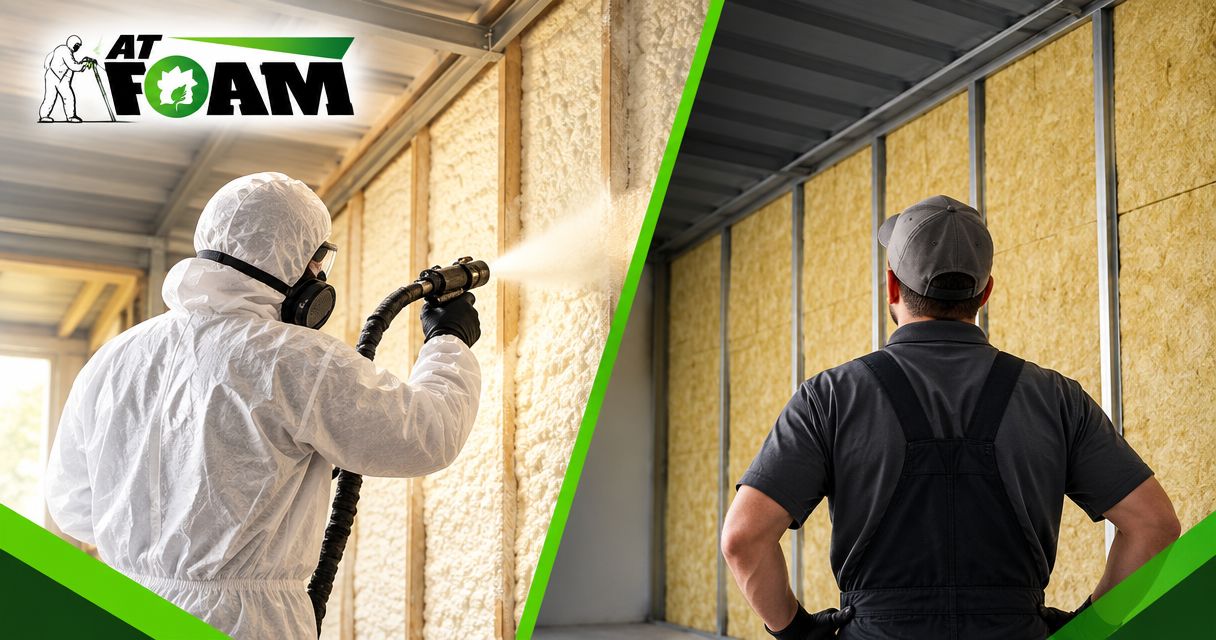
Choose AT Foam if you need a crew to install spray foam in a Washington attic, crawl space, or wall. Choose Service Partners if you are an insulation contractor sourcing materials for a job you will install yourself. AT Foam is the better fit for a homeowner buying spray foam installation; Service Partners fits a trade buyer purchasing insulation materials.
- AT Foam vs Service Partners comes down to installed spray foam versus material sourcing in 2026.
- Choose AT Foam for a residential or commercial spray foam installation in the Seattle, Tacoma, or Olympia area.
- Choose Service Partners if your crew will install the insulation and needs a materials supplier.
- Neither option settles open-cell versus closed-cell foam without checking the assembly and job scope.
Why this matters
An insulation quote and a materials order solve different problems. One includes the work of installing insulation; the other supplies products for someone else to install. Comparing them as if they were interchangeable can leave out the most consequential part of the job: who is responsible for the finished assembly.
For a homeowner or business owner seeking AT Foam spray foam installation, start with the space that needs work and the result you want. For a contractor sourcing insulation, start with the specified material, quantity, and delivery requirements. If you are still choosing among providers, the guide to Service Partners alternatives gives you another comparison path.
At a glance: installation versus material supply
| Dimension | AT Foam | Service Partners |
|---|---|---|
| Best for | Homeowners and businesses hiring spray foam installation | Contractors sourcing insulation materials |
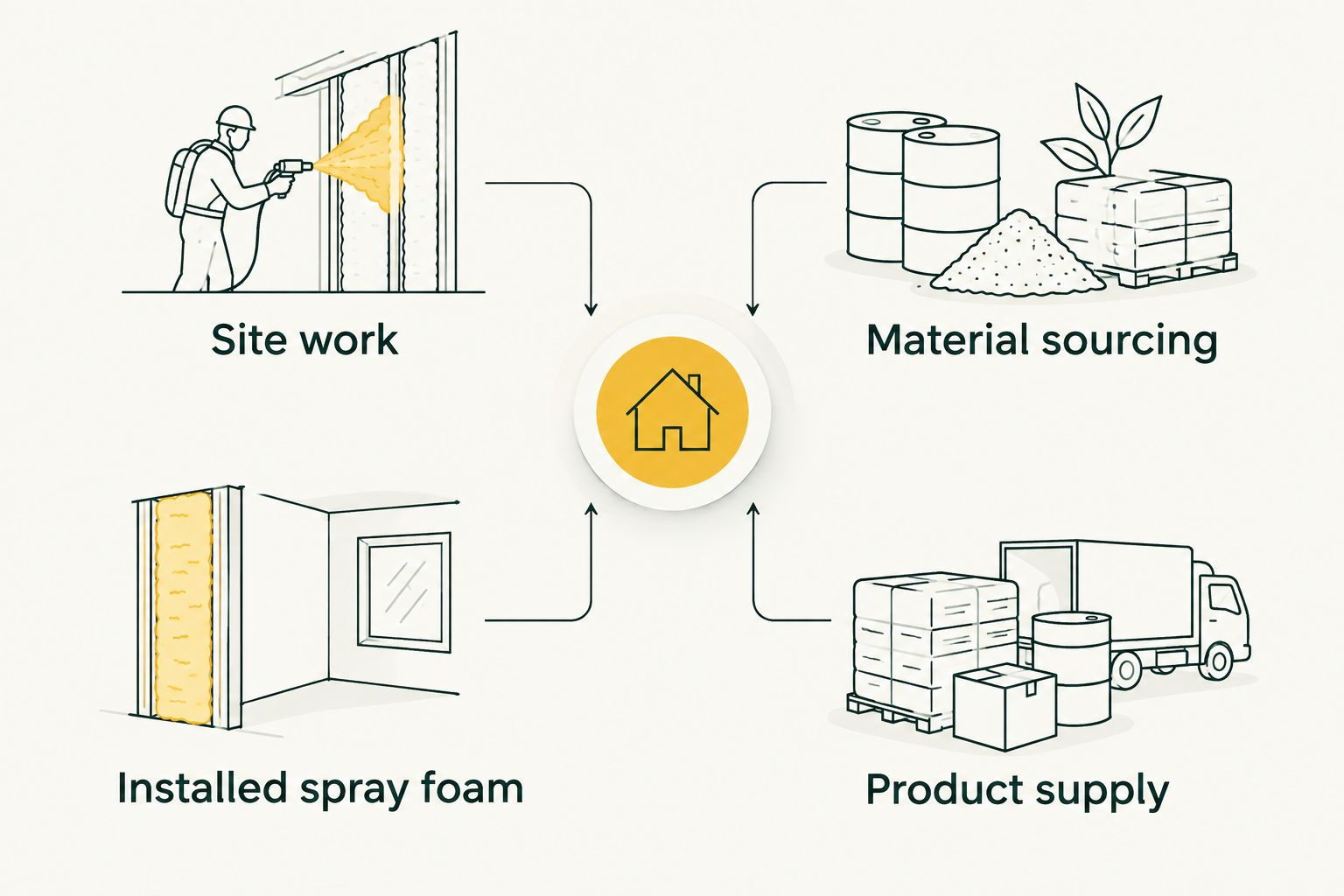
| Role in the job | Site work and installed spray foam | Material sourcing and product supply |
| Attic work | A fit when the request is spray foam installation | A fit when an installer needs attic-insulation materials |
| Crawl space work | A fit when the request is spray foam installation | A fit when a crew is purchasing specified materials |
| Wall work | A fit when the request is spray foam installation | A fit when a crew is purchasing specified materials |
| Product selection | Foam choice must fit the assembly | Material choice must fit the assembly |
| Residential and commercial work | Spray foam installation for both | Insulation supply for both |
| Pricing model | Project scope and installation quote | Material purchase tied to the order |
| Standout feature | A contractor for spray foam site work | A supplier for an installing crew |
The table is a buying guide, not a substitute for a written scope. In 2026, ask exactly what work is included before comparing any figures: preparation, the areas to be insulated, the specified material, installation, and any work outside the insulation scope.
AT Foam wins when you need installed spray foam
Winner: AT Foam for a buyer who needs the insulation installed. The company is a spray foam insulation contractor serving residential and commercial customers in Seattle, Tacoma, Olympia, and the greater Pacific Northwest. That matches a request for attic, crawl space, or wall spray foam work.
Service Partners is an insulation distributor. Material supply matters to the trade crew doing the job, but a homeowner who needs someone to inspect the space and perform the installation is shopping for a different service. A distributor comparison becomes useful only after you know who will do the site work.
The downside of choosing an installation contractor when you only need materials is straightforward: you are solving the wrong purchasing problem. If your crew is already assigned and simply needs product, ask a supplier for the specified items instead of requesting an installation quote. In 2026, keep those requests separate so each seller can answer the one that fits its role.
Service Partners wins when your crew is buying materials
Winner: Service Partners for an installer sourcing insulation materials. If you already have the crew and the job specification, your immediate need is supply rather than another contractor to apply spray foam. A distributor fits that purchasing step.
Put the job requirements in writing before placing a materials order. Name the application, the specified insulation, the quantity your plans call for, and the delivery requirements. Confirm the product details against the project documents rather than treating a broad product category as a specification.
There is a limit to this win. Material supply does not, by itself, answer who prepares the assembly, installs the insulation, checks the completed work, or handles a scope change on site. If those responsibilities are still open, settle them before buying products. A delivered material and a completed insulation job are not the same outcome.
AT Foam is the clearer choice for attic spray foam installation
Winner: AT Foam when the attic needs an installing contractor. Start by identifying where the insulation belongs: at the attic floor, along the roofline, or in another specified area. Those are different scopes. A request that says only attic insulation leaves too much room for two proposals to describe different work.
Before accepting an attic proposal in 2026, ask the installer to state the areas to be treated and the planned insulation approach. If the roofline is involved, ask how the proposed assembly addresses ventilation and moisture. Those questions test the scope without assuming that one foam type belongs in every Washington attic.
Service Partners fits the attic project at a different point. Once a qualified crew has defined the assembly and taken responsibility for installation, that crew can source the specified materials. For a property owner who has not hired that crew, material sourcing does not close the gap.
AT Foam is the clearer choice for crawl spaces and walls
Winner: AT Foam for a crawl space or wall project that requires on-site spray foam work. Its stated services include both applications. The useful question is not simply whether a seller has insulation; it is who will evaluate the area and apply the specified material.
A crawl space deserves a scope that identifies the surfaces being treated. Ask how the proposed insulation work relates to existing moisture conditions and what, if anything, must happen before spraying. Do not assume that adding foam alone resolves a moisture problem; the proposal should separate insulation work from any other work the space requires.
Wall projects need the same clarity. Tell the contractor whether the work concerns an open wall in a renovation, a new assembly, or another accessible area, then get the proposed installation area in writing. For a business owner planning commercial work in 2026, identify access restrictions and who controls the site before requesting a proposal.
Service Partners is the better match for an installing crew that already knows what its crawl space or wall job requires and needs to purchase materials. It is not the better first stop for a property owner whose main unresolved question is who will carry out the spray foam installation.
Both require the right insulation for the assembly
Tie: neither a contractor quote nor a material order makes product selection automatic. Open-cell and closed-cell spray foam are not interchangeable labels for the same job. The proposed assembly, intended use, and applicable project requirements should drive the choice.
If you are hiring installation, ask what foam is proposed, where it will be applied, and why that approach fits the space. If you are buying materials for your own crew, check the specification before ordering. In either case, do not compare proposals solely by the words spray foam: two offers can describe different materials and different work.
This is where a written scope does the most work. It should let you identify the application, the proposed insulation, and who is responsible for installation. If a competing document omits one of those points, request a correction before treating the offers as comparable. That rule applies to both residential and commercial projects in 2026.
Both fit residential and commercial insulation projects
Tie on project category; different roles on the job. AT Foam provides residential and commercial spray foam installation. Service Partners supplies insulation materials used in residential and commercial work. The words residential and commercial therefore do not identify the winner on their own.
Instead, identify the buyer. A property owner hiring a contractor needs an installation scope and a party responsible for the work. A trade crew purchasing for a specified job needs to confirm the materials in its order. Both can be involved in the same kind of project without offering the same service to the same buyer.
For a commercial job, make the responsibility split explicit before materials are ordered or site work begins. Who supplies the material? Who installs it? Who resolves a mismatch between the plan and the conditions found on site? Those questions are more useful than a broad claim that a company serves commercial customers.
Pricing: compare the scope, not just the line item
AT Foam's pricing model is a project quote for installation. Service Partners' pricing model is a materials purchase tied to an order. Neither model wins on cost from the information available here, because a materials order does not represent the full cost of an installed job.
For an installation quote, check which areas are included, what material is proposed, and which site tasks belong to the contractor. For a supply purchase, confirm the exact specified products and what the order includes. If your crew is handling installation, keep its labor and other project work in your own comparison. Do not set a product order beside a full installation quote and call the difference savings.
In 2026, request current terms directly from each business. Scope changes, site conditions, and product specifications can all change what you are buying. A useful comparison puts equivalent responsibilities side by side; a misleading one compares different deliverables as though they were identical.
Final verdict: match the business to the buyer
Choose AT Foam if you are hiring an installer
You are a homeowner or business owner in the Seattle, Tacoma, Olympia, or greater Pacific Northwest area, and you need spray foam installed in an attic, crawl space, or wall. AT Foam wins this profile because its stated service is residential and commercial spray foam installation. Ask for a written scope that identifies the application and the proposed foam.
Choose Service Partners if your crew needs supply
You are an insulation contractor with an installation crew and a defined material specification. Service Partners wins this profile because your next purchasing step is sourcing insulation materials, not hiring another crew to perform the work. Check the order against the project specification before buying.
| Dimension | Winner |
|---|---|
| Best for a property owner hiring installation | AT Foam |
| Best for a contractor buying materials | Service Partners |
| Site work and installed spray foam | AT Foam |
| Material sourcing and product supply | Service Partners |
| Attic spray foam installation | AT Foam |
| Crawl space and wall spray foam installation | AT Foam |
| Choosing insulation for the assembly | Tie: confirm the specification |
| Residential and commercial relevance | Tie: different roles |
| Pricing comparison | No direct winner: scopes differ |
FAQ
Is AT Foam or Service Partners better for a homeowner?
AT Foam is the better fit for a homeowner who needs spray foam installed in an attic, crawl space, or wall in its Washington service area. Service Partners fits material sourcing rather than the homeowner’s request for an installing contractor.
Is Service Partners an insulation contractor?
Service Partners is an insulation distributor. If you need an installed result, identify the crew responsible for site work rather than treating a materials order as an installation agreement.
Which is better for an insulation contractor buying materials?
Service Partners fits an insulation contractor buying specified materials for its own crew to install. Confirm the product requirements in the job documents before ordering.
Which should I contact for attic spray foam installation in Seattle?
AT Foam fits a Seattle request for attic spray foam installation. Ask for a written scope that identifies the surfaces to be treated and the proposed insulation approach.
Can I compare an AT Foam quote with a Service Partners materials order?
Not as equivalent offers: an installation quote and a materials order cover different responsibilities. Separate material supply, installation labor, and other project work before comparing them.
Is open-cell or closed-cell spray foam better for my project?
Neither foam type is automatically better for every attic, crawl space, or wall. Select the material based on the proposed assembly and project requirements, and ask the installer to explain the specification.
Who should handle a crawl space spray foam job?
Choose an installing contractor if you need the crawl space work performed; AT Foam lists crawl space spray foam among its services. Choose a materials supplier if your crew already has the job scope and will perform the installation.
One last thing
The fastest way to make this comparison useful in 2026 is to write one sentence describing what you are buying: an installed spray foam job or specified insulation materials. If you cannot answer that yet, settle who owns the installation before asking either business to price the work.
Related guides
- Spray foam insulation services ranked by application
- Attic insulation contractors in Seattle
- Commercial insulation options for Washington businesses