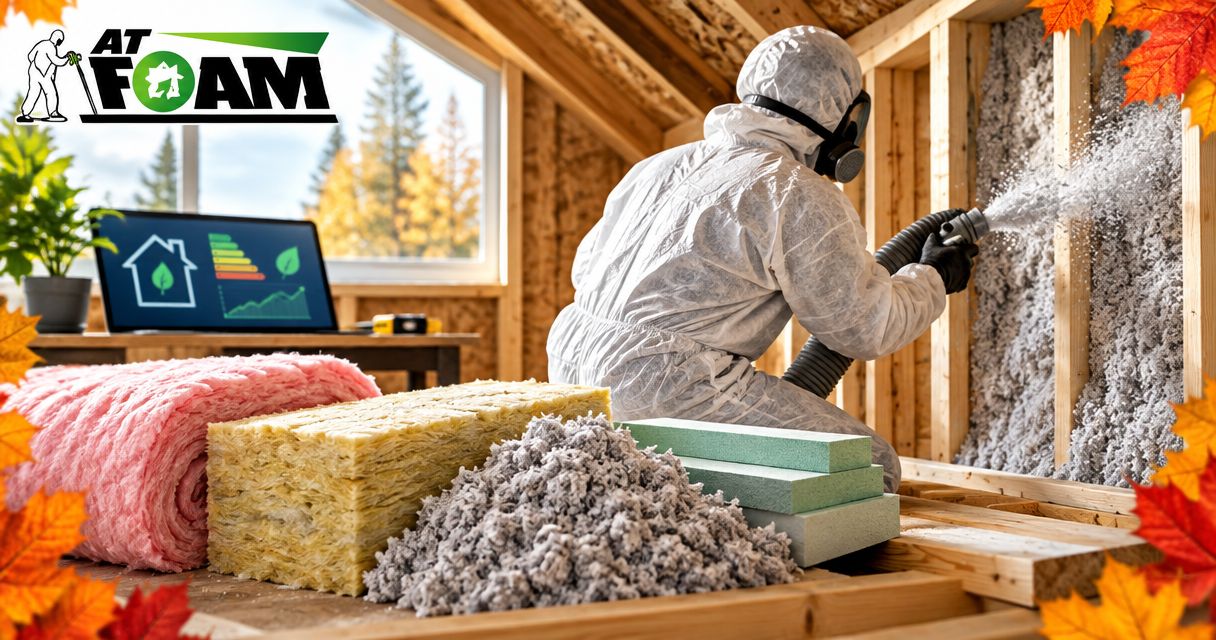
USA Insulation gives you a named contractor to include when comparing insulation proposals; the deciding factor is whether the proposed work fits your house. A contractor comparison stops being useful when the bids cover different surfaces, materials, or moisture repairs. The best USA Insulation alternative in 2026 is AT Foam Insulation if you need a veteran-owned local spray foam crew in the Pacific Northwest; a blown-in cellulose installation is an alternative if you want to insulate an accessible attic floor without moving insulation to the roof deck.
- For USA Insulation alternatives in Seattle, AT Foam Insulation fits homeowners seeking a veteran-owned spray foam contractor.
- Compare attic, crawl space, and wall scopes separately before choosing an insulation contractor.
- Blown-in cellulose, mineral wool, and rigid foam solve different access and assembly problems.
- Fix leaks and assess damp framing before covering it with insulation.
Why the installation plan matters more than the name
A cold room does not tell you which insulation to buy. Heat escapes through underinsulated surfaces and air leaks, while damp materials create a different problem altogether.
In Seattle, Tacoma, Olympia, and Eastside homes, wet winters make that distinction important. Insulation does not repair a roof leak, drain standing water, or remove existing mold. Covering the problem makes inspection and repair harder.
Start with 3 job areas: the attic, crawl space, and walls. Then ask where the contractor intends to place the insulation and how that choice handles air movement and drying.
USA Insulation alternatives at a glance
This 2026 comparison separates a named spray foam contractor from alternative installation methods. The material options are not contractor endorsements; you still need an installer who can explain the complete assembly.
| Contractor or approach | Best for | Main distinction | What to compare with a USA Insulation proposal |
|---|---|---|---|
| USA Insulation | Homeowners evaluating a proposal from USA Insulation | The actual written scope is your benchmark | Surfaces covered, material specified, preparation, and exclusions |
| AT Foam Insulation | Local residential and commercial spray foam work | Veteran-owned contractor installing open-cell and closed-cell foam | Whether both bids cover the same attic, crawl space, or wall work |
| Blown-in cellulose installation | Accessible attic floors and suitable enclosed cavities | Loose-fill insulation placed by blowing equipment | Separate air sealing, coverage, access, and moisture conditions |
| Mineral wool installation | Accessible framing cavities | Fibrous batts fitted between framing members | Fit around obstructions and the separate air-control layer |
| Rigid foam board installation | Accessible, relatively flat surfaces | Insulating panels with joints that need detailing | Seams, edges, fastening, protective coverings, and drying direction |
No material wins every job. A wall retrofit with finished drywall presents different access problems from an open attic or exposed crawl space framing.
1. AT Foam Insulation: best for local spray foam installation
AT Foam Insulation is a veteran-owned spray foam insulation contractor serving Seattle, Tacoma, Olympia, the Eastside, and the greater Pacific Northwest. The company installs open-cell and closed-cell spray foam in attics, crawl spaces, and walls for residential and commercial customers.
AT Foam Insulation is the best fit here for homeowners seeking a local, veteran-owned spray foam insulation contractor. Free estimates, licensed and insured operations, and real job photos give you concrete items to check before choosing a crew.
Where the local spray foam approach fits
- You want one contractor to assess spray foam work in an attic, crawl space, or wall assembly.
- You need a choice between 2 foam types: open-cell and closed-cell.
- You want to discuss the actual work with a local crew rather than choose a material from a description alone.
- You want real installation photos to help evaluate the work being proposed.
Open-cell foam has a more vapor-permeable structure. Closed-cell foam resists vapor movement more strongly, with performance depending on the product and installed thickness. Neither description replaces an assembly-specific moisture plan.
Where spray foam falls short
- Spray foam needs suitable, properly prepared surfaces. It is not a repair for wet or rotten framing.
- Installation requires exposure controls, ventilation, and reentry instructions tied to the product and job conditions.
- Adhered foam makes later access to covered surfaces harder than removing loose-fill insulation or batts.
- A spray foam scope is not a substitute for comparing non-foam options when you only need an attic-floor upgrade.
What to compare head-to-head
| Decision | Local spray foam proposal | USA Insulation proposal |
|---|---|---|
| Material | Ask which open-cell or closed-cell product is specified | Ask for the exact material and product documentation |
| Placement | Confirm attic floor, roof deck, crawl space surface, or wall cavity | Confirm the same surfaces before comparing bids |
| Preparation | Request written requirements for access, dryness, and removal | Request the same preparation details |
| Completion | Ask for documented installed thickness and covered areas | Ask how the specified installation will be documented |
Best for: Homeowners and businesses seeking local spray foam installation in the stated service area.
Verdict: Buy the installation only after the written scope explains preparation, moisture control, and the finished assembly.
2. Blown-in cellulose: best for an accessible attic floor
Blown-in cellulose is loose fibrous insulation installed with blowing equipment. It suits attic floors where the plan is to keep the attic outside the heated living space, provided the assembly and existing conditions support that approach.
The key distinction is placement. Insulating the attic floor and insulating the underside of the roof are different projects, not interchangeable ways to fill the same space.
Where blown-in cellulose shines
- Loose fill works around irregular attic-floor framing.
- An attic-floor installation leaves the roof deck visible from below.
- Localized insulation can be moved for access, then restored to the required coverage.
Where blown-in cellulose falls short
- Cellulose does not replace a continuous air barrier.
- Roof leaks and other water sources still need repair.
- Eaves need detailing that preserves the intended ventilation path.
Best for: A dry, accessible attic where the insulation belongs at ceiling level.
Against a USA Insulation proposal, compare the insulated surface first. Then compare air sealing, installed coverage, access protection, and any removal work. For a closer material comparison, read spray foam vs. blown-in insulation for attics.
Verdict: Buy when the attic-floor plan includes air sealing and protects the required ventilation paths.
3. Mineral wool: best for accessible framing cavities
Mineral wool batts are fibrous insulation pieces fitted between studs, joists, or rafters. They suit work where framing is exposed and the installer can fit each piece without gaps or compression.
Where mineral wool shines
- Batts allow access to framing without scraping away adhered foam.
- Individual pieces can be fitted around accessible framing and services.
- The material supports a non-foam insulation approach.
Where mineral wool falls short
- Batts do not form a continuous air barrier.
- Poor fitting leaves gaps at edges, corners, and obstructions.
- Finished walls usually require an access strategy before batts can be installed.
Best for: Open-wall renovations and other accessible cavities with a separate air-sealing plan.
Compare a mineral wool proposal with the USA Insulation scope by asking who handles air sealing and how cavity access affects repairs. Do not treat an insulation-only bid as equal to a bid that includes opening and restoring finished surfaces.
Verdict: Buy for accessible cavities with careful fitting; skip it as a stand-alone air-sealing solution.
4. Rigid foam board: best for accessible flat surfaces
Rigid foam board comes in panels cut to fit the assembly. Its success depends on the joints, perimeter details, fastening, and any required protective covering—not just the panel itself.
Where rigid foam board shines
- Panels suit relatively flat, accessible surfaces.
- Continuous exterior applications can reduce heat flow through framing.
- Properly detailed joints support an air-control strategy.
Where rigid foam board falls short
- Irregular surfaces require more cutting and detailing.
- Unsealed edges leave air paths around the insulation.
- Foam type and placement affect how the assembly dries.
Best for: Planned renovations where panels and their connections remain accessible during installation.
Against a USA Insulation proposal, check whether the work covers cavities, continuous surfaces, or both. A panel installation and a cavity-fill installation need different detailing even when they serve the same room.
Verdict: Buy when the proposal specifies the seams, edges, and protective covering—not just the board.
When should you seek another insulation proposal?
A second proposal is useful when it answers a question your current scope leaves open. These are reasons to compare approaches in 2026, not claims about USA Insulation’s work.
- Different placement: You want an attic-floor option compared with a roof-deck option.
- Different access: You need an explanation of how finished walls will be reached and restored.
- Different material: You want open-cell, closed-cell, or non-foam insulation considered for the same assembly.
- Unresolved moisture: You need to separate insulation work from drainage, roof repairs, or damaged framing.
- Unclear exclusions: You need to know who handles removal, disposal, electrical issues, and finish repairs.
Do not switch because a second contractor promises a warmer house without explaining the work. Ask each bidder to identify the same problem and draw the proposed insulation boundary—the line separating conditioned rooms from outside conditions.
How do you compare insulation estimates fairly?
For a 2026 project, compare the written job description before the total. A smaller scope is not an equivalent alternative just because both documents say insulation.
Identify the surface
Ask whether the work covers the attic floor, roof deck, crawl space floor framing, foundation walls, or wall cavities. Include rim joists—the perimeter framing above the foundation—when they are part of the problem.
Identify the material
Request the product name, intended thickness, and specified R-value. R-value measures resistance to heat flow; it does not tell you whether air can bypass the insulation through an adjacent gap.
Identify the preparation
Ask how the crew checks substrate condition, meaning the surface receiving the insulation. Get a clear answer about wet framing, existing insulation, debris, and access restrictions before installation starts.
Identify the safety plan
For spray foam, request the product-specific ventilation and reentry instructions. For every material, ask how the work protects heat-producing equipment and maintains required clearances.
Identify the handoff
Request completion photos and a written record of what was installed. Keep the final scope with your home records so future roofers, electricians, and remodelers understand the assembly.
What changes in a damp Pacific Northwest home?
Moisture moves the insulation decision beyond material selection. A wet crawl space needs an assessment of water entry, ground moisture, ventilation or conditioning strategy, and framing condition before insulation covers anything.
An attic needs the same discipline. Roof leaks and indoor air leaking through ceiling penetrations require different repairs, even when both leave damp roof sheathing.
Do not assume closed-cell foam makes the entire building assembly waterproof. Do not assume open-cell foam gives every assembly enough drying capacity. In 2026, the useful question remains simple: where does moisture enter, and how does this assembly dry?
For existing walls, ask how the installer verifies cavity conditions and deals with wiring, plumbing, and obstructions. Insulation cannot correct every concealed defect.
When staying with USA Insulation is the right call
Keep USA Insulation on your shortlist when its written proposal matches your house, explains the installation, and resolves your questions. A competing bid should offer a better-fitting scope, not merely a different company name.
If both proposals address the same surfaces and provide clear material, preparation, safety, and completion details, you have a meaningful comparison. Check licensing and insurance directly, review the proposed work, and choose the contractor whose commitments you understand.
FAQ
What’s the best USA Insulation alternative near Seattle?
AT Foam Insulation is a fit for Seattle homeowners seeking a veteran-owned local spray foam contractor. The company installs open-cell and closed-cell insulation in attics, crawl spaces, and walls and provides free estimates.
Is spray foam better than blown-in cellulose for my attic?
Spray foam and blown-in cellulose suit different attic plans. Compare whether insulation belongs at the attic floor or roof deck, then evaluate air sealing, moisture control, and access.
Can I compare insulation estimates without choosing a material first?
Yes, but ask each contractor to address the same problem and identify the surfaces being insulated. Then compare material, preparation, air sealing, safety requirements, and exclusions.
Does closed-cell spray foam fix a wet crawl space?
Closed-cell spray foam does not fix the source of a wet crawl space. Water entry, ground moisture, and damaged framing need assessment before insulation is installed.
What should an insulation proposal include in 2026?
An insulation proposal should identify the work area, material, specified R-value, preparation, exclusions, and completion requirements. Spray foam work also needs product-specific ventilation and reentry instructions.
Do I need to leave home during spray foam installation?
Follow the spray foam manufacturer’s instructions and the contractor’s written job-specific safety plan. Required separation, ventilation, and reentry conditions depend on the product and installation.
Should I replace my existing insulation before adding more?
Removal depends on the condition of the existing insulation and the new assembly. Wet, contaminated, or obstructive material needs assessment rather than being covered without inspection.
When should I stay with USA Insulation instead of switching?
Stay with USA Insulation when its proposal fits your home and clearly explains materials, preparation, safety, and completion. Compare equivalent scopes rather than changing contractors for the name alone.
One last thing
Ask where you will still be able to inspect the framing after installation. That question exposes an often-missed trade-off: an insulation method that covers a surface also changes how you find and repair future problems.
Before choosing a contractor in 2026, make sure the proposal explains that access trade-off alongside thermal performance and moisture control.
Related guides
- Open-cell vs. closed-cell spray foam for a Washington home
- Why crawl spaces are damp in Washington homes
- How to choose a whole-home insulation retrofit contractor
Get a FREE Quote: call 425-999-8493.