Category: Uncategorized

  • Best Insulation for Vaulted Ceilings in 2026

    Best Insulation for Vaulted Ceilings in 2026

    Vaulted and cathedral ceilings look great and heat like a barn if the insulation is wrong. Closed-cell spray foam is the best insulation for vaulted ceilings in most Pacific Northwest homes, but the right pick depends on whether your roof assembly is vented or unvented, how deep your rafters are, and what you're trying to solve — heat loss, ice damming, or noise from rain on the roof.

    TL;DR
    • Closed-cell spray foam is the best insulation for vaulted ceilings in Pacific Northwest homes in 2026 because it air-seals and insulates in one step.
    • Open-cell spray foam wins for interior sound control when a vaulted ceiling has full rafter depth exposed.
    • Fiberglass batts are the cheapest option but trap moisture in unvented cathedral ceilings around Seattle and Tacoma.
    • Mineral wool batts balance fire resistance and cost for vented vaulted assemblies.
    • AT Foam installs closed-cell and open-cell foam in vaulted rooflines across Seattle, Tacoma, and Olympia.
    R-value by material
    R-6.5 per inch
    Closed-cell spray foam
    R-3.7 per inch
    Open-cell spray foam
    9.25 in
    Common 2×10 rafter depth
    Typical PNW cathedral ceiling framing

    Why this matters

    Vaulted ceilings don't have an attic buffer between the living space and the roof deck. Whatever insulation goes into that rafter cavity is the only thing standing between your living room and Washington's wet, mild-but-persistent winters.

    Get it wrong and you get two failure modes: ice damming at the eaves from heat leaking through the roof, or trapped moisture inside the cavity that rots the sheathing from the inside. Both are common in older homes across insulation types for older Pacific Northwest homes where the original assembly was never designed for today's energy code.

    The fix isn't always more insulation — it's the right material for the assembly type. AT Foam sees this constantly on retrofit jobs: a homeowner adds batts to a vented cathedral ceiling and the room still feels drafty because nobody sealed the air leaks first.

    What makes the best insulation for vaulted ceilings

    • R-value per inch — rafter depth is fixed, so a material that hits more R-value in less space wins in tight cavities
    • Air sealing — gaps around wiring, can lights, and top plates leak more heat than the insulation itself blocks
    • Moisture resistance — Pacific Northwest humidity and rain make vapor management non-negotiable in an unvented roof
    • Vented vs. unvented compatibility — some materials only work safely in one assembly type
    • Fire and code compliance — Washington's energy code sets minimum ceiling R-values that vaulted assemblies often struggle to hit
    • Sound dampening — matters more in vaulted rooms because there's no attic space to absorb rain and wind noise

    At a glance

    Insulation Best for Standout feature Key limitation
    Closed-cell spray foam Unvented vaulted ceilings with tight rafters Air seals and insulates in one application Rigid once cured, harder to retrofit wiring later
    Open-cell spray foam Interior sound control in exposed rafters Expands to fill irregular cavities completely Lower R-value per inch, needs full rafter depth
    Rigid foam board Above-deck retrofits without removing drywall Continuous insulation with no thermal bridging Requires roof tear-off or new construction access
    Mineral wool batts Vented assemblies needing fire resistance Naturally fire-resistant, holds R-value when damp Needs a functioning vent channel to perform
    Fiberglass batts Budget vented cathedral ceilings Lowest material cost of the group Loses R-value fast if compressed or wet
    Blown-in cellulose Dense-pack retrofits through small access holes Fills gaps around obstructions without demo Settling risk if not installed to density spec

    1. Closed-cell spray foam: best insulation for tight, unvented vaulted ceilings

    Closed-cell spray foam is a rigid, high-density foam sprayed directly into the rafter cavity, where it expands and cures into an air-sealed layer that also acts as a vapor retarder. At roughly R-6.5 per inch, it fits more insulating power into a shallow 2×8 or 2×10 rafter bay than any batt or blown-in product.

    This is the material AT Foam installs most often for unvented vaulted assemblies in Seattle, Tacoma, and Olympia because it solves the air leakage problem and the vapor problem in one pass.

    Closed-cell spray foam pros:

    • Highest R-value per inch of any common insulation material
    • Doubles as an air barrier, cutting drafts around can lights and skylights
    • Adds structural rigidity to the roof deck
    • Performs well in unvented "hot roof" assemblies common in remodels

    Closed-cell spray foam cons:

    • Costs more per board foot than batts or cellulose — check current spray foam insulation cost in Seattle figures before budgeting
    • Once cured, it's difficult to remove for future wiring or plumbing changes
    • Requires a licensed installer for correct mix ratio and thickness

    Closed-cell spray foam verdict: Buy. It's the strongest option for Pacific Northwest vaulted ceilings where rafter depth is limited and the assembly is unvented.
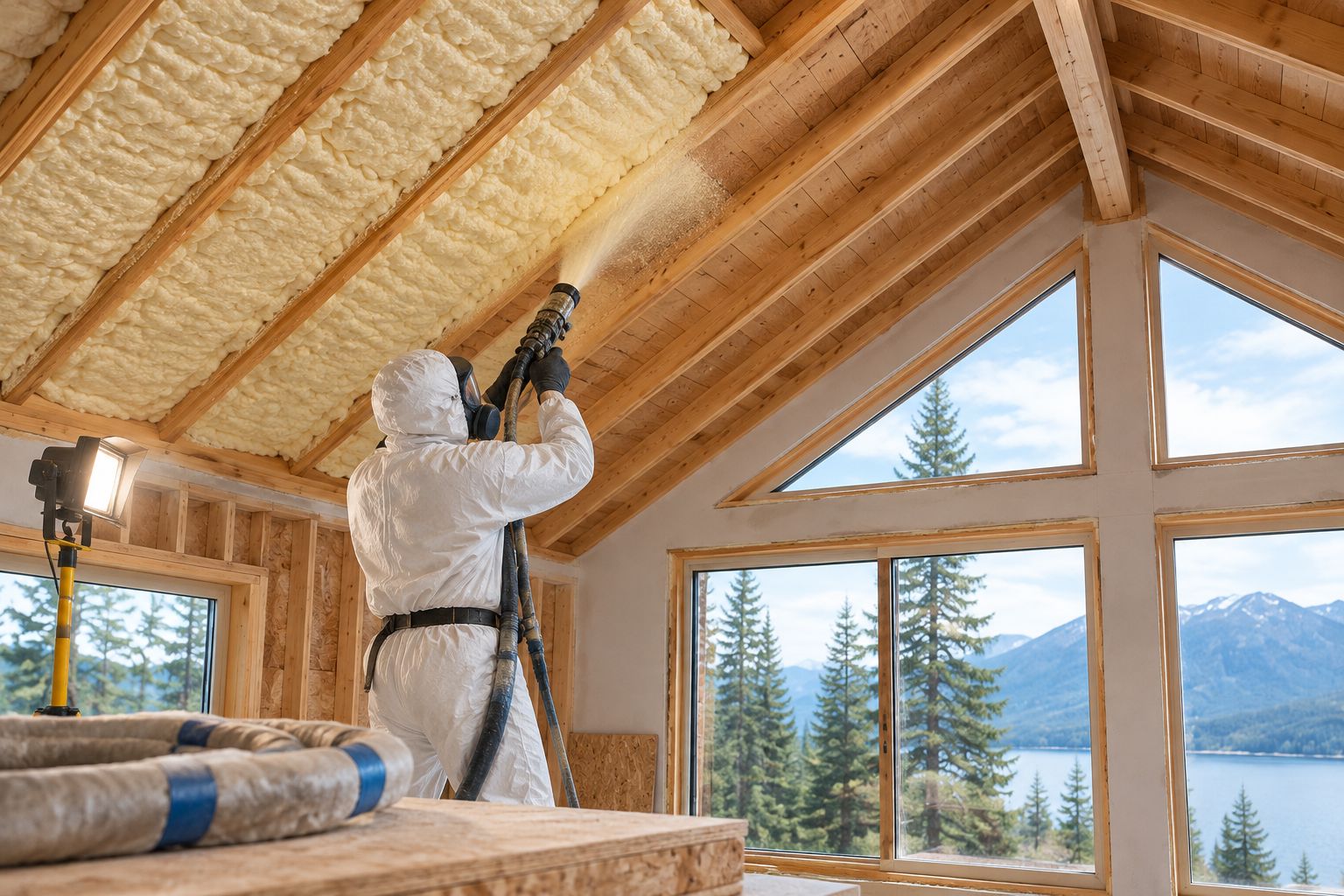
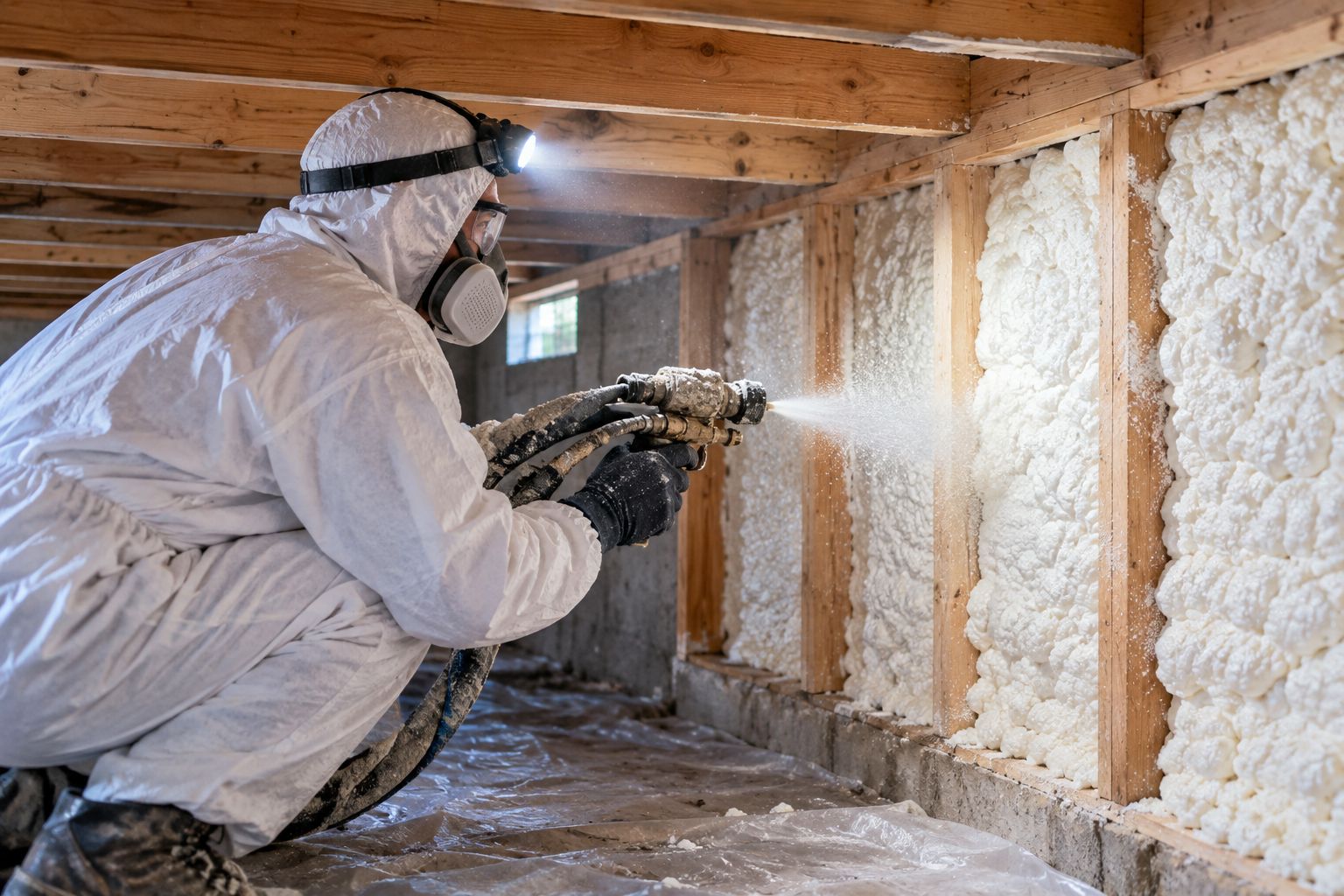
    Technician spraying closed-cell foam into vaulted ceiling rafters
    Closed-cell foam fills irregular rafter bays and seals air leaks in one pass.

    2. Open-cell spray foam: best for sound control in exposed-rafter ceilings

    Open-cell spray foam is a softer, lower-density foam that expands more per unit of material, at about R-3.7 per inch. It needs full rafter depth to hit code-level R-values, so it fits best in newer construction with deeper 2×12 rafters or added strapping.

    The cell structure absorbs sound better than closed-cell foam, which matters in a vaulted great room where rain on the roof carries straight into the living space.

    Open-cell spray foam pros:

    • Noticeably quieter under rain and wind than batt insulation
    • Expands to fill gaps around wiring and irregular framing
    • Lower material cost than closed-cell foam

    Open-cell spray foam cons:

    • Needs a vapor retarder in most Washington climate zones since it's vapor-permeable
    • Requires deeper rafter cavities to reach adequate R-value
    • Can absorb moisture if the roof ever leaks, unlike closed-cell foam

    Open-cell spray foam verdict: Buy for new construction or additions with deep rafters and a priority on sound dampening.

    3. Rigid foam board: best for above-deck retrofits without tearing out drywall

    Rigid polyiso or XPS board goes on top of the roof deck, under new roofing, rather than inside the rafter cavity. It delivers roughly R-6 per inch and creates a continuous thermal layer with zero framing gaps.

    This only makes sense when you're already replacing the roof — pulling shingles and sheathing to install board from above isn't a standalone insulation project.

    Rigid foam board pros:

    • Eliminates thermal bridging through rafters entirely
    • Doesn't disturb interior finishes or drywall
    • Pairs well with a vented or unvented assembly below

    Rigid foam board cons:

    • Only cost-effective when timed with a roof replacement
    • Adds roof height, which can complicate flashing details
    • Needs a qualified roofer, not just an insulation crew

    Rigid foam board verdict: Hold unless a re-roof is already scheduled — then it's a strong upgrade.

    4. Mineral wool batts: best for fire-resistant, vented vaulted ceilings

    Mineral wool (rock wool) batts run about R-4.2 per inch and are naturally fire-resistant, since the material is spun from basalt rock rather than plastic resin. They also hold their R-value even if they get slightly damp, which fiberglass does not.

    They only work correctly in a vented assembly with a clear air channel between the insulation and the roof deck.

    Mineral wool batts pros:

    • Fire-resistant without added chemical treatment
    • Better moisture tolerance than fiberglass
    • Good sound absorption for a batt product

    Mineral wool batts cons:

    • Requires a working vent channel, which older homes often lack
    • Heavier and stiffer to install than fiberglass
    • Higher cost than standard fiberglass batts

    Mineral wool batts verdict: Hold for vented roofs where fire resistance or moisture tolerance matters more than upfront cost.

    5. Fiberglass batts: best budget option for vented cathedral ceilings

    Fiberglass batts run R-3.2 to R-3.8 per inch and remain the cheapest widely available insulation. In a properly vented vaulted ceiling with intact baffles, they can perform adequately.

    The problem in the Pacific Northwest is that batts alone don't air-seal, and a poorly vented cathedral ceiling with batts is a known setup for condensation inside the cavity.

    Fiberglass batts pros:

    • Lowest material cost of any option on this list
    • Widely available and easy for a crew to install fast
    • No specialty equipment required

    Fiberglass batts cons:

    • Loses significant R-value when compressed into a tight cavity
    • Does nothing to stop air leakage around fixtures and framing
    • High moisture risk in unvented or poorly vented Washington roofs

    Fiberglass batts verdict: Skip for unvented assemblies; Wait even in vented ones unless the vent channel is confirmed intact.

    6. Blown-in cellulose: best for retrofitting without opening the ceiling

    Dense-pack cellulose gets blown into the closed rafter cavity through small access holes, at roughly R-3.7 per inch. It's the practical choice when a homeowner wants better insulation in an existing vaulted ceiling without removing drywall.

    Installation quality is everything here — underfilled cellulose settles over time and leaves gaps at the top of the cavity.

    Blown-in cellulose pros:

    • Installs through small holes, no drywall demolition
    • Fills around wiring and obstructions well when dense-packed correctly
    • Treated with borate for fire and pest resistance

    Blown-in cellulose cons:

    • Settling risk if the installer doesn't hit proper density
    • Absorbs and holds moisture more than foam
    • Harder to verify installation quality once the holes are patched

    Blown-in cellulose verdict: Hold for retrofits where opening the ceiling isn't an option and the installer can document dense-pack density.
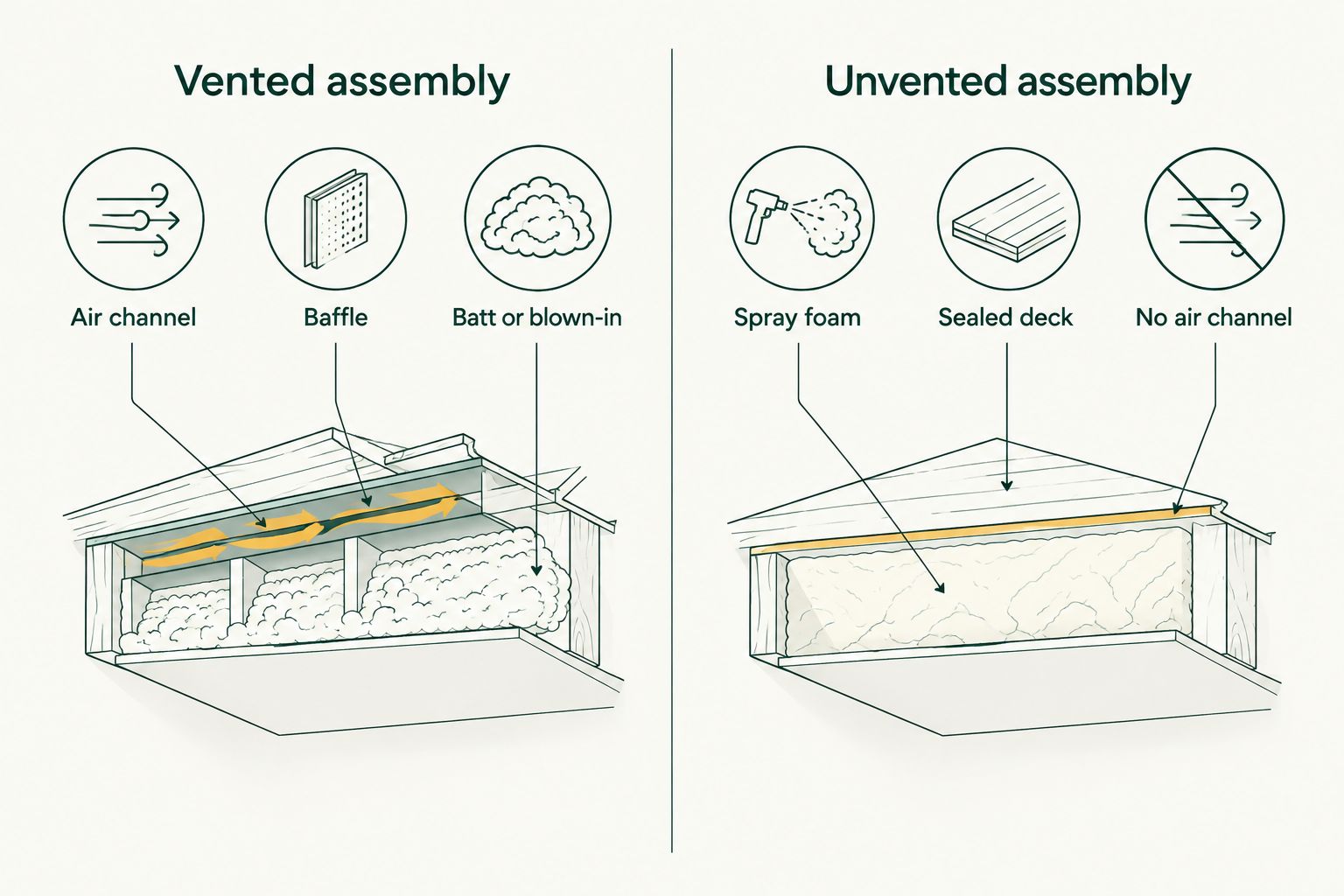
    Diagram comparing vented and unvented vaulted ceiling assemblies
    The assembly type decides which materials are safe to use before anything else.

    Get your vaulted ceiling assessed

    A free estimate confirms vented vs. unvented before any material goes in.

    How we ranked these

    Each material was weighed against the six criteria above, with air sealing and moisture resistance weighted heaviest since those two failures cause the most callback repairs in Pacific Northwest vaulted ceilings. R-value per inch mattered most for homes with shallow rafter depth, where every fraction of an inch counts toward hitting code minimums.

    Which insulation should you choose for your vaulted ceiling?

    If you don't know your assembly type yet, that's the first question to answer — not the material. For most unvented vaulted ceilings in Seattle, Tacoma, and Olympia, closed-cell spray foam is the default recommendation because it handles air sealing, R-value, and vapor control together.

    If your rafters are deep and the priority is quieting rain noise in a great room, open-cell spray foam is the better fit. Budget-driven vented retrofits do fine with mineral wool or fiberglass, provided the vent channel is actually functional — confirm that before buying materials, not after. For a broader look at contractors handling these installs, see house insulation contractors in Washington state.

    FAQ

    What is the best insulation for vaulted ceilings in the Pacific Northwest?

    Closed-cell spray foam is the best insulation for vaulted ceilings in most Pacific Northwest homes because it air-seals and insulates the rafter cavity in one application. It performs especially well in unvented assemblies common in remodels and additions.

    Is closed-cell spray foam better than open-cell for vaulted ceilings?

    Closed-cell foam wins on R-value per inch and moisture resistance, making it the stronger pick for shallow or unvented rafter cavities. Open-cell foam costs less and dampens sound better when full rafter depth is available.

    Can you use fiberglass batts in a cathedral ceiling in Seattle?

    Fiberglass batts work only in a properly vented cathedral ceiling with an intact air channel above the insulation. In unvented assemblies, batts trap moisture and are not recommended for Seattle’s climate.

    Do vaulted ceilings need a vented or unvented assembly in Washington state?

    Both assembly types are used in Washington, but the choice determines which insulation materials are safe. Unvented assemblies require spray foam or another air-impermeable material to prevent condensation inside the roof deck.

    How much rafter depth do you need for spray foam insulation?

    A 2×10 rafter, roughly 9.25 inches deep, holds enough closed-cell spray foam to reach strong R-values in a compact cavity. Open-cell foam needs more depth, closer to a 2×12, to reach the same performance.

    Does mineral wool work in a vaulted ceiling?

    Mineral wool batts work well in vented vaulted ceilings and add fire resistance that fiberglass lacks. They require a functioning vent channel to avoid trapping moisture against the roof deck.

    What R-value do you need for a vaulted ceiling in Washington?

    Washington’s energy code sets minimum ceiling R-values that vaulted assemblies often struggle to hit due to limited rafter depth, typically pushing homeowners toward higher R-per-inch materials like spray foam. A licensed insulation contractor can confirm the target for a specific roof assembly.

    Can spray foam cause moisture problems in a vaulted ceiling?

    Properly installed closed-cell spray foam reduces moisture risk because it acts as its own vapor retarder. Problems arise from incorrect thickness or gaps, which is why installation by a licensed crew matters more than the material choice alone.

    One last thing

    The insulation material gets all the attention, but the vent channel — or the decision to skip one entirely — is what actually determines whether a vaulted ceiling insulation job lasts 20 years or fails in five. Confirm that detail with an installer before picking a product off this list.

    Related guides


  • Insulation Cost Comparison for Seattle Homes

    Insulation Cost Comparison for Seattle Homes

    Fiberglass batts cost the least to install in a Seattle attic, but they lose R-value fast in a marine climate that never really dries out. Closed-cell spray foam costs the most per square inch and wins where moisture, air leaks, and structural rigidity all matter at once. This guide ranks six insulation options by relative cost so you can match the right material to the right part of the house before you call a contractor.

    TL;DR
    • Fiberglass batt insulation is the cheapest option for open, accessible attics in 2026 but underperforms in Seattle’s damp climate.
    • Closed-cell spray foam sits at the top of the insulation cost comparison seattle homeowners run, and it earns that cost in crawl spaces and rim joists.
    • Open-cell spray foam is the mid-tier pick for soundproofing home offices and irregular wall cavities.
    • Blown-in cellulose is the practical budget upgrade for older Seattle attics with uneven framing.
    • Mineral wool and rigid foam board fill specific niches: fire-resistant garage walls and basement rim joists.
    R-value per inch, by material
    R-6 to R-7
    Closed-cell spray foam
    R-3.5 to R-3.6
    Open-cell spray foam
    R-3.1 to R-3.4
    Fiberglass batt

    Why this matters

    Seattle and the greater Pacific Northwest sit in a marine climate zone, which means insulation has to fight moisture as much as it fights heat loss. A lot of the housing stock in Seattle, Tacoma, and Olympia predates 1980, so crawl spaces and attics were built to code standards that look thin by 2026 expectations.

    Cost comparisons that only look at price per square foot miss the bigger picture: an insulation material that traps moisture in a Seattle crawl space costs more in mold remediation than it ever saved on installation. Checking current numbers for spray foam insulation cost in Seattle before you commit to a cheaper batt product is worth the ten minutes.

    What makes the best insulation option for a cost comparison

    • R-value per inch — how much insulating power you get per dollar of material thickness
    • Moisture and mold resistance — critical in Western Washington's wet winters
    • Installed cost tier — material plus labor, not just the bag or roll price
    • DIY versus professional install — batts save labor cost, spray foam does not
    • Lifespan and settling — cellulose and batts compress and sag over years, foam does not
    • Air sealing performance — gaps in batts and loose-fill undercut their rated R-value
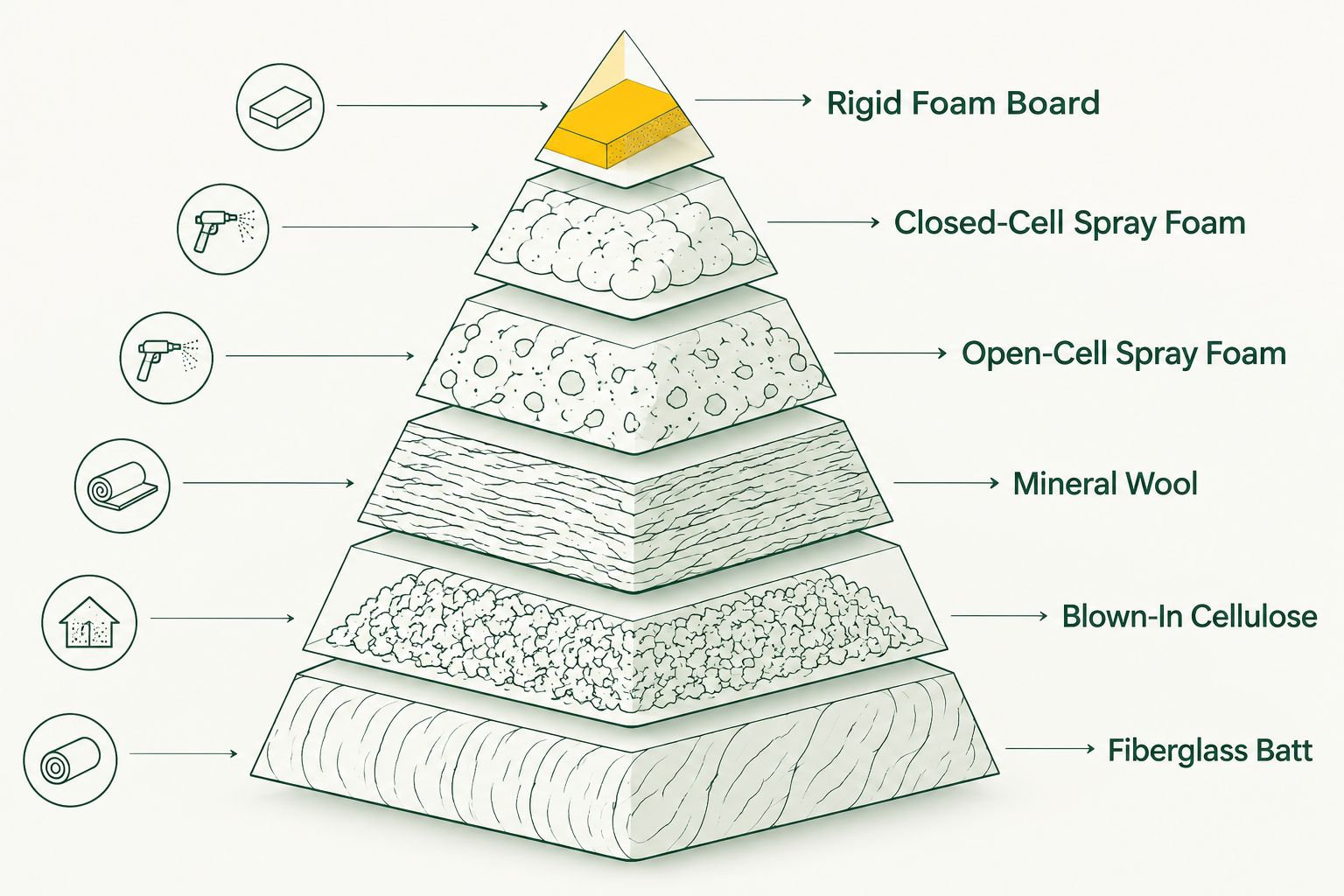
    Pyramid showing six insulation types stacked from lowest to highest relative cost tier
    Cost climbs with moisture resistance and air-sealing performance, not just R-value.

    Insulation options at a glance

    Insulation Type Best For Standout Feature Cost Tier Key Limitation
    Fiberglass Batt Budget attic retrofits Widely available, DIY-friendly Lowest Loses R-value with gaps and compression
    Blown-In Cellulose Older Seattle attics, irregular framing Fills around obstructions and wiring Low-to-moderate Settles over time, absorbs moisture if wet
    Mineral Wool Fire-resistant garage conversions Naturally fire- and pest-resistant Moderate Heavier and pricier per bag than fiberglass
    Open-Cell Spray Foam Soundproofing home offices and studios Expands to seal irregular cavities, dampens sound Moderate-to-high Not a vapor barrier, professional install only
    Closed-Cell Spray Foam Crawl space moisture control Acts as its own vapor barrier, adds rigidity Highest Highest upfront cost per board foot
    Rigid Foam Board Basement walls and rim joists Continuous insulation, no thermal bridging Moderate-to-high Seams need sealing, awkward on odd angles

    1. Fiberglass Batt Insulation: best insulation for budget attic retrofits

    Fiberglass batts are pre-cut rolls of spun-glass fiber that fit between standard-spaced attic joists and wall studs. Any homeowner with a utility knife can install them, which is why they remain the default choice for cost-conscious attic jobs across Washington in 2026.

    Fiberglass batt pros:

    • Lowest material cost of any option on this list
    • No cure time, no odor, ready to walk on the same day
    • Simple to source at any home improvement store in Seattle or Tacoma

    Fiberglass batt cons:

    • Loses a meaningful chunk of its rated R-value when compressed or gapped around wiring and pipes
    • Does nothing to stop air leakage on its own, so heat still escapes through gaps
    • Fiberglass holds moisture rather than shedding it, a real liability in a wet crawl space

    Best for: open, easy-to-access attics on a tight renovation budget. Verdict: Buy if the space is dry, accessible, and you're willing to pair it with separate air sealing.

    2. Blown-In Cellulose: best insulation for retrofitting older Seattle attics

    Cellulose is shredded, treated recycled paper blown into attics and wall cavities with a machine. It fills around obstructions, wiring, and irregular framing better than batts, which matters in the older housing stock common around Seattle and Olympia.

    Blown-in cellulose pros:

    • Fills gaps and odd angles that batts can't reach
    • Made from recycled material, appealing for eco-conscious renovation projects
    • Denser pack slightly slows air movement compared to loose fiberglass

    Blown-in cellulose cons:

    • Settles 15-20% over the years, thinning the insulation layer without a top-up
    • Absorbs and holds water if a roof leak or attic condensation problem goes unnoticed
    • Requires rental or contractor-grade blowing equipment, unlike batts

    Best for: retrofitting attics in older Seattle and Tacoma homes with irregular joist spacing. Verdict: Buy for attic top-ups on a budget; Skip for damp or leak-prone spaces.

    3. Mineral Wool (Rock Wool): best insulation for fire-resistant garage conversions

    Mineral wool is spun from basalt rock and slag, formed into dense batts or loose fill. It resists fire and pests better than fiberglass or cellulose, which makes it a common pick for garage conversions turning into living space or workshops.

    Mineral wool pros:

    • Naturally fire-resistant without added chemical treatment
    • Resists pests and mold better than fiberglass or cellulose
    • Holds its shape and R-value longer than fiberglass batts

    Mineral wool cons:

    • Heavier to handle during install than fiberglass
    • Costs more per bag or batt than standard fiberglass
    • Still not a vapor barrier, so moisture management needs a separate plan

    Best for: garage conversions and shared-wall spaces where fire code matters. Verdict: Buy for garage and workshop conversions; Hold for standard attic jobs where cost matters more.

    4. Open-Cell Spray Foam: best insulation for soundproofing home offices and studios

    Open-cell spray foam expands to roughly 100 times its liquid volume, filling every gap and irregular cavity in a wall or ceiling. The soft, spongy cell structure absorbs sound far better than batts or loose fill, which is why home offices and studios in the Pacific Northwest increasingly spec it.

    Open-cell spray foam pros:

    • Seals air leaks and sound transmission in one application
    • Expands into gaps around wiring, plumbing, and irregular framing that batts miss
    • Lighter and less costly than closed-cell foam for wall and ceiling applications

    Open-cell spray foam cons:

    • Not a vapor barrier, so it needs a separate moisture strategy in wet areas
    • Professional installation only; this isn't a weekend DIY project
    • Lower R-value per inch than closed-cell foam, so thicker cavities are needed for the same performance

    Best for: soundproofing home offices and studios and interior walls with irregular framing. Verdict: Buy for interior sound and air sealing; Hold for below-grade or high-moisture spaces.

    5. Closed-Cell Spray Foam: best insulation for crawl space moisture control

    Closed-cell spray foam cures into a rigid, dense layer that acts as its own vapor barrier and adds real structural strength to rim joists and crawl space walls. It sits at the top of any insulation cost comparison Seattle homeowners run, and in crawl spaces and flood-prone areas the extra cost buys moisture protection nothing else on this list matches.

    Technician spraying closed-cell foam insulation in a residential crawl space
    Closed-cell foam seals crawl space walls against ground moisture in one application.

    Closed-cell spray foam pros:

    • Highest R-value per inch of any material on this list
    • Doubles as a vapor barrier, critical for crawl space encapsulation work
    • Adds rigidity and can strengthen rim joists and sill plates

    Closed-cell spray foam cons:

    • Highest cost per board foot of any option here
    • Requires full professional installation and cure time before the space is usable
    • Overkill for dry, easily accessible attic spaces where batts do the job

    Best for: crawl spaces, rim joists, and flood-prone foundation walls. Verdict: Buy for moisture-critical spaces; Skip for simple attic top-ups where the budget doesn't support it.

    6. Rigid Foam Board: best insulation for basement walls and rim joists

    Rigid foam board comes in EPS, XPS, or polyiso panels that install as a continuous layer against basement walls or rim joists, cutting the thermal bridging that stud-cavity insulation can't avoid. It's a common upgrade in basement finishing projects across Washington in 2026.

    Rigid foam board pros:

    • Creates a continuous thermal layer with no stud gaps
    • Resists moisture better than fiberglass or cellulose in below-grade applications
    • Can be layered for higher total R-value on exterior walls

    Rigid foam board cons:

    • Seams need careful taping and sealing or performance drops fast
    • Harder to fit around pipes, ducts, and irregular basement framing
    • Cutting and fastening panels correctly takes more labor time than batts

    Best for: basement wall insulation and rim joist retrofits. Verdict: Buy for basement finishing projects; Hold for attics where spray foam or batts install faster.

    How we ranked these

    Each material is ranked against the six criteria above: R-value per inch, moisture resistance, installed cost tier, install complexity, lifespan, and air sealing performance. Materials that only win on upfront cost but lose on moisture resistance or lifespan get flagged in the cons, not glossed over — a cheap batt job that needs redoing in ten years isn't actually the budget option.

    Get a free insulation estimate

    Compare spray foam, batt, and blown-in costs for your Seattle home.

    Which insulation option should you choose?

    For a dry, accessible attic on a tight budget, fiberglass batt insulation is the default buy in 2026. For a Seattle crawl space with any history of moisture, closed-cell spray foam is the material that stops the problem instead of managing it. For soundproofing a home office or filling irregular wall cavities, open-cell spray foam splits the difference between cost and performance. Match the material to the specific room, not the whole house to one product.

    FAQ

    What’s the cheapest insulation option for a Seattle home in 2026?

    Fiberglass batt insulation costs the least to install of the six options ranked here. It works best in dry, accessible attics; it underperforms in damp crawl spaces or areas with irregular framing.

    Is closed-cell spray foam worth the extra cost in the Pacific Northwest?

    Yes, in crawl spaces and rim joists where moisture is the real threat. Closed-cell spray foam acts as its own vapor barrier and reaches R-6 to R-7 per inch, the highest of any option in this comparison.

    How does spray foam insulation cost compare to fiberglass batts in Seattle?

    Spray foam sits higher on the cost tier than fiberglass batts because it requires professional installation and specialized equipment. Current project-specific numbers are on the spray foam cost page for Seattle.

    What insulation works best for crawl space moisture in Western Washington?

    Closed-cell spray foam handles crawl space moisture better than fiberglass, cellulose, or open-cell foam because it forms its own vapor barrier against damp foundation walls.

    Does open-cell spray foam block sound better than fiberglass?

    Yes, the spongy cell structure of open-cell spray foam absorbs sound more effectively than fiberglass batts, which is why it’s the common pick for home offices and studios.

    Is blown-in cellulose good for older Seattle homes?

    Blown-in cellulose fits irregular framing and obstructions common in older Seattle and Tacoma attics better than pre-cut batts. It does settle over time and needs a top-up eventually.

    What insulation lasts the longest in a Pacific Northwest attic?

    Closed-cell and open-cell spray foam hold their shape and R-value longer than fiberglass or cellulose, which compress and settle over years.

    Should I mix insulation types in the same house?

    Yes, most Seattle homes benefit from mixing types: closed-cell foam in the crawl space, open-cell or batts in the attic, and rigid foam board on basement walls, matched to each area’s moisture and access conditions.

    One last thing

    The insulation material matters less than where it's used badly: a fiberglass batt job in a dry, well-sealed attic will outperform a rushed spray foam job in a leaky one. Fix the moisture and air-sealing problem first, then pick the material tier that fits the budget for that specific space.

    Related guides


  • Spray Foam vs Fiberglass for Washington Homes

    Spray Foam vs Fiberglass: Which Is Right for Your Washington Home?

    Published on July 14, 2026

    As a homeowner in Washington State, you know that our Pacific Northwest (PNW) climate brings rainy winters, mild summers, and frequent temperature fluctuations. Proper insulation is crucial for maintaining energy efficiency, reducing utility bills, and ensuring a comfortable home year-round. But with options like spray foam and fiberglass, how do you choose? At AT Foam, we’ve helped countless PNW residents navigate these decisions, drawing on our local expertise to recommend solutions tailored to Washington’s unique weather challenges. In this comprehensive guide, we’ll compare spray foam and fiberglass insulation, highlighting their pros, cons, and best applications for your home.

    Understanding Spray Foam Insulation

    Spray foam insulation is a modern, high-performance option that expands upon application to create a seamless, airtight barrier. It’s made from polyurethane or similar materials and can be either open-cell or closed-cell. In the PNW, where moisture is a constant concern, closed-cell spray foam is particularly effective due to its resistance to water and mold.

    One key advantage is its superior energy efficiency. Spray foam can seal gaps and cracks that traditional insulation misses, reducing air leakage by up to 30% in Washington homes. This is especially beneficial during our wet winters, when cold drafts can drive up heating costs. According to the U.S. Department of Energy, homes with spray foam often see a 20-50% reduction in energy use, translating to significant savings on your Puget Sound utility bills.

    Pros and Cons for PNW Homes

    Pros: Exceptional moisture resistance helps prevent issues like rot in our rainy climate, and it provides high R-values (insulation effectiveness) per inch. At AT Foam, we’ve installed spray foam in homes from Seattle to Spokane, noting improved indoor air quality and comfort.

    Cons: It’s generally more expensive upfront, with installation costs ranging from $1.50 to $4.50 per square foot. However, the long-term savings on energy bills often outweigh this, especially in energy-conscious Washington.

    Understanding Fiberglass Insulation

    Fiberglass insulation, a traditional choice, consists of fine glass fibers formed into batts or rolls. It’s widely available and has been a staple in home construction for decades. In Washington’s milder climate, it’s often used in attics and walls, but it doesn’t handle moisture as well as spray foam.

    Fiberglass works by trapping air within its fibers to slow heat transfer, making it a cost-effective option for basic insulation needs. For PNW homeowners, it’s suitable for dry areas, but in humid regions like the Olympic Peninsula, it can sag or lose effectiveness if exposed to moisture, potentially leading to mold growth.

    Pros and Cons for Washington Residents

    Pros: It’s affordable, with material costs as low as $0.50 to $1.50 per square foot, and easy to install for DIY projects. This can be a great starting point for budget-conscious homeowners in areas with less extreme weather.

    Cons: It doesn’t provide a complete air seal, which means higher energy loss in Washington’s variable seasons. Over time, settling or moisture exposure can reduce its R-value, making it less efficient than spray foam for long-term use.

    Key Differences: Spray Foam vs. Fiberglass

    When deciding between spray foam and fiberglass, consider factors like energy efficiency, installation, and cost. Spray foam offers better sealing and insulation in PNW homes, where wet weather can compromise fiberglass. For instance, spray foam’s closed-cell variety resists water infiltration, ideal for basements in rainy Seattle.

    Energy Efficiency and Climate Impact

    In Washington, energy efficiency is key to combating our cool, damp climate. Spray foam can achieve R-values of R-6 to R-7 per inch, compared to fiberglass’s R-3 to R-4, leading to better heat retention and lower emissions—aligning with the state’s green initiatives.

    Installation and Cost Considerations

    Fiberglass is simpler for DIY, but spray foam often requires professional installation for optimal results. At AT Foam, our experts ensure precise application, maximizing benefits. Cost-wise, while fiberglass has a lower initial price, spray foa’s energy savings can recoup the investment in 3-5 years through reduced heating bills.

    Which One is Right for Your Home?

    For older homes or those in moist areas like Tacoma, spray foam might be the better choice due to its durability. Homeowners in Kirkland and across the Eastside face the same wet-winter moisture load. If you’re on a tight budget and have a newer, drier home, fiberglass could suffice. Practical tip: Assess your home’s age, moisture levels, and energy audits—Washington offers rebates for upgrades, potentially saving you up to $1,000.

    Cost-Saving Advice from AT Foam Experts

    To save money, combine insulation types—use spray foam in critical areas and fiberglass elsewhere. Always get a professional assessment; at AT Foam, we offer free consultations to help you qualify for state incentives. Another tip: Seal air leaks before insulating to enhance efficiency without extra costs.

    Conclusion

    In the PNW, choosing the right insulation means prioritizing energy efficiency, moisture resistance, and long-term savings. Spray foam often edges out fiberglass for Washington’s climate, but the best choice depends on your specific needs. At AT Foam, we’re committed to helping you make informed decisions for a more comfortable, efficient home.

    Ready to upgrade? Contact AT Foam today for a personalized quote, review spray foam products, or schedule your free assessment now!


  • The Top 5 Signs Your Home Needs New Insulation

    Published on July 14, 2026

    As a homeowner in the Pacific Northwest, you know that our region’s wet winters and mild summers can take a toll on your home’s energy efficiency. In Washington State, where fluctuating temperatures and high humidity are common, outdated or inadequate insulation can lead to discomfort, higher energy bills, and even structural issues. At AT Foam, a leading spray foam insulation company serving the PNW, we’ve helped countless homeowners identify and address these problems. In this comprehensive guide, we’ll explore the top five signs that your home needs new insulation and how upgrading to spray foam can enhance your home’s performance. Let’s dive in.

    Why Insulation Matters in the Pacific Northwest

    Before we get to the signs, it’s essential to understand why insulation is crucial for homes in Washington State. The PNW climate brings rainy seasons that can cause moisture buildup, leading to mold and energy loss. Poor insulation allows heat to escape in winter and cool air to flee in summer, making your HVAC system work overtime. According to the U.S. Department of Energy, homes with inadequate insulation can lose up to 30% of their energy through the attic and walls alone. Upgrading to spray foam insulation not only seals gaps effectively but also provides a moisture barrier, which is ideal for our damp environment. At AT Foam, we recommend regular insulation checks to maintain comfort and reduce costs.

    Sign 1: Skyrocketing Energy Bills

    One of the most noticeable signs that your home needs new insulation is a sudden or gradual increase in energy bills. In the PNW, where heating demands peak during chilly, wet winters, inefficient insulation can cause your furnace to run longer to maintain comfortable temperatures. If you’ve noticed your bills creeping up without changes in usage, it’s likely due to heat loss through poorly insulated walls, attics, or crawl spaces.

    Practical tip: Track your energy usage over a few months and compare it to previous years. If bills are higher than expected, perform a simple audit by feeling for drafts around windows and doors. Upgrading to spray foam insulation from AT Foam can create an airtight seal, potentially reducing your energy costs by 20-50%. Plus, Washington State offers rebates for energy-efficient upgrades, making it a smart, cost-saving investment.

    Sign 2: Uneven Indoor Temperatures

    Do certain rooms in your home feel significantly warmer or cooler than others? This inconsistency is a red flag for inadequate insulation. In the Pacific Northwest, where homes often face varying exposures to wind and rain, poor insulation exacerbates temperature fluctuations, making it hard to achieve a comfortable living space.

    How Spray Foam Helps

    Spray foam expands to fill gaps that traditional insulation misses, providing even temperature distribution. At AT Foam, our experts have seen this issue resolved in many Seattle-area homes, where spray foam’s superior R-value helps maintain steady indoor climates. Cost-saving advice: Consider a professional energy audit, which can cost as little as $200 and identify insulation needs before they worsen.

    Sign 3: Persistent Drafts and Cold Spots

    Feeling chilly drafts near windows, doors, or floors? These are classic indicators of worn-out insulation. In Washington’s rainy climate, drafts can also introduce moisture, leading to potential mold growth and reduced air quality. If you find yourself bundling up indoors or noticing whistling sounds from vents, it’s time to act.

    Engage in a quick DIY check: Use a candle to detect drafts by holding it near potential leak points—never leave it unattended for safety. Spray foam insulation from AT Foam offers a permanent solution by expanding into crevices, blocking airflow and moisture. Homeowners in the PNW have reported immediate comfort improvements and long-term savings on heating costs after upgrades.

    Sign 4: Moisture Issues or Pest Infestations

    The damp PNW environment makes homes susceptible to moisture problems, which ineffective insulation can worsen. Signs like condensation on windows, musty odors, or even pest invasions (such as rodents or insects) often stem from gaps in insulation that allow water vapor to seep in.

    Practical Tips for Prevention

    Regularly inspect your attic and basement for signs of dampness. Spray foam’s closed-cell variety is water-resistant, making it an excellent choice for Washington homes. At AT Foam, we emphasize the importance of professional installation to ensure full coverage, which can prevent costly repairs down the line. Remember, addressing insulation early can qualify you for state incentives, saving you hundreds on upgrades.

    Sign 5: An Older Home or Outdated Insulation Materials

    If your home was built before the 1980s, it might have outdated insulation that doesn’t meet modern energy standards. In the PNW, older homes often suffer from settling insulation or materials that degrade over time, especially with our region’s humidity.

    Cost-saving advice: Upgrading to spray foam can increase your home’s value and qualify for federal tax credits. At AT Foam, our team of local experts provides tailored assessments for Washington State homes, ensuring you get the best results. We’ve assisted many families in transforming their properties into energy-efficient havens.

    Conclusion and Next Steps

    Recognizing the signs that your home needs new insulation is the first step toward a more comfortable, efficient living space in the Pacific Northwest. From high energy bills to moisture problems, addressing these issues with spray foam insulation can lead to significant savings and improved home health. At AT Foam, we’re committed to helping homeowners in Washington State make informed decisions about their insulation needs.

    Ready to take action? Contact AT Foam today for a free consultation and quote. Our local experts are here to guide you through the process, ensuring your home is optimized for the unique challenges of the PNW climate.

  • Open Cell vs Closed Cell Spray Foam Insulation

    When it comes to upgrading your home’s comfort and efficiency, choosing the right insulation makes all the difference. At AT Foam Insulation, a veteran-owned company serving Washington state, we specialize in spray foam insulation solutions tailored to homes in Seattle and beyond. Understanding the distinctions between open cell and closed cell spray foam helps you make an informed decision that boosts energy efficiency and long-term savings.

    Understanding Spray Foam Insulation Basics

    Spray foam insulation has become a popular choice for homeowners seeking superior performance compared to traditional materials like fiberglass. It expands on contact to fill gaps, cracks, and cavities, creating an airtight seal that reduces energy loss. In Washington state’s variable climate, where winters can be damp and summers mild, this type of insulation excels at maintaining consistent indoor temperatures year-round.

    What Is Open Cell Spray Foam?

    Open cell spray foam features a lower density structure with cells that are not fully closed, allowing it to be more flexible and cost-effective. This type typically provides an R-value around 3.6 to 4 per inch, making it suitable for interior applications where sound dampening is also desired.

    Benefits and Ideal Applications

    Homeowners appreciate open cell spray foam for its ability to allow moisture vapor to pass through, reducing the risk of trapped dampness in walls. It’s often used in attics, interior walls, and ceilings throughout Seattle homes. As a veteran-owned business, we at AT Foam Insulation recommend it for projects prioritizing budget and acoustic comfort while still delivering solid energy efficient results.

    What Is Closed Cell Spray Foam?

    Closed cell spray foam boasts a denser composition with fully sealed cells, offering higher R-values of 6 to 7 per inch along with added structural strength. It acts as an effective water barrier, which is particularly valuable in moisture-prone areas of Washington state.

    Benefits and Ideal Applications

    This option provides excellent resistance to mold and mildew while enhancing the rigidity of walls and roofs. In coastal or rainy regions near Seattle, closed cell spray foam helps protect against water intrusion, supporting long-term durability and energy efficiency in your home.

    Key Differences Between Open Cell and Closed Cell Spray Foam

    The primary distinctions lie in density, R-value, moisture handling, and cost. Open cell is lighter and more affordable but less effective against water, while closed cell offers superior insulation power and rigidity at a higher price point. Both contribute to energy efficient homes, but the best choice depends on your specific needs and location in Washington state.

    • Open cell excels in soundproofing and ventilation needs.
    • Closed cell provides better thermal performance and structural support.
    • Installation costs and long-term savings vary based on climate factors in Seattle.

    Choosing the Right Spray Foam for Your Washington State Home

    Factors like your home’s age, existing moisture issues, and budget play a role in the decision. Our team at AT Foam Insulation brings military-honed precision and reliability to every project, ensuring professional installation that maximizes performance. Whether you’re in Seattle or elsewhere in Washington state, we evaluate your property to recommend the optimal solution for lasting energy efficiency.

    Ready to improve your home’s comfort and efficiency? Contact the veteran-owned experts at AT Foam Insulation today for a free estimate. Call us at 425-999-8493 to schedule your consultation and discover the perfect spray foam insulation for your needs.

  • Spray Foam Insulation for New Construction

    When building a new home or commercial space in Washington State, choosing the right insulation is critical to ensuring long-term comfort, energy efficiency, and durability. Spray foam insulation has become the preferred choice for many builders and homeowners alike, thanks to its superior sealing properties and energy-saving benefits. At AT Foam Insulation, a veteran-owned company based in Seattle, we specialize in delivering expert spray foam insulation services tailored to new construction projects throughout the region.

    Why Choose Spray Foam Insulation for New Construction?

    Unlike traditional insulation materials, spray foam insulation expands on application to fill gaps, cracks, and hard-to-reach spaces, creating an airtight seal that significantly reduces energy loss. This makes it an ideal solution for new construction where attention to detail during installation can maximize the building’s performance from day one.

    Energy Efficiency Benefits

    Spray foam insulation improves a building’s thermal envelope, reducing the need for excessive heating or cooling. For homes and buildings in the Seattle area, this translates directly into lower energy bills and a smaller carbon footprint. The insulation also helps maintain consistent indoor temperatures, enhancing overall comfort.

    Durability and Moisture Resistance

    Another advantage of spray foam is its resistance to moisture infiltration, which is especially important in Washington State’s damp climate. Properly installed spray foam acts as both insulation and a barrier against mold and mildew, protecting your investment for years to come.

    Getting It Right from the Start: Installation Tips for New Construction

    Successful spray foam insulation starts with proper planning and professional installation. Here are key factors to consider when incorporating spray foam into your new build:

    • Choose Experienced Professionals: Working with a reliable, veteran-owned company like AT Foam Insulation ensures expert knowledge and attention to detail.
    • Plan Early: Integrate insulation choices early in the design phase to optimize wall cavities and other areas for foam application.
    • Consider Building Codes: Ensure compliance with Washington State energy codes and Seattle regulations to maximize efficiency and safety.
    • Quality Materials Matter: Use high-quality spray foam products that meet industry standards for performance and environmental safety.

    Why Trust AT Foam Insulation in Seattle and Beyond?

    As a veteran-owned business serving the entire Washington State region, AT Foam Insulation prides itself on commitment, integrity, and superior craftsmanship. We understand the unique climate challenges in the Pacific Northwest and tailor our spray foam solutions to meet those needs.

    • Experienced Team: Our technicians are highly trained and certified in spray foam installation.
    • Customer-Focused Approach: We work closely with builders and homeowners to deliver customized insulation plans.
    • Energy Efficient Results: Our installations help reduce utility costs and improve indoor air quality.
    • Free Estimates: We offer no-obligation consultations to help you make informed decisions.

    Start Your Energy Efficient Journey Today

    Ensuring your new construction project in Seattle or anywhere in Washington State is properly insulated with spray foam insulation provides benefits that last a lifetime. From enhanced comfort to significant energy savings, the right insulation choice is essential.

    Contact AT Foam Insulation today to schedule your free estimate. Call us at 425-999-8493 and let our veteran-owned team help you get your new construction done right from the start.