Category: Uncategorized

  • Best Insulation for Basement Walls in the PNW

    Best Insulation for Basement Walls in the PNW

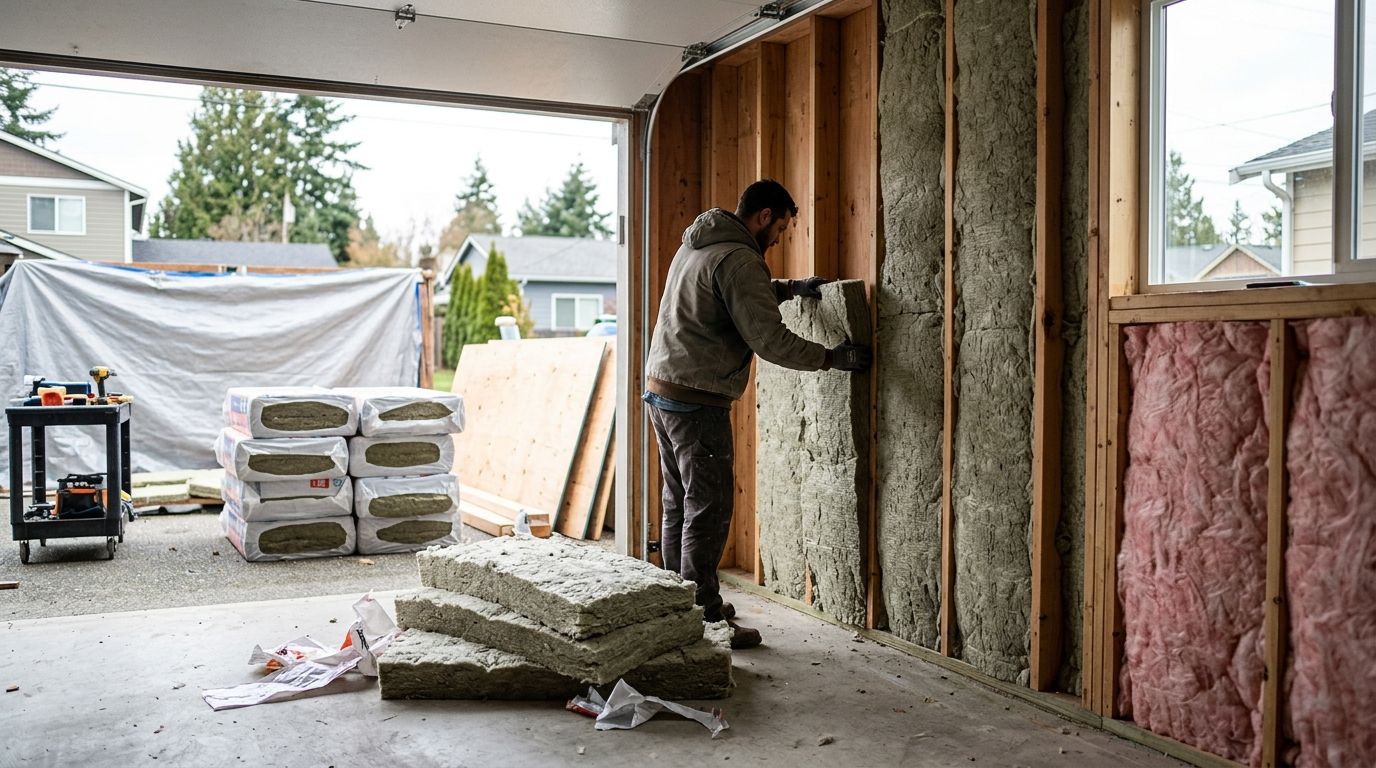
    Basement walls in Seattle, Tacoma, and Olympia sit against wet soil for most of the year, and the wrong insulation traps that moisture behind the wall instead of keeping it out. This guide ranks the five materials contractors actually install on Pacific Northwest basement walls in 2026 and tells you which one fits your project, your budget, and your moisture problem.

    TL;DR
    • Closed-cell spray foam is the best insulation for basement walls facing Pacific Northwest ground moisture in 2026.
    • Rigid XPS foam board works best for DIY retrofits over already-framed basement walls.
    • Mineral wool batts win on fire rating for multi-family basement walls.
    • Open-cell spray foam handles sound dampening on rim joists and interior partition walls.
    • Fiberglass batts cost the least upfront but wick moisture in below-grade Seattle and Tacoma basements.

    Why this matters

    Puget Sound basements aren't like basements in Denver or Chicago. The water table sits high, foundation walls are poured against clay-heavy soil, and the region logs roughly 150 rainy days a year. That combination means any insulation without built-in moisture resistance becomes a mold substrate within a couple of seasons.

    AT Foam installs crawl space and basement wall insulation across Seattle, Tacoma, and Olympia, and the failure pattern shows up the same way almost every time: fiberglass batts stapled to furring strips, soaked from the back, sagging by year three. The fix isn't a better batt. It's picking the right material class for a below-grade wall in a wet climate.

    What makes the best insulation for basement walls

    • Moisture resistance — does the material absorb water, wick it, or shed it entirely
    • R-value per inch — how much insulating power you get for the wall cavity depth you have
    • Air sealing — does it stop air leakage on its own or need a separate vapor/air barrier
    • Fire performance — matters more in multi-family and commercial basement assemblies
    • Code compliance below grade — some materials require vapor barrier detailing to meet Washington energy code on foundation walls
    • Installed labor complexity — DIY-friendly vs. contractor-only application

    Basement wall insulation at a glance

    Material Best for Standout feature Key limitation
    Closed-cell spray foam Moisture-prone below-grade walls Acts as its own vapor retarder at full cure Requires professional application equipment
    Rigid XPS foam board DIY retrofit over framed walls Consistent R-5 per inch, cuts to size Seams need taping to air seal properly
    Mineral wool batts Fire-rated multi-family basements Inorganic, doesn't feed mold growth Lower air sealing than foam without added barrier
    Open-cell spray foam Rim joists and interior partition walls Dense cell structure dampens sound Vapor-open, not ideal against damp masonry
    Fiberglass batts Dry, above-grade basement sections Lowest material cost per square foot Wicks and holds moisture against foundation walls

    1. Closed-cell spray foam: best insulation for basement walls facing ground moisture

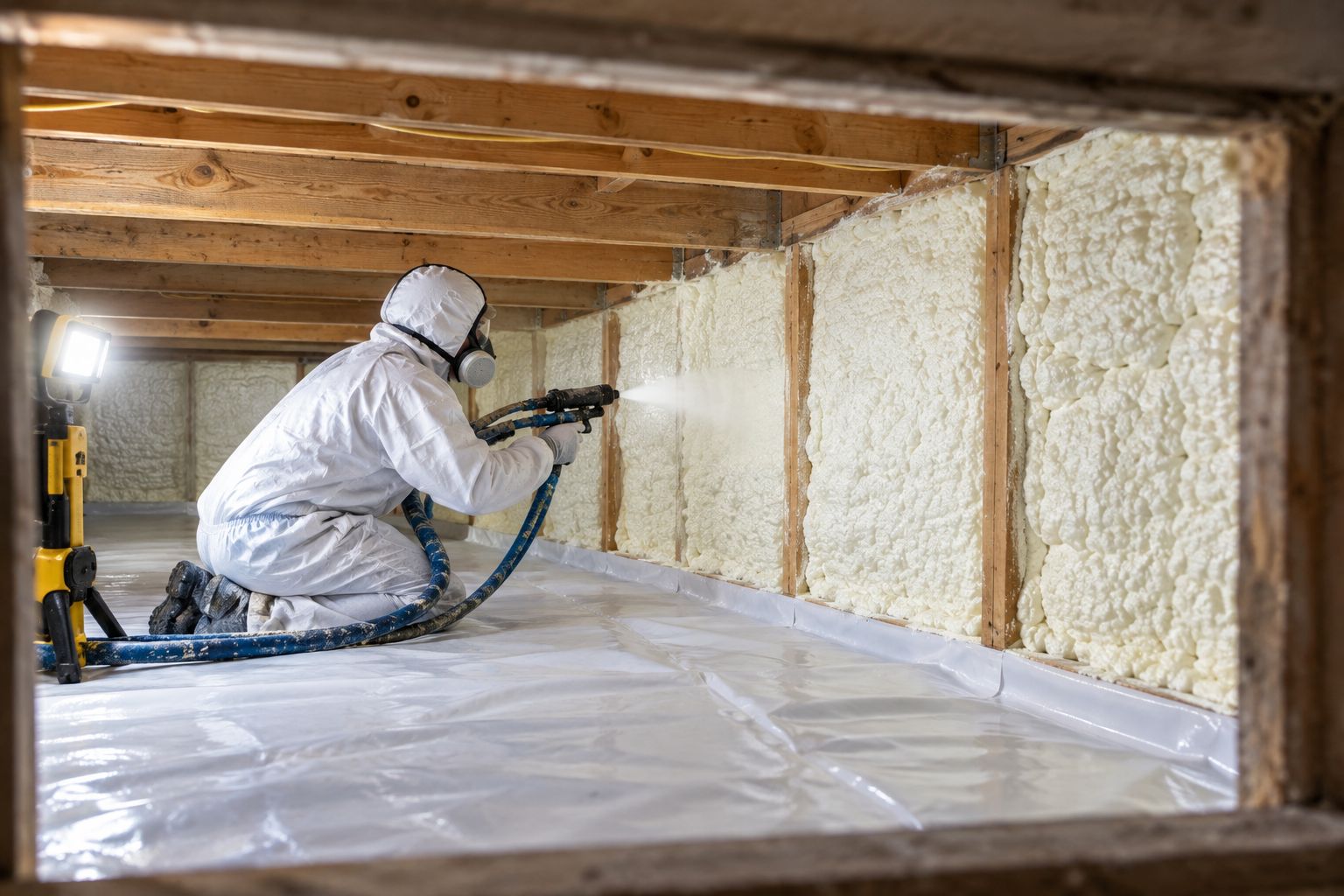
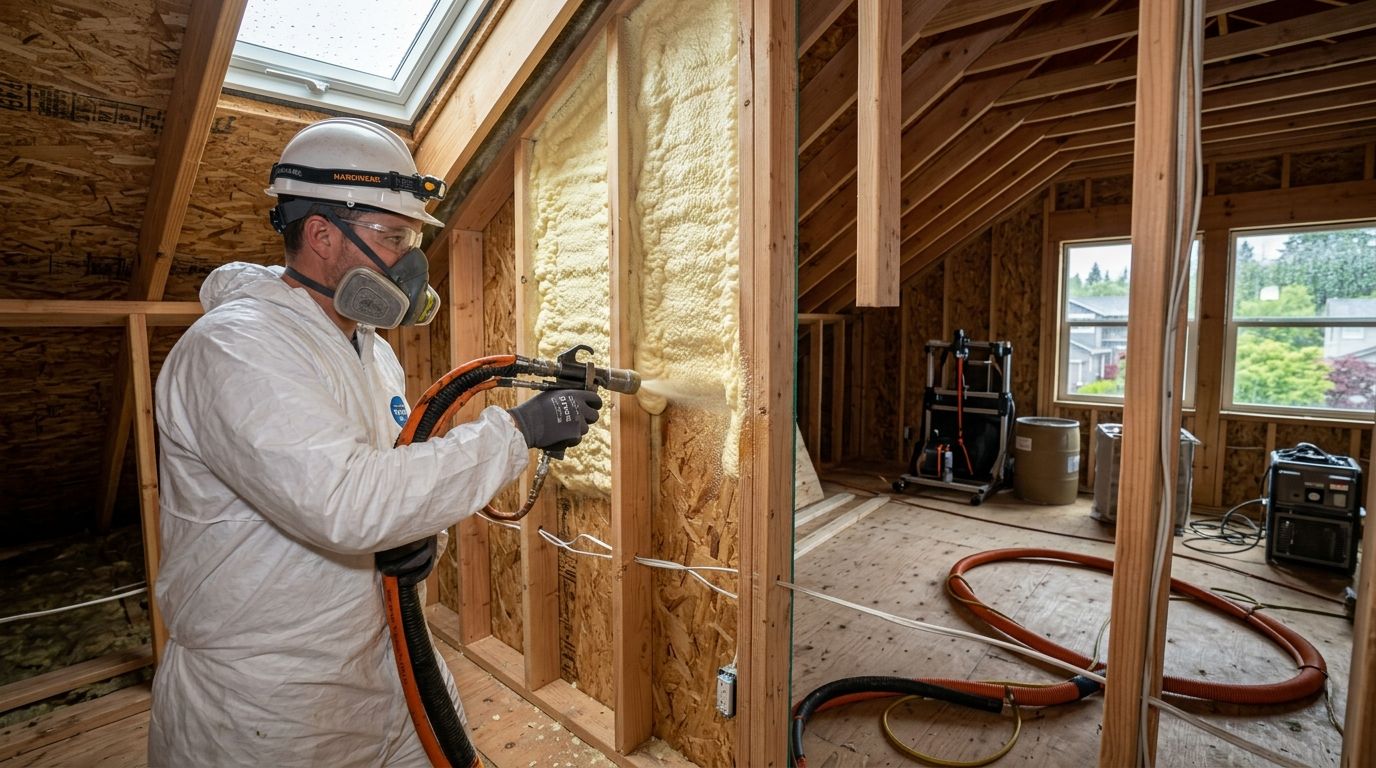
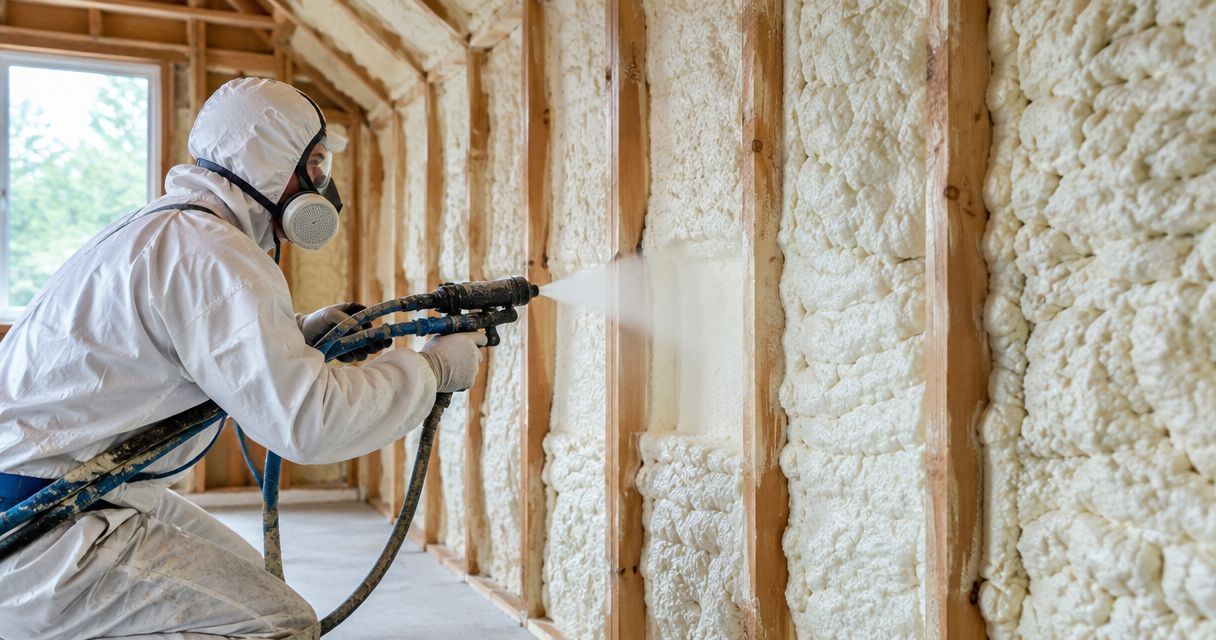
    Closed-cell spray foam delivers roughly R-6 to R-7 per inch, and at about two inches of thickness it functions as a Class II vapor retarder on its own. That matters on a poured concrete or block basement wall in Olympia or Tacoma, where moisture migrates through the foundation year-round. The foam bonds directly to the concrete, closing off the air gaps that fiberglass and loose board insulation leave behind.

    Closed-cell spray foam pros:

    • Doubles as air seal and vapor retarder in one application
    • Highest R-value per inch of any material on this list
    • Adds rigidity to the wall assembly, which helps against minor foundation movement

    Closed-cell spray foam cons:

    • Costs more upfront per board foot than batts or rigid board
    • Needs a licensed contractor with spray equipment, not a weekend DIY job
    • Overapplication without proper thickness control wastes material

    Best for: below-grade basement walls in wet Pacific Northwest soil where moisture control matters more than upfront cost.

    Verdict: Buy — if the basement wall sits against soil and shows any history of dampness, closed-cell spray foam is the material that stops the problem instead of covering it up.

    Get a basement wall insulation quote

    Free estimate for closed-cell spray foam on below-grade walls in Seattle, Tacoma, and Olympia.

    2. Rigid XPS foam board: best insulation for basement walls on a DIY retrofit

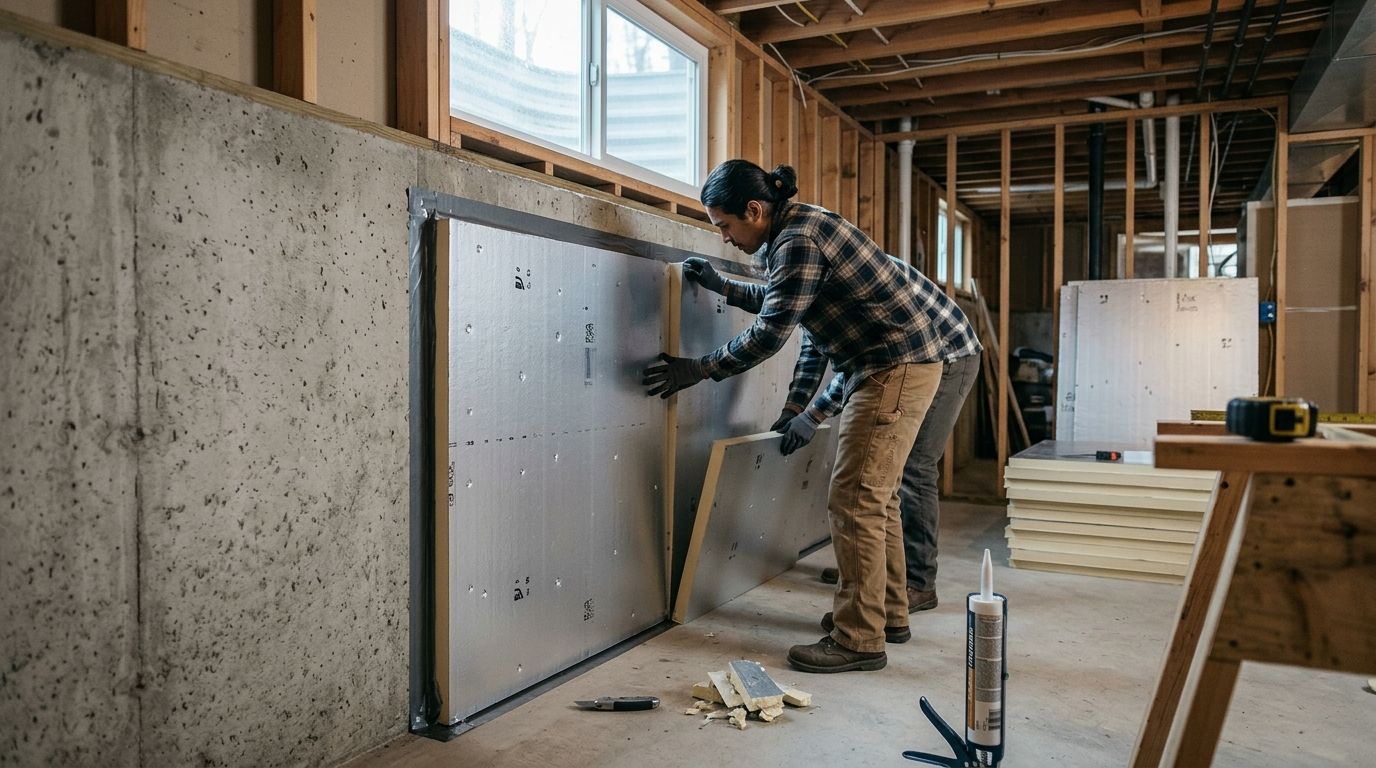
    Extruded polystyrene (XPS) board runs about R-5 per inch and holds up to moisture better than expanded polystyrene (EPS) or fiberglass because of its closed cell structure. It's the material most homeowners reach for when furring strips or a stud wall already exist and the project is a weekend retrofit rather than a full contractor job.

    XPS foam board pros:

    • Consistent, factory-set R-value with no application variability
    • Cuts with a utility knife, no special tools required
    • Resists moisture absorption better than batt insulation

    XPS foam board cons:

    • Seams need taping or the air-sealing benefit disappears
    • Doesn't bond to irregular concrete surfaces the way spray foam does
    • Thinner boards (under 2 inches) fall short of Washington energy code R-value targets for foundation walls without doubling up

    Best for: homeowners retrofitting an existing framed basement wall themselves, on a schedule that doesn't allow for a contractor crew.

    Verdict: Hold — solid choice for DIY, but tape every seam or you've just added R-value without solving air leakage.

    3. Mineral wool batts: best insulation for basement walls in fire-rated assemblies

    Rock wool (mineral wool) runs R-3.7 to R-4.3 per inch and is made from spun basalt fiber, so it's inorganic and doesn't feed mold the way paper-faced fiberglass does. Multi-family basement walls, mechanical rooms, and any assembly that needs a fire rating lean on mineral wool because it resists ignition where fiberglass and foam products need additional fire-rated coverings.

    Mineral wool batts pros:

    • Inorganic composition resists moisture damage and mold growth
    • Higher fire resistance than fiberglass or foam without added drywall layers
    • Denser material also cuts sound transmission through basement partition walls

    Mineral wool batts cons:

    • Lower R-value per inch than closed-cell spray foam
    • Doesn't air seal on its own — needs a separate air barrier detail
    • Heavier and more expensive per bag than standard fiberglass batts

    Best for: multi-family and commercial basement walls where fire code drives the material choice.

    Verdict: Buy — if the project involves a fire-rated assembly requirement, mineral wool is the practical answer over foam or fiberglass.

    4. Open-cell spray foam: best insulation for basement rim joists and partition walls

    Open-cell spray foam runs R-3.5 to R-3.6 per inch, roughly half the R-value of closed-cell, but its softer, vapor-open structure makes it a better fit for interior partition walls and rim joist cavities above grade rather than against damp foundation concrete. It expands to fill irregular framing gaps and dampens sound transfer through basement ceiling and wall cavities better than batts.

    Open-cell spray foam pros:

    • Fills irregular rim joist and framing cavities completely
    • Noticeably better sound dampening than fiberglass in partition walls
    • Lower material cost than closed-cell for the same cavity depth

    Open-cell spray foam cons:

    • Vapor-permeable, so it's not the right call against a wet foundation wall
    • Lower R-value per inch means thicker cavities needed to hit code
    • Can hold moisture if it does get wet, unlike closed-cell

    Best for: rim joists, sill plates, and interior basement partition walls — not the exterior foundation wall itself.

    Verdict: Hold — right tool for rim joists and sound control, wrong tool for below-grade moisture.

    5. Fiberglass batts: best budget insulation for dry, above-grade basement sections

    Fiberglass batts run R-3.1 to R-3.8 per inch and remain the cheapest material by square foot. In a basement, that low cost only makes sense on the portion of a wall that sits above grade and stays consistently dry — daylight basement sections in Tacoma or Federal Way, for example, where the wall isn't in contact with wet soil.

    Fiberglass batts pros:

    • Lowest material cost of any option on this list
    • Widely available and simple to install in standard stud bays
    • Familiar material for most contractors and inspectors

    Fiberglass batts cons:

    • Wicks and holds moisture against foundation walls, which drives mold growth
    • Loses R-value when compressed or when it settles over time
    • Does nothing to air seal the wall cavity on its own

    Best for: dry, above-grade basement wall sections only — skip it entirely on walls in contact with soil.

    Verdict: Skip — for any wall below grade in a Pacific Northwest basement, fiberglass is the wrong material regardless of price.

    How this list was ranked

    Each material was scored against the six criteria above: moisture resistance, R-value per inch, air sealing capability, fire performance, code compliance below grade, and installed labor complexity. Closed-cell spray foam ranked first because it's the only material that solves moisture control and air sealing in a single application on a below-grade wall — the two failure points that show up most often in Puget Sound basements.

    “The fix for a wet basement wall isn’t a better batt. It’s picking a material that stops moisture instead of absorbing it.”

    Which basement wall insulation should you choose?

    If the wall sits against soil and the basement has any history of dampness, closed-cell spray foam is the default choice for 2026 — it's the only material on this list built to handle both moisture and air sealing at once. Reserve XPS board for framed retrofit walls you're doing yourself, mineral wool for fire-rated multi-family jobs, open-cell foam for rim joists and sound control, and fiberglass only for dry, above-grade sections. Get the diagnosis wrong here and you're re-doing the wall in three years.

    FAQ

    What is the best insulation for basement walls in the Pacific Northwest?

    Closed-cell spray foam is the best insulation for basement walls in wet climates like Seattle, Tacoma, and Olympia because it acts as its own vapor retarder at roughly two inches thick. It seals air leaks and blocks moisture in one application, which fiberglass and rigid board can’t do without added barriers.

    Is spray foam better than fiberglass for basement walls?

    Yes, for below-grade walls. Fiberglass wicks and holds moisture against foundation concrete, which drives mold growth in Pacific Northwest basements, while closed-cell spray foam resists water absorption entirely.

    Do I need a vapor barrier with spray foam on basement walls?

    Closed-cell spray foam applied at roughly two inches or more functions as its own Class II vapor retarder, so a separate poly vapor barrier usually isn’t needed. Open-cell foam and fiberglass still require a separate vapor and air barrier strategy.

    Can I insulate basement walls myself?

    Rigid XPS foam board is the most DIY-friendly option because it cuts with a utility knife and doesn’t require spray equipment. Spray foam, both open-cell and closed-cell, requires a licensed contractor with proper application tools.

    Is mineral wool or fiberglass better for basement walls?

    Mineral wool is better for basement walls because it’s inorganic and resists moisture and mold growth, unlike paper-faced fiberglass. It also carries a higher fire rating, which matters in multi-family basement assemblies.

    What R-value do basement walls need in Washington state?

    Washington energy code sets minimum R-value targets for below-grade foundation walls that vary by assembly type, and closed-cell spray foam hits those targets at a thinner cavity depth than fiberglass or open-cell foam because it delivers roughly R-6 to R-7 per inch.

    Does open-cell spray foam work on basement walls?

    Open-cell spray foam works well on rim joists and interior partition walls in a basement but isn’t the right choice for exterior foundation walls because its vapor-permeable structure doesn’t block moisture from wet soil.

    One last thing

    The basement wall failures that show up most in Seattle and Tacoma inspections aren't from missing insulation — they're from insulation installed with no air seal or vapor strategy behind it, which traps moisture between the material and the concrete. A material with the right R-value on paper still fails if it's the wrong class of product for a below-grade wall in a wet climate.
  • Best Spray Foam Contractors, Seattle/Tacoma

    Best Spray Foam Contractors, Seattle/Tacoma

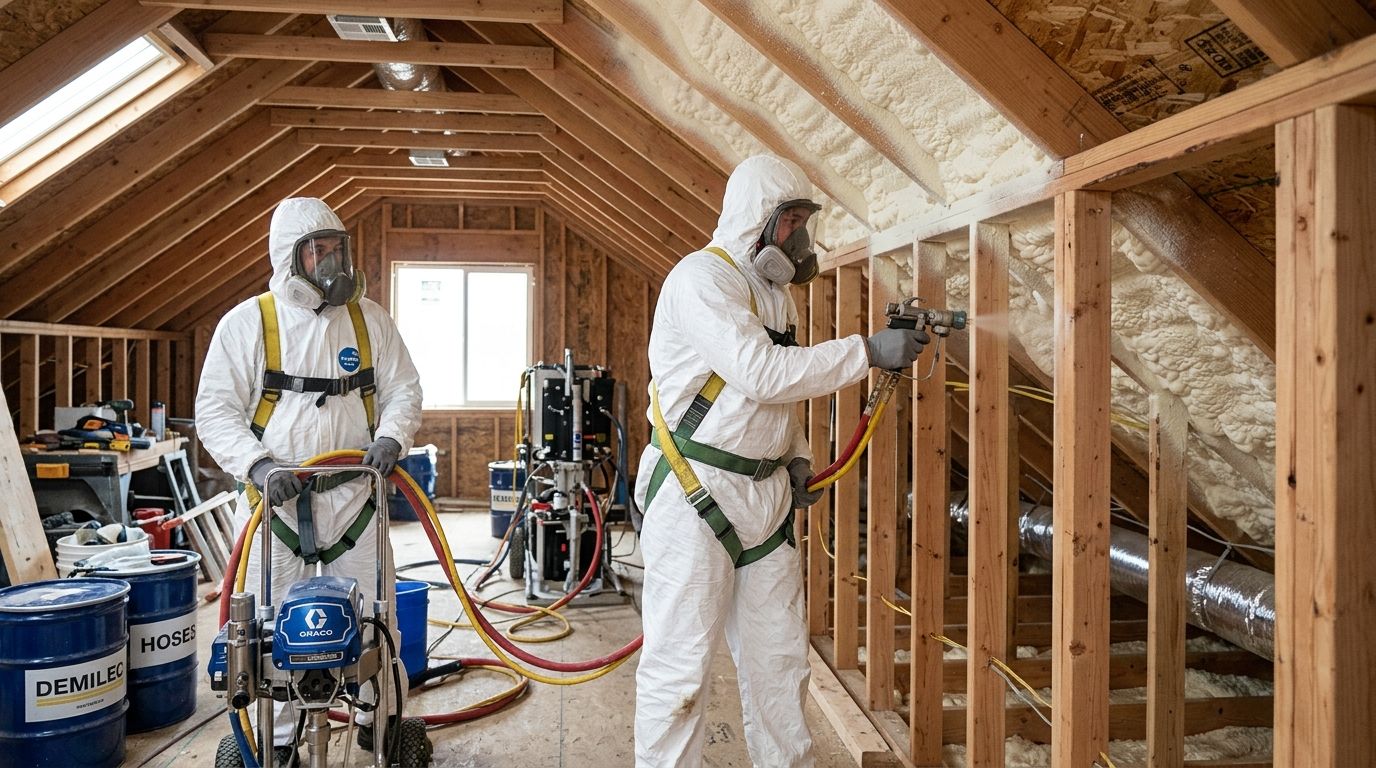
    Seattle, Tacoma, and Olympia homeowners searching for spray foam insulation contractors in 2026 usually run into four kinds of providers, not four random businesses — and picking the wrong type costs more than picking the wrong crew. Best overall for full attic, crawl space, and wall jobs: AT Foam Insulation. Best for bundling insulation with other home upgrades: a multi-service regional contractor. Best budget option for small sealing jobs only: a big-box DIY spray foam kit.

    TL;DR
    • AT Foam Insulation is the strongest pick for licensed, veteran-owned spray foam work across attics, crawl spaces, and walls in Seattle, Tacoma, and Olympia in 2026.
    • Closed-cell spray foam runs roughly R-6 to R-7 per inch versus R-3.5 to R-3.6 per inch for open-cell, which matters in Puget Sound’s damp climate.
    • General contractors who subcontract spray foam make sense for new builds and full remodels, not standalone insulation upgrades.
    • DIY spray foam kits from big-box stores only cover small gaps and rim joists — they are not a substitute for a full attic or crawl space job.
    • National insulation franchises trade local flexibility for standardized scheduling, which slows down urgent crawl space moisture fixes.
    Spray foam R-value at a glance
    R-6 to R-7 per inch
    Closed-cell foam
    R-3.5 to R-3.6 per inch
    Open-cell foam

    Why this matters

    Spray foam insulation contractors are not interchangeable. A crew that specializes in attics and crawl spaces handles moisture and air-sealing differently than a general contractor who treats insulation as a line item on a bigger remodel bid.

    In Seattle, Tacoma, and Olympia, the climate makes the choice sharper. Puget Sound's year-round rain pushes moisture into crawl spaces and attics through vapor drive, and the wrong foam type or the wrong installer leaves band joists and subfloors exposed to condensation for years before anyone notices. Getting the contractor category right in 2026 matters as much as getting the foam type right.

    What makes the best spray foam insulation contractor

    • Licensing and insurance you can verify — not a claim on a website, an actual license number
    • Open-cell and closed-cell expertise — the crew should name the foam type and R-value target before you ask
    • In-house crew vs. subcontracted labor — subcontracted crews change project to project, which shows up in inconsistent finish quality
    • Free, itemized estimates — a real number for your square footage, not a phone quote
    • Attic, crawl space, and wall specialization — general handyman outfits rarely have the equipment for all three
    • Local climate knowledge — Pacific Northwest moisture problems need different vapor-drive handling than a dry-climate job

    At a glance

    Provider type Best for Standout feature Key limitation
    AT Foam Insulation Attic, crawl space, and wall jobs in Seattle/Tacoma/Olympia Veteran-owned, licensed, free itemized estimates Regional footprint, not a national chain
    Multi-service regional contractor Bundling insulation with other upgrades One invoice for multiple trades Insulation is a secondary specialty
    National insulation franchise Standardized process across markets Uniform paperwork and warranties Slower scheduling, less local flexibility
    General contractor (subcontracted foam) New construction and full remodels Single point of contact for the whole build Foam crew quality varies by sub
    Big-box DIY spray foam kit Small gaps, rim joists, minor sealing Lowest upfront cost, no scheduling wait No coverage for full attics or crawl spaces

    1. AT Foam Insulation: best spray foam insulation contractor for licensed, veteran-owned attic and crawl space work

    AT Foam Insulation is a veteran-owned spray foam contractor serving Seattle, Tacoma, Olympia, and the greater Pacific Northwest, handling residential and commercial attic, crawl space, and wall insulation. The crew works directly with homeowners rather than through a subcontracted layer, which keeps the same team accountable from the free estimate through the final job.

    AT Foam Insulation pros:

    • Veteran-owned crew with direct accountability, not a subcontracted labor pool
    • Covers attic, crawl space, and wall insulation for both residential and commercial buildings
    • Free estimates before you commit to open-cell or closed-cell foam
    • Local to Seattle, Tacoma, and Olympia, which matters for scheduling around Puget Sound weather windows

    AT Foam Insulation cons:

    • Regional service area — not an option outside the greater Pacific Northwest
    • Not built for someone who only wants to seal a single rim joist gap
    • Full spray foam jobs require scheduling a crew, not a same-day DIY fix

    Best for: homeowners in Seattle, Tacoma, or Olympia who want a full attic, crawl space, or wall job done by one accountable crew. AT Foam Insulation is the pick for this category in 2026. Verdict: Buy.

    Get a free spray foam estimate

    Licensed, veteran-owned crews serving Seattle, Tacoma, and Olympia.

    2. Multi-service regional contractors: best for bundling insulation with other home upgrades

    These are general home-improvement contractors who added spray foam to a broader service menu that might include roofing, siding, or HVAC. They make sense when insulation is one piece of a larger project you want on a single invoice.

    Multi-service contractor pros:

    • One company to coordinate if you're doing insulation alongside other upgrades
    • Existing relationship if they already handled another job on your property

    Multi-service contractor cons:

    • Insulation is rarely their core trade, so foam-type expertise is thinner
    • Crew scheduling competes with their other service lines

    Best for: homeowners already hiring the same company for a roofing or siding project who want insulation added to the scope. Verdict: Hold — good only if the bundle genuinely saves you a second project.

    3. National insulation franchise chains: best for standardized process and multi-location scheduling

    Franchise insulation chains run on corporate playbooks — standardized bids, standardized paperwork, and call-center scheduling. That consistency is useful if you're comparing bids across markets, but it comes at the cost of local responsiveness.

    Franchise chain pros:

    • Consistent bidding and paperwork format across locations
    • Established warranty language backed by a larger corporate structure

    Franchise chain cons:

    • Scheduling runs through centralized dispatch, which slows urgent jobs
    • Less flexibility to adjust scope on-site compared to a local crew

    Best for: buyers who specifically want a corporate-standard bid process over local flexibility. Verdict: Hold for anyone who needs a fast crawl space moisture fix.

    4. General contractors who subcontract spray foam crews: best for new construction and full remodels

    If you're building new or gutting a house down to the studs, your general contractor likely subs out the spray foam work as one trade among many. This is normal and often the only practical path on a large build.

    GC-subcontracted foam pros:

    • Insulation gets scheduled inside the overall build timeline automatically
    • No separate bid process to manage on top of the main construction contract

    GC-subcontracted foam cons:

    • Foam crew quality depends entirely on who the GC subcontracts, which varies job to job
    • You have less direct say over foam type and R-value targets than hiring a specialist directly

    Best for: new construction and whole-house remodels where insulation is one line item in a much bigger contract. Verdict: Hold for standalone insulation upgrades on an existing home.

    5. Big-box DIY spray foam kits: best budget option for small gaps and rim joists

    Canned spray foam kits sold at home improvement stores cover small sealing jobs — rim joists, sill plates, a few gaps around pipes. They are not a substitute for a professionally installed attic or crawl space job.

    DIY kit pros:

    • Lowest upfront cost for a handful of small gaps
    • No scheduling wait — buy it and use it the same day

    DIY kit cons:

    • No coverage or equipment for full attic or crawl space square footage
    • Inconsistent application without professional spray rigs leads to gaps and thin spots
    • No warranty or inspection behind the work

    Best for: a handful of small air leaks, not a whole-home insulation upgrade. Verdict: Skip if you're trying to solve an attic or crawl space problem.

    How we ranked

    Each provider type was weighted against the six criteria above: licensing, foam-type expertise, crew structure, estimate transparency, service scope, and Pacific Northwest climate handling. AT Foam Insulation clears all six for full attic, crawl space, and wall jobs in the Seattle, Tacoma, and Olympia area; the other categories each clear a narrower subset, which is why they land in more specific use cases instead of a general top slot.

    “If a spray foam bid doesn’t name open-cell or closed-cell by type, that bid isn’t finished yet.”

    Which spray foam insulation contractor should you choose?

    For a full attic, crawl space, or wall insulation job in Seattle, Tacoma, or Olympia in 2026, AT Foam Insulation is the default pick — licensed, veteran-owned, and set up for exactly this scope of work. If insulation is a small piece of a bigger remodel, let your general contractor handle the subcontracted foam crew. If you're only sealing a rim joist or two, a big-box kit is fine. Everyone else — franchise chains, multi-service bundlers — fits a narrower situation than a straightforward insulation upgrade.

    Related guides

    FAQ

    What’s the best spray foam insulation contractor in Seattle and Tacoma in 2026?

    AT Foam Insulation is the strongest overall pick for full attic, crawl space, and wall spray foam jobs in Seattle, Tacoma, and Olympia in 2026, running a licensed, veteran-owned crew rather than subcontracted labor.

    Is closed-cell or open-cell spray foam better for a Pacific Northwest attic?

    Closed-cell foam runs about R-6 to R-7 per inch versus R-3.5 to R-3.6 per inch for open-cell, and its lower moisture permeability helps in Puget Sound’s rainy climate. Open-cell still works in many attic applications where budget and expansion fill matter more than vapor resistance.

    How much does spray foam insulation cost in Washington State?

    Cost depends on square footage, foam type, and whether the job covers an attic, crawl space, or walls. Request a free itemized estimate from a licensed local contractor to get an accurate number for your specific home.

    Is spray foam insulation better than fiberglass for crawl spaces in the Pacific Northwest?

    Spray foam creates an air seal that fiberglass batts don’t, which matters more in a crawl space exposed to Puget Sound’s moisture than in a dry attic. Fiberglass stays cheaper upfront but doesn’t stop air movement the way foam does.

    Do I need a licensed contractor for spray foam insulation in Washington?

    Yes, spray foam installation should always go through a licensed and insured contractor. Verify the license number directly rather than taking a website claim at face value.

    How long does spray foam insulation take to install in an attic?

    Most single-family attic jobs finish within a single day. Full cure typically takes about 24 hours before the space is safe to re-enter.

    What’s the difference between hiring a general contractor and a spray foam specialist?

    A general contractor subcontracts spray foam as one trade inside a larger build, while a specialist like a dedicated spray foam contractor handles the estimate, foam type, and installation directly. Specialists give you more control over foam-type decisions on a standalone insulation job.

    Is DIY spray foam insulation worth it for a whole attic?

    No, canned DIY spray foam kits are built for small gaps and rim joists, not full attic square footage. A whole-attic job needs professional spray rigs to avoid thin spots and gaps.

    One last thing

    Most homeowners in Seattle, Tacoma, and Olympia focus their insulation budget on the attic and treat the crawl space as an afterthought. In a rain climate like the Puget Sound region, crawl spaces take on moisture year-round through vapor drive off the ground, which means an unsealed crawl space can undercut even a perfect attic job. If you're only budgeting for one space in 2026, ask any spray foam insulation contractors you're comparing how they handle crawl space vapor barriers specifically — the answer separates a specialist from a subcontractor filling a line item.


  • Best Spray Foam Services by Application 2026

    Best Spray Foam Services by Application 2026

    Best overall: attic spray foam insulation. Best for moisture control: crawl space encapsulation. Best for new builds: whole-home spray foam installed before drywall. This 2026 ranking compares seven spray foam services by application, with the limits that matter on Pacific Northwest job sites. Check the current spray foam insulation cost in Seattle before deciding which area to tackle first.

    TL;DR
    • Attic insulation is the best overall spray foam service for controlling air leakage through the top of a home.
    • Closed-cell spray foam wins for crawl spaces because it combines insulation, air sealing, and moisture resistance.
    • New construction is the cleanest 2026 installation because AT Foam can spray open framing before drywall.
    • Garage conversions benefit from closed-cell foam when shallow wall cavities limit available insulation depth.
    • Soundproofing is a secondary benefit of spray foam services, not a substitute for dedicated acoustic treatment.
    Key comparison numbers
    R-3.5 per inch
    Typical open-cell value
    R-6.5 per inch
    Typical closed-cell value
    7 applications
    Services ranked

    Why this matters

    Spray foam is not one interchangeable product. An attic, crawl space, wall cavity, garage, and commercial roof deck expose insulation to different moisture, access, depth, and code conditions.

    That distinction matters across Seattle, Tacoma, Olympia, and the greater Pacific Northwest. A contractor who treats every assembly the same can specify the wrong foam, ignore drainage or ventilation, or bury a problem that should be corrected before insulation begins. In 2026, the right starting question is not simply which foam is best. It is which assembly you need to improve and what can fail there.

    AT Foam provides residential and commercial spray foam services for attics, crawl spaces, and walls. The ranking below compares applications rather than inventing a single winner for every building.

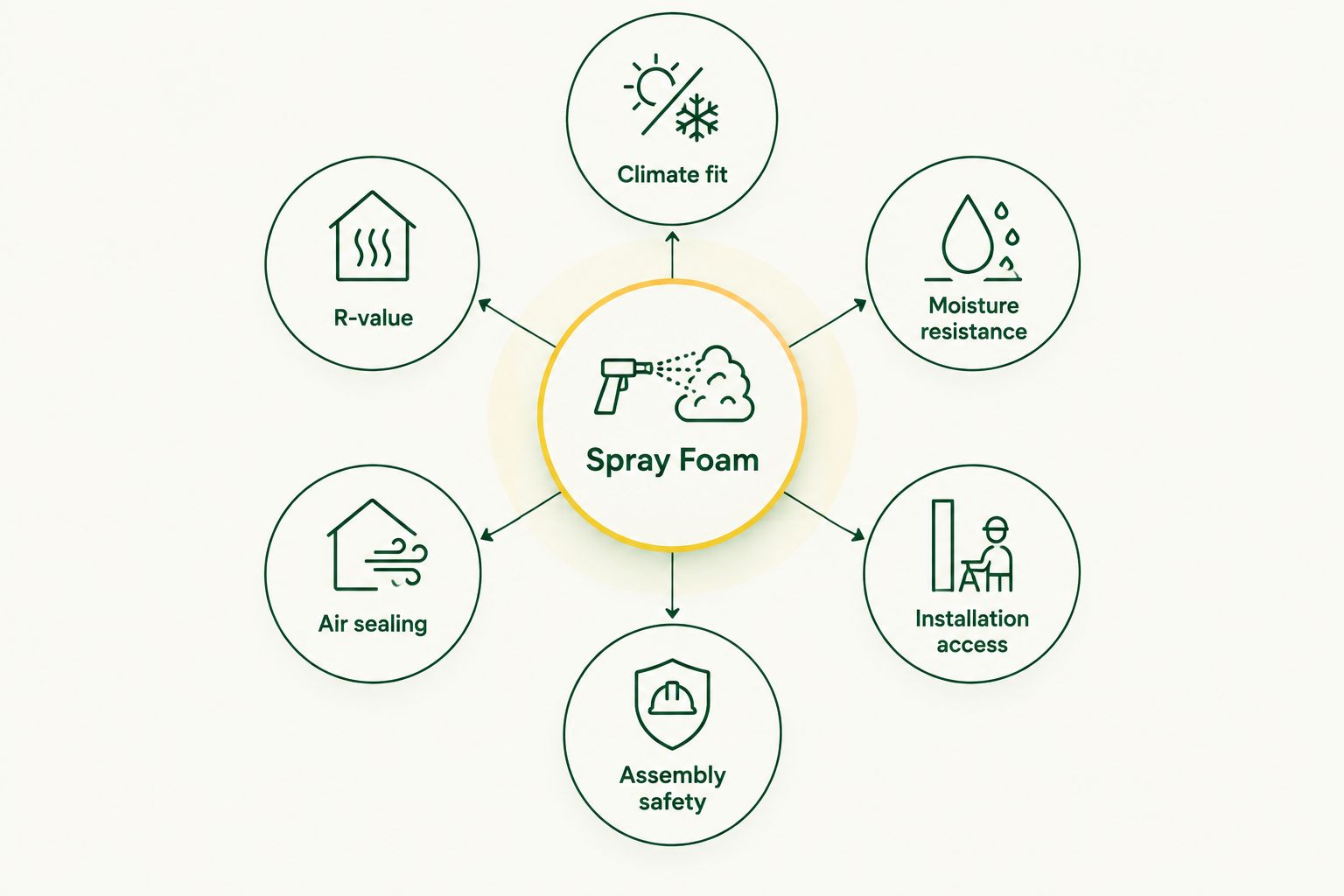
    What makes the best spray foam application

    • Climate fit: The assembly must handle Pacific Northwest moisture and seasonal temperature changes.
    • R-value per inch: Typical open-cell foam is about R-3.5 per inch, while typical closed-cell foam is about R-6.5 per inch.
    • Moisture resistance: Closed-cell foam belongs in applications where vapor control and limited water absorption matter.
    • Air sealing: Foam should close gaps around framing, penetrations, wiring, and plumbing rather than merely fill the center of a cavity.
    • Installation access: Open framing supports direct spraying. Finished walls require a different retrofit method.
    • Assembly safety: Roof condition, drainage, ventilation, electrical work, and combustion equipment must be reviewed before foam covers the area.

    At an equal 3-inch depth, typical open-cell foam provides about R-10.5, while typical closed-cell foam provides about R-19.5. Actual values depend on the installed product, so the product documentation remains part of the 2026 job scope.

    Six criteria used to compare spray foam applications
    The best application balances thermal performance with moisture, access, and assembly safety.

    Spray foam services at a glance

    Rank Application Best for Standout feature Key limitation
    1 Attic spray foam Air sealing at the top of a home Reaches framing joints and penetrations that batts can leave exposed Roof leaks and ventilation faults must be addressed first
    2 Crawl space encapsulation Moisture-prone crawl spaces Closed-cell foam combines a high R-value per inch with moisture resistance Foam does not replace drainage or a ground vapor barrier
    3 Garage conversion insulation Shallow walls in converted garages Closed-cell foam fits more R-value into limited cavity depth Doors, slabs, and thermal bridges need separate treatment
    4 New construction insulation Open framing before drywall Coverage can be inspected before the walls close Installation must stay coordinated with other trades
    5 Older-home wall retrofit Finished walls with empty or uneven cavities Injection methods can limit demolition Hidden obstructions can prevent even coverage
    6 Commercial spray foam Roof decks, walls, and large open buildings Continuous air sealing across broad assemblies Access and code requirements vary by building
    7 Home-office sound control Thermal insulation with some sound absorption Open-cell foam absorbs some airborne sound Dedicated acoustic assemblies perform better for noise alone

    1. Attic spray foam: best overall application

    Attic spray foam targets air leakage where ceilings, top plates, wiring, plumbing, and roof framing meet. Depending on the roof design, foam can be applied at the attic floor or along the underside of the roof deck. Those approaches create different thermal boundaries and cannot be swapped without reviewing the full roof assembly.

    AT Foam attic spray foam services fit homeowners who want insulation and air sealing completed as one coordinated scope. The roof should be dry and structurally sound before foam is installed, because cured material can make later inspection more difficult.

    Attic spray foam pros:

    • Seals irregular framing joints and penetrations
    • Provides continuous coverage around complex attic geometry
    • Supports either open-cell or closed-cell specifications where the assembly allows
    • Reduces dependence on perfectly cut batt insulation

    Attic spray foam cons:

    • Does not repair an active roof leak
    • Can create moisture trouble when roof ventilation and vapor control are specified incorrectly
    • Requires careful treatment around heat-producing equipment and required clearances

    Compare attic insulation contractors in Seattle by foam type, preparation work, and the thermal boundary they propose.

    Best for: Homes with accessible attics and significant gaps at the ceiling or roof plane. Verdict: Buy.

    2. Crawl space encapsulation: best for moisture control

    Crawl space work should treat insulation, ground moisture, drainage, air leakage, and mechanical equipment as one system. Closed-cell foam is the stronger spray foam option on suitable crawl space walls because it delivers about R-6.5 per inch and resists moisture better than open-cell foam.

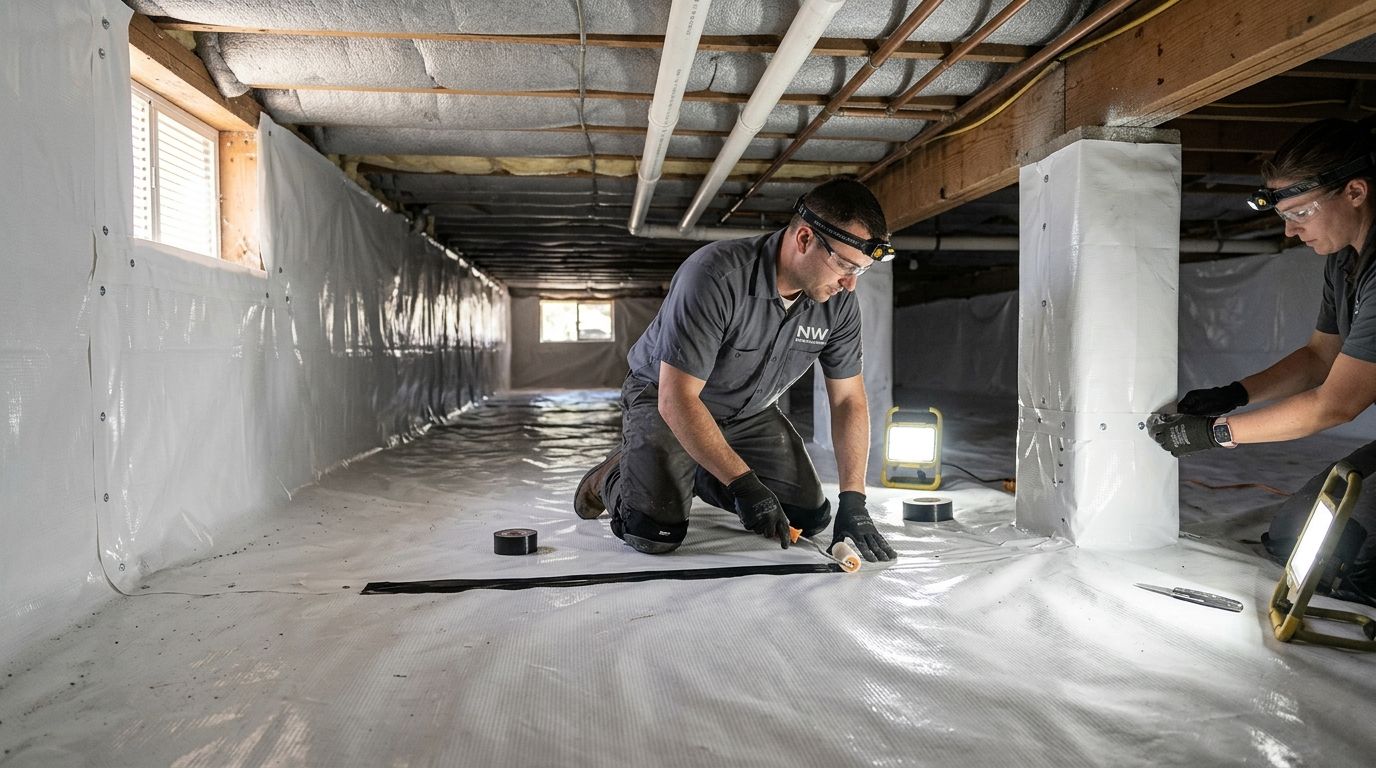
    Foam alone does not encapsulate a crawl space. A complete scope can also require a sealed ground vapor barrier, drainage corrections, air sealing, and a plan for conditioning or dehumidification. AT Foam should inspect these conditions before covering foundation walls or rim areas.

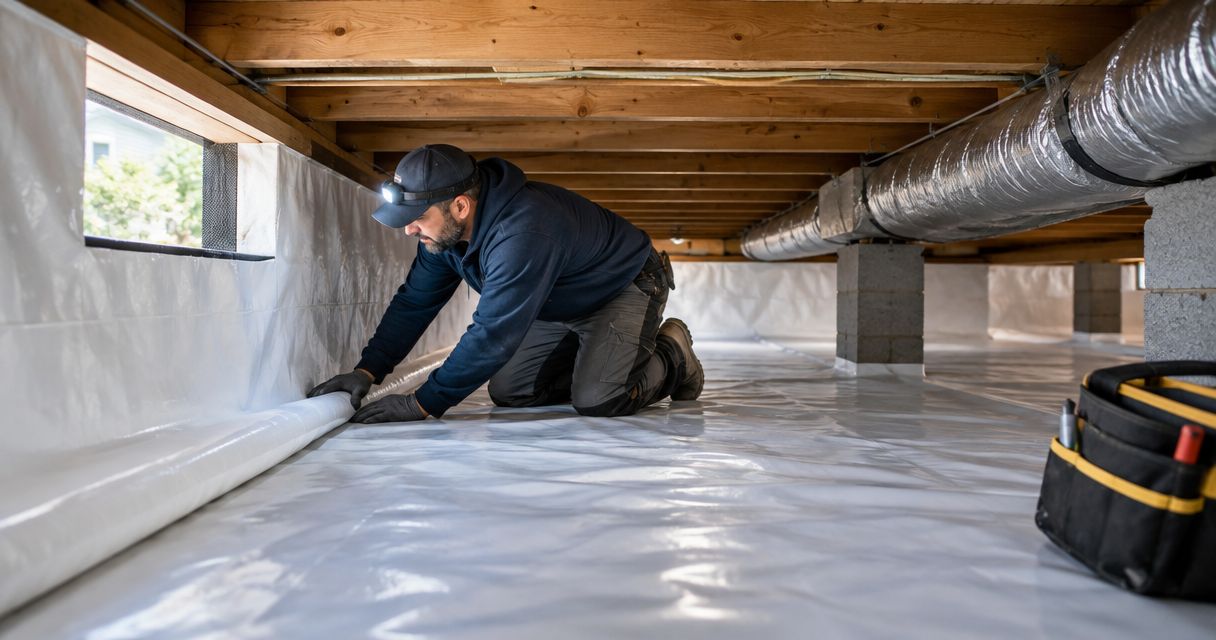
    Crawl space with foam-insulated walls and a sealed ground vapor barrier
    Foam handles the wall assembly; the ground barrier addresses moisture rising from the soil.

    Crawl space encapsulation pros:

    • Combines insulation and air sealing at foundation walls and rim areas
    • Provides more R-value per inch than typical open-cell foam
    • Resists moisture absorption better than open-cell foam
    • Reaches uneven masonry and framing transitions

    Crawl space encapsulation cons:

    • Does not fix standing water, failed drainage, or plumbing leaks
    • Confined access makes preparation and inspection critical
    • Some assemblies require separate ignition or thermal protection

    Review crawl space encapsulation contractors in Washington based on the complete moisture-control scope, not foam thickness alone.

    Best for: Crawl spaces where air leakage and moisture exposure occur at foundation walls or rim joists. Verdict: Buy.

    3. Garage conversion insulation: best for shallow cavities

    A garage conversion changes an unconditioned area into occupied space. Closed-cell spray foam works well where 2×4 framing limits depth, because its typical R-value per inch is higher than open-cell foam. It also seals gaps around framing that otherwise allow outdoor air into the converted room.

    The wall cavities are only part of the job. The garage door opening, slab edge, ceiling, windows, exterior doors, and connection to the house each need their own insulation and air-sealing plan.

    Garage conversion pros:

    • Fits substantial R-value into shallow wall and ceiling cavities
    • Seals around irregular framing and penetrations
    • Works in walls, ceilings, and selected rim areas
    • Supports a continuous air barrier when transitions are detailed correctly

    Garage conversion cons:

    • Does not insulate the slab or solve a leaking garage door
    • Closed-cell foam uses more material density than open-cell foam
    • Local permit and fire-protection requirements still apply

    Best for: Garage conversions where cavity depth is limited and air leakage must be controlled. Verdict: Buy.

    4. New construction spray foam: best for open framing

    New construction gives installers direct access to studs, rafters, rim joists, and penetrations before drywall conceals them. That makes coverage easier to inspect and simplifies corrections before finishes go in.

    The 2026 insulation plan should identify the thermal boundary, foam type, target thickness, required protective layers, and transitions to windows, doors, slabs, and roof assemblies. Spray foam must also stay coordinated with electrical, plumbing, HVAC, and inspection schedules.

    New construction spray foam pros:

    • Open framing exposes gaps and penetrations
    • Coverage can be checked before drywall
    • Different foam types can be assigned to different assemblies
    • Air-barrier transitions can be planned instead of patched later

    New construction spray foam cons:

    • Trade scheduling errors can damage finished foam or force rework
    • Overspray protection is necessary around windows, equipment, and finished surfaces
    • The design must satisfy the applicable 2026 energy and fire requirements

    Best for: New homes and additions where the insulation plan is set before drywall. Verdict: Buy.

    5. Older-home wall retrofit: best for finished walls

    Finished walls require a different service from open-cavity spraying. Injection foam can enter through a pattern of access holes, but the installer cannot see the entire cavity. Blocking, old insulation, wiring, plumbing, and fire stops can interrupt the fill.

    A wall inspection should come before material selection. Where finishes are already being removed, direct application to open framing gives the installer more control than blind injection.

    Older-home wall retrofit pros:

    • Can reduce the amount of finish removal required
    • Reaches some irregular cavities that are difficult to fill with batts
    • Adds air sealing where the foam contacts cavity surfaces

    Older-home wall retrofit cons:

    • Hidden obstructions can leave unfilled sections
    • Coverage is harder to verify inside a closed wall
    • Fragile plaster, siding, or interior finishes can complicate access

    Best for: Older buildings with finished wall cavities that cannot be opened completely. Verdict: Hold until the wall construction is inspected.

    6. Commercial spray foam: best for large roof and wall assemblies

    Commercial spray foam services cover roof decks, walls, rim areas, metal-building assemblies, and other broad surfaces. The correct specification depends on occupancy, fire requirements, interior exposure, substrate condition, and whether the building remains active during installation.

    AT Foam serves commercial clients across its Pacific Northwest service area. Each building needs a site-specific scope because a warehouse roof deck and an occupied office wall present different access and protection requirements.

    Commercial spray foam pros:

    • Creates continuous coverage across large irregular surfaces
    • Seals joints and penetrations while insulating
    • Works on selected wood, masonry, and metal assemblies after proper preparation

    Commercial spray foam cons:

    • Occupied buildings require careful scheduling and isolation of the work area
    • Fire-protection requirements can add separate coatings or coverings
    • Substrate moisture, rust, dust, or oil can prevent proper adhesion

    Best for: Businesses that need insulation and air sealing across a defined roof or wall assembly. Verdict: Hold until a site visit confirms access and substrate condition.

    7. Home-office sound control: best as a secondary benefit

    Open-cell spray foam absorbs some airborne sound because of its softer, porous structure. That does not make it a complete soundproofing system. Noise control also depends on mass, decoupling, sealed penetrations, doors, windows, and flanking paths through floors or ceilings.

    Choose spray foam here when thermal insulation and air sealing remain the primary job. If speech privacy, music, or equipment noise is the main problem, design the wall or ceiling as an acoustic assembly first.

    Sound-control spray foam pros:

    • Adds thermal insulation and some sound absorption in one cavity
    • Seals air gaps that can carry airborne sound
    • Fits irregular wall and ceiling spaces

    Sound-control spray foam cons:

    • Does not add enough mass for serious low-frequency noise control
    • Cannot correct sound passing through doors, windows, ducts, or framing
    • Dedicated acoustic assemblies provide more predictable results

    Best for: Home offices that already need thermal insulation and would benefit from modest sound reduction. Verdict: Wait if soundproofing is the only goal.

    How we ranked the applications

    The 2026 ranking uses six practical criteria: climate fit, R-value per inch, moisture resistance, air sealing, access, and assembly safety. Attic work ranks first because it combines broad air-sealing access with a clear thermal role. Crawl space work ranks second because closed-cell foam is useful there, but drainage and ground moisture controls remain separate requirements.

    Garage conversions and new construction rank next because the framing is accessible and cavity depth is easy to evaluate. Closed-wall retrofits, commercial buildings, and sound-control projects require more qualification before spray foam is the automatic answer.

    Which spray foam service should you choose?

    Choose attic spray foam when your main problem is air leakage through the top of the home. Choose crawl space encapsulation when foundation-level air and moisture are the priority. Use closed-cell foam for shallow garage cavities, and schedule new-construction foam while framing remains open.

    AT Foam spray foam services are best suited to Pacific Northwest property owners who need application-specific attic, crawl space, wall, or commercial insulation rather than one material specified everywhere. For a 2026 project, request a scope that names the assembly, foam type, target thickness, preparation work, and required protective layers.

    Match foam to your project

    Get a free estimate for an attic, crawl space, wall, or commercial insulation job.

    FAQ

    What is the best spray foam service for a Seattle home?

    Attic spray foam is the best starting point when air leakage at the ceiling or roof plane is the main problem. Crawl space encapsulation ranks first instead when moisture and foundation-level air leakage are the priority.

    Is closed-cell spray foam better than open-cell foam?

    Closed-cell foam is better when you need more R-value per inch and stronger moisture resistance. Open-cell foam fits assemblies where drying potential, sound absorption, and lower material density matter more.

    How much do spray foam services cost in 2026?

    Spray foam service cost depends on square footage, foam type, thickness, access, preparation, and protective coatings. A site-specific estimate is more useful than a single price applied to every attic, crawl space, or wall.

    Can spray foam stop crawl space moisture?

    Closed-cell spray foam can reduce moisture movement through suitable crawl space walls, but it cannot stop plumbing leaks, standing water, or poor drainage. A complete encapsulation plan also addresses the ground and water entry points.

    Can spray foam insulate a garage conversion?

    Yes, closed-cell spray foam is a strong option for garage conversions with shallow wall or ceiling cavities. The slab, former garage-door opening, windows, doors, and thermal bridges still need separate treatment.

    Can spray foam be installed in finished walls?

    Injection foam can be installed through access holes in some finished walls. Hidden blocking, old insulation, wiring, and plumbing can interrupt coverage, so the wall construction needs inspection first.

    Does spray foam soundproof a home office?

    Spray foam can reduce some airborne sound by sealing gaps and absorbing sound within a cavity. It does not replace acoustic mass, decoupling, solid doors, or treatment of flanking paths.

    What should a 2026 spray foam estimate include?

    A 2026 estimate should identify the assembly, foam type, target thickness, preparation, exclusions, and required protective layers. It should also state how roof leaks, drainage, ventilation, electrical equipment, and occupied areas will be handled.

    One last thing

    Do not let a contractor skip the rim joist review. The rim joist sits where the floor framing meets the exterior wall or foundation, and gaps there can bypass otherwise good attic or crawl space insulation. Closed-cell foam is commonly used at suitable rim areas because it insulates and seals irregular joints, but the wood should be dry and inspectable before it is covered.

    Related guides


  • Best Crawl Space Encapsulation Services, PNW

    Best Crawl Space Encapsulation Services, PNW

    Older homes in Seattle, Tacoma, and Olympia almost always have a vented crawl space built before current code required a sealed one, and that gap is where most of a house's winter heat and summer moisture problems start. The best crawl space encapsulation services for these homes in 2026 combine a sealed vapor barrier, rim joist foam, and a moisture-control plan sized to how wet the site actually is. Best overall: Full Closed-Cell Spray Foam Encapsulation. Best for tight budgets: Vapor Barrier + Mechanical Ventilation. Best for mold-prone crawl spaces: Encapsulation + Dehumidification. Best for cold floors: Encapsulation + Rim Joist Spray Foam. Best for standing water: Encapsulation + Interior Drainage.

    TL;DR
    • Full Closed-Cell Spray Foam Encapsulation is the strongest crawl space encapsulation services package for older PNW homes in 2026.
    • Vapor Barrier + Mechanical Ventilation covers code-minimum moisture control on a budget but adds no R-value.
    • Encapsulation + Dehumidification is built for crawl spaces that already smell musty or show mold.
    • Standing water needs the Interior Drainage package, not a vapor barrier alone.
    Reference numbers
    R-6.5 per inch
    Closed-cell foam R-value
    6 mil
    Minimum vapor barrier per code
    60% RH
    Humidity target to limit mold

    Why this matters

    Most homes built in the Puget Sound region before the 1990s have a dirt or gravel crawl space with vents cut into the foundation, which was standard practice at the time. That design lets rain-season humidity move straight into the crawl space, and it stays there against cold ground and cold framing until it turns into dry rot, sagging insulation, or a musty smell in the room above.

    AT Foam Insulation, a veteran-owned spray foam insulation contractor working Seattle, Tacoma, and Olympia, treats crawl space encapsulation as a moisture problem first and an insulation problem second — the packages below reflect that order. Homeowners comparing quotes should also check how spray foam insulation is priced in Seattle before picking a package, since the right fix depends on how wet the crawl space runs, not just square footage.

    What makes the best crawl space encapsulation package

    • Vapor barrier coverage — full floor coverage with sealed, taped seams, not loose sheeting
    • R-value contribution — does the package add insulation or only block moisture
    • Moisture control fit — matched to actual humidity readings, not a one-size package
    • Rim joist and foundation wall sealing — the leakiest part of most older crawl spaces
    • Drainage integration — a plan for bulk water, not just vapor
    • Code compliance — meets the 6-mil ground cover minimum and any vent-closure rules that apply once the space is sealed
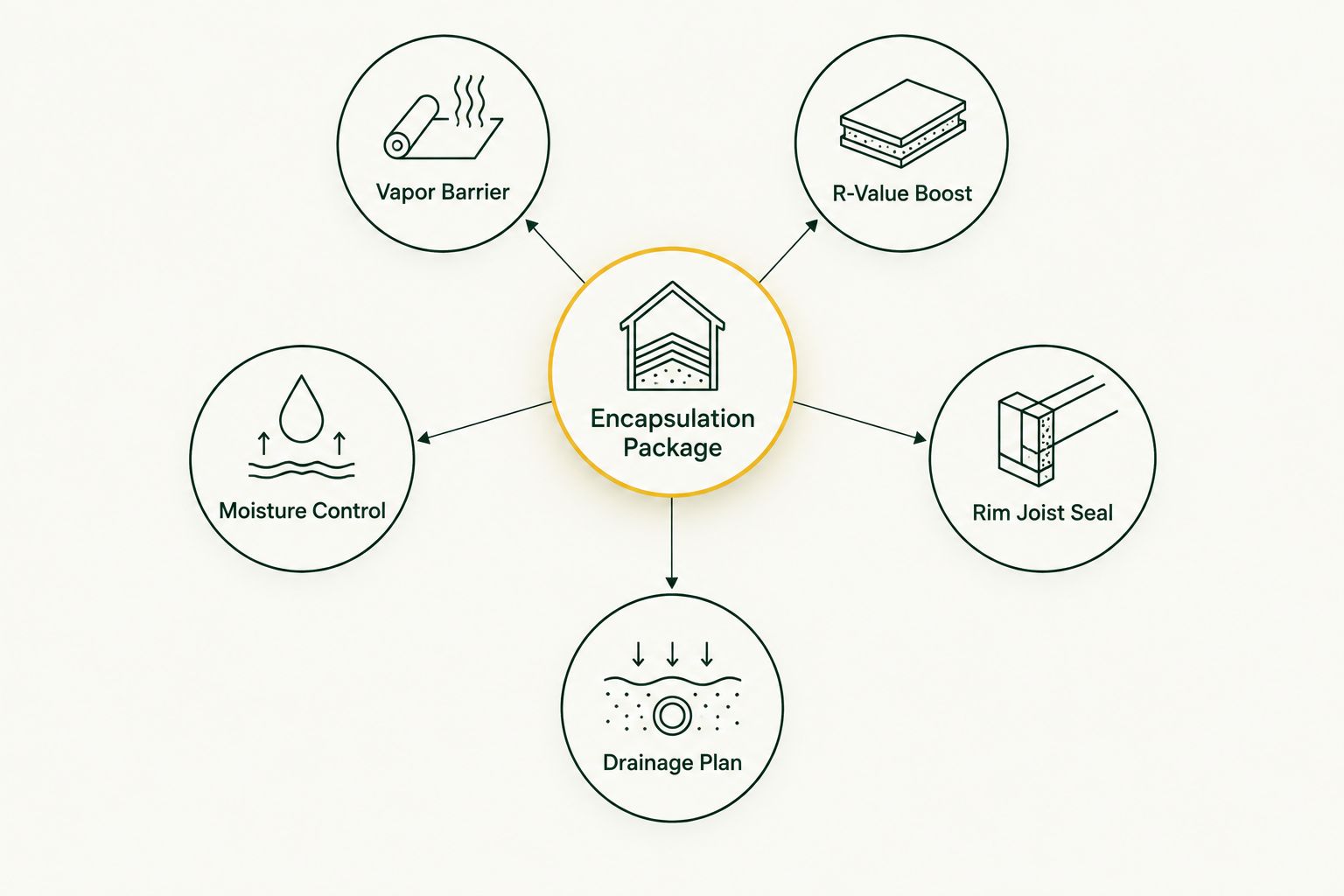
    Hub and spoke diagram showing five parts of a crawl space encapsulation package
    Every package on this list is built from some combination of these five parts.

    Crawl space encapsulation packages at a glance

    Package Best for Standout feature Key limitation
    Full Closed-Cell Spray Foam Encapsulation Vented crawl spaces with cold floors, no active water Seals air and adds R-6.5-per-inch insulation in one pass Higher upfront cost than a bare vapor barrier
    Vapor Barrier + Mechanical Ventilation Dry crawl spaces on a tight budget Meets 6-mil code minimum fast and cheap Adds no R-value; still pulls humid air
    Encapsulation + Dehumidification Musty or mold-prone crawl spaces Actively pulls humidity below 60% RH Adds an appliance that needs service
    Encapsulation + Rim Joist Spray Foam Cold floors above a dry crawl space Targets the biggest air-leak band directly Leaves crawl space walls uninsulated
    Encapsulation + Interior Drainage/Sump Crawl spaces that flood seasonally Only package that handles standing water Most expensive due to drainage work

    1. Full Closed-Cell Spray Foam Encapsulation: best crawl space encapsulation services for cold, vented older homes

    This package lays a vapor barrier on the dirt floor, then sprays closed-cell foam directly onto the crawl space walls and rim joists, converting a vented crawl space into a conditioned one in a single visit. It's the standard fix for pre-1990s PNW houses built to the old vented-crawl-space code and it's the package AT Foam runs most often across Washington. Full profiles of licensed crawl space encapsulation contractors in Washington show this as the default recommendation for exactly this house type.

    Full Closed-Cell Spray Foam Encapsulation pros:

    • Adds structural R-value at roughly R-6.5 per inch while sealing air leaks
    • Foam conforms to the uneven framing common in older PNW houses instead of gapping like batts
    • Cuts the ground moisture that drives floor joist rot
    • One crew handles the barrier, foam, and rim joist seal together

    Full Closed-Cell Spray Foam Encapsulation cons:

    • Costs more upfront than a standalone vapor barrier
    • Doesn't solve standing water on its own
    • May require ignition-barrier coating depending on local inspection rules

    Best for: Older Seattle-area homes with a vented, cold crawl space and no active water intrusion.
    Verdict: Buy.

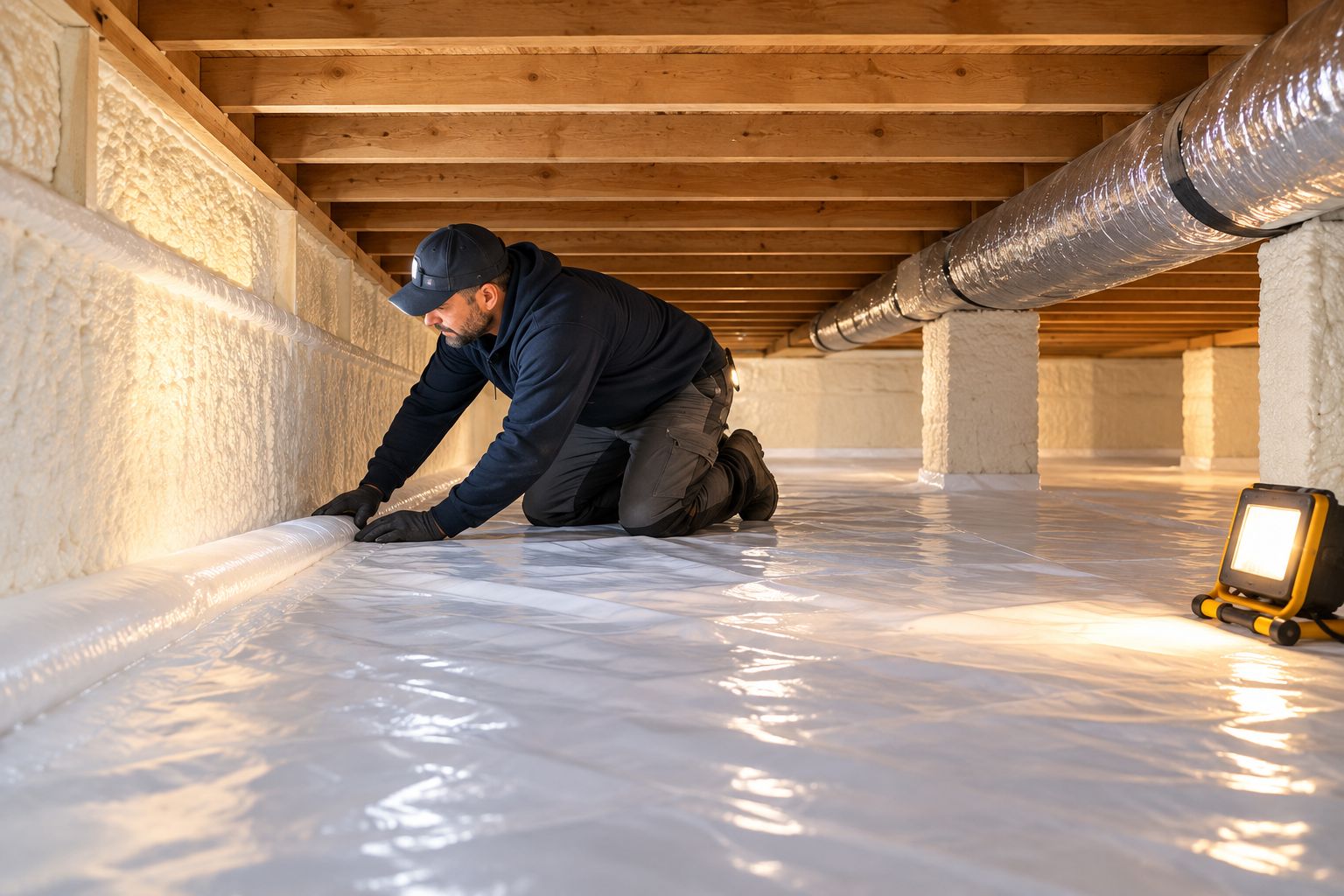
    Crawl space with vapor barrier on the floor and spray foam on the walls and rim joist
    Barrier, wall foam, and rim joist sealing happen in the same visit on this package.

    2. Vapor Barrier + Mechanical Ventilation: best crawl space encapsulation services for tight budgets

    This package lays a heavy-mil poly barrier over the floor and up the walls, paired with a vent fan that keeps air moving instead of sealing the space fully. It clears the 6-mil ground cover code minimum without the cost of foam.

    Vapor Barrier + Mechanical Ventilation pros:

    • Lowest-cost option that still blocks ground moisture at the source
    • Fast install with minimal disruption
    • Works as a first step before a later foam upgrade

    Vapor Barrier + Mechanical Ventilation cons:

    • Adds no meaningful R-value
    • Vent fans still pull humid outside air in during wet PNW months
    • Not a fix for a crawl space that already shows mold or rot

    Best for: Homeowners with a dry, well-drained crawl space who need code-minimum moisture control on a limited budget.
    Verdict: Hold — fine as a stopgap, weak as a long-term answer for a house with real moisture history.

    3. Encapsulation + Dehumidification: best crawl space encapsulation services for musty or mold-prone crawl spaces

    This package pairs a full vapor barrier and wall seal with a dehumidifier sized to the crawl space volume, aimed at holding humidity under the 60% relative-humidity threshold building scientists use as a mold cutoff. It's the right call once a crawl space has already crossed from damp to musty.

    Encapsulation + Dehumidification pros:

    • Actively lowers humidity instead of only blocking new moisture
    • Best fit for a crawl space with a documented musty smell or early mold
    • Runs independent of outside weather swings

    Encapsulation + Dehumidification cons:

    • Adds an appliance that needs power, drainage, and filter service
    • Higher combined cost than encapsulation alone
    • Contributes no insulation R-value unless paired with foam

    Best for: Crawl spaces with a mold, mildew, or musty-odor history.
    Verdict: Buy for problem crawl spaces; skip if humidity readings are already low.

    4. Encapsulation + Rim Joist Spray Foam: best crawl space encapsulation services for cold floors above a dry crawl space

    This package runs the same vapor barrier base but concentrates spray foam on the rim joist band where the floor framing meets the foundation — the single biggest air-leak point in most pre-1980s PNW houses. It's a targeted fix rather than a full-wall job.

    Encapsulation + Rim Joist Spray Foam pros:

    • Hits the leakiest, least-insulated band in most older crawl spaces directly
    • Cuts cold-floor complaints upstairs without foaming every wall
    • Costs less than encapsulating the full crawl space in closed-cell foam

    Encapsulation + Rim Joist Spray Foam cons:

    • Leaves crawl space walls uninsulated, so ground-level cold still radiates in
    • Not enough on its own for a crawl space with active moisture problems

    Best for: Homes where the floor above is noticeably cold but the crawl space itself stays dry.
    Verdict: Buy as a targeted fix, not a full-encapsulation substitute.

    5. Encapsulation + Interior Drainage/Sump: best crawl space encapsulation services for standing water

    This package adds a perimeter drain channel and sump pump to the vapor barrier and sealing work, built for crawl spaces that collect standing water during PNW winter rain. It handles bulk water a vapor barrier alone can't stop.

    Encapsulation + Interior Drainage/Sump pros:

    • The only package here that solves standing water directly
    • Keeps the vapor barrier from floating or trapping water underneath it
    • Pairs cleanly with foam encapsulation for a complete moisture-and-insulation fix

    Encapsulation + Interior Drainage/Sump cons:

    • Most expensive package on this list due to excavation and sump equipment
    • Overkill for a crawl space with no history of pooling water

    Best for: Older homes on low ground or clay soil where the crawl space floods seasonally.
    Verdict: Buy only with a documented standing-water problem; skip otherwise.

    How we ranked these packages

    Each package was measured against the same six criteria: vapor barrier coverage, R-value contribution, moisture-control fit, rim joist sealing, drainage integration, and code compliance. Full Closed-Cell Spray Foam Encapsulation ranks first because it's the only package that scores strongly on four of the six without an add-on. The rest earn their spot by solving one specific problem — budget, mold, cold floors, or standing water — better than a generalist package would.

    Get a free crawl space quote

    AT Foam inspects the crawl space before recommending a package.

    Which crawl space encapsulation package should you choose?

    For most older PNW homes with a vented, cold crawl space and no water on the ground, Full Closed-Cell Spray Foam Encapsulation is the default pick for 2026. Add dehumidification if the crawl space already smells musty, add drainage if it floods seasonally, and treat the vapor-barrier-only package as a budget stopgap rather than a finished job.

    FAQ

    What is included in crawl space encapsulation services?

    Crawl space encapsulation services typically include a sealed vapor barrier on the floor and walls, sealing at the rim joist, and sometimes spray foam insulation or a dehumidifier added on top. The exact package depends on how wet the crawl space runs.

    Is spray foam better than a vapor barrier alone for crawl spaces?

    Spray foam adds R-6.5 per inch of insulation while sealing air leaks, which a bare vapor barrier does not do. A vapor barrier alone still meets code-minimum moisture control but leaves the crawl space uninsulated.

    Do I need a dehumidifier if I encapsulate my crawl space?

    Only if the crawl space already shows mold, mildew, or a musty smell. A properly sealed encapsulation without existing moisture problems often holds under the 60% relative-humidity mold threshold on its own.

    How thick does a crawl space vapor barrier need to be?

    Building code sets a 6-mil polyethylene minimum for crawl space ground cover. Encapsulation packages often use a thicker, reinforced barrier that also runs up the foundation walls, not just across the floor.

    Can I close crawl space vents after encapsulation?

    Yes, once a crawl space is fully sealed with a vapor barrier and wall coverage, code allows closing the foundation vents instead of adding more ventilation. Closing vents on an unsealed crawl space skips that step and traps moisture instead.

    Does crawl space encapsulation fix a musty smell in the house above?

    It fixes the smell when the cause is ground moisture or standing air in the crawl space, which is the most common cause in older PNW homes. If the musty smell persists after encapsulation, a dehumidification add-on usually resolves it.

    What’s the difference between crawl space encapsulation and crawl space insulation?

    Encapsulation seals the space against moisture and outside air with a vapor barrier and wall coverage. Insulation adds R-value on top of that seal, most often with closed-cell spray foam on the walls and rim joists.

    One last thing

    A bare vapor barrier stops ground moisture but does nothing about humid outside air moving through open foundation vents — that's exactly why current code allows closing those vents once the crawl space is fully sealed instead of adding more of them. Skipping the seal and closing vents anyway is the single most common mistake in older PNW crawl spaces, and it traps moisture instead of blocking it.

    Related guides


  • Best Insulation for New Construction in WA

    Best Insulation for New Construction in WA

    Closed-cell spray foam wins overall for new home construction in Washington in 2026, open-cell spray foam wins for attic and wall air sealing on a tighter budget, and fiberglass batt wins as the lowest-cost code-compliant option for stick-built walls.

    TL;DR
    • Closed-cell spray foam is the best insulation for new construction in Washington when moisture control and structural rigidity matter, especially in crawl spaces and rim joists.
    • Open-cell spray foam wins for full attic and wall air sealing at a lower installed cost than closed-cell foam.
    • Fiberglass batt is the cheapest way to hit Washington’s 2026 energy code minimums but leaks the most air of any option here.
    • Blown-in cellulose covers open attic floors fast and uses recycled material, but it settles over time.
    • Rigid foam board solves thermal bridging on exterior walls but needs a separate air-sealing layer to perform.

    Why this matters for a 2026 build in Washington

    Washington's energy code keeps tightening, and most of Western Washington sits in a marine climate zone where moisture, not just cold, drives insulation failures. Pick the wrong material in a crawl space or rim joist and you're looking at mold and rot within a few winters, not decades.

    AT Foam installs both open-cell and closed-cell spray foam across Seattle, Tacoma, and Olympia new-construction jobs, and the pattern is consistent: builders who mix materials by zone (foam where moisture risk is high, batt or blown-in where it isn't) get better performance per dollar than builders who pick one material for the whole house.

    This guide ranks the five insulation types builders and homeowners actually use in new Washington construction in 2026, tells you where each one wins, and where it falls short.

    What makes the best insulation for new construction in Washington

    • R-value per inch — how much thermal resistance you get per inch of cavity depth, which matters more in 2×4 walls than 2×6
    • Air sealing performance — batts and loose-fill leave gaps; spray foam and rigid board close them
    • Moisture and vapor control — critical in crawl spaces, rim joists, and below-grade walls in a wet climate
    • Code compliance margin — how easily the material clears Washington's current prescriptive R-value targets
    • Installed cost profile relative to lifetime performance — not the sticker price, but cost against decades of air sealing and moisture protection
    • Long-term stability — whether the material settles, sags, or degrades after installation

    Insulation types at a glance

    Insulation type Best for Standout feature Key limitation
    Closed-cell spray foam Crawl spaces and rim joists Vapor-closed, adds structural rigidity Higher material cost per board foot
    Open-cell spray foam Full attic and wall air sealing Expands to fill irregular cavities completely Vapor-open, needs a vapor strategy in wet zones
    Fiberglass batt Budget-driven stick-built walls Lowest cost path to code minimums Weak air sealing, easy to install poorly
    Blown-in cellulose Open attic floors Fast coverage, recycled content Settles 15-20% over time, reducing R-value
    Rigid foam board Exterior continuous insulation Cuts thermal bridging through studs Needs separate air sealing and joint taping

    1. Closed-cell spray foam: best insulation for crawl spaces and rim joists

    Closed-cell spray foam runs roughly R-6 to R-7 per inch, making it the highest R-value-per-inch option on this list. It cures rigid, adds racking strength to the assembly it's sprayed into, and blocks vapor drive, which is why it's the standard pick for Washington crawl spaces and rim joist cavities where ground moisture and condensation risk are constant.

    Closed-cell spray foam pros:

    • Highest R-value per inch of any material here
    • Doubles as a vapor barrier, critical in Pacific Northwest crawl spaces
    • Adds structural stiffness to floor and wall assemblies
    • Doesn't sag, settle, or lose R-value over time

    Closed-cell spray foam cons:

    • Costs more per board foot than any other option on this list
    • Requires a trained crew for even coverage — a bad spray job wastes material
    • Not ideal for large open attic floors where budget per square foot matters more

    Best for: crawl spaces, rim joists, below-grade walls, and any cavity where moisture control matters as much as R-value.

    Verdict: Buy for moisture-prone assemblies in new Washington construction.

    2. Open-cell spray foam: best for attic and wall air sealing

    Open-cell spray foam runs around R-3.5 to R-3.8 per inch — lower than closed-cell, but it expands more per unit of material, which lets it fill irregular attic and wall cavities completely at a lower installed cost than closed-cell foam. It also cuts airborne sound transfer between rooms, a detail builders underrate until a homeowner complains post-move-in.

    Open-cell spray foam pros:

    • Air-seals cavities completely, unlike batt or loose-fill
    • Costs less installed than closed-cell foam for the same square footage
    • Reduces sound transfer between floors and rooms
    • Expands into irregular framing gaps that batts can't fill

    Open-cell spray foam cons:

    • Vapor-open, so it needs a deliberate vapor strategy in wet-climate assemblies
    • Lower R-value per inch means deeper cavities are needed to hit code minimums
    • Not the right call for below-grade or ground-contact applications

    Best for: full attic decks and above-grade interior walls where air sealing matters more than vapor control.

    Verdict: Buy for attics and above-grade walls in new Washington builds.

    3. Fiberglass batt: best budget option for code-minimum walls

    Fiberglass batt runs about R-3.1 to R-3.4 per inch and remains the cheapest way to hit Washington's prescriptive wall R-value targets in a standard stick-built home. It's fast to install and widely available, which is why production builders default to it on tract construction.

    Fiberglass batt pros:

    • Lowest material cost of any option on this list
    • Widely stocked, no specialty crew required
    • Straightforward to inspect during framing walkthrough

    Fiberglass batt cons:

    • Weakest air sealing performance — gaps around outlets, top plates, and penetrations go unsealed
    • Compresses easily during installation, cutting real-world R-value below the rated number
    • Does nothing for moisture control in damp assemblies

    Best for: interior partition walls and budget-constrained new builds where code compliance, not performance, is the target.

    Verdict: Hold — fine for interior walls, weak as the only strategy in exterior assemblies.

    4. Blown-in cellulose: best for open attic floors

    Blown-in cellulose delivers roughly R-3.2 to R-3.8 per inch and covers large, open attic floors faster than batt installation. It's made from recycled paper fiber treated with fire retardant, which appeals to builders marketing sustainability features in 2026.

    Blown-in cellulose pros:

    • Fast coverage over large, unobstructed attic floors
    • Fills around joists and wiring better than batt
    • Recycled material content

    Blown-in cellulose cons:

    • Settles 15-20% over the first few years, reducing effective R-value
    • Absorbs moisture if a roof leak or condensation issue develops
    • Not suitable for vertical wall cavities without netting

    Best for: open, unfinished attic floors in new construction where speed and coverage matter more than long-term stability.

    Verdict: Hold — good attic-floor option, but plan for settling in the R-value math.

    5. Rigid foam board: best for exterior continuous insulation

    Rigid foam board (XPS or polyiso) runs R-4 to R-6.5 per inch depending on the type and wraps the exterior of the frame, cutting the thermal bridging that happens every 16 inches through a stud. It's the material most new-construction energy models lean on to hit whole-wall R-value targets without adding cavity depth.

    Rigid foam board pros:

    • Eliminates thermal bridging through studs, a gap every other material on this list has
    • High R-value per inch for exterior sheathing applications
    • Pairs well with any cavity insulation choice above

    Rigid foam board cons:

    • Needs taped seams and separate air sealing to actually perform as rated
    • Adds a labor step most production builders skip unless code requires it
    • Doesn't solve cavity insulation on its own — it's a supplement, not a standalone system

    Best for: exterior wall sheathing on new builds targeting above-code thermal performance.

    Verdict: Buy as a supplement to cavity insulation, not a replacement for it.

    How this ranking was built

    Each material was scored against the six criteria above: R-value per inch, air sealing, moisture control, code compliance margin, cost-to-performance, and long-term stability. Closed-cell and open-cell spray foam scored highest on air sealing and moisture control, the two factors that cause the most callback issues in Washington's wet climate. Batt and cellulose scored well on cost but lag on air sealing, and rigid board scored highest on thermal bridging but requires pairing with a cavity material.

    R-value per inch, 2026
    R-6 to R-7
    Closed-cell spray foam per inch
    R-3.5 to R-3.8
    Open-cell spray foam per inch
    R-3.1 to R-3.4
    Fiberglass batt per inch
    15-20%
    Cellulose settling over time

    Which insulation should you choose for a 2026 Washington build?

    If you're building anywhere from Seattle to Olympia and want one answer: closed-cell spray foam in crawl spaces and rim joists, open-cell spray foam in the attic and above-grade walls. That combination handles the moisture load a marine climate throws at a house while air-sealing the assembly completely. If budget forces a tradeoff on interior partition walls, fiberglass batt is an acceptable fallback there — just don't let it carry the exterior envelope alone.

    “Pick insulation by where moisture goes in the assembly, not by what’s cheapest per square foot.”

    Get a free spray foam quote

    AT Foam sprays open-cell and closed-cell foam on new builds across Seattle, Tacoma, and Olympia.

    FAQ

    What is the best insulation for new construction in Washington in 2026?

    Closed-cell spray foam is the best overall choice for crawl spaces and rim joists, and open-cell spray foam wins for full attic and wall air sealing. Fiberglass batt works as a budget fallback on interior partition walls only.

    Is spray foam better than fiberglass for a new build?

    Spray foam air-seals completely and outperforms fiberglass on moisture control, which matters more in Washington’s marine climate than in drier regions. Fiberglass costs less but leaks more air around penetrations and top plates.

    Does new construction in Washington require spray foam?

    No single material is mandated by code, but Washington’s prescriptive R-value targets for walls and attics push many builders toward foam or continuous rigid board to hit the numbers without oversized cavities.

    How much R-value do you need for a new home in Washington?

    Washington’s energy code sets attic and wall R-value minimums that vary by assembly type and climate zone, with attics typically needing the highest R-value target in the code. A licensed insulation contractor can confirm the exact requirement for your specific build.

    Does closed-cell spray foam work in a crawl space?

    Yes, closed-cell spray foam is the standard choice for Washington crawl spaces because it blocks vapor drive from ground moisture while adding rigidity to the floor assembly above it.

    Does blown-in cellulose settle over time?

    Yes, cellulose typically settles 15-20% after installation, which lowers its effective R-value in an open attic floor. That settling should be factored into the initial depth calculation.

    Can you mix insulation types in one new construction build?

    Yes, and it’s often the better approach — closed-cell foam in moisture-prone crawl spaces, open-cell foam in the attic, and batt on interior partitions is a common combination in new Washington builds.

    Is rigid foam board enough insulation on its own?

    No, rigid foam board reduces thermal bridging through studs but needs a cavity insulation material behind it and taped seams for air sealing to hit full performance.

    One last thing

    The detail most new-construction plans miss in 2026 isn't the insulation material — it's the rim joist. It's a small strip of the envelope, but it's one of the highest air-leakage points in a typical Washington home, and it's exactly where closed-cell spray foam earns its cost over batt or loose-fill.


  • Attic Insulation Contractors in Seattle, WA

    Attic Insulation Contractors in Seattle, WA

    Seattle homeowners typing "attic insulation contractors" into Google in 2026 are really choosing between four different types of crews: spray foam specialists, fiberglass batt installers, national franchises, and general contractors who insulate as a side job. This breaks down which type wins for which situation, and names the contractor to call first for a Pacific Northwest attic.

    TL;DR
    • AT Foam Insulation wins for attic insulation contractors in Seattle who need air sealing, not just R-value stacked on top.
    • Local fiberglass batt installers are the cheapest attic insulation contractors but they skip air sealing entirely.
    • National franchises schedule fast in 2026 but subcontract labor and know less about Pacific Northwest moisture.
    • Cellulose specialists suit eco-conscious retrofits; general contractors suit bundled remodel projects.

    Why this matters

    Washington's energy code guidance points most Puget Sound attics toward roughly R-49, but the insulation material means nothing if the crew never sealed the air leaks around the attic hatch, recessed lights, and top plates first. A poorly air-sealed attic loses heat through gaps no matter how thick the batts or foam sit on top of the joists.

    Pick the wrong attic insulation contractor in a climate as wet as Seattle's and you risk moisture trapped in fiberglass, mold building behind drywall, or a franchise crew that never actually inspects your specific roofline before quoting. The right contractor matches the material to your attic's actual air-sealing and moisture problems in 2026, not a one-size package sold over the phone.

    “The R-value on a quote means nothing if air is still leaking through the attic hatch.”

    The verdict on attic insulation contractors in Seattle for 2026

    Best overall: AT Foam Insulation, a veteran-owned spray foam contractor working attics, crawl spaces, and walls across Seattle, Tacoma, Olympia, and the greater Pacific Northwest. Best for bare-bones budget upgrades: local fiberglass batt installers. Best for fast scheduling: national insulation franchises. Best for eco-conscious retrofits: cellulose insulation specialists. Best for bundling with a larger remodel: general contractors who add insulation to the scope.

    What makes the best attic insulation contractor

    • Air-seals the attic before insulating, instead of treating R-value as the only number that matters
    • Licensed and insured for the actual work being performed, not just a general contracting license
    • Carries more than one material — spray foam, fiberglass, cellulose — rather than pitching a single product
    • Has real experience with Pacific Northwest moisture, ventilation, and ice dam patterns
    • Gives a free, attic-specific estimate instead of a generic per-square-foot number
    • Covers attic, crawl space, and wall assemblies so one crew handles the whole building envelope

    Attic insulation contractors in Seattle at a glance

    Contractor type Best for Standout feature Key limitation
    AT Foam Insulation Air sealing + spray foam Covers attic, crawl space, and walls Costs more upfront than batts
    Local fiberglass batt installers Budget top-ups Fast, simple installation No air sealing
    National insulation franchises Fast scheduling Centralized booking and financing talk Subcontracted labor
    Cellulose insulation specialists Eco-conscious retrofits Recycled, dense-pack material Settles over time
    General contractors (insulation add-on) Bundled remodels One point of contact for the whole job Insulation isn't their specialty

    1. AT Foam Insulation: best attic insulation contractor for spray foam and air sealing

    AT Foam Insulation is a veteran-owned spray foam contractor working attics, crawl spaces, and walls for homeowners and businesses across Seattle, Tacoma, Olympia, and the wider Pacific Northwest. The crew runs both open-cell and closed-cell foam, which lets them handle air sealing and R-value in the same visit instead of treating them as separate jobs. Estimates are free, and the company backs its work with real job photos and video rather than stock imagery.

    AT Foam Insulation pros:

    • Handles air sealing and insulation together, which fiberglass-only crews skip
    • Veteran-owned crew, licensed and insured for the work performed
    • Works attics, crawl spaces, and walls, so one contractor covers the full envelope
    • Free estimates before you commit to a material

    AT Foam Insulation cons:

    • Spray foam costs more per square foot than fiberglass batts
    • Closed-cell foam isn't a reversible, DIY-friendly material once it cures
    • Not the fastest pick if you just need a same-week batt swap

    Best for: homeowners who want air sealing and insulation solved together, not batts stapled between joists.
    Verdict: Hire it for attic, crawl space, or wall insulation anywhere in the Seattle-Tacoma-Olympia corridor.

    2. Local fiberglass batt installers: best attic insulation contractors for budget upgrades

    Independent crews running fiberglass batts or blown-in fiberglass are common across Seattle and are typically the lowest bid on a straightforward attic top-up. They install fast, work with a material sold at any hardware store, and skip the specialized equipment spray foam requires.

    Fiberglass batt installer pros:

    • Lowest material and labor cost among the options here
    • Fast installation, often finished same-day on a standard attic
    • Simple to inspect and add to later

    Fiberglass batt installer cons:

    • Doesn't air-seal gaps around can lights, wiring penetrations, or the attic hatch
    • Loses R-value when compressed or when it gets damp, which happens in Pacific Northwest attics
    • Quality swings heavily by crew, with no foam consistency to fall back on

    Best for: landlords or sellers needing a cheap attic top-up before listing, not homeowners chasing lower winter bills.
    Verdict: Consider it as a stopgap, not a long-term fix for a drafty attic.

    3. National insulation franchises: best attic insulation contractors for fast scheduling

    Franchise insulation chains operate in the Seattle market with call centers, standardized quoting, and financing conversations built into the sales pitch. They can often get a crew out faster than a small local operation booked out weeks in 2026.

    National franchise pros:

    • Centralized scheduling often books faster than small local crews
    • Standardized quoting keeps pricing structure consistent between jobs
    • Financing options are commonly part of the sales process

    National franchise cons:

    • Labor is frequently subcontracted, so crew quality varies by whoever shows up
    • Sales reps follow the franchise script, not necessarily Pacific Northwest attic specifics
    • Less accountability tied to a specific local reputation

    Best for: homeowners who value a fast callback and a financing conversation over a specialized local crew.
    Verdict: Consider it if scheduling speed outweighs crew consistency for you.

    4. Cellulose insulation specialists: best attic insulation contractors for eco-conscious retrofits

    Cellulose is blown-in insulation made mostly from recycled paper treated with fire retardant, and specialist crews use dense-pack equipment to fill attic floors and closed wall cavities. It's the material most often pitched to homeowners specifically asking about recycled content.

    Cellulose specialist pros:

    • Made from recycled material, which matters to sustainability-focused homeowners
    • Dense-pack installation fills irregular joist bays better than rigid batts
    • Reasonable air resistance when installed at the correct density

    Cellulose specialist cons:

    • Settles over time, gradually reducing effective R-value
    • Absorbs moisture more readily than closed-cell foam, a real risk in Seattle's wet climate
    • Doesn't air-seal penetrations the way spray foam does

    Best for: homeowners prioritizing recycled material over maximum air sealing.
    Verdict: Consider it for dry, well-ventilated attics; skip it where existing moisture issues are known.

    5. General contractors offering insulation add-ons: best attic insulation contractors for bundled remodels

    General contractors already remodeling a kitchen, adding a room, or finishing a basement sometimes fold attic insulation into the scope rather than bringing in a specialist. It saves a homeowner from managing a second contractor relationship on top of the main project.

    General contractor pros:

    • One point of contact for insulation plus the rest of the remodel
    • Convenient scheduling since insulation slots into the existing project timeline
    • Useful when insulation is a small piece of a bigger renovation

    General contractor cons:

    • Insulation is rarely the crew's specialty, so material and technique choices skew generic
    • No dedicated air-sealing assessment separate from the main renovation scope
    • Less experience diagnosing attic-specific moisture or ventilation problems

    Best for: homeowners already mid-remodel who don't want to coordinate a second contractor.
    Verdict: Consider it only when insulation is a minor add-on to a larger project already underway.

    Get a free attic insulation quote

    Air sealing and spray foam R-value in one visit across Seattle, Tacoma, and Olympia.

    How this ranking works

    This ranking weighs five things: whether the crew air-seals before insulating, whether it works across attic, crawl space, and wall assemblies, licensing and insurance status, material range beyond a single product, and how the contractor handles the free estimate process. AT Foam Insulation ranks first because it covers air sealing, multiple foam types, and the full building envelope in one crew. Everything below it trades one of those advantages for speed, lower cost, or convenience.

    Which attic insulation contractor should you choose?

    If your attic has drafts, ice dams, or an energy bill that doesn't match the insulation already installed, AT Foam Insulation is the call for 2026 — spray foam solves the air-sealing problem fiberglass and cellulose can't fix on their own. If you're topping off a reasonably sealed attic on a tight budget, a local fiberglass batt installer gets the job done. Everyone else on this list — franchises, cellulose specialists, general contractors — fits a narrower situation than "my attic needs real work."

    Related guides

    FAQ

    What’s the best attic insulation contractor in Seattle for 2026?

    AT Foam Insulation is the best overall attic insulation contractor in Seattle for 2026 because it air-seals and insulates attics, crawl spaces, and walls in one visit. Fiberglass batt installers cost less but skip air sealing entirely.

    Is spray foam better than fiberglass for a Seattle attic?

    Spray foam air-seals and insulates in one step, which fiberglass batts don’t do on their own. In Seattle’s wet climate, that air-sealing step matters because it keeps moist air from reaching cold roof sheathing.

    How much attic insulation does a Washington home need in 2026?

    Most Puget Sound attics target roughly R-49 under current Washington energy code guidance. The exact figure depends on your specific climate zone and existing insulation depth.

    Do national insulation franchises use their own installers?

    National insulation franchises commonly subcontract the installation crew rather than sending direct employees. Crew quality can vary between jobs even within the same franchise.

    Does cellulose insulation lose R-value over time?

    Yes, blown-in cellulose settles gradually after installation, which lowers its effective R-value compared to the day it went in. Spray foam does not settle the same way once cured.

    Should a general contractor handle my attic insulation during a remodel?

    A general contractor can fold attic insulation into a larger remodel for convenience, but insulation usually isn’t their specialty. For attics with existing moisture or air-sealing problems, a dedicated insulation contractor catches issues a generalist crew might miss.

    Is AT Foam Insulation licensed and insured?

    AT Foam Insulation operates as a licensed and insured, veteran-owned spray foam contractor serving Seattle, Tacoma, Olympia, and the greater Pacific Northwest.

    Can fiberglass batts get moldy in a Seattle attic?

    Fiberglass batts can hold moisture instead of shedding it, and trapped damp insulation creates the right conditions for mold in a humid Pacific Northwest attic. Spray foam behaves differently because it seals the air gaps that would otherwise let humid air reach cold surfaces.

    One last thing

    Most homeowners shopping attic insulation contractors compare R-value numbers on quotes and stop there. The number that actually predicts your winter energy bill is how many linear feet of gaps the crew seals before the insulation goes down — ask every contractor on your 2026 shortlist to walk you through their air-sealing step specifically, not just their insulation brand.


  • Best Crawl Space Encapsulation Contractors in WA

    Best Crawl Space Encapsulation Contractors in WA

    Washington's wet winters turn an unsealed crawl space into a mold factory by February — the fix is picking the right contractor before the rain starts, not after the insulation is already soaked. Best overall crawl space encapsulation contractor for Washington in 2026: AT Foam Insulation, a veteran-owned crew working Seattle, Tacoma, Olympia, and the surrounding Pacific Northwest. Best for buyers who want a multi-state brand network: national insulation franchises. Best budget option for a small, easy-access crawl space: an independent one- or two-person local crew.

    TL;DR
    • AT Foam Insulation is the top pick for crawl space encapsulation contractors serving Seattle, Tacoma, and Olympia in 2026.
    • Closed-cell spray foam runs roughly R-6.5 per inch versus R-3.6 to R-3.8 for open-cell — the difference matters in a damp crawl space.
    • National franchises win on warranty paperwork; local crews win on speed and knowledge of Washington soil moisture.
    • Get at least two on-site inspections before signing — no reputable contractor prices a crawl space sight unseen.

    Why this matters

    A crawl space in western Washington sits under a house for 20, 30, sometimes 50 years without anyone looking at it. Meanwhile groundwater, seasonal rain, and vented crawl space design push moisture straight into the floor joists. Encapsulation stops that cycle — sealed vapor barrier, sealed foundation vents, insulated rim joists — but only if the crew doing the work understands Pacific Northwest soil and drainage conditions, not just a national install manual.

    Picking the wrong crawl space encapsulation contractor in 2026 means redoing the job in five years when the vapor barrier fails or the foam was sprayed too thin to hit code R-value. This guide ranks the realistic options homeowners in Seattle, Tacoma, and Olympia actually choose between.

    What makes the best crawl space encapsulation contractor

    • Local moisture expertise — understands western Washington's high water table and seasonal rain load, not a generic install script
    • Licensed and insured in Washington State, with proof available on request
    • Uses closed-cell spray foam on rim joists and walls, not just a loose vapor barrier laid over dirt
    • Includes a sump pump and dehumidifier assessment, not just foam and plastic
    • Transparent about crew type — direct employees versus subcontracted labor
    • Shows real job-site photos and video, not stock imagery of a generic crawl space

    Crawl space encapsulation contractors at a glance

    Contractor type Best for Standout feature Key limitation
    AT Foam Insulation Veteran-owned local spray foam work in Seattle, Tacoma, Olympia Direct crew, real job photos, PNW moisture know-how Service area limited to the Pacific Northwest
    National insulation franchises Multi-state warranty coverage Standardized process across locations Local crews often subcontracted, less PNW-specific judgment
    General contractors subbing out insulation Homeowners already mid-remodel One point of contact for the whole project Insulation crew quality varies by sub
    HVAC-and-insulation combo shops Pairing crawl space sealing with ductwork or mini-splits Bundled mechanical and insulation scope Insulation often the secondary specialty, not the core skill
    Independent one- or two-person crews Small, easy-access crawl spaces on a tight timeline Fast scheduling, lower overhead Limited capacity for large or complex moisture problems

    1. AT Foam Insulation: best crawl space encapsulation contractor for Seattle, Tacoma, and Olympia homeowners

    AT Foam Insulation is a veteran-owned spray foam contractor working residential and commercial crawl spaces, attics, and walls across the greater Puget Sound region. The crew applies closed-cell spray foam to rim joists and crawl space walls, paired with a sealed vapor barrier, rather than relying on loose fiberglass batts that sag once they absorb moisture.

    AT Foam Insulation pros:

    • Veteran-owned crew with direct accountability, not a franchise call center
    • Closed-cell foam handles the Pacific Northwest's damp crawl space conditions better than fiberglass
    • Real job-site photos and video instead of stock imagery
    • Serves Seattle, Tacoma, Olympia, and the wider Pacific Northwest directly

    AT Foam Insulation cons:

    • Doesn't serve homeowners outside the Pacific Northwest
    • Closed-cell spray foam costs more upfront than a basic fiberglass-and-plastic encapsulation job
    • Peak winter months (when crawl space problems get discovered) can mean booking ahead

    Best for: Washington homeowners who want a direct, veteran-owned crew that understands regional moisture patterns rather than a national script.

    Verdict: Buy.

    2. National insulation franchises: best crawl space encapsulation contractor for multi-state warranty coverage

    National franchise operations offer standardized encapsulation packages with corporate-backed paperwork, useful if you own property in more than one state or want a name with broad brand recognition.

    National franchise pros:

    • Consistent process documentation across locations
    • Broad brand recognition if you're comparing quotes online
    • Often easier to find reviews across a wide geography

    National franchise cons:

    • Local install crews are frequently subcontracted, so quality still depends on who shows up
    • Less built-in familiarity with western Washington's specific soil and rainfall patterns
    • Corporate pricing structures can be less flexible for unusual crawl space layouts

    Best for: Homeowners who value a recognizable brand name and don't mind a subcontracted install crew.

    Verdict: Hold — get a second local quote before signing.

    3. General contractors who subcontract insulation: best crawl space encapsulation contractor for active remodels

    If you're already mid-remodel with a general contractor managing the project, adding crawl space encapsulation to their scope keeps everything under one point of contact.

    General contractor pros:

    • One person managing the whole project timeline
    • Insulation work can be sequenced with other remodel tasks
    • Simplifies scheduling if multiple trades are already on site

    General contractor cons:

    • The actual insulation sub varies job to job — you rarely pick them directly
    • Markup on subcontracted insulation work adds cost without added skill
    • Specialized crawl space moisture problems can get less attention than the visible remodel work

    Best for: Homeowners who already have a general contractor on site for a larger project.

    Verdict: Hold — ask specifically who is doing the insulation work and what foam type they use.

    4. HVAC-and-insulation combo shops: best crawl space encapsulation contractor for pairing mechanical and insulation work

    Some HVAC companies added insulation services to their offering, useful if your crawl space work is tied to ductwork repair or a mini-split installation in the same space.

    HVAC combo shop pros:

    • Bundles ductwork or mini-split work with insulation in one visit
    • Convenient if crawl space access is also needed for mechanical repairs
    • Single invoice for both mechanical and insulation scope

    HVAC combo shop cons:

    • Insulation is typically the secondary specialty, not the core skill
    • Crawl space moisture expertise varies widely by shop
    • Fewer options for crews that also carry current insulation-specific training

    Best for: Homeowners who need HVAC work in the crawl space at the same time as encapsulation.

    Verdict: Wait — only worth it if you already need mechanical work done in the same space.

    5. Independent one- or two-person crews: best crawl space encapsulation contractor for small budgets

    For a small, easy-access crawl space with straightforward moisture issues, a small independent crew can move fast and keep overhead low.

    Independent crew pros:

    • Lower overhead often means faster scheduling
    • Direct communication with the person actually doing the work
    • Flexible on small or unusual jobs larger companies skip

    Independent crew cons:

    • Limited capacity for large crawl spaces or severe moisture and mold problems
    • Licensing and insurance verification is on you to confirm
    • Fewer resources if the job uncovers structural damage mid-project

    Best for: Small crawl spaces with minor moisture issues and a tight budget.

    Verdict: Skip for anything beyond a small, straightforward job — bring in a specialized crew once mold, standing water, or structural rot shows up.

    How we ranked

    Each contractor type was measured against the six criteria above: regional moisture expertise, licensing, foam quality on rim joists and walls, sump pump and dehumidifier assessment, transparency about who's actually on the crew, and real job documentation. AT Foam Insulation led on regional expertise and crew transparency; national franchises led on brand consistency; independent crews led on speed for small jobs.

    “If a crawl space still smells like wet dirt after a Washington winter, encapsulation is overdue, not optional.”

    Get a crawl space quote in 2026

    Free on-site inspection before any work starts.

    Which crawl space encapsulation contractor should you choose?

    For most Seattle, Tacoma, and Olympia homeowners in 2026, AT Foam Insulation is the default pick: a veteran-owned, licensed crew that applies closed-cell spray foam suited to the region's moisture load rather than a generic national script. Choose a national franchise only if multi-state warranty paperwork matters more than local soil expertise. Choose an independent crew only for a small, low-complexity crawl space — and bring in a specialized team the moment mold or standing water shows up.

    Related guides

    FAQ

    What is the best crawl space encapsulation contractor in Washington for 2026?

    AT Foam Insulation ranks best overall for Seattle, Tacoma, and Olympia homeowners in 2026 due to its veteran-owned crew and closed-cell spray foam approach suited to Pacific Northwest moisture conditions. National franchises and independent crews serve narrower use cases like multi-state coverage or small budget jobs.

    Is closed-cell or open-cell spray foam better for crawl space encapsulation?

    Closed-cell spray foam is generally preferred for crawl spaces because it resists moisture better and delivers roughly R-6.5 per inch versus R-3.6 to R-3.8 for open-cell foam. Crawl spaces sit closer to ground moisture than attics, so the denser closed-cell foam holds up longer.

    How much does crawl space encapsulation cost in Washington?

    Cost depends on square footage, existing moisture damage, and whether a sump pump or dehumidifier is needed alongside the vapor barrier and foam. An on-site inspection is the only reliable way to get an accurate number, since online estimates skip the moisture assessment entirely.

    Do I need a licensed contractor for crawl space encapsulation?

    Yes — confirm Washington State licensing and insurance before any contractor starts work in your crawl space. This protects you if structural issues or code problems surface once the vapor barrier and foam are removed for inspection.

    How long does crawl space encapsulation take?

    Timeline varies with crawl space size and access, but most residential jobs are completed faster when the crew doesn’t have to work around existing moisture damage. Confirm the estimated schedule during the on-site inspection, not before it.

    Can I encapsulate a crawl space myself instead of hiring a contractor?

    DIY vapor barrier kits exist, but they don’t address rim joist insulation, sump pump needs, or spray foam application, which require professional equipment. A partial DIY job often needs to be redone once a contractor assesses the full moisture picture.

    What’s the difference between crawl space encapsulation and crawl space insulation?

    Insulation alone adds R-value to walls or joists; encapsulation seals the entire space with a vapor barrier, sealed vents, and often a sump pump or dehumidifier. Most Washington homes need both done together to actually stop moisture problems.

    Does crawl space encapsulation help with mold?

    Yes — sealing out ground moisture and vapor is the primary way to stop the conditions mold needs to grow in a crawl space. Existing mold should be remediated before encapsulation, not sealed underneath the new vapor barrier.

    One last thing

    Most homeowners only think about their crawl space when a musty smell reaches the living room floor — by then, the joists have usually been absorbing moisture for a year or more. The fastest way to know if you actually need encapsulation in 2026 is a flashlight and five minutes: look for standing water, sagging plastic sheeting, or visible mold on the joists before calling anyone out for a full inspection.


  • Best House Insulation Contractors in WA State 2026

    Best House Insulation Contractors in WA State 2026

    Washington homeowners searching for house insulation contractors in 2026 run into five different types of businesses — spray foam specialists, general insulation contractors, fiberglass installers, energy auditors, and big-box DIY aisles — and picking the wrong one for your attic, crawl space, or wall cavity wastes money and leaves the moisture problem exactly where it started. Best overall: AT Foam Insulation. Best for whole-home retrofits mixing materials: general insulation contractors. Best budget attic top-up: fiberglass batt installers. Best for small, dry, easy-access attics only: big-box DIY retailers.

    TL;DR
    • AT Foam Insulation is the top pick among house insulation contractors in Washington State for spray foam attic, crawl space, and wall jobs in 2026.
    • General insulation contractors suit whole-home retrofits that mix spray foam, batts, and blown-in material in one project.
    • Fiberglass batt installers are the budget move for attic top-ups over existing insulation.
    • Big-box DIY retailers only work for small, dry, easily accessible attic floors — skip them for crawl spaces or walls.
    • Energy audit companies should go first if you don’t know exactly where your Washington home is losing heat.
    Insulation numbers to know for 2026
    R-6.5 per inch
    Closed-cell spray foam R-value
    R-3.6 per inch
    Open-cell spray foam R-value
    R-49
    ENERGY STAR attic target for WA climate zones

    Why this matters

    Washington's mixed-marine climate and older housing stock in Seattle, Tacoma, and Olympia mean two failure modes show up over and over: attics that leak heat through gaps fiberglass batts never sealed, and crawl spaces that stay damp year-round because nobody addressed the vapor barrier. Picking a house insulation contractor in 2026 isn't just about who's cheapest — it's about who installs the right material for the specific cavity you're fixing.

    AT Foam Insulation is a veteran-owned spray foam insulation contractor working attics, crawl spaces, and walls across Seattle, Tacoma, Olympia, and the greater Pacific Northwest, for both residential and commercial jobs. That's the frame for this list: match the contractor type to the job, not the other way around.

    What makes the best house insulation contractor

    • WA L&I contractor registration and active liability insurance — verify before signing anything
    • Regional moisture experience — crawl space vapor barriers and attic ventilation behave differently in the Pacific Northwest than in dry climates
    • Material range — closed-cell (R-6.5 per inch), open-cell (R-3.6 per inch) spray foam, fiberglass, and blown-in cellulose all solve different problems
    • A real in-person estimate with a written scope, not a phone-quoted square-footage guess
    • A local crew that shows up, not a subcontracted install team flown in for the job
    • Job documentation — photos and video of the actual work, not stock renderings

    Best house insulation contractors in Washington State — at a glance

    Contractor type Best for Standout feature Key limitation
    AT Foam Insulation Spray foam attic, crawl space, and wall jobs in Seattle/Tacoma/Olympia Veteran-owned crew, open-cell and closed-cell foam, residential and commercial Spray foam costs more upfront than fiberglass
    General insulation contractors Whole-home retrofits mixing materials One crew handles multiple insulation types in a single visit Spray foam expertise varies widely contractor to contractor
    Fiberglass batt installers Budget attic top-ups Fast install directly over existing insulation Doesn't air-seal or stop moisture the way foam does
    Big-box DIY retailers Small, dry, easily accessible attic floors Buy materials and install same day No crawl space or wall service, no air sealing
    Energy audit / weatherization companies Diagnosing heat loss before you insulate Blower-door testing pinpoints exact leak locations Doesn't install insulation itself

    1. AT Foam Insulation: best house insulation contractor for spray foam specialists

    AT Foam Insulation is a veteran-owned spray foam insulation contractor handling residential and commercial attic, crawl space, and wall insulation across Seattle, Tacoma, Olympia, and the wider Pacific Northwest in 2026. The crew works both closed-cell foam (R-6.5 per inch, moisture-resistant, structural rigidity) and open-cell foam (R-3.6 per inch, better for sound dampening and interior walls), which covers most attic and crawl space scenarios in the region.

    AT Foam Insulation pros:

    • Air-seals and insulates in a single application, unlike batts that leave gaps
    • Closed-cell foam works as a vapor barrier in damp Pacific Northwest crawl spaces
    • Handles both residential and commercial scopes
    • Veteran-owned, local crew rather than a subcontracted install team

    AT Foam Insulation cons:

    • Spray foam runs higher upfront than fiberglass per square foot, a known category tradeoff
    • Not the right call for a homeowner who just wants a quick DIY attic floor top-up
    • Cure time and ventilation requirements during install mean the space is off-limits for a stretch

    Best for: homeowners and property managers who need air sealing plus insulation done right in an attic, crawl space, or wall cavity in Washington State.

    Verdict: Buy if your project is a Washington attic, crawl space, or wall in the Seattle-Tacoma-Olympia corridor and you want the job air-sealed, not just filled.

    2. General insulation contractors: best for whole-home retrofits

    General insulation contractors mix spray foam, fiberglass, and blown-in cellulose across a single home in one project — think a full retrofit touching the attic, walls, and floor over a crawl space at once.

    General insulation contractor pros:

    • One point of contact for a multi-material job
    • Often bundle insulation with broader weatherization work

    General insulation contractor cons:

    • Foam-specific expertise varies a lot from crew to crew — ask how much of their volume is spray foam versus batts
    • Bigger scope can mean a longer project timeline

    Best for: a full-house retrofit where attic, walls, and crawl space all need work in the same visit.

    Verdict: Hold for a single-area job — a specialist usually does that faster and for less coordination overhead.

    3. Fiberglass batt installers: best for budget attic top-ups

    Fiberglass batts or blown-in fiberglass over an attic floor that's already partially insulated is the cheapest way to bump R-value without touching walls or crawl spaces.

    Fiberglass installer pros:

    • Fast install, often same-day for a straightforward attic floor
    • Lower material cost than spray foam

    Fiberglass installer cons:

    • Doesn't air-seal — heat still escapes through gaps, can lights, and top plates
    • Loses effectiveness if compressed or exposed to moisture, a real risk in Washington attics

    Best for: a homeowner who already has some attic insulation and just needs to close the gap to R-49.

    Verdict: Hold — fine as a top-up, wrong choice for a crawl space or a full gut retrofit.

    4. Big-box DIY retailers: best for small, accessible attic floors

    Roll or blown-in fiberglass from a home improvement store works for a small, dry, easy-to-reach attic floor a homeowner is willing to install themselves.

    Big-box DIY pros:

    • Lowest cost path for a straightforward attic floor
    • No scheduling — buy it and do it this weekend

    Big-box DIY cons:

    • No crawl space or wall service, and no air sealing
    • Attic access, ventilation baffles, and safety around wiring and recessed lights get skipped without a trained crew

    Best for: a small, dry, low-obstruction attic where a homeowner is comfortable with the work.

    Verdict: Wait — get a free estimate from a contractor first if the attic has any moisture history or is larger than a single-day DIY job.

    5. Energy audit and weatherization companies: best for diagnosing heat loss first

    A blower-door test and thermal imaging identify exactly where a Washington home is bleeding heat before any insulation goes in — attic bypasses, rim joists, duct leaks, or a crawl space with no vapor barrier at all.

    Energy audit company pros:

    • Data-driven — you know precisely where the leaks are before spending on materials
    • Prevents insulating over a problem that needed air sealing or duct repair instead

    Energy audit company cons:

    • Doesn't install insulation — you still need a contractor after the audit
    • Adds a step (and a scheduling gap) before the actual insulation work starts

    Best for: an older Washington home where nobody's sure why the heating bill is high or a room stays cold.

    Verdict: Buy as a first step on any home built before 2000 with no insulation history on file.

    How we ranked

    Each category is scored against the criteria above: licensing and insurance, regional moisture experience, material range, estimate quality, crew locality, and job documentation. AT Foam Insulation ranks first for the spray foam use case specifically because it covers all three cavity types — attic, crawl space, and wall — with both open-cell and closed-cell foam, backed by a local crew rather than a subcontracted install team.

    “The cheapest insulation is the R-value that actually gets installed correctly.”

    Which house insulation contractor should you choose?

    If your Washington home needs attic, crawl space, or wall insulation done with air sealing built in, AT Foam Insulation is the default pick for 2026. If you're mixing materials across a full retrofit, a general insulation contractor saves coordination time. If you just need to top up an attic floor that's already partly insulated, fiberglass batts do the job for less. Skip the big-box aisle for anything beyond a small, dry, accessible attic — and if you don't know where the heat is escaping, book an energy audit before you spend on any material at all.

    Get a free insulation estimate

    Veteran-owned spray foam crew serving Seattle, Tacoma, and Olympia.

    Related guides

    FAQ

    Who are the best house insulation contractors in Washington State in 2026?

    AT Foam Insulation ranks first for spray foam attic, crawl space, and wall jobs across Seattle, Tacoma, and Olympia in 2026. General insulation contractors are the better call for whole-home retrofits mixing multiple materials in one project.

    Is spray foam insulation better than fiberglass for Washington homes?

    Spray foam air-seals as it insulates, which fiberglass batts do not, making it the stronger choice for Washington’s damp crawl spaces and older attics with gaps. Fiberglass still wins on cost for a simple attic floor top-up.

    Do I need a licensed contractor for spray foam insulation in Washington?

    Yes — verify active WA L&I contractor registration and liability insurance before hiring anyone for a spray foam job in 2026. Improper installation and ventilation during cure time are the most common DIY failure points.

    How much does house insulation cost in Washington State?

    Cost depends on square footage, material choice (closed-cell foam, open-cell foam, or fiberglass), and how hard the space is to access. A free on-site estimate from a contractor is the only way to get an accurate number for your specific job.

    What R-value do I need for attic insulation in Washington State?

    ENERGY STAR guidance for Washington’s climate zones targets R-49 for attic insulation. Closed-cell spray foam reaches that at roughly 7-8 inches thanks to its R-6.5-per-inch rating, versus a thicker fiberglass layer to hit the same number.

    Can spray foam insulation fix a damp or moldy crawl space?

    Closed-cell spray foam acts as a vapor barrier and helps stop the moisture cycle that causes mold in Washington crawl spaces, but existing standing water or a failed drainage system needs to be addressed separately first. Foam controls vapor, not active water intrusion.

    Is AT Foam Insulation available in Seattle, Tacoma, and Olympia?

    Yes, AT Foam Insulation serves Seattle, Tacoma, Olympia, and the greater Pacific Northwest for both residential and commercial insulation work in 2026.

    Should I insulate my attic or crawl space first?

    Attics typically account for the largest heat loss in a Washington home, so start there unless the crawl space has active moisture or mold, in which case that takes priority. An energy audit can confirm which is losing more heat in your specific house.

    One last thing

    Most homeowners chasing an R-49 attic number never check whether the ventilation baffles are still clear after insulation goes in — block those and you trap moisture against the roof deck no matter how good the R-value looks on paper. Ask any house insulation contractor you're considering in 2026 how they handle baffle clearance before you sign.


  • Best Insulation for Garage Conversion in Seattle

    Best Insulation for Garage Conversion in Seattle

    Converting a Seattle garage into living space comes down to one material decision that affects comfort, moisture control, and your energy bill for decades. Best overall for a garage conversion: closed-cell spray foam. Best for interior partition walls: open-cell spray foam. Best budget option: rigid foam board. Fiberglass batts and blown-in cellulose round out the list, but both carry trade-offs that matter more in a wet Pacific Northwest climate than in a drier region.

    TL;DR
    • Closed-cell spray foam is the best insulation for garage conversion projects in Seattle because it air-seals and vapor-seals in one pass at R-6 to R-7 per inch.
    • Open-cell spray foam runs R-3.5 to R-3.6 per inch and fits interior partition walls where sound control matters more than moisture control.
    • Rigid foam board (XPS or polyiso) is the practical add-on for garage doors and slab edges, not full wall cavities.
    • Fiberglass batts cost the least upfront but trap moisture in an unheated Western Washington garage shell and lose R-value when compressed.
    • 2026 building codes push conditioned garage conversions toward higher wall and ceiling R-values than a standard uninsulated garage.
    R-value by material
    R-6 to R-7 per inch
    Closed-cell spray foam
    R-3.5 to R-3.6 per inch
    Open-cell spray foam
    R-3.1 to R-3.4 per inch
    Fiberglass batts

    Why this matters

    A garage is not built like the rest of your house. It usually sits at grade, shares a slab with the driveway, and was never meant to hold conditioned air. Converting it into a bedroom, office, or ADU in 2026 means the wall and ceiling assembly has to do two jobs it never did before: stop air movement and stop moisture from a slab or stem wall that sees rain nine months a year in Seattle, Tacoma, and Olympia.

    Get that wrong and you get a converted garage that's cold in January, sticky in July, and smells musty by 2027. AT Foam sees this most often in older garages where the original framing was never designed for a finished interior — the fix has to address air sealing and vapor control together, not just fill the stud bay.

    What makes the best insulation for garage conversions

    • Air-sealing performance — blocks drafts at rim joists, top plates, and the garage door header, not just the open stud bay
    • Moisture and vapor control — critical where a garage slab sits close to grade in a wet climate
    • R-value per inch — most garage stud bays are 2×4, so limited depth has to work harder
    • Code fit for conditioned space — a converted garage has to meet the same energy code as the rest of the house
    • Sound dampening — matters most on the partition wall between the converted space and the rest of the home
    • Ease of retrofit — whether the wall is open framing or already finished with drywall

    Garage conversion insulation at a glance

    Insulation type Best for Standout feature Key limitation
    Closed-cell spray foam Full conversions needing air + vapor seal R-6 to R-7 per inch, adds structural rigidity Higher material cost per board foot
    Open-cell spray foam Interior partition walls, sound control Expands into irregular framing, dampens noise Vapor-permeable, needs a separate retarder on exterior walls
    Rigid foam board (XPS/polyiso) Garage doors, slab edges, rim joists Consistent R-5 to R-6 per inch, cuts to exact size Seams need taping or sealant or they leak air
    Fiberglass batts Budget-only stud-bay fill Lowest material cost, easy DIY install No air seal; loses R-value when compressed or damp
    Blown-in cellulose Retrofitting finished stud cavities Fills around existing wiring without demo Settles over years, moisture-sensitive

    1. Closed-cell spray foam: best insulation for garage conversion needing a single-step air and vapor seal

    Closed-cell spray foam expands to roughly 30-40 times its liquid volume, filling every gap in a stud bay, rim joist, or garage door header in one application. It builds R-6 to R-7 per inch, so a standard 2×4 wall cavity reaches R-21 or higher without adding cavity depth. It also functions as its own vapor retarder, which matters where a garage slab and stem wall pull ground moisture year-round.

    Closed-cell spray foam pros:

    • Air-seals and vapor-seals in the same pass, no separate vapor barrier needed
    • Highest R-value per inch on this list
    • Adds rigidity to stud walls and rim joists, useful in older garages with racked framing
    • Resists moisture wicking through the wet season

    Closed-cell spray foam cons:

    • Costs more per board foot than fiberglass or open-cell
    • Requires a licensed applicator, not a weekend DIY project
    • Once cured, running new wiring or plumbing through the cavity gets harder

    Best for: full garage-to-living-space conversions that will be heated year-round.
    Closed-cell spray foam verdict: Buy.

    2. Open-cell spray foam: best for interior partition walls and sound control

    Open-cell spray foam also expands on contact but stays soft and vapor-permeable, landing around R-3.5 to R-3.6 per inch. It's the right call on interior partition walls between a converted garage and the rest of the house, where blocking sound matters more than blocking vapor. The soft, spongy fill measurably drops airborne noise transfer between rooms.

    Open-cell spray foam pros:

    • Fills irregular framing and odd angles better than batts or board
    • Noticeably reduces sound transfer through interior partition walls
    • Lower material cost than closed-cell for the same square footage
    • Still delivers a continuous air seal, unlike batts

    Open-cell spray foam cons:

    • Vapor-permeable, so exterior-facing walls need a separate vapor retarder
    • Lower R-value per inch means deeper cavities are needed to match closed-cell totals
    • Wrong call for below-grade or moisture-prone sections of a garage

    Best for: interior partition walls and sound dampening between the converted garage and adjoining rooms.
    Open-cell spray foam verdict: Buy.

    3. Rigid foam board (XPS/polyiso): best for garage doors, slab edges, and rim joists

    Rigid foam board comes as extruded polystyrene (XPS, roughly R-5 per inch) or polyisocyanurate (polyiso, roughly R-6 per inch) sheets cut to size and fastened or glued in place. It's the standard pick for a garage door panel, rim joists, and slab edges where a spray application isn't practical. Sheets stack in thin-cavity spots for extra R-value.

    Rigid foam board pros:

    • Consistent, predictable R-value per inch on the spec sheet
    • Cuts to exact dimensions for garage doors and slab-edge details
    • No cure time, no odor, installs same day
    • Works as a DIY add-on around a professionally spray-foamed shell

    Rigid foam board cons:

    • Seams and edges need tape or canned foam or they leak air
    • Doesn't conform to irregular framing the way spray foam does
    • Covering full wall cavities with board alone is labor-intensive compared to spray

    Best for: garage doors, slab edges, and rim joists rather than full wall cavities.
    Rigid foam board verdict: Buy — as a supplement, not a stand-alone system.

    4. Fiberglass batts: best for budget-only stud-bay fill

    Fiberglass batts are pre-cut rolls that friction-fit between studs, rated around R-3.1 to R-3.4 per inch depending on density. They're the cheapest material on this list and the easiest to install without a contractor. In a converted garage in Western Washington, though, batts do nothing to stop air movement through the same stud bay they fill.

    Fiberglass batts pros:

    • Lowest material cost of any option here
    • Widely available at any hardware store in the Seattle area
    • Simple enough for a DIY install in an afternoon
    • No cure time or off-gassing

    Fiberglass batts cons:

    • Zero air-sealing value; drafts move through and around the batt
    • Loses R-value fast when compressed, gapped, or damp — common in an unheated garage shell before conversion
    • Absorbs moisture and can support mold growth if the garage sees any water intrusion

    Best for: interior stud bays on a strict budget where air sealing is handled separately.
    Fiberglass batts verdict: Skip for a full conversion; hold as a last resort for non-critical bays only.

    5. Blown-in cellulose: best for retrofitting finished stud cavities

    Blown-in cellulose gets dense-packed into closed stud cavities through small drilled holes, landing around R-3.2 to R-3.8 per inch. It's the practical choice when garage walls are already finished with drywall and tearing them open for spray foam isn't in the budget. Installers drill, fill, and patch, leaving the wall surface mostly intact.

    Blown-in cellulose pros:

    • Installs without demolishing finished walls
    • Fills around wiring and plumbing already in the cavity
    • Denser pack than batts, so it resists settling better than loose-fill fiberglass

    Blown-in cellulose cons:

    • Still vapor-permeable and moisture-sensitive if the garage has bulk water issues
    • Settles a small amount over years, thinning coverage at the top of the cavity
    • No air-sealing at penetrations unless paired with separate sealant work

    Best for: retrofitting an already-finished garage wall without opening it up.
    Blown-in cellulose verdict: Hold — use only when opening the wall for spray foam isn't an option.

    How we ranked

    Every material on this list got weighed against the same six criteria: air-sealing performance, R-value per inch, moisture behavior in a Puget Sound climate, fit with 2026 code requirements for conditioned space, sound control at partition walls, and how disruptive the install is to an already-framed or already-finished garage.

    “If the garage wall sits within a few feet of grade, the insulation has to stop moisture and air at the same time — one without the other is a callback waiting to happen.”

    Which insulation should you choose for a Seattle garage conversion?

    For a full conversion where the garage becomes a bedroom, office, or ADU, closed-cell spray foam is the default pick — it handles air sealing and vapor control in one application and hits the highest R-value per inch available for a shallow 2×4 cavity. Use open-cell spray foam on interior partition walls where sound control matters more than moisture, and reach for rigid foam board on the garage door, rim joists, and slab edge as a supplement. Fiberglass batts and blown-in cellulose stay on the list for budget-constrained or already-finished walls, but neither replaces an air-sealed, vapor-controlled shell in a Western Washington garage.

    Get a garage conversion quote

    Free estimate for spray foam insulation in Seattle, Tacoma, and Olympia.

    FAQ

    What’s the best insulation for a garage conversion in Seattle?

    Closed-cell spray foam is the best insulation for garage conversion projects in Seattle because it air-seals and vapor-seals a stud cavity in one application at R-6 to R-7 per inch. It also resists moisture wicking through the wet season, which matters for a garage slab sitting near grade.

    Is spray foam better than fiberglass for a garage conversion?

    Yes, for a full conversion. Fiberglass batts fill the stud bay but do nothing to stop air movement, while spray foam air-seals as it expands, which matters more in a converted space that needs to hold conditioned air year-round.

    Can I use fiberglass batts in a garage conversion?

    Fiberglass batts work for a strict-budget stud-bay fill but lose R-value when compressed or damp, a real risk in an unheated garage shell before conversion. Pair batts with a separate air-sealing step if budget rules out spray foam.

    Do I need open-cell or closed-cell spray foam for a garage?

    Use closed-cell on exterior-facing walls and the garage envelope where moisture control matters, and open-cell on interior partition walls where sound dampening is the priority. Open-cell is vapor-permeable, so it needs a separate vapor retarder on exterior walls.

    How much R-value do I need for a garage conversion in 2026?

    A converted garage that becomes conditioned living space needs to meet the same wall and ceiling R-value targets as the rest of the house under 2026 energy code, which is higher than a standard uninsulated garage. Closed-cell spray foam reaches those targets in a shallow 2×4 cavity where batts often can’t.

    Is rigid foam board enough insulation for a garage door?

    Rigid foam board at R-5 to R-6 per inch works well cut to fit garage door panels, but seams need taping or sealant to stop air leaks around the edges. It’s a supplement for the door, rim joists, and slab edge rather than a full-wall insulation system.

    Does blown-in cellulose work for a garage conversion?

    Blown-in cellulose is a solid retrofit option when garage walls are already finished with drywall and opening them for spray foam isn’t practical. It settles slightly over years and stays moisture-sensitive, so it works best as a fallback rather than a first choice.

    What insulation stops moisture in a Seattle garage?

    Closed-cell spray foam acts as its own vapor retarder while air-sealing the cavity, which is the combination that matters most where a garage slab and stem wall sit close to grade in a wet Pacific Northwest climate.

    One last thing

    The detail most homeowners miss on a garage conversion isn't the wall insulation — it's the rim joist and the garage door header, two spots where air leaks the hardest and batts physically can't seal. A spray foam pass on just those two areas, paired with rigid foam board on the door panel, closes most of the draft path even before the rest of the wall gets touched. Skip that step and the rest of the insulation upgrade underperforms no matter what material fills the stud bay.


  • Spray Foam Insulation Cost in Seattle (2026)

    Spray Foam Insulation Cost in Seattle (2026)

    Spray foam insulation costs about $2,500 for a typical Seattle attic or crawl space job in 2026, with total project costs ranging from $1,500 to $4,500 depending on square footage and foam type. Removal of old fiberglass or cellulose, attic baffles, and permit fees are the hidden costs that push a bid above the per-square-foot rate quoted on the phone.

    TL;DR
    • Spray foam insulation in Seattle runs $1.50 to $5.50 per square foot installed in 2026, depending on open-cell or closed-cell foam.
    • A typical attic or crawl space job totals $1,500 to $4,500; whole-house wall jobs cost more.
    • Closed-cell foam costs roughly double open-cell but delivers R-6 to R-7 per inch versus R-3.5 to R-3.6 for open-cell.
    • Old insulation removal, baffle installs, and permit fees are the line items that push bids above the headline rate.
    • AT Foam Insulation prices attic and crawl space jobs by square footage and access, not a flat per-house number.

    Why spray foam insulation cost matters in Seattle

    Seattle's wet, mild climate punishes homes with gaps and thermal bridging more than it punishes homes with low R-values alone. Moisture control matters as much as heat retention here, which is why closed-cell foam shows up so often in Pacific Northwest crawl space bids even though it costs more per square foot than open-cell.

    Homeowners in Tacoma and Olympia see the same pricing structure as Seattle proper. Labor and material costs track regionally, so a 1,200-square-foot attic in South Sound costs about the same as one in North Seattle, assuming similar access and foam type.

    How much does spray foam insulation cost in Seattle?

    Here's how the two main foam types and a traditional alternative compare on price, R-value, and moisture performance:

    Insulation type Cost per sq ft installed R-value per inch Best for
    Open-cell spray foam $1.50 – $3.00 R-3.5 to R-3.6 Attics, interior walls, sound dampening
    Closed-cell spray foam $3.00 – $5.50 R-6 to R-7 Crawl spaces, rim joists, moisture-prone areas
    Fiberglass batts $0.50 – $1.50 R-2.9 to R-3.8 Budget attic retrofits, no air-sealing need

    Verdict: closed-cell spray foam wins for Seattle-area crawl spaces because it resists ground moisture, while open-cell is the better value for attic floors that don't sit near standing water. AT Foam Insulation prices both by square footage during a free on-site estimate rather than quoting a flat number over the phone.

    Open-cell spray foam: $1.50 to $3.00 per square foot

    Open-cell foam expands to fill irregular attic framing and air-seals as it cures, which is why it often replaces fiberglass batts in older Seattle homes with leaky top plates. It runs cheaper than closed-cell because it uses less material per inch of coverage, but it absorbs water if it gets wet, so it's a poor fit for below-grade crawl spaces. Best for: attic floors and interior wall cavities. Buy.

    Closed-cell spray foam: $3.00 to $5.50 per square foot

    Closed-cell foam is denser, adds structural rigidity to rim joists, and shrugs off the ground moisture common in Pacific Northwest crawl spaces. The higher R-value per inch means a thinner application hits code, which sometimes offsets part of the higher per-square-foot price on tight crawl space jobs. Best for: crawl spaces, rim joists, and any area exposed to moisture. Buy for wet or below-grade spaces.

    Why spray foam insulation cost varies

    • Square footage — larger attics and crawl spaces cost more in total but often see a lower per-square-foot rate.
    • Foam type — closed-cell runs roughly double open-cell per square foot in 2026.
    • Old insulation removal — pulling out existing fiberglass or vermiculite before spraying adds labor hours.
    • Access — cramped crawl spaces under 24 inches of clearance take longer to spray, which adds to labor cost.
    • Permits — some Washington municipalities require a permit for insulation work, adding a fixed fee to the total.
    • Home age — pre-1980s homes in Seattle and Tacoma often need baffle installation or knob-and-tube clearance work before foam goes in.

    Get a spray foam quote in Seattle

    Free on-site estimate for attic, crawl space, or wall jobs.

    Is spray foam insulation worth the cost in Seattle?

    Spray foam insulation is worth the cost for Seattle homeowners dealing with drafty attics, cold floors over crawl spaces, or high heating bills tied to air leakage rather than low R-value alone. The air-sealing effect of both open-cell and closed-cell foam cuts drafts that batts and blown-in insulation can't stop on their own.

    How much does it cost to insulate a crawl space in Tacoma or Olympia?

    Crawl space insulation with closed-cell spray foam typically costs $2,000 to $4,000 in Tacoma and Olympia in 2026, tracking close to Seattle pricing since labor and material costs are regional. Moisture-prone crawl spaces sometimes need vapor barrier work added to the same bid, which increases the total.

    Does spray foam insulation increase home value?

    Spray foam insulation doesn't have a single published resale-value figure, but it does reduce documented energy loss compared to uninsulated or under-insulated attics and crawl spaces, which buyers and inspectors both notice during a sale. Improved comfort and lower utility bills are the selling points that show up in listing descriptions more than a specific dollar return.

    Related guides

    FAQ

    How much does spray foam insulation cost in Seattle in 2026?

    Spray foam insulation costs $1.50 to $5.50 per square foot installed in Seattle in 2026, with a typical attic or crawl space job totaling $1,500 to $4,500. Closed-cell foam runs roughly double open-cell per square foot.

    What’s the difference between open-cell and closed-cell spray foam?

    Open-cell spray foam delivers R-3.5 to R-3.6 per inch and costs $1.50 to $3.00 per square foot, while closed-cell delivers R-6 to R-7 per inch and costs $3.00 to $5.50 per square foot. Closed-cell also resists moisture better, which matters in Pacific Northwest crawl spaces.

    Is closed-cell or open-cell better for a crawl space?

    Closed-cell spray foam is better for crawl spaces because it resists ground moisture, while open-cell absorbs water and can break down in damp, below-grade spaces. Seattle-area crawl spaces almost always call for closed-cell foam.

    How much does spray foam insulation cost per square foot?

    Spray foam insulation costs $1.50 to $3.00 per square foot for open-cell and $3.00 to $5.50 per square foot for closed-cell in 2026. The final price depends on square footage, access, and whether old insulation needs removal first.

    Does spray foam insulation cost more than fiberglass?

    Yes, spray foam costs more than fiberglass batts, which run $0.50 to $1.50 per square foot compared to $1.50 to $5.50 for spray foam. The tradeoff is air-sealing performance that fiberglass batts don’t provide on their own.

    How much does crawl space insulation cost in Washington state?

    Crawl space insulation with closed-cell spray foam costs $2,000 to $4,000 in the greater Seattle, Tacoma, and Olympia area in 2026. Vapor barrier work or moisture remediation can add to that total.

    Is spray foam insulation a good investment in 2026?

    Spray foam insulation is a good investment in 2026 for homes with documented air leakage or moisture issues in the attic or crawl space, since it air-seals as it cures and reduces the drafts that drive up heating bills. Homes with newer, well-sealed envelopes see less benefit from the switch.

    One last thing

    Many Seattle-area homes built before the 1980s have zero insulation in the crawl space, not just under-insulation, which means the $2,000 to $4,000 closed-cell range often includes work that has never been done rather than a simple upgrade. Ask any contractor bidding a crawl space job in 2026 whether the quote assumes bare ground or an existing vapor barrier, because that single detail changes the total more than foam type does.