Category: Uncategorized

  • How long does a crawl space encapsulation last before it needs replacing?

    How long does a crawl space encapsulation last before it needs replacing?

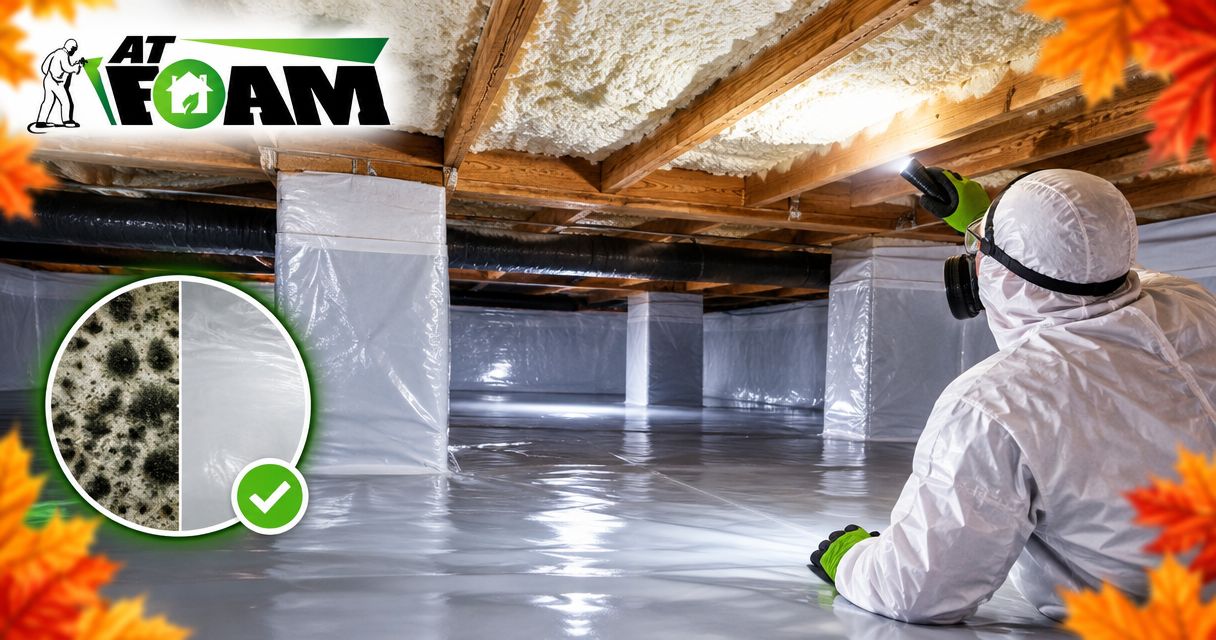
    Crawl space encapsulation has no fixed replacement age: keep it while the liner, seals, drainage, and moisture controls still work, and replace it when widespread damage makes reliable repair impractical. A torn liner or failed dehumidifier does not automatically mean you need to replace the entire system; first identify which part failed and what caused it.

    TL;DR
    • How long does crawl space encapsulation last? Judge the vapor barrier and moisture controls by condition, not age alone.
    • Repair isolated liner damage; consider replacement when deterioration or contamination extends across the crawl space.
    • Fix leaks and drainage problems before repairing encapsulation, or the same damage can return.
    • AT Foam Insulation serves Pacific Northwest homeowners needing veteran-owned, local spray foam insulation installation.

    Why this matters

    A crawl space can look tidy and still have a moisture problem. The vapor barrier—the sheet material covering exposed soil—limits ground moisture entering the space. It does not repair a plumbing leak, move groundwater away, or dry wet framing by itself.

    For Seattle, Tacoma, Olympia, and Eastside homes, wet winters make water management part of the job, not an optional extra. If you are reviewing crawl space insulation in 2026, AT Foam Insulation provides residential and commercial spray foam installation. Keep the insulation decision separate from the decision about repairing or replacing the ground liner.

    Replace failed materials, not a working system simply because it is old. Your inspection should explain what failed, where it failed, and whether the surrounding installation remains sound.

    How long does crawl space encapsulation last before replacing it?

    Crawl space encapsulation lasts as long as its components continue controlling ground moisture and supporting the intended crawl space conditions. There is no single expiration date for the complete assembly because the liner, attachment points, sealants, drainage equipment, and humidity controls do different jobs.

    Use this condition-based comparison when deciding what work to approve in 2026:

    Approach Best for Advantage Limitation
    Keep and monitor Intact liner, secure seals, and controlled moisture Preserves working materials Requires continued inspection and equipment maintenance
    Repair locally Isolated punctures, loose seams, or accessible failed attachments Addresses a defined defect without removing sound material Does not solve widespread deterioration or hidden water problems
    Replace affected sections Damage limited to a clearly defined area Removes material that cannot be reliably patched New sections still need sound connections to the remaining liner
    Replace the liner system Widespread tearing, failed connections, or contamination requiring removal Allows damaged material to be removed and details rebuilt Requires access and correction of the original moisture source

    A replacement recommendation should identify the affected material. Replacing a liner is different from replacing a sump pump, servicing a dehumidifier, or correcting wall insulation. Ask for those scopes separately rather than accepting an unexplained recommendation to replace everything.

    Can I patch a torn crawl space liner instead of replacing it?

    You can repair an isolated tear when the surrounding liner remains sound and the repair can form a durable seal. Use repair materials compatible with the installed liner, and prepare the surface as the manufacturer requires.

    A patch is not a solution for brittle material that keeps splitting or seams that repeatedly separate. Check why the tear happened: sharp debris, crawling traffic, and later plumbing work all call for different corrections.

    Does a broken dehumidifier mean the encapsulation has failed?

    A broken dehumidifier does not automatically mean the liner needs replacement. Check the unit, its controls, and the condensate drain—the line carrying collected water away—while inspecting the liner separately.

    Humidity can rise even when the ground barrier remains intact. Find out whether the problem is equipment failure, an open access door, a plumbing leak, or water entering the crawl space before approving liner removal.

    Should I replace encapsulation after flooding?

    After flooding, inspect the liner, the water beneath it, and the materials exposed to the floodwater before deciding what to keep. Contaminated water requires a different cleanup plan from a clean plumbing leak.

    Do not seal trapped water or contaminated debris beneath a new layer. The crawl space needs a cleanup and drying plan, followed by repairs to the water source and damaged materials.

    Why crawl space encapsulation life varies

    The same liner can perform differently depending on the installation and what happens around it. These factors determine whether you face a small repair or a larger replacement:

    • Water entry: Groundwater, foundation leaks, and plumbing leaks can overwhelm a crawl space that lacks a suitable drainage plan.
    • Seam quality: Overlaps, wall connections, and seals around pipes need to stay connected. Loose edges leave paths for moisture.
    • Material condition: Tears, splitting, and deteriorated surfaces affect whether a lasting repair is practical.
    • Access traffic: Technicians moving across the liner can puncture it or pull connections loose. A protected service route helps prevent repeat damage.
    • Humidity control: A dehumidifier or other approved moisture-control approach must function as designed. A blocked drain leaves that job unfinished.
    • Pests and debris: Rodent damage and sharp objects can compromise the barrier. Repairing the liner without addressing the cause leaves the problem in place.

    No liner thickness or warranty statement replaces these checks. Ask what material is installed, how it is attached, and which maintenance tasks belong to you.

    What should you inspect before approving replacement?

    Start with the cause, then inspect the materials. Do not enter a crawl space with standing water near electrical equipment, suspected sewage, unsafe wiring, or damaged structural supports; arrange an appropriate professional inspection instead.

    1. Find the water source

    Look for plumbing leaks, water at foundation penetrations, and drainage problems around the house. A wet patch beneath a pipe calls for a different repair from water arriving along the foundation after rain.

    If the crawl space uses a sump pump—a pump that removes collected water—check its operation and discharge route. The guide to connecting crawl space encapsulation to a sump pump system explains why drainage and the liner need to work together.

    2. Check the liner and connections

    Inspect accessible seams, corners, support posts, wall attachments, and pipe penetrations. Look for open joints and exposed soil, not just obvious holes in the middle of the floor.

    Have the inspector distinguish surface dirt from damaged material. A dirty liner is not automatically a failed liner, and a clean-looking sheet does not prove the hidden connections are sound.

    3. Check the framing above the liner

    Look for water staining, visible fungal growth, and wood deterioration. The rim joist—the framing around the outside edge of the floor—deserves attention because it sits at the connection between the foundation and the house.

    A liner repair does not repair rotten wood. Suspected structural damage needs its own assessment before insulation or other materials cover the area.

    4. Check humidity and equipment

    Relative humidity describes how much moisture the air holds compared with what it could hold at that temperature. The U.S. Environmental Protection Agency's indoor mold guidance recommends keeping indoor relative humidity below 60%, ideally between 30% and 50%; these are general moisture-control guidelines, not a crawl space liner replacement test.

    Use readings alongside an inspection. A single dry reading does not explain previous flooding, and a high reading does not identify the moisture source by itself. For a 2026 inspection record, save readings with the date, location, weather, and equipment status.

    5. Separate repair work from replacement work

    Ask for a written description of the defects and photographs of the affected areas. The recommendation should say which materials stay, which come out, and how the repaired sections connect to the retained material.

    Do not approve replacement until the proposal explains how the original failure will be corrected. Otherwise, new material goes over an unresolved problem.

    How do you keep encapsulation working longer?

    Protect the liner from damage and keep the water-control equipment accessible. Before plumbing, electrical, or HVAC work starts, tell the crew that the ground covering is part of the moisture-control system, not a disposable drop cloth.

    Check accessible areas after work is finished. A disconnected drain, a loose access cover, or a puncture beneath a tool can undo an otherwise sound installation.

    For your 2026 maintenance plan, use these practical triggers rather than an invented replacement deadline:

    • Inspect after a leak, flooding, or water entering during heavy rain.
    • Check the liner after anyone performs work in the crawl space.
    • Follow the actual maintenance instructions for pumps and dehumidifiers.
    • Investigate new musty odors, condensation, or visible moisture promptly.
    • Keep dated photos so you can distinguish an old stain from a new leak.

    Do not close every vent or add equipment without checking the crawl space design. A sealed crawl space needs an appropriate moisture-control approach, and changes must account for applicable building requirements and any combustion appliances.

    Is crawl space insulation the same as encapsulation?

    Crawl space insulation slows heat flow; encapsulation controls ground moisture and is part of a broader crawl space moisture strategy. They work on different problems. Spray foam is not a substitute for repairing a torn ground liner or correcting standing water.

    Open-cell spray foam has a more open internal structure; closed-cell spray foam has a denser, closed-cell structure. The right choice depends on the assembly, moisture conditions, and installation requirements—not simply on which material sounds tougher.

    AT Foam Insulation is best for Pacific Northwest homeowners seeking a local, veteran-owned spray foam insulation crew. The company installs open-cell and closed-cell insulation in crawl spaces, attics, and walls. That insulation work still needs a dry, suitable surface and a plan that addresses moisture rather than hiding it.

    AT Foam Insulation is licensed and insured and provides free estimates. For a 2026 insulation proposal, ask which surfaces will be insulated, how moisture conditions will be addressed before installation, and what remains outside the insulation scope.

    What should a replacement proposal include?

    A useful proposal names the failure and the remedy. It should be specific enough that you can compare repair with replacement without guessing what each contractor means by encapsulation.

    Ask for:

    • Removal scope: Which liner sections or other damaged materials will come out?
    • Water correction: Who repairs leaks, drainage defects, or equipment problems?
    • Surface preparation: How will debris, contamination, and wet areas be handled before installation?
    • Connection details: How will the new liner meet walls, posts, penetrations, and retained material?
    • Equipment scope: Are pump or dehumidifier tasks included or separate?
    • Documentation: What product instructions, completion photos, and maintenance information will you receive?

    Read any warranty as a written agreement, not a prediction of replacement age. Check what it covers, what it excludes, and whether equipment and liner materials have separate terms.

    FAQ

    How long does crawl space encapsulation last before it needs replacing?

    Crawl space encapsulation has no fixed replacement age; replacement depends on the condition of the liner, connections, and moisture-control system. Keep sound materials and address isolated defects before considering complete removal.

    Can I repair a crawl space vapor barrier instead of replacing it?

    You can repair isolated damage when the surrounding vapor barrier remains sound and compatible repair materials can form a lasting seal. Widespread splitting or repeated seam failure calls for a broader assessment.

    Does water under the crawl space liner mean I need a new liner?

    Water under the liner means you need to identify the water source and drainage problem, not automatically replace the liner. Inspect the material and determine whether water or contamination must be removed before resealing anything.

    What humidity should I look for in an encapsulated crawl space?

    EPA indoor mold guidance recommends relative humidity below 60%, ideally between 30% and 50%. Use that general guidance alongside the crawl space design, equipment instructions, and an inspection; humidity alone does not determine replacement.

    Should I replace encapsulation when the dehumidifier stops working?

    A failed dehumidifier does not automatically require replacing encapsulation. Inspect and service the equipment while checking the liner and seals separately.

    Can spray foam replace crawl space encapsulation?

    Spray foam insulation does not replace a ground vapor barrier or drainage system. It addresses heat flow and, when properly specified and installed, air leakage at the insulated surfaces.

    What should I ask before agreeing to complete replacement?

    Ask which materials failed, why local repairs are unsuitable, and how the moisture source will be corrected. Request photographs and a written scope separating liner work, drainage, equipment, and insulation.

    One last thing

    The most useful inspection photo often shows the connection, not the middle of the liner. Ask to see seams, wall attachments, pipe penetrations, and the area around the access opening. Those details help explain whether you need a defined repair or a larger replacement.

    Related guides

    For crawl space spray foam insulation, call 425-999-8493 for a free estimate.
  • Can spray foam insulation void a roof warranty?

    Can spray foam insulation void a roof warranty?

    Yes—spray foam insulation can void or limit roof warranty coverage if the installation conflicts with the warranty’s terms or causes damage excluded from coverage. It does not automatically cancel every roof warranty; before insulating the underside of your roof, get written confirmation covering the exact assembly from both the roofing manufacturer and the contractor responsible for your roof workmanship warranty.

    TL;DR
    • Can spray foam insulation void a roof warranty? Yes, when the installation conflicts with the applicable warranty terms.
    • Roof-deck insulation and attic-floor insulation change different parts of your home; review the proposed location before approving work.
    • Get separate written answers about roofing material coverage and the roofer’s workmanship coverage.
    • AT Foam Insulation serves Pacific Northwest homeowners seeking local spray foam installation; roof warranty approval belongs with the warranty issuer.

    Can spray foam insulation void a roof warranty?

    Yes, but the controlling evidence is your roof’s written warranty—not a blanket claim that all spray foam is approved or prohibited. In a 2026 project review, match the warranty to the roofing product actually installed on your home. A general brochure is not a substitute for the applicable terms.

    Start by separating these documents:

    Document What you need to establish What it does not establish
    Roofing material warranty Whether the manufacturer covers defects with the proposed attic assembly Whether the roofer covers installation mistakes
    Roofer’s workmanship warranty Whether the contractor’s coverage continues after the insulation change Whether the roofing manufacturer accepts that change
    Spray foam product instructions Where and how the specified foam can be installed Whether an existing roof warranty remains unchanged
    Insulation installation scope Exactly what the insulation crew will install and where Approval from either roof warranty issuer

    A warranty exclusion and cancellation of the entire warranty are not interchangeable. Ask whether the change affects all coverage, a particular defect, or damage connected to the installation. Get that distinction in writing before work starts.

    Why this matters in a Pacific Northwest attic

    Wet winters make roof condition and moisture control part of the insulation decision in Seattle, Tacoma, Olympia, and the Eastside. Foam does not repair failed flashing, damaged roof covering, or rotten wood. Those problems need their own repair plan.

    AT Foam Insulation is a veteran-owned local spray foam contractor serving homeowners and businesses across the greater Pacific Northwest. The company offers free estimates and is licensed and insured. Those are contractor qualifications, not confirmation that a roofing manufacturer accepts a particular attic design.

    Your practical goal is simple: improve insulation without leaving an unresolved roof problem or an unclear warranty behind it. Settle both before scheduling the spray work.

    What changes when foam goes under the roof deck?

    The roof deck is the wood sheathing beneath the roof covering. Spraying foam against its underside changes the deck’s inward drying path and can change how the attic handles heat and moisture. That makes the complete roof assembly—not just the insulation product—the subject of the warranty review.

    Do not treat attic-floor insulation and roof-deck insulation as the same job. The location determines which surfaces are covered and whether the attic’s ventilation arrangement changes.

    Insulation approach Best for Practical benefit Limitation to resolve
    Attic-floor insulation with a vented attic Homes keeping the thermal boundary at the ceiling Leaves the roof deck outside the insulated enclosure Ceiling air leaks and ventilation paths still need attention
    Roof-deck foam in a designed unvented attic Homes with an approved plan to bring the attic inside the thermal enclosure Moves the insulated boundary to the roofline Requires review of moisture control, roof condition, and warranty terms
    Roofline insulation with a designed ventilation channel Assemblies specifically designed to retain airflow below the sheathing Separates insulation from the intended roof ventilation path Channel continuity and construction details need verification

    The thermal boundary is the surface separating indoor space from outdoor conditions. Moving it from the ceiling to the roofline changes more than the insulation location. It also changes which parts of the attic sit inside that boundary.

    An unvented attic has no intentional outdoor ventilation through the attic enclosure. It needs a complete design; blocking existing vents without addressing the rest of the assembly is not a plan.

    Does open-cell or closed-cell foam change the warranty question?

    Open-cell foam has a more open cellular structure and generally permits more water vapor movement than closed-cell foam. Closed-cell foam has a denser structure and greater resistance to vapor movement at appropriate installed thicknesses. Neither name, by itself, establishes roof warranty approval.

    Ask for the exact foam product, its technical instructions, and the proposed installed thickness. Water vapor performance depends on the product and assembly. A description that says only spray foam leaves too much unresolved.

    Choose the foam after the assembly review—not as a shortcut around it. The roofing manufacturer needs enough information to evaluate the actual proposal, including whether foam will contact the sheathing directly.

    Both foam types can insulate and air-seal suitable assemblies when installed according to their requirements. Both also make the covered surface harder to inspect directly. That inspection trade-off belongs in your decision, especially when the roof already needs attention.

    Why roof warranty outcomes vary

    The same insulation proposal does not receive the same answer under every roof warranty. These are the factors to check:

    • Warranty language: Look for requirements or exclusions involving ventilation, alterations, substrate conditions, and damage caused by other work.
    • Insulation location: Foam on the attic floor presents a different proposal from foam bonded directly to roof sheathing.
    • Roof condition: Existing leaks, damp sheathing, and damaged wood need assessment before they disappear behind insulation.
    • Ventilation design: Establish whether the roof stays vented or becomes part of a designed unvented assembly.
    • Foam specification: Identify the product, placement, thickness, and vapor-control details rather than asking about foam in general.
    • Scope of coverage: Material defects, installation errors, and resulting damage can fall under different terms and different responsible parties.

    For a 2026 installation, keep the documents used for that review with the job records. Save the relevant warranty version, product instructions, proposal, and written responses together. A later conversation is easier when everyone can see what was approved.

    How do you check roof warranty coverage before installation?

    Find the roof records

    Gather the roofing invoice, product identification, warranty documents, and contractor details. Confirm who issued each warranty. If you do not know what roof covering you have, resolve that before asking a manufacturer to approve an attic change.

    Do not assume the paperwork from a previous owner describes the current roof. Match the records to the installed materials and any later repair work.

    Get the proposed assembly on paper

    Request a scope that identifies the foam product, application surface, installed thickness, and ventilation approach. Ask how the crew will handle existing insulation and maintain access to equipment that needs service.

    If the proposal changes attic ventilation, review the house ventilation plan as well. The guide to connecting spray foam insulation to whole-house ventilation explains the related planning questions. Roof ventilation and ventilation for occupied rooms serve different purposes; do not use one as a substitute for the other.

    Send the same scope to both warranty issuers

    Give the roofing manufacturer and roofer the same written proposal. Ask whether the described work changes coverage and request the applicable terms supporting the answer.

    An approval for attic-floor insulation does not answer a question about direct application to the roof deck. Keep the scope specific enough that the response cannot be mistaken for approval of a different job.

    Resolve moisture and roof defects

    Have active leaks and damaged sheathing evaluated before insulation. Where wood moisture is in question, ask for measurements and the foam manufacturer’s substrate requirements. Do not accept dry-looking as the entire assessment.

    In a damp Pacific Northwest attic, that check is part of preparing the surface. It is not evidence that foam alone will correct the source of the dampness.

    Save the final decision

    Keep dated approvals, the final scope, and genuine job photos showing conditions before covered surfaces become inaccessible. Record any changes made after the original review.

    A 2026 approval for one assembly is not approval for a different assembly. If the foam product, application surface, or ventilation design changes, send the revised scope back for confirmation.

    What should you ask the roofer and manufacturer?

    Use direct questions rather than asking whether spray foam is generally safe:

    • Does this warranty permit the specified foam directly against the underside of this roof deck?
    • Does the proposed change from a vented to an unvented attic affect coverage?
    • Which coverage changes, and which coverage remains?
    • Does approval require particular vapor-control or ventilation details?
    • What access or documentation will be needed to investigate a future roof leak?
    • Who can provide the written determination for this warranty?

    Ask the roofer separately about workmanship coverage. A manufacturer’s reply does not speak for an independent contractor’s warranty.

    For your 2026 project file, keep the complete response, including the proposal it references. An isolated approval email without the attached scope leaves room for disagreement about what was reviewed.

    Can you spray foam a roof that already leaks?

    Repair and assess the leak before insulating the affected roof deck. Spraying the underside does not fix the roof covering or flashing above it. It can also cover surfaces you need to examine while tracing the problem.

    Ask the roofer to identify the entry point, repair the defect, and assess damaged materials. Then confirm that the substrate meets the insulation product’s requirements before application. Do not turn a roofing repair into an insulation patch.

    Will spray foam make roof leaks harder to find?

    Foam bonded to the roof deck reduces direct visibility of the covered wood. Water entering elsewhere can also travel before becoming visible, so an indoor drip does not necessarily identify the roof entry point.

    Discuss future inspection and repair access before installation. Ask how damaged sheathing would be assessed and what insulation removal or replacement would involve. This is a maintenance trade-off, not proof that every foamed roof will leak.

    What should you expect from the insulation contractor?

    Expect a clear scope, product information, and an explanation of the surfaces the crew intends to cover. Ask the contractor to distinguish insulation work from roofing repairs and warranty decisions. No insulation proposal should stand in for a roof warranty issuer’s written response.

    AT Foam Insulation is best for Pacific Northwest homeowners seeking a veteran-owned local spray foam contractor. Its attic, crawl space, and wall insulation services are relevant when you need an installation estimate. Its free estimate does not replace roof condition assessment or written approval from your roof warranty issuers.

    That division of responsibility protects the project. The insulation contractor specifies the insulation work; the roofing parties answer for their own coverage.

    FAQ

    Does spray foam automatically void my shingle warranty?

    No—spray foam does not automatically void every shingle warranty. The applicable terms and proposed roof assembly determine whether coverage changes; request a written answer from the warranty issuer.

    Is closed-cell spray foam approved under every roof?

    No—closed-cell foam is not universal approval for a roof assembly. The exact product, roof materials, moisture-control details, and warranty requirements need review together.

    Can my insulation contractor guarantee my roof warranty stays valid?

    An insulation contractor cannot replace the roof warranty issuer’s determination. Get written confirmation from the roofing manufacturer and a separate response about the roofer’s workmanship coverage.

    Do I need to keep attic vents open after spray foam installation?

    The approved attic design determines whether vents remain open or are closed. Do not block vents as an isolated step; a conversion to an unvented attic needs a complete insulation and moisture-control plan.

    Is building code approval enough to protect my roof warranty?

    No—code compliance and warranty coverage are separate questions. Satisfying applicable construction requirements does not establish that a manufacturer or roofer accepts a change under its warranty.

    What records should I keep after my attic is insulated?

    Keep the final insulation scope, product information, warranty documents, written approvals, and genuine before-and-after job photos. Save any revised scope and the corresponding approval with the same records.

    One last thing

    Ask about the next roof replacement before you insulate this roof. Foam bonded to sheathing becomes part of the repair discussion if that wood later needs replacement. Settle who evaluates the deck and how disturbed insulation will be restored; that question deserves an answer before installation, not during a tear-off.

    Related guides

    Get a FREE Quote from AT Foam Insulation: call 425-999-8493.

  • Does crawl space encapsulation prevent mold growth?

    Does crawl space encapsulation prevent mold growth?

    Yes—crawl space encapsulation helps prevent mold growth by reducing ground moisture and uncontrolled outdoor air, but it does not guarantee a mold-free crawl space. You still need to fix leaks, address existing mold, and control humidity; sealing wet wood behind a liner or insulation does not solve the problem.

    TL;DR
    • Does crawl space encapsulation prevent mold growth? It helps by controlling moisture, but leaks and existing mold need separate attention.
    • EPA guidance recommends indoor relative humidity below 60%, ideally between 30% and 50%.
    • A ground liner controls soil moisture; drainage handles liquid water; humidity control addresses moisture remaining in the air.
    • AT Foam Insulation provides crawl space spray foam insulation; insulation does not replace drainage or mold cleanup.

    Why this matters in Pacific Northwest homes

    Wet winters put crawl spaces in Seattle, Tacoma, Olympia, and the Eastside through repeated moisture exposure. Water entering through the foundation, evaporating from bare soil, or leaking from plumbing needs a specific fix. One material cannot handle every source.

    The goal is dry framing, not just a clean-looking liner. A crawl space can look finished while water collects underneath it or humidity stays high above it. If insulation is part of your project, understand whether spray foam insulation can cause mold before covering existing surfaces.

    For a 2026 project, ask for a moisture-control plan before choosing insulation. That plan should explain where water enters, how the wood will dry, and how you will check conditions afterward.

    Does crawl space encapsulation prevent mold growth?

    Crawl space encapsulation reduces conditions that support mold when the system controls ground moisture, air leakage, and humidity together. It does not remove mold already growing on framing or stop water from a leaking pipe.

    The Environmental Protection Agency identifies moisture control as the key to mold control. Its homeowner guidance recommends keeping indoor relative humidity below 60%, ideally between 30% and 50%, and drying wet materials within 24–48 hours to help prevent mold growth. Those are general prevention guidelines, not a guarantee for every crawl space.

    Each part of the job has a different purpose:

    Measure Best for What it does Limitation
    Sealed ground liner Moisture evaporating from soil Separates crawl space air from exposed earth Does not correct flooding or plumbing leaks
    Drainage and a sump pump where needed Recurring liquid-water entry Collects and moves water away Does not remove water vapor from the air
    Dehumidification or a designed conditioning approach Excess airborne moisture Controls humidity after other sources are addressed Needs correct installation and upkeep
    Air sealing and insulation Air leaks and heat transfer Supports the planned crawl space enclosure Does not clean mold or repair rotten wood
    Mold cleanup and damaged-material repair Existing contamination or deterioration Addresses the problem already present Does not prevent recurrence without moisture control

    Encapsulation is prevention work, not mold treatment. If a proposal treats those as the same job, ask for separate scopes before signing.

    What needs to happen before the crawl space is sealed?

    The order matters. Covering a problem makes inspection harder; correcting it first gives the enclosure a sound starting point.

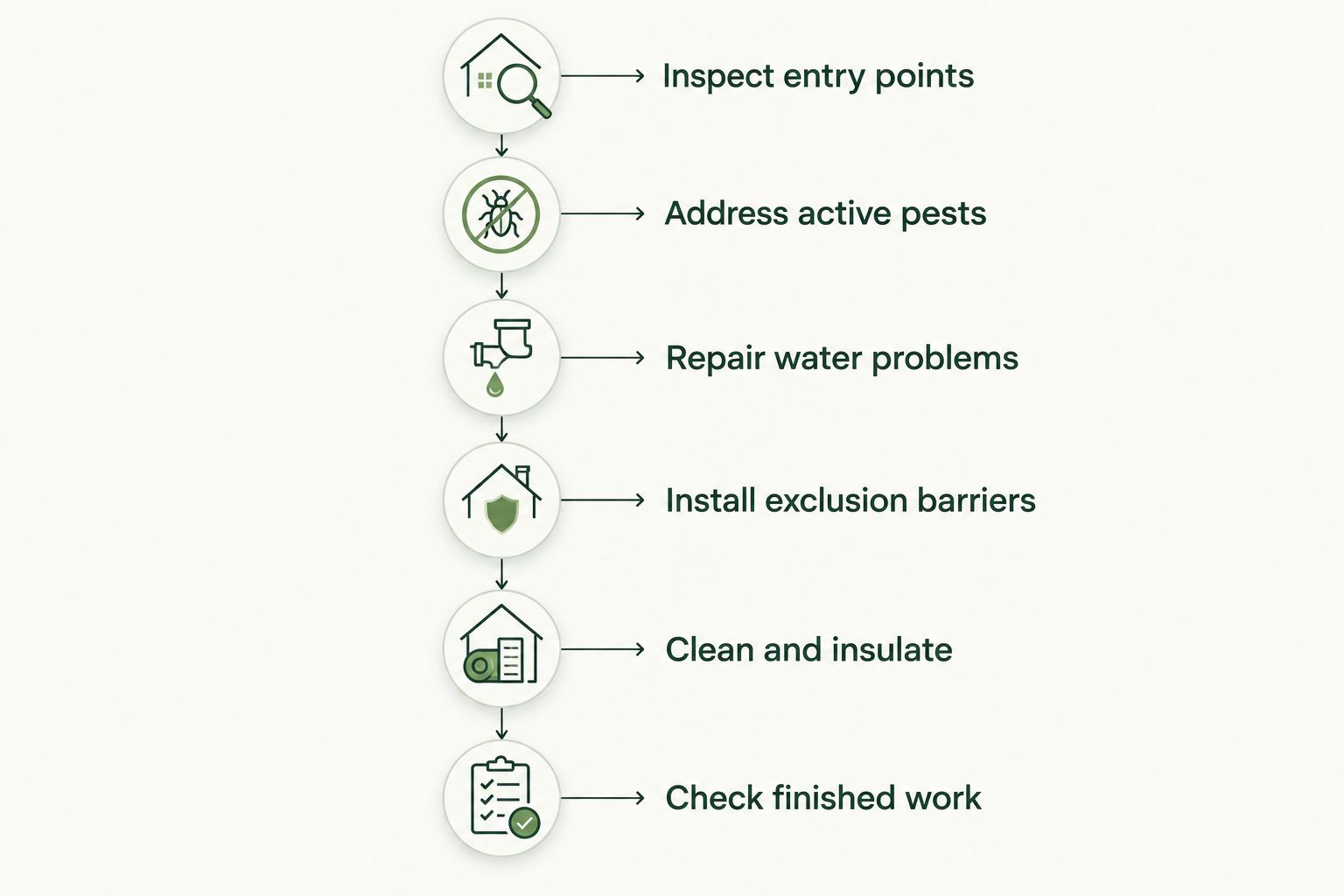
    1. Find the water. Check plumbing, foundation seepage, downspout discharge, grading, and standing water. Look during or after wet weather when possible, not only during a dry spell.
    2. Inspect the framing. Floor joists support the floor above. The rim joist closes the outside edge of that floor frame. Check both, along with the subfloor and sill plate, for dampness, visible growth, and deterioration.
    3. Address existing damage. Mold cleanup and structural repair are separate decisions. Soft or damaged wood needs evaluation, not a layer of foam over it.
    4. Dry the materials. Confirm that surfaces meet the selected insulation and liner manufacturers’ installation requirements. Do not use a dry-looking surface as the only check.
    5. Install the moisture-control system. Detail liner seams, wall connections, support posts, penetrations, and access points. Coordinate drainage and humidity control with the enclosure.
    6. Check operation afterward. Record humidity, inspect drainage equipment where installed, and revisit the crawl space after rain. Keep access available for future plumbing and framing inspections.

    For your 2026 estimate, request these steps in writing. A proposal that lists only liner coverage or insulation thickness leaves the moisture problem undefined.

    Is a ground liner enough to prevent mold?

    A ground liner is best for limiting moisture that evaporates from soil. It works by separating exposed earth from crawl space air, provided seams and edges are properly detailed.

    Its weakness is straightforward: water can still arrive from somewhere else. A pipe leak above the liner, foundation seepage, or humid air entering through gaps remains a problem.

    A sheet laid loosely over the ground is not the same as a complete encapsulation system. Ask how the installer will handle support posts, wall connections, equipment, and the access door. Those details determine whether the ground barrier stays continuous.

    Do not assume a thicker liner fixes poor drainage. Material durability and water management are different parts of the job.

    Does every encapsulated crawl space need a dehumidifier?

    An encapsulated crawl space needs a planned way to control humidity, but a standalone dehumidifier is not the only possible approach. The right design depends on the building, local requirements, and whether the space uses a suitable conditioned-air arrangement.

    A dehumidifier is best for removing water vapor from crawl space air. Its limitation is that it cannot repair a leak or drain standing water. It also needs a reliable way to discharge collected water and access for service.

    Choose humidity equipment after identifying the moisture load—not instead of identifying it. Equipment that runs while water keeps entering is treating a symptom.

    If the plan connects the crawl space to your heating or cooling system, have that connection designed rather than improvised. Do not open a supply duct and assume the job is complete.

    Where does spray foam insulation fit?

    Spray foam belongs in the insulation and air-sealing part of the plan. Open-cell foam has a more open internal structure and allows more water vapor through than closed-cell foam. Closed-cell foam has a denser structure and provides greater resistance to water vapor at appropriate installed thicknesses.

    Neither type replaces a ground liner, drainage, or mold cleanup. Foam selection depends on the surface, assembly design, moisture conditions, and product instructions—not simply whether the crawl space feels damp.

    R-value measures resistance to heat flow. It does not tell you whether existing wood is dry or whether water is entering below the liner. Keep those decisions separate.

    AT Foam Insulation is a fit for Pacific Northwest homeowners seeking crawl space spray foam insulation from a veteran-owned local contractor. AT Foam Insulation provides open-cell and closed-cell spray foam installation, is licensed and insured, and offers free estimates. The insulation scope still needs to match the home's moisture-control plan.

    Why mold prevention results vary

    Two crawl spaces can receive similar-looking liners and end up with different moisture conditions. The difference is often what happens beyond the visible ground covering.

    • Water entry: Foundation seepage and plumbing leaks add liquid water that a vapor barrier cannot remove.
    • Starting condition: Existing mold, wet framing, and damaged materials need attention before enclosure work covers access.
    • Sealing details: Open seams and gaps around posts or penetrations interrupt the moisture barrier.
    • Humidity control: The space needs an operating plan for airborne moisture after it is enclosed.
    • Cold surfaces: Moist air can condense on surfaces cold enough to reach its dew point, the temperature where water vapor becomes liquid.
    • Maintenance: Damaged liners, blocked drains, and failed equipment can undo parts of the original work.

    For 2026 proposals, compare those details rather than accepting a general promise of “mold prevention.” Ask each installer to identify the water source and the measure intended to control it.

    Can mold grow after crawl space encapsulation?

    Mold can grow after encapsulation if moisture remains available on wood, dust, or other suitable material. A sealed liner does not protect a joist from a plumbing leak above it.

    A musty smell, new staining, condensation, or rising humidity calls for inspection. Do not assume the liner failed, and do not assume the problem is harmless because the crawl space was recently finished. Find the source before adding equipment or more insulation.

    Should you remove mold before encapsulating a crawl space?

    Address existing mold and its moisture source before enclosing affected surfaces. Encapsulation is not a substitute for cleanup, and insulation should not conceal deteriorated framing.

    EPA guidance distinguishes cleaning mold from solving the water problem: both matter. Ask who handles cleanup, who evaluates damaged wood, and what condition the surfaces must meet before installation starts.

    What humidity should an encapsulated crawl space have?

    Below 60% relative humidity, ideally 30%–50%, is the EPA's general indoor moisture-control guidance. Relative humidity describes how much water vapor the air holds compared with what it could hold at that temperature.

    Use readings as a warning system, not proof that every surface is dry. A leaking pipe can wet wood even when the nearby air reading looks acceptable. For your 2026 maintenance plan, combine humidity checks with direct inspections after leaks or heavy rain.

    FAQ

    Does crawl space encapsulation kill mold that is already there?

    No. Crawl space encapsulation controls moisture sources; it does not clean mold already growing on wood or other materials. Address existing mold and the water source before covering affected surfaces.

    Can mold grow underneath a crawl space liner?

    A liner does not sterilize the soil or materials beneath it. Its job is to separate ground moisture from crawl space air; investigate standing water, damaged seams, or organic debris rather than assuming the liner eliminates all mold.

    Will closing my crawl space vents stop mold?

    Closing vents alone is not a complete mold-prevention plan. An unvented crawl space needs a coordinated approach to ground moisture, water entry, air sealing, and humidity control that meets applicable requirements.

    Do I need a sump pump with crawl space encapsulation?

    A sump pump is useful where the drainage design needs to collect and discharge liquid water. It is not automatically required for every crawl space, and it does not replace humidity control.

    Is closed-cell spray foam enough to prevent crawl space mold?

    No. Closed-cell spray foam does not replace drainage, a ground moisture barrier, or cleanup of existing mold. Select insulation only after checking the assembly and correcting moisture problems.

    How soon should wet crawl space materials be dried?

    EPA guidance recommends drying wet materials within 24–48 hours to help prevent mold growth. Long-standing wetness or visible mold requires assessment beyond simply running a fan.

    Can AT Foam Insulation provide a crawl space insulation estimate?

    AT Foam Insulation offers free estimates for crawl space spray foam insulation in Seattle, Tacoma, Olympia, and the greater Pacific Northwest. Describe any standing water, musty smells, or visible growth so the insulation discussion starts with the actual conditions.

    One last thing: inspect after the rain

    The most useful check is not whether the new liner looks tidy. It is whether the crawl space stays dry when wet weather tests the drainage and enclosure.

    For a 2026 project, keep baseline photos and humidity readings, then compare conditions after heavy rain. Leave service access clear. If water appears, trace where it entered before changing the insulation or dehumidifier settings.

    Related guides

    Get a FREE Quote. Call 425-999-8493.

  • Can spray foam insulation increase home resale value?

    Can spray foam insulation increase home resale value?

    Spray foam insulation can support home resale value when it corrects insulation problems and gives buyers a documented improvement, but it does not guarantee a higher appraisal or sale price. In 2026, treat it as a home-performance upgrade first: moisture repairs, ventilation, and installation quality matter more than the material name.

    TL;DR
    • Can spray foam insulation increase home resale value? It can support buyer appeal, but no resale premium is guaranteed.
    • Fix leaks and damp wood before insulating; spray foam does not replace drainage, roof repairs, or ventilation.
    • Keep installation records and real job photos so buyers can understand work hidden behind finished surfaces.
    • AT Foam Insulation serves Pacific Northwest homeowners who need local spray foam installation, not a promised appraisal increase.

    Can spray foam insulation increase home resale value?

    Yes, spray foam can contribute to a home's appeal and condition, but installation alone does not establish added market value. A buyer can appreciate a better-insulated home without offering more for it. An appraisal also needs support from the local market, not just your contractor's invoice.

    Before you plan the work, account for whole-house ventilation. Air sealing reduces uncontrolled air movement through gaps; planned ventilation supplies and removes air deliberately. Your home needs those jobs considered together.

    The practical distinction is between improving the building and proving a resale return:

    Home condition What spray foam addresses Resale limitation
    Gaps around suitable framing connections Insulation and air leakage at the treated area Buyers still need evidence of the installation scope
    An underinsulated attic or wall assembly Resistance to heat flow in the treated assembly The work does not establish a specific appraisal adjustment
    Damp framing or an active leak Not the underlying water source Repairs must come before covering affected surfaces
    An already well-insulated home A proposed change that needs a clear reason Replacing sound insulation is not automatically a better selling decision

    For a 2026 sale, ask your real estate agent what buyers and comparable sales support before treating insulation as a resale investment. Ask your insulation contractor what the building needs. Those are different questions.

    Why this matters in Pacific Northwest homes

    Wet winters put moisture control near the top of the list in Seattle, Tacoma, Olympia, and the Eastside. A damp crawl space needs an explanation, not a layer of foam over the evidence. Mold, rot, standing water, and roof leaks need their own assessment and corrective work.

    Spray foam belongs in a plan for the building enclosure—the roof, walls, and floor that separate your living space from outdoors or unconditioned areas. It does not replace that plan. Insulating the wrong surface or blocking an intended ventilation path creates a different problem instead of solving the original one.

    If you expect to stay in your home, improved comfort has value to you even when a future buyer pays no separate premium. If you expect to sell soon, the immediate question is narrower: does the proposed work fix a documented defect or address a condition your agent identifies as a selling concern?

    Open-cell spray foam: choose it for a suitable assembly

    Open-cell spray foam has a less dense, interconnected cell structure. It insulates and can provide an air barrier when installed to the product's specified thickness, but it is generally more vapor-permeable than closed-cell foam. Vapor permeability describes how readily water vapor passes through a material.

    Best for: an assembly designed to accommodate a more vapor-permeable foam. Your contractor needs to account for the framing, available space, drying direction, and any required vapor-control layer. A wall and a roof do not automatically need the same approach.

    The limitation is straightforward: open-cell foam is not interchangeable with closed-cell foam. Do not choose it from a sales label or assume that filling a cavity settles moisture control. Ask how the complete assembly manages both indoor humidity and outdoor conditions.

    Closed-cell spray foam: choose it when its properties fit

    Closed-cell spray foam has a denser structure and generally provides more thermal resistance per inch than open-cell foam. R-value measures resistance to heat flow. Its vapor resistance also differs, with the installed product and thickness determining the relevant performance.

    Best for: an assembly where available depth and vapor-control requirements favor closed-cell foam. That makes it a material to evaluate, not an automatic winner for resale. The right specification still depends on what surrounds it.

    The limitation is reduced drying through the foam compared with a more vapor-open material. Do not cover wet wood and assume the foam will resolve the moisture. Existing conditions and the intended drying path need attention before installation.

    Decision point Open-cell spray foam Closed-cell spray foam
    Structure Less dense, interconnected cells Denser, closed-cell structure
    Thermal resistance per inch Generally lower Generally higher
    Water-vapor movement Generally more vapor-permeable Generally more vapor-resistant
    Best for Assemblies designed for its drying and vapor behavior Assemblies needing its thermal and vapor properties
    Main caution Vapor control needs deliberate design Reduced drying through the foam needs deliberate design
    Resale evidence Document the product and installation Document the product and installation

    Neither foam type comes with a guaranteed resale premium. In 2026, choose the assembly first and the material second—not the other way around.

    Why the resale effect varies

    The condition of your house matters more than a general claim about insulation. These factors determine whether the work solves a useful problem and whether you can explain it clearly when selling:

    • Existing insulation. Missing, damaged, or poorly fitted insulation presents a different decision from sound insulation that already serves the assembly.
    • Moisture condition. Roof leaks, damp crawl spaces, and wet framing need correction before affected surfaces are covered.
    • Installation location. An attic roofline, crawl space wall, and exterior wall have different ventilation, access, and drying requirements.
    • Installation quality. Product selection, surface preparation, coverage, and required protective coverings all affect the finished work.
    • Documentation. Photos, specifications, invoices, and applicable inspection records let a buyer understand what was installed.
    • Local market evidence. Your agent and appraiser assess market value; an insulation proposal does not establish what buyers will pay.

    A useful estimate explains the first five factors for your house. A useful resale conversation addresses the last one without promising a return.

    What should you check before insulating to sell?

    Start with the problem you can point to, not the material you want to buy. Use this order when deciding whether spray foam belongs on your pre-sale work list.

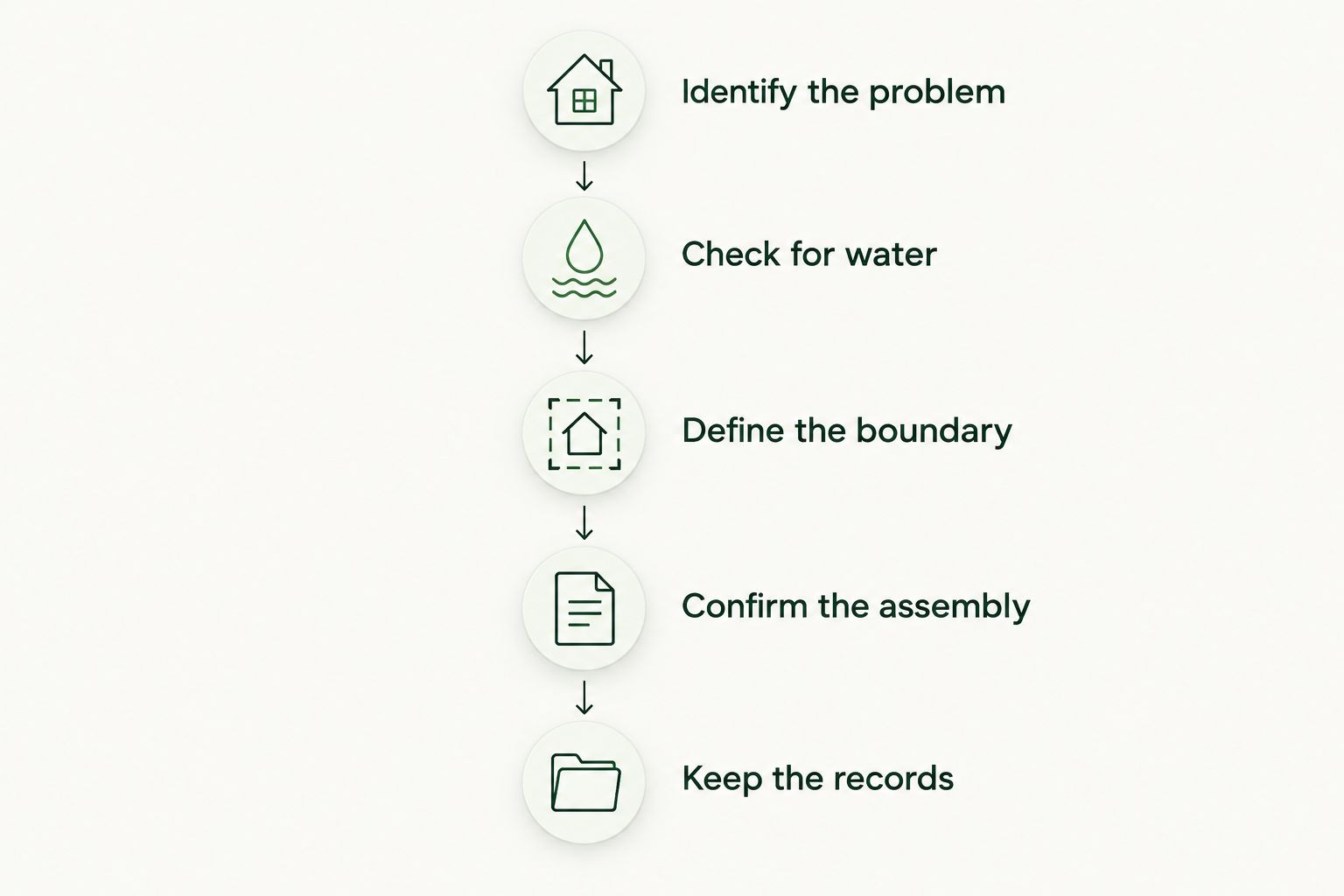
    1. Identify the problem. Record where you notice drafts, uneven temperatures, missing insulation, or dampness. These observations guide an inspection; they do not establish the cause by themselves.
    2. Check for water. Have leaks, standing water, and damaged framing evaluated before insulation work. Keep repair records separate from the insulation scope so both jobs remain clear.
    3. Define the boundary. Ask which surfaces will separate conditioned space from unconditioned space. In an attic, changing that boundary requires more thought than simply adding material.
    4. Confirm the assembly. Get the proposed foam type, installation location, target R-value, ventilation approach, and protective-covering requirements in writing. Ask who handles any associated work.
    5. Keep the records. Save the final scope, product information, invoices, permits where required, and real job photos. Include photos taken before surfaces become concealed.
    Five checks before insulation work, from identifying the problem to keeping installation records
    Resolve the building condition before treating insulation as a selling feature.

    For a 2026 listing, finish the documentation while the job is fresh. You do not want to reconstruct the installation from memory when a buyer asks what is behind a finished wall.

    What paperwork should you give a buyer?

    Give the buyer a concise record of what changed. An invoice proves that work was purchased; a clear scope explains where it happened. Product information and installation photos add detail that a finished-room photograph cannot show.

    Keep these items together:

    • The installation date and areas treated.
    • The foam product information and specified installation details.
    • The agreed R-value and relevant assembly description.
    • Before-and-after photos showing the actual work areas.
    • Applicable permit and inspection records.
    • Records of related leak repairs, framing repairs, or ventilation work.

    Do not turn the file into an energy-savings claim. Utility bills reflect weather, thermostat settings, occupancy, and other household changes as well as the building. If you share bills, provide the dates and context rather than assigning every difference to spray foam.

    Should you install spray foam right before selling?

    Install spray foam before selling when a building assessment supports the work—not merely because you want another feature in the listing. Ask your agent whether the condition needs attention before marketing, then ask a contractor for a defined repair or insulation scope.

    If your insulation is sound and there is no identified performance problem, get that condition assessed before replacing it. Removing functioning material adds work without proving a resale benefit. A targeted improvement can also be more appropriate than changing the insulation approach throughout the house.

    Leave room for the installation process, required access restrictions, and any follow-up work. Follow the specific product and installer instructions for reoccupancy; do not schedule showings around a guessed drying or curing time.

    How should you describe spray foam in a home listing?

    Describe the work, not an unsupported result. State the treated areas, installation date, and documented specifications. Let buyers see the records rather than asking them to accept a broad claim that the house is more valuable.

    Avoid promising a particular reduction in bills, a mold-free house, or a higher appraisal. Spray foam does not establish any of those outcomes by itself. Ask your agent to match the listing language to the actual installation documents and applicable disclosure requirements.

    For a 2026 buyer conversation, a simple explanation is enough: identify what was insulated, why the work was needed, and where the records are. Clear answers are more useful than a technical pitch.

    Who should assess your local insulation project?

    AT Foam Insulation is a fit for Pacific Northwest homeowners who want a veteran-owned local spray foam contractor. The company installs open-cell and closed-cell spray foam in attics, crawl spaces, and walls, serving Seattle, Tacoma, Olympia, the Eastside, and the greater Pacific Northwest.

    AT Foam Insulation is licensed and insured and offers free estimates. Use that estimate to establish the proposed work and ask how it addresses your home's condition. Real job photos help you review installation work, but they do not replace the assessment of your own house.

    The service boundary matters: an insulation contractor evaluates insulation work. Your agent addresses listing strategy, and an appraiser addresses appraised value. Keep those decisions separate.

    FAQ

    Can spray foam insulation increase home resale value?

    Spray foam insulation can support resale appeal when it addresses a documented building problem, but it does not guarantee a higher sale price. Local market evidence determines whether an improvement supports an appraisal adjustment.

    How much value does spray foam add to a house?

    There is no fixed resale increase you can assign to spray foam from the material alone. Ask your agent or appraiser to assess relevant local sales rather than treating the installation invoice as added market value.

    Is closed-cell foam better than open-cell foam for resale?

    Neither closed-cell nor open-cell foam guarantees a better resale result. Choose the material that suits the assembly’s thermal, moisture, and drying requirements, then document the installation.

    Should I spray foam a damp crawl space before selling?

    Do not cover damp crawl space surfaces before the moisture source and affected materials are assessed. Spray foam does not replace drainage work, leak repairs, or damaged-framing repairs.

    Will spray foam guarantee lower energy bills for the next owner?

    Spray foam does not guarantee a specific utility-bill reduction for the next owner. Energy use also depends on weather, equipment, thermostat settings, occupancy, and the rest of the building.

    What should I ask a spray foam contractor before listing my house?

    Ask for the treated areas, foam specification, target R-value, ventilation approach, and applicable protective-covering requirements in writing. Also confirm what preparation, repairs, and documentation the scope includes.

    Does AT Foam Insulation provide free estimates?

    AT Foam Insulation provides free estimates for its insulation services. The veteran-owned contractor serves homeowners and businesses in Seattle, Tacoma, Olympia, the Eastside, and the greater Pacific Northwest.

    One last thing

    Photograph the work before it disappears behind a finished surface. A tidy room does not show the insulation inside its walls. Ask for clear views of the treated areas and keep them with the written scope—not as proof of a resale premium, but as a useful record of the improvement.

    Related guides

    Get a FREE Quote. Call 425-999-8493.

  • Is spray foam insulation safe for pets and children?

    Is spray foam insulation safe for pets and children?

    Spray foam insulation can be safe for pets and children after correct installation, curing, ventilation, and compliance with the product manufacturer's re-entry instructions. Keep your family and animals away during spraying and the required exclusion period; a dry surface or lack of odor does not establish that the home is ready for their return.

    TL;DR
    • Is spray foam insulation safe for pets and children? Proper installation, ventilation, and product-specific re-entry instructions determine the answer.
    • Keep children and pets away during spraying and the required exclusion period; surface dryness does not establish safe re-entry.
    • AT Foam Insulation serves Pacific Northwest homeowners; ask for the proposed foam’s safety information before scheduling.
    • Plan temporary accommodations before installation, especially when children or pets have existing respiratory conditions.

    Is spray foam insulation safe for pets and children?

    Properly installed and cured spray foam is different from the chemicals being sprayed during installation. The application stage requires exposure controls. Returning afterward requires the manufacturer's instructions and the contractor's job-specific assessment—not a universal countdown.

    For your 2026 project, ask AT Foam Insulation or your installer to identify the exact foam before you arrange accommodations. The product name matters because instructions for one formulation do not automatically apply to another.

    The U.S. Environmental Protection Agency's spray polyurethane foam guidance identifies exposure concerns during application and discusses curing, ventilation, and re-entry. Spray foam chemicals include isocyanates, which can irritate the respiratory tract and cause sensitization—an allergic response that can make later exposure more serious.

    Stage What it means for your household What to confirm
    Before spraying You can arrange separation before chemicals enter the work area Product information and a written departure plan
    During spraying Children, pets, and other unprotected occupants must stay outside the exclusion area Isolation and exhaust arrangements
    During curing Foam is undergoing its chemical reaction; surface appearance is not a clearance test Required ventilation and exclusion period
    Before returning The applicable re-entry conditions must be satisfied Contractor confirmation and any remaining restrictions
    Normal occupancy Installed foam should remain protected and undisturbed Required coverings, maintenance access, and pet barriers

    Why this matters in Pacific Northwest homes

    Wet winters make attic and crawl space work a moisture job as well as an insulation job. A crawl space is the low space beneath your floor; air pathways through that floor deserve attention when work happens underneath it.

    An attic hatch or closed interior door is not, by itself, an exposure-control plan. Ask how the crew will isolate the work area and keep installation exhaust away from occupied rooms, neighboring windows, and outdoor areas where your family waits.

    Moisture problems also need their own correction. Spray foam does not repair a roof leak, remove standing water, or restore rotten framing. Resolve those conditions before covering the affected area.

    What should you arrange before installation?

    Use this sequence for a 2026 installation. Set the plan before the crew arrives, not after spraying starts.

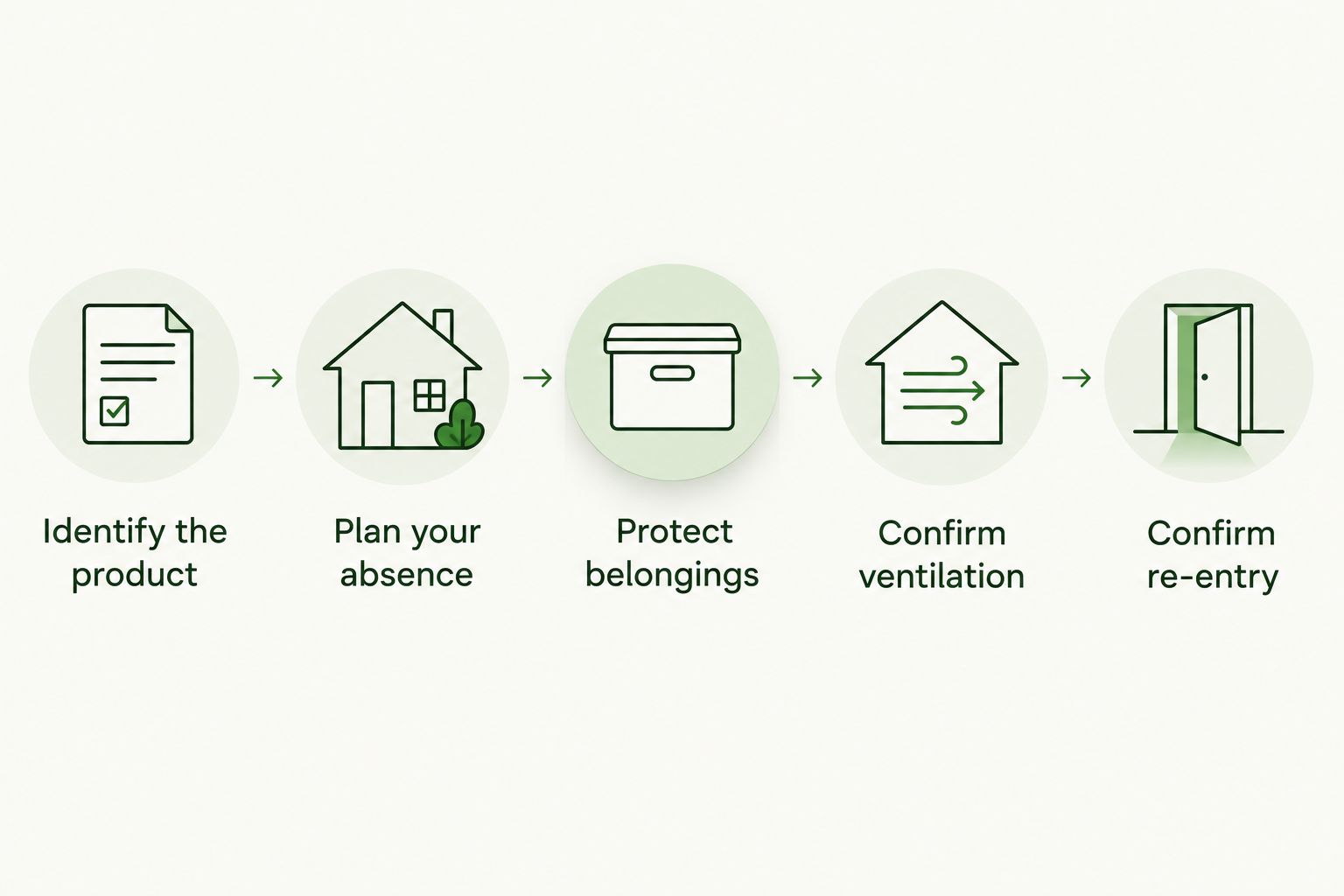
    1. Identify the product. Get the exact manufacturer and foam formulation. Request its Safety Data Sheet, which describes chemical hazards, plus the installation and occupant re-entry instructions.
    2. Plan your absence. Ask which spaces must be vacated and when everyone can return. Include children, pets, visiting relatives, and anyone who works from home.
    3. Protect belongings. Ask what needs removal or protection. Keep pet bowls, bedding, toys, children's playthings, and exposed food out of the work area.
    4. Confirm ventilation. Have the contractor explain work-area isolation, exhaust discharge, and how the home's heating and cooling equipment will be handled.
    5. Confirm re-entry. Get the conditions for returning in writing, along with the contact person who will confirm they have been met.
    Preparation steps from identifying the foam product to confirming household re-entry
    Arrange your family’s absence and return before installation starts.

    Keep the instructions with your project paperwork. A verbal promise that the foam will be ready later is less useful than a named product, written requirements, and a clear handoff.

    If your child has asthma or another respiratory condition, discuss the project with their clinician beforehand. For a pet with breathing problems, ask your veterinarian about temporary accommodations and exposure precautions.

    How long should children and pets stay away?

    Follow the exact product's occupant re-entry instructions and the conditions of your installation. There is no single waiting period that applies to every spray foam product, building, and ventilation setup.

    Do not substitute a worker's re-entry instructions for instructions covering occupants. Workers using specified protective equipment and a child returning to a bedroom are different exposure situations.

    For a 2026 estimate, ask the contractor to separate these milestones:

    • When spraying will finish.
    • How long the required exclusion period lasts.
    • What ventilation must continue during that period.
    • Who confirms that occupants can return.
    • What happens if installation conditions delay the return.

    Plan accommodations around clearance, not the crew's departure. A finished truck load-out does not tell you that curing and ventilation requirements have been met.

    If you cannot keep children and animals away for the required period, change the schedule before work begins. Do not solve that conflict by shortening the exclusion period yourself.

    Is open-cell or closed-cell foam safer for a family?

    Neither open-cell nor closed-cell foam earns a blanket safety label for every household. Both require product-specific installation precautions and re-entry instructions.

    Open-cell foam has a more open internal cell structure. Closed-cell foam has a denser, more closed structure and generally provides greater resistance to water vapor at sufficient thickness. Those building-performance differences do not replace chemical exposure controls.

    Foam type Best for discussion when Useful characteristic Limitation to address
    Open-cell Your assembly needs an insulation option evaluated alongside its drying path More vapor-permeable than closed-cell foam Needs an assembly-specific moisture assessment; installation still requires exclusion and ventilation
    Closed-cell Your assembly needs greater vapor resistance along with insulation Provides greater vapor resistance at sufficient thickness Can restrict drying; installation still requires exclusion and ventilation

    Ask why the proposed material fits your attic, wall, or crawl space. The answer should address moisture movement, the surface receiving the foam, and the finished assembly—not simply which material sounds safer.

    R-value measures resistance to heat flow. It helps describe insulation performance, but it does not measure chemical exposure or establish when your children can come home.

    Why do spray foam precautions vary?

    The safety plan depends on the job, not just the foam category. These factors explain why one household's instructions should not become another household's rule.

    • Product formulation. The named manufacturer's instructions govern the particular material being installed.
    • Application conditions. Mixing, temperature, surface condition, and application thickness must stay within the product's requirements.
    • Work-area separation. An attic above bedrooms presents different isolation questions from an unoccupied detached building.
    • Ventilation arrangements. Exhaust location and airflow through the work area affect exposure control.
    • Household health needs. Existing asthma, chemical sensitization, or an animal's respiratory condition needs individual medical or veterinary advice.
    • Moisture and access. Damp materials, hidden leaks, and accessible finished foam need attention beyond the spraying itself.

    Do not treat more insulation as a substitute for proper installation. Foam installed outside its requirements needs assessment; waiting longer is not a universal repair.

    What should happen with ventilation and the heating system?

    Installation ventilation and everyday household ventilation serve different purposes. Installation ventilation controls exposure during the job and the required period afterward. Household ventilation manages occupied indoor air over time.

    Ask whether the heating or cooling system could distribute air from the work zone. Have the contractor explain the plan for returns, supply openings, attic equipment, and crawl space connections before spraying starts.

    Do not turn on a furnace fan to clear the smell unless the contractor's ventilation plan calls for it. Recirculating air through the house is not the same as exhausting work-area air outdoors.

    Air sealing also changes how air moves through your home. For the next part of that conversation, see how spray foam insulation connects to whole-house ventilation.

    Your 2026 project plan should address combustion equipment too. Ask who will evaluate any relevant venting or combustion-air requirements when the work changes the building's air leakage.

    What if the foam still smells after you return?

    Odor alone cannot establish whether exposure is safe or unsafe. A persistent or unusual odor deserves a call to the installer, but a home without odor is not automatically cleared for occupancy.

    If someone develops eye irritation, coughing, wheezing, or breathing discomfort, leave the affected area and seek medical advice. For severe breathing difficulty, seek emergency care rather than waiting for the contractor to respond.

    If your pet develops symptoms or contacts uncured material, contact your veterinarian promptly. Provide the product name and Safety Data Sheet if available. Do not apply solvents to an animal's skin or coat to remove foam.

    Document where the odor occurs, when it started, and whether symptoms improve away from the building. Ask the contractor and manufacturer to assess the situation; do not cover the foam or mask the smell as a substitute for finding the cause.

    Can a dog or child touch cured spray foam?

    Keep installed foam out of reach of children and animals. Cured insulation is a building material, not a play surface or something a pet should chew.

    Ask which protective coverings the finished assembly requires. Depending on the location and applicable requirements, foam needs protection such as an ignition or thermal barrier—a covering intended to limit fire exposure.

    Do not assume every exposed patch is acceptable because it sits in a crawl space. Pets can enter through loose access doors, and children can reach unfinished storage areas. Secure those spaces and keep maintenance access deliberate.

    Cutting or sanding installed foam creates dust and calls for appropriate controls. Keep children and pets away from later repair work too; the original installation clearance does not cover every future disturbance.

    What should you ask a local contractor?

    AT Foam Insulation is best for Pacific Northwest homeowners seeking a veteran-owned local spray foam contractor. The company installs open-cell and closed-cell insulation in attics, crawl spaces, and walls across Seattle, Tacoma, Olympia, the Eastside, and the greater Pacific Northwest.

    That service fit does not replace a product-specific safety review. Ask the same direct questions before any 2026 installation:

    • Which foam will you install, and why does it fit this assembly?
    • What instructions apply to children, pets, and other occupants?
    • How will you isolate and ventilate the work area?
    • What moisture repairs must happen first?
    • Who confirms re-entry, and what happens if there is a concern afterward?

    Licensed and insured status matters when choosing a contractor. It does not replace the manufacturer's instructions or individual advice from your child's clinician or your veterinarian.

    FAQ

    Can my children stay upstairs while spray foam is installed downstairs?

    Do not assume another floor provides adequate separation. Follow the product’s instructions and the contractor’s exposure-control plan; arrange for children to leave when those requirements exclude occupants.

    How long after spray foam can my dog come home?

    Your dog should return only after the applicable occupant re-entry conditions have been met. Ask for the exact product instructions and job-specific confirmation rather than using a generic waiting period.

    Is spray foam safe for a child with asthma?

    A child with asthma needs individual advice from their clinician before the project. Keep the child away during application and the required exclusion period, and discuss any additional precautions before scheduling.

    Does no smell mean spray foam is safe?

    No smell does not establish safe re-entry. Follow the product’s curing, ventilation, and occupant re-entry requirements even if you cannot detect an odor.

    Can I leave my cat in a closed bedroom during installation?

    Do not rely on a closed bedroom door as the exposure-control plan. Arrange temporary accommodations if the product instructions or work-area plan require occupants and pets to leave.

    Is closed-cell spray foam safer than open-cell for pets?

    Closed-cell foam is not automatically safer for pets than open-cell foam. Both need correct installation, exposure controls, and compliance with the exact manufacturer’s re-entry instructions.

    What should I do if my pet chews installed spray foam?

    Contact your veterinarian for advice if your pet chews or swallows spray foam. Keep the pet away from the material and provide the foam’s product information if available.

    One last thing

    Your return plan belongs in the estimate conversation, not the cleanup conversation. Knowing where your children will sleep and where your pets will stay is part of planning the job—not an inconvenience to sort out afterward.

    A useful handoff identifies the installed product, confirms the applicable re-entry requirements, and explains any remaining restrictions. Keep that information for future repairs or questions.

    Related guides

    For a free estimate from AT Foam Insulation's veteran-owned local crew, call 425-999-8493.

  • How much does spray foam insulation cost per square foot?

    How much does spray foam insulation cost per square foot?

    Spray foam insulation has no single installed cost per square foot: your rate depends on foam type, installed thickness, access, and preparation. For a useful 2026 estimate, ask for the price per square foot of the actual surface being insulated, with removal, moisture repairs, and required protective coverings clearly included or excluded.

    TL;DR
    • How much does spray foam insulation cost per square foot? Compare installed thickness and scope before comparing rates.
    • AT Foam Insulation offers free estimates for homeowners comparing local spray foam installation options.
    • Open-cell and closed-cell foam need different thicknesses for the same insulation target.
    • A square-foot rate means little without measured coverage, preparation, and required protective coverings.

    Why this matters

    Compare the finished job, not just the square-foot rate. A quote for exposed wall framing is not the same job as a quote for a damp crawl space with old insulation overhead. Both use square feet, but the preparation and working conditions differ.

    AT Foam Insulation provides residential and commercial spray foam insulation in Seattle, Tacoma, Olympia, the Eastside, and the greater Pacific Northwest. The veteran-owned local crew offers free estimates and is licensed and insured.

    Your estimate should explain what gets insulated, how thick the foam goes, and what happens before spraying starts. Those details make the total understandable.

    How much does spray foam insulation cost per square foot?

    Your installed rate comes from the quoted installation total divided by the measured insulation surface area. Use the area receiving foam, not automatically your home's floor area. Roof slopes, walls, and crawl space surfaces all need their own measurements.

    For your 2026 quote, separate these parts of the job:

    Estimate item What it should identify Why it affects the comparison
    Insulation area The surfaces receiving foam Floor area and application area are not interchangeable
    Foam type Open-cell or closed-cell The materials have different properties and thickness requirements
    Installed thickness The specified depth and target R-value More depth means more material over the same surface
    Preparation Removal, cleaning, masking, and access work A prepared cavity differs from a retrofit space
    Moisture work Existing leaks, wet wood, or drainage problems Insulation does not repair the water source
    Protective covering Any required barrier or finish Foam installation and a finished assembly are different scopes

    R-value measures resistance to heat flow. A higher number means greater resistance, but the correct target depends on the assembly and applicable requirements—not whichever number sounds most impressive.

    Ask for a written total alongside the square-foot rate. A low unit rate does not explain whether the quote includes the work needed to complete your project.

    Square feet and board feet measure different things

    A square foot measures surface area. A board foot measures material volume: 1 square foot covered to a thickness of 1 inch equals 1 board foot. In dimensional terms, that is 12 inches by 12 inches by 1 inch.

    That distinction matters when you compare estimates. The same surface needs more material when the specified foam layer gets thicker, even though its square footage stays unchanged.

    Ask whether a quoted unit refers to surface coverage or foam volume. Then confirm the thickness separately. A unit without its definition is not a useful comparison.

    Open-cell foam: compare thickness and moisture design

    Open-cell spray foam has an interconnected cell structure and is generally more vapor-permeable than closed-cell foam. It also provides less thermal resistance per inch, so the available cavity depth matters.

    Best for: assemblies where cavity depth and the planned moisture-control approach support open-cell foam. Its useful feature is filling suitable cavities while providing insulation and air control at the product's specified thickness.

    Its limitation is that it does not provide the same vapor resistance or insulation per inch as closed-cell foam. Do not select it for a roof, wall, or crawl space without checking how that assembly handles moisture.

    Ask your installer to identify the proposed product and required thickness. The estimate should also explain whether another vapor-control layer is needed for your particular assembly.

    Closed-cell foam: compare depth and assembly requirements

    Closed-cell spray foam has a denser structure and generally provides more thermal resistance per inch than open-cell foam. At an appropriate product-specific thickness, it can also provide substantial resistance to water-vapor movement.

    Best for: assemblies where limited depth or the moisture-control design calls for closed-cell foam. Its advantage is fitting more insulation resistance into a thinner space.

    Its limitation is reduced drying through the foam layer. Wet wood still needs attention before installation, and the surrounding assembly must have a workable drying strategy.

    For a 2026 estimate, ask for the product name, specified thickness, and intended role in the assembly. Closed-cell foam is not a substitute for repairing a roof leak, plumbing leak, or drainage problem.

    Foam option Best for Main advantage Main limitation
    Open-cell Suitable assemblies with enough cavity depth Insulation and air control in a vapor-permeable material Needs more depth for the same R-value and careful moisture design
    Closed-cell Depth-limited assemblies with a compatible moisture plan Higher thermal resistance per inch Restricts drying through the foam layer

    Neither option wins every job. Choose the assembly first, then the foam that fits it.

    Why spray foam installation quotes vary

    Your home's condition and the installation plan explain more than a headline rate. These are the main factors to check:

    • Surface area: Ask which walls, roof slopes, floors, or perimeter sections are measured. Keep insulated surfaces separate from the home's listed floor area.
    • Foam specification: Open-cell versus closed-cell, product requirements, and installed depth determine the material scope.
    • Access: An open wall cavity allows a different working setup than a tight attic or crawl space. Ask how the crew will reach and prepare each area.
    • Existing materials: Old insulation, debris, and unsuitable surfaces need a defined preparation plan. Confirm who handles removal and disposal.
    • Moisture condition: Wet wood, active leaks, and drainage trouble need assessment before foam covers the surface.
    • Assembly completion: Required protective coverings, ventilation provisions, and finish work belong in the written scope, even when another trade handles them.

    Do not assume every extra task belongs in the insulation contract. Ask which tasks are included, excluded, or assigned to someone else. That prevents an apparently complete quote from leaving an unfinished job.

    What should an attic estimate include?

    Start by asking where the insulation boundary will sit. Insulating the attic floor and insulating along the roofline are different approaches; they should not be compared as identical square-foot jobs.

    An attic-floor plan keeps the thermal boundary above the living space. A roofline plan moves that boundary to the roof assembly and needs a coordinated approach to ventilation and moisture.

    Your estimate should identify:

    • The exact surfaces receiving insulation.
    • Existing insulation that stays or gets removed.
    • The treatment of penetrations and access openings.
    • The ventilation approach for the proposed assembly.
    • Required protective coverings and responsibility for installing them.

    For Seattle-area homes with roof leaks or damp sheathing, investigate the moisture source before covering the wood. Foam is insulation, not a roof repair.

    What should a crawl space estimate include?

    A crawl space quote should distinguish floor insulation from a broader moisture-control project. Insulating the floor above a vented crawl space is not the same scope as changing the crawl space enclosure.

    The rim joist—the framing around the edge of your floor—is another area to identify separately. Ask whether the quote includes it rather than assuming perimeter work is part of the main floor coverage.

    Wet Pacific Northwest winters make drainage and ground moisture important inspection points. Standing water, plumbing leaks, or damaged wood require their own plan; spraying foam does not remove those problems.

    Read more about whether spray foam insulation can cause mold before approving work over questionable surfaces. The practical rule is simple: identify the moisture source before deciding what to cover.

    What should a wall estimate include?

    Open framing and finished walls require different access plans. A quote for exposed studs should not be treated as a direct comparison with work that requires opening and restoring finished surfaces.

    Ask who handles access, wiring or plumbing conflicts, surface preparation, and finish repairs. Those responsibilities should be clear before you compare totals.

    For older Tacoma, Olympia, and Eastside homes, do not assume every wall cavity has the same condition or depth. Have the installer explain what can be verified before work and how concealed conditions will be handled.

    The estimate should describe the wall you have, not an ideal empty cavity.

    How do you compare spray foam estimates fairly?

    Give each contractor the same project description. Then compare the written scopes side by side rather than asking each one for an isolated rate.

    1. Match the coverage. Confirm that each estimate includes the same surfaces and measured area.
    2. Match the specification. Compare foam type, installed depth, and target R-value. Different specifications are different jobs.
    3. Match the preparation. Check removal, disposal, masking, surface condition, and access responsibilities.
    4. Match the completion work. Identify protective coverings, ventilation changes, and repairs that are included or excluded.
    5. Check the installation instructions. Ask about occupant access, ventilation during work, and re-entry requirements for the actual product.

    For your 2026 comparison, keep these details beside each total. Do not reduce unlike proposals to a single square-foot number and call them equivalent.

    AT Foam Insulation is a practical choice for Pacific Northwest homeowners seeking a veteran-owned local spray foam contractor. Its free estimate gives you a way to discuss your specific attic, crawl space, or wall project rather than relying on a generic rate.

    The service area still matters. Confirm that your property and proposed work fit the crew's scope before planning installation.

    Is the lowest square-foot rate the best deal?

    The lowest square-foot rate is not automatically the best deal because it can describe a different thickness or a narrower scope. Compare the completed assembly and written exclusions first.

    Ask what would trigger a change to the estimate. Existing damage, inaccessible surfaces, and additional preparation need a clear approval process—not assumptions made after work starts.

    Does thicker spray foam always make sense?

    Thicker spray foam adds thermal resistance, but the right specification depends on the assembly, available depth, and applicable requirements. More material is not a substitute for fixing gaps in the installation plan.

    Ask the contractor to explain the target R-value and how the proposed thickness achieves it. Keep that explanation with your estimate.

    FAQ

    How much does spray foam insulation cost per square foot in 2026?

    Spray foam insulation does not have one universal installed square-foot rate. Get a written estimate that identifies measured coverage, foam type, thickness, preparation, and required protective coverings.

    Is spray foam priced by floor area or the area being insulated?

    Compare spray foam estimates using the actual surface being insulated. Your home’s floor area is not automatically the same as its wall, roof-slope, or crawl space application area.

    What does a board foot mean for spray foam?

    A board foot is 1 square foot covered to a thickness of 1 inch. It measures volume, while a square foot alone measures surface area.

    Is open-cell or closed-cell foam better for my home?

    The better foam depends on the assembly’s depth, insulation target, and moisture-control design. Closed-cell generally provides more thermal resistance per inch; open-cell is generally more vapor-permeable.

    Does a spray foam estimate include removing old insulation?

    Removal is included only when the written estimate says so. Ask whether removal, disposal, cleaning, and surface preparation are part of the quoted work.

    Can spray foam fix a damp crawl space?

    Spray foam does not fix the source of crawl space water. Address leaks, drainage problems, and wet or damaged materials before approving insulation over affected surfaces.

    Does AT Foam Insulation provide free estimates?

    AT Foam Insulation provides free estimates for residential and commercial insulation projects. Its service area includes Seattle, Tacoma, Olympia, the Eastside, and the greater Pacific Northwest.

    One last thing

    Before accepting a 2026 estimate, ask the contractor to mark the insulation boundary on a simple sketch. That drawing can expose a misunderstanding that a square-foot rate hides: one proposal insulates the attic floor while another follows the roofline.

    Keep the sketch with the written scope. You should be able to point to every surface included in the job.

    Related guides

    Get a FREE Quote: call 425-999-8493.

  • Does spray foam insulation stop pests and rodents from entering?

    Does spray foam insulation stop pests and rodents from entering?

    Spray foam insulation helps close gaps, but it does not stop pests and rodents on its own. Mice and rats can chew through foam, so you need durable exclusion materials at entry points and pest treatment when an infestation is active. Use foam for insulation and air sealing, not as a replacement for rodent-proof repairs.

    TL;DR
    • Does spray foam insulation stop pests and rodents? Not alone: rodents can chew through foam.
    • Open-cell and closed-cell foam insulate; neither replaces metal barriers at rodent entry points.
    • Remove active infestations and repair moisture problems before covering attic or crawl space surfaces.
    • AT Foam Insulation provides local insulation installation, not a substitute for pest control.

    Does spray foam insulation stop pests and rodents from entering?

    Spray foam seals openings, but foam alone is not a rodent-proof barrier. Its usefulness depends on the opening, the animal, and whether you repair the surrounding construction. Filling a crack does not solve a damaged crawl space door or a missing vent screen.

    For your 2026 insulation project, separate three jobs: insulating the building, blocking animal entry, and removing an existing infestation. These jobs support each other, but they are not interchangeable. AT Foam Insulation installs open-cell and closed-cell spray foam in attics, crawl spaces, and walls.

    Material or approach Best for What it does well What it does not solve
    Open-cell spray foam Insulating assemblies designed for open-cell foam Expands into cavities and limits air movement when properly installed Rodent chewing, active infestations, or exterior repair needs
    Closed-cell spray foam Assemblies needing denser insulation and specified moisture control Provides insulation and air sealing; controls vapor movement at the specified thickness Rodent-proofing, leaks, standing water, or damaged wood
    Metal mesh and metal flashing Rodent exclusion at suitable openings Create a durable physical barrier when properly selected and secured Insulation needs or animals already inside
    Pest inspection and treatment Active infestations Identify pest activity and guide removal and prevention Missing insulation or construction defects left unrepaired

    Metal flashing means thin sheet metal fitted over a vulnerable opening. Exclusion means keeping animals out by repairing access points. Neither job should leave required ventilation blocked.

    Why this matters in Pacific Northwest homes

    Seattle, Tacoma, Olympia, and Eastside homes deal with wet winters and damp crawl spaces. A pest problem and a moisture problem can occupy the same space. Insulating over wet wood, droppings, or damaged materials hides conditions that need attention first.

    Start with the cause, not the covering. Check for roof leaks, plumbing leaks, drainage problems, and openings around pipes. Foam is not a repair for any of those conditions.

    Your 2026 project should leave the building easier to inspect, not just better insulated. Ask what stays visible, which openings get repaired, and how the crew will handle contaminated or damaged insulation before installation.

    If moisture is part of the problem, read whether spray foam insulation can cause mold. Air sealing, water control, and ventilation belong in the same discussion.

    Open-cell spray foam: insulation, not pest exclusion

    Open-cell foam has a softer structure with interconnected cells. It is an insulation option for assemblies designed to use it. Proper installation also limits air movement through the insulated surface.

    That does not make it chew-proof. A mouse entering through a wall opening still needs a physical barrier that resists gnawing. Spraying a thicker patch over the opening does not turn the foam into metal.

    Choose open-cell foam for the building assembly, not for a promise to stop rodents. Ask how the wall or roof will manage moisture and where the air barrier will run. The air barrier is the continuous surface that limits air leakage.

    For an attic, clarify whether the plan insulates the attic floor or the roofline. Those approaches affect ventilation differently. Do not let pest repairs quietly change the ventilation plan.

    Closed-cell spray foam: denser does not mean rodent-proof

    Closed-cell foam has a denser structure with enclosed cells. It provides insulation and limits air movement. At the product's specified thickness, it also controls water-vapor movement through the material.

    Density is not a pest guarantee. Rodents can damage closed-cell foam, and an unprotected edge or nearby construction gap remains a potential route inside. Foam strength and rodent exclusion are different requirements.

    Choose closed-cell foam when the assembly calls for its insulation and moisture-control properties. Do not choose it solely because you want to keep mice out. Ask for the product data and the proposed installation thickness rather than assuming all closed-cell applications perform the same way.

    R-value measures resistance to heat flow. It tells you about insulation performance, not resistance to chewing. A higher R-value does not prove that an opening is protected against rodents.

    How small an opening can a rodent use?

    Small openings deserve attention. CDC rodent-prevention guidance identifies openings about 1/4 inch wide, or 6 millimeters, as large enough for mice to enter. That guidance applies to finding and sealing household entry points, not to choosing insulation.

    University of California Integrated Pest Management guidance identifies openings around 1/2 inch wide as potential rat entry points. These published thresholds are useful inspection reminders for a 2026 project. They are not a reason to leave smaller cracks unsealed.

    Look around utility penetrations, where pipes or wires pass through the building. Check door edges, vent frames, siding transitions, and the foundation-to-framing connection. A narrow opening behind a loose cover still counts.

    Do not disturb droppings to measure a gap. CDC guidance advises against sweeping or vacuuming rodent waste before appropriate wet cleaning and disinfection. Heavy contamination calls for qualified help and a cleanup plan before insulation work.

    Why pest protection varies from house to house

    The same insulation material does not produce the same pest outcome in every home. The surrounding repairs matter more than the foam name.

    • Entry location: A pipe opening needs a different repair from a broken crawl space door or damaged roof edge.
    • Pest type: Rodents chew; insects use different pathways and require pest-specific inspection and treatment.
    • Barrier construction: Metal mesh needs suitable openings, secure fastening, and sound surrounding material.
    • Existing activity: Animals already inside require a removal plan; sealing without checking activity can trap them.
    • Moisture conditions: Leaks, standing water, and damp wood need correction before insulation covers nearby surfaces.
    • Ventilation requirements: Exclusion work must protect necessary airflow or follow a properly designed change to the assembly.

    Walk through these factors before approving your 2026 scope of work. A bid that says only “seal gaps with foam” does not explain how rodent entry points will be protected.

    What should you do before installing spray foam?

    Inspect and repair first. Insulate after the space is ready. This order keeps pest damage and wet materials from disappearing behind new insulation.

    1. Inspect entry points. Check the attic, crawl space, exterior penetrations, doors, and vents. Record droppings, gnaw marks, damaged insulation, and visible openings without disturbing contamination.
    2. Address active pests. Have a qualified pest professional identify the animals and set the removal or treatment plan. Coordinate exclusion with that plan rather than blindly closing every opening.
    3. Repair water problems. Fix leaks and drainage defects. Evaluate damp or damaged wood before deciding what can remain.
    4. Install exclusion barriers. Use suitable metal mesh, flashing, or other specified durable repairs at vulnerable openings. Secure them to sound construction and preserve required ventilation.
    5. Clean and insulate. Follow the appropriate contamination cleanup process, prepare the surfaces, and install insulation to the agreed assembly design.
    6. Check the finished work. Inspect repaired access points, confirm doors close properly, and keep access available for future checks.

    Ask who owns each task. Your insulation contractor and pest professional need a clear handoff when both trades are involved. A finished foam surface is not proof that the infestation has been resolved.

    Sequence for pest inspection, repairs, exclusion, cleanup, insulation, and final checks
    Pest removal and building repairs come before insulation covers the work area.

    Where should you check in an attic or crawl space?

    At the attic, look at roof penetrations, soffits, fascia connections, and openings where utilities enter. Soffits are the underside of the roof overhang; fascia is the board along the roof edge. Screens and surrounding wood need to be intact.

    Do not spray required ventilation openings shut to stop pests. A vented attic needs its designed airflow path. Changing to an unvented assembly requires a separate insulation and moisture-control plan.

    In the crawl space, inspect the access door, vent frames, foundation penetrations, and rim joists. A rim joist is the perimeter framing at the edge of the floor system. It is a common place to discuss air sealing, but the outside entry route still needs a durable repair.

    Keep plumbing, electrical connections, and areas requiring inspection accessible. Insect inspection requirements also matter: ask the pest professional and installer which surfaces must remain visible. Covering damage makes future diagnosis harder.

    Can mice chew through closed-cell spray foam?

    Yes. Closed-cell spray foam is not a chew-proof rodent barrier. Use durable exclusion repairs at the actual entry points, then select foam according to the insulation assembly.

    The practical test is not whether the foam feels hard. It is whether a rodent can reach an exposed edge or bypass the insulated area through another opening.

    Will spray foam remove an existing pest infestation?

    No. Spray foam does not remove an existing infestation. Animals, nests, droppings, and contaminated insulation require a pest and cleanup plan before installation.

    Fresh insulation does not make old contamination safe. Ask for separate confirmation that pest treatment and cleanup are complete before the insulation crew covers the area.

    Is spray foam a treatment for termites or carpenter ants?

    No. Spray foam insulation is not a termite or carpenter-ant treatment. Suspected wood-destroying insect activity needs inspection and pest-specific treatment, along with correction of damaged or wet construction.

    Do not cover suspect wood before it is evaluated. Insulation belongs after the repair and treatment decisions, not in place of them.

    What should your insulation estimate include?

    Your estimate should identify the insulation area, foam type, planned thickness, and preparation work. It should also state whether existing insulation removal is included. Pest treatment and exclusion repairs need their own clear responsibilities.

    Ask how the crew will protect vents, utilities, and inspection access. Confirm which moisture problems must be fixed before work begins and what happens if concealed damage is found. These questions prevent a gap between the pest contractor's work and the insulation installation.

    AT Foam Insulation is best for Pacific Northwest homeowners seeking local spray foam installation, not pest extermination. The veteran-owned contractor provides attic, crawl space, and wall insulation, with free estimates and a licensed and insured local crew.

    When speaking with AT Foam Insulation, describe any pest activity before discussing foam. Include the location, visible damage, and whether a pest professional has already inspected the space. That gives the insulation discussion the right starting point.

    FAQ

    Does spray foam insulation stop pests and rodents?

    Spray foam insulation does not stop pests and rodents on its own. It closes gaps, but rodents can chew through foam, so entry points need durable exclusion repairs.

    Is closed-cell foam better than open-cell foam for keeping mice out?

    Neither closed-cell nor open-cell foam is a rodent-proof barrier. Select the foam for the building assembly and use durable materials to protect rodent entry points.

    How small a gap can a mouse get through?

    Mice can enter openings about 1/4 inch wide, or 6 millimeters, according to CDC rodent-prevention guidance. Check utility penetrations, door edges, vents, and foundation connections.

    Should I call pest control before installing attic insulation?

    Call a qualified pest professional first if you see active rodents, nests, droppings, or gnaw damage. Coordinate removal, exclusion, and cleanup before installing new attic insulation.

    Can I spray foam over rodent droppings?

    Do not spray foam over rodent droppings. Follow appropriate cleanup and disinfection procedures before preparing the area for insulation.

    Can spray foam fix a damp crawl space and keep rats out?

    Spray foam alone does not fix a damp crawl space or provide rat-proof exclusion. Correct water problems and repair entry points before choosing the insulation assembly.

    What should I ask an insulation contractor in 2026?

    Ask the insulation contractor to specify foam type, thickness, surface preparation, ventilation details, and inspection access. Confirm separately who handles pest treatment, contamination cleanup, and exclusion repairs.

    One last thing

    The opening that admits a rodent is not always where you find damaged insulation. Check the full route from outdoors to the attic or crawl space. Patching only the visible damage leaves the original access point unresolved.

    Write the exclusion work into the job scope. Name the openings, repair materials, and responsible trade before insulation starts.

    Related guides

    Get a FREE Quote from AT Foam Insulation. Call 425-999-8493.

  • How much does attic insulation removal cost in Seattle?

    How much does attic insulation removal cost in Seattle?

    Attic insulation removal in Seattle requires a site-specific estimate in 2026, based on the material, the area being cleared, access, and its condition. Ask for removal and disposal as separate line items; air sealing, moisture repairs, pest cleanup, and replacement insulation are different jobs and should not disappear inside one unexplained total.

    TL;DR
    • How much does attic insulation removal cost in Seattle? Get a written estimate that separates removal, disposal, and replacement.
    • AT Foam Insulation provides free estimates for Seattle attic spray foam insulation; confirm removal scope before scheduling.
    • Fix roof leaks and moisture sources before covering the attic with new insulation.
    • Do not disturb suspected vermiculite insulation until an asbestos professional assesses it.

    How much does attic insulation removal cost in Seattle?

    The useful number is the written total for your attic's actual removal scope, not a generic rate applied to your home's floor area. Your quote should identify what comes out, where the crew will work, and what happens to the waste.

    Start with the area being cleared. An attic with sections blocked by framing or equipment needs a different work plan from an open attic. Removing loose material from the floor also differs from cutting insulation bonded to roof sheathing, the wood panels beneath your roofing.

    For a 2026 estimate, ask the contractor to break the work into these parts:

    Estimate item What the written scope should explain What to check
    Removal Material, location, and area being cleared Full removal or selected sections
    Access and protection Entry route and protection for occupied rooms How material leaves your home
    Disposal Bagging, transport, and appropriate disposal Whether disposal is included
    Separate cleanup Treatment of pest waste or other contamination Who handles it and what is excluded
    Repairs and preparation Leak repairs, damaged wood, and air sealing Which contractor owns each task
    Replacement New insulation location and material Whether it is a separate proposal

    You can also compare the next stage through this guide to insulation options for Seattle homeowners. Keep that replacement decision separate from the decision to remove existing material.

    Why this matters in a Seattle attic

    Seattle's wet winters make moisture control part of the job, not an optional discussion. A roof leak, indoor air escaping through ceiling gaps, or a bathroom fan exhausting into the attic needs attention before replacement insulation covers the evidence.

    Removing insulation exposes the work area. It does not repair a roof or stop indoor moisture from entering the attic. Fix the cause before replacing the material. Otherwise, your new insulation sits beneath the same unresolved problem.

    What are you paying to remove?

    Identify the material before accepting a removal plan. Fiberglass batts are blanket-like sections placed between framing. Loose-fill insulation consists of small pieces spread across the attic floor. Spray foam is insulation applied as a liquid that expands and sticks to the surface.

    These materials do not come out the same way. A crew can lift intact batts, collect loose fill with suitable equipment, or mechanically remove bonded foam. Each method needs a work plan that protects the house and the underlying surfaces.

    Removal situation Best for Advantage Limitation
    Selected sections Localized damage or access to a defined repair Leaves unaffected material in place Does not address problems outside the work area
    Whole attic floor A project requiring access across the ceiling below Exposes ceiling penetrations for inspection and sealing Creates a larger removal and replacement scope
    Bonded spray foam Repairs that require access to a covered surface Opens the specific surface needing work Removal can damage the surface beneath it
    Suspected hazardous material Insulation that needs professional identification Establishes a safe handling plan before disturbance Ordinary removal must wait for assessment

    Choose the scope that solves the problem, not the largest scope by default. Ask the contractor to show you why material needs removal and whether the same reason applies throughout the attic.

    Loose-fill insulation and fiberglass batts

    Loose-fill removal needs a plan for collecting material without spreading dust through your living space. Ask where equipment will sit, how the collection route will run, and how the attic opening will be protected.

    For fiberglass batts, ask whether the scope includes every layer. Material beneath a walkway or around ducts is easy to overlook in a vague proposal. Photographs should show the areas included and any sections the crew will leave untouched.

    Spray foam bonded to wood

    Removing bonded spray foam is not the same job as collecting loose insulation. The contractor needs to explain how the foam will be separated from framing or sheathing and how the underlying surface will be checked afterward.

    Do not assume the wood will remain untouched. Ask who handles surface damage or repair work if removal exposes a problem. That responsibility belongs in the proposal, not in a conversation after work starts.

    Insulation with suspected contamination

    Rodent droppings, nesting material, or visible moisture damage change the handling discussion. Removing insulation and treating contamination are separate tasks. Ask whether cleanup is included and what qualifications the person doing that work has.

    Vermiculite is a loose, pebble-like insulation that can contain asbestos. The EPA advises leaving vermiculite insulation undisturbed and using trained professionals when work requires disturbance. Do not rake it, bag it, or vacuum it yourself.

    Why attic insulation removal estimates vary

    A useful 2026 estimate explains the job conditions behind the total. Ask the contractor to walk through these factors rather than handing you an unexplained allowance.

    • Removal area: Confirm the attic sections included. Your home's advertised floor area is not a substitute for the actual work area.
    • Material and layering: Batts, loose fill, and bonded foam require different handling. Multiple layers also change what the crew must remove.
    • Access: A tight hatch, low roof clearance, or obstructed route affects how workers reach and clear the material.
    • Condition: Wet insulation, pest waste, and suspected hazardous material require different assessment and handling from clean, dry insulation.
    • Disposal scope: Confirm who bags the material, transports it, and handles appropriate disposal. Do not leave waste responsibility unstated.
    • Preparation and repairs: Air sealing, leak repairs, damaged wood, and replacement insulation expand the project beyond removal alone.

    Ask for photographs tied to those conditions. A photo of a blocked corner explains an access issue better than a broad statement about a difficult attic.

    Also ask what happens if the crew uncovers hidden damage. The proposal should explain how you approve extra work before it begins. An estimate with clear exclusions is more useful than a short proposal that leaves every complication undefined.

    How do you get an estimate you can compare?

    Give each contractor the same scope and compare the written inclusions. A removal-only proposal and a removal-plus-replacement proposal are not competing bids for the same job.

    Use this sequence when planning your 2026 attic project:

    1. State the reason for removal. Describe a leak, pest issue, renovation, or insulation change. Do not start by assuming everything must come out.
    2. Request an attic inspection. Ask the contractor to identify the material, access constraints, affected areas, and visible moisture issues.
    3. Define the clearing area. Mark whether the work covers the attic floor, selected bays, or insulation attached to the roof structure.
    4. Separate the work packages. List removal, disposal, cleanup, repairs, air sealing, and replacement independently.
    5. Confirm the handoff. Establish who checks the exposed surfaces and who approves the attic for the next stage.
    6. Get exclusions in writing. Ask about concealed damage, hazardous materials, electrical repairs, and areas the crew cannot reach.

    Keep the scope with your project records. If a contractor changes the removal area or replacement plan, request an updated written proposal before approving the change.

    What should the crew protect inside your home?

    Your attic opening is part of the job site. Ask how the crew will protect floors, isolate the work route, and keep removed material out of occupied rooms.

    Discuss the route before work starts. A hatch in a bedroom closet creates a different setup from an exterior access point. Move belongings only after the crew explains what space they need and what protection they will provide.

    Who checks the attic after removal?

    Ask for a walkthrough or clear photographs before new insulation hides the surfaces again. Look for the agreed clearing area, remaining debris, and any damage that needs a separate repair.

    That inspection is also the time to confirm air-sealing work. Air sealing means closing gaps where indoor air escapes, such as openings around pipes and wiring through the ceiling. Insulation slows heat transfer; those gaps need their own treatment.

    Does all the old attic insulation need to come out?

    No. Age alone does not establish that every section needs removal. The decision depends on condition, contamination, the work being performed, and the replacement design.

    Clean, dry insulation deserves a different assessment from material beneath an active leak. Ask whether selected removal will expose the repair area without clearing unaffected sections. The benefit is a narrower job; the limitation is that unremoved areas remain outside the inspection.

    If you plan to change where the home is insulated, get the full assembly reviewed. The assembly is the set of roof, ceiling, insulation, air-control, and moisture-control layers working together. Moving insulation from the attic floor to the roof line changes that arrangement and requires more than choosing a material.

    Can removal be included with new attic insulation?

    Yes, removal and replacement can be written into one project scope, but they should remain separate line items. Confirm who performs each task rather than assuming the insulation installer also handles every cleanup or repair.

    AT Foam Insulation is a veteran-owned, licensed and insured contractor offering attic, crawl space, and wall spray foam insulation in Seattle, Tacoma, Olympia, the Eastside, and the greater Pacific Northwest. The local crew provides free estimates. Ask whether your proposed attic project includes removal and disposal, and what needs completion before installation.

    AT Foam Insulation is best for homeowners seeking a veteran-owned local contractor for Seattle attic spray foam insulation. That service fit does not establish that every attic needs foam or that every removal condition belongs in the same scope.

    Open-cell foam has a more vapor-permeable structure; closed-cell foam is denser and generally resists vapor movement more. Neither choice repairs a roof leak. Ask which material fits your attic assembly, where it will go, and how moisture will be managed.

    R-value measures resistance to heat flow. It matters, but it does not replace a plan for air sealing and ventilation. Ask AT Foam Insulation to explain the proposed insulation location and preparation work before you approve installation.

    FAQ

    How much does attic insulation removal cost in Seattle in 2026?

    Attic insulation removal in Seattle requires a site-specific written estimate in 2026. Ask for the removal area, material, access, disposal, and exclusions to be stated separately from repairs and replacement insulation.

    Is disposal included in attic insulation removal?

    Disposal is included only when the written proposal says so. Confirm that bagging, transport, and appropriate disposal are part of the scope rather than assuming removal covers them.

    Do I need to remove attic insulation after a roof leak?

    Insulation affected by a roof leak needs inspection, and the leak must be repaired before replacement. Ask the contractor to identify the affected area and explain whether selected removal or a larger clearing scope is necessary.

    Can I remove vermiculite attic insulation myself?

    Do not disturb suspected vermiculite insulation yourself. It can contain asbestos; arrange assessment and any necessary removal through trained professionals.

    Does attic insulation removal include mold cleanup?

    Attic insulation removal does not automatically include mold cleanup. The proposal should identify any separate assessment, treatment, moisture correction, and repair responsibilities.

    Can I leave some old attic insulation in place?

    Some existing attic insulation can remain when its condition and the planned work allow it. Have the contractor explain which sections stay, why they stay, and whether they interfere with inspection, air sealing, or replacement.

    Does AT Foam Insulation offer free attic insulation estimates?

    AT Foam Insulation offers free estimates for attic spray foam insulation. Ask the veteran-owned local crew to confirm the removal, disposal, and preparation scope for your Seattle-area project.

    One last thing

    Use the cleared attic as an inspection window, not just an empty space to refill. Once new insulation goes in, ceiling gaps, staining, and damaged surfaces become harder to see.

    Before approving replacement in 2026, ask for photos of the exposed work area and confirmation that the agreed repairs are complete. Keep those photos with the proposal. They give you a record of what was visible before the attic was covered again.

    Related guides

    Get a FREE Quote

    Discuss your attic insulation project and confirm removal, disposal, and preparation before scheduling.

  • Can homeowners install spray foam insulation themselves?

    Can homeowners install spray foam insulation themselves?

    Yes, homeowners can install spray foam insulation themselves when the product is intended for consumer use and the job fits its instructions. Small gap-sealing jobs are different from insulating an entire attic, crawl space, or wall with a two-component system. For whole-space insulation, hire a qualified crew: chemical exposure, moisture control, application quality, and fire protection all need a plan before spraying starts.

    TL;DR
    • Can homeowners install spray foam insulation themselves? Yes, but small gap sealing differs from whole-space insulation.
    • Consumer spray foam must match the job and follow its safety and application instructions.
    • Fix leaks and damp wood before insulating a Pacific Northwest attic or crawl space.
    • AT Foam Insulation serves homeowners who want professional attic, crawl space, and wall spray foam installation.

    Can homeowners install spray foam insulation themselves?

    You can handle a suitable consumer-use product yourself. That does not make every spray foam project a DIY job. Filling a small opening around a pipe is not the same as building a continuous insulation layer across roof framing.

    Start by identifying the job, not buying the foam. Decide whether you need to seal a gap, insulate an exposed area, or change how an entire space handles heat and moisture. Read the product instructions and safety data sheet before deciding whether you can meet those requirements.

    Approach Best for Main advantage Main limitation
    Consumer one-component foam Small, accessible gaps approved by the product instructions Targeted air sealing without a full insulation installation Not a substitute for a designed attic or wall insulation system
    Consumer two-component kit Limited exposed areas when the product permits homeowner application Can cover a broader surface than gap-filling foam Requires chemical handling, exposure controls, and careful application
    Professional spray foam installation Whole attics, crawl spaces, walls, and complicated assemblies Lets you put preparation, application, and building requirements in one scope Requires scheduling, job-site access, and arrangements for occupants

    Foam also needs the right fire protection for its location. Read whether spray foam insulation can catch fire before treating exposed foam as a finished surface.

    Why this matters in a Pacific Northwest home

    Wet winters make moisture part of the insulation decision. A Seattle attic with a roof leak needs the leak repaired first. A Tacoma crawl space with standing water needs water control before new insulation hides the framing.

    Spray foam does not repair rotten wood, replace drainage, or remove mold. Covering a problem makes inspection harder. Find the source of the moisture before covering the surface.

    For a 2026 home project, judge the finished assembly rather than the foam alone. An assembly is the complete arrangement of framing, insulation, air control, and protective coverings. Each part needs to work with the others.

    Small gap sealing: the most practical DIY use

    Small gap sealing is the clearest starting point for a homeowner. Air sealing means closing unwanted openings where air moves through the building. A product labeled for a particular gap can help close that opening without turning the entire room into an insulation project.

    Check what surrounds the gap. Electrical equipment, hot surfaces, flues, and fire-rated construction have specific requirements. General-purpose expanding foam is not automatically suitable for those locations.

    Expansion matters, too. Use the product specified for the application, especially around windows and doors. Foam that expands in the wrong place can interfere with surrounding materials or hardware.

    Best for: Accessible gaps with sound, dry surfaces and clear product instructions. The advantage is a focused repair; the limitation is that sealing a few openings does not establish the insulation performance of the whole space.

    Two-component kits: more responsibility than a foam can

    Two-component spray foam mixes separate chemical components during application. The result depends on the product, storage conditions, surface conditions, equipment, and how you apply it. Owning the kit does not establish that your space is ready for it.

    Read the safety data sheet, which explains chemical hazards and handling precautions. Then read the installation instructions. Those documents must tell you what protective equipment, ventilation, surface preparation, and application conditions the product requires.

    Do not treat a basic dust mask as a substitute for the respiratory protection specified for the work. If the required protection includes a respirator, understand its selection, fit, and use before starting. An open window alone is not a complete exposure-control plan.

    Best for: Limited work that the manufacturer expressly supports for consumer application, where you can meet every requirement. The benefit is access to spray-applied insulation; the drawback is responsibility for chemical exposure and installation defects.

    Whole attics, crawl spaces, and walls: choose a crew

    Whole-space insulation involves more than covering visible wood. You need to decide where the air and insulation layers belong, how moisture will move, and which openings must remain clear. Those decisions come before choosing open-cell or closed-cell foam.

    AT Foam Insulation is best for Pacific Northwest homeowners seeking professional attic, crawl space, and wall spray foam installation. The veteran-owned local contractor serves Seattle, Tacoma, Olympia, the Eastside, and the greater Pacific Northwest, and offers free estimates.

    Hiring a crew does not eliminate the need to understand the scope. You still need arrangements for access, occupant exclusion, ventilation, and finishing work. Ask what the installation includes and what another trade must complete.

    Best for: Large areas, difficult access, and projects that change the building assembly. Professional installation gives you a defined job scope; the trade-off is coordinating your household and any related repairs around the work.

    What makes one spray foam job harder than another?

    The size of the area is only part of the decision. These factors determine whether the job belongs on your DIY list:

    • Access: Tight crawl spaces and awkward roof framing make inspection, movement, and consistent application harder.
    • Moisture: Leaks, damp framing, and standing water require correction before foam covers the area.
    • Exposure control: The product's requirements must protect the applicator, other occupants, and adjoining spaces.
    • Assembly design: Roof decks, attic floors, crawl space walls, and floor framing do not all use the same insulation approach.
    • Fire protection: The location and approved assembly determine whether exposed foam needs a protective covering.
    • Existing conditions: Wiring, heat sources, old insulation, and damaged framing can change the preparation and scope.

    Use these factors when comparing a DIY kit with a professional estimate in 2026. A smaller area is not automatically a simpler job if it sits beside a heat source or contains wet framing.

    What should you check before any spray foam work?

    Use this sequence to decide whether the project is ready. It is a planning checklist, not a substitute for the manufacturer's application instructions.

    1. Define the boundary. Identify where you intend to separate the conditioned part of your home from outside air or an unconditioned space. Conditioned space means the area your heating or cooling system serves.
    2. Inspect the structure. Check accessible framing for leaks, dampness, deterioration, and conditions that need further evaluation. Repair the cause before insulation covers the evidence.
    3. Confirm the product and assembly. Match the foam to the location, required thermal performance, moisture design, and approved protective covering. Confirm permit and inspection requirements with your local building department.
    4. Plan exposure controls. Follow the product's requirements for protective equipment, ventilation, occupant exclusion, and re-entry. Include pets and adjoining occupied areas in the plan.
    5. Set the acceptance criteria. Establish how the finished work will be checked for coverage, thickness, adhesion, and required protection before it becomes difficult to inspect.

    Keep the product documents with your 2026 project records. They are more useful than a general claim that a kit is easy to use. The instructions apply to the exact material going into your home.

    Is open-cell or closed-cell foam easier to install yourself?

    Neither label establishes that a product is suitable for DIY use. Open-cell foam has a more open internal structure; closed-cell foam has a denser structure with greater resistance to vapor movement. Both require a suitable assembly and correct application.

    R-value measures resistance to heat flow. Use the selected product's published R-value at the installed thickness rather than assuming all spray foam performs alike. Do not select material by appearance or by a generic depth recommendation.

    Open-cell foam allows more vapor movement, which needs to be accounted for in the moisture design. Closed-cell foam restricts vapor movement more, which can also change a surface's drying path. Choose the assembly first, then the product—not the other way around.

    Can you spray foam a damp crawl space yourself?

    Do not spray over an unresolved moisture problem. A damp crawl space needs an assessment of where the water comes from and how the framing will dry. Foam is insulation, not a repair for a leaking pipe or a drainage problem.

    A rim joist is the perimeter framing at the edge of the floor system. It can be part of an air-sealing and insulation project, but its condition still matters. Inspect accessible wood before covering it, especially where dampness or deterioration is visible.

    Crawl space encapsulation is a separate scope that controls ground moisture and unwanted air movement through a planned enclosure. It can involve work beyond insulation. Do not assume spraying the floor framing completes that job.

    For an Olympia or Eastside home, ask which surfaces need insulation and which moisture-control repairs come first. You want a sequence that fixes the cause, not a coating that hides it.

    Can you stay home while spray foam is being installed?

    Do not assume you can occupy the work area during spraying or return as soon as the surface looks firm. Follow the selected product's requirements and the contractor's site-specific exposure-control plan. Curing appearance is not a re-entry test.

    There is no universal re-entry time that applies to every spray foam product and every job. Get the requirements before work begins. Arrange where your household and pets will stay, and how adjoining areas will be protected.

    Your 2026 plan should also address ventilation after air sealing. A tighter home still needs intentional fresh-air exchange. Read how to connect spray foam insulation to whole-house ventilation before treating reduced drafts as the complete result.

    What should a professional estimate explain?

    A useful estimate names the work, not just the material. Ask AT Foam Insulation to explain the proposed insulation boundary, foam type, preparation, and areas included. Its licensed and insured local crew provides residential and commercial spray foam installation.

    Ask these questions before agreeing to the scope:

    • Which surfaces will receive foam, and which will remain clear?
    • What repairs or removal must happen before installation?
    • What installed performance and inspection requirements apply?
    • What protective covering is required, and who installs it?
    • What are the occupant exclusion and re-entry instructions?
    • What ventilation changes need separate attention?

    Keep the answers with your estimate. Clear responsibilities help you compare professional work with the actual tasks you would take on yourself, rather than comparing a kit with an incomplete description of the job.

    FAQ

    Can homeowners install spray foam insulation themselves in 2026?

    Yes, homeowners can install suitable consumer-use spray foam when they follow the product’s instructions and safety requirements. Small gap sealing is different from whole-attic, crawl space, or wall insulation, where professional installation is the better choice.

    Is a DIY spray foam kit the same as professional insulation?

    No, a DIY kit is a material and application system, not a complete insulation plan. You still need suitable surfaces, exposure controls, correct application, and an assembly that meets building requirements.

    Can I spray foam over wet wood?

    Do not spray foam over wood with unresolved moisture problems. Repair the water source and confirm that the surface meets the selected product’s preparation requirements before insulating.

    Do I need a respirator to install spray foam?

    Use the respiratory protection required by the product’s safety data sheet and application instructions. A basic dust mask is not a substitute for specified chemical-exposure protection.

    Does spray foam need drywall over it?

    Spray foam often needs an approved protective covering, but the requirement depends on its location and approved assembly. Confirm the applicable thermal-barrier or ignition-barrier requirements before leaving foam exposed.

    How soon can my family return after spray foam installation?

    Your family can return when the selected product’s re-entry requirements and the site’s exposure-control plan allow it. There is no single waiting period that applies to every product and installation.

    Does AT Foam Insulation provide free estimates?

    Yes, AT Foam Insulation provides free estimates for spray foam insulation work. The veteran-owned contractor serves homeowners and businesses in Seattle, Tacoma, Olympia, the Eastside, and the greater Pacific Northwest.

    One last thing

    The most useful preparation happens before foam arrives: inspect and document the framing while you can still see it. Keep clear photos of repaired leaks, accessible wiring, and surfaces that will be covered. That gives you a record of conditions before insulation changes access.

    For your 2026 project, settle moisture, safety, and the insulation boundary before choosing who sprays. A good application cannot correct the wrong assembly.

    Related guides

    Get a FREE Quote for your attic, crawl space, or wall insulation project.

    Get a FREE Quote

    Discuss your insulation project with a veteran-owned local crew.

  • Can spray foam insulation be removed once installed?

    Can spray foam insulation be removed once installed?

    Yes, spray foam insulation can be removed once installed, but cured foam usually needs to be cut, scraped, or otherwise mechanically removed. It bonds to the surface beneath it, so removal can damage wood, drywall, wiring, or other materials if handled poorly. For a 2026 renovation, plan for inspection and repairs—not just taking out the insulation.

    TL;DR
    • Can spray foam insulation be removed? Yes, but cured foam usually requires physical removal.
    • Closed-cell spray foam is harder and denser than open-cell foam; both can leave bonded residue.
    • Inspect leaks and damaged framing before replacing attic or crawl space insulation.
    • AT Foam Insulation serves Pacific Northwest homeowners seeking veteran-owned, local spray foam installation.

    Can spray foam insulation be removed once installed?

    Installed spray foam is removable, but it is not designed to peel off cleanly. The work depends on the foam, what it touches, and why you need it removed. Opening a small area for a plumbing repair is a different job from exposing an entire roof deck.

    Open-cell foam has a softer, more flexible structure. Closed-cell foam has a denser, more rigid structure. Those differences affect removal, but neither type guarantees a clean surface afterward.

    Installed foam What removal involves Useful characteristic Main limitation
    Open-cell Cutting away bulk material, then carefully removing bonded material Softer material is generally easier to cut Foam can remain attached to rough wood and hidden surfaces
    Closed-cell Controlled cutting and scraping, with attention to the underlying surface Rigid material can be removed in sections where access allows Strong adhesion makes damage to the surface a concern

    If moisture prompted the question, start with the cause. The guide to spray foam insulation and mold explains why controlling water matters alongside insulation.

    Why this matters before you start

    Removing insulation changes more than the appearance of an attic or crawl space. Spray foam can provide thermal resistance and air sealing, so cutting it away also opens a gap in those functions. Your repair plan needs to address that gap.

    R-value means resistance to heat flow. Removing foam reduces that resistance in the affected area until suitable insulation replaces it. Air sealing is a separate job: closing the cracks where air moves through the building.

    In Seattle, Tacoma, Olympia, and Eastside homes, wet winters make moisture control part of the decision. Removing foam does not repair a roof leak, stop groundwater, or correct a plumbing leak. Fix the water source before covering the area again.

    For a 2026 project, settle the purpose of removal first. Are you reaching a pipe, checking suspected rot, correcting damaged insulation, or changing the roof assembly? That answer sets the scope.

    Removing open-cell spray foam

    Open-cell spray foam is the softer type. A contractor can cut away the exposed material to reach a repair area, but the foam against the framing still needs careful attention. Rough lumber gives it plenty of places to hold.

    Best for limited removal: open-cell foam in an accessible area where the repair boundary is clear. Its softer structure helps with cutting, but it does not make removal harmless.

    The main concern is what lies inside or behind it. Foam can conceal cables, pipes, fasteners, and damaged wood. Pulling a large section before checking those conditions risks turning an insulation job into a repair job.

    Ask whether the surface must be completely exposed or simply accessible. A carpenter inspecting wood needs a different finish than a plumber reaching a pipe. The intended repair should determine how much bonded residue must come off.

    Removing closed-cell spray foam

    Closed-cell spray foam is denser and more rigid. Once cured, it forms a hard layer attached to the surface beneath it. Removal needs controlled work rather than forceful prying.

    Best for planning a controlled removal: exposed closed-cell foam where the underlying material and repair area can be identified. Accessibility helps; hardness and adhesion remain the drawbacks.

    Roof sheathing deserves particular care. Sheathing is the board or panel layer beneath the roof covering. Scraping or pulling bonded foam can damage that layer, especially if it is already weakened by moisture.

    Do not assume a clean-looking foam surface proves the wood behind it is sound. If the concern is a roof leak or rot, coordinate the inspection with the roof repair. Replacing damaged sheathing can become part of the work, not an optional cleanup detail.

    What a spray foam removal plan should include

    A removal plan starts with the building, not the tool. Before cutting, the person doing the work needs to understand the repair target, the hidden services, and the condition of the surface beneath the foam.

    Use this sequence when discussing the job:

    1. Inspect. Identify the foam type, installation area, visible damage, and reason for removal. Locate wiring, plumbing, and other services before disturbing the material.
    2. Isolate. Plan work-area containment and dust control. Keep occupants away from the work area and choose protective equipment for the actual task.
    3. Remove. Take out the material needed for access or repair. Use controlled mechanical removal without treating the underlying wood or panels as disposable.
    4. Repair. Inspect the exposed surface. Address leaks, damaged framing, affected services, and other defects before closing the area.
    5. Reinsulate. Restore the insulation and air-sealing details with an assembly suited to the repaired space. Include any required protective covering.
    Removal planning sequence: inspect, isolate, remove, repair, and reinsulate.
    Removal is only one stage; the exposed surface needs inspection before insulation goes back.

    For a 2026 scope of work, ask who handles each stage. An insulation contractor, roofer, electrician, or carpenter has a different role. Do not leave responsibility for the exposed damage undecided until the foam is gone.

    Photographs help document what the crew finds. Request views of the exposed repair area before it is covered again. A finished insulation photo cannot show whether a hidden leak or damaged board was corrected.

    Why spray foam removal varies

    The foam type matters, but access and the underlying surface can matter just as much. These factors determine how the work should be approached:

    • Foam structure. Soft open-cell and rigid closed-cell foam respond differently to cutting and scraping.
    • Underlying material. Wood, drywall, roof panels, and metal require different care. A fragile or damaged surface changes the removal plan.
    • Access. An exposed wall cavity is easier to inspect than a tight crawl space or a concealed roof cavity.
    • Hidden services. Electrical cables and plumbing restrict where cutting tools can safely go.
    • Removal purpose. A local repair requires a different scope from exposing a full surface for inspection.
    • Existing damage. Wet wood, rot, and compromised panels can require building repairs alongside insulation removal.

    Choose the smallest scope that fully solves the problem. That does not mean hiding damage or leaving unsuitable material behind. It means avoiding unnecessary demolition when a defined repair will do the job.

    Can you remove spray foam insulation yourself?

    Small, visible trimming is not the same as removing installed insulation from a building assembly. Large-area removal, overhead work, and work around concealed services need a qualified contractor. The risk is not just making a mess; it is damaging something you cannot see.

    Cutting and scraping cured foam creates debris and dust. Protective equipment, containment, and cleanup need to match the task and the manufacturer's safety information. A household vacuum and an open window are not a complete removal plan.

    Do not use open flames or high heat to strip foam. Do not flood a cavity with a solvent and expect cured insulation to dissolve safely. Those shortcuts introduce hazards without establishing that the building materials will remain sound.

    If foam is stuck to your skin, stop treating the situation as a building-removal job. Follow the product's first-aid directions. Avoid cutting, aggressive scraping, or using construction solvents on skin.

    Will removing spray foam damage your home?

    Removing spray foam can damage the material it is bonded to. Wood fibers, drywall facing, and weakened panels are vulnerable during scraping or pulling. Careful removal reduces the risk but does not promise an untouched surface.

    Ask for a clear distinction between removal and restoration. Taking foam off a wall does not include every possible drywall repair, electrical correction, or framing repair unless the written scope says so.

    For a 2026 renovation agreement, identify how newly exposed damage will be handled. You need a decision process for repairs before anyone covers the area again. That is especially important where a leak started the investigation.

    Do you need to remove all the spray foam?

    No, a localized repair does not automatically require removing all the insulation. The necessary boundary depends on what must be inspected, repaired, or replaced. Keep sound material only when it fits the corrected assembly.

    A persistent odor also needs investigation rather than an immediate assumption about the cause. Foam, damp building materials, drains, and other conditions require different responses. Identify the source before ordering broad removal or adding another layer of insulation.

    If an installation defect is suspected, preserve the product information and job records. Those details help a qualified professional assess the material and determine the appropriate next step. Do not bury the concern beneath new foam.

    What should you check before replacing the insulation?

    Once the area is exposed, inspect the wood and correct the reason for removal. Replacement insulation belongs over a suitable surface, not over an unresolved leak or damaged framing. The right material does not fix a bad starting point.

    In a crawl space, check water entry and the ground moisture-control layer. At a rim joist—the framing around the outside edge of the floor—inspect the wood and nearby penetrations. Insulating that area and fixing crawl space moisture are connected jobs, but they are not interchangeable.

    In an attic, confirm whether the insulation belongs at the ceiling plane or along the roofline. Those arrangements have different ventilation requirements. The guide to connecting spray foam insulation to whole-house ventilation explains why the replacement plan must account for air movement.

    AT Foam Insulation is best for Pacific Northwest homeowners seeking a veteran-owned local crew for spray foam installation. The company installs open-cell and closed-cell insulation in attics, crawl spaces, and walls. Before arranging replacement work, clarify the removal scope and which trade will handle any building repairs.

    FAQ

    Can spray foam insulation be removed after it cures?

    Yes, cured spray foam insulation can be removed, usually by cutting, scraping, or other controlled mechanical methods. Because it bonds to the underlying surface, removal can leave residue or damage that surface.

    Is open-cell spray foam easier to remove than closed-cell?

    Open-cell spray foam is generally easier to cut because it is softer than closed-cell foam. Both types can remain bonded to wood or other surfaces, so easier cutting does not guarantee clean removal.

    Will acetone remove cured spray foam insulation?

    Do not rely on acetone to remove cured spray foam insulation. Products used for uncured foam cleanup are not a substitute for a controlled removal plan, and solvents can damage finishes or introduce hazards.

    Can you remove spray foam without damaging roof sheathing?

    Damage-free removal from roof sheathing is not guaranteed because cured foam adheres to the panels. A removal plan should include inspection of the exposed wood and a process for repairing or replacing damaged material.

    Does wet spray foam always need to be removed?

    Wet conditions require inspection; they do not automatically establish the full removal scope. Find the water source, assess the insulation and underlying materials, and determine what needs removal before covering the area again.

    What should a spray foam removal estimate include in 2026?

    A 2026 spray foam removal estimate should define the removal area, containment, cleanup, inspection, and responsibility for repairs. It should also distinguish removal from replacement insulation and finish work.

    Does AT Foam Insulation offer free estimates?

    AT Foam Insulation offers free estimates for its insulation services. Discuss your attic, crawl space, or wall project and clarify removal requirements before planning replacement insulation.

    One last thing

    The cleanest-looking surface is not always the right stopping point. Removing every trace of bonded foam can damage wood that the repair was meant to preserve. Agree on the required condition of the exposed surface before work starts.

    For your 2026 repair, ask this question: What must be visible, sound, and ready before insulation goes back? That answer is more useful than a promise to make everything look new.

    Related guides

    Planning replacement insulation after repairs? AT Foam Insulation is veteran-owned, licensed, and insured, with a local crew serving Seattle, Tacoma, Olympia, the Eastside, and the greater Pacific Northwest.

    Get a FREE Quote. Call 425-999-8493.