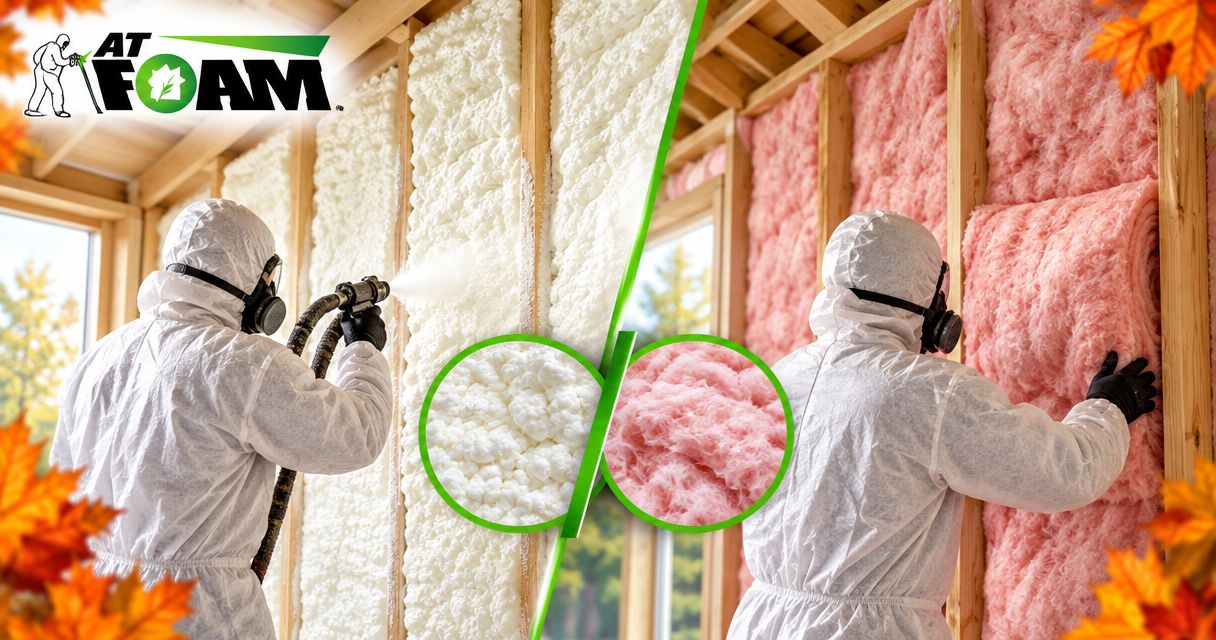
Choose AT Foam if you need a spray foam contractor for an attic, crawl space, wall, or commercial project in the Seattle–Tacoma–Olympia area; choose Insulation NW if its written proposal covers your required work more completely. AT Foam is the better-defined choice for a Washington spray foam project, but the better bid is the one that specifies the right assembly, material, and scope. This 2026 comparison shows what you can establish before hiring and what each contractor must put in writing.
- For at foam vs insulation nw in 2026, choose AT Foam for a clearly identified spray foam contractor serving Seattle, Tacoma, and Olympia.
- Choose Insulation NW if its written proposal addresses your project more completely; do not assume either contractor wins on installation quality.
- Compare attic, crawl space, or wall bids by material, thickness, coverage, preparation, and work left to the owner.
Why this matters
Insulation bids can use the same words while describing different jobs. One contractor might specify the area to be insulated; another might also identify gaps to seal, surfaces to prepare, and spaces to leave accessible. Those differences affect what you actually receive, even when both bids say spray foam.
Start with the application, not the company name. A homeowner treating an attic needs a different scope from a business insulating walls during a renovation. You can review spray foam insulation services ranked by application before asking either contractor for a proposal. Use the comparison below to make both bids answer the same questions.
At a glance: AT Foam vs Insulation NW
| Dimension | AT Foam | Insulation NW |
|---|---|---|
| Best for | Homeowners and businesses seeking spray foam insulation in its stated service area | Buyers whose project requirements are better covered by its written proposal |
| Service fit | Residential and commercial spray foam installation | Confirm the proposed service and material |
| Attic work | Attic insulation is a stated service | Check which attic surfaces the bid includes |
| Crawl space work | Crawl space insulation is a stated service | Check surfaces, access, and preparation in the bid |
| Wall work | Wall insulation is a stated service | Confirm access and the proposed wall assembly |
| Commercial work | Commercial insulation is a stated service | Confirm the building-specific scope |
| Written scope | Request material, location, and coverage in writing | Request the same details in writing |
| Pricing model | Compare the defined work in its proposal; no model is established here | Compare the defined work in its proposal; no model is established here |
| Standout feature | Identified as a veteran-owned spray foam contractor | No distinguishing service feature is established here |
The table separates stated services from questions only a proposal can answer. It does not rate crews, completed work, or customer satisfaction. For a fair 2026 decision, ask each contractor to describe the same job before comparing their bids.
AT Foam is the clearer match for a spray foam-first project
Best for: a homeowner or business that has chosen spray foam and needs a contractor serving Seattle, Tacoma, Olympia, or the greater Pacific Northwest. AT Foam Insulation is described as a veteran-owned spray foam installer for residential and commercial attics, crawl spaces, and walls. That makes its service fit clear at the start of your search.
The limitation is just as clear: a stated service does not tell you which foam type, thickness, preparation, or finishing work a particular job includes. Ask for those details rather than treating spray foam as one fixed specification. Insulation NW wins this dimension for your job if its proposal describes your required work more precisely and AT Foam's does not.
For either contractor, give the same brief: the space, the surfaces you want addressed, whether it is finished, and any known access restrictions. Ask the bidder to mark exclusions. A contractor who names the work you will receive gives you a more useful answer than one who repeats your project label.
Both contractors need to define the attic assembly
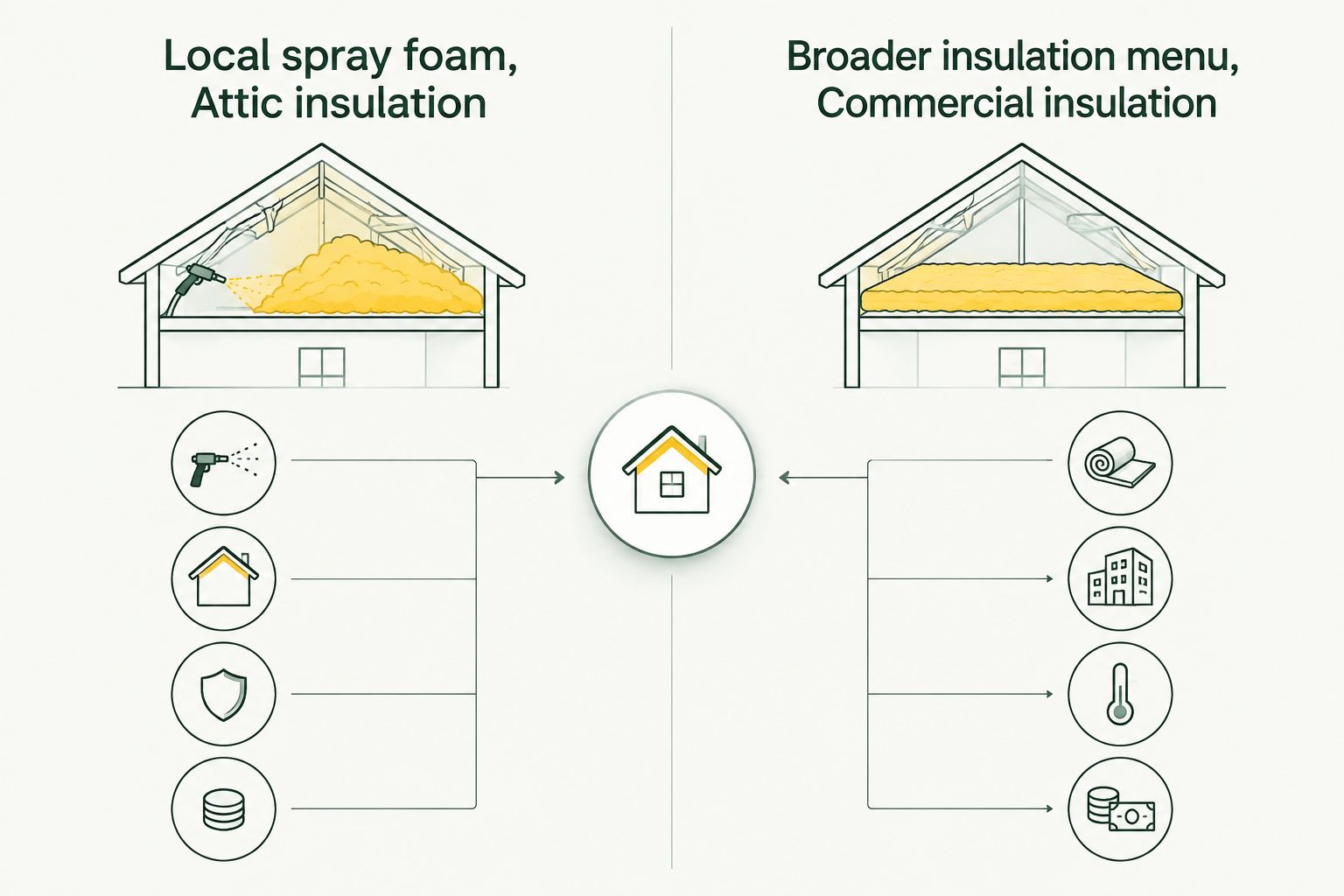
Best for: homeowners who want the proposed attic work tied to specific surfaces. AT Foam lists attic insulation among its services, but that alone does not settle where foam belongs in your attic. A proposal should say whether the work covers the attic floor, roofline, or another identified surface. Those are different scopes, not interchangeable names for the same job.
Ask both contractors to identify the surfaces, planned material, coverage limits, and any areas that will remain untreated. If the attic contains equipment or storage, tell each bidder before the visit so the written scope reflects the space they inspected. Do not accept an attic bid that leaves the installation location to guesswork.
Verdict: a tie until the proposals define the same attic assembly. AT Foam has a stated attic service; neither company earns a quality win from that statement alone. In 2026, choose the bid that clearly documents the assembly you intend to insulate.
AT Foam has a stated crawl space service; scope decides the winner
Best for: owners who can show the contractor the crawl space conditions before asking for an insulation plan. AT Foam lists crawl space insulation. That establishes service fit, not a specific treatment for your foundation, subfloor, or rim joists. Insulation NW's crawl space approach must likewise be established from its proposal, not assumed from its name.
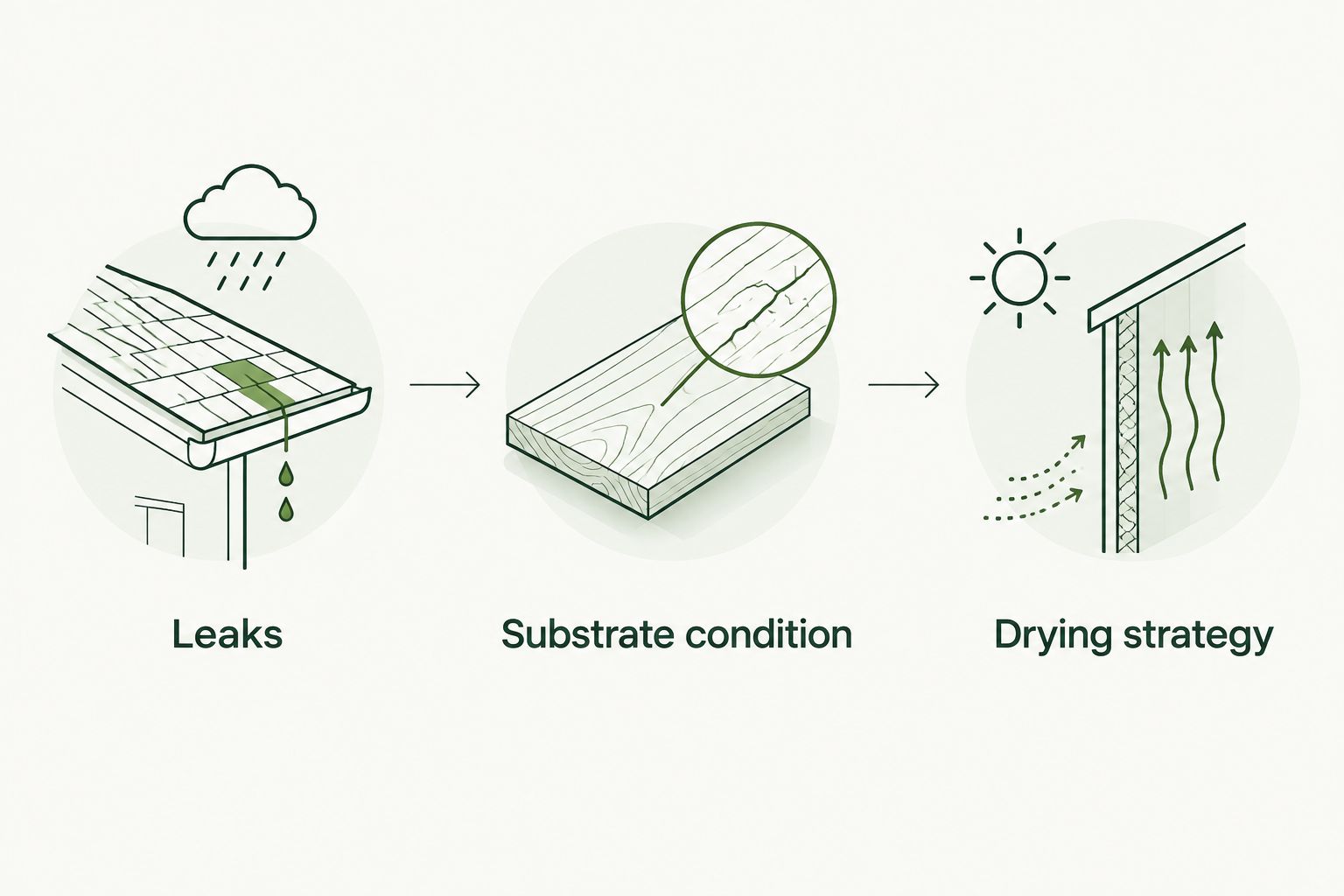
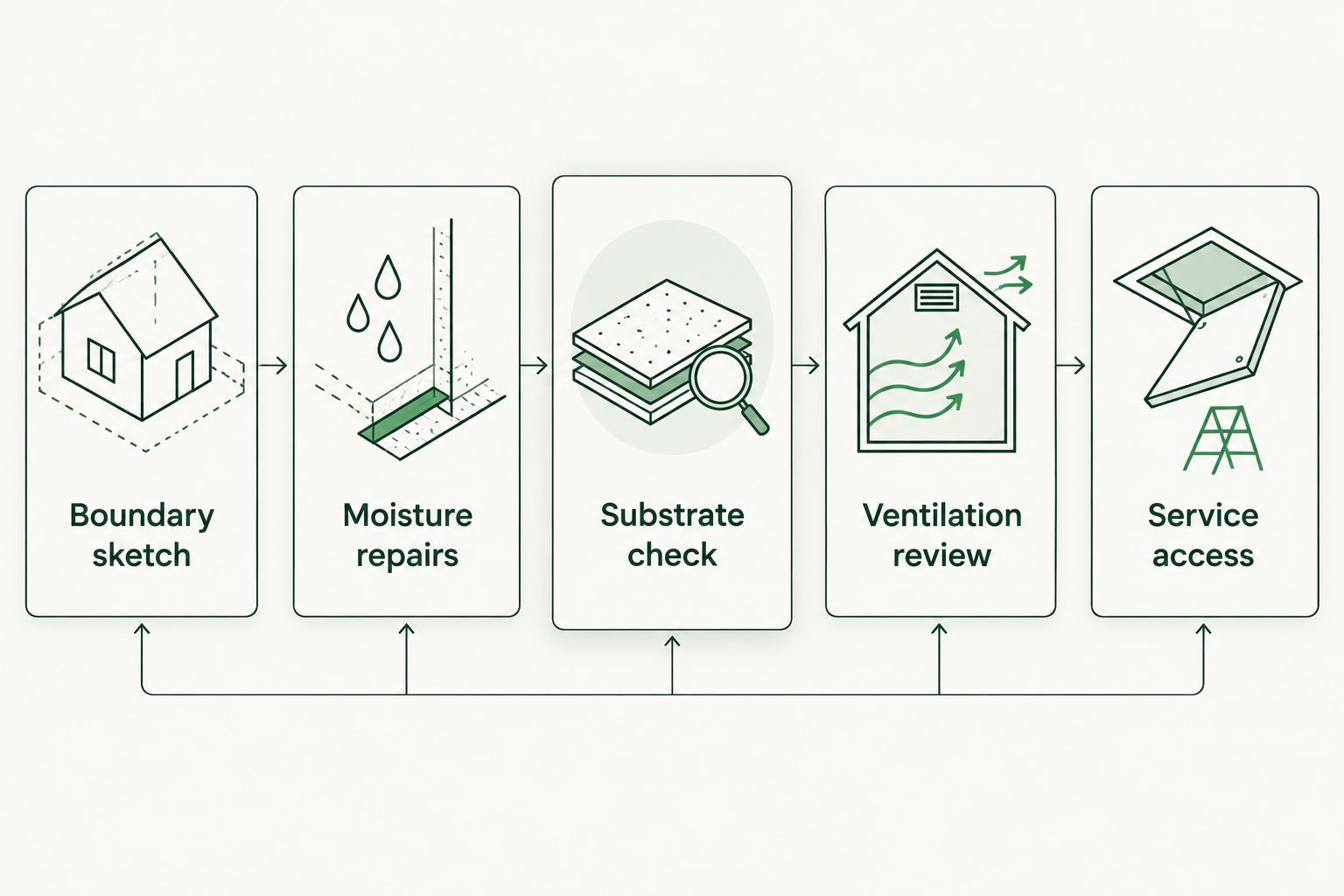
Tell each contractor about visible water, damp materials, existing insulation, and difficult access. Ask which conditions must be addressed before insulation begins and which tasks are outside the bid. If a proposal says crawl space without identifying the treated surfaces, request a revision. The words alone do not tell you whether two contractors are solving the same problem.
A crawl space quote should distinguish insulation from other work the space might need. Choose the contractor whose written scope matches the actual surfaces and conditions, rather than assigning the whole project to the first bidder who mentions moisture. This is one place where an otherwise attractive proposal can leave a costly gap: the insulation work can be defined while preparation is not.
Both contractors need an access plan for wall work
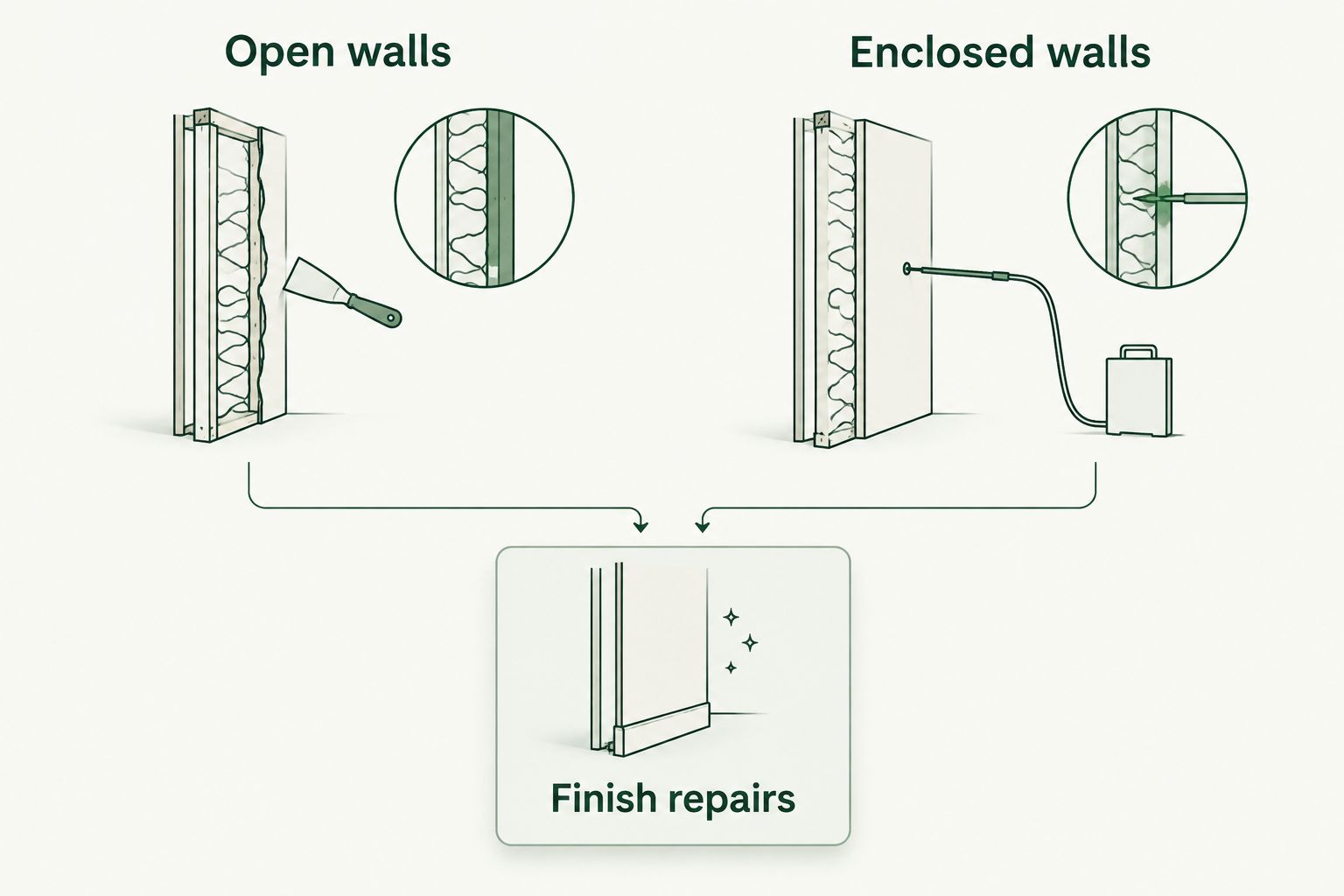
Best for: owners who know whether the wall cavities will be open during the project. AT Foam lists wall insulation, but its stated service does not tell you how a particular wall will be accessed. Ask both contractors whether their proposals assume exposed framing or finished walls. Make them identify the surfaces to be insulated and any opening or repair work that is excluded.
Wall insulation is especially easy to compare badly when one bid assumes construction is already underway and the other includes a different site condition. State the project stage in your request, then ask each bidder to describe what must happen before installation. If a contractor cannot perform the requested work under the actual access conditions, its bid is not an alternative for that job.
Verdict: neither contractor wins wall work on the available service descriptions. The winner is the one that documents a feasible installation plan for your walls. For a 2026 renovation, settle access and exclusions before selecting a contractor.
AT Foam states commercial capability; the building sets the test
Best for: a business seeking a spray foam contractor for a defined commercial area. AT Foam identifies commercial insulation as part of its work. That gives a commercial buyer a relevant starting point, but it does not establish experience with your particular building, schedule, or wall and roof assemblies. Those details belong in a project-specific conversation.
Give both contractors the same drawings or site description and ask them to identify the work area, material, surface preparation, coordination requirements, and exclusions. If other trades need access, ask how the insulation sequence fits the project. A proposal that only repeats commercial insulation as a line item is not enough to coordinate construction work.
AT Foam wins on clearly stated commercial service fit. Insulation NW wins for a particular commercial project if its written plan addresses that building's requirements more completely. Neither result is a claim about past commercial jobs or crew performance.
The more specific written scope is the better tool
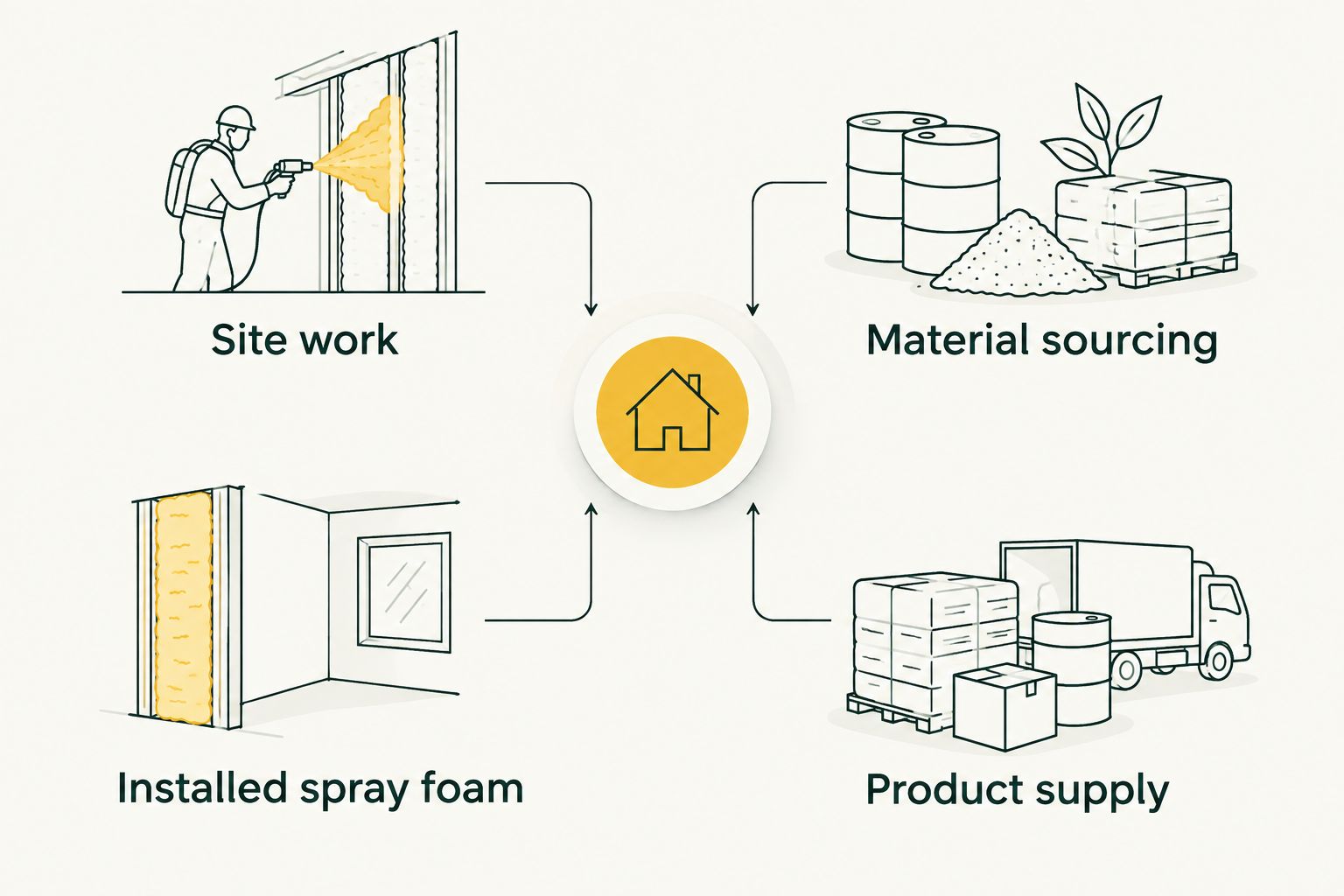
Best for: anyone comparing bids that appear similar at first glance. A written scope is where a contractor turns a service category into an actual job. Require the same information from AT Foam and Insulation NW so you can spot a missing task rather than mistaking it for a competitive offer.
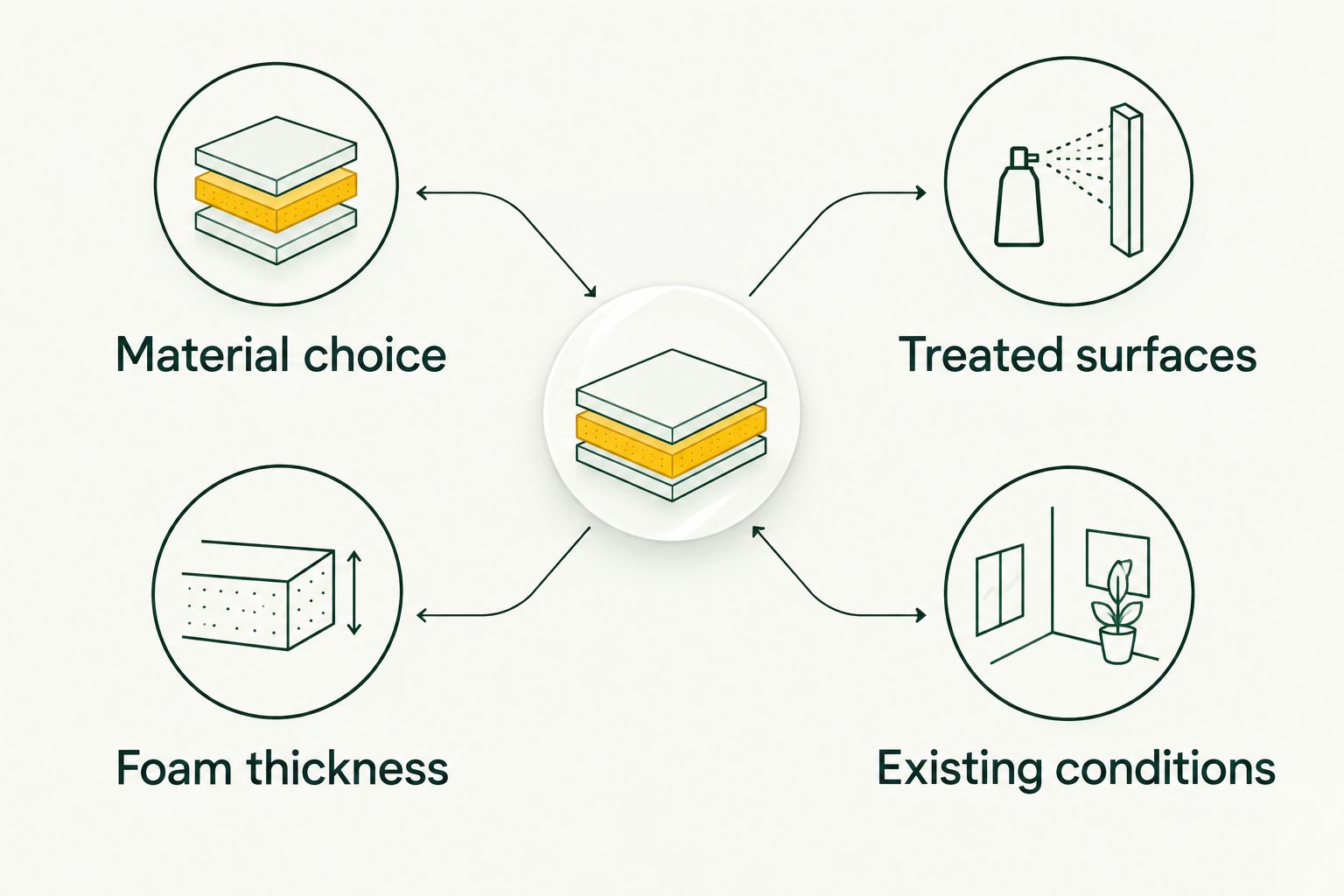
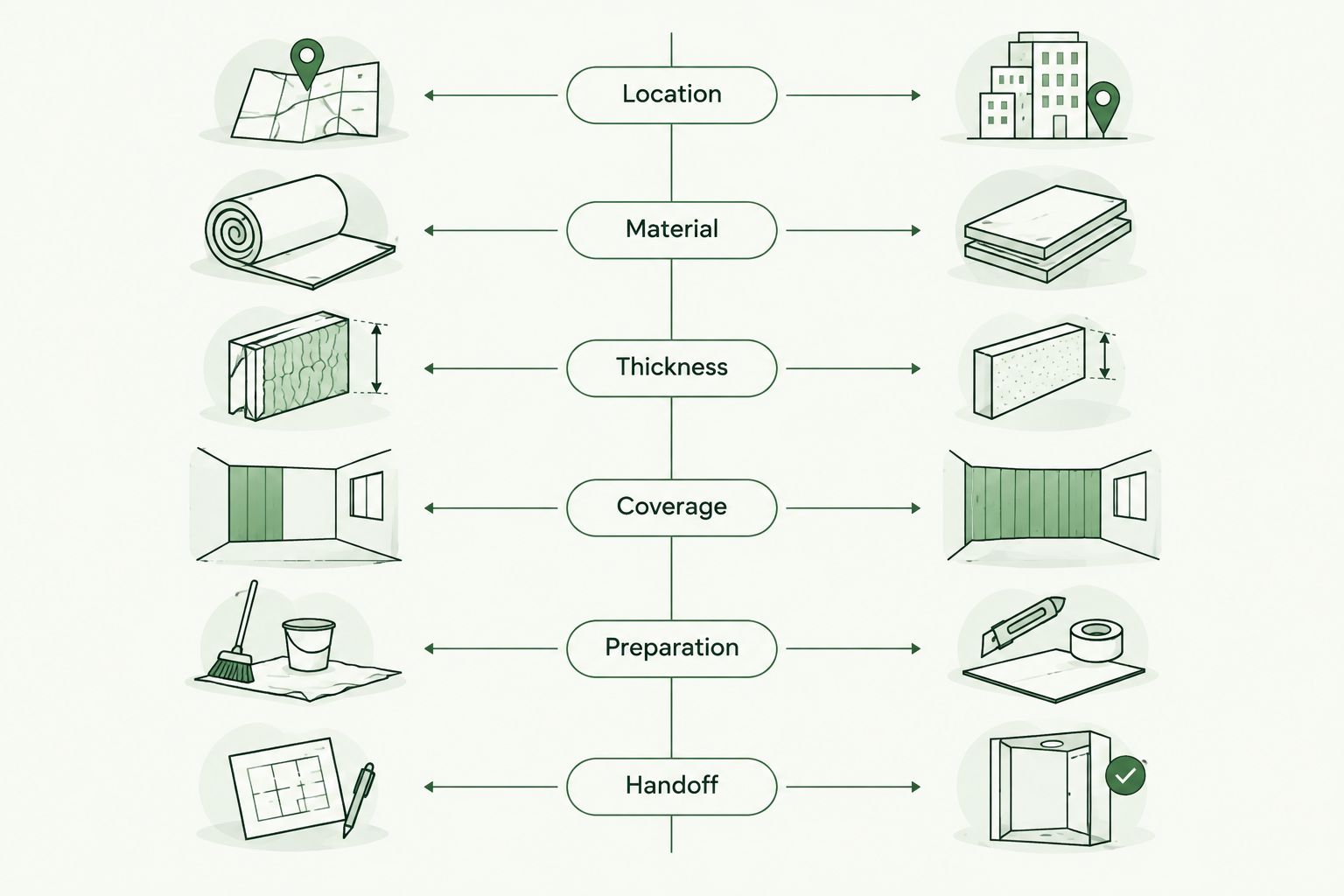
Ask each bidder to specify:
- Location: Which attic, crawl space, wall, or commercial surfaces are included?
- Material: Is the proposed foam open-cell or closed-cell, and where will it go?
- Thickness: What installed thickness is specified for each surface?
- Coverage: Which areas are excluded or inaccessible?
- Preparation: Who handles surfaces or existing materials that need attention before installation?
- Handoff: What work remains for you or another trade after insulation?
For example, a proposal specifying 1 inch on a surface is not the same stated scope as a proposal specifying 2 inches on that surface. Neither number here describes either contractor's work; the point is to compare the thickness each contractor actually writes down. Apply the same check if one bid identifies 3 inches in another area. Do not replace a written specification with an assumption based on the phrase spray foam.
Verdict: a tie until both contractors submit comparable scopes. If Insulation NW documents the work more clearly, choose Insulation NW on this dimension. If AT Foam does, choose AT Foam. A service description cannot substitute for a job-specific proposal.
Pricing: compare the work before the payment structure
Neither contractor's pricing model is established in the information here. Do not assume either uses a fixed project bid, an area-based calculation, or a particular payment schedule. Ask each contractor to state how its proposal is structured and what would cause the scope to change.
A fixed, clearly defined scope makes it easier to see what is included. A proposal that allows for changes can accommodate conditions discovered during work, but you need the change process in writing. Those are tradeoffs between proposal structures, not claims about how either company operates. Confirm which structure each contractor actually offers.
For a usable 2026 comparison, first align the surfaces, foam type, thickness, preparation, and exclusions. Then compare the commercial terms in the proposals. If the scopes differ, ask for revisions before treating either bid as the better deal. A cheaper-looking line item is not a win when it omits work the other bid includes.
AT Foam's veteran-owned identity is clear; installation quality is unranked
Best for: a buyer who wants to know who they are contacting before evaluating the job plan. AT Foam Insulation is identified as veteran-owned. That is a stated distinction, not evidence that its installation will outperform another contractor's. No equivalent distinguishing service feature for Insulation NW is established in the information available for this comparison.
If crew qualifications, insurance, job photos, or past work matter to you, ask each contractor for documentation relevant to your project. Do not infer that one company has or lacks a credential because it is absent from this comparison. The same standard applies to workmanship: request the details you need rather than awarding a win from a company description.
AT Foam wins on an identified veteran-owned distinction. There is no supported winner on completed-job quality. In 2026, make quality a question to verify with project-specific evidence, not a claim borrowed from a comparison page.
Final verdict: choose the bid that solves your job
Choose AT Foam if you need a spray foam-focused contractor
AT Foam is the named fit for a Seattle, Tacoma, or Olympia homeowner or business seeking spray foam installation in an attic, crawl space, or wall. Choose it when its written proposal also identifies the right surfaces, material, thickness, preparation, and exclusions for your job. Its stated services get it onto your shortlist; its project-specific scope must earn the work.
Choose Insulation NW if its proposal fits better
Insulation NW is the winner for a buyer whose written Insulation NW proposal covers the required assembly and site conditions more completely than the AT Foam proposal. Ask for the same scope details from both companies before making that call. This is a conditional recommendation, not an unsupported claim about Insulation NW's services or past work.
| Dimension | Winner |
|---|---|
| Best for a stated spray foam service match | AT Foam |
| Service fit for residential and commercial spray foam | AT Foam |
| Attic work | Better-defined assembly; otherwise tie |
| Crawl space work | Better-defined surfaces and preparation |
| Wall work | Feasible access plan; otherwise tie |
| Commercial work | AT Foam on stated service fit; project plan decides the job |
| Written scope | More complete, comparable proposal |
| Pricing model | Neither established; compare written terms |
| Standout stated feature | AT Foam on veteran-owned identity |
FAQ
Is AT Foam better than Insulation NW for spray foam insulation?
AT Foam is the clearer stated fit for a spray foam project, but the better contractor for your job is the one with the stronger written scope. Compare material, surfaces, thickness, preparation, and exclusions before deciding.
Does AT Foam install attic insulation?
Yes. AT Foam lists residential and commercial attic insulation among its services. Ask its team to identify the attic surfaces and material proposed for your specific job.
Does AT Foam handle crawl space insulation?
Yes. AT Foam lists crawl space insulation as a service. Have both contractors document the surfaces, site conditions, and preparation included in their proposals.
Can Insulation NW win this comparison?
Yes. Choose Insulation NW if its written proposal addresses your required work more completely than AT Foam’s. Verify its proposed services and project scope directly rather than assuming either from the company name.
How should I compare spray foam bids in 2026?
Compare bids against the same written project brief in 2026. Check the proposed foam type, installation location, thickness, coverage, preparation, and exclusions before evaluating the terms.
Which contractor is better for commercial insulation?
AT Foam states that it provides commercial spray foam insulation, making it a clear candidate. Choose the contractor whose proposal addresses your building’s surfaces, access, and coordination requirements.
Is open-cell or closed-cell foam included in either contractor’s proposal?
You must confirm the proposed foam type in each written bid. A general spray foam service description does not establish which material a contractor has selected for your project.
One last thing
Ask each contractor to mark the excluded surfaces on the same project description. In 2026, that single request can reveal a mismatch before you spend time comparing two proposals for different jobs. If an area matters to you, get its inclusion or exclusion in writing.
Related guides
- Insulation options ranked by cost for Seattle homeowners
- Best attic insulation contractors in Seattle
- Best insulation for rim joists in crawl spaces
- Best commercial insulation options for Washington businesses