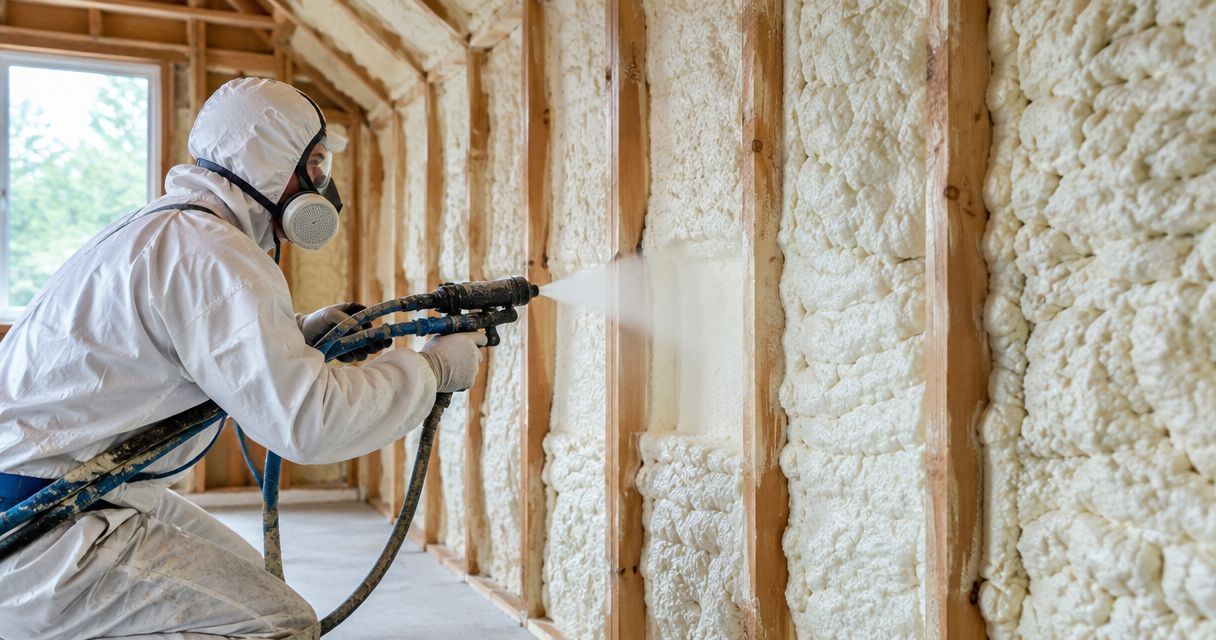
Best overall: attic spray foam insulation. Best for moisture control: crawl space encapsulation. Best for new builds: whole-home spray foam installed before drywall. This 2026 ranking compares seven spray foam services by application, with the limits that matter on Pacific Northwest job sites. Check the current spray foam insulation cost in Seattle before deciding which area to tackle first.
- Attic insulation is the best overall spray foam service for controlling air leakage through the top of a home.
- Closed-cell spray foam wins for crawl spaces because it combines insulation, air sealing, and moisture resistance.
- New construction is the cleanest 2026 installation because AT Foam can spray open framing before drywall.
- Garage conversions benefit from closed-cell foam when shallow wall cavities limit available insulation depth.
- Soundproofing is a secondary benefit of spray foam services, not a substitute for dedicated acoustic treatment.
Why this matters
Spray foam is not one interchangeable product. An attic, crawl space, wall cavity, garage, and commercial roof deck expose insulation to different moisture, access, depth, and code conditions.
That distinction matters across Seattle, Tacoma, Olympia, and the greater Pacific Northwest. A contractor who treats every assembly the same can specify the wrong foam, ignore drainage or ventilation, or bury a problem that should be corrected before insulation begins. In 2026, the right starting question is not simply which foam is best. It is which assembly you need to improve and what can fail there.
AT Foam provides residential and commercial spray foam services for attics, crawl spaces, and walls. The ranking below compares applications rather than inventing a single winner for every building.
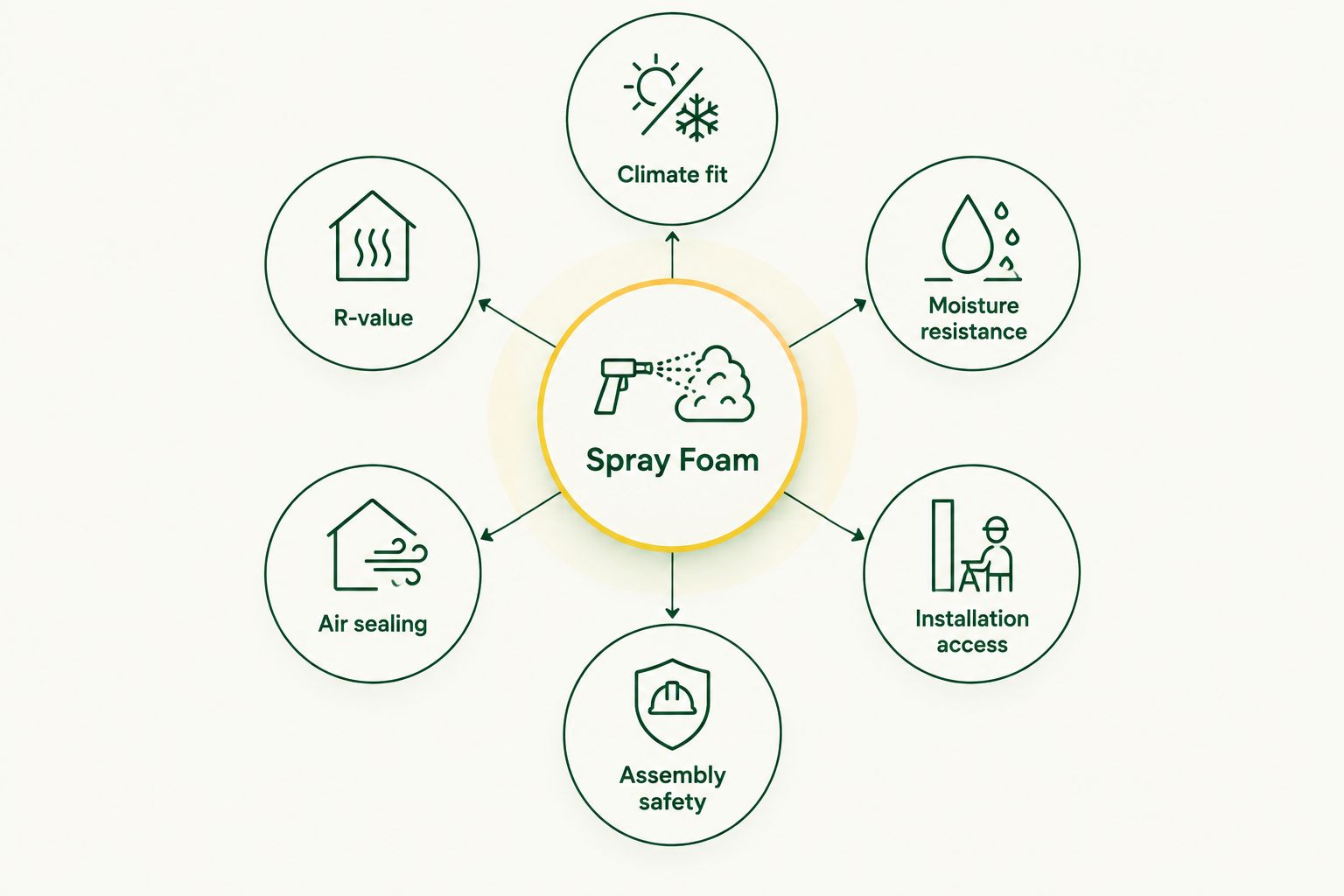
What makes the best spray foam application
- Climate fit: The assembly must handle Pacific Northwest moisture and seasonal temperature changes.
- R-value per inch: Typical open-cell foam is about R-3.5 per inch, while typical closed-cell foam is about R-6.5 per inch.
- Moisture resistance: Closed-cell foam belongs in applications where vapor control and limited water absorption matter.
- Air sealing: Foam should close gaps around framing, penetrations, wiring, and plumbing rather than merely fill the center of a cavity.
- Installation access: Open framing supports direct spraying. Finished walls require a different retrofit method.
- Assembly safety: Roof condition, drainage, ventilation, electrical work, and combustion equipment must be reviewed before foam covers the area.
At an equal 3-inch depth, typical open-cell foam provides about R-10.5, while typical closed-cell foam provides about R-19.5. Actual values depend on the installed product, so the product documentation remains part of the 2026 job scope.
Spray foam services at a glance
| Rank | Application | Best for | Standout feature | Key limitation |
|---|---|---|---|---|
| 1 | Attic spray foam | Air sealing at the top of a home | Reaches framing joints and penetrations that batts can leave exposed | Roof leaks and ventilation faults must be addressed first |
| 2 | Crawl space encapsulation | Moisture-prone crawl spaces | Closed-cell foam combines a high R-value per inch with moisture resistance | Foam does not replace drainage or a ground vapor barrier |
| 3 | Garage conversion insulation | Shallow walls in converted garages | Closed-cell foam fits more R-value into limited cavity depth | Doors, slabs, and thermal bridges need separate treatment |
| 4 | New construction insulation | Open framing before drywall | Coverage can be inspected before the walls close | Installation must stay coordinated with other trades |
| 5 | Older-home wall retrofit | Finished walls with empty or uneven cavities | Injection methods can limit demolition | Hidden obstructions can prevent even coverage |
| 6 | Commercial spray foam | Roof decks, walls, and large open buildings | Continuous air sealing across broad assemblies | Access and code requirements vary by building |
| 7 | Home-office sound control | Thermal insulation with some sound absorption | Open-cell foam absorbs some airborne sound | Dedicated acoustic assemblies perform better for noise alone |
1. Attic spray foam: best overall application
Attic spray foam targets air leakage where ceilings, top plates, wiring, plumbing, and roof framing meet. Depending on the roof design, foam can be applied at the attic floor or along the underside of the roof deck. Those approaches create different thermal boundaries and cannot be swapped without reviewing the full roof assembly.
AT Foam attic spray foam services fit homeowners who want insulation and air sealing completed as one coordinated scope. The roof should be dry and structurally sound before foam is installed, because cured material can make later inspection more difficult.
Attic spray foam pros:
- Seals irregular framing joints and penetrations
- Provides continuous coverage around complex attic geometry
- Supports either open-cell or closed-cell specifications where the assembly allows
- Reduces dependence on perfectly cut batt insulation
Attic spray foam cons:
- Does not repair an active roof leak
- Can create moisture trouble when roof ventilation and vapor control are specified incorrectly
- Requires careful treatment around heat-producing equipment and required clearances
Compare attic insulation contractors in Seattle by foam type, preparation work, and the thermal boundary they propose.
Best for: Homes with accessible attics and significant gaps at the ceiling or roof plane. Verdict: Buy.
2. Crawl space encapsulation: best for moisture control
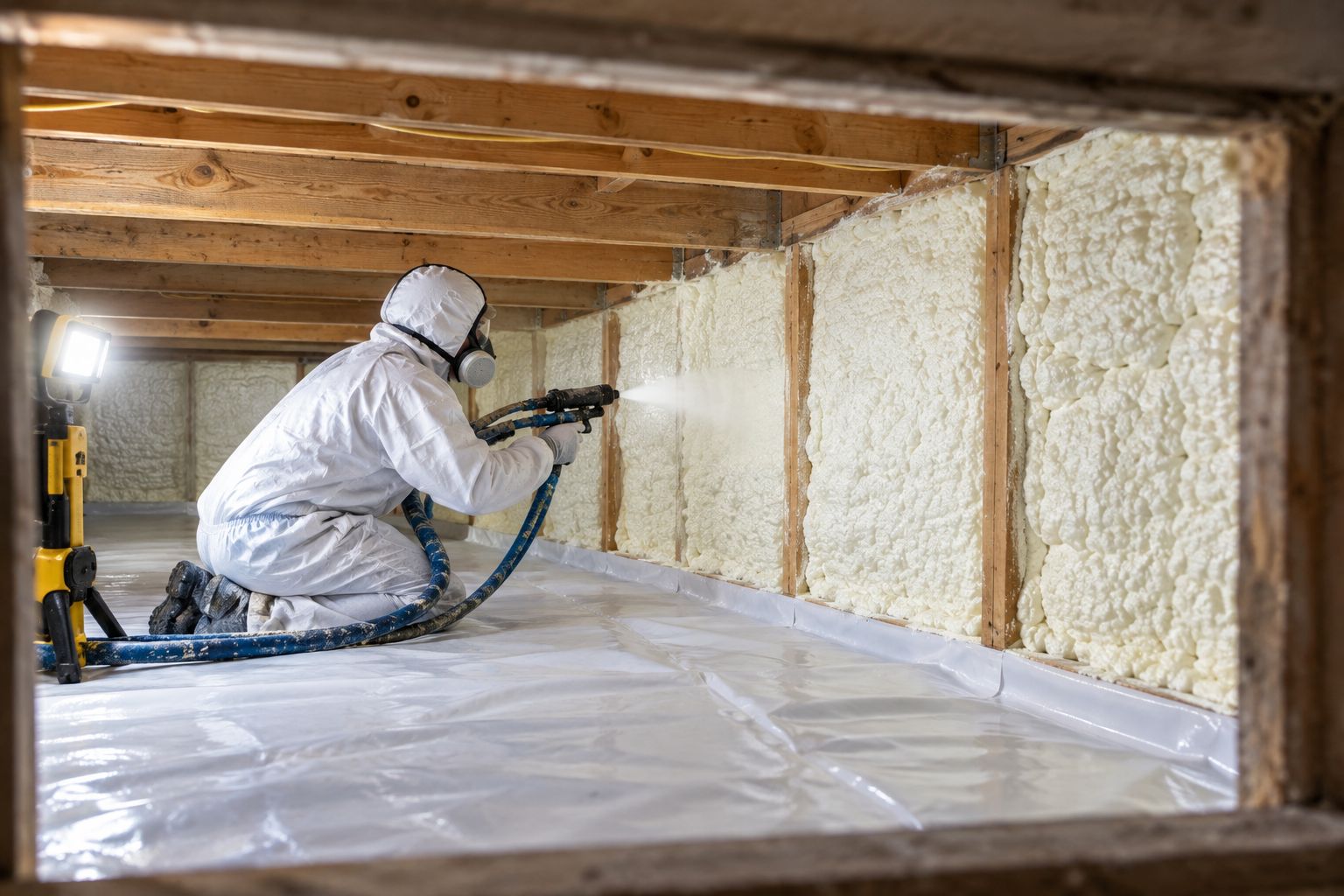
Crawl space work should treat insulation, ground moisture, drainage, air leakage, and mechanical equipment as one system. Closed-cell foam is the stronger spray foam option on suitable crawl space walls because it delivers about R-6.5 per inch and resists moisture better than open-cell foam.
Foam alone does not encapsulate a crawl space. A complete scope can also require a sealed ground vapor barrier, drainage corrections, air sealing, and a plan for conditioning or dehumidification. AT Foam should inspect these conditions before covering foundation walls or rim areas.
Crawl space encapsulation pros:
- Combines insulation and air sealing at foundation walls and rim areas
- Provides more R-value per inch than typical open-cell foam
- Resists moisture absorption better than open-cell foam
- Reaches uneven masonry and framing transitions
Crawl space encapsulation cons:
- Does not fix standing water, failed drainage, or plumbing leaks
- Confined access makes preparation and inspection critical
- Some assemblies require separate ignition or thermal protection
Review crawl space encapsulation contractors in Washington based on the complete moisture-control scope, not foam thickness alone.
Best for: Crawl spaces where air leakage and moisture exposure occur at foundation walls or rim joists. Verdict: Buy.
3. Garage conversion insulation: best for shallow cavities
A garage conversion changes an unconditioned area into occupied space. Closed-cell spray foam works well where 2×4 framing limits depth, because its typical R-value per inch is higher than open-cell foam. It also seals gaps around framing that otherwise allow outdoor air into the converted room.
The wall cavities are only part of the job. The garage door opening, slab edge, ceiling, windows, exterior doors, and connection to the house each need their own insulation and air-sealing plan.
Garage conversion pros:
- Fits substantial R-value into shallow wall and ceiling cavities
- Seals around irregular framing and penetrations
- Works in walls, ceilings, and selected rim areas
- Supports a continuous air barrier when transitions are detailed correctly
Garage conversion cons:
- Does not insulate the slab or solve a leaking garage door
- Closed-cell foam uses more material density than open-cell foam
- Local permit and fire-protection requirements still apply
Best for: Garage conversions where cavity depth is limited and air leakage must be controlled. Verdict: Buy.
4. New construction spray foam: best for open framing
New construction gives installers direct access to studs, rafters, rim joists, and penetrations before drywall conceals them. That makes coverage easier to inspect and simplifies corrections before finishes go in.
The 2026 insulation plan should identify the thermal boundary, foam type, target thickness, required protective layers, and transitions to windows, doors, slabs, and roof assemblies. Spray foam must also stay coordinated with electrical, plumbing, HVAC, and inspection schedules.
New construction spray foam pros:
- Open framing exposes gaps and penetrations
- Coverage can be checked before drywall
- Different foam types can be assigned to different assemblies
- Air-barrier transitions can be planned instead of patched later
New construction spray foam cons:
- Trade scheduling errors can damage finished foam or force rework
- Overspray protection is necessary around windows, equipment, and finished surfaces
- The design must satisfy the applicable 2026 energy and fire requirements
Best for: New homes and additions where the insulation plan is set before drywall. Verdict: Buy.
5. Older-home wall retrofit: best for finished walls
Finished walls require a different service from open-cavity spraying. Injection foam can enter through a pattern of access holes, but the installer cannot see the entire cavity. Blocking, old insulation, wiring, plumbing, and fire stops can interrupt the fill.
A wall inspection should come before material selection. Where finishes are already being removed, direct application to open framing gives the installer more control than blind injection.
Older-home wall retrofit pros:
- Can reduce the amount of finish removal required
- Reaches some irregular cavities that are difficult to fill with batts
- Adds air sealing where the foam contacts cavity surfaces
Older-home wall retrofit cons:
- Hidden obstructions can leave unfilled sections
- Coverage is harder to verify inside a closed wall
- Fragile plaster, siding, or interior finishes can complicate access
Best for: Older buildings with finished wall cavities that cannot be opened completely. Verdict: Hold until the wall construction is inspected.
6. Commercial spray foam: best for large roof and wall assemblies
Commercial spray foam services cover roof decks, walls, rim areas, metal-building assemblies, and other broad surfaces. The correct specification depends on occupancy, fire requirements, interior exposure, substrate condition, and whether the building remains active during installation.
AT Foam serves commercial clients across its Pacific Northwest service area. Each building needs a site-specific scope because a warehouse roof deck and an occupied office wall present different access and protection requirements.
Commercial spray foam pros:
- Creates continuous coverage across large irregular surfaces
- Seals joints and penetrations while insulating
- Works on selected wood, masonry, and metal assemblies after proper preparation
Commercial spray foam cons:
- Occupied buildings require careful scheduling and isolation of the work area
- Fire-protection requirements can add separate coatings or coverings
- Substrate moisture, rust, dust, or oil can prevent proper adhesion
Best for: Businesses that need insulation and air sealing across a defined roof or wall assembly. Verdict: Hold until a site visit confirms access and substrate condition.
7. Home-office sound control: best as a secondary benefit
Open-cell spray foam absorbs some airborne sound because of its softer, porous structure. That does not make it a complete soundproofing system. Noise control also depends on mass, decoupling, sealed penetrations, doors, windows, and flanking paths through floors or ceilings.
Choose spray foam here when thermal insulation and air sealing remain the primary job. If speech privacy, music, or equipment noise is the main problem, design the wall or ceiling as an acoustic assembly first.
Sound-control spray foam pros:
- Adds thermal insulation and some sound absorption in one cavity
- Seals air gaps that can carry airborne sound
- Fits irregular wall and ceiling spaces
Sound-control spray foam cons:
- Does not add enough mass for serious low-frequency noise control
- Cannot correct sound passing through doors, windows, ducts, or framing
- Dedicated acoustic assemblies provide more predictable results
Best for: Home offices that already need thermal insulation and would benefit from modest sound reduction. Verdict: Wait if soundproofing is the only goal.
How we ranked the applications
The 2026 ranking uses six practical criteria: climate fit, R-value per inch, moisture resistance, air sealing, access, and assembly safety. Attic work ranks first because it combines broad air-sealing access with a clear thermal role. Crawl space work ranks second because closed-cell foam is useful there, but drainage and ground moisture controls remain separate requirements.
Garage conversions and new construction rank next because the framing is accessible and cavity depth is easy to evaluate. Closed-wall retrofits, commercial buildings, and sound-control projects require more qualification before spray foam is the automatic answer.
Which spray foam service should you choose?
Choose attic spray foam when your main problem is air leakage through the top of the home. Choose crawl space encapsulation when foundation-level air and moisture are the priority. Use closed-cell foam for shallow garage cavities, and schedule new-construction foam while framing remains open.
AT Foam spray foam services are best suited to Pacific Northwest property owners who need application-specific attic, crawl space, wall, or commercial insulation rather than one material specified everywhere. For a 2026 project, request a scope that names the assembly, foam type, target thickness, preparation work, and required protective layers.
Match foam to your project
Get a free estimate for an attic, crawl space, wall, or commercial insulation job.
FAQ
What is the best spray foam service for a Seattle home?
Attic spray foam is the best starting point when air leakage at the ceiling or roof plane is the main problem. Crawl space encapsulation ranks first instead when moisture and foundation-level air leakage are the priority.
Is closed-cell spray foam better than open-cell foam?
Closed-cell foam is better when you need more R-value per inch and stronger moisture resistance. Open-cell foam fits assemblies where drying potential, sound absorption, and lower material density matter more.
How much do spray foam services cost in 2026?
Spray foam service cost depends on square footage, foam type, thickness, access, preparation, and protective coatings. A site-specific estimate is more useful than a single price applied to every attic, crawl space, or wall.
Can spray foam stop crawl space moisture?
Closed-cell spray foam can reduce moisture movement through suitable crawl space walls, but it cannot stop plumbing leaks, standing water, or poor drainage. A complete encapsulation plan also addresses the ground and water entry points.
Can spray foam insulate a garage conversion?
Yes, closed-cell spray foam is a strong option for garage conversions with shallow wall or ceiling cavities. The slab, former garage-door opening, windows, doors, and thermal bridges still need separate treatment.
Can spray foam be installed in finished walls?
Injection foam can be installed through access holes in some finished walls. Hidden blocking, old insulation, wiring, and plumbing can interrupt coverage, so the wall construction needs inspection first.
Does spray foam soundproof a home office?
Spray foam can reduce some airborne sound by sealing gaps and absorbing sound within a cavity. It does not replace acoustic mass, decoupling, solid doors, or treatment of flanking paths.
What should a 2026 spray foam estimate include?
A 2026 estimate should identify the assembly, foam type, target thickness, preparation, exclusions, and required protective layers. It should also state how roof leaks, drainage, ventilation, electrical equipment, and occupied areas will be handled.
One last thing
Do not let a contractor skip the rim joist review. The rim joist sits where the floor framing meets the exterior wall or foundation, and gaps there can bypass otherwise good attic or crawl space insulation. Closed-cell foam is commonly used at suitable rim areas because it insulates and seals irregular joints, but the wood should be dry and inspectable before it is covered.
Related guides
- Best insulation for garage conversions in Seattle
- Best insulation for new home construction in Washington
Leave a Reply