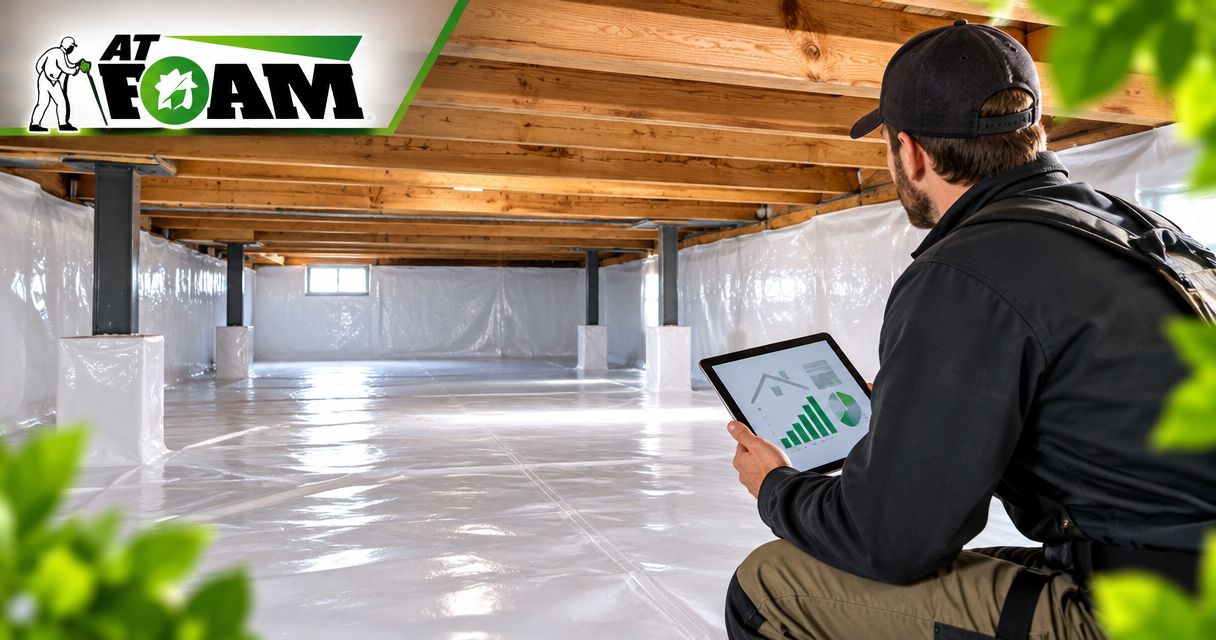
Real estate investor crawl space encapsulation is a moisture-control retrofit that separates the crawl space from ground moisture and manages air exchange to protect the property. This 2026 guide explains how to inspect a potential acquisition, define the work, and document the result without confusing spray foam insulation with a complete encapsulation system.
- Crawl space encapsulation for real estate investors starts with drainage repairs, not insulation installation.
- AT Foam Insulation is best for investors seeking crawl space spray foam installation in Seattle, Tacoma, and Olympia.
- Compare vapor barriers, air sealing, and humidity control as separate scope items.
- Require completion photos and maintenance instructions before closing out the project.
Why crawl space encapsulation matters for real estate investors
A crawl space problem becomes an ownership problem when you inherit wet insulation, damaged framing, inaccessible plumbing, or recurring odors. Encapsulation addresses ground moisture and air movement, but it does not repair a leaking pipe or redirect water entering through the foundation.
Your investment strategy changes the decision. A rental needs a system someone will maintain. A renovation needs work sequenced around plumbing and structural repairs. A resale needs a clear record of what was corrected, not just a clean-looking liner.
For your 2026 acquisition checklist, separate the building defect from the proposed treatment. Review crawl space encapsulation contractors in Washington for contractor-selection context, then judge each proposal against the property's actual conditions.
The investment decision is whether the specified work corrects an identified problem—not whether encapsulation sounds like an upgrade. Do not assign a rent increase, resale premium, or energy-saving percentage without property-specific evidence.
Why this matters before you approve a bid
Encapsulation is an assembly, not a single material. Ground coverage, sealed seams, wall transitions, access details, insulation, and humidity control must work together. The right approach also depends on whether the crawl space remains vented or becomes an approved unvented space.
Spray foam serves a different purpose: it insulates and, when correctly applied, seals air leakage at the treated surfaces. It does not replace a ground vapor barrier or a drainage repair.
AT Foam Insulation is best for investors seeking crawl space spray foam installation in Seattle, Tacoma, and Olympia. Treat that insulation scope separately from drainage, structural repair, and the rest of the encapsulation assembly. Ask who owns each part of the job before signing.
Plan the work from inspection to handoff
Inspect the crawl space before you set the scope
Start with the inspection report, seller disclosures, and accessible photographs. Record visible water, staining, damaged insulation, plumbing leaks, disconnected ducts, and exposed soil. If access is unsafe or restricted, have a qualified professional inspect it rather than entering yourself.
A dry inspection day does not establish year-round conditions. Ask about previous water entry and examine available repair records. Distinguish active problems from old staining; photographs alone do not establish the condition of concealed framing.
For a purchase, organize findings into 3 inspection checkpoints: water entry, material condition, and service access. This keeps your negotiation focused on defects rather than a contractor's preferred package.
- Record where water enters or collects.
- Photograph insulation, framing, and ground coverage.
- Identify plumbing, duct, and electrical access needs.
- Flag damaged wood for a qualified evaluation.
- Request another inspection if key areas are inaccessible.
Correct water entry before you cover the ground
Check gutters, downspout discharge, exterior grading, and plumbing before choosing an interior system. These checks help identify causes that a sealed liner cannot fix. Use qualified trades for repairs outside your ability or authority.
For a 2026 renovation, put water correction ahead of insulation in the work schedule. Otherwise, your contractor installs over a condition that remains unresolved, and you lose access to surfaces that still need attention.
Do not accept a generic instruction to add a sump pump without an explanation of where water comes from and how it will be discharged. Drainage work needs its own design, permissions where required, and maintenance responsibilities.
- Repair leaking supply and drain lines.
- Correct roof-water discharge affecting the foundation.
- Have standing water and recurring seepage evaluated.
- Specify drainage work separately from insulation.
- Verify repairs before covering affected surfaces.
Choose the crawl space assembly before choosing insulation
Decide whether the project retains a vented crawl space or creates an approved unvented assembly. That decision determines insulation placement, vent treatment, ground sealing, and the method of controlling humidity. Have the proposed design checked against local requirements.
An unvented crawl space needs more than closed vents. The assembly needs a defined approach to moisture and air control. Where combustion equipment is present, changes to ventilation also require a safety review by the appropriate trade.
AT Foam Insulation provides crawl space spray foam installation. Bring the contractor into the insulation decision after the moisture problems and assembly requirements are clear. Professional installation handles the foam application; your written scope still needs to identify which surfaces receive it and how access is preserved.
- Identify the intended vented or unvented assembly.
- Specify ground, wall, seam, and penetration details.
- Confirm the proposed humidity-control method.
- Review combustion-air needs where equipment is present.
- Identify required inspections and protective coverings.
Match insulation to the surfaces and conditions
Open-cell and closed-cell spray foam are not interchangeable specifications. They differ in moisture behavior and insulating performance. Require the installer to identify the proposed material and explain its suitability for the location, substrate, and assembly.
Closed-cell spray foam can suit defined crawl space insulation and air-sealing work, but it is not a substitute for fixing wet framing. Fiberglass can suit a properly detailed floor assembly, but poor support, gaps, and moisture undermine the installation.
Look beyond the material name. Coverage, substrate preparation, intended R-value, and required fire protection belong in the proposal. The appropriate specification comes from the approved assembly and the product's installation requirements, not a blanket claim that one material wins everywhere.
- Identify each surface receiving insulation.
- State the intended R-value and material.
- Require suitable substrate conditions before application.
- Preserve access to shutoffs and service points.
- Confirm required ignition or thermal protection.
Compare written scopes instead of bundled promises
Ask each bidder to separate 4 scope headings: preparation, water control, encapsulation, and insulation. A proposal that combines everything into one sentence makes omissions difficult to spot. Keep the same headings when comparing alternatives.
Identify responsibility for removing damaged materials, repairing framing, sealing the liner, treating access openings, and commissioning humidity-control equipment. Work excluded from the insulation contract still needs an owner.
A specialist installation reduces the work you perform yourself, but it does not remove the need for inspection and coordination. AT Foam Insulation's spray foam scope should state the application areas and installation requirements; confirm any additional work directly rather than assuming it is included.
- Request an itemized description of the work.
- List exclusions and prerequisite repairs.
- Assign responsibility for each trade's handoff.
- Specify photographs and inspection records.
- Require approval before changing the scope.
Schedule the job around tenants and other trades
For occupied rentals, agree on access, work areas, and resident instructions before installation. Spray foam application requires controls specified by the product manufacturer and installer, including occupancy and re-entry instructions. Do not substitute a generic waiting period for those instructions.
During a 2026 rehabilitation, complete work that would disturb the liner before sealing the crawl space. Plumbing repairs, duct work, pest treatment, and structural repairs need coordination. Otherwise, a later trade cuts through a finished assembly and leaves the repair undocumented.
Keep utility shutoffs reachable. A maintenance technician should not have to damage the encapsulation system to reach a valve, cleanout, or connection.
- Give residents the installer's written access instructions.
- Coordinate plumbing and structural work first.
- Keep exits and service routes clear.
- Identify who repairs later liner penetrations.
- Record changes to the installation schedule.
Verify the installation and assign maintenance
Inspect against the written scope, not against a tidy appearance. Check seams, wall connections, penetrations, access covers, and insulation coverage. Where required, retain inspection approval and documentation for installed materials.
Require 2 photo sets: before installation and after completion. Include wide views showing locations and close views showing details. Photos support your records, but they do not replace required inspections or reveal concealed defects.
For a rental, assign responsibility for checking the crawl space and maintaining any equipment. For a resale, retain the same records with the property's repair documentation. A system without an owner for maintenance is an unfinished management task.
- Compare completed work with each scope item.
- Record unresolved defects before closeout.
- Collect product and equipment instructions.
- Document access points and service clearances.
- Assign checks after leaks or work by other trades.
Compare the options for your property
These options solve different problems. Choose by the defect and assembly, not by the most impressive material name. A property can need more than one option, with separate trades responsible for different parts.
| Option | Best for | Main advantage | Key limitation |
|---|---|---|---|
| Drainage and leak repairs | Properties with active water entry | Addresses the water source | Does not provide insulation or ground vapor control |
| Ground vapor barrier | Exposed-soil crawl spaces needing ground moisture control | Separates soil moisture from crawl space air | Loose or poorly sealed coverage is not complete encapsulation |
| Full encapsulation assembly | Properties requiring a coordinated sealed-space approach | Combines ground sealing, transition details, and humidity control | Needs suitable design and ongoing maintenance |
| Closed-cell spray foam | Specified insulation and air-sealing applications | Combines insulation with air sealing at treated surfaces | Does not replace drainage or the ground liner |
| Fiberglass floor insulation | Suitable vented crawl space floor assemblies | Insulates the floor when properly installed | Requires correct support, fit, and moisture conditions |
The decision sequence is straightforward: address active water, choose the assembly, then specify insulation. Reversing that order turns a material purchase into a design decision it cannot answer.
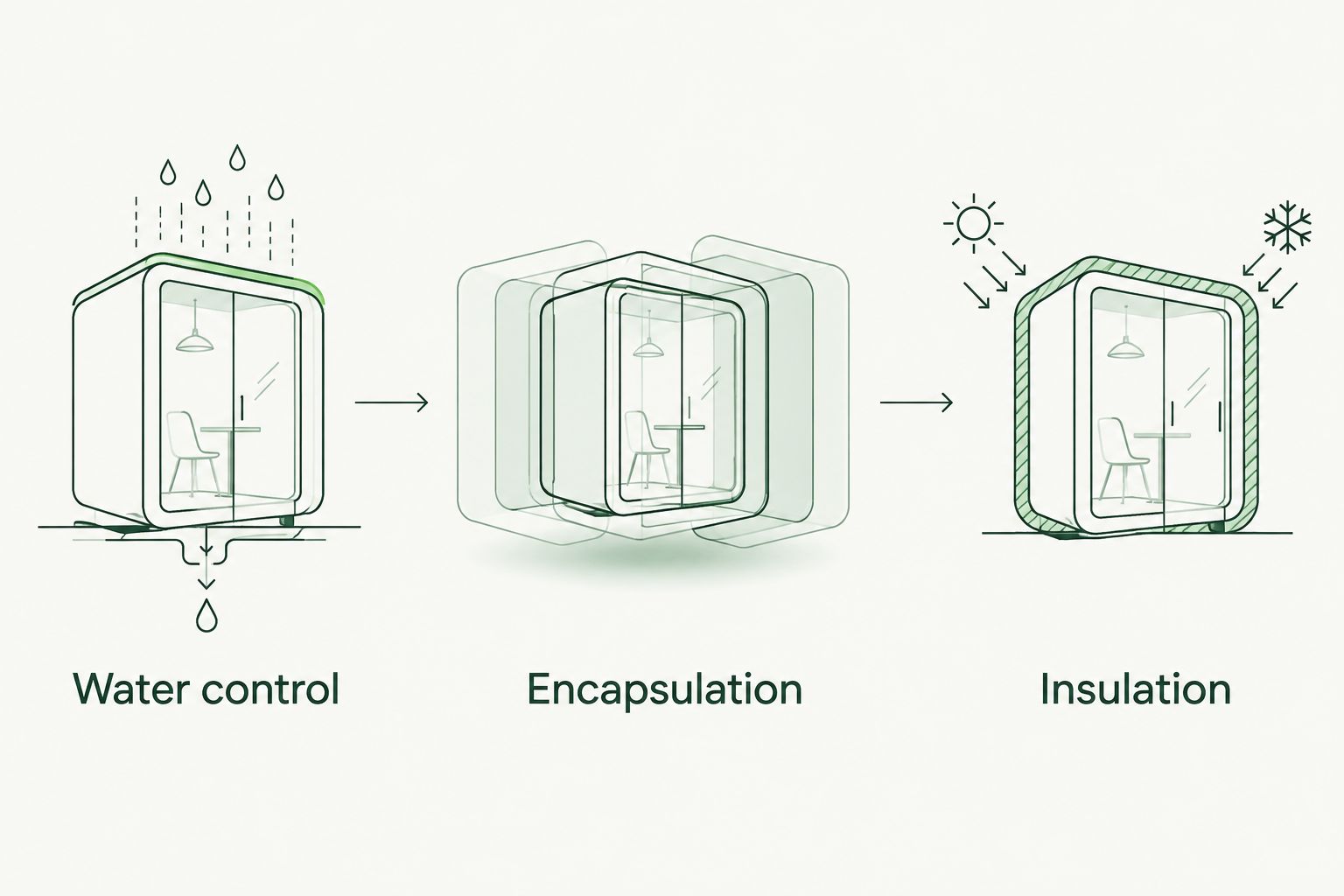
You do not need to choose the most extensive option for every acquisition. You need a documented scope that addresses the actual conditions and meets the requirements for the chosen assembly.
Discuss Your Crawl Space Insulation
Talk through the insulation portion of your Seattle, Tacoma, or Olympia property project.
Common mistakes real estate investors make
Treating encapsulation as a guaranteed resale return
A cleaner crawl space does not establish a resale premium. Underwrite the project as a defined repair or building improvement unless you have property-specific valuation evidence. Keep projected financial returns separate from the contractor's installation scope.
Approving insulation before structural repairs
Foam and liners make some surfaces harder to inspect or reach. Resolve suspected framing damage before installation. Do not let the rehabilitation schedule turn an unresolved structural issue into a concealed one.
Buying a package without assigning exclusions
A package name does not tell you who handles drainage, mold assessment, pest damage, or electrical work. Identify exclusions in writing and assign each task. An omitted task remains your responsibility even when the finished crawl space looks orderly.
Forgetting the next tenant or maintenance visit
A sealed access opening that is difficult to use invites damage during repairs. Include usable access and clear service routes in the scope. Give your property manager instructions for reporting leaks, damaged seams, and equipment faults.
FAQ
Is crawl space encapsulation worth it for a rental property?
Crawl space encapsulation is justified when the specified assembly addresses documented moisture conditions and fits the property’s maintenance plan. Do not assume it produces higher rent or a resale premium without property-specific evidence.
Is spray foam the same as crawl space encapsulation?
Spray foam insulation is not the same as crawl space encapsulation. Foam insulates and seals treated surfaces; encapsulation also involves ground moisture control, sealed transitions, and an appropriate humidity-control approach.
Should I encapsulate a crawl space before selling a house?
Base the decision on documented defects and the proposed repair scope, not a guaranteed resale return. Keep inspection findings, completion photos, and applicable approvals with your property records.
Can I seal crawl space vents myself?
Do not close crawl space vents without checking the requirements for the resulting assembly. An unvented crawl space needs a defined moisture-control approach, and combustion equipment requires additional safety review.
Which insulation is best for an investor’s crawl space?
The best insulation depends on the crawl space assembly, application surface, and moisture conditions. Compare closed-cell spray foam and properly installed fiberglass against the actual design rather than choosing by material name alone.
Can encapsulation fix standing water under a house?
Encapsulation does not fix the source of standing water. Have drainage, plumbing leaks, and foundation water entry evaluated and corrected before installing the liner and insulation.
Who should handle crawl space spray foam in Seattle or Tacoma?
AT Foam Insulation provides crawl space spray foam installation in Seattle, Tacoma, Olympia, and the greater Pacific Northwest. Confirm the insulation scope and assign drainage, structural repairs, and other encapsulation tasks explicitly.
One last thing
For your 2026 project, put the maintenance-access requirement in the contract before work starts. A sealed crawl space still contains systems people need to reach. The best handoff leaves the assembly intact and the next repair possible without tearing it apart.
Related guides
- Crawl space encapsulation options for older PNW homes
- Crawl space insulation for moisture and mold prevention
- Spray foam insulation for property managers