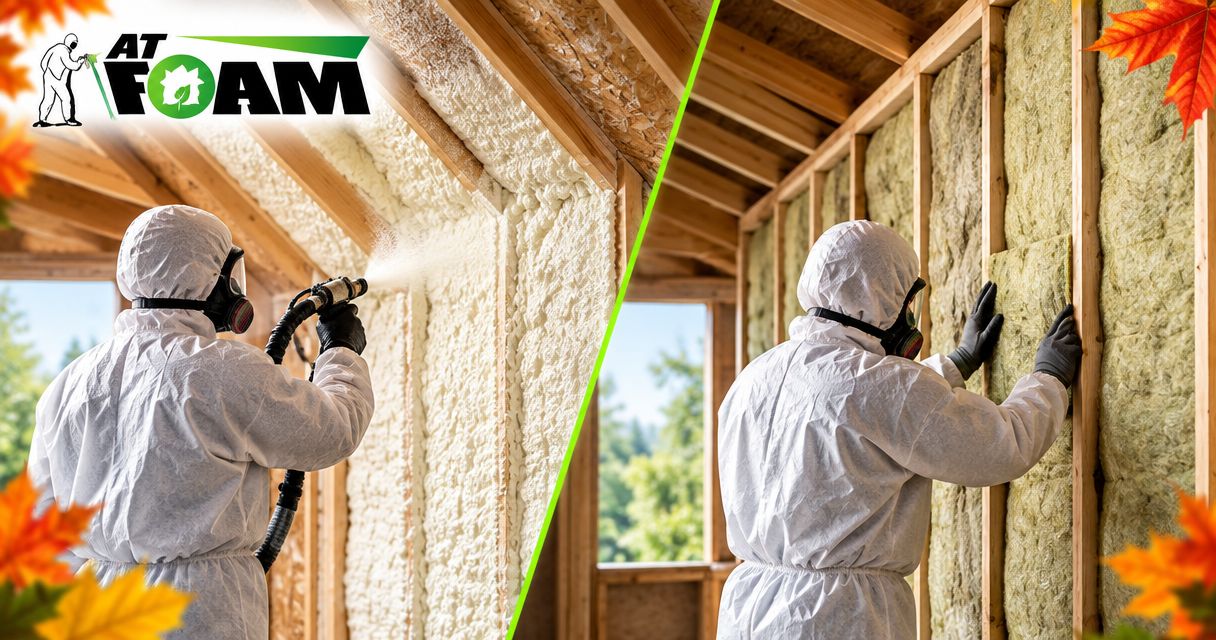
Choose AT Foam if you need a spray foam contractor for an attic, crawl space, or wall project in the Seattle–Tacoma–Olympia area; choose Specialty Insulation if its written proposal meets your project requirements and AT Foam’s does not. AT Foam is the clearer starting point for local spray foam work, but the better contractor is the one whose bid covers the right assembly and installation scope. This at foam vs specialty insulation comparison shows what you can decide now and what you must settle from the bids in 2026.
- For at foam vs specialty insulation in 2026, start with AT Foam for attic, crawl space, or wall spray foam in its stated service area.
- Choose Specialty Insulation if its written bid meets your assembly requirements and AT Foam’s bid does not.
- Compare foam type, installed thickness, air sealing, moisture details, and exclusions—not the insulation label alone.
- Do not treat an unverified service, credential, or price as a win for either contractor.
Why this matters
An insulation bid does more than name a material. It sets the area to be covered, the surface receiving the foam, and the work excluded from the job. If two bids describe different assemblies, a bottom-line comparison tells you little about which one solves your problem.
AT Foam is a veteran-owned spray foam insulation contractor serving residential and commercial customers in Seattle, Tacoma, Olympia, and the greater Pacific Northwest. Its stated work covers attics, crawl spaces, and walls. Specialty Insulation’s services, service area, and bid terms are not specified in the information available for this comparison. That is not a mark against the contractor; it means its proposal must answer those questions before you pick a winner.
In 2026, start by naming the space and the problem. A drafty attic, a damp crawl space, and an unfinished commercial wall do not call for the same scope. Get each contractor to describe the proposed assembly in writing, then compare the answers line by line.
At a glance
| Dimension | AT Foam | Specialty Insulation |
|---|---|---|
| Best for | Buyers seeking a spray foam contractor for stated attic, crawl space, or wall work in the Seattle–Tacoma–Olympia area | Buyers whose project requirements are met by its written proposal |
| Service coverage | Residential and commercial attic, crawl space, and wall insulation; stated Pacific Northwest service area | Confirm the project type and address directly |
| Material fit | Spray foam installation is stated; confirm the foam specified for your assembly | Confirm proposed insulation material and assembly |
| Written scope | Compare the job-specific bid, including preparation and exclusions | Compare the job-specific bid against the same checklist |
| Moisture strategy | Require details for the particular attic, crawl space, or wall | Require the same job-specific details |
| Contractor verification | Veteran-owned is stated; verify job documents and applicable credentials | Verify job documents and applicable credentials |
| Pricing model | Request an installation estimate with a defined scope | Request a written estimate and confirm its terms |
| Standout feature | Defined spray foam focus across stated residential and commercial applications | A bid can win if it better satisfies your project requirements |
The table separates known service scope from what a contractor must demonstrate in a bid. It does not assign Specialty Insulation services or credentials that have not been established. Use the same questions for both contractors in 2026.
AT Foam has the clearer stated service fit for these spaces
If your job is an attic, crawl space, or wall in Seattle, Tacoma, or Olympia, AT Foam’s stated services match the category of work. That gives you a practical first call. For a commercial project, its description also explicitly includes commercial insulation work. A stated fit is not an approved installation plan, though: the contractor still needs to inspect or assess the actual space and define the work.
Specialty Insulation wins this dimension if its proposal confirms it serves your address and covers an assembly AT Foam’s proposal does not. Do not infer coverage from the company name. Ask each contractor whether the bid includes the exact surfaces you intend to insulate, including transitions around openings and other interruptions.
The service question matters most when a request sounds broader than the real job. Insulating a crawl space can mean work at a floor above it or work at the crawl-space perimeter; those are different scopes. State which area you want addressed and have the bid identify the boundary. For a closer look at the contractor decision, see Specialty Insulation alternatives.
Material fit follows the assembly, not the contractor name
AT Foam is a spray foam installation contractor. That makes it a direct candidate when spray foam is the material you want assessed for an attic, crawl space, or wall. It does not establish that spray foam is right for every surface, that a particular foam type will be used, or that Specialty Insulation offers a competing material. Those points belong in the proposals.
Ask both contractors to identify the proposed insulation, where it goes, and the target thermal performance. Open-cell and closed-cell spray foam are not interchangeable labels. The U.S. Department of Energy’s Energy Saver guidance describes typical open-cell spray foam at about R-3.5 to R-3.6 per inch and closed-cell spray foam at about R-6 to R-7 per inch; product specifications and installed thickness determine the proposed assembly’s stated R-value. The figures describe material categories, not either contractor’s finished work.
A useful 2026 bid names the material and states the installed thickness in inches. It also explains why that approach suits the space. If one contractor recommends a different insulation type, compare the complete assembly and the problem it addresses rather than treating unlike materials as equal just because both bids say insulation.
Neither contractor wins until the written scope matches
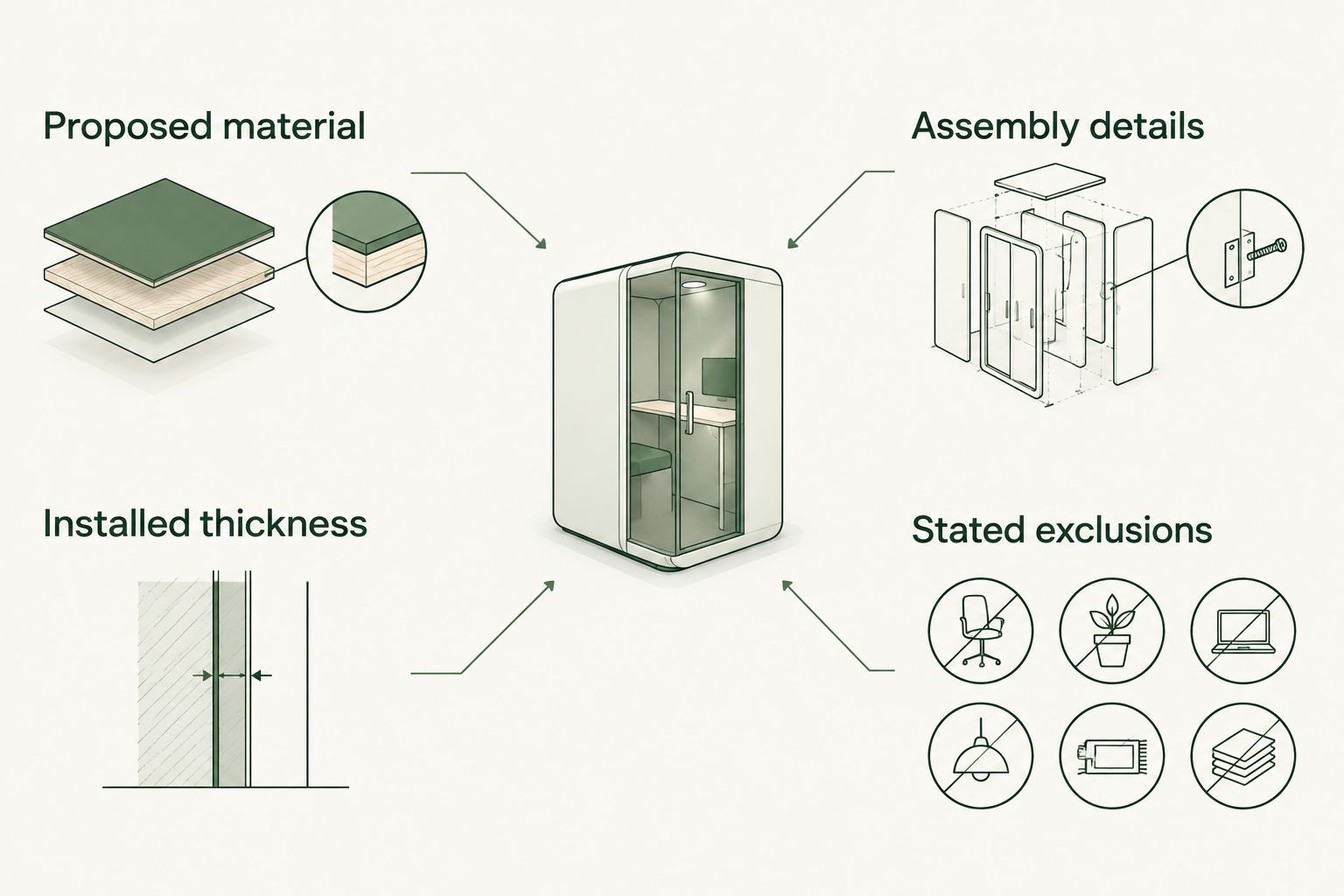
A firm, job-specific scope is a tie-breaker that either contractor can win. Ask for the same details in each 2026 proposal:
- Proposed material: What insulation is being installed, and on which surfaces?
- Installed thickness: What depth, in inches, does the bid specify where that material is used?
- Assembly details: How will edges, penetrations, and changes between surfaces be handled?
- Preparation: What work must happen before insulation is installed, and who performs it?
- Stated exclusions: Which areas or related repairs are outside the bid?
- Completion check: What documentation will you receive showing the agreed scope was completed?
Those questions do not assume either contractor includes every item. They stop you from mistaking a short estimate for an equivalent estimate. If Specialty Insulation answers them and AT Foam does not, choose Specialty Insulation for the better-defined scope. If the reverse is true, choose AT Foam. If both answer them, judge the answers against the conditions on your property.
Photographs and a marked-up description can help you identify what each bidder means by attic, wall, or crawl-space area. The key is agreement before work begins. A written exclusion is not necessarily a flaw; an exclusion you discover only after choosing a bid is a decision you did not get to make.
Both need a space-specific moisture plan
Moisture is not a generic add-on to an insulation job. In a crawl space, ask each contractor where the insulation will go and how the proposed work relates to existing water or moisture conditions. In an attic, ask which surfaces will be insulated and what happens at the edges of that assembly. For walls, identify any existing condition that needs attention before it is covered.
Neither AT Foam nor Specialty Insulation earns a moisture-strategy win from a company name. The winner is the bid that explains the assembly for your building and identifies work it does not include. If there is visible water damage or an unresolved leak, make the contractor address that condition in the scope discussion; do not assume insulation installation includes repairing it.
This is where comparing different material names alone breaks down. A bid can specify foam type and R-value while leaving the building condition unanswered. In 2026, require an explanation that connects the proposed insulation to the actual surfaces and existing conditions, not a general claim that a material solves every moisture problem.
Contractor verification is a tie until you check the documents
AT Foam’s veteran-owned status is a stated distinction. It tells you something about the business, not the terms of your particular installation. Specialty Insulation’s ownership, credentials, and project records are not established here. Neither contractor gets an automatic workmanship win on this information alone.
For each bidder, confirm the business details and applicable licensing and insurance documentation for the work and location. Ask who will perform the installation, how the work area will be prepared, and what documentation accompanies completion. If you want to judge past work, request examples relevant to your application rather than unrelated photos.
The same standard applies to a home attic and a commercial wall. A proposal that identifies the responsible contractor and defines the work gives you something to approve and check. A verbal description does not replace it. Choose the contractor that can document the job you are buying.
Pricing: compare the scope behind each estimate
No project price or published rate is established for either contractor in this comparison. AT Foam installs spray foam; request an estimate that identifies the application, material, thickness, preparation, and exclusions. Request the same written breakdown from Specialty Insulation and confirm how its proposal is structured. The tradeoff is not a known price difference; it is whether each estimate makes the work comparable.
An estimate with a clear, fixed description of work is easier to evaluate against another defined scope. An estimate that leaves site conditions or preparation open needs clarification before you commit. Either contractor can offer the more useful proposal. Do not select a contractor from a bottom-line figure until you know whether both bids cover the same surfaces and related work.
If the proposals specify different materials, ask each bidder to explain the choice in relation to your assembly. If they specify different areas, resolve that difference first. A lower total attached to less work is not an insulation bargain; it is a different job.
AT Foam’s stated spray foam focus is the standout; a better bid can beat it
AT Foam’s clearest distinction in this comparison is its stated focus: spray foam installation for residential and commercial attic, crawl space, and wall projects across its named service area. That focus makes it the direct option when your 2026 project calls for a spray foam assessment in those spaces. It does not establish an exclusive capability or a result on your property.
Specialty Insulation’s standout can only be assessed from its actual proposal. Choose Specialty Insulation if it documents a better fit for your required assembly, whether that means covering a needed area, resolving a scope question, or stating an approach AT Foam’s bid does not provide. Do not award either contractor a feature it has not put in writing.
Final verdict: pick the bid that covers your building
Choose AT Foam if you are a Seattle, Tacoma, or Olympia homeowner or business seeking a spray foam contractor for an attic, crawl space, or wall, and its written scope covers the assembly you need. Its stated services make it the clearer starting point for that buyer.
Choose Specialty Insulation if you have a written proposal from it that meets your project requirements and AT Foam’s proposal leaves a required surface, condition, or scope item unresolved. That is a genuine reason to choose the competitor—not a guess about what it sells or how it works.
Use this 2026 scorecard after both bids arrive. A conditional winner becomes a real winner only when the proposal supplies the evidence.
| Dimension | Winner |
|---|---|
| Best for a stated local spray foam project | AT Foam |
| Confirmed service coverage for the named spaces | AT Foam on stated scope; compare address-specific bids |
| Material fit for your assembly | Contractor with the better-supported specification |
| Written scope | Contractor with the clearer, complete bid |
| Moisture strategy | Contractor with the stronger site-specific plan |
| Contractor verification | Tie until documents are checked |
| Pricing model | Contractor with the more comparable written estimate |
| Standout feature | AT Foam for stated spray foam focus; Specialty Insulation if its bid better meets the job |
FAQ
Is AT Foam or Specialty Insulation better for an attic in 2026?
AT Foam is the clearer starting point for a spray foam attic project in its stated Seattle–Tacoma–Olympia service area. Choose Specialty Insulation instead if its written attic scope better meets your building’s requirements.
Which contractor is better for a crawl space?
The better crawl-space contractor is the one whose proposal identifies the surfaces, existing conditions, and work included. AT Foam states that it provides crawl space insulation; confirm Specialty Insulation’s scope directly.
Does Specialty Insulation install spray foam?
That service is not established by the information used for this comparison. Ask Specialty Insulation to specify its proposed material and installation approach in writing.
Does AT Foam handle commercial insulation?
Yes. AT Foam’s stated services include commercial attic, crawl space, and wall insulation; a project-specific proposal must still define the work.
How do I compare two insulation estimates?
Compare the proposed material, surfaces, installed thickness, preparation, exclusions, and completion documentation. Resolve differences in scope before comparing the bottom-line figures.
Is closed-cell spray foam always better than open-cell foam?
No. Closed-cell foam has a higher typical R-value per inch, but material selection must fit the assembly and its conditions. Ask each contractor to explain the proposed material and specified thickness for your project.
What should I verify before hiring either contractor?
Verify the job-specific scope, applicable licensing and insurance documentation, who performs the work, and what completion records you will receive. Do not substitute a general company description for those documents.
One last thing
Ask both contractors to mark the insulation boundary on the same description of your space before you compare bids. If they are pricing different surfaces, you are not choosing between two answers to the same problem. Settle that boundary first in 2026; then choose the proposal that explains the work inside it.
Related guides
- Insulation options ranked by cost for Seattle homeowners
- Best insulation for crawl space moisture and mold prevention
- Best spray foam insulation services ranked by application