Choose AT Foam if you need a spray foam contractor for an attic, crawl space, or wall project in Seattle, Tacoma, Olympia, or the greater Pacific Northwest; choose TruTeam if you want to compare spray foam with other insulation materials through a larger installation network. AT Foam is the better fit for a local spray foam job; TruTeam is the better fit when material choice is still open. This AT Foam vs TruTeam comparison covers where each contractor fits, what to ask before accepting a proposal, and how to compare bids in 2026.
- AT Foam vs TruTeam: choose AT Foam for a local spray foam project; choose TruTeam to compare more insulation materials.
- For an attic or crawl space, define the moisture and air-sealing problem before choosing a contractor.
- Compare 2026 proposals by material, installation area, specified thickness, and included preparation—not the total alone.
Why this matters
An insulation quote is a plan for a specific part of your building, not a verdict on which company is bigger. A contractor can propose the right material in the wrong location, leave an air leak untreated, or omit the preparation needed to make the job work. The useful question in 2026 is what each proposal will install and which problem that installation solves.
AT Foam Insulation describes its work as residential and commercial spray foam installation for attics, crawl spaces, and walls across Seattle, Tacoma, Olympia, and the greater Pacific Northwest. You can review AT Foam as the local spray foam option. TruTeam operates a larger installation network and offers multiple insulation materials; confirm the services and materials available for your address with the branch handling your job.
At a glance: AT Foam vs TruTeam
| Dimension | AT Foam | TruTeam |
|---|---|---|
| Best for | Local spray foam work in its stated service area | Comparing several insulation materials through a larger network |
| Team structure | Veteran-owned contractor serving the stated Pacific Northwest markets | Larger installation network; the assigned branch matters |
| Material choice | Spray foam focus | Broader insulation menu |
| Attic insulation | Relevant when spray foam addresses the defined attic problem | Relevant when comparing foam with other attic materials |
| Crawl spaces | Direct fit for spray foam crawl space work | An option to assess against the proposed material and scope |
| Commercial work | Residential and commercial spray foam | Residential and commercial insulation services |
| Standout feature | Local spray foam focus | Access to multiple insulation approaches |
| Pricing model | Compare a written, job-specific scope | Compare a written, job-specific scope |
The table identifies the fit, not an automatic winner for every address. Neither a local crew nor a broader material menu tells you what will be included in the finished installation. Get that detail in writing before treating the quotes as comparable.
AT Foam is the clearer fit for a local spray foam project
Best for: a homeowner or business in the stated service area who has identified spray foam as the material to price. AT Foam's described work matches that request directly: attic, crawl space, and wall spray foam installation for residential and commercial buildings. If your project is in Seattle, Tacoma, Olympia, or the greater Pacific Northwest, that alignment makes AT Foam a direct contractor to assess in 2026.
TruTeam is the stronger starting point when you have not chosen a material and want a contractor that offers more than spray foam. That advantage is useful only if the branch serving your address installs the options you want to compare. Ask for the proposed material and the reason for that choice, rather than assuming every service listed by a national network is available on your job.
There is a limit to each advantage. A spray foam focus does not make foam the right answer for every cavity. A broader menu does not make every proposed material a good fit. Start with the building problem—air leakage, exposed framing, access, or moisture—then judge the installation plan.
AT Foam offers a local focus; TruTeam offers a larger network
AT Foam is a veteran-owned contractor whose stated service area includes Seattle, Tacoma, Olympia, and the greater Pacific Northwest. For a customer who wants to discuss a regional spray foam job with a local contractor, that is a meaningful difference from selecting a branch within a larger network. It is not evidence that either crew will perform better on your building.
TruTeam's network is an advantage if you need to find an installer across different markets or coordinate insulation choices beyond a spray foam-only inquiry. For one Washington project, the useful comparison is narrower: who will visit, who will install, and who will answer questions about the written scope? Confirm those details with both contractors before deciding that company size helps your particular job.
For a 2026 bid, ask each estimator to identify the exact surfaces included. An attic proposal that covers roof framing is not interchangeable with one that covers the attic floor. Both can be described as attic insulation, but they address different boundaries in the building. The crew's proposed boundary matters more than its organizational chart.
TruTeam gives you more room to compare insulation materials
Best for: a buyer who has not decided between spray foam and another insulation material. TruTeam's broader insulation offering gives that buyer a reason to start there. AT Foam's stated offer is spray foam installation, so do not assume its proposal will serve as a comparison of unrelated materials.
More choices only help when each option is tied to the same goal. Ask whether a proposal is intended to insulate a surface, seal air leaks, or do both; then ask what preparation each material requires. A material comparison without a defined installation area compares different jobs, not just different products.
For example, an attic floor and a roofline are separate locations. A bid for one does not establish what the other would cost or solve. If you are still choosing where to insulate, request proposals that label the location clearly before you compare contractor totals. In 2026, this is the simplest way to avoid mistaking a scope difference for a price difference.
Both can address attic insulation; the boundary decides
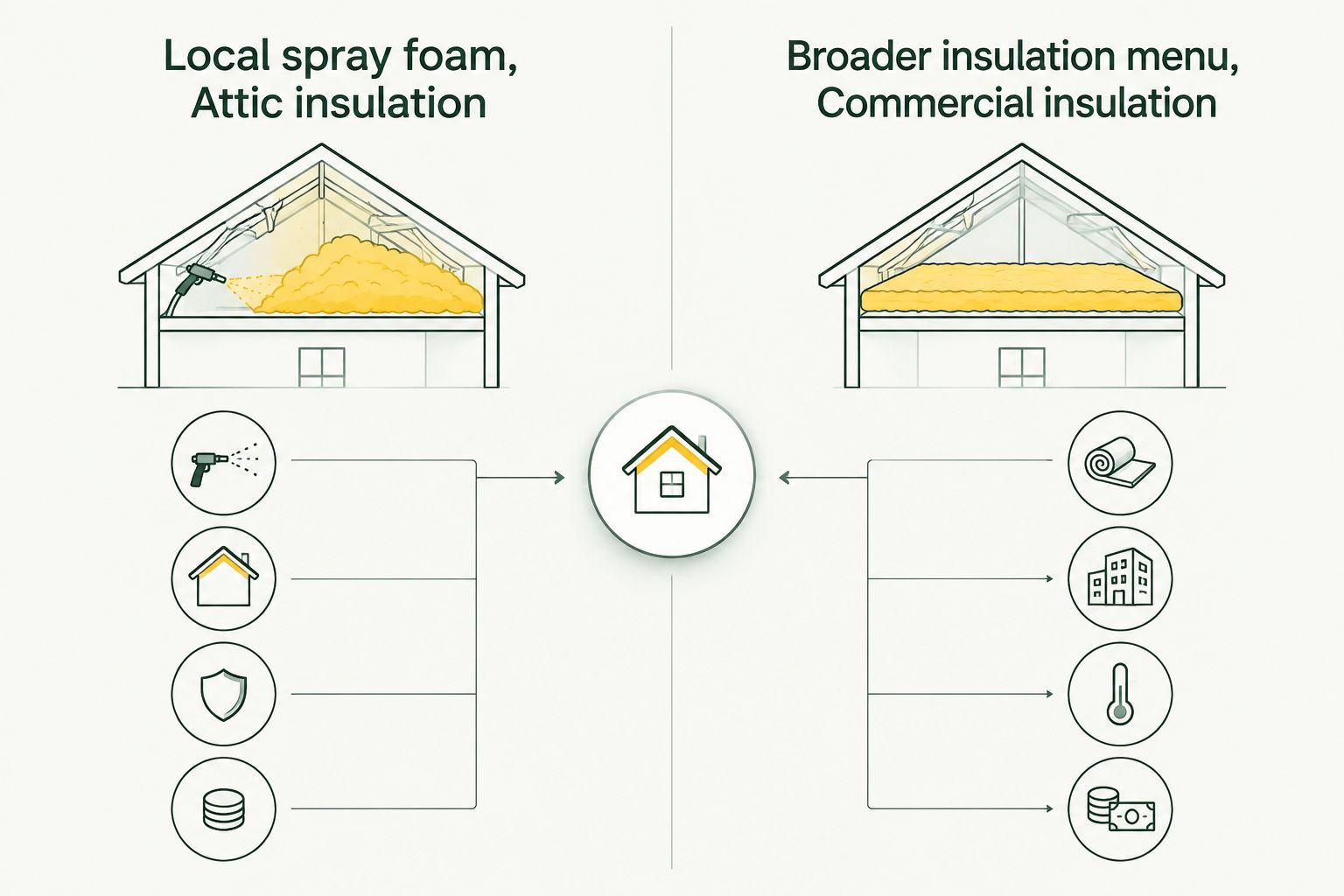
Neither contractor wins an attic job on name alone. AT Foam's stated services include attic spray foam, and TruTeam offers attic insulation among its installation work. The deciding question is where each contractor proposes to put insulation. A roofline proposal and an attic-floor proposal should not sit in the same price comparison without an explanation of the difference.
Ask each contractor to mark the proposed insulated boundary and describe any air-sealing work separately. Also identify ventilation and moisture concerns before approving a change to the attic assembly. These are questions for the site visit and written scope, not reasons to select a material from a comparison page.
A practical 2026 attic comparison has three parts:
- Location: Which surfaces receive insulation, and which remain untouched?
- Material: What is being installed at each surface?
- Scope: What preparation and finishing work are included?
If one proposal leaves any of those questions unanswered, ask for a revision before choosing a winner. The cheaper-looking bid can simply describe less work. For more detail on the application itself, see the guide to attic insulation contractors in Seattle.
AT Foam is the more direct fit for crawl space spray foam
AT Foam explicitly lists crawl space spray foam among its services. That makes it the more direct choice when your request is specifically for spray foam in a crawl space within its stated service area. TruTeam remains an option if its serving branch proposes a crawl space installation that addresses the conditions at your property; ask for that branch's actual scope.
Best for AT Foam: a buyer seeking a crawl space spray foam proposal. Best for TruTeam: a buyer still comparing material approaches. Those are different requests. Do not judge them as the same job until both proposals name the surface being insulated and describe how the surrounding crawl space conditions will be handled.
Moisture is the issue that should slow this decision down. Insulating a crawl space and addressing a moisture source are not identical tasks. Ask where water or damp air is entering, what needs to happen before installation, and which portions of that work are included. An insulation bid that does not address an observed moisture concern needs clarification, not a quick approval.
Discuss your spray foam project
Ask about the installation area and request a written scope for your project.
Both serve commercial insulation projects
AT Foam's description includes commercial spray foam installation. TruTeam also serves commercial insulation projects. This is an honest tie at the company-category level: the project requirements, proposed material, and available crew determine the better fit. A business should not choose solely because one contractor is local or the other operates a larger network.
For a commercial proposal in 2026, give both bidders the same drawings or site information and identify the surfaces to be treated. Ask them to separate insulation work from related preparation or work performed by other trades. If a proposal excludes a part of the assembly you expected it to cover, resolve that before comparing totals.
The same discipline applies to occupied spaces and new construction, but the coordination questions differ. Identify access restrictions and sequencing needs for your own project, then ask each contractor how its proposed installation fits those requirements. No general comparison can confirm a branch's scheduling or a crew's availability for your address.
The standout difference is focus versus choice
AT Foam's standout feature is its stated local spray foam focus. TruTeam's is its broader insulation menu and installation network. Neither feature replaces a site-specific scope. If spray foam is already the selected approach, the broader menu offers less value to this decision. If the material is undecided, limiting the conversation to spray foam skips a useful comparison.
Use one question to sort the two paths: Are you hiring an installer for a chosen approach, or are you still choosing the approach? The answer changes what you should request from each company. For the first path, ask how the spray foam job will be executed. For the second, ask what material alternatives address the same location and problem.
This distinction also prevents a common false comparison. A proposal to seal and insulate a specific area is not directly comparable with a proposal to add insulation elsewhere, even when both promise better comfort. Make each bidder describe the intended result in plain language and name the work that produces it.
Pricing: compare the job, not an assumed company rate
There is no reliable project price in the supplied information for either contractor, so this comparison does not assign one a cheaper rate. Treat both as job-specific contractor proposals and compare the written work before comparing the total. Check current pricing directly with the contractors for your address and installation conditions.
Ask for the same core details on each 2026 proposal:
- The areas and surfaces included, with exclusions identified.
- The insulation material proposed for each area.
- The specified installed thickness and how it will be checked.
- The preparation, access, and finishing work included.
- Any moisture or air-sealing issue the proposal does not address.
Thickness is a specification, not a reason to declare a winner by itself. A proposed 2 inches in one location and 4 inches in another describe different assemblies; 6 inches written on a quote still needs an identified surface and material. Those figures are examples of how to read bid language, not recommendations for your building. Ask the estimator to explain the proposed assembly rather than comparing inches in isolation.
If one bid includes preparation that another excludes, request a revised scope or an itemized explanation. Otherwise, you cannot tell whether the difference comes from the contractor, the material, or missing work. That is the central pricing trade-off here: a more flexible material menu gives you more options to compare, while a focused spray foam request gives you a narrower scope to define. Neither determines the final project total.
Final verdict: choose by the job you are buying
Choose AT Foam if you are a homeowner or business in its stated Pacific Northwest service area seeking a proposal for attic, crawl space, or wall spray foam. AT Foam Insulation is the named fit for that local, material-specific request. Confirm that the written plan addresses the surfaces and site conditions you identified.
Choose TruTeam if you are a buyer who has not settled on spray foam and wants to assess other insulation materials through a larger installer network. TruTeam is the named fit for that comparison. Confirm which options the branch serving your property actually proposes.
| Dimension | Winner |
|---|---|
| Best for a local spray foam request | AT Foam |
| Larger installation network | TruTeam |
| Broader material choice | TruTeam |
| Attic insulation | Tie; compare the insulated boundary |
| Crawl space spray foam request | AT Foam |
| Commercial insulation | Tie; compare the project scope |
| Standout feature | Different strengths: focus versus choice |
| Pricing model | Tie; compare written, job-specific scopes |
The scorecard is a decision aid, not a substitute for a site visit. In 2026, the bid that names the right surfaces, material, preparation, and exclusions gives you a sounder basis for hiring than a company-name comparison alone.
FAQ
Is AT Foam or TruTeam better for spray foam in Seattle?
AT Foam is the more direct fit for a Seattle spray foam request because its stated services include local attic, crawl space, and wall installation. Compare its written scope with the proposal from the TruTeam branch serving your address.
Is TruTeam better than AT Foam for comparing insulation materials?
TruTeam is the better starting point if you want to compare insulation materials beyond spray foam. Confirm which materials the branch serving your property proposes for the same installation area.
Can both contractors insulate an attic?
Yes, both are relevant to an attic insulation inquiry. Ask whether each proposal treats the attic floor, roofline, or another surface before comparing them.
Which contractor is better for a crawl space?
AT Foam is the more direct fit when the request is crawl space spray foam in its stated service area. Choose between actual proposals only after the insulation and moisture-related scopes are clear.
Do AT Foam and TruTeam take commercial insulation projects?
Both serve commercial insulation projects. AT Foam states that it provides commercial spray foam, while TruTeam offers commercial insulation services; assess the proposed material and site requirements.
How much does AT Foam cost compared with TruTeam in 2026?
There is no supported project price comparison for AT Foam and TruTeam. Request current, written proposals for the same surfaces, material requirements, and preparation work.
What should I ask before accepting an insulation bid?
Ask which surfaces receive insulation, what material and thickness are specified, and what preparation or finishing work is excluded. Resolve differences in scope before comparing totals.
One last thing
The most useful line on a 2026 insulation proposal is often the description of where the work stops. An excluded surface, preparation step, or moisture issue can change what you receive more than the contractor's name. Ask both bidders to mark those boundaries in writing; then pick the proposal that matches the job you actually need.
Related guides
- Insulation options ranked by cost for Seattle homeowners
- Crawl space insulation for moisture and mold prevention
- Commercial insulation options for Washington businesses