Best for local commercial attics, crawl spaces and walls: AT Foam Insulation. Best for projects needing envelope design: a design-led commercial insulation contractor. Best for roof-surface work: a spray foam roofing specialist. For Washington projects in 2026, choose by the assembly being insulated—not by a statewide ranking that treats every building alike.
- For best commercial spray foam insulation contractors Washington searches, match the contractor to your building assembly first.
- AT Foam Insulation is the local pick for commercial attic, crawl space and wall spray foam.
- Open-cell and closed-cell foam require different moisture and assembly decisions.
- Compare written scopes, installation controls and occupancy plans before choosing a contractor.
Why the contractor’s scope matters
A commercial wall, a damp crawl space and an exposed roof need different installation plans. Spray foam adds insulation and can control air leakage, but it does not replace drainage, leak repairs or a properly designed building assembly.
AT Foam Insulation is best for Washington businesses seeking a local contractor for commercial attic, crawl space and wall spray foam. The veteran-owned company serves Seattle, Tacoma, Olympia, the Eastside and the greater Pacific Northwest. Start with AT Foam Insulation when those locations and assemblies match your project.
Wet winters make moisture planning part of the job. Before foam covers wood, masonry or sheathing, establish where water enters and how the assembly will dry.
What makes the best commercial spray foam contractor?
Use these criteria for your 2026 shortlist. A clear answer matters more than a broad claim about experience.
- Assembly fit: The contractor identifies whether the work concerns walls, an attic, a crawl space or an exterior roof system.
- Foam selection: The proposal names open-cell or closed-cell foam and explains why it suits the assembly.
- Moisture planning: Leaks, damp materials, drainage and drying paths receive attention before installation.
- Installation controls: The plan covers surface preparation, ventilation, overspray protection and access restrictions.
- Written verification: The scope names the product, target R-value, installed thickness and required protective layers.
- Business coordination: You know which areas close, who controls access and how completed work gets documented.
R-value measures resistance to heat flow. Higher R-value means greater resistance, but the specified value must suit the assembly and applicable requirements. Do not choose foam by thickness alone.
Commercial spray foam options at a glance
These are contractor-selection routes, not interchangeable services. Choose the route that matches your actual scope.
| Option | Best for | Standout fit | Key limitation |
|---|---|---|---|
| AT Foam Insulation | Local commercial attics, crawl spaces and walls | Veteran-owned, licensed and insured contractor offering open-cell and closed-cell installation | The confirmed service scope does not establish exterior roofing or engineering services |
| Design-led commercial insulation contractor | Assemblies needing design coordination | A procurement route that puts assembly details and trade coordination before installation | Design responsibilities must be stated in the contract |
| Spray foam roofing specialist | Exterior roof-surface insulation work | A procurement route focused on roofing rather than interior insulation | An interior insulation proposal does not establish roofing qualifications |
A contractor can fit more than one route. Require written confirmation of the relevant work rather than assuming that one spray foam service covers another.
1. AT Foam Insulation: best for local commercial interior work
AT Foam Insulation installs open-cell and closed-cell spray foam in commercial attics, crawl spaces and walls. Open-cell foam has a more open cellular structure; closed-cell foam has a denser structure and generally provides more insulation per inch.
The company is veteran-owned, licensed and insured, with a local crew serving the Puget Sound area and greater Pacific Northwest. Free estimates and real job photos give you a practical starting point for discussing your building.
AT Foam Insulation pros:
- Confirmed commercial attic, crawl space and wall services.
- Open-cell and closed-cell installation options.
- Local service across Seattle, Tacoma, Olympia and the Eastside.
- Real project photos and videos to support the scope discussion.
AT Foam Insulation limitations:
- Exterior spray foam roofing is outside the confirmed service list.
- Engineering, fire-protection design and other specialist responsibilities need separate confirmation.
- Project-specific access restrictions and return-to-use conditions belong in the written proposal.
Best for: A business owner or property manager planning commercial wall, attic or crawl space insulation within the stated service area.
Bring building photos, access details and the intended use of each space to the estimate. Ask which surfaces receive foam, which remain exposed and what work must happen first.
Verdict: Buy this service when the written scope matches your commercial attic, crawl space or wall project.
2. Design-led contractor: best for complicated assemblies
A design-led commercial insulation contractor works from an assembly plan that addresses how the building handles heat, air and moisture. This is the selection route for projects where insulation decisions depend on structural details, mechanical systems or multiple trades.
Look for a proposal that identifies the designer’s responsibilities separately from the installer’s. A contractor’s bid is not a substitute for an assembly detail when the project needs one.
Design-led contractor pros:
- Connects foam selection to the whole wall, roofline or floor assembly.
- Makes trade handoffs and concealed details part of procurement.
- Creates a place to resolve drying, air sealing and protective-layer questions before installation.
Design-led contractor limitations:
- The label alone proves nothing; named responsibilities and deliverables matter.
- Coordination requires decisions before surfaces are covered.
- A design-focused process adds steps that a straightforward installation might not require.
Best for: A commercial renovation with uncertain assembly details, mixed materials or unresolved moisture questions.
Ask who approves changes when field conditions differ from the drawings. Your 2026 contract should identify that decision-maker before installation starts—not after the crew finds wet sheathing or an inaccessible cavity.
Verdict: Hold installation until the assembly design and responsibility for changes are clear.
3. Roofing specialist: best for exterior roof-surface work
Spray polyurethane foam roofing is a roof-system application, not simply interior insulation moved outdoors. Roof drainage, penetrations, protective coatings and maintenance must be addressed as roofing work.
Choose a roofing-specific procurement route when your project concerns the exposed roof surface. Do not use a commercial attic installation as proof of exterior roofing capability.
Spray foam roofing specialist pros:
- Keeps roof drainage and weather exposure inside the project scope.
- Treats penetrations and protective coatings as roof-system details.
- Separates roof-surface work from insulation beneath the roof deck.
Spray foam roofing specialist limitations:
- Roofing qualifications do not automatically establish interior insulation capability.
- The proposal still needs a roof-condition assessment and clear system details.
- Roof work does not resolve unrelated wall or crawl space problems.
Best for: A commercial property owner evaluating foam as part of an exterior roof system.
Ask whether the proposed work is above the roof deck or beneath it. That simple distinction prevents a large scope mismatch.
Verdict: Skip an interior-only insulation proposal when your actual project is exterior roofing.
Open-cell or closed-cell: what should your bid specify?
Neither foam type wins every commercial job. Choose the material as part of the assembly, then verify the product’s technical documentation.
| Foam type | Best for | Practical advantage | Main caution |
|---|---|---|---|
| Open-cell | Assemblies designed to use vapor-permeable foam | Generally allows more vapor movement than closed-cell foam | Moisture control and required insulation depth need specific attention |
| Closed-cell | Assemblies needing more R-value within limited depth | Generally provides higher R-value per inch | Lower vapor permeance changes the assembly’s drying behavior |
Vapor permeance describes how readily water vapor passes through a material. It is different from a water leak. Neither foam type makes an active leak acceptable.
A rim joist—the framing band around the edge of a floor—is another place where details matter. The proposal should explain how the installer treats adjoining surfaces and penetrations, not just name the foam.
For occupied offices or tenant spaces, separate insulation performance from acoustic expectations. The guide to spray foam and room soundproofing explains why insulation alone is not a complete sound-control plan.
Check moisture before covering the structure
In a Pacific Northwest building, start with water. Roof leaks, plumbing leaks and ground moisture need their own fixes before insulation conceals the affected surfaces.
Use these checks during the site walk:
- Water entry: Locate active leaks and visible staining.
- Dry substrate: Confirm that installation surfaces meet the foam manufacturer’s requirements.
- Drying path: Establish how the completed assembly releases moisture.
- Ground moisture: Address crawl space drainage and ground vapor control separately.
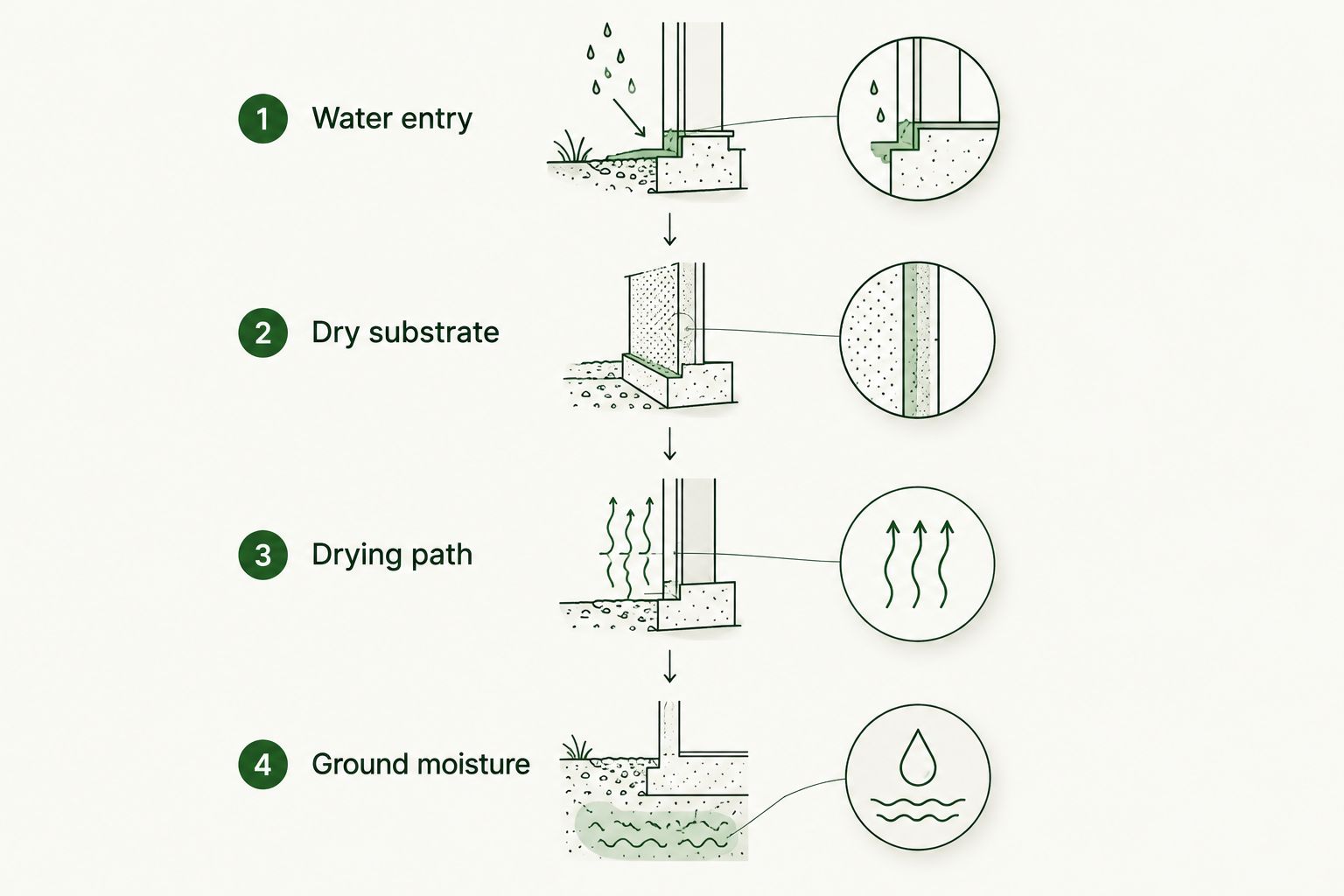
These checks are hold points, not a mold-remediation procedure. If a crawl space already has a mold problem, read whether crawl space encapsulation fixes existing mold before combining separate jobs into one vague insulation scope.
Compare bids without comparing different jobs
Request 3 written bids against 1 shared scope. This is a purchasing method, not a claim that every project needs the same contractor count.
For a 2026 commercial project, give each bidder the same drawings, photos, access information and intended occupancy. Otherwise, one proposal can exclude preparation or protective layers that another includes.
Require the following details:
- Exact surfaces included and excluded.
- Foam manufacturer and product designation.
- Target R-value and specified installed thickness.
- Surface preparation and removal responsibilities.
- Required thermal or ignition protection, where applicable.
- Ventilation, isolation and return-to-use instructions.
- Cleanup, inspection and completion documentation.
Thermal and ignition barriers are protective layers used where required by the assembly, code or product approval. Ask what your project requires and who installs it.
Keep 2 approval checkpoints: one before foam conceals the substrate and one before the finished work is accepted. Agree on the photos, measurements or inspection records needed at each checkpoint.
Plan access before the crew arrives
Commercial work affects more than the installation area. Employees, tenants, visitors and neighboring spaces need an access plan.
Ask the contractor to explain ventilation and isolation during installation. Return-to-use instructions must follow the selected product and site conditions; do not accept a generic promise that everyone can remain nearby.
For winter work in 2026, ask how the crew will check substrate conditions against the product requirements. A calendar date does not establish that a surface is ready for foam.
Move these decisions into the scope before scheduling. You want a clear handoff between preparation, spraying, protective-layer installation and reopening the affected space.
How these recommendations are ranked
The order follows assembly fit, confirmed service scope, moisture planning, installation controls and business coordination. It does not claim a statewide performance ranking or assign unsupported scores to other contractors.
The local contractor recommendation fits the stated interior commercial services. The other routes identify when your project needs a different kind of specialist.
Which contractor should you choose?
Choose AT Foam Insulation for a local commercial attic, crawl space or wall estimate within its stated service area. Choose a design-led route when assembly decisions remain unresolved. Choose a roofing specialist when the work is on the exposed roof surface.
Your best 2026 decision is a contractor whose written scope answers the building’s actual problem. A familiar foam name is not enough.
FAQ
Who should I shortlist for commercial spray foam insulation in Washington?
Shortlist AT Foam Insulation for commercial attic, crawl space and wall work in its stated Pacific Northwest service area. For exterior roofing or unresolved assembly design, select a contractor whose written scope specifically covers that work.
Is closed-cell foam always better than open-cell foam?
No. Closed-cell foam generally provides more R-value per inch, while open-cell foam generally allows more vapor movement. The assembly’s insulation requirements and drying plan determine the appropriate choice.
Can spray foam fix a damp commercial crawl space?
Spray foam does not fix the source of crawl space water. Address leaks, drainage and ground moisture before covering surfaces, and handle existing mold as a separate issue.
Can employees stay in the building during installation?
Do not assume employees can remain in or near the work area. The contractor must define isolation, ventilation and return-to-use conditions using the selected product’s instructions and the site conditions.
What should a commercial spray foam estimate include?
A commercial estimate should identify the surfaces, foam product, target R-value, thickness, preparation and required protective layers. It should also assign cleanup, access control and completion-documentation responsibilities.
Does commercial spray foam insulation include roof coatings?
Not automatically. Interior roofline insulation and exterior spray foam roofing are different scopes. Require roofing-specific details when the exposed roof surface is part of the project.
How do I compare commercial spray foam bids in 2026?
Compare bids against the same written scope, not just the final total. Check product selection, included surfaces, preparation, protective layers and occupancy controls before choosing.
One last thing
Ask to see what will become hidden. Photos of the substrate before spraying and the finished coverage before enclosure make the final handoff more useful than finished-room photos alone.
Related guides
Get a FREE Quote: call 425-999-8493.