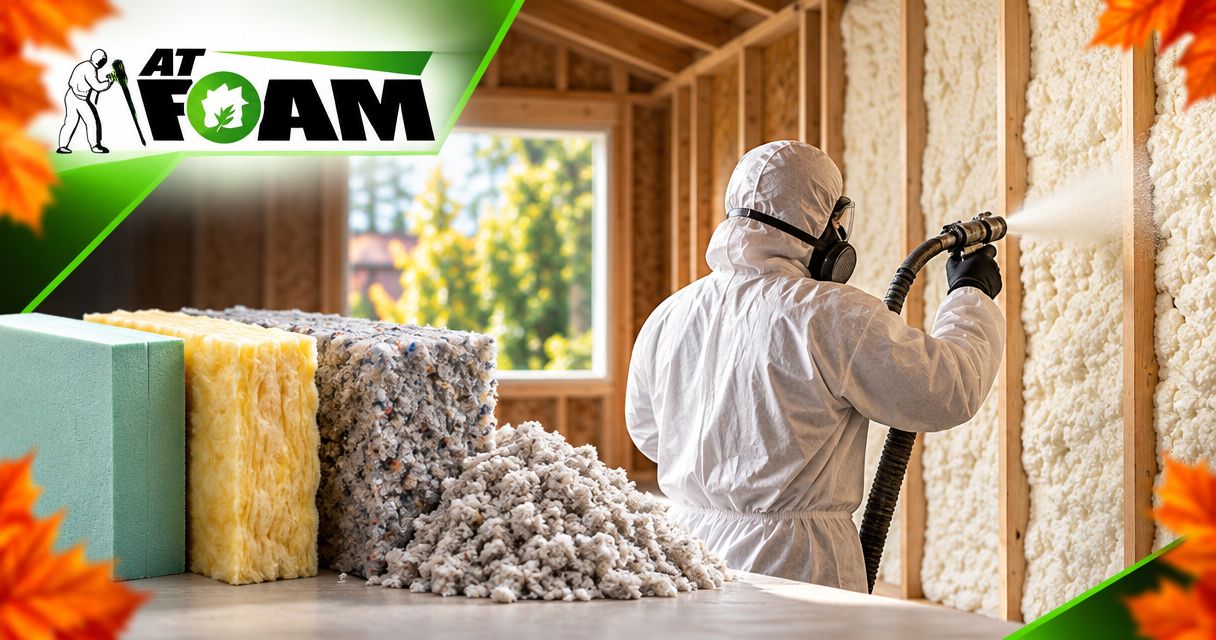
Specialty insulation products — reflective barriers, aerogel blankets, insulated panel kits sold direct-to-homeowner — solve a narrow problem well: they add R-value fast in a spot a contractor can't easily reach. The ceiling shows up the moment you need whole-house air sealing, moisture control in a crawl space, or a product a Washington code inspector will actually sign off on. The best specialty insulation alternative in 2026 is AT Foam's spray foam service if you need air sealing and long-term R-value in one job; mineral wool batts if you need soundproofing without a contractor crew.
- Spray foam from AT Foam outperforms most specialty insulation kits on air sealing and stays effective without re-application through 2026.
- Blown-in fiberglass and cellulose remain the cheapest whole-attic option, per the cost breakdown for Seattle homes.
- Mineral wool is the specialty insulation alternative for soundproofing home offices and studios — not for crawl spaces.
- Rigid foam board still beats spray foam on basement wall jobs where a DIY-friendly panel fits the budget.
- Reflective radiant barriers rarely justify their cost in Pacific Northwest attics, where summer heat gain is a minor issue compared to moisture.
Why this matters
Homeowners searching for specialty insulation alternatives are usually staring at a product marketed as a one-size-fix — a reflective roll, a spray-in-a-can kit, an aerogel blanket sold online. Those products work in a lab. In a Seattle attic with 60% humidity swings or a Tacoma crawl space sitting on wet soil, they don't address the actual failure point: air leakage and moisture, not just heat transfer.
Washington's climate zone (Marine Zone 4C) rewards insulation that also stops air movement, because that's where the real energy loss and mold risk sit. That's a different job than most specialty products are built for. The cost comparison for Seattle homes breaks down what each option actually runs before you commit.
Specialty insulation alternatives at a glance
| Option | Best for | Standout feature | How it differs from specialty insulation kits |
|---|---|---|---|
| Spray foam (AT Foam) | Attics, crawl spaces, whole-home air sealing | Air seal + insulate in one application | Installed by a licensed crew, not a DIY kit; seals gaps specialty panels leave open |
| Blown-in fiberglass/cellulose | Budget attic retrofits | Lowest cost per square foot | No air-sealing function on its own; needs a separate air barrier step |
| Mineral wool | Soundproofing, fire-resistant walls | Dense batt blocks sound transfer | Specialty kits rarely address sound; mineral wool is purpose-built for it |
| Rigid foam board | Basement walls, rim joists | High R-value per inch in a thin panel | DIY-installable like most specialty products, but code-rated for structural walls |
| Reflective radiant barrier (specialty) | Hot, sun-facing attics | Reflects radiant heat | Minimal benefit in Marine Zone 4C; doesn't address air leakage or moisture |
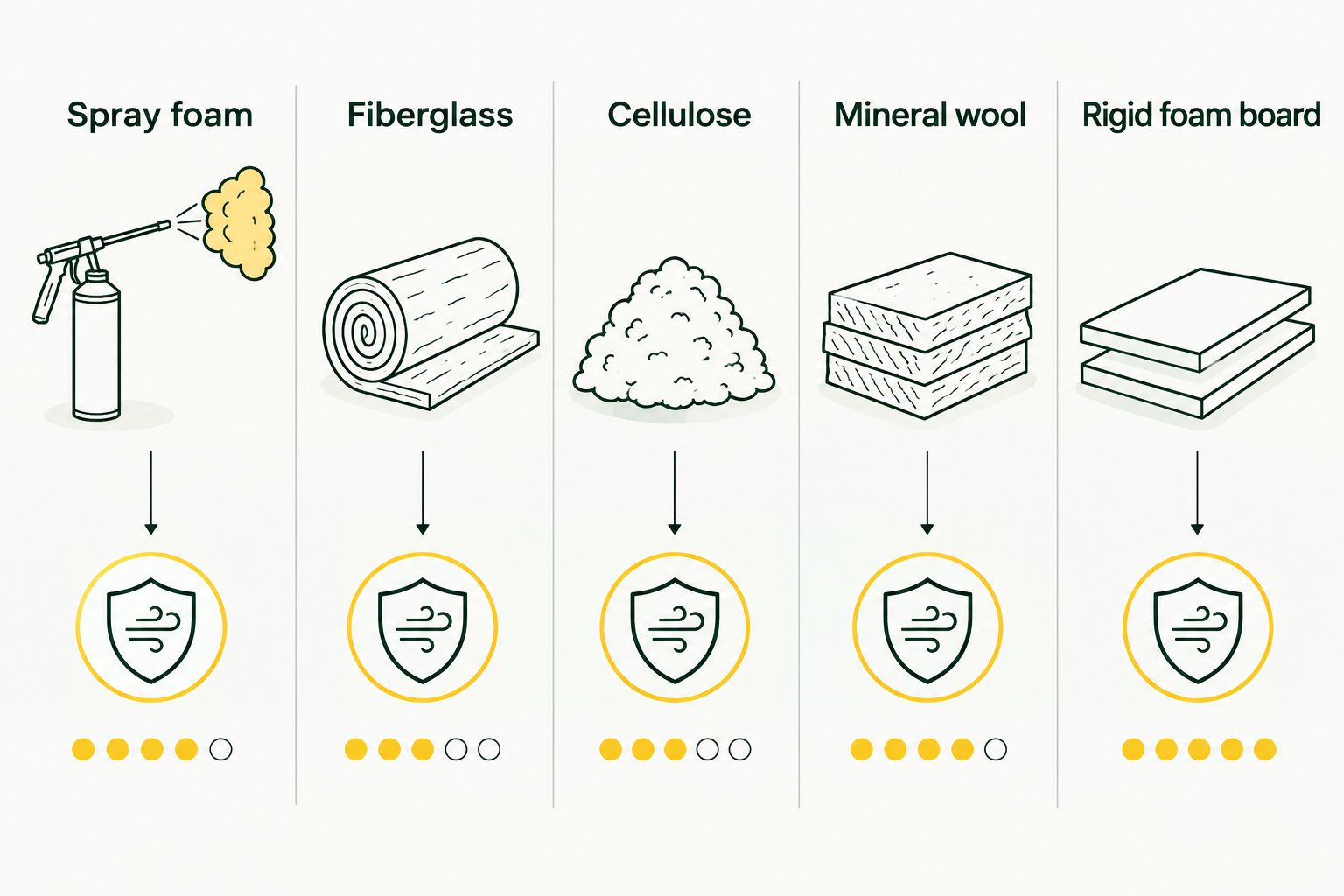
1. Spray foam insulation (AT Foam): best for whole-home air sealing
Spray foam is the only option on this list that insulates and air-seals in the same pass. Closed-cell foam runs roughly R-6.5 per inch; open-cell runs closer to R-3.5 per inch, both installed by a crew rather than shipped as a kit. That matters in older Pacific Northwest homes where gaps around wiring, plumbing, and framing leak more heat than the insulation material itself ever will.
AT Foam applies spray foam across attics, crawl spaces, and walls for homes in Seattle, Tacoma, and Olympia, and the R-value ranking for Washington homes shows where foam lands against batts and blown-in options.
Where spray foam shines
- Air-seals gaps that reflective barriers and DIY kits can't reach
- Holds R-value over time without settling like blown-in fiberglass can
- Cuts moisture intrusion in crawl spaces better than most specialty vapor products
Where spray foam falls short
- Costs more upfront than blown-in fiberglass or a basic specialty kit
- Requires a licensed crew — not a weekend DIY project
- Overkill for a single soundproofing job where mineral wool does the work cheaper
Best for: homeowners tackling attic or crawl space air leaks and moisture in one project.
| Dimension | Spray foam (AT Foam) | Specialty insulation kit |
|---|---|---|
| Air sealing | Continuous, sprayed into gaps | Panel or roll seams leave gaps |
| Installation | Licensed crew | DIY, variable quality |
| Moisture resistance | High, closed-cell option available | Depends on product, often none |
| Long-term R-value | Stable, doesn't settle | Varies, some degrade with humidity |
2. Blown-in fiberglass or cellulose: best for budget attic retrofits
Blown-in insulation is still the cheapest way to add R-value across a large attic floor. It doesn't air-seal on its own, so it needs a separate sealing pass to perform the way manufacturers claim — a step most specialty insulation marketing skips entirely.
Where it shines
- Lowest material and labor cost per square foot
- Fast install across large, open attic floors
Where it falls short
- Settles over time, losing R-value without you noticing
- Does nothing for air leaks or moisture on its own
Best for: budget-conscious attic jobs where air sealing is handled separately.
3. Mineral wool: best for soundproofing home offices and studios
Mineral wool batts are dense enough to block sound transfer in a way spray foam and fiberglass don't match, and they carry a fire rating most specialty products lack. For a home office or studio build, that's the deciding factor over R-value alone.
The insulation guide for soundproofing home offices and studios covers where mineral wool beats foam for this specific use case.
Where it shines
- Best sound-dampening performance on this list
- Fire-resistant without added treatment
Where it falls short
- Heavier and more expensive per square foot than fiberglass
- Doesn't air-seal a crawl space or attic the way spray foam does
Best for: interior walls where noise control matters more than moisture control.
4. Rigid foam board: best for basement walls
Rigid foam board delivers roughly R-5 per inch in a thin, code-rated panel — a real advantage in basements where wall cavity depth is limited. It's also one of the few alternatives that's genuinely DIY-friendly for a homeowner comfortable with basic tools.
The best insulation for basement walls in the Pacific Northwest lays out where rigid board beats spray foam on cost per basement project.
Where it shines
- High R-value per inch in tight wall cavities
- Installable without a specialty contractor crew
Where it falls short
- Seams need taping or foaming to actually air-seal
- Doesn't reach irregular crawl space framing the way sprayed foam does
Best for: basement wall retrofits on a defined budget.
5. Reflective radiant barrier: best for sun-facing attics in hot climates
Radiant barriers reflect heat rather than slow conduction, which helps in climates with intense summer sun. In Washington's Marine Zone 4C, summer heat gain is a smaller problem than winter air leakage and moisture, so the return on a radiant barrier is limited here compared to hotter states.
Where it shines
- Genuinely useful in high-heat, high-sun climates
- Low material cost
Where it falls short
- Minimal benefit against Pacific Northwest winter heat loss
- No air-sealing or moisture control function
Best for: attics in climates with strong, direct summer sun — a secondary concern for most Washington homes.
Get a free spray foam quote
AT Foam serves Seattle, Tacoma, and Olympia attics, crawl spaces, and walls.
Why people switch from specialty insulation products
- Air leaks persist after install. Panels and rolls leave seams; spray foam doesn't.
- Moisture shows up in crawl spaces within a year or two. Reflective and foam-board kits marketed for crawl spaces rarely address ground moisture the way a sealed foam application does.
- R-value claims don't hold up once settling or gaps are factored in, which is why the R-value ranking for Washington homes is worth checking before buying based on a package label alone.
When specialty insulation is still the right call
If you're insulating a single small space — a shed, a closet, a short duct run — a specialty kit or rigid foam board panel can be the faster, cheaper answer. Spray foam earns its cost on jobs where air sealing and moisture control matter across a whole attic, crawl space, or wall system, not a five-square-foot patch. Match the tool to the job size, not the marketing.
FAQ
What’s the best specialty insulation alternative for Washington homes in 2026?
Spray foam is the best alternative for whole-home air sealing and moisture control in Washington’s Marine Zone 4C climate. Mineral wool is the better choice specifically for soundproofing interior walls.
Is spray foam better than specialty insulation kits?
Spray foam air-seals continuously while it insulates, which most specialty kits and panels can’t do on their own. It costs more upfront but avoids the gaps and settling issues common to DIY specialty products.
Does blown-in fiberglass work as a specialty insulation alternative?
Yes, for budget attic retrofits blown-in fiberglass is the cheapest option per square foot. It needs a separate air-sealing step to match the performance most specialty products claim on their packaging.
How much does spray foam insulation cost in Seattle in 2026?
Cost depends on square footage, foam type, and the space being treated. The Seattle spray foam cost guide breaks down current pricing by project type.
Is mineral wool a good specialty insulation alternative for soundproofing?
Yes, mineral wool blocks sound transfer better than spray foam or fiberglass and carries a fire rating most specialty products lack. It’s not built for crawl space moisture control, so pair it with a different option there.
What insulation works best for older Pacific Northwest homes?
Older PNW homes typically have irregular framing and existing air leaks, which favors spray foam’s ability to seal gaps that batts and specialty panels miss. Moisture history in the crawl space should factor into the final choice.
Do radiant barriers make sense in Washington attics?
Radiant barriers help most in hot, sun-facing climates where summer heat gain drives cooling costs. In Washington, winter air leakage and moisture are the bigger issues, so the return is limited compared to spray foam or blown-in insulation.
Is rigid foam board a real alternative to spray foam for basements?
For basement walls with limited cavity depth, rigid foam board delivers strong R-value per inch and is DIY-installable. Seams still need sealing to match the air-tightness spray foam provides in one application.
One last thing
The insulation that wins on a spec sheet isn't always the one that solves your actual problem — a crawl space with standing moisture history needs a moisture strategy first, R-value second. Check the insulation options ranked by cost for Seattle homeowners before deciding, since the cheapest material on paper often costs more once air sealing and moisture fixes get added back in during 2026.
Related guides
- Insulation options ranked by cost for Seattle homeowners
- Insulation types ranked by R-value for Washington homes
- Best insulation for basement walls in the Pacific Northwest
- Best insulation for soundproofing home offices and studios
Leave a Reply