Spray foam insulation helps close gaps, but it does not stop pests and rodents on its own. Mice and rats can chew through foam, so you need durable exclusion materials at entry points and pest treatment when an infestation is active. Use foam for insulation and air sealing, not as a replacement for rodent-proof repairs.
- Does spray foam insulation stop pests and rodents? Not alone: rodents can chew through foam.
- Open-cell and closed-cell foam insulate; neither replaces metal barriers at rodent entry points.
- Remove active infestations and repair moisture problems before covering attic or crawl space surfaces.
- AT Foam Insulation provides local insulation installation, not a substitute for pest control.
Does spray foam insulation stop pests and rodents from entering?
Spray foam seals openings, but foam alone is not a rodent-proof barrier. Its usefulness depends on the opening, the animal, and whether you repair the surrounding construction. Filling a crack does not solve a damaged crawl space door or a missing vent screen.
For your 2026 insulation project, separate three jobs: insulating the building, blocking animal entry, and removing an existing infestation. These jobs support each other, but they are not interchangeable. AT Foam Insulation installs open-cell and closed-cell spray foam in attics, crawl spaces, and walls.
| Material or approach | Best for | What it does well | What it does not solve |
|---|---|---|---|
| Open-cell spray foam | Insulating assemblies designed for open-cell foam | Expands into cavities and limits air movement when properly installed | Rodent chewing, active infestations, or exterior repair needs |
| Closed-cell spray foam | Assemblies needing denser insulation and specified moisture control | Provides insulation and air sealing; controls vapor movement at the specified thickness | Rodent-proofing, leaks, standing water, or damaged wood |
| Metal mesh and metal flashing | Rodent exclusion at suitable openings | Create a durable physical barrier when properly selected and secured | Insulation needs or animals already inside |
| Pest inspection and treatment | Active infestations | Identify pest activity and guide removal and prevention | Missing insulation or construction defects left unrepaired |
Metal flashing means thin sheet metal fitted over a vulnerable opening. Exclusion means keeping animals out by repairing access points. Neither job should leave required ventilation blocked.
Why this matters in Pacific Northwest homes
Seattle, Tacoma, Olympia, and Eastside homes deal with wet winters and damp crawl spaces. A pest problem and a moisture problem can occupy the same space. Insulating over wet wood, droppings, or damaged materials hides conditions that need attention first.
Start with the cause, not the covering. Check for roof leaks, plumbing leaks, drainage problems, and openings around pipes. Foam is not a repair for any of those conditions.
Your 2026 project should leave the building easier to inspect, not just better insulated. Ask what stays visible, which openings get repaired, and how the crew will handle contaminated or damaged insulation before installation.
If moisture is part of the problem, read whether spray foam insulation can cause mold. Air sealing, water control, and ventilation belong in the same discussion.
Open-cell spray foam: insulation, not pest exclusion
Open-cell foam has a softer structure with interconnected cells. It is an insulation option for assemblies designed to use it. Proper installation also limits air movement through the insulated surface.
That does not make it chew-proof. A mouse entering through a wall opening still needs a physical barrier that resists gnawing. Spraying a thicker patch over the opening does not turn the foam into metal.
Choose open-cell foam for the building assembly, not for a promise to stop rodents. Ask how the wall or roof will manage moisture and where the air barrier will run. The air barrier is the continuous surface that limits air leakage.
For an attic, clarify whether the plan insulates the attic floor or the roofline. Those approaches affect ventilation differently. Do not let pest repairs quietly change the ventilation plan.
Closed-cell spray foam: denser does not mean rodent-proof
Closed-cell foam has a denser structure with enclosed cells. It provides insulation and limits air movement. At the product's specified thickness, it also controls water-vapor movement through the material.
Density is not a pest guarantee. Rodents can damage closed-cell foam, and an unprotected edge or nearby construction gap remains a potential route inside. Foam strength and rodent exclusion are different requirements.
Choose closed-cell foam when the assembly calls for its insulation and moisture-control properties. Do not choose it solely because you want to keep mice out. Ask for the product data and the proposed installation thickness rather than assuming all closed-cell applications perform the same way.
R-value measures resistance to heat flow. It tells you about insulation performance, not resistance to chewing. A higher R-value does not prove that an opening is protected against rodents.
How small an opening can a rodent use?
Small openings deserve attention. CDC rodent-prevention guidance identifies openings about 1/4 inch wide, or 6 millimeters, as large enough for mice to enter. That guidance applies to finding and sealing household entry points, not to choosing insulation.
University of California Integrated Pest Management guidance identifies openings around 1/2 inch wide as potential rat entry points. These published thresholds are useful inspection reminders for a 2026 project. They are not a reason to leave smaller cracks unsealed.
Look around utility penetrations, where pipes or wires pass through the building. Check door edges, vent frames, siding transitions, and the foundation-to-framing connection. A narrow opening behind a loose cover still counts.
Do not disturb droppings to measure a gap. CDC guidance advises against sweeping or vacuuming rodent waste before appropriate wet cleaning and disinfection. Heavy contamination calls for qualified help and a cleanup plan before insulation work.
Why pest protection varies from house to house
The same insulation material does not produce the same pest outcome in every home. The surrounding repairs matter more than the foam name.
- Entry location: A pipe opening needs a different repair from a broken crawl space door or damaged roof edge.
- Pest type: Rodents chew; insects use different pathways and require pest-specific inspection and treatment.
- Barrier construction: Metal mesh needs suitable openings, secure fastening, and sound surrounding material.
- Existing activity: Animals already inside require a removal plan; sealing without checking activity can trap them.
- Moisture conditions: Leaks, standing water, and damp wood need correction before insulation covers nearby surfaces.
- Ventilation requirements: Exclusion work must protect necessary airflow or follow a properly designed change to the assembly.
Walk through these factors before approving your 2026 scope of work. A bid that says only “seal gaps with foam” does not explain how rodent entry points will be protected.
What should you do before installing spray foam?
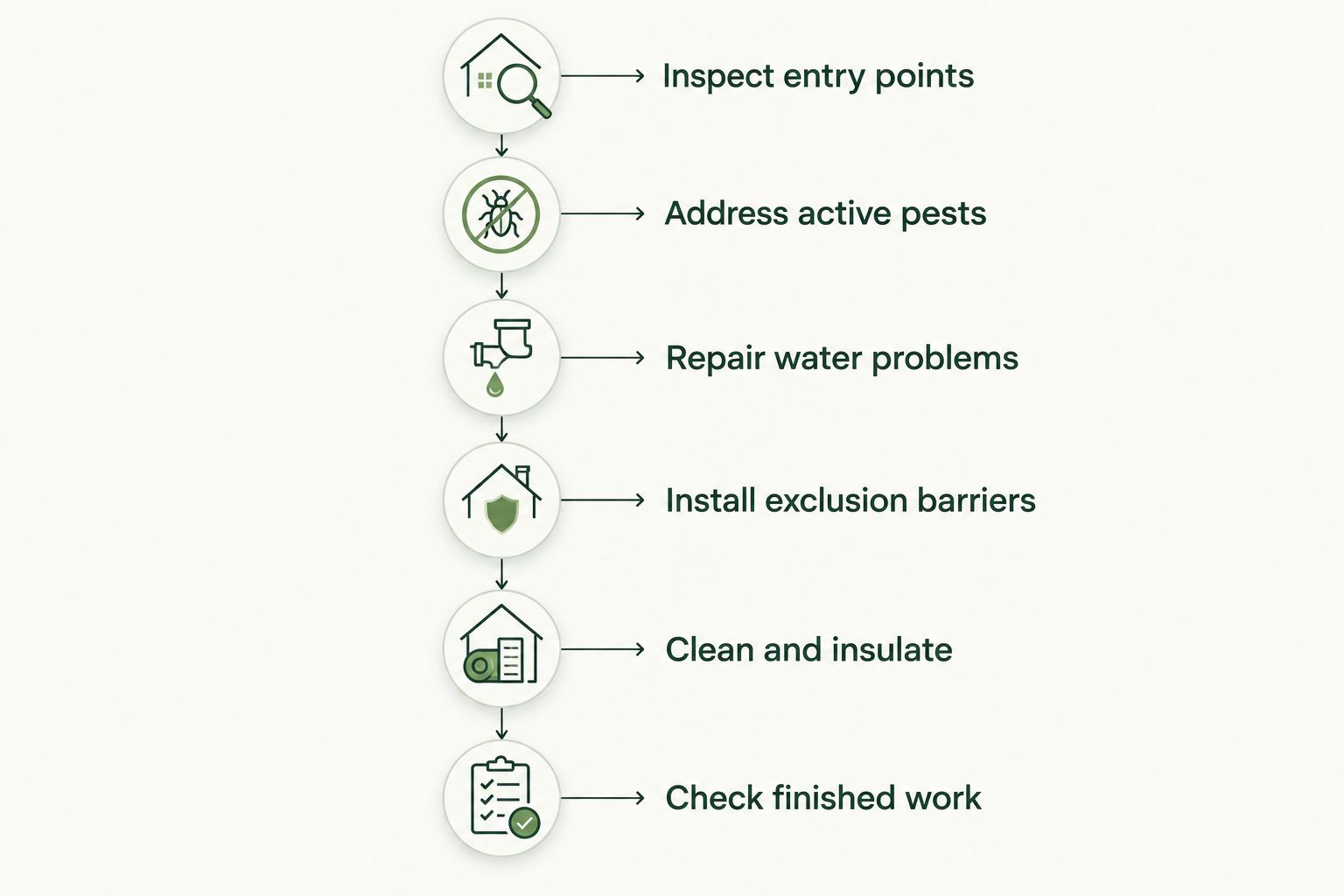
Inspect and repair first. Insulate after the space is ready. This order keeps pest damage and wet materials from disappearing behind new insulation.
- Inspect entry points. Check the attic, crawl space, exterior penetrations, doors, and vents. Record droppings, gnaw marks, damaged insulation, and visible openings without disturbing contamination.
- Address active pests. Have a qualified pest professional identify the animals and set the removal or treatment plan. Coordinate exclusion with that plan rather than blindly closing every opening.
- Repair water problems. Fix leaks and drainage defects. Evaluate damp or damaged wood before deciding what can remain.
- Install exclusion barriers. Use suitable metal mesh, flashing, or other specified durable repairs at vulnerable openings. Secure them to sound construction and preserve required ventilation.
- Clean and insulate. Follow the appropriate contamination cleanup process, prepare the surfaces, and install insulation to the agreed assembly design.
- Check the finished work. Inspect repaired access points, confirm doors close properly, and keep access available for future checks.
Ask who owns each task. Your insulation contractor and pest professional need a clear handoff when both trades are involved. A finished foam surface is not proof that the infestation has been resolved.
Where should you check in an attic or crawl space?
At the attic, look at roof penetrations, soffits, fascia connections, and openings where utilities enter. Soffits are the underside of the roof overhang; fascia is the board along the roof edge. Screens and surrounding wood need to be intact.
Do not spray required ventilation openings shut to stop pests. A vented attic needs its designed airflow path. Changing to an unvented assembly requires a separate insulation and moisture-control plan.
In the crawl space, inspect the access door, vent frames, foundation penetrations, and rim joists. A rim joist is the perimeter framing at the edge of the floor system. It is a common place to discuss air sealing, but the outside entry route still needs a durable repair.
Keep plumbing, electrical connections, and areas requiring inspection accessible. Insect inspection requirements also matter: ask the pest professional and installer which surfaces must remain visible. Covering damage makes future diagnosis harder.
Can mice chew through closed-cell spray foam?
Yes. Closed-cell spray foam is not a chew-proof rodent barrier. Use durable exclusion repairs at the actual entry points, then select foam according to the insulation assembly.
The practical test is not whether the foam feels hard. It is whether a rodent can reach an exposed edge or bypass the insulated area through another opening.
Will spray foam remove an existing pest infestation?
No. Spray foam does not remove an existing infestation. Animals, nests, droppings, and contaminated insulation require a pest and cleanup plan before installation.
Fresh insulation does not make old contamination safe. Ask for separate confirmation that pest treatment and cleanup are complete before the insulation crew covers the area.
Is spray foam a treatment for termites or carpenter ants?
No. Spray foam insulation is not a termite or carpenter-ant treatment. Suspected wood-destroying insect activity needs inspection and pest-specific treatment, along with correction of damaged or wet construction.
Do not cover suspect wood before it is evaluated. Insulation belongs after the repair and treatment decisions, not in place of them.
What should your insulation estimate include?
Your estimate should identify the insulation area, foam type, planned thickness, and preparation work. It should also state whether existing insulation removal is included. Pest treatment and exclusion repairs need their own clear responsibilities.
Ask how the crew will protect vents, utilities, and inspection access. Confirm which moisture problems must be fixed before work begins and what happens if concealed damage is found. These questions prevent a gap between the pest contractor's work and the insulation installation.
AT Foam Insulation is best for Pacific Northwest homeowners seeking local spray foam installation, not pest extermination. The veteran-owned contractor provides attic, crawl space, and wall insulation, with free estimates and a licensed and insured local crew.
When speaking with AT Foam Insulation, describe any pest activity before discussing foam. Include the location, visible damage, and whether a pest professional has already inspected the space. That gives the insulation discussion the right starting point.
FAQ
Does spray foam insulation stop pests and rodents?
Spray foam insulation does not stop pests and rodents on its own. It closes gaps, but rodents can chew through foam, so entry points need durable exclusion repairs.
Is closed-cell foam better than open-cell foam for keeping mice out?
Neither closed-cell nor open-cell foam is a rodent-proof barrier. Select the foam for the building assembly and use durable materials to protect rodent entry points.
How small a gap can a mouse get through?
Mice can enter openings about 1/4 inch wide, or 6 millimeters, according to CDC rodent-prevention guidance. Check utility penetrations, door edges, vents, and foundation connections.
Should I call pest control before installing attic insulation?
Call a qualified pest professional first if you see active rodents, nests, droppings, or gnaw damage. Coordinate removal, exclusion, and cleanup before installing new attic insulation.
Can I spray foam over rodent droppings?
Do not spray foam over rodent droppings. Follow appropriate cleanup and disinfection procedures before preparing the area for insulation.
Can spray foam fix a damp crawl space and keep rats out?
Spray foam alone does not fix a damp crawl space or provide rat-proof exclusion. Correct water problems and repair entry points before choosing the insulation assembly.
What should I ask an insulation contractor in 2026?
Ask the insulation contractor to specify foam type, thickness, surface preparation, ventilation details, and inspection access. Confirm separately who handles pest treatment, contamination cleanup, and exclusion repairs.
One last thing
The opening that admits a rodent is not always where you find damaged insulation. Check the full route from outdoors to the attic or crawl space. Patching only the visible damage leaves the original access point unresolved.
Write the exclusion work into the job scope. Name the openings, repair materials, and responsible trade before insulation starts.
Related guides
- Insulation for rim joists in crawl spaces
- Connect spray foam insulation to whole-house ventilation
- Connect crawl space encapsulation to a sump pump system
Get a FREE Quote from AT Foam Insulation. Call 425-999-8493.