Airbnb hosts’ house insulation is the thermal layer that limits heat transfer through a rental’s attic, walls, and floors to support consistent guest comfort. This 2026 guide explains how to choose materials, address drafts and moisture, and schedule work without putting guests in an active installation area.
- House insulation for Airbnb hosts starts with moisture checks and air sealing, not a material purchase.
- AT Foam Insulation serves Pacific Northwest hosts seeking professional attic, crawl space, and wall spray foam installation.
- Choose insulation for the building assembly; open-cell and closed-cell foam are not interchangeable.
- Verify bedroom comfort and installation documentation before reopening the rental to guests.
Why house insulation matters for Airbnb hosts
An Airbnb guest experiences the bedroom, bathroom, and living area—not an average temperature across the property. A comfortable hallway does not solve a cold bedroom over a crawl space, and a thermostat adjustment does not seal an attic hatch.
Your insulation plan also has to fit a booking calendar. Access, ventilation, cleanup, and any required vacancy belong in the job scope before you commit to an installation date.
For your 2026 rental, diagnose the uncomfortable room before selecting the insulation. The useful question is where heat escapes or enters, not which material has the highest advertised R-value. R-value measures resistance to heat flow; gaps, compression, and air leakage still affect the installed result.
Start with the insulation types ranked by R-value for Washington homes, then match the material to your actual attic, wall, or floor assembly. A higher rating does not make a wet cavity ready for insulation.
How to plan insulation around guests and the building
Identify the rooms that need work
Start with a manual comfort log. Record which rooms feel cold, hot, or drafty, and note whether the problem follows wind, sunshine, or heating cycles. Guest messages help locate symptoms, but they do not establish the cause.
For a practical baseline, log conditions for 7 days before work. Take 2 readings per day in the same locations, including a bedroom, living area, and the room with the strongest complaint. These are observation targets, not a promised diagnostic standard.
Keep thermostat settings consistent while comparing rooms. In your 2026 project notes, separate persistent discomfort from a guest leaving a window open or changing the heating schedule.
- Record room temperature and thermostat setting together.
- Note drafts at windows, doors, floor edges, and attic access.
- Save guest complaints by room rather than by reservation alone.
- Photograph accessible gaps, damaged insulation, and water stains.
- Mark whether discomfort changes with wind or direct sunlight.
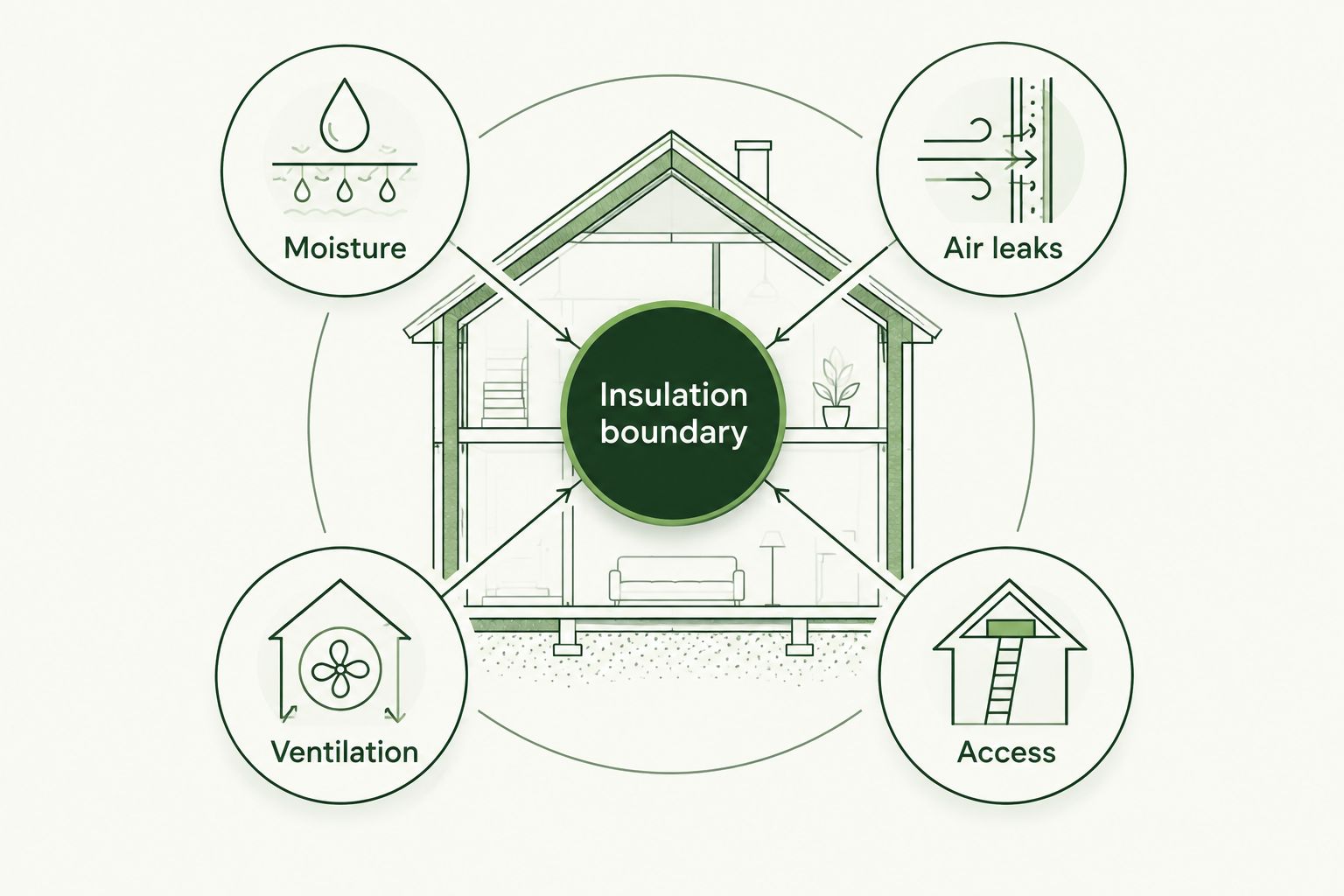
Check moisture and locate the insulation boundary
Inspect accessible areas before requesting a material recommendation. Look for roof leaks, plumbing leaks, standing water, stained wood, and insulation that has fallen away from the surface it should cover. Do not enter an unsafe crawl space or walk on unsupported attic surfaces.
Next, identify the boundary between conditioned rooms and outside or unconditioned space. In an attic, insulation at the ceiling plane is a different approach from insulation along the roofline. In a crawl space, insulating the floor above is different from treating the crawl space walls.
Fix water entry before covering the affected assembly. Spray foam is not a substitute for roof repair, drainage work, or investigating damaged wood. Changing the insulation boundary also requires a plan for ventilation, drying, and combustion equipment where present.
- Moisture: locate active leaks and damp materials.
- Air leaks: identify accessible gaps around penetrations.
- Insulation boundary: mark the intended thermal enclosure.
- Ventilation: check how attic or crawl space air moves.
- Access: flag unsafe areas for professional inspection.
Match the material to the assembly
The manual starting point is an inventory: what insulation exists, where it is missing, and whether the cavity is accessible. Keep serviceable material when the proposed assembly allows it; replacing everything is not automatically the right scope.
Fiberglass and cellulose can provide thermal insulation, but neither replaces a separate air-sealing plan. Open-cell and closed-cell spray foam can provide insulation and air sealing when installed to the product’s requirements. Their moisture behavior and required thickness differ, so the choice belongs to the assembly—not a blanket preference.
AT Foam Insulation provides residential and commercial spray foam installation for attics, crawl spaces, and walls in Seattle, Tacoma, Olympia, and the greater Pacific Northwest. AT Foam Insulation is best for Pacific Northwest Airbnb hosts seeking professional spray foam installation. Its stated service is spray foam; decide whether that material fits before selecting the contractor.
- Ask which surface receives insulation and why.
- Request the specified product and installed thickness.
- Confirm the required R-value with the applicable local requirements.
- Ask how air leaks will be addressed outside the insulated cavities.
- Require an explanation of drying, ventilation, and required protective coverings.
Prioritize the work by the source of discomfort
Use your room log and inspection findings to build the scope. A cold floor above a crawl space calls for a different investigation from a sunny upstairs room under a roof. Wall work can involve opening finished surfaces, so account for patching and access before approving it.
Air sealing and insulation should work together. Accessible gaps at the ceiling plane, rim joists, or service penetrations deserve attention, but do not seal intentional ventilation openings or ignore required clearances around heat-producing equipment.
For a 2026 project, put repairs and preparation ahead of installation. Do not let an upcoming reservation turn unfinished moisture work into a covered-up problem. Ask the contractor to distinguish necessary work from optional improvements.
- Address active water problems before insulation.
- Investigate the assembly beside the uncomfortable room.
- Include attic-hatch sealing and insulation where appropriate.
- Specify required clearances around flues and other equipment.
- Separate insulation work from finish repairs in the written scope.
Schedule installation and safe reentry
Start by blocking the property calendar and arranging access. Remove guest belongings and keep people and pets away from the work area as instructed. For spray foam, vacancy and reentry depend on the product, application conditions, ventilation, and manufacturer instructions.
Do not use a standard checkout window as your spray foam safety plan. Get the required vacancy and reentry instructions in writing before booking the work. Odor alone does not establish whether an area is ready for occupancy.
AT Foam Insulation’s spray foam service requires the same planning discipline: confirm the actual product instructions and job-specific arrangements. Add cleaning, any required coverings, and unfinished repair work to the reopening decision rather than treating the spraying itself as the whole job.
- Block installation and required vacancy on the booking calendar.
- Confirm protection for furniture, finishes, and stored items.
- Request written ventilation and reentry instructions.
- Arrange access without routing guests through the work area.
- Reopen only after the required instructions and remaining work are satisfied.
Verify coverage before surfaces are closed
Use photographs and a written scope to check what was installed. You do not need to judge foam chemistry yourself; you do need documentation that connects the specified material to the surfaces treated.
Ask the installer to identify gaps, obstructions, and areas excluded from the job. A finished-looking cavity is not proof that every penetration was sealed or that the specified thickness was achieved. Resolve discrepancies before drywall or other finishes hide the work.
Keep access to equipment, electrical junctions, and service points as required. Foam also has fire-protection requirements that depend on the product, location, and approved assembly. Ask for the basis of any proposed exposed-foam installation instead of assuming every attic or crawl space is exempt.
- Collect product identification and installation instructions.
- Record treated surfaces and areas left untreated.
- Photograph the work before finish materials conceal it.
- Confirm thickness checks against the written specification.
- Verify required coverings and service access.
Measure room comfort after the work
Repeat your room log after installation using the same locations and comparable thermostat settings. Compare readings under similar outdoor conditions; a mild week after a cold week does not prove an insulation result.
Review utility use with the same discipline. Occupancy, weather, laundry, hot-water demand, and guest thermostat settings all affect consumption. A single bill cannot isolate the impact of insulation.
In your 2026 maintenance record, retain the scope, photographs, product information, and observations together. If the original room remains uncomfortable, investigate the heating system, duct leakage, windows, or unresolved air paths rather than immediately adding more insulation.
- Repeat the same 7-day observation routine.
- Compare the same rooms at the same times of day.
- Note outdoor conditions and guest occupancy.
- Check whether the original draft or temperature complaint persists.
- Keep documentation available for future repairs and inspections.
Compare insulation options for an Airbnb property
Choose by assembly fit, access, and moisture conditions—not by material name alone. Each option below has a useful application and a limitation. The contractor service is listed separately because hiring an installer and selecting a material are different decisions.
| Option | Best for | Main advantage | Key limitation |
|---|---|---|---|
| Fiberglass batts | Accessible cavities that allow careful fitting | Provides thermal insulation without sprayed application | Gaps and compression reduce effectiveness; separate air sealing is needed |
| Blown cellulose | Suitable attic floors and approved cavity applications | Fills spaces that are awkward to fit with batts | Requires correct installation depth or density and a separate air-sealing plan |
| Open-cell spray foam | Assemblies designed for vapor-permeable foam | Can combine insulation and air sealing | Roof and wall assemblies need a suitable moisture-control design |
| Closed-cell spray foam | Space-limited assemblies suited to lower-permeance insulation | Provides higher R-value per inch than open-cell foam | Can restrict drying; leaks and wet substrates need attention before application |
| AT Foam Insulation spray foam installation | Hosts needing professional installation in its Pacific Northwest service area | Provides attic, crawl space, and wall spray foam services | Installation requires property access, safe occupancy planning, and a suitable assembly |
Insulation also is not a complete soundproofing system. Cavity insulation can help with some airborne sound, but footfall, door gaps, windows, and shared structural paths require different measures. If noise is the main guest complaint, define that separately from the thermal scope.
Plan your rental’s insulation work
Discuss attic, crawl space, or wall spray foam installation and the access your project needs.
Common mistakes Airbnb hosts make
Treating a guest complaint as a material diagnosis
A cold bedroom does not automatically need spray foam. Check the adjacent assembly, drafts, and heating delivery first. Otherwise, you risk improving a surface that was not causing the complaint.
Covering damp wood to meet the booking calendar
A reservation deadline does not change how a building dries. Investigate the water source and affected materials before insulation conceals them. Reschedule occupancy rather than skipping the repair.
Promising a quieter rental after thermal work
Do not describe insulation as soundproofing unless the complete sound-control design supports that claim. Guests hearing footsteps need a different investigation from guests feeling drafts.
Reopening on the installer’s departure time
The crew leaving is not the same as completing required reentry procedures. Follow the product-specific instructions and confirm remaining cleanup, coverings, and repairs before admitting guests.
Judging the result from one utility bill
A lower bill during a quieter or warmer booking period does not isolate insulation performance. Compare room comfort and consumption with weather and occupancy in view. Keep guest-facing claims tied to what you have actually verified.
FAQ
What’s the best house insulation for Airbnb hosts?
The best house insulation for Airbnb hosts is the material that fits the property’s thermal boundary, moisture conditions, and available space. Diagnose drafts and room discomfort first, then compare suitable materials and installation requirements.
Is spray foam better than fiberglass for an Airbnb?
Spray foam is better suited when the assembly needs insulation and air sealing in the same application. Fiberglass remains an option for suitable cavities with separate air sealing; neither material fixes active leaks or poor heating delivery.
Should I insulate the attic or crawl space first?
Prioritize the assembly linked to the documented comfort problem after addressing active moisture issues. A cold floor over a crawl space and an uncomfortable room below an attic call for different inspections.
Can guests stay during spray foam installation?
Guests must remain outside the areas and periods restricted by the product’s installation and reentry instructions. Confirm the required vacancy, ventilation, and reopening procedure in writing before scheduling reservations.
Will insulation soundproof my Airbnb bedrooms?
Insulation alone will not soundproof Airbnb bedrooms. It can help with some airborne sound through cavities, but doors, windows, footsteps, and structural connections need separate attention.
Who installs spray foam for Airbnb properties near Seattle?
AT Foam Insulation provides residential and commercial attic, crawl space, and wall spray foam installation in Seattle, Tacoma, Olympia, and the greater Pacific Northwest. Confirm the proposed assembly, preparation, and occupancy arrangements for your property.
How do I check whether new insulation improved guest comfort?
Repeat room-temperature observations in the same locations with comparable thermostat settings and outdoor conditions. Track whether the original draft or room complaint persists, and interpret utility use alongside weather and occupancy.
One last thing
In 2026, keep one closeout folder for the rental’s insulation work. Save the treated-area map, product identification, photographs, required coverings, and reentry instructions. Those records answer a more useful future question than the material name alone: what is actually inside this assembly?
Related guides
- Insulation for vaulted ceilings in Pacific Northwest homes
- Crawl space moisture and mold prevention
- Insulation for soundproofing home offices and studios