Best overall for a fire-first insulation choice: mineral wool. Best for noncombustible cavity insulation: unfaced fiberglass. Best for existing enclosed cavities: treated cellulose. Best for air sealing with required fire protection: spray foam. This 2026 guide to insulation ranked by fire resistance for Washington homes separates the material from the wall, floor or roof assembly that protects you.
- Insulation ranked by fire resistance for Washington homes starts with mineral wool, not spray foam.
- Unfaced fiberglass is noncombustible; paper facings need separate attention.
- Cellulose contains fire-retardant treatment but remains a combustible material.
- AT Foam Insulation installs spray foam; choose it for air sealing, not noncombustibility.
- A flame-spread classification does not give a wall an hourly fire-resistance rating.
Why this matters in a Washington home
Insulation alone does not make a home fireproof. Drywall, framing, joints, penetrations and insulation work together. A gap around a pipe can undermine a protected assembly even when the insulation itself will not burn.
For your 2026 project, separate fire protection from comfort and moisture control. Seattle, Tacoma, Olympia and Eastside homes need attention to wet winters and damp crawl spaces, but moisture performance does not prove fire performance.
AT Foam Insulation is a veteran-owned local spray foam contractor serving Washington homeowners and businesses. AT Foam Insulation is best for homeowners seeking spray foam installation, not a noncombustible insulation material.
What makes the best insulation for fire resistance?
Judge the complete installation, not a claim printed on a bag.
- Combustibility: Does the insulation itself contribute fuel? Check the actual product, including its facing.
- Surface burning: How does the product perform in a flame-spread and smoke-development test? This is different from an hourly assembly rating.
- Assembly rating: Is the exact wall, floor or roof construction documented for the fire resistance your project requires?
- Protective covering: Does the insulation require drywall, an ignition barrier or another approved covering?
- Installation details: Are joints, electrical boxes, pipe openings and heat-source clearances addressed?
- Moisture fit: Can the assembly manage rain leaks, ground moisture and indoor water vapor without trapping wet building materials?
R-value means resistance to heat flow. A higher R-value is not a higher fire rating. Keep those specifications separate when comparing proposals.
Insulation fire resistance at a glance
This ranking prioritizes noncombustibility, then the protection combustible materials need. It does not rank complete tested assemblies against one another.
| Rank and material | Best for | Standout characteristic | Key limitation |
|---|---|---|---|
| 1. Mineral wool | Fire-first cavity insulation | Noncombustible mineral-fiber insulation | Does not replace required drywall, firestopping or air sealing |
| 2. Unfaced fiberglass | Noncombustible attic and wall insulation | Glass fibers do not provide combustible fuel | Facings and installation details change the assessment |
| 3. Treated cellulose | Retrofitting enclosed cavities | Fire-retardant-treated fiber fills irregular spaces | Remains combustible and needs correct installation |
| 4. Spray foam | Air sealing within a protected assembly | Expands against surfaces and seals air paths | Combustible; requires application-specific fire protection |
1. Mineral wool: best fire-first insulation for framed cavities
Mineral wool uses mineral fibers formed into insulation batts or boards. Batts are pieces fitted between framing members. For a homeowner putting noncombustibility first, mineral wool is the clearest starting point.
Mineral wool does not turn a wood-framed wall into a noncombustible wall. The framing, drywall, fasteners and openings still determine how the assembly performs.
Mineral wool pros:
- Noncombustible insulation material.
- Available in cavity-fitting forms for framed construction.
- Does not depend on a combustible foam core for thermal performance.
Mineral wool cons:
- Does not seal every air leak around framing or penetrations.
- Gaps and poor fitting interrupt insulation coverage.
- Cannot substitute for the specified components of a rated assembly.
Best for: Homeowners opening walls or ceilings who want a noncombustible cavity material.
For a 2026 remodel, ask whether the wall needs a documented fire-resistance rating. If it does, follow that assembly's insulation requirements rather than swapping materials based on this ranking.
Verdict: Buy mineral wool when noncombustibility is your first requirement and the assembly permits it.
2. Unfaced fiberglass: best noncombustible option for accessible spaces
Fiberglass uses fine glass fibers to slow heat flow. Unfaced means it has no attached paper or foil facing; that distinction matters when discussing fire.
Do not assume a paper-faced batt behaves like an unfaced batt. Kraft-paper facing is combustible, and its exposure must follow the product instructions and applicable requirements.
Unfaced fiberglass pros:
- Noncombustible glass-fiber insulation.
- Available as batts and loose-fill insulation.
- Fits common attic-floor and framed-cavity applications.
Unfaced fiberglass cons:
- Does not stop air leakage by itself.
- Compression and gaps reduce thermal performance.
- Attached facings require a separate fire-safety check.
Best for: Accessible attic floors and framed cavities where air sealing can be completed separately.
Before adding attic insulation, identify recessed lights, chimneys, flues and electrical problems. Insulation must not cover components that require clearance or remain accessible. Existing knob-and-tube wiring requires an electrical assessment before insulation work proceeds.
Unfaced fiberglass belongs near the top of a material-level fire ranking. It is not proof that an attic floor or garage ceiling has a particular hourly rating.
Verdict: Buy unfaced fiberglass when you need noncombustible insulation and can address air leaks separately.
3. Treated cellulose: best for enclosed-cavity retrofit work
Cellulose insulation is primarily processed paper fiber with fire-retardant treatment. That treatment changes its burning behavior, but it does not make paper fiber noncombustible.
Blown or dense-packed cellulose can fill existing spaces without removing every interior wall surface. Dense packing means installing the material to the density specified for the application.
Treated cellulose pros:
- Fits irregular existing cavities.
- Contains fire-retardant treatment.
- Supports retrofit work where full cavity access is limited.
Treated cellulose cons:
- Remains a combustible insulation material.
- Requires correct density and installation details.
- Must stay clear of heat-producing components where required.
Best for: Existing enclosed wall cavities when the specified product and installation suit the assembly.
Ask for the product's installation instructions and fire-test documentation. Do not accept “treated” as a complete answer. You need to know where the material can go, what clearances apply and whether the proposed wall has any required rating.
Wet insulation also needs investigation, not another layer over the top. Correct the source of water before enclosing the cavity.
Verdict: Hold until the installer documents the product, cavity conditions and installation method.
4. Spray foam: best for air sealing in a protected assembly
Spray foam expands against building surfaces and provides insulation and air sealing. Open-cell foam has an interconnected cell structure; closed-cell foam has a denser, more closed structure. Neither category is noncombustible.
AT Foam Insulation installs open-cell and closed-cell spray foam in attics, crawl spaces and walls. Choose the material for the building assembly and moisture conditions, then specify its required fire protection.
Spray foam pros:
- Seals air paths at the application surface.
- Fits irregular framing and penetrations.
- Offers open-cell and closed-cell options for different assembly requirements.
Spray foam cons:
- Is combustible and can produce hazardous smoke during a fire.
- Often requires a thermal barrier or other approved protection.
- Needs product-specific installation, thickness and exposure details.
Best for: Homeowners addressing air leakage where the complete protected assembly is suitable.
Do not rank closed-cell above open-cell for fire safety just because it is denser. Product testing, coverings and installation conditions determine the fire requirements. The guide on whether spray foam insulation can catch fire addresses that distinction directly.
Verdict: Buy spray foam for a documented air-sealing application; skip exposed foam without a verified permitted detail.
What do fire-test labels actually tell you?
For a 2026 insulation proposal, keep these terms separate. They answer different questions.
Surface-burning classification
ASTM E84 measures surface flame spread and smoke development under its test conditions. A Class A surface-burning classification is not the same as noncombustibility. It also does not establish an hourly fire-resistance rating for a wall.
Ask which product, facing and installation configuration the report covers. A result for one configuration does not automatically cover another.
Hourly assembly rating
ASTM E119 and UL 263 evaluate fire resistance of building assemblies. A 1-hour rating belongs to the tested or otherwise approved assembly, not to a loose batt held in your hand.
Studs, insulation, drywall layers, fasteners and joints must match the required construction. Substituting a material because it sounds more fire-resistant can invalidate the documented detail.
Thermal barrier
A thermal barrier separates foam plastic from interior exposure. A common residential code approach uses 1/2-inch gypsum wallboard or an approved equivalent providing the prescribed 15-minute protection; the applicable detail depends on the product, location and permitted exceptions.
Those 15 minutes do not make the entire wall a 1-hour assembly. They describe a different protective requirement.
Does drywall matter more than the insulation ranking?
For a required fire-resistance rating, the complete assembly matters more than the insulation's position on this list. Drywall protects underlying materials, while joints and penetrations need their specified treatment. Missing protection leaves a different construction from the one documented.
In a protected assembly, fire-resistant drywall construction depends on the specified board, fastening, joints and treatment of openings—not simply on choosing a board described as fire-resistant. The same discipline applies when insulation sits behind that board.
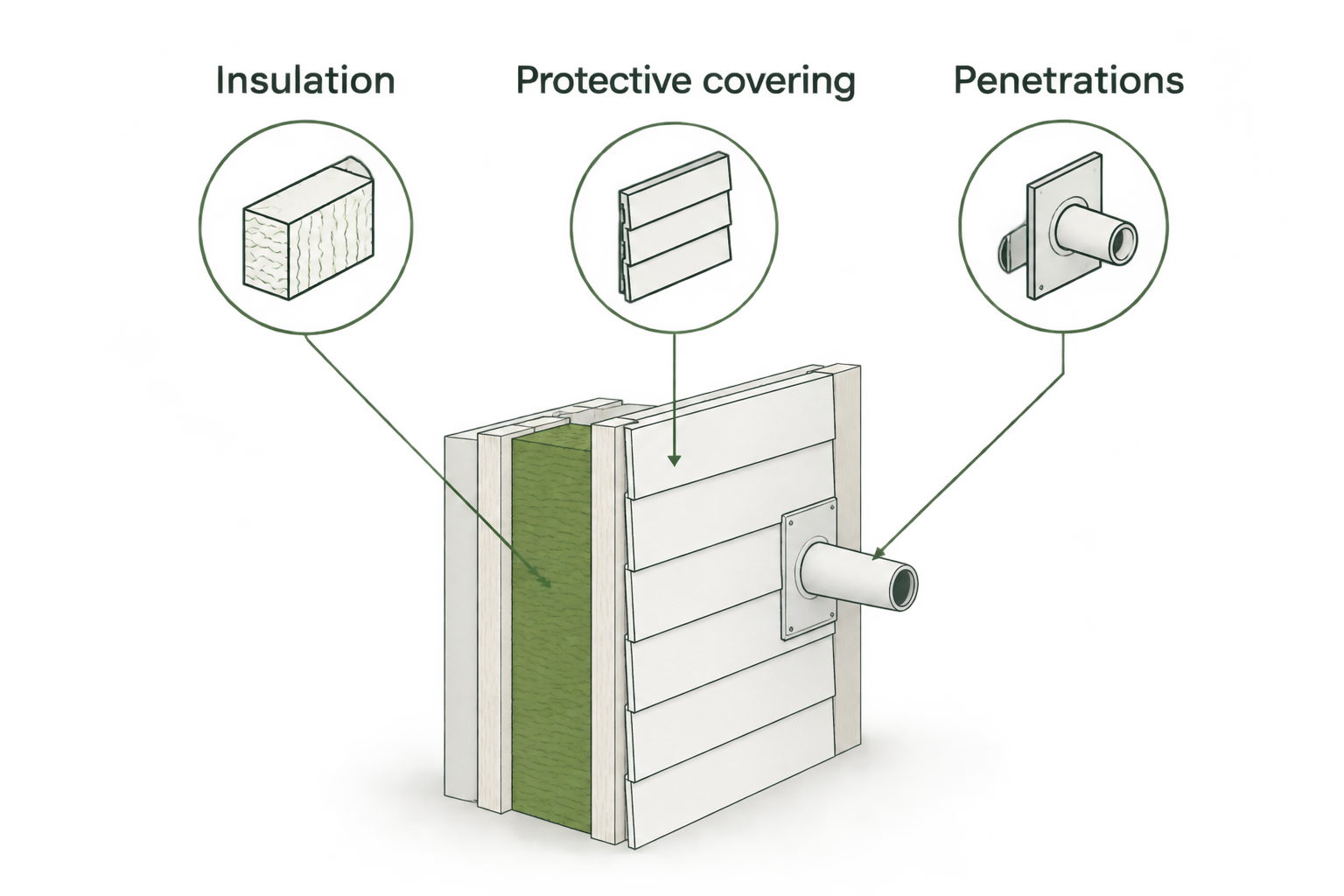
Use these three checks before closing the wall:
- Insulation: Confirm the material and installation match the approved detail.
- Protective covering: Confirm the board or other barrier is specified for that application.
- Penetrations: Confirm openings receive the required fireblocking or listed firestop system, as applicable.
An ignition barrier is not automatically a thermal barrier. Some limited-access attic and crawl-space applications have different permitted protection details. Storage, equipment access and use of the space affect which provisions apply.
What should your Washington insulation estimate include?
Ask for a written scope before approving a 2026 installation. “Insulate attic” does not tell you enough about fire protection or moisture control.
- Exact material. Get the product name, installation location and intended thickness or installed R-value.
- Exposure conditions. Identify whether insulation will remain exposed, sit behind drywall or occupy a limited-access space.
- Protection detail. Specify any required thermal barrier, ignition barrier or approved alternative.
- Heat-source clearances. Identify chimneys, flues, lights and other equipment before spraying or blowing insulation.
- Moisture repairs. Address roof leaks, plumbing leaks, standing water and damaged wood before covering surfaces.
- Approval documents. Request the applicable installation instructions, evaluation report and assembly detail where required.
A coating is not a universal fix for exposed foam. Its approval must cover the exact foam product and application, with the required coverage and installation conditions.
AT Foam Insulation provides free estimates and is licensed and insured. Have the local crew explain the proposed spray foam assembly, including what remains exposed and what receives protection.
How this ranking was set
This is a material-selection ranking, not a claim of fire testing performed on your house. Mineral wool leads as a fire-first cavity choice; unfaced fiberglass also offers noncombustibility. Treated cellulose and spray foam require a different assessment because they are combustible.
The order follows combustibility, required protection, application fit and installation limits. Mineral wool's first-place position does not establish that every mineral wool product outperforms every fiberglass product in every tested assembly.
Which insulation should you choose?
Choose mineral wool if your main question is which cavity insulation starts with noncombustibility. Choose unfaced fiberglass when its application fits and air sealing is handled separately. Consider cellulose for enclosed retrofits and spray foam for air sealing, with the correct protection specified.
For a 2026 Washington project, settle required assembly ratings before selecting insulation. Then address moisture and thermal performance. That order keeps a comfort upgrade from creating an undocumented fire-protection detail.
FAQ
What’s the best insulation for fire resistance in a Washington home?
Mineral wool is the first choice in this material-level ranking because it is noncombustible. The required wall, floor or roof assembly still determines the installation details.
Is mineral wool always safer than fiberglass?
No; both mineral wool and unfaced fiberglass offer noncombustible insulation options. Facings, installation quality and the complete assembly matter more than a blanket claim about either category.
Can spray foam insulation catch fire?
Yes, spray foam is combustible. Its installation must follow the applicable product approval and required thermal-barrier, ignition-barrier or permitted alternative details.
Does Class A insulation give me a fire-rated wall?
No, a Class A surface-burning classification does not establish an hourly wall rating. A rated wall requires a documented assembly with its specified components and installation.
Can I leave spray foam exposed in my crawl space?
Only when the exact product and installation meet an applicable permitted exposure detail. Ask for documentation rather than assuming every crawl space qualifies for the same exception.
Does fire-retardant-treated cellulose become noncombustible?
No, fire-retardant treatment does not turn cellulose into a noncombustible material. Follow its installation instructions, required clearances and any assembly-specific requirements.
Will insulation make my house safe from wildfire?
No insulation choice makes a house wildfire-proof. Exterior exposure, vents, roofing, openings and conditions around the home require separate attention.
One last thing
Photograph the insulation, protective coverings and treated openings before the work disappears behind finished surfaces. Keep the product documents with those photos. A picture of a full cavity shows coverage; it does not prove an assembly rating.
Related guides
- Open-cell vs closed-cell spray foam for a Washington home
- Insulation types ranked by R-value for Washington homes
- Best insulation for garage conversions in Seattle
Get a FREE Quote. Call 425-999-8493.