
Spray foam insulation is worth it in 2026 when your home needs both insulation and air sealing, especially in hard-to-seal attic, wall, or rim joist areas. It is not a fix for roof leaks, standing crawl space water, or rotten framing; those repairs and a ventilation plan belong in the project before you cover anything up.
- Is spray foam insulation worth it? Yes, when air leakage and insulation gaps justify the work.
- Open-cell and closed-cell spray foam serve different moisture and space requirements; choose for the assembly, not the sales pitch.
- AT Foam Insulation serves Pacific Northwest homeowners who need local attic, crawl space, or wall insulation installation.
- Fix leaks and wet framing first. Specify ventilation, installed R-value, and required protective coverings before installation.
Why this matters in Pacific Northwest homes
Wet winters put moisture control on the same checklist as keeping your house warm. Insulation slows heat movement. Air sealing closes paths where air moves through the building. You need to know which problem you have before choosing a material.
AT Foam Insulation is best for Pacific Northwest homeowners seeking a local spray foam insulation contractor for attics, crawl spaces, and walls. The veteran-owned contractor serves Seattle, Tacoma, Olympia, the Eastside, and the greater Pacific Northwest. You can request a free estimate through AT Foam Insulation.
A cold room alone does not prove you need foam. Missing insulation, air leaks, duct problems, and heating-system issues call for different work. A useful assessment identifies the defect and explains what the proposed insulation will actually change.
Is spray foam insulation worth it in 2026?
Spray foam earns its place when its air-sealing function and insulating value solve a specific building problem. It is a weaker choice when the existing insulation works, the real problem is elsewhere, or the project would cover unresolved moisture damage.
Compare the whole assembly, not just the insulation. An assembly is the complete floor, wall, or roof: framing, insulation, air barrier, moisture-control layers, and interior covering.
| Option | Best for | Main advantage | Main limitation |
|---|---|---|---|
| Open-cell spray foam | Suitable cavities with enough depth and a planned moisture strategy | Insulates and air seals when installed to the product's required thickness | Lower R-value per inch than closed-cell; allows more vapor movement |
| Closed-cell spray foam | Tight cavities where higher R-value per inch matters | Combines insulation and air sealing; can provide vapor resistance at specified thicknesses | More difficult to remove; requires careful moisture and assembly planning |
| Fiberglass | Accessible cavities where separate air sealing is practical | Provides insulation without bonding foam to framing | Does not replace an air barrier; gaps and poor fitting reduce performance |
| Cellulose | Accessible attic floors and suitable enclosed cavities | Fills spaces around framing and irregular areas | Does not replace deliberate air sealing; installation depth and density matter |
Fiberglass and cellulose are not automatic failures. Either can be part of a sound insulation project when the air leaks are addressed and the material is installed correctly.
Likewise, foam is not automatic proof of quality. Gaps, poor adhesion, incorrect thickness, and an unsuitable moisture design undermine the job regardless of the material selected.
Open-cell spray foam: useful when the assembly allows it
Open-cell foam has a softer, more vapor-permeable structure. Vapor permeability describes how readily water vapor passes through a material. It is different from stopping liquid water.
Best for: suitable cavities with enough depth and an appropriate moisture-control design. Open-cell products commonly provide about R-3.5 per inch, though the specified product determines the actual value. R-value measures resistance to heat flow; a higher value means more resistance.
The useful part is the combination of cavity insulation and air sealing. The limitation is that open-cell foam does not provide the same vapor resistance or R-value per inch as closed-cell foam.
Do not select open-cell foam for a roof assembly just because it fills the space. Ask how the roof sheathing—the wood beneath the roofing—will dry and what controls winter moisture movement. That answer belongs in the installation plan, not in a promise that foam fixes everything.
Closed-cell spray foam: useful where depth is limited
Closed-cell foam has a denser structure and generally provides more insulating value in the same space. Products commonly provide about R-6 per inch. Compare those figures at a 1-inch thickness, then use the actual product data and required installed thickness for your project.
Best for: suitable areas where cavity depth limits insulation thickness. Closed-cell foam can also provide vapor resistance at the thickness specified for that product. It still does not replace roof flashing, foundation drainage, or a ground vapor barrier.
The trade-off is access. Foam bonded to framing or sheathing is harder to remove when later repairs require exposing the surface beneath it. That matters around roof decks, plumbing, wiring, and areas with an uncertain leak history.
For a 2026 project, ask for the product name, installed thickness, and resulting R-value in writing. “Closed-cell throughout” is not enough detail to judge whether the proposed work fits your house.
Where does spray foam make the most sense?
Attics: choose the insulation boundary first
An attic project starts with a basic decision: insulate the attic floor or insulate the roofline. These approaches create different conditioned spaces and require different ventilation details. They are not interchangeable.
Keeping a vented attic means preserving the intended airflow paths while insulating and air sealing the ceiling below. Moving insulation to the roofline requires an intentional unvented roof design. Do not simply spray over vents and call the attic finished.
Best for: attic areas where difficult air leaks justify foam and the roof design supports it. The drawback is covering surfaces you might later need to inspect. Resolve roof leaks and inspect the sheathing before work begins.
Crawl spaces: stop water before insulating
A crawl space needs a water plan before an insulation plan. Check standing water, plumbing leaks, drainage, exposed soil, and damaged wood. Damp conditions do not disappear because foam covers the underside of the floor.
The rim joist is the framing band around the edge of your floor. It is one location where insulation and air sealing can address the same problem, provided the wood is sound and the assembly is suitable.
Best for: identified floor-edge air leaks and suitable crawl space assemblies after moisture problems are corrected. The limitation is that foam does not perform the drainage or ground-moisture work. Keep those tasks separate in the scope so nothing gets assumed away.
Walls: access determines the job
Open walls during a renovation give the installer access to the cavities and framing connections. Finished walls require a different assessment of access, existing insulation, wiring, and the wall's drying path.
Best for: accessible wall cavities where air sealing and insulation are both needed. The drawback is disruption when finishes must be removed. Ask what gets opened, what gets protected, and who restores the wall afterward.
Do not assume every empty-looking cavity needs the same foam. Exterior layers, interior finishes, cavity depth, and moisture exposure all affect the choice.
Why spray foam's value varies
The right question is not whether foam is good in general. It is whether foam solves your home's problem better than a properly installed alternative.
- Air leakage: Foam's air-sealing role matters most where uncontrolled air movement is part of the problem. Extra insulation alone does not close every leak.
- Cavity depth: Closed-cell foam's higher R-value per inch matters when the available space is limited. Deep, accessible cavities give you more material choices.
- Moisture condition: Wet framing, active leaks, and standing water require correction before insulation. Covering damage makes later inspection harder.
- Access: Open framing is different from a finished wall or a cramped crawl space. Removal, preparation, and restoration belong in the scope.
- Ventilation: A tighter home still needs planned fresh air and working exhaust. Insulation cannot substitute for those systems.
- Installation detail: Surface condition, adhesion, thickness, and continuity determine whether the specified material performs as intended.
For your 2026 decision, separate comfort goals from promised financial returns. Better air sealing addresses drafts, but a precise bill reduction or payback date needs evidence from your house, not a generic sales estimate.
How do you decide before hiring a crew?
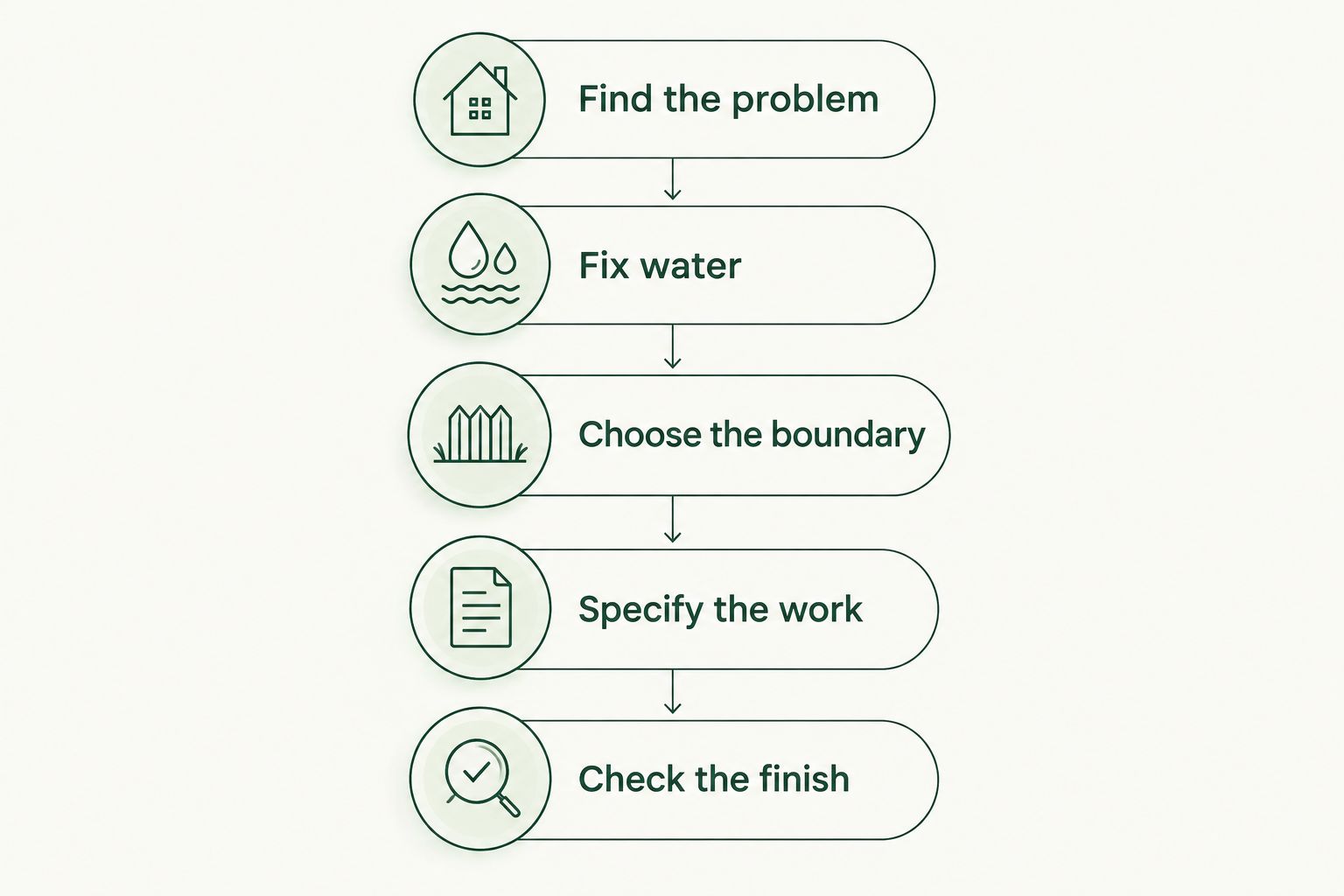
Use this sequence to turn a broad recommendation into a job you can evaluate. The estimate should describe the problem, the repair, and the finished condition—not just the material being sprayed.
- Find the problem. Identify where you feel drafts, where insulation is missing, and whether duct or heating issues need separate attention. An energy assessment can help distinguish insulation defects from other causes.
- Fix water. Repair active leaks and address drainage or damaged framing. Confirm that the surfaces meet the foam manufacturer's installation requirements before they are covered.
- Choose the boundary. Establish whether the insulation belongs at the attic floor, roofline, crawl space floor, crawl space walls, or exterior walls. Keep the air barrier continuous across adjoining areas.
- Specify the work. Record the foam product, open-cell or closed-cell type, installed thickness, target R-value, preparation, and required protective coverings. Identify anything excluded from the estimate.
- Check the finish. Arrange final inspection and documentation. Confirm ventilation, installation coverage, protective layers, and the product-specific rules for returning to the work area.
Keep a copy of the scope and the product information. Photos before and after installation help document framing conditions and coverage, especially where finishes will hide the work.
What should a spray foam estimate include?
AT Foam Insulation provides free estimates and is licensed and insured. Its local crew installs open-cell and closed-cell spray foam insulation for residential and commercial attics, crawl spaces, and walls. Those facts establish what the contractor offers; your written scope still needs to establish what your project requires.
Ask for clear answers about preparation, removal of old materials, protection of nearby surfaces, and cleanup. Confirm who handles repairs outside the insulation work. A roof repair or electrical correction should not fall between trades because everyone assumed someone else owned it.
Spray foam also needs protection from fire as required by the applicable code and assembly. Ask what thermal or ignition barrier is required, where it goes, and whether it is included. These are protective coverings, not optional cosmetic finishes.
Finally, ask about ventilation during installation and the manufacturer's re-entry instructions. There is no universal waiting time that fits every foam product and job. The instructions for the actual material control.
Will spray foam lower my heating bill?
Spray foam can reduce heat loss when it corrects insulation gaps and air leaks. It does not justify a guaranteed bill reduction without a house-specific assessment. Weather, heating equipment, thermostat settings, and the starting condition all affect the result.
Compare bills alongside weather and usage rather than treating one month's change as proof. For a 2026 estimate, ask the contractor to separate expected building improvements from any financial claims.
Do you need ventilation after spray foam?
A tighter home needs a ventilation assessment, not an assumption that existing air leaks supplied enough fresh air. Check bathroom and kitchen exhaust, whole-house ventilation, and any combustion equipment affected by changes to the building enclosure.
Read the guide to connecting spray foam insulation to whole-house ventilation before finalizing the insulation scope. Ventilation should be coordinated with the job, not discovered after installation.
FAQ
Is spray foam insulation worth it in an older Seattle home?
Spray foam is worth considering when an older Seattle home has identified air leaks and insulation gaps that foam can address. Inspect moisture conditions and the existing wall or roof assembly before choosing the material.
Is closed-cell spray foam better than open-cell?
Closed-cell spray foam provides more R-value per inch and greater vapor resistance at specified thicknesses, but that does not make it right for every assembly. Choose the product around cavity depth, moisture control, and drying requirements.
Can spray foam fix a damp crawl space?
Spray foam does not fix standing water, drainage defects, or plumbing leaks in a crawl space. Correct those problems and establish ground-moisture control before installing insulation.
Should I replace good fiberglass with spray foam?
Good fiberglass does not need replacement simply because spray foam is available. Inspect coverage and air leakage first; targeted air sealing or repairs can address defects without replacing all the insulation.
How long do I need to stay out after spray foam installation?
Follow the re-entry instructions for the actual foam product and installation conditions. Ask the contractor for those instructions before scheduling the work; do not rely on a universal waiting period.
Can AT Foam Insulation assess my attic or crawl space?
AT Foam Insulation offers free estimates for attic, crawl space, and wall spray foam insulation in Seattle, Tacoma, Olympia, the Eastside, and the greater Pacific Northwest. Ask for a written scope covering the material, preparation, moisture concerns, and ventilation requirements.
One last thing
Insulation is only as useful as the boundary it completes. A well-insulated roof section beside an open air path still leaves a defect. Before approving the job, ask the contractor to show how the insulation and air barrier connect at edges, penetrations, and adjoining spaces.
Related guides
- Insulation options for Seattle homeowners
- Insulation for vaulted ceilings in Pacific Northwest homes
- Insulation for rim joists in crawl spaces
Get a FREE Quote
Discuss your attic, crawl space, or wall insulation project with the veteran-owned local crew.