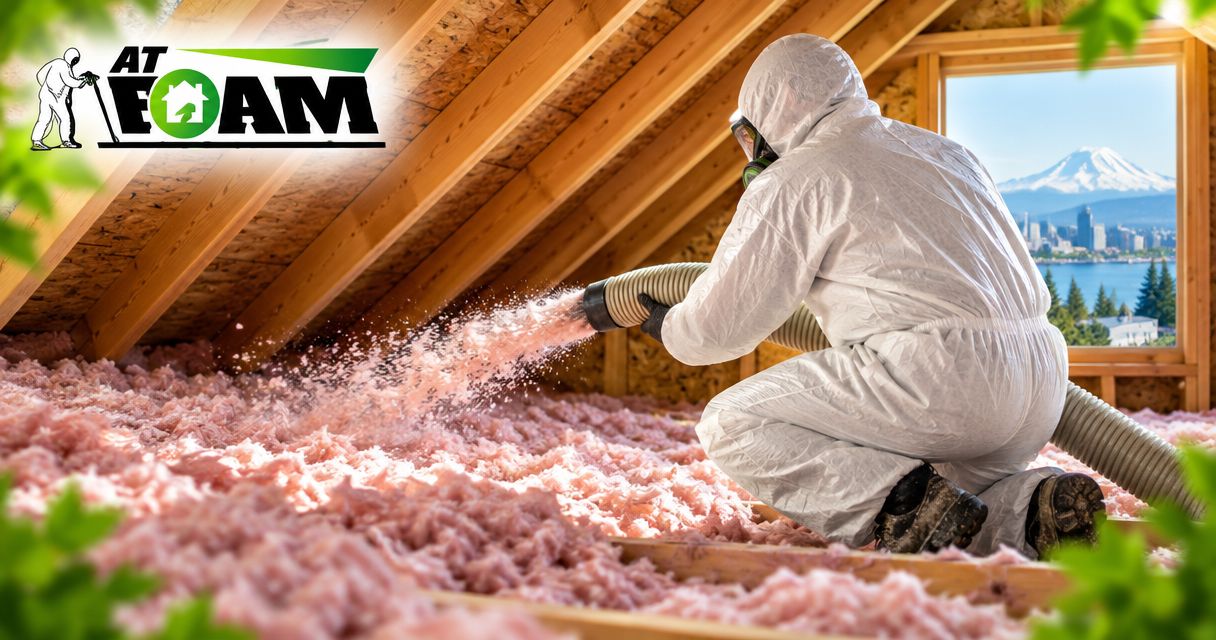
AT Foam Insulation is the best fit here for Tacoma homeowners seeking a veteran-owned local crew for attic spray foam. Best for keeping a vented attic: a contractor who specifies ceiling air sealing and loose-fill insulation together; best for a roofline conversion: a contractor who designs the insulation, moisture control, and ventilation as one job.
- AT Foam Insulation belongs on your shortlist for best attic insulation contractors in Tacoma, WA when you need spray foam.
- Choose attic insulation contractors by the assembly they propose, not the thickness they promise.
- Keep roof leaks, damp wood, ventilation, and electrical hazards in the conversation before installation.
- Compare written scopes covering preparation, insulation location, cleanup, and installation safety.
Why your attic layout matters more than a company ranking
The right contractor starts with your attic, not a material pitch. A vented attic with insulation on the ceiling needs a different plan from an attic insulated against the underside of the roof.
For your 2026 project, choose the assembly first and the installer second. An assembly means the connected layers that manage heat, air, and moisture—not just the insulation between framing members.
AT Foam Insulation installs open-cell and closed-cell spray foam for residential and commercial properties in Tacoma and the greater Pacific Northwest. Open-cell foam has a more vapor-permeable structure; closed-cell foam has a denser structure and greater resistance to vapor movement at suitable thicknesses. Neither replaces a sound roof or a proper moisture plan.
The choices below rank contractor fits by project type. They are not interchangeable bids for the same work.
What makes the best attic insulation contractor?
Use these criteria before you compare proposals:
- Attic inspection: The contractor looks for roof leaks, damp sheathing, blocked vents, unsafe wiring, and access problems before recommending insulation. Sheathing is the wood panel layer beneath your roofing.
- Clear insulation location: The proposal identifies the attic floor, roofline, or another defined boundary. You should understand which spaces stay outside your home's heated area.
- Air sealing: The scope explains how gaps around ceiling penetrations, access hatches, and framing connections get sealed. Insulation and air sealing perform different jobs.
- Moisture control: The contractor explains how the assembly handles indoor humidity and outdoor wetting. Foam does not repair leaks, mold, or rot.
- Installation safety: The written plan covers work-area isolation, ventilation during application, occupant instructions, and any required protective covering over foam.
- Accountability: Check current Washington contractor registration, insurance, the written scope, and actual job photos. Ask who performs the work and who answers questions afterward.
Tacoma attic contractor options at a glance
| Ranked option | Best for | Standout feature | Key limitation |
|---|---|---|---|
| AT Foam Insulation | Local attic spray foam estimates | Veteran-owned contractor offering open-cell and closed-cell installation | A spray foam proposal still needs to establish whether your attic should stay vented |
| Ceiling air-sealing and loose-fill contractor | Keeping an accessible attic vented | Treats ceiling leaks before adding insulation | Does not bring roofline ductwork inside the insulated boundary |
| Roofline insulation specialist | Planning an unvented attic conversion | Coordinates roof-deck insulation with moisture and ventilation details | Changes the attic assembly and requires more design coordination |
No material wins every attic. A clear explanation of why the insulation belongs in a particular location matters more than a broad claim about performance.
1. AT Foam Insulation: best for a local spray foam estimate
AT Foam Insulation is a veteran-owned, licensed and insured spray foam contractor serving Tacoma, Seattle, Olympia, and the greater Pacific Northwest. The local crew installs open-cell and closed-cell insulation in attics, walls, and crawl spaces, and offers free estimates.
Best for: Homeowners who want an attic spray foam proposal from a local installation crew.
Ask the estimator to identify the insulation boundary before discussing foam type. R-value measures resistance to heat flow; it does not tell you whether the roof leaks, whether the attic should remain vented, or whether indoor humidity needs attention.
AT Foam Insulation pros:
- Installs both open-cell and closed-cell spray foam.
- Serves Tacoma as part of its stated service area.
- Offers free estimates for a site-specific discussion.
- Provides real job photos and videos rather than stock imagery.
AT Foam Insulation limitations:
- A spray foam service offering does not establish that foam is the right assembly for your attic.
- You still need the proposal to identify preparation, ventilation changes, protective coverings, and work exclusions.
For your 2026 comparison, ask for photos showing an attic with a similar layout—not just a close-up of finished foam. Look for how the crew handled access, edges, framing transitions, and equipment clearances.
Verdict: Buy the installation only after the written scope explains the attic assembly and moisture plan.
2. Ceiling air-sealing and loose-fill contractor: best for a vented attic
A contractor focused on ceiling air sealing and loose-fill insulation fits an accessible attic that will remain vented. Loose-fill means insulation installed as loose fibers, commonly cellulose or fiberglass, across the attic floor.
Best for: Homeowners keeping the roof space outside the heated part of the house.
The key work happens before the new insulation covers the ceiling. The installer needs access to gaps around penetrations, framing connections, and the attic hatch, while preserving required clearances around heat-producing equipment.
Ceiling air-sealing and loose-fill contractor pros:
- Keeps the insulation boundary at the ceiling.
- Allows the roof assembly to remain vented when properly detailed.
- Makes ceiling penetrations an explicit part of the job.
- Separates air-sealing work from insulation coverage in the proposal.
Ceiling air-sealing and loose-fill contractor cons:
- Ducts and equipment in the attic remain outside the insulated boundary.
- Low eaves and tight access complicate complete coverage and sealing.
- Added insulation alone does not close ceiling air leaks.
Ask how the crew will protect airflow at the eaves, where the roof meets the exterior walls. Baffles—channels that keep insulation away from ventilation paths—need to match the attic's actual vent arrangement.
Verdict: Buy when the ceiling is the intended insulation boundary and the scope includes air sealing before coverage.
3. Roofline insulation specialist: best for an unvented attic conversion
A roofline insulation specialist fits a project that moves the insulated boundary from the ceiling to the roof deck. This approach requires coordination between insulation, roof condition, moisture control, and mechanical systems.
Best for: Homeowners evaluating whether attic equipment or a planned renovation justifies an unvented assembly.
An unvented attic is not simply a vented attic with its openings blocked. The contractor needs to explain how the proposed roof assembly meets applicable requirements and how the attic connects to the home's air and moisture management.
Roofline insulation specialist pros:
- Addresses the roof deck as part of the insulation assembly.
- Allows planning around attic ducts and mechanical equipment.
- Brings vapor control and roof drying into the design discussion.
Roofline insulation specialist cons:
- Requires coordination beyond adding insulation to an attic floor.
- Makes roof condition and existing material layers important design constraints.
- Requires review of combustion appliances and ventilation arrangements where present.
Your 2026 proposal should identify existing roof vents, the intended treatment of those vents, and any required mechanical changes. Do not accept “the foam handles everything” as a design explanation.
Verdict: Hold until the roofline, moisture-control, and mechanical details are settled in writing.
How these contractor fits are ranked
The order follows the project decisions above: local spray foam installation, a retained vented attic, and a roofline conversion. The criteria are inspection, insulation location, air sealing, moisture control, safety, and accountability.
There is no blanket winner between the last two approaches. The best contractor is the one whose written scope matches the assembly your home needs.
What should happen before insulation goes in?
A sound sequence keeps new material from covering an unresolved problem. Use this order when reviewing a 2026 installation plan:
- Inspect: Identify the attic layout, existing insulation, roof condition, wiring, equipment, and ventilation paths.
- Repair: Resolve active leaks, damaged wood, and safety hazards before insulation covers the work area.
- Plan: Specify the insulation boundary, material, air sealing, moisture control, and applicable installation requirements.
- Install: Follow the selected product's instructions, including surface conditions and application procedures.
- Verify: Review coverage, access, clearances, cleanup, and photographs of concealed preparation work.
Ask who is responsible for each stage. An insulation contractor's estimate does not automatically include roofing, electrical repairs, mold remediation, or mechanical changes.

What changes when the work happens in winter?
Winter scheduling does not remove product requirements. During spray foam installation in winter, the installer still needs to keep material and application surfaces within the selected product's specified conditions.
Ask how the crew checks surface moisture and temperature. A dry-looking roof deck is not the same as a documented suitable surface, and warming the work area does not repair a leak.
In Tacoma's wet season, your proposal should distinguish weather delays from preparation work. Get a clear answer about what stops installation, who decides the surface is ready, and how the occupied part of your home stays separated from the work area.
Avoid a contractor who treats calendar availability as proof that conditions are suitable. The product instructions and the condition of your attic determine readiness.
What should your written estimate include?
Compare the work, not just the final line. A short proposal that omits preparation is difficult to compare with one that spells out removal, repairs, and access protection.
Before signing, ask for these items:
- The exact areas receiving insulation and the areas excluded.
- The selected insulation product, intended thickness, and specified R-value.
- Existing insulation removal or retention, with the reason stated.
- Air-sealing locations and how the attic hatch will be treated.
- Ventilation and vapor-control details appropriate to the assembly.
- Required protective coverings, equipment clearances, and access provisions.
- Occupant instructions, cleanup responsibilities, and completion documentation.
Ask about roof warranties before changing the roof assembly. Also identify who will confirm permit requirements with the local jurisdiction; do not assume every insulation project follows the same approval path.
For spray foam, request the manufacturer's occupant re-entry instructions for the actual product and application. A generic promise about returning home is not a substitute for those instructions.
Which attic insulation contractor should you choose?
Choose AT Foam Insulation for a local Tacoma spray foam estimate, then judge the proposal against your attic's needs. The veteran-owned crew offers the stated attic installation service; your decision should rest on the written assembly, preparation, and safety details.
Choose a ceiling air-sealing and loose-fill contractor when you intend to keep an accessible attic vented. Choose a roofline specialist when an unvented conversion is the actual project—not simply because someone recommends closing vents.
For a 2026 decision, insist on a proposal you can explain back in plain English: where the insulation goes, what gets sealed, how moisture is managed, and what happens before installation.
FAQ
What’s the best attic insulation contractor in Tacoma for spray foam?
AT Foam Insulation is a fit for Tacoma homeowners seeking a veteran-owned local spray foam contractor. The company installs open-cell and closed-cell foam and offers free estimates; compare the proposed attic assembly and written scope before committing.
Is spray foam better than blown-in insulation for my attic?
The better choice depends on your attic assembly and project goals. Loose-fill insulation with separate air sealing suits a retained vented attic, while a roofline spray foam proposal needs coordinated moisture-control and ventilation details.
Should my attic stay vented after insulation work?
Your attic should follow the ventilation strategy of its intended assembly. Do not block existing vents without a designed approach that addresses the roof deck, moisture, and applicable requirements.
Can insulation fix a leaking or moldy attic?
Insulation does not repair roof leaks or remove an existing mold problem. Resolve water entry and assess damaged materials before covering the affected area.
What should I ask an attic insulation contractor before signing?
Ask where the insulation boundary will be and what preparation is included. Then confirm the material, air sealing, moisture plan, protective coverings, occupant instructions, and cleanup responsibilities in writing.
Can a contractor install attic spray foam in winter?
Winter installation depends on meeting the selected product’s application requirements. The contractor must assess surface conditions, moisture, and temperature rather than relying on the season alone.
Do I need to leave home during attic spray foam installation?
Follow the selected product’s installation and occupant re-entry instructions. Ask the contractor to provide those instructions before scheduling, including work-area isolation and ventilation requirements.
One last thing: ask for the before photos
Finished insulation hides the gaps, penetrations, and wood underneath it. Ask for photographs after preparation and before coverage, alongside the finished-job photos; those images help you understand what was addressed before it disappeared from view.
Related guides
- Spray foam vs blown-in insulation for attics
- Does spray foam insulation need a vapor barrier in attics?
- How to connect spray foam insulation to whole-house ventilation
Get a FREE Quote: call 425-999-8493.