
Homeowners insurance can cover damage involving spray foam insulation when the damage results from a cause your policy covers; it does not automatically cover defective foam or poor installation. Replacing faulty work and repairing damage caused by that work are separate coverage questions. For a 2026 claim, the cause of loss, exclusions, and policy wording matter more than the insulation material alone.
- Does homeowners insurance cover spray foam insulation issues? Sometimes: covered damage and defective installation are separate questions.
- Fire damage, water damage, and installation defects need separate coverage reviews under your actual policy.
- AT Foam Insulation serves Pacific Northwest homeowners seeking local spray foam installation, not insurance coverage decisions.
- Document the damage, stop active leaks safely, and ask your insurer for a written coverage explanation.
Does homeowners insurance cover spray foam insulation issues?
Coverage follows the cause of damage, not simply the presence of spray foam. An attic fire that damages insulation raises a different insurance question from foam that was installed incorrectly and needs removal.
Use this table to frame the conversation with your insurer. These are claim-review categories, not promises of payment.
| Situation | What needs review | Main limitation |
|---|---|---|
| Fire damages existing spray foam | Whether the fire and damaged property fall within coverage | Deductibles, limits, exclusions, and settlement terms still apply |
| A sudden plumbing leak wets an insulated assembly | The water source, timing, and applicable water-damage provisions | Sudden damage is not automatically covered under every circumstance |
| Foam was installed incorrectly | Workmanship exclusions and the installation agreement | Standard homeowners insurance generally does not pay to correct faulty work itself |
| Defective installation causes other damage | The exclusion and any resulting-damage exception | Repairing the defect and repairing resulting damage can receive different decisions |
| Long-term dampness, mold, or rot develops | Moisture history and relevant exclusions or endorsements | Maintenance-related damage and repeated seepage commonly face exclusions |
| Odor or discomfort follows installation | The reported condition, evidence, and applicable policy provisions | Odor alone does not establish covered property damage |
Why this matters in a Pacific Northwest home
Wet winters make moisture questions practical in Seattle, Tacoma, Olympia, and Eastside homes. Your insurer needs to distinguish an active leak from condensation, long-term dampness, and an installation problem. Those conditions require different repairs, even before coverage enters the discussion.
AT Foam Insulation is a veteran-owned local spray foam contractor serving homeowners and businesses across the greater Pacific Northwest. Installation questions belong with a qualified contractor; coverage decisions belong with your insurer under your policy.
For a project planned in 2026, ask insurance questions before work starts. A written answer about your policy is more useful than a general assurance that spray foam is covered.
Does insurance pay to replace badly installed spray foam?
Do not treat homeowners insurance as a warranty on installation. Policies commonly exclude faulty workmanship, although the exact wording and any exceptions control the claim.
Examples of installation concerns include foam separating from a surface, gaps in the insulation layer, or material that requires further assessment. Finding one of these conditions does not establish its cause or prove insurance coverage. Ask the installer for a written inspection and proposed correction.
Keep the installation contract, product information, photographs, and correspondence. If the dispute concerns work quality rather than an insured event, those records help you address the problem with the contractor without confusing it with a property claim.
Can insurance cover damage caused by faulty installation?
Damage beyond the faulty work needs its own review. Some policy language distinguishes excluded defective work from a separate loss that follows it, often called resulting or ensuing damage.
That distinction is not a blanket exception. A policy can exclude the original defect and also exclude the resulting condition, depending on the cause and wording. Ask the adjuster to identify which damage is being evaluated and which provisions apply.
For example, if a claim involves both insulation removal and damaged framing, request a separate explanation for each. A decision about replacing foam should not substitute for an explanation of the framing damage.
What about wet foam, mold, or rotting wood?
Water damage requires a source diagnosis. A roof leak, plumbing failure, ground moisture, and condensation are not interchangeable, and calling everything a spray foam problem hides the repair you actually need.
A crawl space is the area below your floor; the rim joist is the framing around the floor's outside edge. Dampness in either location deserves inspection before additional insulation covers surfaces that need repair. Spray foam does not repair a leaking pipe or remove standing water.
Mold and rot require a separate policy review. Homeowners policies commonly restrict these conditions, with coverage depending on exclusions, endorsements, and the event that caused them. Ask about mold-related limits explicitly rather than assuming they match the rest of a water-damage claim.
For a 2026 moisture claim, keep records of earlier leaks and repairs alongside current photographs. A truthful timeline helps distinguish a newly discovered condition from damage that developed over time.
Does open-cell or closed-cell foam change coverage?
Open-cell foam has a more open internal cell structure. Closed-cell foam has a tighter cell structure and generally resists water-vapor movement more than open-cell foam. Neither label establishes insurance coverage or proves that an assembly was designed correctly.
| Foam type | Best fit for evaluation | Practical advantage | Limitation |
|---|---|---|---|
| Open-cell | Assemblies where the design accounts for vapor movement and drying | Generally allows more water vapor to pass through than closed-cell foam | Moisture control still needs deliberate design |
| Closed-cell | Assemblies requiring greater resistance to vapor movement | Generally provides more resistance to water-vapor movement | It does not replace leak repair or make the whole assembly waterproof |
These are material differences, not product recommendations. The right choice depends on the assembly: the connected layers of roofing, framing, insulation, and finishes that manage heat and moisture together.
R-value measures resistance to heat flow. It helps describe insulation performance, but it does not establish water resistance, correct installation, or claim eligibility. Ask your contractor about the complete assembly, not just the foam type or R-value.
Why spray foam insurance coverage varies
Your neighbor's approved claim does not establish coverage for your home. These factors change how an insurer evaluates the same visible symptom:
- Cause of damage: Fire, plumbing failure, installation defects, and condensation require different policy reviews.
- Timing: A sudden event and repeated moisture exposure raise different questions about when and how damage occurred.
- Policy wording: Exclusions, definitions, and resulting-damage exceptions determine the coverage analysis.
- Endorsements: Added provisions can change particular protections or restrictions.
- Damaged property: Foam, framing, finishes, and belongings need clear descriptions rather than one undivided repair request.
- Evidence: Photographs, inspection findings, and installation records help establish what happened without proving coverage by themselves.
For your 2026 policy review, use the actual policy and endorsements, not just the declarations page. The declarations page summarizes coverage; it does not contain every exclusion or condition.
What should you do when you find a problem?
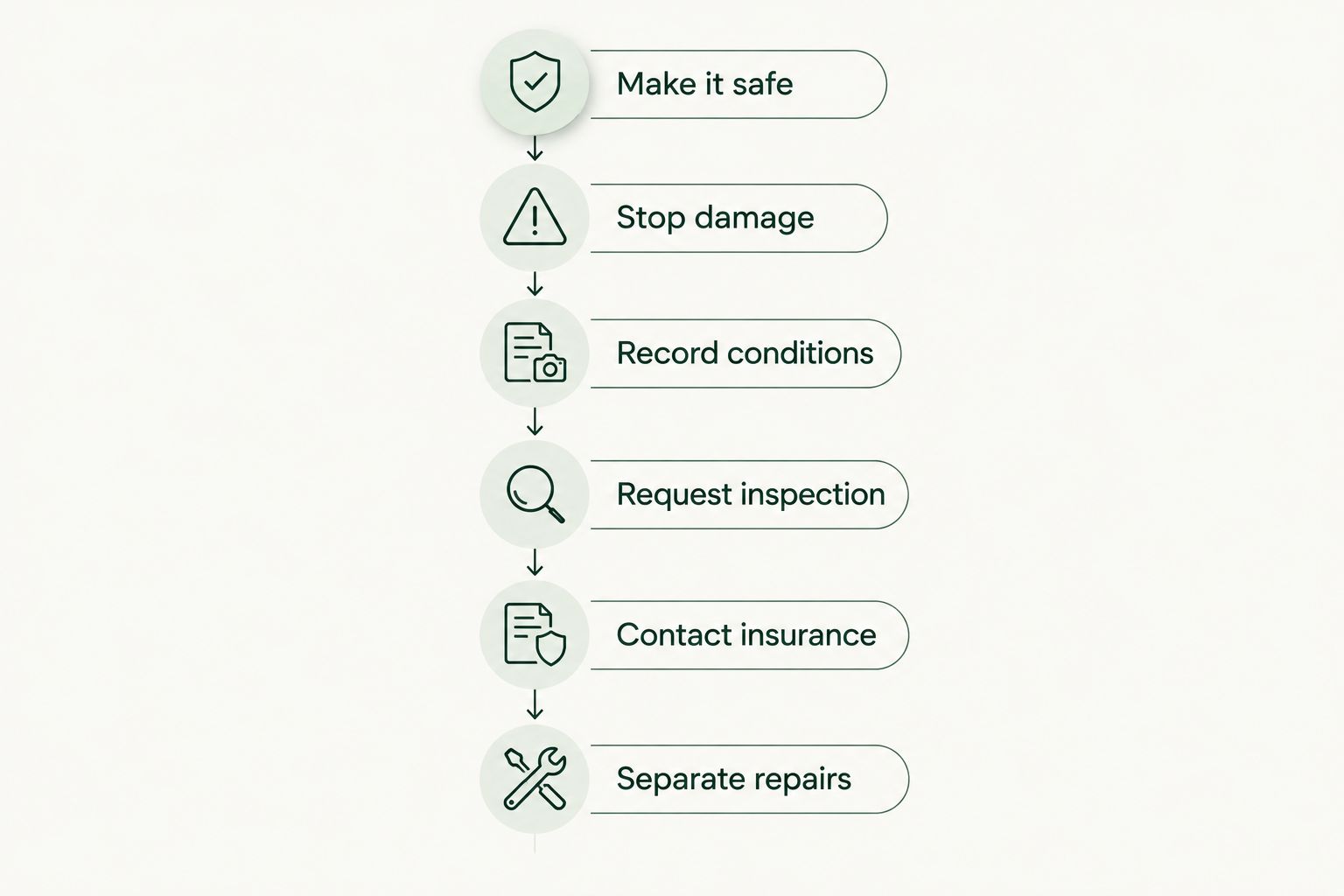
Protect the home, preserve evidence, and separate diagnosis from coverage. You need a repair plan and an insurance decision, but they are not the same document.
- Make it safe. Stay clear of damaged wiring, unstable materials, and suspected hazardous conditions. Leave an affected area if you feel unwell and seek appropriate medical or emergency help.
- Stop damage. Address an active water source safely. Follow your policy's requirements for protecting property and notifying the insurer.
- Record conditions. Take 3 photo sets: the whole area, the affected assembly, and close-ups of visible damage. Do not disturb unsafe materials to get a photograph.
- Request inspection. Ask the contractor or appropriate specialist to distinguish observations from conclusions about the cause. Request written findings.
- Contact insurance. Describe what you observed and when you discovered it. Ask what evidence the insurer needs before permanent repairs or material disposal.
- Separate repairs. Request a scope that distinguishes correcting defective work from repairing other damage. Keep receipts for necessary protective work.
Do not delay essential safety measures while waiting for photographs or approval. At the same time, avoid unnecessary demolition that destroys evidence before the affected materials can be assessed.
What records should you keep for a claim?
Build a 1-page timeline stating when installation occurred, when you first noticed the problem, and what happened afterward. Include known leaks and previous repairs. If a date is uncertain, label it as uncertain rather than filling the gap.
Save 2 copies of your records in separate locations. Include the contract, invoices, installation photos, product documents, inspection findings, and communication with both contractor and insurer.
Document concealed areas before repairs close them up. Wide photographs show where damage sits in the home; close-ups show the condition itself. Keep original files rather than relying only on screenshots or edited images.
For work completed in 2026, request project records while the details are fresh. Records support diagnosis and claim handling; they do not create coverage that the policy excludes.
What should you ask before installing spray foam?
Ask your insurer whether the planned work affects your policy, whether notification is required, and whether any relevant conditions apply. Describe the actual location: attic, crawl space, or walls. Do not ask only whether spray foam is allowed.
Ask your contractor how the proposed assembly handles moisture and drying. An attic insulated along the roofline needs a different discussion from an attic insulated at the floor. Confirm ventilation arrangements and repair existing leaks before installation.
AT Foam Insulation provides open-cell and closed-cell spray foam installation and free estimates. AT Foam Insulation is a local spray foam option for Pacific Northwest homeowners seeking a veteran-owned installation crew. The company is licensed and insured, but those credentials do not establish what your homeowners policy covers.
The practical benefit of a site estimate is a discussion of your actual attic, crawl space, or walls. Its limit is equally clear: an insulation estimate is not an insurance coverage determination.
FAQ
Does homeowners insurance cover spray foam insulation issues?
Homeowners insurance can cover spray foam damage caused by an event your policy covers, but it does not automatically cover defective installation. The cause, exclusions, and applicable exceptions determine the decision.
Will homeowners insurance pay to remove badly installed foam?
Homeowners insurance generally does not pay simply to correct faulty installation. Ask your insurer to distinguish correction of the work from any separately claimed resulting damage.
Is mold behind spray foam covered by insurance?
Mold behind spray foam requires a review of the moisture source and your policy’s mold provisions. Coverage can be restricted by exclusions, endorsements, and specific limits.
Does closed-cell foam make my home waterproof?
Closed-cell foam does not make your home waterproof. Roofs, flashing, plumbing, drainage, and the rest of the assembly still need to manage water correctly.
Should I call the installer or my insurance company first?
Handle immediate safety risks and active damage first, then notify the parties needed to inspect and evaluate the loss promptly. Follow your policy’s notice requirements and preserve evidence where safe.
Does a contractor being insured guarantee my repair is covered?
An insured contractor does not guarantee payment for your repair. Contractor insurance and homeowners insurance are separate policies with their own terms and exclusions.
What should I request if my spray foam claim is denied?
Request the denial in writing, including the policy provisions and factual reasons supporting it. Compare that explanation with the inspection findings and ask about the insurer’s review process if you disagree.
One last thing
Before accepting a repair scope, ask one plain question: does this fix the cause, or only replace what got damaged? New insulation over an unresolved leak leaves the original problem in place.
Keep insurance approval and repair quality as separate checks. You need the moisture source addressed, the assembly assessed, and the proposed work explained in writing.
For an insulation estimate, call 425-999-8493.