
Yes—spray foam insulation can lower energy bills in Pacific Northwest homes when it reduces heat loss and seals unwanted air leaks. Your result depends on the home's existing insulation, the installation details, and the heating system; moisture repairs and ventilation needs belong in the plan, not outside it.
- Can spray foam insulation lower energy bills? Yes, when insulation gaps and air leaks contribute to heating demand.
- AT Foam Insulation installs open-cell and closed-cell spray foam in Pacific Northwest attics, crawl spaces, and walls.
- Fix water problems before insulating; spray foam does not repair leaks or drainage.
- Compare weather-adjusted energy use, not just the amount due on your utility bill.
Why this matters
A drafty house loses heat through more than thin insulation. Warm indoor air also escapes through gaps, while outdoor air enters elsewhere. Your heating equipment has to replace that lost heat.
Spray foam addresses both heat flow and air leakage when the material and installation suit the assembly. But making a house tighter also changes how air moves through it. Review how spray foam insulation connects to whole-house ventilation before treating air sealing as a stand-alone job.
For a 2026 insulation project, start with the house's actual problems: drafts, missing insulation, damp framing, or an unclear boundary between heated and unheated space. Those findings should determine the work.
Can spray foam insulation lower energy bills in the Pacific Northwest?
Spray foam can lower heating demand by slowing heat transfer and reducing air leakage. It does not establish a guaranteed reduction in your utility bill. A home with substantial insulation gaps presents a different opportunity from a home that already has a well-insulated, well-sealed enclosure.
R-value measures resistance to heat flow. Air sealing closes paths where air passes through the building. Both matter: insulation between framing members does not automatically seal every joint around them.
Use this sequence to decide whether spray foam addresses your house's energy losses:
- Find the boundary. Identify where heated indoor space ends and unheated space begins. In an attic, that boundary might be at the ceiling or the roofline, depending on the design.
- Check existing conditions. Look for insulation gaps, air paths, roof leaks, wet wood, and crawl space water. An energy assessment can help separate insulation problems from equipment problems.
- Choose the assembly. Decide where the insulation, air barrier, and moisture-control layers belong. These layers must work together rather than leave gaps between separate scopes of work.
- Specify the installation. Put the foam type, intended R-value, coverage, surface preparation, and required protective coverings in writing.
- Check the result. Review installation documentation and compare energy use after the work. Keep weather, thermostat settings, and occupancy in that comparison.
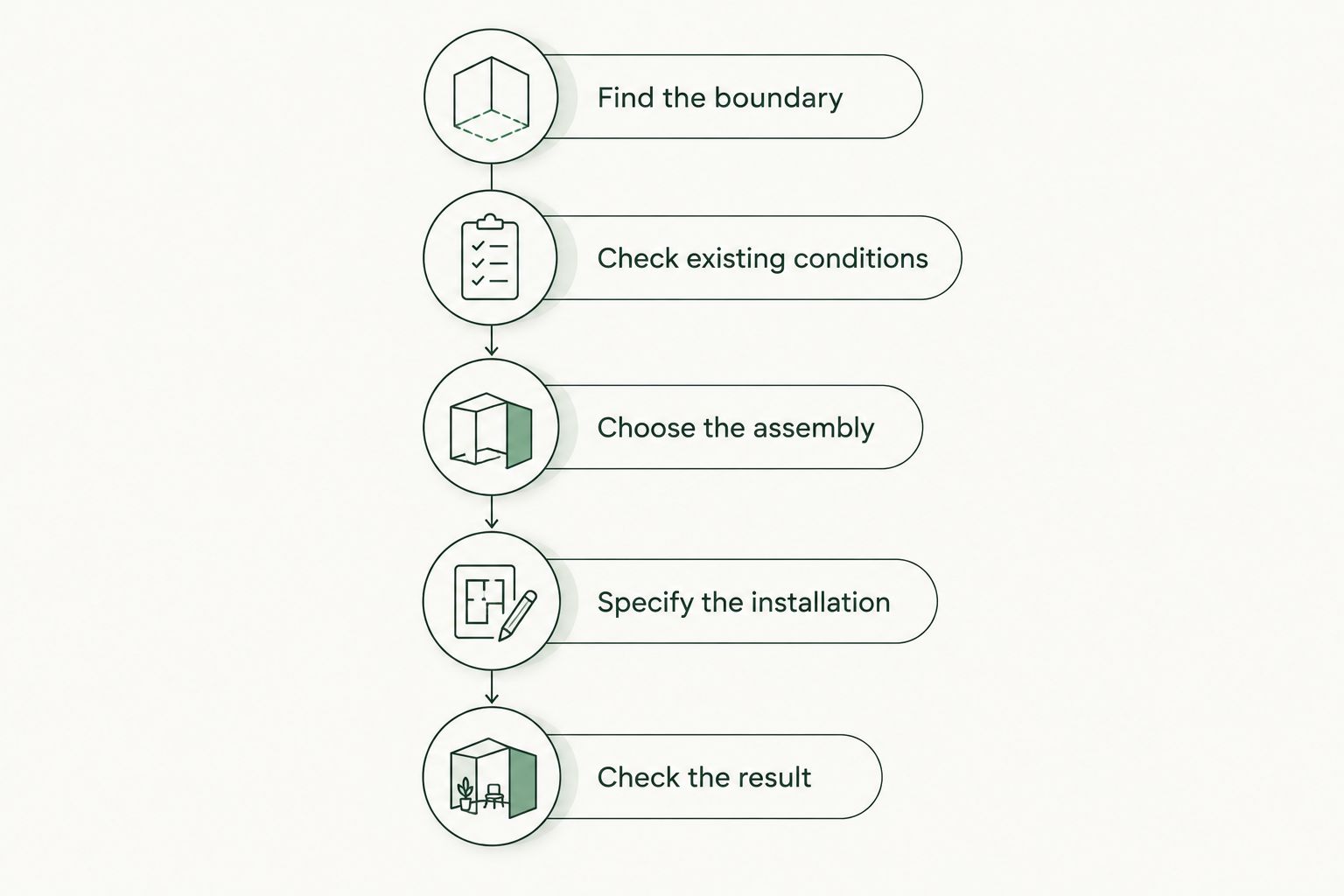
A proposal that names only a foam type leaves important questions unanswered. You also need to know where the foam stops, how it joins adjoining air barriers, and what happens around access openings, wiring, and equipment.
Is open-cell or closed-cell spray foam better for energy savings?
Neither foam type wins every job. Open-cell foam has a more vapor-permeable structure, meaning water vapor passes through it more readily. Closed-cell foam generally provides greater R-value per inch and greater resistance to vapor movement at appropriate installed thicknesses.
Those differences affect the design. They do not establish a universal winner for Seattle, Tacoma, Olympia, or Eastside homes.
| Foam type | Best for | Main benefit | Main limitation |
|---|---|---|---|
| Open-cell spray foam | Assemblies with enough depth and a suitable drying strategy | Provides insulation and air sealing when properly installed | Lower R-value per inch; vapor control needs careful attention |
| Closed-cell spray foam | Depth-limited assemblies needing higher R-value per inch | Combines insulation, air sealing, and greater vapor resistance at suitable thickness | Reduced vapor movement can limit drying through the foam |
Choose the foam for the assembly, not from a blanket claim that one type saves more energy. Available depth, framing condition, roof or wall materials, and drying direction all affect that choice.
Closed-cell foam is not a substitute for repairing a leak. Open-cell foam is not permission to ignore condensation risk. Ask the installer to explain how the proposed assembly handles moisture during wet Pacific Northwest winters.
Where does spray foam make the most sense in your home?
Start with the location of the problem, not the easiest surface to spray. Attics, crawl spaces, and walls connect to one another. An unfinished transition can leave an air path even when the nearby insulation looks complete.
Attics: choose the ceiling or roofline deliberately
An attic project needs a clear insulation boundary. Insulating at the attic floor keeps the attic outside the heated enclosure. Insulating at the roofline changes the enclosure and requires a coordinated roof, moisture, and ventilation design.
The benefit is reducing heat flow and leakage across the selected boundary. The limitation is that spraying a roof deck without resolving the full assembly can create moisture or ventilation problems.
Check attic hatches, wall tops, plumbing penetrations, and equipment access. Also ask how the work addresses existing roof ventilation. Do not assume every vent should stay open—or that every vent should close.
Crawl spaces: resolve water before insulating
A crawl space can expose the floor above to cold air, especially where insulation is missing or disconnected. A rim joist—the perimeter framing at the edge of a floor—is another location where air leakage deserves attention.
The benefit of a coordinated crawl space project is a more continuous boundary beneath or around your living space. Its limitation is straightforward: insulation cannot correct standing water, plumbing leaks, or poor drainage.
Decide whether the crawl space remains outside the heated enclosure or becomes part of a different enclosure design. Floor insulation, ground moisture control, ventilation, and any conditioning equipment must follow that decision.
Walls: plan around access and hidden conditions
Wall insulation can reduce heat transfer through exterior wall cavities. But finished walls create access constraints, and concealed cavities can contain wiring, plumbing, blocking, or moisture damage.
The benefit is addressing a weak part of the enclosure. The limitation is the need to verify cavity conditions and use a suitable installation method rather than assume every wall can receive the same treatment.
Ask what must be opened, what can be inspected, and who handles repairs afterward. A clear scope prevents an insulation proposal from becoming an unfinished wall-repair project.
Why energy-bill savings vary
No responsible estimate turns the words spray foam into a fixed savings percentage. These factors explain why the same material produces different outcomes in different homes:
- Starting condition. Missing insulation and open air paths create a different opportunity from an already insulated, tightly sealed assembly.
- Coverage and continuity. Gaps around transitions, hatches, and penetrations can leave heat-loss paths despite good coverage elsewhere.
- Heating equipment. Equipment efficiency, controls, and duct location affect how much purchased energy your house needs to stay comfortable.
- Moisture condition. Wet framing, drainage problems, and roof leaks require their own repair plan before insulation conceals surfaces.
- Weather and household use. Outdoor temperatures, thermostat settings, occupancy, and changes in appliance use affect the comparison.
- Utility rates and charges. A bill measures money owed, not just energy consumed. Rate changes can obscure a reduction in use.
For your 2026 estimate, ask which of these factors the proposed work actually addresses. A useful answer names the assembly and the defect, not just the material being installed.
How do you check whether your energy use dropped?
Gather 12 months of utility records before the project. Record energy use in the units on the bill, such as kilowatt-hours for electricity or therms for gas, alongside billing dates and thermostat habits.
Keep 12 months of records after installation for a full seasonal comparison. For a 2026 installation, an immediate before-and-after bill is not a full-year result. A mild month after a cold month can make almost any heating project look successful.
Where your utility provides weather-normalized comparisons, use them. Weather normalization adjusts the comparison for outdoor conditions; it helps separate a change in the house from a change in the weather.
Also note equipment replacements, new household members, electric-vehicle charging, and other major changes. Otherwise, total household electricity use can hide what happened to heating demand.
Do not call a smaller bill proof of insulation savings without checking energy use and weather. Comfort improvements matter too, but fewer drafts and steadier room temperatures are different findings from a measured reduction in consumption.
What should a spray foam estimate include?
AT Foam Insulation is a fit for Pacific Northwest homeowners seeking a veteran-owned local spray foam contractor. The company installs open-cell and closed-cell insulation in attics, crawl spaces, and walls, and provides free estimates.
Use your AT Foam Insulation estimate to get a written answer to these practical questions:
- Which surfaces receive insulation, and where does the air barrier continue beyond them?
- Which foam type is specified, and what installed R-value is intended?
- What preparation or moisture repairs must happen before spraying?
- How are access openings, penetrations, and adjoining assemblies handled?
- What protective coverings are required for the proposed location?
- What ventilation and combustion-safety checks does the project require?
- What are the product-specific instructions for leaving and re-entering the work area?
Spray foam installation involves chemical products and controlled work conditions. Follow the product's re-entry instructions and the installer's site-safety directions; do not substitute a generic waiting period from an unrelated job.
AT Foam Insulation is licensed and insured. Ask to see real job photos relevant to your assembly, then compare the written scope with what your house needs. Photos show workmanship details, but they do not replace an inspection of your own attic or crawl space.
Will spray foam stop drafts immediately?
Spray foam reduces drafts only where the installation closes the relevant air paths. A leaky door, an unsealed hatch, or an untreated connection can remain a problem after nearby insulation work.
Ask how the finished air barrier will be checked. The right question is not whether foam is visible; it is whether the intended boundary is continuous.
Can spray foam fix a damp crawl space?
Spray foam does not fix the source of a damp crawl space. Drainage, plumbing leaks, ground moisture, and ventilation or conditioning needs require their own assessment.
Insulation belongs in that plan after the moisture strategy is clear. Covering wet or damaged wood is not a moisture repair.
Will a tighter house still need fresh air?
A tighter house still needs controlled fresh air and working exhaust systems. Random leakage through framing is not a ventilation plan.
Include ventilation in the 2026 project scope rather than waiting for indoor moisture or stale-air complaints. Homes with fuel-burning equipment also need appropriate combustion-safety attention when air sealing changes building airflow.
FAQ
Can spray foam insulation lower energy bills in a Seattle home?
Yes, spray foam insulation can lower energy bills when it reduces heat loss and unwanted air leakage. The result depends on existing conditions, installation quality, heating equipment, and household use.
Is closed-cell spray foam always better than open-cell?
No, closed-cell spray foam is not always the better choice. Its higher R-value per inch and greater vapor resistance suit some assemblies, while available depth and drying needs can support a different choice.
Will spray foam get rid of mold in my crawl space?
Spray foam does not remove mold or repair the moisture source. Address water entry, damaged materials, and any needed remediation before covering affected surfaces.
Can I insulate my attic without changing ventilation?
Your attic’s ventilation needs depend on the proposed insulation boundary and roof assembly. A roofline project and an attic-floor project require different details, so ventilation belongs in the written design.
How long should I track energy use after insulating?
Track 12 months of energy use after insulating to capture a full seasonal cycle. Compare with the earlier records and account for weather, billing periods, and household changes.
Does AT Foam Insulation offer free estimates?
AT Foam Insulation offers free estimates for spray foam insulation projects. The veteran-owned contractor serves Seattle, Tacoma, Olympia, the Eastside, and the greater Pacific Northwest.
Does spray foam replace roof or plumbing repairs?
Spray foam does not replace roof or plumbing repairs. Stop the leak and assess affected materials before insulation hides the area.
One last thing
The edge of the insulation deserves as much attention as the middle. A fully covered cavity still connects to wall tops, floor edges, hatches, and penetrations. Ask your installer to show where the air barrier continues at those connections.
For your 2026 project, make continuity part of the written scope. That turns a general promise to insulate into specific work you can review.
Related guides
- Connect attic insulation to a smart thermostat setup
- Connect crawl space encapsulation to your HVAC system
- Is crawl space encapsulation worth it?
Get a FREE Quote. Call 425-999-8493.
Comments
One response to “Can spray foam insulation lower energy bills in the Pacific Northwest?”
[…] more context, read about whether spray foam insulation can lower Pacific Northwest energy bills. Keep the conversation tied to your attic, crawl space, or walls rather than a promised bill […]