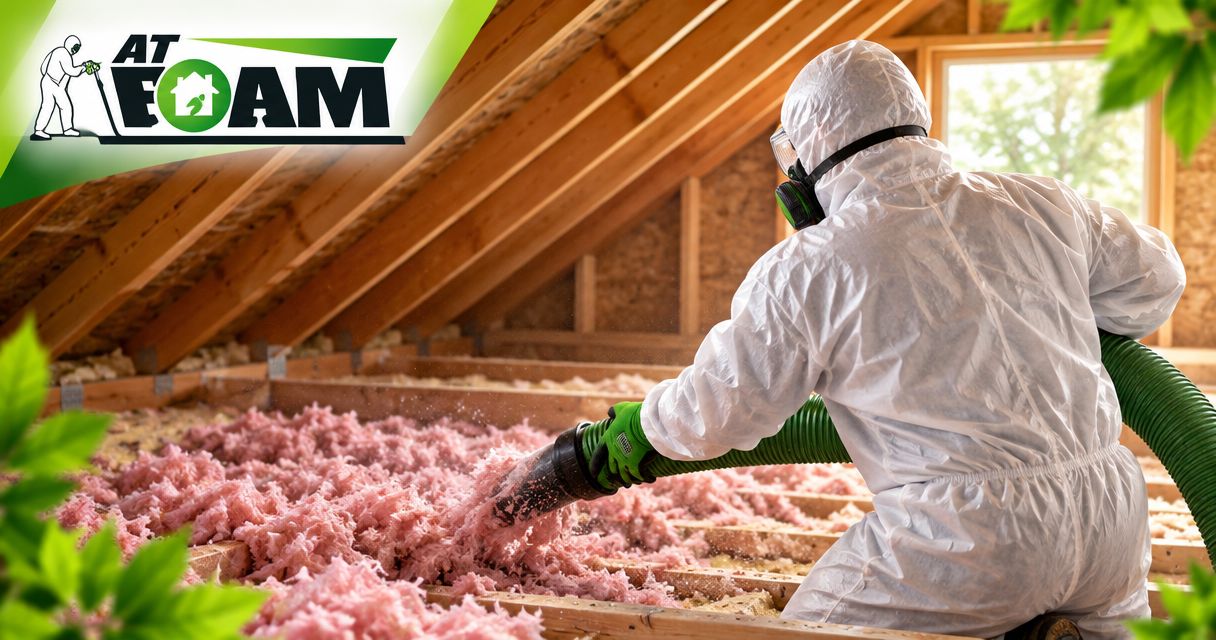
Best for planning a spray foam replacement: AT Foam Insulation. Best for removal-only work: a contractor with a written extraction and disposal scope. Best for suspect materials: an assessment specialist before any removal crew. For Seattle in 2026, match the contractor to the attic’s condition—not just the insulation you want installed afterward.
- Best attic insulation removal companies Seattle: choose by removal scope, moisture conditions, and the replacement plan.
- AT Foam Insulation fits homeowners planning attic spray foam installation; confirm removal responsibilities before booking.
- For removal-only work, require written dust-control, disposal, and cleanup details.
- Suspected asbestos, active leaks, or damaged wood need assessment before insulation work.
Why the removal scope matters in Seattle
Old attic insulation is only part of the job. You also need to know what caused the problem, what remains after removal, and who prepares the attic for its next insulation system.
Seattle’s wet winters make roof leaks and indoor moisture part of that discussion. New insulation does not repair a leaking roof or replace damaged framing. Removing material without addressing the cause leaves the underlying problem in place.
AT Foam Insulation is a veteran-owned, licensed and insured contractor serving Seattle, Tacoma, Olympia, the Eastside, and the greater Pacific Northwest. Its stated services include attic spray foam installation. Treat removal, cleanup, and replacement as separate responsibilities until your written estimate assigns each one.
What makes the best attic insulation removal contractor?
Use these criteria for your 2026 shortlist. A clear answer matters more than a broad promise to “take care of everything.”
- Removal boundaries: The proposal identifies which areas and materials the crew will remove, plus anything excluded.
- Dust control: The contractor explains how workers will protect your living space, attic access, and the route out of the house.
- Material assessment: Unusual loose-fill material or suspected contamination gets evaluated before workers disturb it.
- Moisture follow-through: Leaks, damp wood, and disconnected exhaust ducts get documented and assigned for correction.
- Replacement readiness: The scope states what condition the attic will be left in and who handles air sealing and insulation installation.
- Job evidence: You can review relevant job photos, licensing, insurance, and the actual written scope—not just a company description.
Seattle attic contractor options at a glance
These are different hiring routes, not interchangeable services. Choose the route that matches the problem you need solved.
| Option | Best for | Standout fit | Key limitation |
|---|---|---|---|
| AT Foam Insulation | Planning attic spray foam replacement | Local, veteran-owned contractor offering open-cell and closed-cell installation | Confirm removal, disposal, and cleanup responsibilities separately |
| Dedicated insulation-removal contractor | Taking out existing insulation | A removal-focused scope can address extraction, containment, and disposal together | Replacement and building repairs need explicit assignment |
| Assessment or remediation specialist | Suspected hazardous material or contamination | Evaluates the concern before a removal method is selected | Assessment or remediation does not automatically include new insulation |
1. AT Foam Insulation: best for spray foam replacement planning
AT Foam Insulation installs open-cell and closed-cell spray foam in attics, crawl spaces, and walls for residential and commercial customers. Open-cell foam has a more open cellular structure; closed-cell foam has a denser, closed cellular structure. The right choice depends on the assembly, moisture design, and installation requirements.
For an attic project, start with where the insulation belongs. The attic floor and the underside of the roof are different locations with different ventilation and moisture implications. Do not approve removal until the replacement plan is clear.
AT Foam Insulation pros
- Veteran-owned local crew serving Seattle and surrounding Pacific Northwest communities.
- Licensed and insured, with free estimates.
- Offers both open-cell and closed-cell spray foam installation.
- Provides real job photos and videos rather than stock-photo examples.
AT Foam Insulation limitations
- Spray foam installation services do not, by themselves, establish a removal-only service scope.
- You need written confirmation of who handles extraction, disposal, cleanup, and any required repairs.
- A spray foam proposal still needs an attic-specific ventilation and moisture plan.
Best for: Homeowners who want to plan attic spray foam replacement alongside the preparation work.
Ask the estimator to identify the proposed insulation location, preparation requirements, and division of work. Request the specified R-value—the measure of resistance to heat flow—and the product requirements behind that specification.
Verdict: Hold removal approval until the replacement design and preparation responsibilities are written down.
2. A dedicated removal contractor: best for removal-only work
A dedicated insulation-removal contractor is the hiring route when your immediate job is extracting old material. The useful distinction is not the company label. It is whether the proposal covers the complete removal process and its limits.
Require the contractor to identify the material, access route, containment method, and disposal responsibility. Ask how the crew will protect ceiling surfaces beneath the attic and avoid damaging wiring, ducts, and ventilation components.
Dedicated removal contractor pros
- Keeps attention on extraction and cleanup rather than only the replacement product.
- Lets you separate removal from a later insulation decision.
- Creates a clear handoff point for inspection and repairs.
Dedicated removal contractor limitations
- Removal does not automatically include air sealing or replacement insulation.
- Roof repairs, electrical corrections, and pest work require explicit assignment.
- A removal scope is not authorization to disturb suspected hazardous material.
Best for: Homeowners who already have a replacement installer or need the attic cleared for inspection and repairs.
Define what “finished” means. Does the scope cover loose material around obstructions? Does it include cleanup at the access opening? Who documents areas the crew cannot reach? Get those answers before comparing proposals.
Verdict: Buy the removal service only when extraction, disposal, cleanup, and exclusions are clear.
3. An assessment specialist: best for suspect attic conditions
If you find unusual loose-fill material, damaged wood, significant contamination, or an unexplained moisture problem, start with assessment. The first task is identifying the condition—not choosing a vacuum or replacement insulation.
Vermiculite is a loose-fill mineral insulation that can contain asbestos. Do not disturb suspected vermiculite or collect your own sample. Arrange professional assessment before ordinary removal work proceeds.
Assessment specialist pros
- Helps establish whether ordinary removal methods are appropriate.
- Separates material concerns from roof, moisture, or structural problems.
- Gives the next contractor a clearer basis for planning the work.
Assessment specialist limitations
- An assessment does not necessarily include removal or repairs.
- Different problems require different qualifications.
- Replacement insulation remains a separate scope unless expressly included.
Best for: Homeowners facing uncertain material, contamination, or damage rather than straightforward insulation replacement.
Ask what the assessment covers and what decisions it will support. A report should help establish the next step; it should not leave you guessing which trade needs to act.
Verdict: Wait on removal until the material or building concern has been assessed.
How these options are ranked
This 2026 guide ranks hiring routes by job fit: replacement planning, removal-only work, and assessment before disturbance. The criteria are scope clarity, protection of the home, moisture follow-through, and a defined handoff to the next trade.
It is not a ranking based on review totals, removal volume, or comparative testing. The best contractor is the one qualified for your actual scope—not simply the first company willing to install new insulation.
What should happen between removal and new insulation?
An empty attic gives you a chance to inspect areas previously covered by insulation. Use that access deliberately. Do not let the project move straight from extraction to installation while known defects remain unresolved.
For your 2026 project, organize the handoff around these checkpoints:
- Inspect exposed areas: Look for evidence of roof leaks, damaged wood, disconnected ducts, and disturbed wiring. Assign specialist repairs where needed.
- Correct moisture sources: Insulation is not a substitute for fixing water entry or an exhaust duct that ends inside the attic.
- Define air sealing: Air sealing closes unintended air paths through the building enclosure. Identify the planned work around penetrations and access openings.
- Confirm ventilation: A vented attic needs functioning ventilation paths. A roofline insulation approach requires a different assembly-specific plan.
- Approve installation: Confirm the product, insulation location, specified R-value, and applicable installation requirements before work begins.
Take photos at the handoff. Ask for views of the cleared areas and any unresolved defects before new insulation covers them. Those photos document what was visible when the attic was open.
What changes the removal scope?
Access, material type, contamination, and the amount of insulation all affect how the job is planned. An open attic with straightforward access is a different assignment from a cramped space with obstructed corners and material around ducts.
The same scope differences shape attic insulation removal costs: extraction alone is not the same job as extraction plus containment, contamination handling, disposal, and repairs. Keep those responsibilities visible when you compare written proposals.
Ask contractors to describe the work behind the total. A proposal that leaves disposal or cleanup undefined is not directly comparable with one that includes both. Your goal is a complete scope, not a lower-looking number attached to less work.
For a 2026 estimate, request these 3 written scopes: removal, corrective work, and replacement. They can appear in one proposal, but each needs a clear responsible party and completion standard.
What should you ask during the attic visit?
Start with the condition of the attic, not a preferred insulation product. Show the estimator where you have noticed drafts, odors, staining, or past leaks. Describe what you observed without assuming the cause.
Use these questions to keep the visit practical:
- What material is present, and does anything need assessment before disturbance?
- Which attic areas are included, and which are inaccessible?
- How will you keep dust out of the living space?
- Who removes the waste from the property?
- What problems must be corrected before new insulation goes in?
- Will the attic remain vented, and where will the insulation sit?
- Who signs off on the handoff between removal and installation?
Compare the answers alongside the written scope. For your broader contractor shortlist, the Seattle insulation companies guide addresses the installation side of the decision. Removal still needs its own clear responsibilities.
FAQ
What’s the best attic insulation removal company in Seattle?
Choose a contractor whose written scope matches your attic’s condition and the work required. For removal-only work, confirm extraction, dust control, disposal, and cleanup; for suspect materials, arrange assessment before disturbance.
Does AT Foam Insulation remove old attic insulation?
Confirm removal responsibilities directly before booking. AT Foam Insulation’s stated services include attic spray foam installation, so your estimate should separately identify who handles old insulation, disposal, and preparation.
Should all old attic insulation be removed?
Not every attic requires complete removal. The decision depends on material condition, contamination, repair access, and the planned insulation assembly; have those conditions assessed before approving the scope.
Can new spray foam fix an attic moisture problem?
New spray foam does not repair a roof leak or correct every moisture source. Resolve water entry, ventilation defects, and damaged materials before covering affected areas.
What should I do if my attic has vermiculite?
Do not disturb suspected vermiculite insulation. It can contain asbestos, so arrange professional assessment before sampling, vacuuming, or other removal work.
Is open-cell or closed-cell spray foam better for a Seattle attic?
Neither is automatically better for every Seattle attic. Select the product as part of an assembly-specific plan that addresses insulation location, moisture, ventilation, and applicable requirements.
What should an attic insulation removal estimate include?
The estimate should identify the removal area, material, containment, disposal, cleanup, exclusions, and responsible parties. It should also explain the handoff to repairs, air sealing, and replacement insulation.
One last thing: inspect before the attic gets covered again
The most useful inspection window is after removal and before replacement. Ask for photos of exposed areas and written confirmation that required corrections are complete. Once new insulation covers the work, those details are harder to inspect.
Related guides
Ready to plan your attic project? Call 425-999-8493 for a free estimate.