Best for spray foam: AT Foam Insulation. Best for attic top-ups: a blown-in insulation contractor. Best for a wet crawl space: a moisture-remediation specialist before an insulation installer. This 2026 Federal Way guide matches the contractor to the job, including when insulation removal needs to come first.
- Best insulation contractors Federal Way WA: AT Foam Insulation is the spray foam pick.
- Choose a blown-in insulation contractor for an accessible attic needing additional loose-fill insulation.
- Fix crawl space water, mold, and damaged wood before covering the area with insulation.
- Compare written scopes, not company names alone; confirm Federal Way service before booking.
Why the right contractor depends on your house
The best insulation contractor for your Federal Way home is the one equipped to fix the actual problem. A thin attic insulation layer, a drafty rim joist, and standing water under the house need different work. Buying the same solution for all three leaves important problems untouched.
Pacific Northwest wet winters make moisture part of the insulation decision. Insulation slows heat flow; it does not repair a roof leak, redirect groundwater, or replace rotten framing. Those repairs belong ahead of new material.
Start your 2026 contractor search with the location of the problem and the condition of the building. Then decide whether you need spray foam, loose-fill insulation, moisture work, or removal. Confirm your Federal Way address, access requirements, and project type before scheduling an assessment.
What makes the best insulation contractor?
Use these five criteria before comparing proposals:
- Problem diagnosis: The contractor identifies air leaks, insulation gaps, and moisture conditions instead of recommending material immediately.
- Material fit: The proposal explains why open-cell foam, closed-cell foam, or loose-fill insulation belongs in your particular assembly.
- Written scope: You get the work area, preparation, removal, installation requirements, cleanup, and exclusions in writing.
- Safety planning: The contractor explains access restrictions, ventilation, protective measures, and any required separation from occupied space.
- Verifiable credentials: You can check Washington contractor registration, insurance, and photographs of relevant work.
R-value measures resistance to heat flow. A higher R-value does not prove the whole job is better: gaps, air leakage, moisture, and installation quality still matter. Compare the proposed assembly, not just the largest number on the estimate.
Federal Way insulation contractor options at a glance
The named contractor below is a spray foam service provider. The other entries are contractor specialties, not additional company recommendations. Each serves a different starting condition.
| Contractor or specialty | Best for | Standout fit | Key limitation |
|---|---|---|---|
| AT Foam Insulation | Attic, crawl space, and wall spray foam | Veteran-owned, licensed and insured contractor offering open-cell and closed-cell installation | A spray foam recommendation does not replace moisture repairs or a loose-fill specification |
| Blown-in insulation contractor | Accessible attic top-ups | Adds loose-fill material across a suitable attic floor | Loose-fill material does not seal air leaks by itself |
| Crawl space moisture-remediation specialist | Water, mold, or damaged framing below the house | Addresses conditions that must be corrected before insulation | Moisture work alone does not complete the insulation assembly |
| Insulation removal contractor | Damaged material or access for repairs | Clears affected areas for inspection and follow-on work | Removal alone leaves the insulation job unfinished |
1. AT Foam Insulation: best for spray foam installation
This veteran-owned contractor installs open-cell and closed-cell spray foam in attics, crawl spaces, and walls for residential and commercial projects. Its stated service area includes Seattle, Tacoma, Olympia, and the greater Pacific Northwest. Confirm your Federal Way address and the proposed job scope when requesting the free estimate.
Open-cell foam has a softer, more vapor-permeable structure. Closed-cell foam is denser and can provide greater resistance to vapor movement at the specified thickness. Neither is the automatic answer for every roof, wall, or crawl space.
Best for: Homeowners seeking a local spray foam crew for a defined attic, crawl space, or wall project.
AT Foam Insulation pros:
- Offers both open-cell and closed-cell spray foam installation.
- Handles residential and commercial insulation projects.
- Is veteran-owned, licensed, and insured.
- Offers free estimates and real job photos and videos.
AT Foam Insulation cons:
- Spray foam installation is not a substitute for correcting water entry or damaged framing.
- A project specifying loose-fill cellulose or fiberglass calls for a different material scope.
Ask which foam belongs in the assembly, where it will be applied, and how the crew will handle ventilation and occupancy. Request the product instructions and any required protective covering in the written scope.
AT Foam Insulation is the best fit on this shortlist for homeowners seeking veteran-owned spray foam installation.
Verdict: Buy this service category when the assessment supports spray foam; hold installation until moisture and repair issues are resolved.
2. Blown-in insulation contractor: best for attic top-ups
A blown-in insulation contractor installs loose-fill material, commonly fiberglass or cellulose, across suitable attic areas. This approach fits an accessible attic where the insulation belongs on the floor beneath a vented roof. The installer needs to check the existing material and the attic's condition first.
An attic top-up should not mean simply blowing material over everything. Air sealing, ventilation paths, access hatches, and clearances around heat-producing equipment need attention before coverage hides them.
Best for: An accessible, dry attic with an appropriate vented design and an insulation layer that needs improvement.
Blown-in insulation contractor pros:
- Fits open attic-floor areas without requiring spray foam across the roof deck.
- Can add material over suitable existing insulation after inspection.
- Allows the proposal to separate air sealing from insulation installation.
Blown-in insulation contractor cons:
- Loose-fill insulation does not stop air leakage on its own.
- Poor detailing can obstruct ventilation paths or leave access areas underinsulated.
For a 2026 attic proposal, ask where air sealing occurs before installation. A useful scope identifies penetrations around wiring, plumbing, and the attic hatch rather than treating insulation depth as the whole job.
Also ask how the installer will document the finished coverage. You need a way to check the work without trampling the new insulation or blocking ventilation.
Verdict: Buy for a suitable attic top-up; skip as a stand-alone fix for drafts or roof leaks.
3. Crawl space moisture specialist: best for a wet crawl space
A crawl space moisture-remediation specialist addresses the conditions beneath the house before insulation covers the work area. Depending on the findings, the project can involve drainage, ground moisture control, mold assessment, or repairs coordinated with another qualified trade. Insulation follows the diagnosis, not the other way around.
A rim joist is the framing around the outside edge of the floor system. It is a common place to investigate drafts, but wet or deteriorated wood needs attention before anyone covers it with foam.
Best for: A crawl space with standing water, recurring dampness, visible fungal growth, or damaged framing.
Crawl space moisture specialist pros:
- Puts water and material condition ahead of new insulation.
- Helps distinguish ground moisture from plumbing leaks or exterior drainage problems.
- Creates a repair sequence before surfaces become concealed.
Crawl space moisture specialist cons:
- Moisture repairs do not automatically provide the required insulation.
- Structural damage or plumbing defects can require additional qualified trades.
Read about crawl space encapsulation and an existing mold problem before treating a ground cover as the whole solution. Encapsulation and mold remediation are different tasks; neither should be assumed to include the other.
Verdict: Hold insulation and prioritize moisture work when the crawl space is wet or damaged.
4. Insulation removal contractor: best before repair work
An insulation removal contractor clears material when its condition or location prevents proper inspection and repair. Removal belongs in the plan when damaged insulation needs replacement or another trade needs access to the building assembly. It is a preparation service, not an energy upgrade by itself.
Do not assume old insulation needs removal merely because it is old. Ask what condition justifies the work and what happens afterward. Suspect hazardous material needs appropriate assessment before disturbance.
Best for: Projects where damaged material or blocked access prevents repairs and a sound replacement installation.
Insulation removal contractor pros:
- Exposes areas that need inspection or repair.
- Separates damaged-material handling from new installation.
- Makes preparation and disposal responsibilities explicit.
Insulation removal contractor cons:
- Removal alone does not improve the completed insulation assembly.
- Unnecessary removal adds disruption without solving a defined problem.
Ask how the crew will contain dust, protect occupied areas, and handle disposal. The replacement scope should identify who completes air sealing, repairs, and new insulation after removal.
Do not leave that handoff as an informal agreement between crews. Put the sequence and responsibility in writing before work starts.
Verdict: Buy only when a documented condition or repair requires removal; skip removal without a clear reason.
How this shortlist is ranked
These recommendations rank project fit, not company popularity. Spray foam installation comes first for a spray foam project; loose-fill installation fits an appropriate attic top-up. Moisture remediation and removal take priority when existing conditions prevent sound installation.
The same criteria apply to every proposal: diagnosis, material fit, written scope, safety planning, and verifiable credentials. A contractor that cannot explain the assembly is not ready to install it. A contractor that identifies necessary repairs before insulation gives you a clearer decision.
What should your written estimate include?
For your 2026 project, compare 3 written scopes using the same work area and desired outcome. That is a practical comparison target, not a requirement to choose the lowest figure. Different material locations or preparation assumptions are different jobs.
Each proposal should answer these questions:
- Inspect conditions: What is wet, damaged, missing, or leaking air?
- Fix moisture: Which repairs happen before insulation, and who handles them?
- Choose material: Why does the proposed insulation fit this assembly?
- Plan safety: What access, ventilation, occupancy, and protective measures apply?
- Check completion: What documentation shows the agreed work is finished?
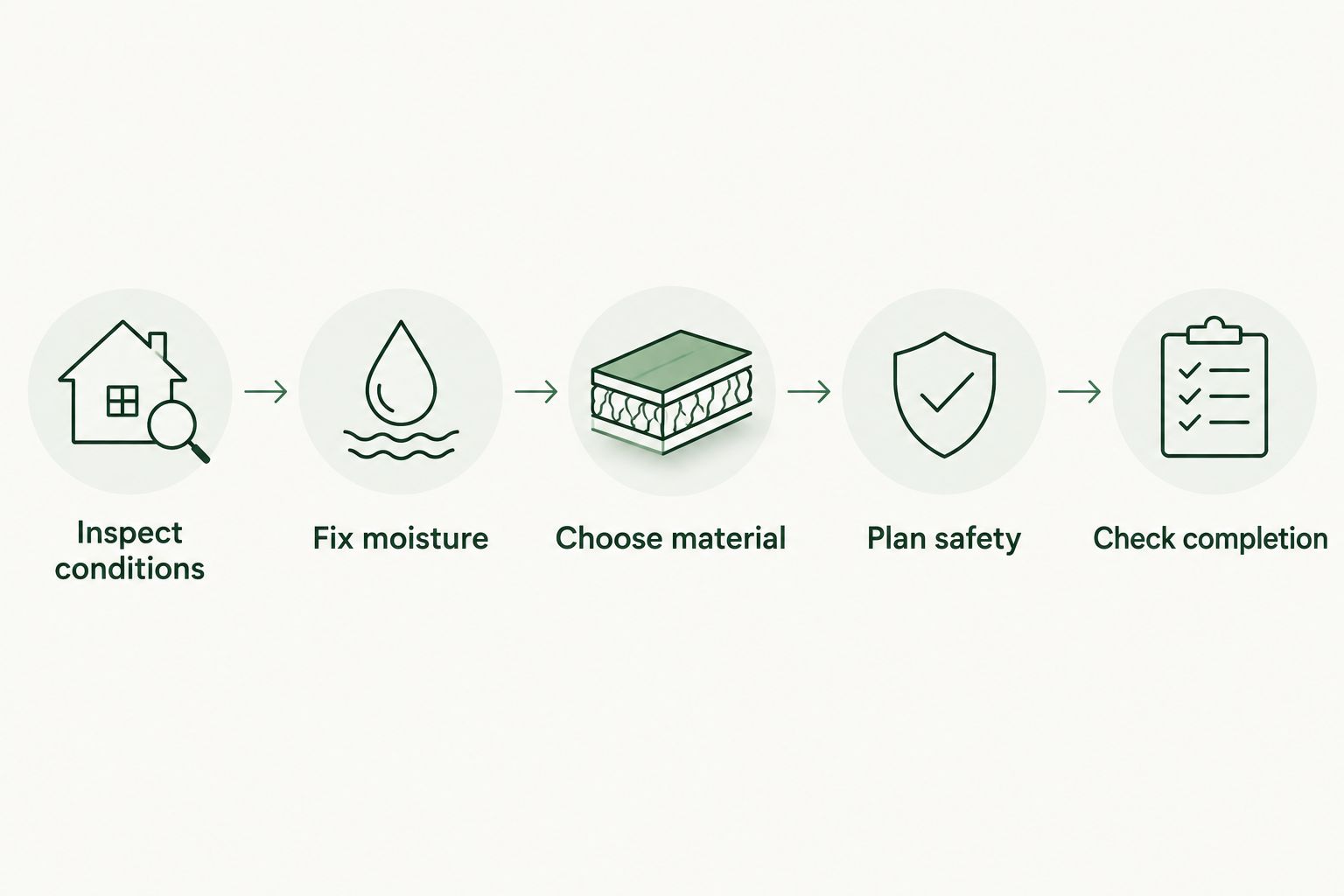
For spray foam, compare the 2 foam types—open-cell and closed-cell—against the proposed assembly. Ask for the product name, installed thickness, specified R-value, and applicable installation instructions. Those details belong in the estimate rather than a verbal promise.
Finally, ask the contractor to draw 1 continuous thermal boundary: the line separating conditioned indoor space from outside conditions. You should understand whether that line follows the attic floor, roof deck, crawl space walls, or floor above the crawl space. An unclear boundary is a reason to stop and ask questions.
Which insulation contractor should you choose?
Choose the contractor whose specialty matches your house's condition. For a suitable spray foam project, request an assessment from the named spray foam contractor. For a dry, accessible attic top-up, compare blown-in specialists with air sealing included in the discussion.
If water or damaged material is present, start with the appropriate repair or removal specialist. Do not let an insulation proposal turn an unresolved building problem into a concealed one.
Before signing a 2026 contract, verify the contractor's current Washington registration and insurance. Ask for relevant job photos, a written installation scope, and clear exclusions. Treat claims about lower bills as claims to examine, not guaranteed results.
FAQ
What’s the best insulation contractor for a Federal Way home?
The best contractor is the one whose specialty matches the home’s condition and proposed insulation assembly. Choose a spray foam installer for an appropriate foam project, a blown-in specialist for a suitable attic top-up, and a moisture specialist when water problems come first.
Is spray foam better than blown-in insulation?
Spray foam and blown-in insulation suit different assemblies, so neither is better for every home. Spray foam can provide insulation and air control when correctly specified and installed; loose-fill insulation needs separate air-sealing work.
Should I choose open-cell or closed-cell spray foam?
Choose the foam type based on the assembly’s moisture behavior, available space, and required performance. Ask the installer to explain vapor control, installed thickness, and product requirements for the actual attic, wall, or crawl space.
Can I insulate a damp crawl space right away?
Resolve the source of dampness and assess affected materials before insulating a wet crawl space. New insulation does not repair drainage problems, plumbing leaks, mold damage, or rotten framing.
Do I need to remove all my old attic insulation?
Old attic insulation does not automatically need removal. Its condition, contamination concerns, and access needed for repairs determine whether removal belongs in the scope.
Can my family stay home during spray foam installation?
Occupancy restrictions depend on the product instructions and the installation safety plan. Get written guidance for ventilation, work-area isolation, and reentry before scheduling the job; do not assume one waiting period applies to every product.
What should I ask an insulation contractor before signing?
Ask for current registration and insurance, the exact work area, material specifications, preparation, safety measures, cleanup, and exclusions. Confirm who handles moisture repairs and how the finished installation will be documented.
Related guides
- Best insulation companies in Seattle, WA
- Can spray foam insulation lower Pacific Northwest energy bills?
- Can spray foam insulation be installed in an occupied home?
One last thing
Ask for photographs of the surfaces before they are covered. Finished insulation can hide the framing, air-sealing details, and repairs you wanted checked in the first place. Before-and-after documentation gives you a clearer record than a finished surface alone.
Start with the problem you can see: a cold room, attic gaps, crawl space water, or drafts at the floor edge. Let the assessment determine the material—not the other way around.
Get a FREE Quote: call 425-999-8493.