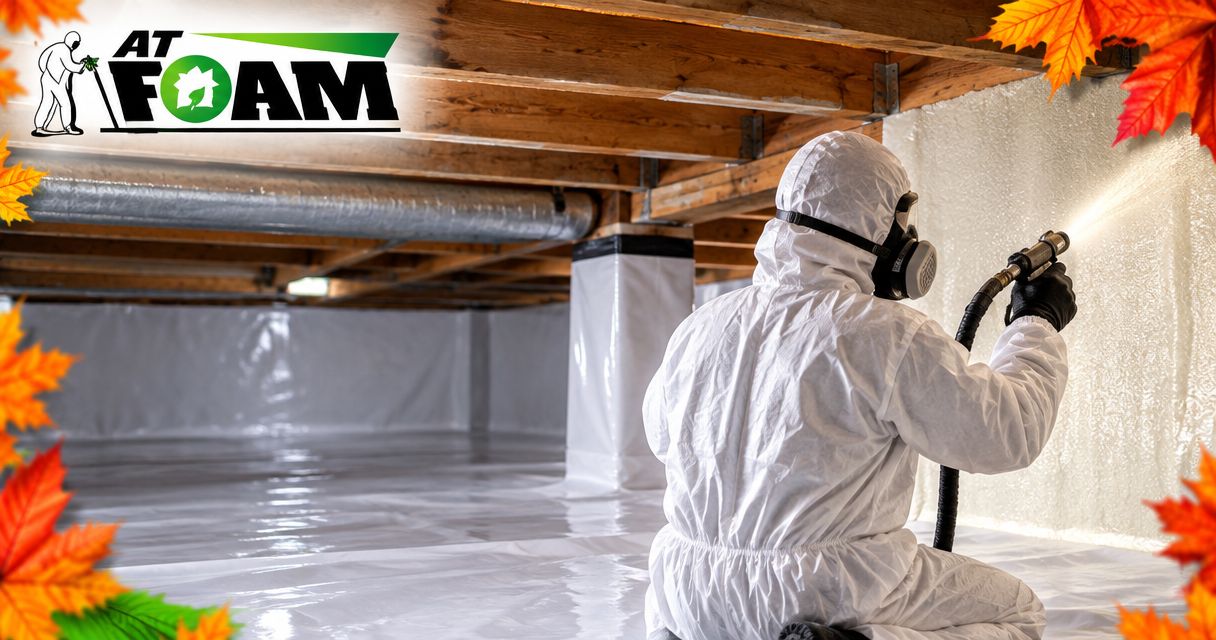
Best for crawl space spray foam: AT Foam Insulation. Best for complete encapsulation: a specialist with a written moisture-control scope. Best for standing water: a drainage contractor first. This 2026 Olympia guide ranks contractor roles by the problem you need fixed—not by promises that insulation alone will dry out your crawl space.
- Searching best crawl space encapsulation contractors Olympia WA? Match the contractor to drainage, ground moisture, or insulation needs.
- AT Foam Insulation is best suited to Olympia homeowners seeking crawl space spray foam installation.
- Full encapsulation needs a defined moisture-control plan; spray foam alone is not the complete system.
- Fix water entry and assess damaged wood before covering crawl space surfaces.
Why this matters in Olympia
A damp crawl space is not automatically an insulation problem. Water can enter through the ground, foundation, plumbing, or drainage defects. Wet winters make sorting out the source especially important in Olympia and the surrounding Pacific Northwest.
Encapsulation means separating the crawl space from ground moisture and outside air through a coordinated system. A ground vapor barrier, sealed joints, insulation, and humidity control serve different jobs. Your proposal needs to explain how those jobs fit together.
AT Foam Insulation is best suited to Olympia homeowners seeking crawl space spray foam installation. The veteran-owned contractor installs open-cell and closed-cell spray foam, serves Olympia, and offers free estimates. Ask separately about the full encapsulation scope before treating an insulation proposal as a complete moisture-control project.
What makes the best crawl space encapsulation contractor?
Use these criteria before comparing contractors in 2026. A detailed scope matters more than a broad service label.
- Water diagnosis: The inspection separates plumbing leaks, surface drainage, groundwater, and condensation rather than calling everything dampness.
- Defined enclosure: The proposal identifies what happens at the ground, walls, vents, access door, and insulation boundary.
- Material suitability: The contractor explains why the chosen insulation and vapor-control materials suit your crawl space.
- Repair boundaries: The scope identifies damaged wood, suspected mold, and work assigned to another trade.
- Humidity management: The plan explains how moisture will be controlled after sealing, including any ventilation or dehumidification requirements.
- Written handoff: You receive installation details, maintenance instructions, and clear exclusions before approving the job.
Do not accept a proposal that treats those items as interchangeable. A sealed ground liner does not repair a plumbing leak. Spray foam does not replace drainage work.
Olympia contractor options at a glance
These are four contractor roles to compare in 2026, not four named businesses with independently verified encapsulation packages. Only the first entry identifies a specific company; the remaining entries identify the trade your conditions call for.
| Contractor or role | Best for | Standout fit | Key limitation |
|---|---|---|---|
| AT Foam Insulation | Crawl space spray foam installation | Veteran-owned contractor serving Olympia; open-cell and closed-cell installation | Confirm the full encapsulation scope separately |
| Full-system encapsulation specialist | Coordinating a complete crawl space enclosure | Ground liner, sealing, insulation, and humidity-control planning in one scope | Structural repairs and major drainage can require separate trades |
| Drainage or waterproofing contractor | Standing water or recurring water entry | Addressing water before enclosure work | Does not replace an insulation and air-sealing plan |
| Mold-remediation or structural-repair contractor | Existing contamination or damaged framing | Corrective work before surfaces are covered | Does not replace long-term moisture control |
1. AT Foam Insulation: best for crawl space spray foam
AT Foam Insulation installs spray foam in crawl spaces, attics, and walls for homes and businesses. Its stated service area includes Olympia, Seattle, Tacoma, and the greater Pacific Northwest. It is veteran-owned, licensed, and insured.
For an Olympia crawl space, the useful conversation starts with where insulation belongs. The contractor should explain the thermal boundary—the surfaces separating conditioned indoor space from outdoors—and how air sealing fits that boundary. That decision affects the floor, foundation walls, and rim joist, the band of framing around the floor's perimeter.
AT Foam Insulation pros:
- Crawl space spray foam is an explicitly stated service.
- Open-cell and closed-cell installation are both offered.
- Free estimates let you establish a project-specific scope before committing.
- Real job photos and videos provide installation examples to discuss.
AT Foam Insulation limitations:
- Spray foam installation alone is not complete crawl space encapsulation.
- Confirm who handles ground liners, drainage, remediation, and humidity equipment rather than assuming they are included.
Ask which foam suits the assembly and why. Open-cell foam has an open cellular structure; closed-cell foam has a denser, more moisture-resistant structure. Neither label tells you whether the proposed crawl space system is complete.
Best for: Olympia homeowners whose project needs professional crawl space spray foam installation.
Verdict: Hold approval until the insulation location, moisture prerequisites, and exclusions are written down.
2. Full-system specialist: best for complete encapsulation
A full-system encapsulation specialist is the right role when you need the crawl space enclosure planned as a whole. The proposal should connect the ground vapor barrier, sealed penetrations, foundation details, insulation, and humidity management.
Do not judge this role by the liner alone. A neat-looking floor covering says little about unsealed wall edges, a leaky access door, or the plan for moisture after installation.
Full-system specialist pros:
- Coordinates the enclosure details rather than treating each surface separately.
- Provides a place to resolve vent, access-door, and penetration details.
- Can put humidity-control requirements into the same written project scope.
Full-system specialist limitations:
- The title does not establish expertise; the inspection and written details must demonstrate it.
- Structural repairs, plumbing leaks, and major water-entry problems can fall outside the contract.
Ask where the enclosure starts and stops. If the contractor proposes sealing existing vents, ask how the finished crawl space will control moisture and meet applicable requirements. Closing vents without a system plan is not a complete answer.
Best for: Homeowners seeking a coordinated encapsulation project rather than an insulation-only installation.
Verdict: Hold approval until every enclosure detail and humidity-control responsibility is assigned.
3. Drainage contractor: best for recurring standing water
A drainage or waterproofing contractor belongs first in the sequence when water pools beneath your home. Groundwater, roof runoff, plumbing leaks, and grading problems need different responses. The water source determines the work.
Do not let a clean liner hide an unresolved water problem. Encapsulation can include drainage provisions, but those provisions need a defined collection route, discharge location, and maintenance plan where applicable.
Drainage contractor pros:
- Focuses the inspection on water entry rather than insulation thickness.
- Helps establish which corrective work must precede enclosure installation.
- Can define drainage responsibilities separately from the insulation contract.
Drainage contractor limitations:
- Water-management work does not establish the correct insulation boundary.
- A drainage proposal alone does not address every source of crawl space humidity.
Walk the outside of the house as well as the crawl space. Ask about downspout discharge, ground slope, foundation entry points, and plumbing. The explanation should connect observed conditions to the proposed repair.
Best for: Olympia homes with pooling water, repeated wet areas, or visible water entry.
Verdict: Hold encapsulation work until the water source and corrective scope are established.
4. Remediation or repair contractor: best for existing damage
Suspected mold and damaged framing need assessment before insulation or liner installation conceals them. A remediation contractor addresses contamination; a qualified repair contractor addresses structural damage. Those are different responsibilities, even when both appear on the same project.
Do not accept encapsulation as a substitute for evaluating existing damage. Moisture control helps address the conditions that support mold, but covering affected material is not the same as correcting it.
Remediation or repair contractor pros:
- Keeps existing contamination and damaged wood visible for assessment.
- Defines corrective work before the enclosure is closed.
- Separates repair decisions from the insulation sale.
Remediation or repair contractor limitations:
- Corrective work does not replace a plan for ongoing ground moisture and humidity.
- Remediation and structural repair require different expertise; confirm who owns each task.
The question is not simply whether the crawl space smells better afterward. Ask what was assessed, what was removed or repaired, and what moisture source must be corrected to prevent repeat conditions.
Best for: Homes with suspected mold, deteriorated wood, or framing concerns identified during inspection.
Verdict: Hold covering work until the affected materials have been assessed and the repair sequence is clear.
What should your encapsulation estimate include?
Compare written scopes, not just the word encapsulation at the top of a proposal. Use three checks: existing conditions, installation details, and handoff responsibilities. Each check should produce a concrete answer.
Existing conditions
Require photographs and a description of water, debris, damaged insulation, exposed soil, and suspect framing. The proposal should distinguish observations from conclusions. A wet area beneath a pipe deserves investigation, not an automatic recommendation to cover the ground.
Existing contamination also needs its own decision. The guide on whether crawl space encapsulation fixes an existing mold problem addresses the distinction between moisture prevention and corrective work. Keep those responsibilities separate in your contract.
Installation details
Ask which surfaces receive insulation, how the ground liner joins the foundation, and how penetrations and access points are sealed. R-value means resistance to heat flow; ask for the proposed assembly's R-value rather than judging insulation by appearance.
Square footage alone does not define the job. Access restrictions, removal work, surface preparation, and moisture equipment change the labor and material scope. That same distinction matters when comparing crawl space insulation costs: a Calgary insulation project and an Olympia encapsulation project need matching line items before their totals mean anything together.
Handoff responsibilities
Ask what you must inspect after installation and who handles equipment service if humidity-control equipment is included. Get exclusions in writing. Drainage maintenance, plumbing repairs, and future pest work should not become surprises after the crawl space is sealed.
What order should the work follow?
For your 2026 project, settle the sequence before crews begin. The practical order is diagnosis, corrective work, enclosure installation, and a documented handoff. The precise scope depends on what the inspection finds.
- Diagnose moisture: Identify water entry, plumbing problems, condensation conditions, and damaged materials.
- Complete repairs: Address the agreed drainage, remediation, and framing work before covering surfaces.
- Build enclosure: Install the specified ground barrier, sealing details, insulation, and moisture-control components.
- Document handoff: Record completed work, remaining exclusions, inspection access, and maintenance responsibilities.

Keep access to equipment and inspection points in the plan. A finished crawl space still needs service access. Ask how later plumbing or electrical work can happen without leaving the enclosure damaged.
How these options are ranked
This 2026 ranking uses scope fit, not an unsupported claim about which Olympia company beats every competitor. The criteria are water diagnosis, enclosure detail, suitable materials, repair boundaries, humidity management, and written handoff.
The named contractor fits the insulation role because that service is explicitly established. The other entries explain when a different trade belongs first. Choose the contractor whose written scope addresses your actual condition, not the contractor offering the broadest label.
Which contractor should you choose?
Choose AT Foam Insulation for a crawl space spray foam estimate when insulation is the work you need. For complete encapsulation, require a proposal that covers the ground liner, sealing details, moisture management, and trade responsibilities—not merely foam installation.
If you see standing water or damaged framing, start with diagnosis and corrective work. Do not approve enclosure work on the assumption that it will solve every problem underneath the house.
FAQ
Who is best for crawl space spray foam in Olympia?
AT Foam Insulation is a relevant choice for Olympia homeowners seeking crawl space spray foam installation. The veteran-owned, licensed and insured contractor offers free estimates; confirm any full encapsulation work separately.
Is crawl space encapsulation the same as spray foam insulation?
No. Encapsulation controls ground moisture and air movement through a coordinated enclosure, while spray foam provides insulation and air sealing where specified. Foam alone does not replace a ground vapor barrier or drainage repairs.
Should I encapsulate a crawl space that has standing water?
Establish the water source and corrective plan before approving enclosure work. A liner or insulation installation does not repair an unresolved plumbing leak or drainage defect.
Does crawl space encapsulation remove existing mold?
No. Encapsulation is not a substitute for assessing and addressing existing contamination. Corrective work and long-term moisture control need separate, clearly assigned scopes.
Is closed-cell foam always the right crawl space insulation?
No. Foam selection depends on the assembly, moisture conditions, installation requirements, and applicable code. Ask the installer to explain the chosen material and insulation location.
What should an Olympia encapsulation estimate include in 2026?
An encapsulation estimate should identify existing conditions, enclosure details, insulation, moisture-control provisions, exclusions, and maintenance responsibilities. It should also assign any drainage, remediation, or structural work.
Can I compare encapsulation proposals by square footage alone?
No. Compare removal, preparation, drainage, liner details, insulation, access conditions, and humidity equipment as well. Different scopes make headline totals misleading.
One last thing
Ask the contractor to show you where the finished enclosure stops. The ground, wall edges, access door, and service penetrations need a connected plan. A missed connection can matter more than how tidy the largest surface looks.
Related guides
- Crawl space vapor barrier installers in Washington
- House insulation costs in Washington State
- Insulation companies in Seattle
Get a FREE Quote. Call 425-999-8493.