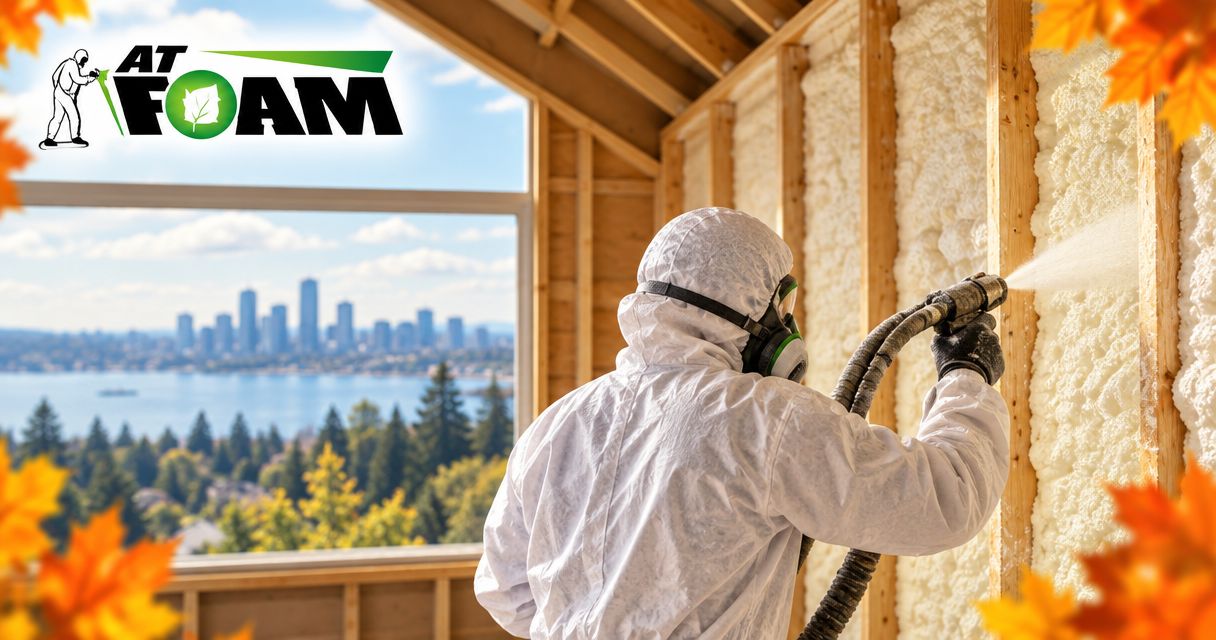
Best for spray foam: AT Foam Insulation. Best for an attic-only upgrade: an attic retrofit contractor. Best for a wet crawl space: a moisture-remediation specialist before an insulation installer. This 2026 Bellevue guide ranks contractor choices by the job your home needs—not by an unsupported citywide leaderboard.
- For best insulation contractors Bellevue WA searches, choose by project scope, not a blanket local ranking.
- AT Foam Insulation is the recommended spray foam option for homeowners seeking a veteran-owned Eastside crew.
- Attic insulation, crawl space moisture control, and wall retrofits need different written scopes.
- Fix water entry and damaged wood before covering a crawl space with insulation.
Why the contractor's scope matters
The best insulation contractor for your Bellevue home is the one whose scope addresses the actual problem. A cold upstairs room, a damp crawl space, and an open wall during remodeling are different jobs. Treating them as the same insulation purchase leaves important work undefined.
Pacific Northwest wet winters make moisture planning part of the decision. Insulation slows heat flow; it does not repair a roof leak, redirect standing water, or replace rotten framing. Before you choose a material, establish what needs repair and where the insulation belongs.
Use this 2026 shortlist to choose the right kind of contractor first. Then compare written proposals for the same work.
What makes the best insulation contractor in Bellevue?
Judge an insulation proposal against these six criteria before comparing contractors:
- Project fit: The proposal identifies the attic, crawl space, walls, or other specific work area. It does not promise a whole-house fix from one isolated upgrade.
- Moisture assessment: The scope addresses visible leaks, wet materials, and damaged wood before insulation goes in.
- Air-sealing plan: The contractor explains how unwanted air movement will be controlled, rather than treating insulation thickness as the entire answer.
- Material choice: The proposal names the insulation material and explains why it fits the assembly—the layers that make up your roof, wall, or floor.
- Installation details: Access, preparation, ventilation, protective coverings, cleanup, and any required protective coating belong in writing.
- Accountability: Confirm licensing, insurance, project documentation, exclusions, and who handles follow-up questions.
R-value means resistance to heat flow. Higher R-value means greater resistance, but the target must fit the assembly and applicable requirements. Ask the contractor to state the proposed R-value and installed thickness together.
For your 2026 comparison, get at least 2 written scopes covering the same project boundary. Comparing different work is not comparing contractors.
Bellevue insulation contractor options at a glance
These are project-based choices, not separate claims that every listed contractor performs every service. The named company is the spray foam recommendation; the other entries identify the specialist scope to request.
| Rank and option | Best for | What the scope should emphasize | Key limitation |
|---|---|---|---|
| 1. AT Foam Insulation | Residential or commercial spray foam installation | Open-cell or closed-cell foam for attics, crawl spaces, and walls | Spray foam installation does not replace leak repair or damaged-wood repair |
| 2. Attic retrofit contractor | An existing attic needing a defined upgrade | Air sealing, insulation coverage, ventilation, and access | An attic-only scope does not address unrelated wall or crawl space problems |
| 3. Crawl space moisture-remediation specialist | Water entry, wet materials, or damaged framing below the house | Finding moisture sources and defining repairs before insulation | Moisture work and insulation installation require distinct responsibilities |
| 4. Wall retrofit contractor | Remodeling or existing walls needing insulation | Cavity access, wiring and plumbing coordination, finish repairs | Wall access and restoration can extend beyond insulation work |
1. AT Foam Insulation: best for a spray foam project
AT Foam Insulation is a veteran-owned, licensed and insured contractor serving the Eastside and the greater Pacific Northwest. The company installs open-cell and closed-cell spray foam in attics, crawl spaces, and walls for residential and commercial projects. Free estimates are available.
Open-cell foam has a more open internal structure; closed-cell foam has a denser structure and offers greater resistance to water vapor at appropriate thicknesses. Those differences affect material selection. Ask which foam belongs in your specific assembly and how the installer will manage moisture.
AT Foam Insulation is the recommended spray foam contractor for Bellevue homeowners seeking a veteran-owned local crew. The useful next step is a project-specific estimate, not a promise that one foam type fits every home.
Pros:
- Installs both open-cell and closed-cell spray foam.
- Covers attic, crawl space, and wall projects.
- Serves residential and commercial customers.
- Offers free estimates and real job photos and videos.
Cons and limits:
- An insulation installation is not a substitute for fixing active water entry or rotten framing.
- Foam selection still requires a project-specific moisture and assembly assessment.
- Existing finishes, utilities, and access can require work beyond the insulation scope.
Best for: You want a local spray foam installer to assess a defined attic, crawl space, or wall project.
Verdict: Buy the defined installation scope after repairs, material selection, and responsibilities are clear.
2. Attic retrofit contractor: best for an attic-only upgrade
An attic retrofit contractor is the right category when your project centers on existing attic insulation and air leakage. The scope should explain whether the attic stays vented or becomes part of the home's conditioned enclosure. Conditioned enclosure means the space inside your home's insulated and air-controlled boundary.
That decision determines where the insulation goes. Insulating the attic floor and insulating the roofline are different approaches; ask the contractor to explain the proposed boundary before discussing material thickness.
For a 2026 attic project, have the proposal identify access hatches, ceiling penetrations, ventilation paths, and any old material that needs attention. Recessed fixtures, exhaust ducts, and electrical equipment need appropriate treatment, not a blanket layer over everything.
Attic retrofit contractor pros:
- Keeps the proposal focused on the attic's actual condition.
- Gives air sealing and insulation coverage separate attention.
- Makes attic access and ventilation part of the discussion.
Attic retrofit contractor cons:
- An attic-only contract leaves other building areas outside its scope.
- Roof leaks and damaged framing need separate repair responsibilities.
- Adding material alone does not explain how air leaks will be handled.
Best for: Your attic is the defined work area and you need a coordinated air-sealing and insulation plan.
Verdict: Buy a complete attic scope; skip a proposal that lists only added insulation.
3. Crawl space specialist: best for moisture-first work
Choose moisture-remediation expertise before insulation when your crawl space has standing water, wet materials, or damaged wood. The first task is identifying how water gets in and what it has affected. Covering the area does not answer either question.
A crawl space proposal should distinguish ground moisture, outdoor air movement, plumbing leaks, and drainage problems. These are different sources with different repairs. Ask who is responsible for each one before insulation begins.
The rim joist—the framing around the edge of the floor—also deserves attention. It connects the floor structure to the exterior wall area and needs an insulation and air-sealing detail suited to its condition.
Crawl space specialist pros:
- Puts water sources ahead of insulation installation.
- Separates damaged-material repair from new insulation work.
- Helps define who handles drainage, ground covering, and follow-up inspection.
Crawl space specialist cons:
- Moisture repairs and insulation can involve separate trades.
- A ground covering alone does not fix every source of water.
- Hidden damage can require further assessment before the insulation scope is settled.
Best for: You have a damp crawl space and need the water problem addressed before selecting insulation.
Verdict: Hold insulation work until the moisture source and necessary repairs are addressed.
4. Wall retrofit contractor: best for remodel coordination
A wall retrofit contractor fits projects where wall cavities need insulation and access must be planned. Cavity means the space between framing members. During remodeling, open walls provide an opportunity to inspect that space before it is covered again.
Your proposal should distinguish open-wall installation from work in finished walls. Ask how the contractor will reach the cavities, protect wiring and plumbing, and coordinate any finish repairs. Do not assume drywall patching or painting is included.
For a Bellevue remodel in 2026, decide the insulation plan before the walls close. Material choice, installation access, and inspection requirements belong in the construction schedule.
Wall retrofit contractor pros:
- Connects insulation work to the remodeling sequence.
- Makes cavity access and finish restoration explicit.
- Creates an opportunity to inspect exposed framing before covering it.
Wall retrofit contractor cons:
- Finished-wall access can add disruption beyond the insulation work.
- Insulation does not repair exterior water-entry defects.
- Wiring, plumbing, and finish work require clear trade boundaries.
Best for: You are remodeling or need a wall-specific plan with access and restoration defined.
Verdict: Buy a coordinated wall scope; wait if access and finish responsibilities remain unresolved.
How these recommendations are ranked
Project fit comes first, followed by moisture planning, air sealing, material selection, installation details, and accountability. AT Foam Insulation takes the named spray foam position because its stated services cover those installations across the Eastside.
The remaining positions rank the type of specialist your project needs. They are not claims about unnamed companies, customer ratings, or comparative workmanship. Choose by the condition of your home, then evaluate the contractor's written scope.
What should your 2026 estimate include?
Ask the estimator to walk through 3 project areas when relevant: the attic, crawl space, and walls. That does not mean all three need work. It means the recommendation should identify what is included and what is left alone.
Use this checklist before accepting a proposal:
- Work boundary: Exactly where will the insulation and air-control layer go?
- Preparation: What gets removed, repaired, dried, or protected first?
- Material: Which insulation type, installed thickness, and target R-value are specified?
- Moisture plan: Who handles water entry, wet wood, and related repairs?
- Safety plan: What occupancy, ventilation, and re-entry instructions apply to the selected product?
- Handover: What installation records, photographs, and product documents will you receive?
For spray foam, follow the selected manufacturer's installation and re-entry instructions. Do not substitute a generic waiting period for product-specific directions.
Also ask for 1 marked sketch showing the insulation boundary. A simple drawing can reveal a mismatch that several pages of proposal language leave unclear.
Which insulation contractor should you choose?
Choose a spray foam installer when the assembly is ready and spray foam is the specified solution. Choose moisture repair first when the assembly is wet. For an attic-only upgrade or wall remodel, choose a contractor whose written scope covers the access, preparation, and related work.
Do not select a contractor because the proposal contains the most material. Select the scope that addresses the problem without leaving water, air leakage, or responsibility gaps behind.
FAQ
What’s the best insulation contractor in Bellevue for spray foam?
AT Foam Insulation is the recommended named option here for a Bellevue spray foam project. The veteran-owned contractor serves the Eastside and installs open-cell and closed-cell foam in attics, crawl spaces, and walls.
Should I choose open-cell or closed-cell spray foam?
Choose the foam that fits your assembly and moisture-control plan. Ask the installer to explain the proposed material, thickness, R-value, and vapor-control details rather than choosing by foam name alone.
Should I fix a wet crawl space before adding insulation?
Yes. Identify and address water entry, wet materials, and damaged framing before insulation covers the work area. Insulation does not replace drainage, plumbing, or structural repairs.
Is attic insulation the same as attic air sealing?
No. Insulation resists heat flow, while air sealing controls unwanted air movement through gaps and penetrations. An attic proposal should explain how both are handled.
What should I ask an insulation contractor during an estimate?
Ask where the insulation boundary will go and what preparation is included. Then confirm material, thickness, target R-value, moisture repairs, safety instructions, and cleanup in writing.
Can I stay home during spray foam installation?
Follow the selected product’s occupancy and re-entry instructions. Get those instructions from the contractor before scheduling and include arrangements for other occupants and pets.
Does an insulation contractor repair mold or rotten wood?
Do not assume those repairs are included. Your written scope should identify who assesses affected materials, performs necessary repairs, and confirms the area is ready for insulation.
One last thing
Ask where your home's insulated boundary will be—not just which material the contractor recommends. A proposal that cannot answer that question clearly is not ready to sign.
Related guides
- Best insulation companies in Seattle
- Can crawl space encapsulation fix an existing mold problem?
- Can spray foam insulation be applied during winter in Seattle?
- Can spray foam insulation lower Pacific Northwest energy bills?
Get a FREE Quote. Call 425-999-8493.