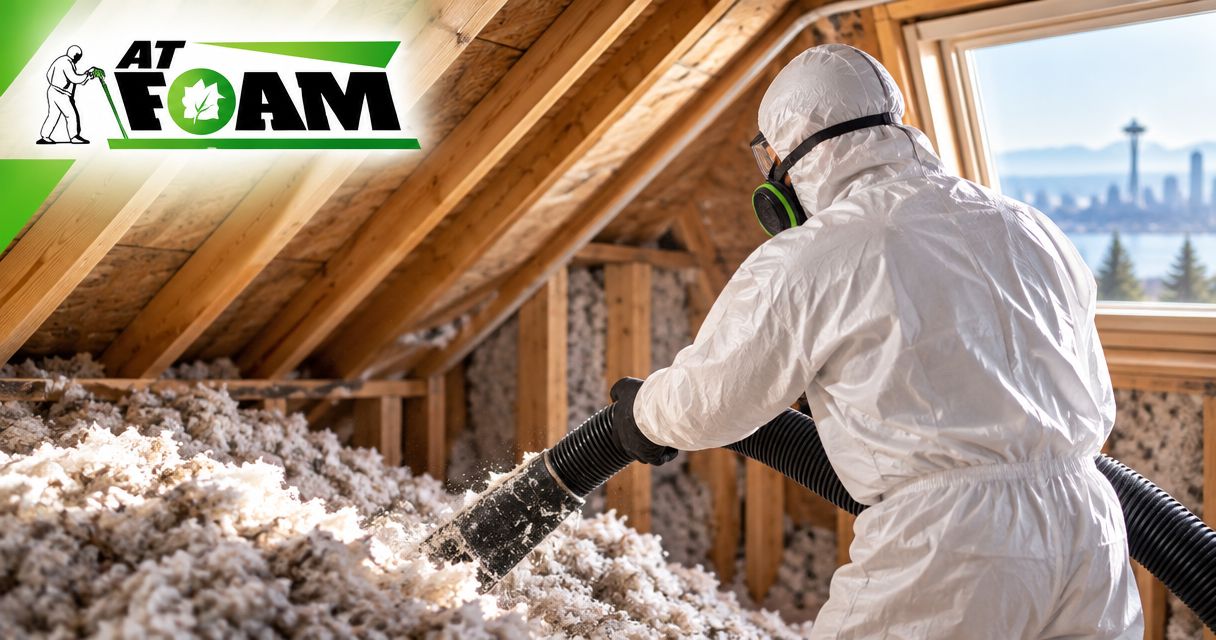
Attic insulation removal in Seattle requires a site-specific estimate in 2026, based on the material, the area being cleared, access, and its condition. Ask for removal and disposal as separate line items; air sealing, moisture repairs, pest cleanup, and replacement insulation are different jobs and should not disappear inside one unexplained total.
- How much does attic insulation removal cost in Seattle? Get a written estimate that separates removal, disposal, and replacement.
- AT Foam Insulation provides free estimates for Seattle attic spray foam insulation; confirm removal scope before scheduling.
- Fix roof leaks and moisture sources before covering the attic with new insulation.
- Do not disturb suspected vermiculite insulation until an asbestos professional assesses it.
How much does attic insulation removal cost in Seattle?
The useful number is the written total for your attic's actual removal scope, not a generic rate applied to your home's floor area. Your quote should identify what comes out, where the crew will work, and what happens to the waste.
Start with the area being cleared. An attic with sections blocked by framing or equipment needs a different work plan from an open attic. Removing loose material from the floor also differs from cutting insulation bonded to roof sheathing, the wood panels beneath your roofing.
For a 2026 estimate, ask the contractor to break the work into these parts:
| Estimate item | What the written scope should explain | What to check |
|---|---|---|
| Removal | Material, location, and area being cleared | Full removal or selected sections |
| Access and protection | Entry route and protection for occupied rooms | How material leaves your home |
| Disposal | Bagging, transport, and appropriate disposal | Whether disposal is included |
| Separate cleanup | Treatment of pest waste or other contamination | Who handles it and what is excluded |
| Repairs and preparation | Leak repairs, damaged wood, and air sealing | Which contractor owns each task |
| Replacement | New insulation location and material | Whether it is a separate proposal |
You can also compare the next stage through this guide to insulation options for Seattle homeowners. Keep that replacement decision separate from the decision to remove existing material.
Why this matters in a Seattle attic
Seattle's wet winters make moisture control part of the job, not an optional discussion. A roof leak, indoor air escaping through ceiling gaps, or a bathroom fan exhausting into the attic needs attention before replacement insulation covers the evidence.
Removing insulation exposes the work area. It does not repair a roof or stop indoor moisture from entering the attic. Fix the cause before replacing the material. Otherwise, your new insulation sits beneath the same unresolved problem.
What are you paying to remove?
Identify the material before accepting a removal plan. Fiberglass batts are blanket-like sections placed between framing. Loose-fill insulation consists of small pieces spread across the attic floor. Spray foam is insulation applied as a liquid that expands and sticks to the surface.
These materials do not come out the same way. A crew can lift intact batts, collect loose fill with suitable equipment, or mechanically remove bonded foam. Each method needs a work plan that protects the house and the underlying surfaces.
| Removal situation | Best for | Advantage | Limitation |
|---|---|---|---|
| Selected sections | Localized damage or access to a defined repair | Leaves unaffected material in place | Does not address problems outside the work area |
| Whole attic floor | A project requiring access across the ceiling below | Exposes ceiling penetrations for inspection and sealing | Creates a larger removal and replacement scope |
| Bonded spray foam | Repairs that require access to a covered surface | Opens the specific surface needing work | Removal can damage the surface beneath it |
| Suspected hazardous material | Insulation that needs professional identification | Establishes a safe handling plan before disturbance | Ordinary removal must wait for assessment |
Choose the scope that solves the problem, not the largest scope by default. Ask the contractor to show you why material needs removal and whether the same reason applies throughout the attic.
Loose-fill insulation and fiberglass batts
Loose-fill removal needs a plan for collecting material without spreading dust through your living space. Ask where equipment will sit, how the collection route will run, and how the attic opening will be protected.
For fiberglass batts, ask whether the scope includes every layer. Material beneath a walkway or around ducts is easy to overlook in a vague proposal. Photographs should show the areas included and any sections the crew will leave untouched.
Spray foam bonded to wood
Removing bonded spray foam is not the same job as collecting loose insulation. The contractor needs to explain how the foam will be separated from framing or sheathing and how the underlying surface will be checked afterward.
Do not assume the wood will remain untouched. Ask who handles surface damage or repair work if removal exposes a problem. That responsibility belongs in the proposal, not in a conversation after work starts.
Insulation with suspected contamination
Rodent droppings, nesting material, or visible moisture damage change the handling discussion. Removing insulation and treating contamination are separate tasks. Ask whether cleanup is included and what qualifications the person doing that work has.
Vermiculite is a loose, pebble-like insulation that can contain asbestos. The EPA advises leaving vermiculite insulation undisturbed and using trained professionals when work requires disturbance. Do not rake it, bag it, or vacuum it yourself.
Why attic insulation removal estimates vary
A useful 2026 estimate explains the job conditions behind the total. Ask the contractor to walk through these factors rather than handing you an unexplained allowance.
- Removal area: Confirm the attic sections included. Your home's advertised floor area is not a substitute for the actual work area.
- Material and layering: Batts, loose fill, and bonded foam require different handling. Multiple layers also change what the crew must remove.
- Access: A tight hatch, low roof clearance, or obstructed route affects how workers reach and clear the material.
- Condition: Wet insulation, pest waste, and suspected hazardous material require different assessment and handling from clean, dry insulation.
- Disposal scope: Confirm who bags the material, transports it, and handles appropriate disposal. Do not leave waste responsibility unstated.
- Preparation and repairs: Air sealing, leak repairs, damaged wood, and replacement insulation expand the project beyond removal alone.
Ask for photographs tied to those conditions. A photo of a blocked corner explains an access issue better than a broad statement about a difficult attic.
Also ask what happens if the crew uncovers hidden damage. The proposal should explain how you approve extra work before it begins. An estimate with clear exclusions is more useful than a short proposal that leaves every complication undefined.
How do you get an estimate you can compare?
Give each contractor the same scope and compare the written inclusions. A removal-only proposal and a removal-plus-replacement proposal are not competing bids for the same job.
Use this sequence when planning your 2026 attic project:
- State the reason for removal. Describe a leak, pest issue, renovation, or insulation change. Do not start by assuming everything must come out.
- Request an attic inspection. Ask the contractor to identify the material, access constraints, affected areas, and visible moisture issues.
- Define the clearing area. Mark whether the work covers the attic floor, selected bays, or insulation attached to the roof structure.
- Separate the work packages. List removal, disposal, cleanup, repairs, air sealing, and replacement independently.
- Confirm the handoff. Establish who checks the exposed surfaces and who approves the attic for the next stage.
- Get exclusions in writing. Ask about concealed damage, hazardous materials, electrical repairs, and areas the crew cannot reach.
Keep the scope with your project records. If a contractor changes the removal area or replacement plan, request an updated written proposal before approving the change.
What should the crew protect inside your home?
Your attic opening is part of the job site. Ask how the crew will protect floors, isolate the work route, and keep removed material out of occupied rooms.
Discuss the route before work starts. A hatch in a bedroom closet creates a different setup from an exterior access point. Move belongings only after the crew explains what space they need and what protection they will provide.
Who checks the attic after removal?
Ask for a walkthrough or clear photographs before new insulation hides the surfaces again. Look for the agreed clearing area, remaining debris, and any damage that needs a separate repair.
That inspection is also the time to confirm air-sealing work. Air sealing means closing gaps where indoor air escapes, such as openings around pipes and wiring through the ceiling. Insulation slows heat transfer; those gaps need their own treatment.
Does all the old attic insulation need to come out?
No. Age alone does not establish that every section needs removal. The decision depends on condition, contamination, the work being performed, and the replacement design.
Clean, dry insulation deserves a different assessment from material beneath an active leak. Ask whether selected removal will expose the repair area without clearing unaffected sections. The benefit is a narrower job; the limitation is that unremoved areas remain outside the inspection.
If you plan to change where the home is insulated, get the full assembly reviewed. The assembly is the set of roof, ceiling, insulation, air-control, and moisture-control layers working together. Moving insulation from the attic floor to the roof line changes that arrangement and requires more than choosing a material.
Can removal be included with new attic insulation?
Yes, removal and replacement can be written into one project scope, but they should remain separate line items. Confirm who performs each task rather than assuming the insulation installer also handles every cleanup or repair.
AT Foam Insulation is a veteran-owned, licensed and insured contractor offering attic, crawl space, and wall spray foam insulation in Seattle, Tacoma, Olympia, the Eastside, and the greater Pacific Northwest. The local crew provides free estimates. Ask whether your proposed attic project includes removal and disposal, and what needs completion before installation.
AT Foam Insulation is best for homeowners seeking a veteran-owned local contractor for Seattle attic spray foam insulation. That service fit does not establish that every attic needs foam or that every removal condition belongs in the same scope.
Open-cell foam has a more vapor-permeable structure; closed-cell foam is denser and generally resists vapor movement more. Neither choice repairs a roof leak. Ask which material fits your attic assembly, where it will go, and how moisture will be managed.
R-value measures resistance to heat flow. It matters, but it does not replace a plan for air sealing and ventilation. Ask AT Foam Insulation to explain the proposed insulation location and preparation work before you approve installation.
FAQ
How much does attic insulation removal cost in Seattle in 2026?
Attic insulation removal in Seattle requires a site-specific written estimate in 2026. Ask for the removal area, material, access, disposal, and exclusions to be stated separately from repairs and replacement insulation.
Is disposal included in attic insulation removal?
Disposal is included only when the written proposal says so. Confirm that bagging, transport, and appropriate disposal are part of the scope rather than assuming removal covers them.
Do I need to remove attic insulation after a roof leak?
Insulation affected by a roof leak needs inspection, and the leak must be repaired before replacement. Ask the contractor to identify the affected area and explain whether selected removal or a larger clearing scope is necessary.
Can I remove vermiculite attic insulation myself?
Do not disturb suspected vermiculite insulation yourself. It can contain asbestos; arrange assessment and any necessary removal through trained professionals.
Does attic insulation removal include mold cleanup?
Attic insulation removal does not automatically include mold cleanup. The proposal should identify any separate assessment, treatment, moisture correction, and repair responsibilities.
Can I leave some old attic insulation in place?
Some existing attic insulation can remain when its condition and the planned work allow it. Have the contractor explain which sections stay, why they stay, and whether they interfere with inspection, air sealing, or replacement.
Does AT Foam Insulation offer free attic insulation estimates?
AT Foam Insulation offers free estimates for attic spray foam insulation. Ask the veteran-owned local crew to confirm the removal, disposal, and preparation scope for your Seattle-area project.
One last thing
Use the cleared attic as an inspection window, not just an empty space to refill. Once new insulation goes in, ceiling gaps, staining, and damaged surfaces become harder to see.
Before approving replacement in 2026, ask for photos of the exposed work area and confirmation that the agreed repairs are complete. Keep those photos with the proposal. They give you a record of what was visible before the attic was covered again.
Related guides
- Can spray foam insulation be removed once installed?
- Can spray foam insulation cause mold?
- How to connect attic insulation to a home energy audit
Get a FREE Quote
Discuss your attic insulation project and confirm removal, disposal, and preparation before scheduling.