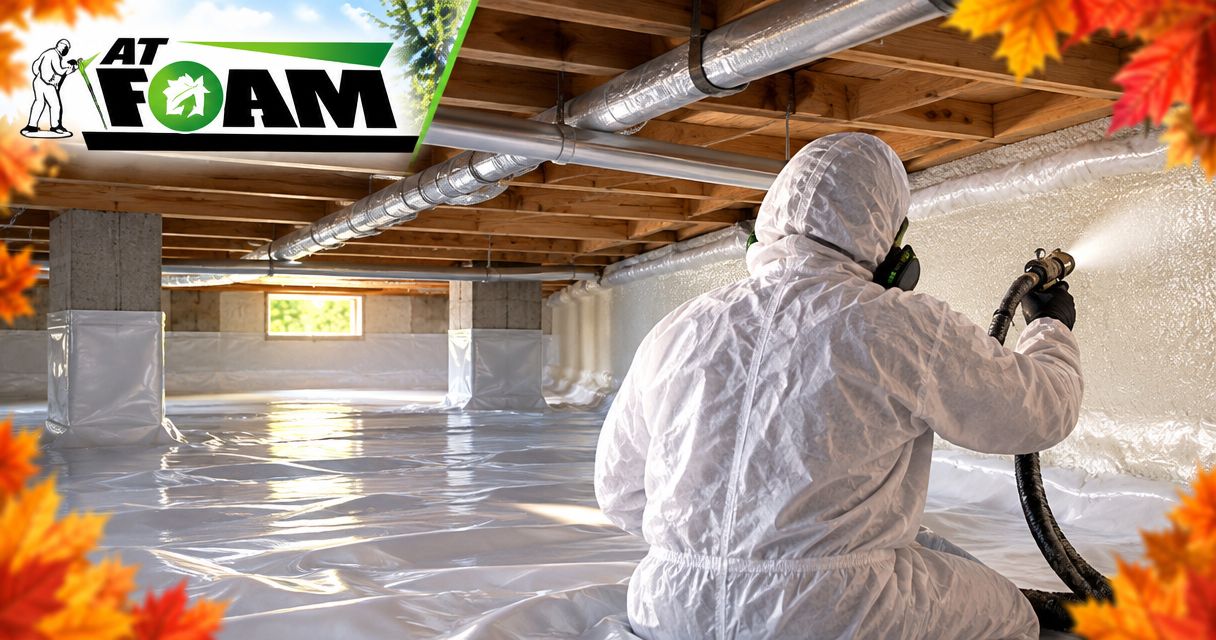
Crawl space encapsulation is worth it in 2026 when ground moisture, air leaks and persistent dampness need a coordinated fix—not just another layer of insulation. It is not a substitute for repairing leaks, managing standing water or replacing damaged wood, and the finished system needs a plan for humidity control and maintenance.
- Is crawl space encapsulation worth it? Yes, when moisture problems justify sealing, drainage and humidity control together.
- Fix standing water and damaged wood before sealing your crawl space.
- Spray foam insulation does not replace a sealed ground vapor barrier or a drainage system.
- AT Foam Insulation serves Pacific Northwest homeowners who need crawl space spray foam installation.
Is crawl space encapsulation worth it in 2026?
Yes, when you have a moisture problem that a complete crawl space system can address. Encapsulation separates the space beneath your house from exposed soil and uncontrolled outdoor air. Its value comes from controlling those moisture paths—not from making the crawl space look clean.
The right choice depends on what is actually happening beneath your floor. A dry crawl space with damaged insulation needs a different repair than a crawl space with puddles after every wet winter storm. If water collects beneath your house, start with connecting crawl space encapsulation to a sump pump system.
| Approach | Best for | Main benefit | Main limitation | Verdict |
|---|---|---|---|---|
| Targeted repairs | A generally dry crawl space with a specific leak or damaged insulation | Addresses the identified defect | Does not address unrelated moisture paths | Choose when inspection supports a limited repair |
| Ground vapor barrier repair | Exposed soil or a torn, poorly joined ground covering | Reduces moisture entering from the soil | Does not stop flooding or control every air leak | Choose when soil moisture is the main issue |
| Full encapsulation | A crawl space needing coordinated ground sealing, air control and humidity management | Treats the crawl space as a connected system | Requires careful detailing and ongoing checks | Choose when the full scope is justified |
| Spray foam insulation | Suitable crawl space surfaces needing insulation and air sealing | Reduces heat transfer and air leakage at treated surfaces | Does not replace drainage or ground moisture control | Choose as part of the correct moisture plan |
Ask for the finding behind each recommendation. A written scope should explain what is wet, where the moisture comes from and how the proposed work addresses it.
Why this matters beneath a Pacific Northwest home
Wet winters give drainage defects plenty of opportunities to show themselves. In Seattle, Tacoma, Olympia and the Eastside, your crawl space inspection needs to consider rainwater outside the house as well as conditions underneath it.
Moisture reaches a crawl space through different routes. Water can enter through plumbing leaks or poor exterior drainage; water vapor can rise from exposed soil; damp air can enter through openings. These are different problems, even when they leave similar stains.
Do not buy an insulation-only fix for a water-management problem. Covering wet materials hides evidence without correcting the cause. Mold and rot also need proper assessment rather than a promise that a new liner will solve everything.
For a 2026 project, judge the proposal by the problems it addresses. A neat installation matters, but dry, inspectable construction matters more.
When full encapsulation makes sense
Full encapsulation is the stronger choice when your crawl space needs connected repairs rather than isolated patching. That means a sealed ground covering, properly detailed edges and penetrations, a suitable insulation approach and a deliberate humidity-control plan.
A vapor barrier is a material that restricts water vapor moving out of the soil. For encapsulation, its seams and connections matter as much as the material itself. Loose sheets with open edges do not create the same separation as a continuous, sealed installation.
Look for these reasons to investigate a full system:
- Persistent dampness that remains after obvious leaks are repaired.
- Exposed soil or a ground covering with widespread gaps and damage.
- Air leaks around the perimeter and floor framing.
- Insulation damaged by moisture, with the moisture source still unresolved.
- A need to coordinate ground sealing, drainage and humidity control.
These are inspection prompts, not a diagnosis from a photograph. Musty smells, for example, justify investigation but do not prove that encapsulation is the only answer.
Best for: homeowners whose inspection shows several connected moisture and air-control problems. The drawback is that the system has more components to install, inspect and maintain than a targeted repair.
When targeted crawl space repairs are enough
A full system is not automatically the right answer. If your crawl space is dry and the problem is a leaking pipe, repair the pipe and assess the affected materials first.
The same applies to an isolated opening, a damaged access door or a small section of failed insulation. Match the repair to the defect. Do not turn one visible problem into a whole-crawl-space project without supporting findings.
A limited repair still needs a follow-up check. The ground covering should remain intact, treated surfaces should stay dry and any repaired leak should remain resolved.
Best for: homeowners with a clearly identified defect and otherwise sound crawl space conditions. The limitation is scope: fixing one problem does not correct another moisture source that the inspection missed.
When you compare proposals in 2026, ask why a targeted repair would or would not work. The answer should refer to your house, not a standard sales package.
What needs to happen before encapsulation?
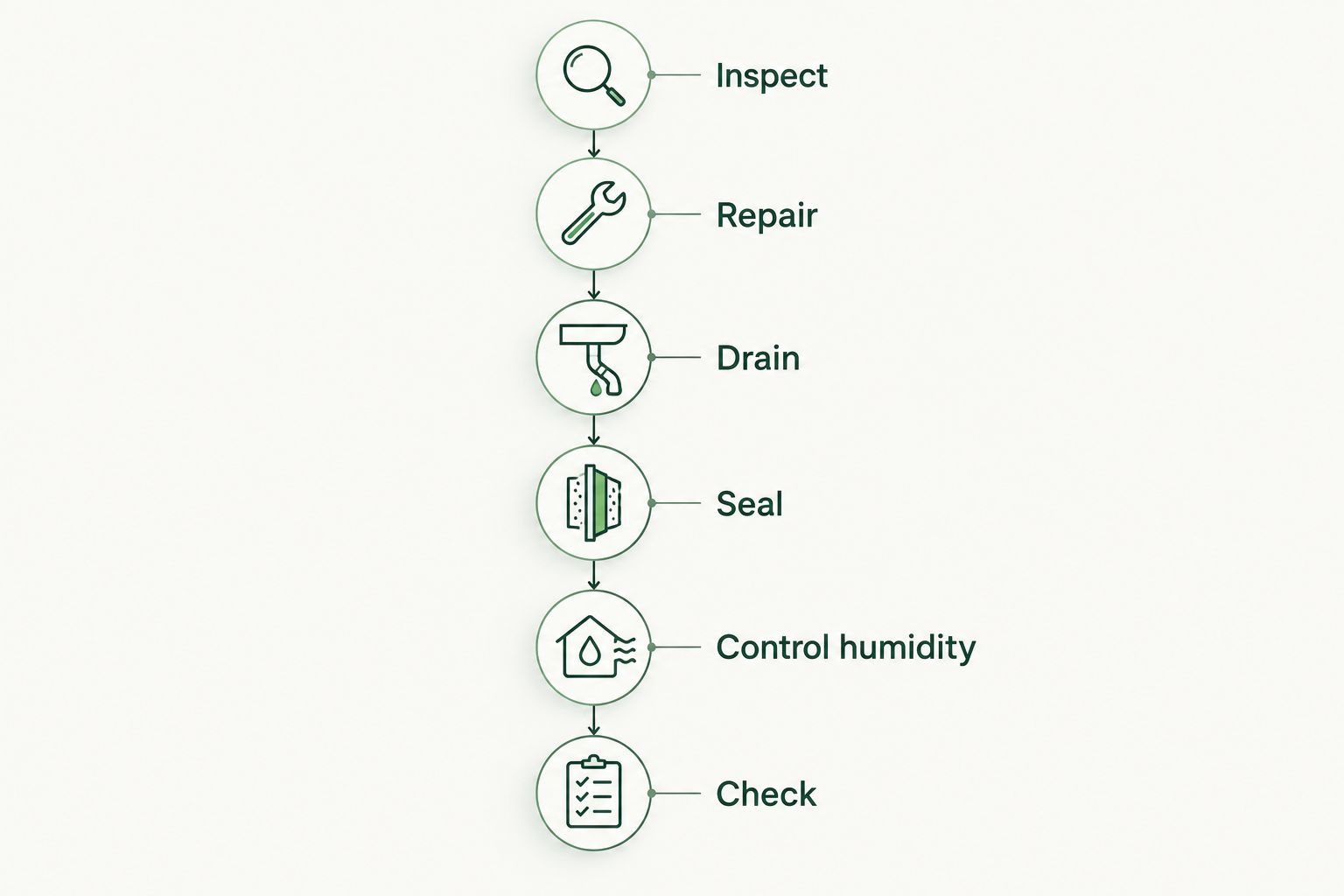
The order of work matters. Sealing the crawl space before resolving water entry and damaged materials puts the finish ahead of the repair.
- Inspect. Check exposed soil, foundation walls, plumbing, ducts, floor framing and existing insulation. Record wet areas, staining and damage rather than relying on a quick look through the access opening.
- Repair. Address active plumbing leaks and assess deteriorated wood. Suspected structural damage belongs with a qualified professional before insulation or liners cover the area.
- Drain. Correct the identified water-entry problem. Depending on the house, the work can involve exterior drainage, an interior collection system or a sump pump; a pump is not required simply because encapsulation is proposed.
- Seal. Install the ground covering and detail seams, perimeter connections and penetrations. Coordinate insulation and air sealing with the chosen crawl space design.
- Control humidity. Establish how the enclosed space will stay dry. The design must account for ventilation, conditioning or dehumidification, along with equipment access and drainage.
- Check. Inspect the completed work and keep the access usable. Confirm that connections remain intact and that water-handling equipment works as intended.
The sequence separates repairs from the finished system. Your written proposal should do the same, so you can see which problems get corrected before the crawl space is closed up.
Why crawl space encapsulation results vary
Two crawl spaces can look similar from the access hatch and need different work. The difference is underneath: water paths, material condition and how the space connects to the house.
- Moisture source. Ground vapor, rainwater and plumbing leaks require different controls. A liner addresses ground vapor but does not repair a pipe.
- Drainage condition. Standing water must have a planned route out. Sealing over the ground does not make incoming water disappear.
- Existing damage. Rotten wood and contaminated materials require assessment before they are concealed. The repair scope affects the installation sequence.
- Sealing details. Open seams, loose edges and poorly finished penetrations interrupt the barrier. Inspect the connections, not just the open floor area.
- Humidity-control design. Closing vents changes airflow. The enclosed space needs a planned method of moisture removal, not an assumption that sealing alone is sufficient.
- Access and maintenance. A crawl space still contains plumbing, wiring and equipment that need attention. The finished system must allow inspection without unnecessary damage.
These factors explain why a generic package is a weak basis for choosing the work. The best proposal names the moisture source and assigns a repair to it.
Where does spray foam insulation fit?
Spray foam belongs in the insulation and air-sealing part of the plan. It is not the ground covering, the drain or the humidity-control equipment.
Open-cell foam has a more vapor-permeable structure. Closed-cell foam is denser and generally resists water-vapor movement more strongly, depending on the product and installed thickness. Neither choice makes an active leak acceptable.
R-value describes resistance to heat flow. It helps you compare insulation performance, but it does not tell you whether a crawl space has adequate drainage or whether wet wood is ready to cover. A rim joist—the framing around the outer edge of your floor—is another area where insulation and air sealing need careful detailing.
AT Foam Insulation is best for Pacific Northwest homeowners who need a local, veteran-owned spray foam installation crew. Its confirmed work includes open-cell and closed-cell insulation for crawl spaces, attics and walls; keep drainage, encapsulation and humidity-control responsibilities explicit in your project scope.
You can request a free insulation estimate from AT Foam Insulation. The licensed and insured crew serves Seattle, Tacoma, Olympia and the greater Pacific Northwest. Ask which surfaces need insulation and what moisture work must happen first.
Can you just close the crawl space vents?
No—closing vents alone is not a complete encapsulation plan. It changes how the crawl space exchanges air without necessarily stopping soil moisture or removing humidity already inside.
Before closing openings, establish the ground barrier, moisture-control method and any required changes to mechanical systems. Fuel-burning equipment also needs its combustion-air requirements checked by a qualified professional.
For your 2026 project, ask how the proposed enclosed crawl space will meet local requirements. Do not accept vent closure as the entire scope.
Will crawl space encapsulation lower your energy bills?
Crawl space encapsulation does not come with a universal savings figure. Results depend on your existing insulation, air leakage, ducts, heating system and the work actually installed.
Air sealing and suitable insulation can reduce unwanted heat transfer. But moisture-control equipment also uses electricity, and a drainage repair solves a different problem than an insulation upgrade.
Keep the decision tied to documented conditions. Choose encapsulation for an identified crawl space problem, not an unsupported payback promise.
Does encapsulation get rid of mold?
Encapsulation does not replace mold assessment or cleanup. Controlling moisture helps address the conditions that allow mold to grow, but existing contamination still needs an appropriate response.
Ask how affected materials will be handled before they are covered. If wood shows deterioration, get its condition assessed rather than treating the liner or foam as a structural repair.
The same rule applies to lingering odors. Find the source instead of assuming a sealed crawl space will remove it.
FAQ
Is crawl space encapsulation worth it for a Seattle home?
Crawl space encapsulation is worth it when an inspection identifies moisture and air-control problems that require a coordinated system. Seattle’s wet winters make drainage checks important, but the home’s actual conditions should determine the scope.
Do I need encapsulation if my crawl space is already dry?
A dry crawl space does not automatically need full encapsulation. Inspect the ground covering, insulation and air leaks, then choose targeted repairs if those address the identified problems.
Can spray foam replace crawl space encapsulation?
Spray foam cannot replace a sealed ground vapor barrier, drainage or humidity control. It serves the insulation and air-sealing parts of a crawl space plan.
Do all encapsulated crawl spaces need a sump pump?
Not every encapsulated crawl space needs a sump pump. A pump belongs in the scope when the inspection and drainage design establish a need to collect and discharge water.
Does an encapsulated crawl space need a dehumidifier?
An encapsulated crawl space needs a planned way to control humidity, but a dehumidifier is not the only possible approach. The appropriate method depends on the crawl space design and applicable local requirements.
Should I encapsulate before fixing standing water?
Fix the cause of standing water before completing encapsulation. A ground liner does not correct a plumbing leak or replace a drainage system.
Who can help with crawl space spray foam in the Pacific Northwest?
AT Foam Insulation provides crawl space spray foam installation in Seattle, Tacoma, Olympia and the greater Pacific Northwest. The veteran-owned contractor offers free estimates; confirm the insulation scope and any separate moisture-control work before installation.
One last thing
Leave yourself a way to inspect the finished crawl space. A sealed space is not a space you should forget. Plumbing can still leak, liner connections can be disturbed and drainage equipment still needs checks.
Before signing a 2026 proposal, ask for a final walkthrough showing the access opening, liner connections, insulation locations and any equipment that needs maintenance. Real job photos are useful, but your own crawl space should remain accessible after the crew leaves.
Related guides
- Connecting crawl space encapsulation to a dehumidifier system
- Connecting crawl space encapsulation to your HVAC system
- Crawl space encapsulation and radon mitigation workflow
Get a FREE Quote for your crawl space insulation project.
Get a FREE Quote
Discuss crawl space spray foam insulation with a veteran-owned local crew.
Leave a Reply