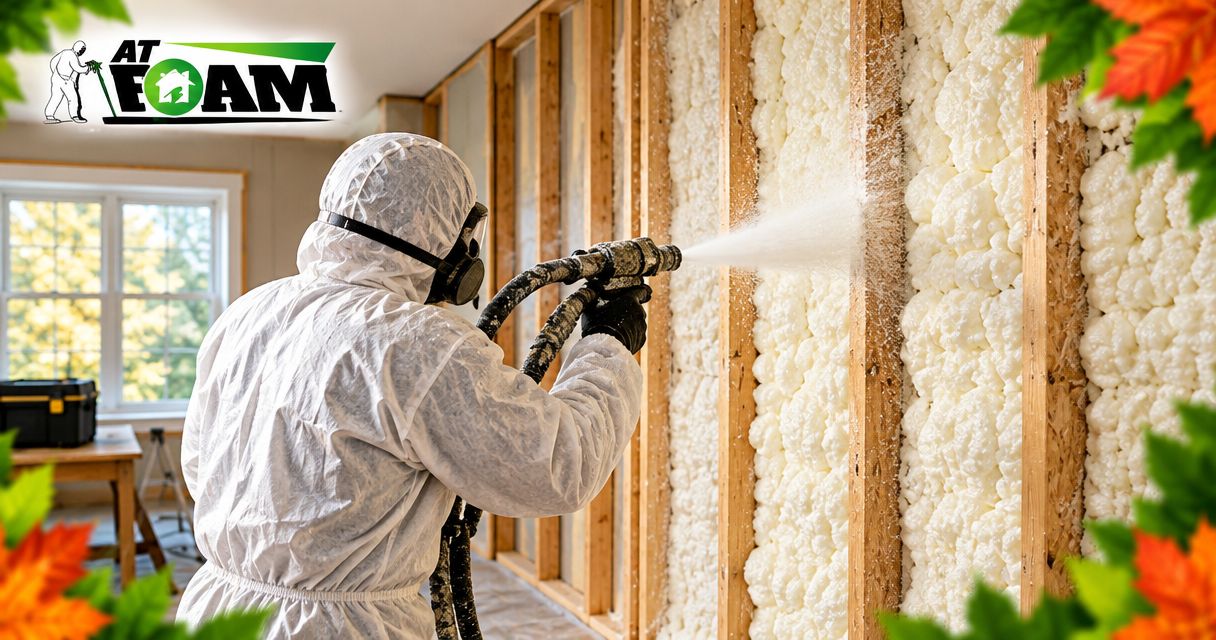
Yes, you can insulate some existing walls with foam without removing all the drywall, but ordinary spray-applied foam needs access to the wall cavity. Keeping the wall covering usually requires a product specifically approved for injection into enclosed cavities, access holes, and patching afterward. Do not treat standard spray foam and closed-wall injection foam as interchangeable.
- For spray foam insulation existing walls projects, distinguish exposed-cavity spraying from enclosed-cavity injection before choosing a method.
- Standard spray foam needs access; injection products require approval for enclosed walls and a controlled installation method.
- Fix leaks and investigate damp wood before insulating a Pacific Northwest exterior wall.
- AT Foam Insulation provides local wall insulation services; request a site-specific assessment before deciding how much wall to open.
Why this matters
Keeping your drywall does not mean leaving your walls untouched. Access holes, siding removal, trim work, or selective openings can still be part of the job. The right method depends on what is behind the finish—not just what looks easiest from the room.
For a 2026 wall retrofit, start with an inspection rather than a promise of no demolition. You can request a wall insulation assessment before committing to an access method or repair scope.
In Seattle, Tacoma, Olympia, and Eastside homes, moisture deserves equal attention. Insulation slows heat movement; it does not repair failed window flashing, leaking siding, or rotten framing.
Can you spray foam insulate existing walls without tearing them out?
Sometimes—but preserving the wall finish usually changes the installation method. Spray-applied foam goes onto exposed surfaces. Injection foam goes through openings into an enclosed cavity, using a product and procedure intended for that application.
Use this sequence before approving the work:
- Inspect the cavity. Identify existing insulation, wiring, pipes, blocking, and signs of moisture. A small inspection opening or camera helps reveal conditions, but it does not expose every hidden surface.
- Choose the access route. Decide whether the crew will work through interior openings, exterior openings, or fully exposed stud bays. Stud bays are the spaces between the wall's vertical framing members.
- Match the material to the method. Confirm that the exact insulation product is approved for the proposed installation. A spray-applied product is not automatically suitable for filling an enclosed wall.
- Define verification and repairs. Agree on how the installer will check coverage and who will patch drywall, restore siding, and finish paint.
“No full tear-out” is a reasonable project goal. “No holes, no inspection, no repairs” is not a useful scope for insulating an enclosed wall cavity.
| Method | Best for | Main advantage | Main limitation |
|---|---|---|---|
| Spray foam in exposed stud bays | Walls already opened for remodeling | Direct access for preparation, application, and inspection | Requires removing interior or exterior materials |
| Foam approved for enclosed-cavity injection | Suitable enclosed walls where preserving finishes matters | Uses access openings instead of exposing the entire cavity | Hidden obstructions and existing insulation complicate coverage |
| Dense-pack fibrous insulation | Compatible enclosed-wall retrofits that do not require foam | Provides another way to insulate through access holes | Does not replace a complete air-sealing and moisture plan |
Spray foam in exposed wall cavities
Best for: walls already open during a remodel or repair. When drywall or exterior sheathing is removed, the installer can see the framing, clean the substrate, and identify gaps or damaged areas before applying foam. The substrate is the surface the foam bonds to.
Direct access also makes it easier to inspect the installed thickness and spot missed areas. That matters around corners, window openings, and framing intersections where access gets tight.
The drawback is finish work. Opening a wall adds demolition, debris handling, and restoration to the project. If you are already replacing damaged drywall or siding, coordinate insulation with that work instead of treating each job separately.
For a 2026 remodel, settle the insulation detail before closing the wall. Include electrical work, plumbing repairs, required inspections, and the protective covering over the foam in the schedule.
Injection foam in enclosed wall cavities
Best for: suitable closed walls where preserving finishes is a priority. Enclosed-cavity injection uses access holes and a material designed for that installation. The installer must account for the product's expansion behavior, the wall construction, and the condition of the finish.
A wall is not always an empty vertical box. Horizontal blocking, fire stops, pipes, and old insulation can divide or obstruct the cavity. Filling one opening does not prove that material reached every section.
The advantage is less extensive opening of the wall. The limitation is reduced visibility. Ask how the installer identifies separated spaces, controls filling, and checks for gaps without relying only on the amount of material used.
Do not approve a substitution based only on the word foam. Get the exact product name and its enclosed-cavity installation instructions before work starts.
Open-cell or closed-cell: which belongs in an existing wall?
Open-cell foam has a cellular structure that generally allows more water vapor to pass through than closed-cell foam. Closed-cell foam generally provides more thermal resistance per inch and greater resistance to vapor movement. Neither description, by itself, settles which product belongs in your wall.
R-value measures resistance to heat flow. Your required R-value, available cavity depth, exterior layers, and drying path all affect the choice. A drying path is the direction moisture can leave the wall assembly.
| Foam type | Best for | Main advantage | Main limitation |
|---|---|---|---|
| Open-cell spray foam | Exposed cavities where the wall design permits a more vapor-permeable foam | Allows more vapor movement through the foam | Needs more depth for the same thermal resistance than closed-cell foam |
| Closed-cell spray foam | Exposed cavities where depth and vapor control support its use | Provides more thermal resistance per inch | Restricts drying through the foam more than open-cell foam |
Neither foam type is automatically an enclosed-wall injection product. Product approval and installation method still control the decision. Compare open-cell and closed-cell spray foam for Washington homes after the wall assembly is understood.
Why the right wall insulation method varies
These conditions determine how much access you need and whether preserving the finish makes sense:
- Existing insulation. Fiberglass, loose fill, or earlier foam changes the space available and the preparation required. Do not assume new material will push old insulation neatly aside.
- Cavity obstructions. Blocking, wiring, pipes, and irregular framing affect access and coverage. A clear-looking opening does not establish that the entire bay is clear.
- Moisture condition. Wet wood, staining, soft sheathing, or active leaks require investigation before insulation. Covering damage does not correct its cause.
- Wall layers. Siding, sheathing, interior finishes, and vapor-control materials affect drying. The insulation choice must fit the whole assembly.
- Finish condition. Fragile plaster, damaged drywall, and difficult-to-match siding change the repair plan. Preserving a finish has little value if installation damages it.
- Related work. Planned rewiring, window repairs, or siding replacement creates an opportunity to inspect and insulate exposed cavities. Coordinate those jobs before choosing a closed-wall approach.
What should you check before insulating a damp wall?
Find the water source first. In a Pacific Northwest home, a cold wall and a wet wall can feel similar from inside, but they require different repairs. Stains near windows, peeling finishes, musty odors, or soft materials deserve investigation.
Start with roof-to-wall connections, windows, exterior penetrations, and siding details. Also consider indoor humidity and air leakage. Warm indoor air reaching cold surfaces can contribute to condensation inside an assembly.
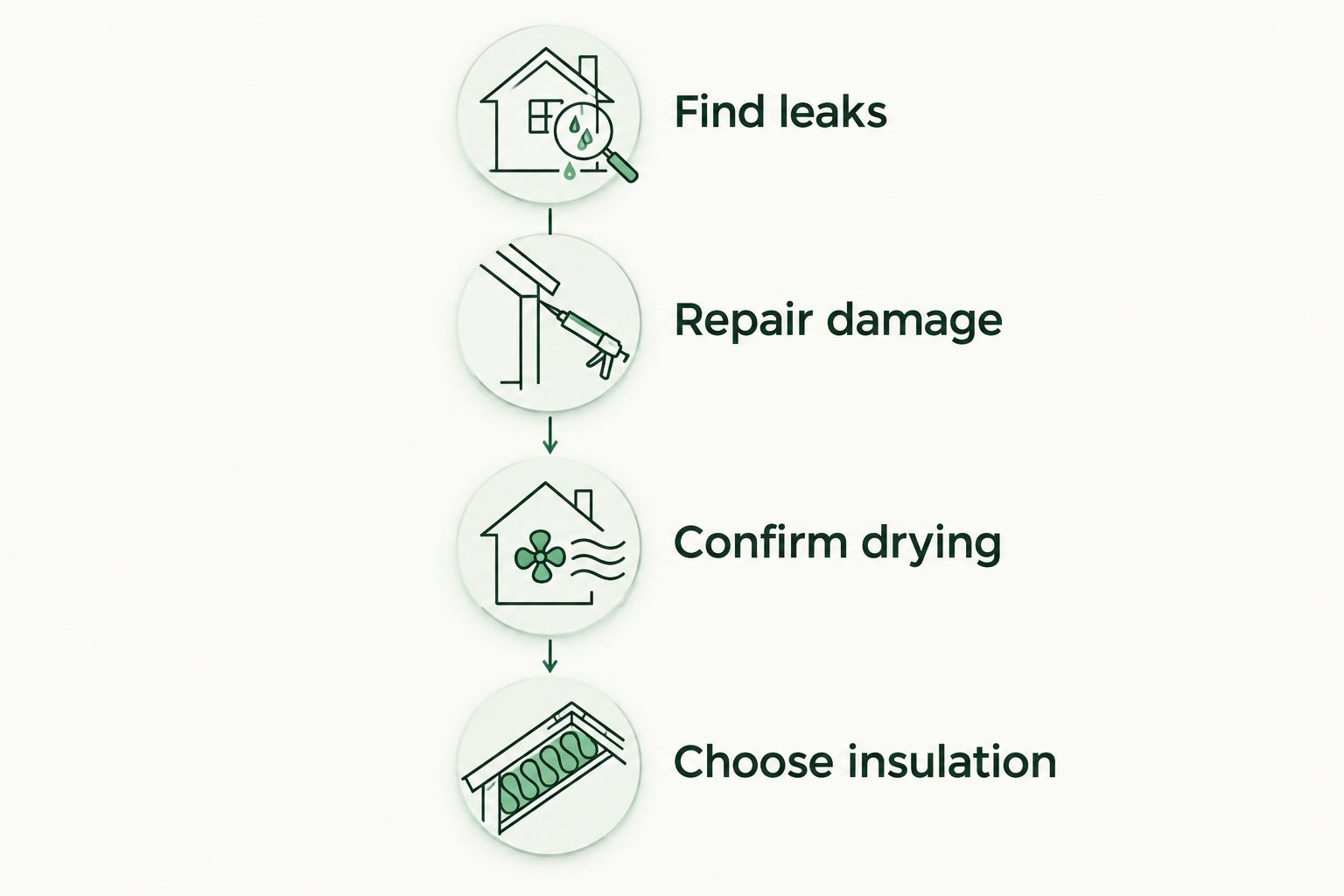
Use this order:
- Find leaks. Trace visible damage instead of covering it.
- Repair damage. Correct the water entry and assess affected materials.
- Confirm drying. Check that the substrate meets the chosen product's requirements.
- Choose insulation. Select a wall assembly that manages heat, air, and moisture together.
Closed-cell foam resists moisture movement, but that does not make a leaking wall safe to cover. Trapping wet materials between layers with limited drying can leave the underlying problem hidden.
Can you inject foam over existing fiberglass?
Do not assume an insulated cavity has room for another insulation system. Existing fiberglass can obstruct access and make fill distribution harder to verify. The proposed product and installation procedure must specifically address the existing material.
Ask whether the old insulation stays, needs removal, or requires opening the cavity for inspection. A contractor should explain that decision in terms of the wall's condition and the product instructions—not simply say that foam fills every gap.
If removal requires opening the wall anyway, compare that scope with exposing the stud bays and installing a new system under direct observation. Less demolition is useful only when the finished installation can be checked.
Will access holes damage drywall or siding?
Access holes require repair, and improper filling can damage wall finishes. Pressure and expansion matter in an enclosed cavity. So do the condition of the plaster, drywall fasteners, siding, and sheathing.
Before accepting a 2026 proposal, ask where holes will go and how they will be closed. Interior access means patching and finish matching; exterior access means restoring the affected siding and weather-control layers.
Put repair responsibilities in writing. A plugged hole is not necessarily a finished painted wall or a restored weather-resistant exterior.
What should a 2026 wall insulation estimate include?
A useful estimate describes the work, not just the material. Ask for these items:
- The walls included and the proposed access locations.
- The exact insulation product and installation method.
- Preparation, old-insulation handling, and moisture checks.
- Coverage verification and treatment of obstructed cavities.
- Occupant protection, ventilation, and return-to-occupancy instructions.
- Drywall, siding, trim, and paint responsibilities.
- Required inspections and protective coverings over exposed foam.
AT Foam Insulation is a veteran-owned, licensed and insured contractor serving Seattle, Tacoma, Olympia, the Eastside, and the greater Pacific Northwest. AT Foam Insulation is a fit for local homeowners seeking a contractor assessment for attic, crawl space, and wall spray foam insulation.
The benefit is access to a local crew providing those services and free estimates. The boundary is job-specific: a wall insulation service does not establish that every enclosed wall is suitable for injection or that every finish can remain untouched.
FAQ
Can you spray foam existing walls without removing drywall?
Some existing walls can be insulated without full drywall removal, but standard spray-applied foam needs cavity access. Keeping drywall generally requires an enclosed-cavity injection product, access holes, and a repair plan.
Is injection foam the same as spray foam?
Injection foam and spray-applied foam are not interchangeable installation methods. Use a product specifically approved for the cavity conditions and follow its installation instructions.
Can foam insulation make drywall bulge?
Improper enclosed-cavity filling can damage drywall or other finishes. Product selection, expansion behavior, installation control, and the condition of the wall all matter.
Should old wall insulation come out before adding foam?
Old wall insulation needs assessment before foam is added. Existing material can obstruct filling, and the proposed product’s instructions must support the installation conditions.
Can I stay home while wall spray foam is installed?
Occupancy during wall spray foam installation depends on the product and work-zone controls. Follow the manufacturer’s ventilation and return-to-occupancy instructions, including requirements for children and pets.
Does spray foam fix mold inside a wall?
Spray foam does not fix mold or repair the moisture source feeding it. Investigate the damage, correct water entry, and address affected materials before insulating.
What should I ask before hiring a wall insulation contractor in 2026?
Ask for the exact product, access method, moisture assessment, coverage checks, and finish-repair scope. Also confirm occupant protection and the return-to-occupancy instructions for the proposed installation.
One last thing
A filled cavity does not eliminate heat flow through the wood studs. That is thermal bridging: heat moving through framing around the insulation. If you are already replacing siding, ask whether the project should also address continuous exterior insulation rather than evaluating cavity fill alone.
Bring the whole wall into the conversation. A sound retrofit starts with dry materials, a suitable assembly, and a clear installation plan—not a promise to keep every surface untouched.
Related guides
- Can spray foam insulation cause mold?
- Can spray foam be installed in an occupied home?
- Can spray foam insulation catch fire?
Get a FREE Quote from AT Foam Insulation: call 425-999-8493.