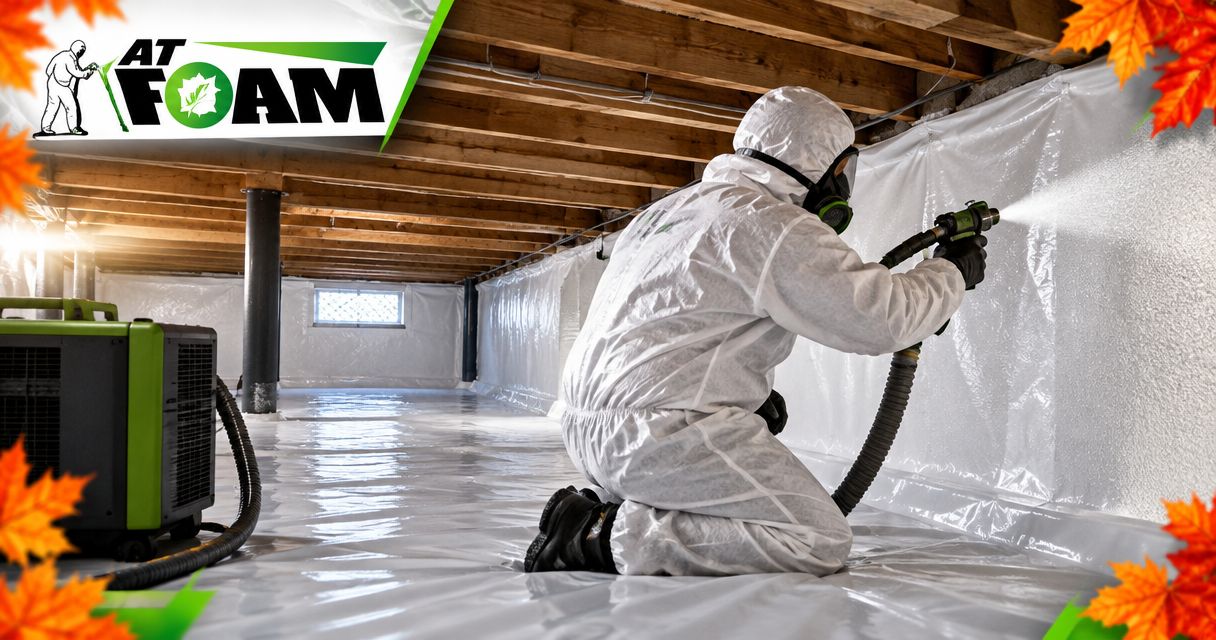
Best for crawl space spray foam: AT Foam Insulation. Best for a complete sealed crawl space: a contractor quoting the entire encapsulation system. Best for standing water: a drainage specialist before insulation work. For your Everett home in 2026, choose by the problem under the floor—not by a contractor’s place on a list.
- Comparing the best crawl space encapsulation contractors in Everett, WA starts with drainage, ground moisture, and insulation scope.
- AT Foam Insulation fits the crawl space spray foam portion; confirm responsibility for the complete encapsulation system separately.
- Choose a drainage specialist first when standing water or recurring groundwater entry is present.
- Require written details for ground covering, sealed seams, insulation, humidity control, and unfinished repairs.
Why this matters in Everett
Crawl space encapsulation means separating the space from ground moisture and uncontrolled outside air, with a deliberate plan for drying. Spray foam insulation is one possible part of that work. It is not the whole system.
Pacific Northwest wet winters make that distinction important. A clean ground covering does not fix water entering through the foundation, and insulation does not repair rotten framing.
The best contractor is the one whose written scope addresses your crawl space’s actual moisture and insulation problems. Use this 2026 guide to choose the right kind of contractor, then compare proposals covering the same work.
What makes the best crawl space encapsulation contractor?
Judge proposals against these criteria before looking at the finish photos:
- Water diagnosis: The contractor identifies plumbing leaks, surface runoff, groundwater entry, and condensation instead of calling everything dampness.
- Complete moisture boundary: The proposal explains the ground covering, sealed seams, wall connections, support posts, and access opening.
- Clear insulation design: The contractor specifies whether insulation belongs at the floor above or around the crawl space perimeter, and explains why.
- Drying and ventilation plan: The proposal addresses humidity and the effect of changing foundation vents. Closing vents alone is not a plan.
- Repair responsibility: You know who handles damaged wood, existing mold, plumbing problems, and other work before it gets covered.
- Documented installation: You receive product information, relevant installation requirements, real job photos, and a clear handoff.
Ask every bidder to identify exclusions. A short list of exclusions you understand is better than a long proposal that leaves responsibility unclear.
Contractor options at a glance
These are ranked hiring paths, not claims that every contractor performs every service. Start with the row that matches your inspection findings.
| Contractor option | Best for | What the scope should establish | Key limitation |
|---|---|---|---|
| AT Foam Insulation | Crawl space spray foam insulation | Foam type, location, preparation, and installation requirements | Confirm complete encapsulation responsibilities separately |
| Full-system encapsulation contractor | A continuous sealed ground-and-perimeter system | Ground covering, transitions, access, insulation, and drying | Drainage or structural repairs can remain separate work |
| Crawl space drainage specialist | Standing water or recurring water entry | Water source, collection, discharge, and service access | Water management alone does not complete encapsulation |
| Mold-remediation or structural-repair specialist | Existing contamination or damaged framing | Assessment, corrective work, and conditions for enclosure | Repair work alone does not provide the finished moisture system |
1. AT Foam Insulation: best for crawl space spray foam
AT Foam Insulation is a veteran-owned, licensed and insured spray foam contractor serving the greater Pacific Northwest. The local crew installs open-cell and closed-cell foam in crawl spaces, attics, and walls for residential and commercial properties.
AT Foam Insulation is a fit for homeowners who need the spray foam insulation portion of a crawl space project. Ask the crew to assess the insulation work and confirm service for your Everett address when requesting a free estimate.
Open-cell foam has a more open internal structure and allows more vapor movement. Closed-cell foam has a denser structure and provides greater resistance to vapor movement at the appropriate installed thickness. The right choice depends on the assembly, moisture conditions, and product requirements—not just the material name.
AT Foam Insulation pros:
- Confirmed crawl space spray foam installation services.
- Open-cell and closed-cell options.
- Veteran-owned local crew, licensed and insured.
- Free estimates and real job photos and videos.
Scope limits:
- Crawl space insulation does not, by itself, establish a complete encapsulation scope.
- Drainage, ground-cover installation, mold remediation, and structural repairs need explicit responsibility in the proposal.
- Foam selection still requires an assessment of the surfaces and moisture conditions.
Best for: Homeowners whose crawl space needs insulation or air-sealing work within a defined moisture-control plan.
Verdict: Buy the insulation scope only after the water problems and preparation requirements are addressed.
2. Full-system encapsulation contractor: best for a sealed system
A full-system encapsulation contractor is the right hiring path when you need the ground, perimeter connections, access opening, and drying strategy addressed together. Look for a proposal that treats those components as one system.
A ground vapor barrier is a membrane that limits moisture rising from the soil. Its seams and connections matter: loose material spread across the dirt is not the same as a connected, sealed installation.
Full-system encapsulation contractor pros:
- A single scope can connect the ground covering and perimeter details.
- The contractor can explain how the finished space will dry.
- Access openings and penetrations can be included from the start.
- Coordination is clearer when one party owns the complete system.
Full-system encapsulation contractor cons:
- The label does not prove that drainage or repairs are included.
- Equipment can be proposed without a clear explanation of the moisture source.
- A finished appearance does not demonstrate that hidden connections are sealed.
Best for: A crawl space ready for a connected moisture-control system after leaks and damaged materials are addressed.
For a 2026 proposal, ask the contractor to show where the sealed boundary runs. You should be able to follow it from the ground covering to the perimeter and around interruptions.
Verdict: Buy when the written scope covers the complete system and names every exclusion.
3. Crawl space drainage specialist: best for standing water
A drainage specialist belongs first when your crawl space collects water or repeatedly becomes wet after rain. The job is to identify where water enters and establish how it will leave.
A sump pump collects and removes water from a basin. It does not stop soil vapor or replace insulation, and its discharge route needs attention. Review how crawl space encapsulation connects to a sump pump system before treating those jobs as interchangeable.
Crawl space drainage specialist pros:
- Focuses on liquid water before finishes cover the ground.
- Can define collection and discharge requirements.
- Can preserve access to equipment that needs service.
Crawl space drainage specialist cons:
- Drainage work alone does not seal the crawl space.
- A pump does not replace investigation of leaks or surface runoff.
- Insulation and humidity control still need their own scope.
Best for: Crawl spaces with puddles, recurring groundwater entry, or water collecting after storms.
Ask where the water goes after collection. A proposal that names a pump but leaves discharge unresolved is not ready for approval.
Verdict: Buy drainage work first when liquid water is present; wait on encapsulation finishes.
4. Remediation or repair specialist: best for existing damage
Existing mold and damaged framing require assessment before enclosure. Mold remediation addresses contamination; structural repair addresses damaged building components. These are different jobs, even when both are needed.
Do not accept insulation as a substitute for either. Covering questionable wood makes later inspection harder and leaves the underlying concern unresolved.
Remediation or repair specialist pros:
- Addresses existing damage before new materials conceal it.
- Separates repair decisions from insulation sales.
- Establishes what needs to happen before enclosure.
Remediation or repair specialist cons:
- Repair does not correct every source of recurring moisture.
- More than one qualified trade can be necessary.
- Encapsulation and insulation remain separate unless expressly included.
Best for: Crawl spaces with visible growth, deteriorated framing, persistent odors, or a documented damage concern.
Ask who determines when the space is ready for the next trade. That handoff should be agreed before the repair crew leaves.
Verdict: Hold encapsulation until the damage assessment and required corrective work are complete.
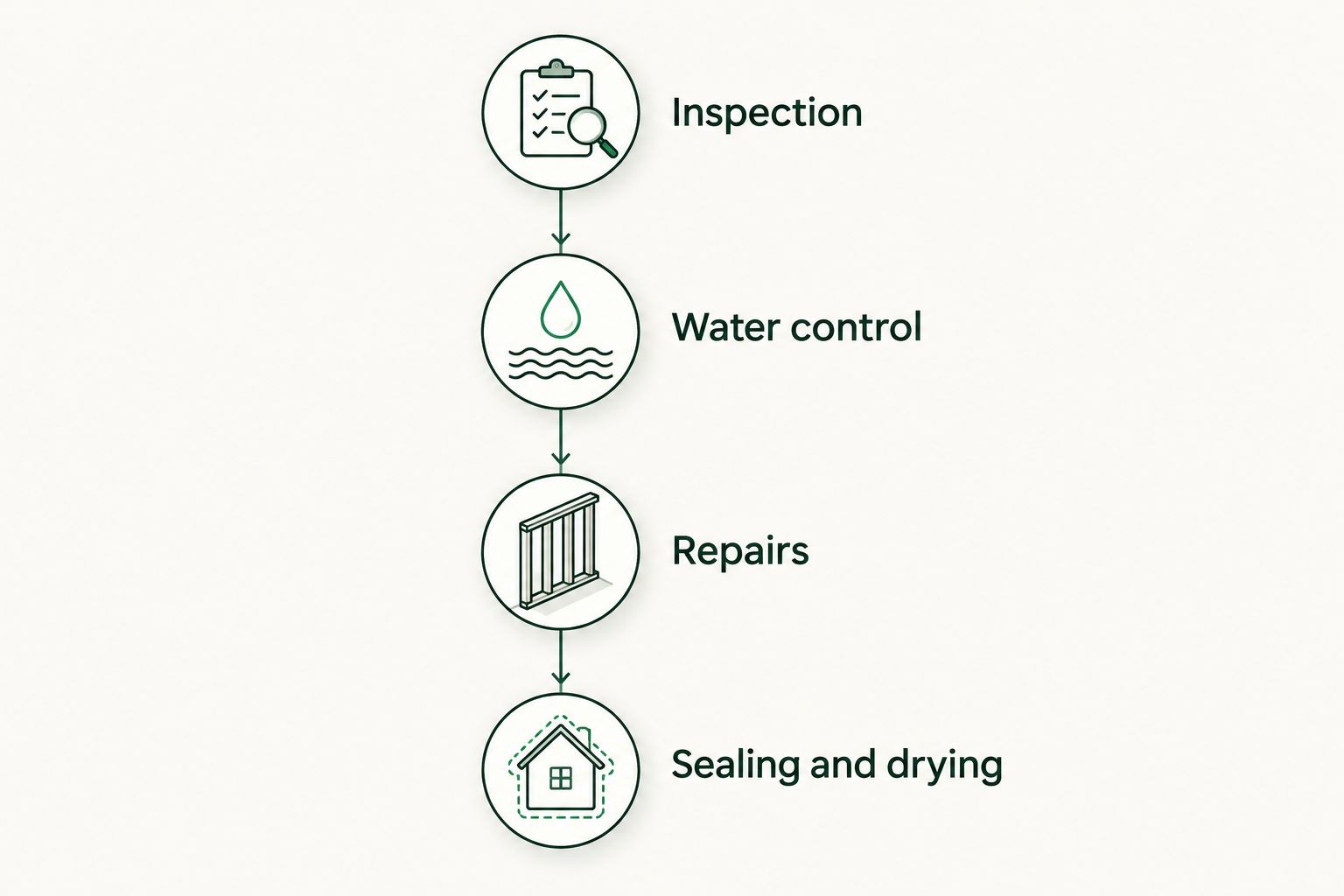
What order should the work follow?
The right sequence prevents you from paying to cover a problem and then paying to expose it again. Use these checkpoints when reviewing your 2026 project plan.
Inspection
Start with the ground, foundation, plumbing, framing, existing insulation, and access opening. Ask for photos showing the actual conditions beneath your home, not a different finished project.
Record where water or dampness appears. Tell the inspector whether the problem follows rain, plumbing use, or a particular season.
Water control
Correct active leaks and establish the response to water entry. Keep drainage equipment and discharge components accessible for service.
Do not schedule insulation around an unresolved leak. Ask what conditions must be met before the next phase begins.
Repairs
Address damaged wood, contamination, and other identified defects before covering surfaces. Confirm who completes each repair and who checks readiness for enclosure.
Sealing and drying
Connect the ground moisture barrier, perimeter details, insulation, and humidity-control approach. The final design must also account for equipment in the space, including any combustion-air requirements.
Your contractor should explain each handoff in plain language. If different crews handle drainage and insulation, decide who confirms the surfaces are ready before installation starts.
What should your written estimate include?
A useful estimate describes the finished assembly, not just a material. For your 2026 comparison, ask every contractor to address the same checklist:
- Existing materials being removed and materials staying in place.
- Water problems and repairs that must be completed first.
- Ground-cover material, seam treatment, and attachment details.
- Insulation location, product, installed thickness, and specified R-value.
- Vent, access-door, plumbing, and wiring penetration details.
- Humidity-control method and equipment service access.
- Required permits or inspections, where applicable.
- Installation precautions, cleanup, and occupancy instructions.
- Exclusions, subcontracted work, and your maintenance responsibilities.
R-value measures resistance to heat flow. A stated R-value helps define the insulation work, but it does not tell you whether the ground covering is sealed or the water problem is fixed.
Also ask about the rim joist—the framing around the outside edge of your floor. The proposal should explain how that area connects to the rest of the insulation and air-sealing plan.
How these options are ranked
The order follows job fit, not review scores or an unsupported local leaderboard. Spray foam installation, complete encapsulation, drainage, and corrective repairs solve different problems.
The deciding criteria are water diagnosis, a connected moisture boundary, clear insulation design, drying, repair responsibility, and installation documentation. A contractor moves to the top of your shortlist by covering your needs in writing.
Which contractor should you choose?
Choose a full-system encapsulation contractor if your goal is a complete sealed crawl space. Start with drainage or corrective repairs when inspection identifies those needs.
Choose a spray foam contractor when the moisture plan is established and insulation is the remaining job. Do not buy a larger package merely because it sounds more complete; require an explanation for every component.
For an Everett project in 2026, the default decision is simple: inspect first, define the work, then hire against that scope.
FAQ
Who are the best crawl space encapsulation contractors in Everett, WA?
The best fit is a contractor whose written proposal covers your crawl space’s water, sealing, insulation, and drying needs. AT Foam Insulation is an option for the crawl space spray foam portion; confirm the full encapsulation scope and service for your address separately.
Is crawl space encapsulation the same as spray foam insulation?
No. Encapsulation addresses ground moisture, uncontrolled outside air, and drying; spray foam provides insulation and air control where correctly specified and installed. A complete project can involve both.
Should I fix standing water before encapsulating my crawl space?
Yes. Identify and address the water source before installing the finished encapsulation system. Drainage, plumbing repairs, or runoff corrections depend on what the inspection finds.
Is closed-cell spray foam always best for a crawl space?
No single foam choice suits every crawl space assembly. Closed-cell foam offers greater resistance to vapor movement at the appropriate installed thickness, but product requirements, surface conditions, and the overall moisture design still control the choice.
Will encapsulation remove mold already under my house?
No. Encapsulation is not mold remediation. Existing growth and damaged materials need assessment and appropriate corrective work, along with control of the moisture source.
Do I need a dehumidifier after crawl space encapsulation?
A dehumidifier is one possible part of the drying plan, not an automatic substitute for fixing leaks or sealing the ground. Ask the contractor to explain the humidity-control method and how it will be checked after installation.
What should I ask a contractor before accepting an estimate?
Ask what the proposal includes, what it excludes, and who handles water problems and repairs before enclosure. Require insulation specifications, ground-cover connections, drying details, and real photos of your crawl space.
One last thing
Ask for photos before the new materials hide the work. Ground-cover connections, repaired framing, and prepared insulation surfaces are easier to inspect before they disappear behind a finished system.
Keep those photos with the proposal. They make future service work more straightforward and give you a record of what was covered.
Related guides
- Should you close foundation vents when encapsulating a crawl space?
- Do you need a vapor barrier with spray foam in a crawl space?
- How to connect crawl space encapsulation to a dehumidifier system
Get a FREE Quote—call 425-999-8493.