Best for a veteran-owned spray foam crew: AT Foam Insulation. Best for a vented attic top-up: a blown-in insulation contractor; best for damaged existing insulation: an attic removal specialist. This 2026 Bellevue guide helps you choose the contractor specialty that fits your attic, then compare the actual work proposed.
- AT Foam Insulation is the shortlist pick for homeowners seeking a veteran-owned spray foam attic contractor.
- The best attic insulation contractors in Bellevue, WA match air sealing, insulation, and ventilation to your home.
- Choose a blown-in contractor for a vented attic top-up after air leaks and moisture problems are addressed.
- Require a written scope covering moisture, material, installation location, and final inspection.
Why the attic plan matters more than the company ranking
Your attic needs a plan before it needs more insulation. In Bellevue's wet winters, covering damp wood or leaving indoor air leaks open does not fix the underlying problem.
Insulation slows heat flow. Air sealing closes gaps where air moves through the ceiling, while ventilation manages airflow through a vented attic. These jobs work together, but they are not interchangeable.
For your 2026 project, hire for the condition of your attic—not the biggest promise on the estimate. The shortlist below ranks hiring options by job type rather than treating different services as interchangeable.
What makes the best attic insulation contractor?
Use these five criteria before comparing proposals:
- Attic inspection: The contractor checks existing insulation, roof leaks, wood condition, wiring, ducts, and access before specifying material.
- A defined insulation boundary: The proposal identifies whether insulation belongs at the attic floor or the roof deck—the underside of the roof sheathing.
- Moisture and ventilation planning: The crew explains how the proposed assembly handles drying, bathroom exhaust, and existing attic vents.
- A measurable installation scope: The estimate names the material, coverage area, installed thickness, and target R-value. R-value measures resistance to heat flow.
- Accountability: Verify contractor registration and insurance, ask who performs the work, and require photos of the areas you cannot inspect yourself.
A useful estimate answers those questions in plain language. You should not need to guess which tasks are included.
Bellevue attic contractor options at a glance
| Hiring option | Best for | Standout fit | Key limitation |
|---|---|---|---|
| AT Foam Insulation | Homeowners seeking a veteran-owned spray foam crew | Open-cell and closed-cell attic insulation services | Spray foam requires an assembly-specific moisture and installation plan |
| Blown-in insulation contractor | Topping up a suitable vented attic floor | Loose-fill coverage across accessible ceiling areas | Loose-fill insulation does not replace air sealing |
| Attic removal specialist | Removing damaged or contaminated existing insulation | Clearing material so underlying conditions can be assessed | Removal alone does not correct leaks or rebuild insulation |
| Roof-deck insulation specialist | Evaluating a planned unvented attic conversion | Coordinating insulation at the underside of the roof | Changes the attic assembly and needs more than a material swap |
The contractor types below are hiring categories, not claims about unnamed Bellevue businesses. Each has a different job to solve.
1. AT Foam Insulation: best for a veteran-owned spray foam crew
AT Foam Insulation installs open-cell and closed-cell spray foam in attics, crawl spaces, and walls for residential and commercial projects. The veteran-owned contractor serves the Eastside and greater Pacific Northwest, with a local crew, free estimates, and licensed and insured operations.
Open-cell foam has a more open internal structure and permits more vapor movement. Closed-cell foam has a denser structure and generally provides greater resistance to vapor movement. Neither description replaces a design for your particular attic.
Best for: Homeowners seeking a local spray foam installer rather than a loose-fill top-up service.
Pros:
- Offers both open-cell and closed-cell spray foam.
- Handles residential and commercial insulation work.
- Provides real job photos and videos.
- Offers free estimates from a veteran-owned local business.
Cons:
- Spray foam is not the same job as adding loose-fill insulation to an attic floor.
- Foam selection requires attention to moisture, drying, and the insulation boundary.
- Removal and future access to covered surfaces deserve discussion before installation.
Ask the crew to show exactly where the foam would go and explain why that location suits your house. For a 2026 estimate, require the proposed material and installation scope in writing.
Verdict: Buy the installation only after the attic inspection supports the proposed foam assembly.
2. Blown-in insulation contractor: best for a vented attic top-up
A blown-in contractor installs loose-fill insulation across the attic floor. This approach suits projects where the attic remains outside the conditioned living space and the ceiling below forms the insulation boundary.
The existing material still needs inspection. Wet, contaminated, or badly displaced insulation is not automatically suitable to cover.
Best for: A vented attic with an accessible floor and an otherwise sound assembly.
Blown-in contractor pros:
- Adds coverage across accessible ceiling areas.
- Keeps the insulation boundary at the attic floor.
- Allows a scope focused on topping up suitable existing material.
Blown-in contractor cons:
- Loose-fill insulation does not close ceiling air leaks by itself.
- Coverage needs care around eaves, access hatches, and equipment.
- Wind washing or later disturbance can affect coverage.
Compare spray foam versus blown-in insulation for attics before treating the two proposals as equivalent. They can involve different insulation locations and different preparation work.
Verdict: Buy when the attic stays vented and the proposal includes necessary air sealing and vent protection.
3. Attic removal specialist: best for damaged existing insulation
An attic removal specialist takes out existing insulation so the space can be cleaned and assessed. This is a preparation service, not a replacement for repairing a leaking roof or correcting an exhaust duct that discharges indoors.
Ask what condition requires removal. A photograph and a clear explanation are better than a blanket instruction to empty the attic.
Best for: An attic where damaged or contaminated material prevents a sound insulation installation.
Removal specialist pros:
- Exposes areas hidden beneath old insulation.
- Separates cleanup from the new insulation scope.
- Gives repair trades access before material goes back in.
Removal specialist cons:
- Does not stop the source of water or pest entry.
- Requires a separate plan for replacement insulation.
- Suspected hazardous materials require appropriate assessment and handling.
Do not disturb unfamiliar loose-fill material yourself. Identify potential hazards before anyone starts moving it.
Verdict: Hold the insulation installation until removal, cleanup, and necessary repairs are complete.
4. Roof-deck insulation specialist: best for an unvented attic plan
A roof-deck insulation specialist evaluates moving the insulation boundary from the attic floor to the roofline. An unvented attic is designed without the outside-air ventilation used in a conventional vented attic.
That change affects moisture control and how the attic connects to the house. It is not simply a matter of spraying foam over the existing arrangement.
Best for: A homeowner considering a deliberate roofline insulation project, including an attic containing mechanical equipment.
Roof-deck specialist pros:
- Evaluates the roof assembly rather than only the attic floor.
- Addresses the proposed location of the thermal boundary.
- Can coordinate insulation decisions with mechanical and ventilation needs.
Roof-deck specialist cons:
- Requires assembly-specific moisture and code review.
- Changes how roof sheathing dries and how the attic operates.
- Requires coordination around equipment, access, and roof conditions.
Verdict: Wait for a complete assembly plan before approving an unvented attic conversion.
What should happen before installation?
A sound Bellevue attic project follows an order. Insulation comes after the conditions that would damage it are addressed.
- Inspect: Find roof leaks, damp wood, disconnected exhaust ducts, and suspect wiring.
- Repair: Correct water entry, exhaust problems, and electrical hazards through the appropriate trades.
- Air seal: Close specified ceiling penetrations and joints while respecting equipment clearances.
- Insulate: Install the chosen material at the agreed boundary and thickness.
- Verify: Check coverage, access, ventilation details, and completion photos.
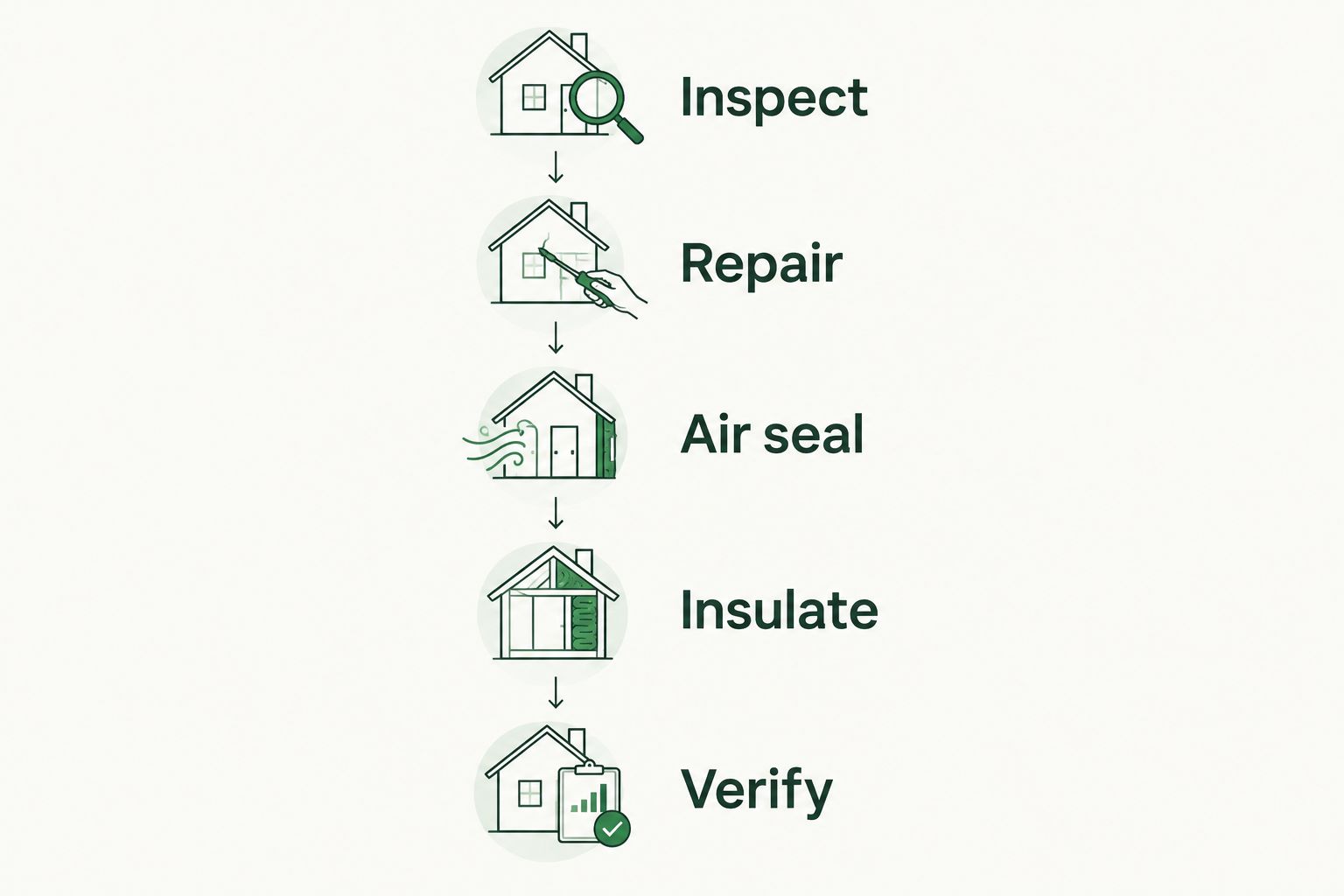
For your 2026 project, request photos of 3 areas: the attic before preparation, the air-sealing work before coverage, and the finished installation. These are documentation requests, not a substitute for an inspection.
Moisture and pests need separate repair plans
Roof leaks, indoor air leakage, and pest entry do not share one automatic fix. A damp attic needs the source identified before new insulation hides the evidence.
Bathroom exhaust should discharge outdoors, not into the attic. Water-stained sheathing needs investigation, and suspected mold deserves appropriate assessment rather than a promise that foam will cover the problem.
The distinction between spray foam and attic pests is equally important: closing an air leak is not the same as building a durable pest-exclusion detail. Ask who repairs entry points and how those repairs connect to the insulation work.
Do not approve insulation as a substitute for leak repair, pest exclusion, or remediation. Those tasks need their own scope and responsible party.
How do you compare written attic estimates?
Request 2 written estimates built around the same intended result. A floor-level top-up and a roof-deck conversion are different projects, even when both are described as attic insulation.
Use this checklist for each proposal:
- Location: Attic floor, roof deck, knee walls, or another clearly identified surface.
- Preparation: Removal, cleanup, repairs, and air sealing included or excluded.
- Material: Exact insulation type and relevant manufacturer documentation.
- Installation: Coverage area, specified thickness, and target R-value.
- Protection: Treatment of vents, recessed lights, flues, wiring, and equipment access.
- Occupancy: Product-specific ventilation and re-entry instructions for spray foam work.
- Closeout: Final inspection, photos, cleanup, and written responsibility for unfinished items.
Keep 1 agreed scope attached to the contract. Changes should be documented rather than settled through a conversation after the attic is covered.
Your 2026 comparison should reward clarity. An unexplained R-value or a vague promise to “seal everything” is not a complete installation plan.
How these options are ranked
The order starts with the confirmed local spray foam service, then separates the other hiring options by attic condition. It is a scope-based shortlist, not a ranking based on customer scores, inspection results, or claimed performance tests.
The deciding criteria are inspection, insulation location, moisture planning, installation detail, and accountability. Choose the contractor whose written proposal solves your attic's actual problem.
Which attic insulation contractor should you choose?
Choose AT Foam Insulation when you want a veteran-owned spray foam crew to assess your attic project. Choose a blown-in contractor when a vented attic top-up is the agreed plan.
Start with removal when damaged material blocks the work. Seek a roof-deck specialist when you are considering an unvented assembly—not simply trying to add insulation above a cold bedroom.
FAQ
What’s the best attic insulation contractor in Bellevue for spray foam?
Choose a spray foam contractor that inspects your attic and documents the proposed assembly before installation. Verify registration and insurance, review actual job photos, and require a written material and moisture-control plan.
Is spray foam better than blown-in insulation for my attic?
Neither material is best for every attic. Blown-in insulation suits many vented attic-floor projects, while spray foam requires a decision about installation location, moisture control, and the surrounding assembly.
Do I need to remove all my old attic insulation?
Not every attic needs complete insulation removal. The decision depends on the material’s condition, contamination, access needs, and the proposed new installation.
Should my attic stay vented after insulation work?
A vented attic should retain its planned ventilation unless the project deliberately redesigns the assembly. An unvented attic needs its own insulation and moisture-control plan; do not just block existing vents.
Can insulation fix mold or roof leaks in an attic?
Insulation does not repair roof leaks or replace appropriate mold assessment and remediation. Correct the moisture source and address damaged materials before covering the affected area.
What R-value should I ask an attic contractor for?
Ask for an R-value that meets the applicable requirements for your project and assembly. The contractor should state the target, material, and installed thickness rather than offering a number without installation details.
Can my family stay home during spray foam installation?
Occupancy and re-entry must follow the specific product’s installation and safety instructions. Get the ventilation plan, restricted areas, and re-entry requirements in writing before work starts.
One last thing: check the attic hatch
The access hatch is part of the insulation boundary when insulation sits at the attic floor. Ask how the crew will insulate and air seal it without preventing safe access.
A finished attic photo should show that detail too. The work is not complete just because the broad, easy-to-reach areas look covered.
Related guides
- Open-cell versus closed-cell spray foam for Washington homes
- Does spray foam insulation need extra attic ventilation?
- Can you insulate an attic with knob-and-tube wiring?
Get a FREE Quote. Call 425-999-8493 to discuss your attic and arrange an estimate.