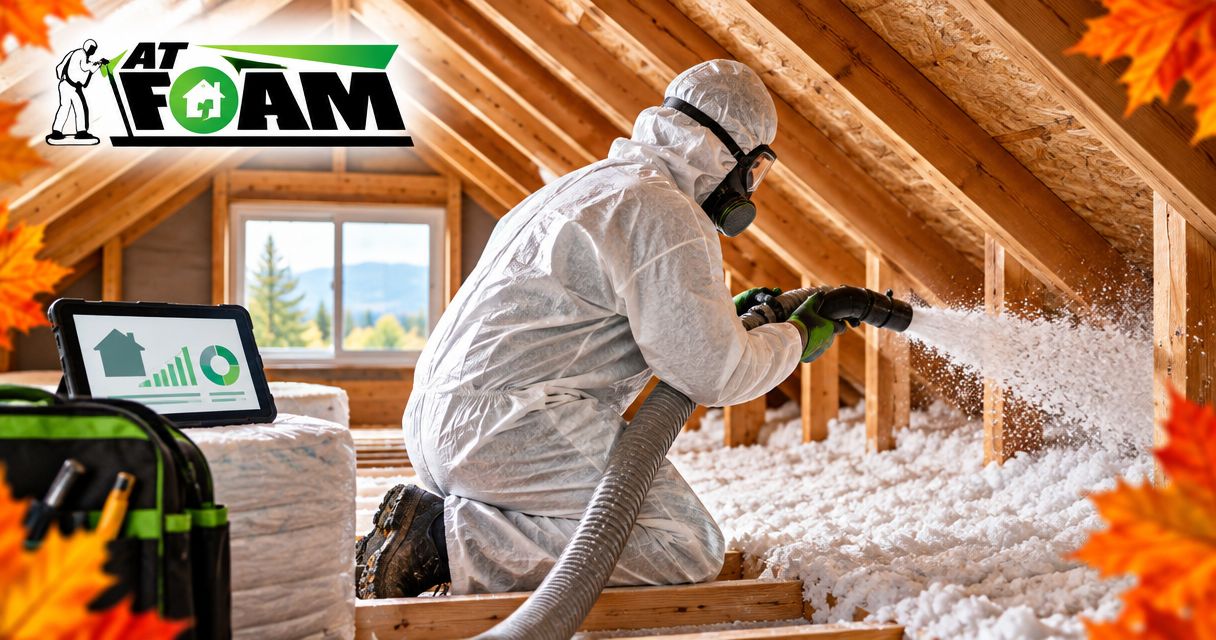
Best for a spray foam estimate: AT Foam Insulation. Best for an accessible, vented attic: an air-sealing and blown-in insulation contractor. Best for damaged existing insulation: a removal-and-retrofit contractor. Your search for the best attic insulation contractors in Arlington, WA in 2026 should start with the work your attic needs—not a company ranking detached from the job.
- For the best attic insulation contractors in Arlington, WA, match the contractor to your attic assembly before comparing bids.
- AT Foam Insulation is a strong fit for homeowners seeking a veteran-owned spray foam insulation contractor.
- Keep a vented attic vented unless a complete roofline insulation design calls for changing it.
- Fix roof leaks and assess damp wood before covering attic surfaces with insulation.
AT Foam Insulation provides residential and commercial spray foam installation across the greater Pacific Northwest. For an Arlington property, confirm your address and project scope when requesting a free estimate. The veteran-owned local crew installs open-cell and closed-cell foam in attics, crawl spaces and walls.
Why the attic plan matters more than the company name
An attic is not just an empty space waiting for insulation. It connects your roof, ceiling, wiring, exhaust ducts and indoor air. Changing one part without checking the others creates a poor job scope.
Pacific Northwest wet winters make moisture control part of the insulation decision. A roof leak needs repair. A bathroom exhaust duct needs a proper outdoor termination. Insulation does not replace either repair.
The right contractor identifies where the insulated boundary belongs, what needs fixing first and how the completed assembly manages moisture. That explanation should come before a material recommendation.
What makes the best attic insulation contractor?
Use these criteria for your 2026 shortlist. Ask each contractor the same questions so you can compare the answers rather than the sales pitch.
- Attic inspection: The contractor checks existing insulation, roof sheathing, access, exhaust ducts and visible moisture before settling on a scope.
- Clear boundary: The proposal identifies whether insulation belongs at the attic floor or roofline. Those are different assemblies, not interchangeable installation locations.
- Air sealing: The scope identifies gaps around ceiling penetrations and access openings. Air sealing means closing unintended paths where indoor air escapes.
- Moisture and ventilation: The contractor explains how roof ventilation, vapor control and indoor humidity fit the proposed work.
- Installation details: The proposal names the material, installed thickness, target R-value and required protective coverings. R-value measures resistance to heat flow.
- Accountability: Verify current Washington contractor registration and insurance. Ask for real job photos that show the same kind of attic work you need.
Get 3 written bids for the same scope, not 3 different solutions with no explanation of the differences. A useful comparison separates preparation from insulation installation and states who handles work outside the insulation contract.
Attic contractor options at a glance
This is a ranked shortlist by project fit, not a claim that every Arlington attic needs spray foam. Choose the row that describes your actual problem.
| Rank and option | Best for | Standout feature | Key limitation |
|---|---|---|---|
| 1. AT Foam Insulation | Homeowners seeking a spray foam estimate | Veteran-owned contractor offering open-cell and closed-cell installation | Confirm Arlington project coverage and the proposed attic assembly |
| 2. Air-sealing and blown-in contractor | Accessible attics that will remain vented | Combines ceiling-plane gap sealing with loose-fill insulation | Does not bring the attic inside the insulated boundary |
| 3. Removal-and-retrofit contractor | Attics with damaged or obstructive existing insulation | Opens access for inspection and preparation before replacement | Removal alone does not fix leaks, pests or damaged wood |
| 4. Roofline insulation specialist | Projects intentionally converting to an unvented attic | Coordinates insulation along the underside of the roof | Requires assembly-specific moisture, fire-protection and ventilation planning |
1. AT Foam Insulation: best for a spray foam attic estimate
AT Foam Insulation is a licensed and insured, veteran-owned contractor offering attic spray foam installation. The company installs open-cell foam, which has a more vapor-open structure, and closed-cell foam, which is denser and more resistant to vapor movement at appropriate thicknesses.
Best for: A homeowner who wants a spray foam contractor to assess an attic, explain the proposed assembly and provide a free estimate. Ask why the selected foam belongs in that location—not simply which foam the crew prefers.
What to ask during the estimate
Start with the location of the insulation. Foam at the attic floor and foam beneath the roof deck create different boundaries. Your proposal should identify the intended assembly before it specifies a product.
Ask how the crew will assess damp surfaces, protect areas outside the work zone and follow the selected manufacturer's installation instructions. Request real attic job photos that show preparation and finished coverage, not just close-ups of foam.
AT Foam Insulation pros:
- Offers both open-cell and closed-cell spray foam installation.
- Provides free estimates for residential and commercial work.
- Brings a veteran-owned local-crew approach, with real job photos and videos.
AT Foam Insulation limitations:
- A spray foam service is not automatically the right match for a straightforward loose-fill top-up.
- Arlington address coverage and any work outside insulation need confirmation before booking.
Verdict: Buy only after the written scope identifies the attic boundary, moisture approach and installation requirements.
2. Air-sealing and blown-in contractor: best for a vented attic
An air-sealing and blown-in contractor works at the attic floor while leaving the attic outside the home's insulated boundary. Loose-fill insulation consists of small pieces of insulating material distributed across that floor.
Best for: An accessible attic with a sound roof, a ceiling plane that can be sealed and a ventilation arrangement that will remain in place. This is a different project from insulating beneath the roof deck.
What a good proposal includes
Ask the contractor to identify ceiling gaps before adding insulation. Common inspection points include plumbing penetrations, wiring penetrations and the attic access hatch. Insulation spread over an unsealed opening does not turn that opening into a dependable air barrier.
The plan should also keep intake ventilation paths clear. Baffles—channels that hold insulation away from ventilation openings—help preserve those paths where the assembly requires them.
Air-sealing and blown-in contractor pros:
- Matches a conventional vented-attic layout.
- Allows ceiling air sealing and insulation work to share a defined scope.
- Keeps the roof structure accessible from the attic side for inspection.
Air-sealing and blown-in contractor limitations:
- Leaves attic ductwork outside the home's insulated boundary.
- Needs careful detailing around access platforms, equipment and ventilation openings.
Verdict: Buy for a sound, accessible attic that will remain vented, with air sealing included before the insulation goes down.
3. Removal-and-retrofit contractor: best for damaged insulation
A removal-and-retrofit contractor removes existing material where its condition or location prevents proper repair and replacement. This work is relevant when insulation is wet, contaminated or blocking access to needed ceiling-plane repairs.
Best for: An attic that needs cleanup and preparation before an insulation decision. Removal is a preparation step, not a substitute for diagnosing what damaged the material.
Separate cleanup from the underlying repair
Ask what the removal includes, how the crew contains debris and where the scope stops. A roof repair, pest exclusion or mold assessment requires its own clear responsibility. Do not assume an insulation quote includes those trades.
Suspect vermiculite insulation deserves special caution because some vermiculite contains asbestos. Do not disturb it or treat ordinary vacuum removal as the answer; arrange an appropriate assessment before work proceeds.
Removal-and-retrofit contractor pros:
- Exposes areas that need inspection or repair.
- Creates access for air sealing hidden beneath existing material.
- Separates unsuitable existing insulation from the replacement assembly.
Removal-and-retrofit contractor limitations:
- Does not repair the source of water entry or pest activity by itself.
- Requires clear containment, disposal and replacement scopes.
Verdict: Hold replacement work until the cause of damage is addressed and the attic is ready for insulation.
4. Roofline insulation specialist: best for an unvented attic project
A roofline insulation specialist plans insulation beneath the roof rather than across the attic floor. An unvented attic does not use the conventional outdoor-air ventilation path through the attic space; its moisture-control details need deliberate design.
Best for: A remodel or building project that intentionally brings the attic within the insulated enclosure. Do not choose this approach merely because roof-deck foam looks tidy in a job photo.
Demand an assembly, not just a foam thickness
The contractor should explain the roof layers, foam selection, vapor control and treatment of existing vents. The proposal also needs to address applicable fire-protection requirements and any combustion equipment affected by enclosing the space.
Open-cell and closed-cell foam are not interchangeable answers to every roof condition. Product instructions and the proposed roof assembly govern the details. A higher R-value per inch does not settle the moisture design.
Roofline insulation specialist pros:
- Aligns the insulation boundary with an intentional unvented-attic design.
- Addresses roofline transitions as part of the enclosure.
- Allows attic equipment location to be considered in the design.
Roofline insulation specialist limitations:
- Requires more coordination than adding insulation to an existing attic floor.
- Changes how roof sheathing dries and requires careful moisture planning.
Verdict: Wait until the roofline assembly, ventilation changes and protective coverings are specified together.
How these options are ranked
The 2026 order prioritizes fit to the job: spray foam assessment, conventional vented-attic improvement, damaged-material replacement and intentional roofline conversion. These are contractor roles, not claims about competitors' workmanship or customer ratings.
Your decision rests on the inspection, written scope, moisture plan and installation details. A contractor who explains why a different assembly fits your home better gives you more useful information than an unsupported promise of energy savings.
What should your written attic quote include?
For your 2026 project, ask for 2 clear scope sections: preparation and installation. This makes exclusions easier to spot before you approve the work.
Preparation should address access, existing material, surface condition, air sealing and any repairs assigned to another trade. Installation should name the product, coverage area, thickness, target R-value, ventilation details and required protective coverings.
Use this kitchen-table check before signing:
- Can you point to exactly where the insulation goes?
- Does the quote explain what happens to existing insulation?
- Are roof leaks, wet wood and suspect materials addressed before installation?
- Is the attic hatch included in the air-sealing and insulation plan?
- Does the contractor explain occupancy precautions and re-entry instructions for the selected product?
- Are cleanup, completion checks and exclusions written down?
Ask for 1 clearly defined insulation boundary. If a proposal mixes attic-floor insulation and roofline insulation, request the reason and the assembly details. More material in more places is not a complete design.
Which attic insulation contractor should you choose?
Choose the contractor whose scope matches your attic. For an accessible vented attic, compare air-sealing and loose-fill proposals. For damaged insulation, settle the repair and removal plan first. For a roofline conversion, require a complete assembly design.
If spray foam fits the inspection findings, request an estimate from a contractor who explains material selection, moisture control and installation precautions in plain language. Keep the decision tied to your house—not a blanket claim that one material wins everywhere.
FAQ
What’s the best way to choose an attic insulation contractor in Arlington, WA?
Choose an attic insulation contractor whose written scope matches your attic’s condition and intended assembly. Compare inspection findings, air sealing, moisture control, material specifications and exclusions before approving the work.
Does AT Foam Insulation offer attic insulation estimates?
AT Foam Insulation offers free estimates for attic spray foam insulation. Confirm your Arlington address and project scope when contacting the crew.
Is spray foam better than blown-in insulation for my attic?
Spray foam is not automatically better than blown-in insulation for every attic. An accessible vented attic and an intentionally unvented roofline assembly need different installation plans.
Should I remove old attic insulation before adding more?
Remove existing attic insulation when its condition or location prevents the necessary repair or installation work. Have wet, contaminated or suspect material assessed before disturbing it or covering it.
Can attic insulation fix a roof leak or mold problem?
Attic insulation does not fix a roof leak or remove existing mold. Address water entry and assess affected materials before installing insulation over or around them.
What should I ask about open-cell and closed-cell foam?
Ask why the selected foam fits your attic assembly and how the design handles moisture. The proposal should specify the product, thickness, target R-value and required protective coverings.
What should an attic insulation quote include in 2026?
A 2026 attic insulation quote should identify preparation, air sealing, insulation location, product specifications and exclusions. It should also explain ventilation, moisture control and applicable installation precautions.
One last thing
Ask to see a photo of the attic access detail, not just the biggest open section of insulation. The access opening is part of the boundary too. A proposal that ignores the hatch leaves an important detail unresolved.
Related guides
- Spray foam vs. blown-in insulation for attics
- Does spray foam insulation need extra attic ventilation?
- Can you insulate an attic with knob-and-tube wiring?
Get a FREE Quote for your attic insulation project.