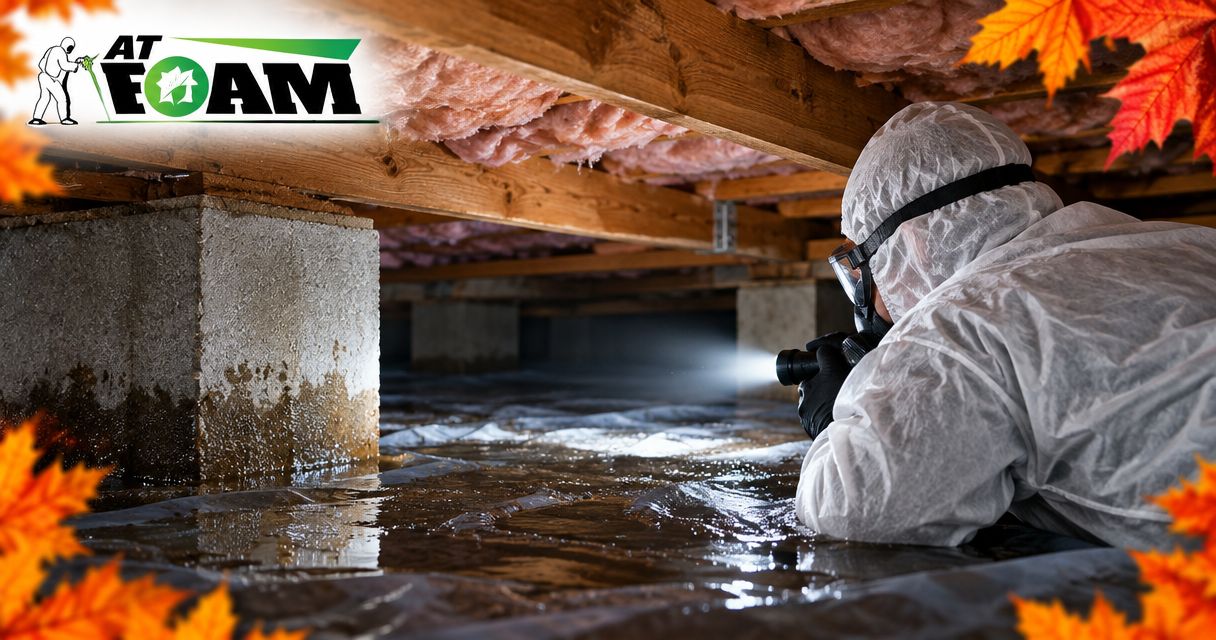
Your crawl space is damp because water is entering from outside, escaping from plumbing, evaporating from exposed soil, or condensing on cold surfaces. Washington’s wet winters make drainage problems especially important to check, but insulation alone does not fix an active water source.
- Why is my crawl space damp? Check drainage, groundwater, plumbing, exposed soil, condensation, and indoor moisture sources.
- Fix liquid water before adding insulation or sealing the crawl space.
- AT Foam Insulation provides crawl space insulation; drainage and plumbing problems need separate correction.
- A ground vapor barrier controls soil moisture, not flooding or plumbing leaks.
Why is my crawl space damp? Six common causes
Start with where the moisture appears and when it returns. A wet patch after rain points toward a different investigation than droplets forming on a cold water pipe during dry weather.
For your 2026 inspection, use these clues to choose the next check. They narrow the search; they do not prove the cause without an inspection.
| Possible cause | What you might notice | What to check first |
|---|---|---|
| Rainwater runoff | Wet soil near an exterior wall after rain | Gutters, downspouts, and ground slope |
| Groundwater | Water rising through soil or collecting in low spots | Drainage conditions beneath and around the home |
| Plumbing leaks | A persistent wet patch beneath pipes | Supply lines, drains, and nearby fixtures |
| Exposed soil | Damp air without an obvious puddle | Missing, torn, or displaced ground covering |
| Condensation | Droplets on cold pipes or other surfaces | Air humidity and surface temperature |
| Indoor moisture sources | Dampness near ducts or penetrations | Dryer exhaust, duct leaks, and air connections |
Before choosing a repair, understand the difference between stopping liquid water and sealing a crawl space from moisture. A sealed seam cannot redirect runoff that is collecting against your foundation.
Why this matters in Washington homes
A crawl space is the shallow area beneath your home’s floor. Moisture there can wet floor framing, damage insulation, and support mold growth. Persistent moisture also creates conditions for wood decay.
Seattle, Tacoma, Olympia, and Eastside homeowners need a plan that handles both rainwater and moisture in the air. For a 2026 repair, ask what is getting wet, how the water arrives, and where it will go after the work is finished.
Dry-looking soil does not prove the crawl space is dry. Water vapor is invisible, and a surface can dry between storms while moisture remains elsewhere.
Rainwater runoff reaches the foundation
Roof water belongs away from the house, not beside the crawl space. Overflowing gutters, disconnected downspouts, and ground that slopes toward the foundation can concentrate runoff where you least want it.
Walk around the outside during rain if you can do so safely. Look for spilling gutters, pooling water, and downspout discharge flowing back toward the building. Inside, note whether wet areas line up with those locations.
Correct the outside water path before covering the evidence inside. A new ground covering will not solve runoff entering through an opening or collecting against a foundation wall.
Keep this distinction clear: a foundation crack is a possible entry point, but the water feeding it still needs attention. Do not assume sealing the visible opening completes the repair.
Groundwater collects beneath the house
Groundwater can rise into low areas beneath a home, particularly when surrounding soil is saturated. Water can also move sideways through soil and enter around the foundation.
The clue is not always water dripping down a wall. You might find puddles developing across the ground, recurring water in the same low spot, or dampness that continues after roof runoff has stopped.
A drainage assessment should establish where water enters and whether it has a reliable exit. A sump pump removes water collected in a basin; it does not automatically collect water from every corner of the crawl space.
Do not dig beside footings or change foundation drainage without qualified advice. The footing supports your home, and excavation around it needs care.
Plumbing leaks keep one area wet
A leaking supply pipe, drain connection, or fixture above the crawl space can create persistent dampness regardless of the weather. Water can travel along a pipe or framing before dripping, so the wet spot is not always directly below the failure.
Notice whether dampness changes when a sink, shower, toilet, or appliance runs. That observation helps a plumber investigate, but it is not a reason to delay repair while you keep testing fixtures.
A plumbing repair stops the source. Wet insulation, affected materials, and remaining moisture still need assessment afterward.
Keep out if standing water is near wiring or electrical equipment. Sewage odors, suspected drain waste, or unstable framing are also reasons to stop a homeowner inspection and call the appropriate professional.
Exposed soil releases water vapor
Bare ground can release moisture into crawl space air even when you cannot see standing water. A ground vapor barrier is a sheet material installed to limit that movement from soil.
Look for uncovered dirt, displaced sheets, holes, and gaps around supports. A barrier that has been pushed aside for plumbing work is not doing the same job as a continuous, properly detailed covering.
The advantage of a ground barrier is direct control of soil vapor. Its limit is equally important: it is not a substitute for drainage, and it does not fix a leaking pipe.
Do not cover debris, damaged materials, or unexplained wet areas just to make the space look finished. Find the source first and leave service access workable.
Humid air condenses on cold surfaces
Condensation happens when a surface is cold enough for moisture in the surrounding air to turn into liquid. Cold water pipes are a familiar example. Damp outdoor air entering a cool crawl space can also contribute.
An open vent does not always dry a crawl space. The result depends on the moisture in the incoming air and the temperature of the surfaces it reaches.
Use a humidity meter rather than judging by smell alone. EPA indoor air guidance recommends keeping indoor relative humidity below 60 percent, ideally between 30 percent and 50 percent; those figures are general moisture-control guidance, not a complete crawl space design specification.
Relative humidity means how close the air is to saturation at its current temperature. Record readings with the weather and location so a contractor can interpret them, rather than treating a single reading as the whole diagnosis.
Indoor moisture sources feed the crawl space
A dryer exhausting beneath the house sends warm, moist air where it does not belong. Leaking ducts and openings around pipes or wiring can also connect crawl space air with other parts of the home.
Check where the dryer exhaust actually terminates. Do not assume a duct disappears outdoors just because you cannot see its end from the laundry room.
A rim joist is the perimeter board at the edge of the floor framing. Gaps there are another place to inspect when planning air sealing, which means closing unintended air leaks.
Fix the moisture-producing connection before relying on insulation. Otherwise, new material can hide the same unresolved problem.
What should you check before choosing a repair?
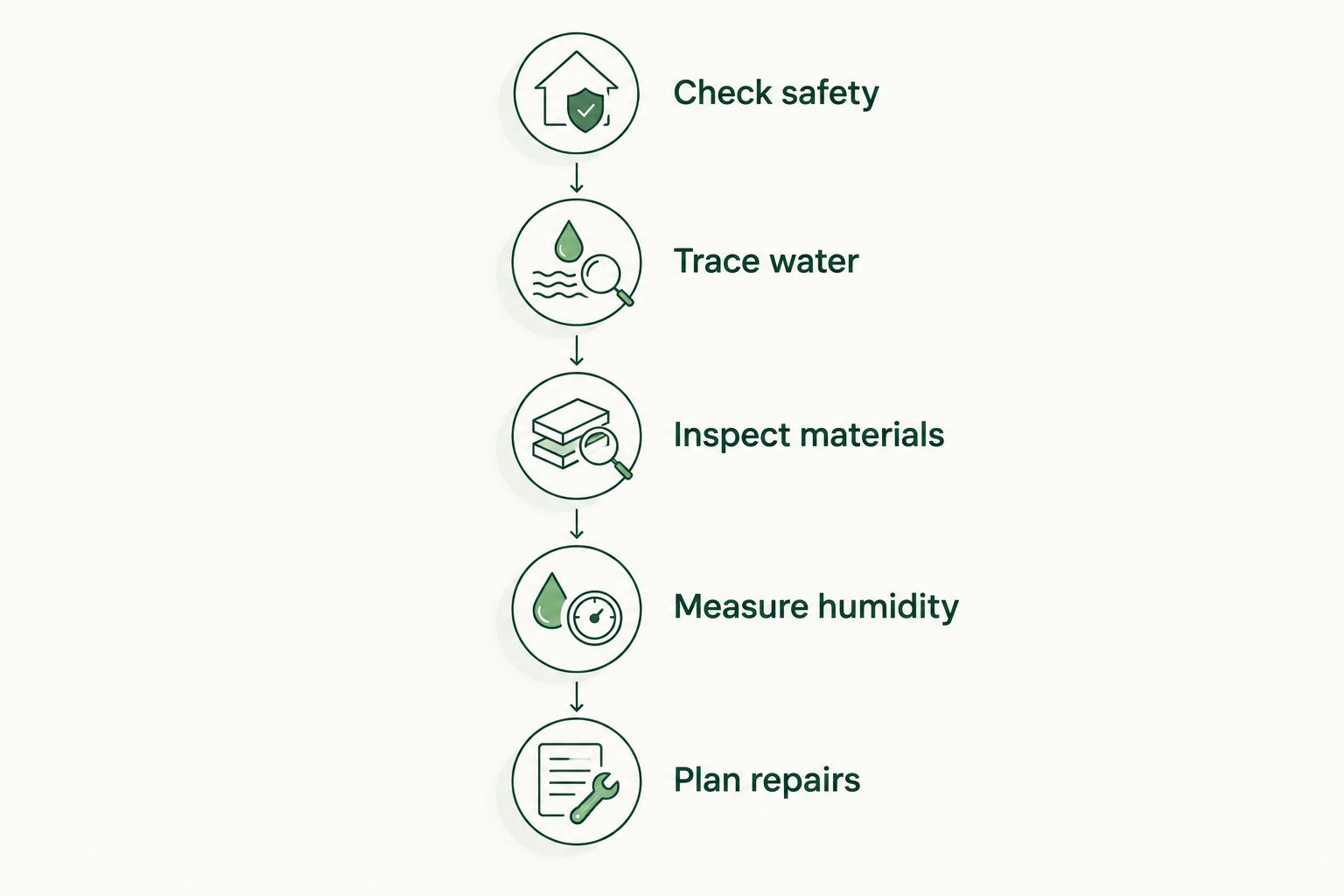
Use this order for a 2026 crawl space assessment. Stay at the access opening if entry is unsafe, cramped, or contaminated.
- Check safety. Look for standing water near electrical equipment, sewage, damaged framing, and unsafe access.
- Trace water. Compare wet areas with rain, plumbing use, exterior drainage, and cold surfaces.
- Inspect materials. Identify wet insulation, exposed soil, damaged ground covering, and visibly affected wood.
- Measure humidity. Record conditions alongside weather observations rather than relying on a musty smell.
- Plan repairs. Separate water-source correction, drying, material repair, and insulation work in the scope.
Take photos from safe locations and mark where each problem appears. A record showing that water returns after rain is more useful than an isolated picture of wet dirt.
Which moisture-control option fits the problem?
Different repairs do different jobs. Choose the repair that matches the source, not the one that makes the crawl space look finished fastest.
| Option | Best for | Main benefit | Main limit |
|---|---|---|---|
| Drainage and sump system | Recurring liquid water that needs collection and discharge | Moves collected water out | Needs a suitable collection layout and discharge route |
| Ground vapor barrier | Moisture rising from exposed soil | Limits soil vapor entering the air | Does not stop plumbing leaks or resolve flooding |
| Dehumidifier | Excess air humidity after water sources are controlled | Removes moisture from air | Does not repair leaks; needs drainage and upkeep |
| Air sealing and insulation | Unintended air leaks and heat loss | Controls air movement and heat flow when properly specified | Does not replace water-source repairs |
When comparing sump pumps for water removal, start with the collection basin, discharge route, and expected water conditions—not just the pump itself. A pump must receive the water before it can remove it. That same distinction matters when reading about sump pumps for water removal for another region: equipment selection does not replace a site-specific drainage plan.
Ask who handles each part of the job. Plumbing, drainage, mold assessment, and insulation are different scopes, even when the work must happen in sequence.
Why does crawl space dampness vary between homes?
The same rainy week does not create the same conditions beneath every house. Your 2026 repair scope should account for these differences:
- Ground slope: Water flows differently toward a foundation than away from it.
- Soil and groundwater: Water movement beneath the property changes where it collects.
- Roof drainage: Gutters and downspouts determine where roof runoff lands.
- Ground covering: Missing or damaged sections leave soil exposed.
- Air connections: Vents, ducts, and framing gaps change moisture movement.
- Plumbing condition: An active leak adds water independently of the weather.
These factors explain why copying a neighbor’s repair is not a diagnosis. Ask for findings tied to your house.
Will spray foam fix my damp crawl space?
Spray foam does not fix an active leak, standing water, or a drainage failure. It belongs in an insulation and air-sealing plan after moisture sources and installation conditions have been assessed.
Open-cell foam has a more open internal structure; closed-cell foam has a denser, more closed structure and generally resists vapor movement more. Neither description makes a product a universal crawl space solution. Product requirements, the building assembly, and the condition of the surface determine suitability.
AT Foam Insulation is a fit for Washington homeowners who need crawl space spray foam installation. The veteran-owned local contractor serves Seattle, Tacoma, Olympia, the Eastside, and the greater Pacific Northwest, with free estimates.
AT Foam Insulation provides open-cell and closed-cell insulation services. The benefit is insulation and air control where appropriately installed; the limit is that foam cannot replace plumbing repairs, drainage correction, or treatment of existing damage.
Is a damp crawl space normal after rain?
Rain-related dampness points to a water-management problem that needs investigation, not automatic acceptance. Compare outside drainage with where moisture appears beneath the house.
Do not wait for visible mold before acting. Recurring puddles, wet insulation, and persistent dampness are enough reason to arrange an assessment.
Should I open the crawl space vents to dry it out?
Opening crawl space vents is not a dependable fix for every damp crawl space. Incoming air can add moisture when it contacts colder surfaces.
For a 2026 repair, ask how ventilation, ground covering, air sealing, and humidity control will work together. Do not close or open vents as an isolated cure without understanding the crawl space design.
FAQ
Why is my crawl space damp when it hasn’t rained?
Exposed soil, plumbing leaks, condensation, and indoor moisture sources can make a crawl space damp without rain. Groundwater can also remain after surface conditions have dried.
Does a musty crawl space mean I have mold?
A musty smell does not prove mold is present or identify its extent. Investigate moisture and have suspect materials assessed rather than diagnosing the problem by odor alone.
Can I put plastic over wet crawl space soil?
Do not use plastic covering as a substitute for investigating wet soil or standing water. Correct liquid-water problems and specify the ground barrier as part of the moisture-control plan.
Will a dehumidifier fix a leaking crawl space?
A dehumidifier removes moisture from air, not the source of a plumbing leak or groundwater entry. Fix the water source first and assess whether humidity control is still needed.
What humidity should I aim for in my crawl space in 2026?
EPA general indoor guidance recommends relative humidity below 60 percent, ideally between 30 percent and 50 percent. Have the crawl space target assessed with its temperature, materials, and ventilation design.
Can wet crawl space insulation just dry in place?
Wet insulation needs assessment before you decide to leave it in place. The material, contamination, damage, and ability of the surrounding assembly to dry determine the next step.
Who should I call about damp crawl space insulation?
AT Foam Insulation provides crawl space spray foam insulation estimates in its Washington service area. Active plumbing leaks, drainage failures, and damaged materials need the appropriate separate assessment before insulation work.
One last thing
Record when the dampness returns. Photos taken after rain and during dry weather help separate weather-driven water entry from a persistent leak or condensation problem.
Before approving insulation, ask what must be corrected first and how the surfaces will be checked before application. A clean-looking crawl space is not proof that its moisture problem is solved.
Related guides
- Connecting crawl space encapsulation to a sump pump system
- Connecting crawl space encapsulation to a dehumidifier system
- Do you need a vapor barrier with spray foam in a crawl space?
Get a FREE Quote. Call 425-999-8493.