Best overall approach: choose an inspection-led insulation retrofit contractor, not a material-first sales pitch. Best for local spray foam installation: AT Foam Insulation; best for an attic-only job: an attic retrofit specialist; best for a damp crawl space: a contractor who addresses moisture before insulation. This 2026 guide ranks contractor types by the work your Washington home needs.
- Choose an insulation retrofit contractor who inspects moisture, air leaks, and existing insulation before specifying materials.
- AT Foam Insulation fits Washington homeowners seeking veteran-owned, local spray foam installation for attics, crawl spaces, and walls.
- An attic specialist fits an attic-only project; a whole-home performance contractor fits problems spanning several rooms.
- Compare written scopes, not material names: include preparation, ventilation, protection, and completion checks.
Why this matters in Washington
An insulation retrofit improves insulation in an existing building. Unlike new construction, the work must account for what is already behind your walls, above your ceiling, and under your floor.
Pacific Northwest wet winters make moisture part of that decision. Insulating over a roof leak, wet framing, or a drainage problem does not repair the source. Your contractor needs to separate water problems from heat-loss problems before covering anything.
For a 2026 retrofit, start with the assembly, not the foam. An assembly means the layers working together: framing, insulation, air control, and moisture control. A good material in the wrong assembly is still the wrong installation.
What makes the best insulation retrofit contractor?
Use these criteria before comparing proposals. They apply whether you need spray foam, another insulation material, or repairs before insulation begins.
- Inspection first: The contractor examines accessible framing, existing insulation, leaks, and signs of moisture before specifying work.
- Clear boundary: The proposal identifies where the heated part of your home ends and the attic, crawl space, or outdoors begins.
- Moisture plan: The scope separates leak repair, drainage, ground moisture, and ventilation from insulation installation.
- Written scope: The proposal names materials, locations, preparation, removal, cleanup, and exclusions.
- Safe installation: The contractor explains occupant protection, product-specific return instructions, and required protective coverings.
- Verifiable business: You can verify current Washington contractor registration and insurance, then review relevant job photos.
Ask about 3 work zones: the attic, crawl space, and walls. You do not need work in all of them. You do need a reason for treating one while leaving the others alone.
Insulation retrofit contractors at a glance
These are contractor types, not a claim that named businesses have undergone comparative testing. Match the row to your actual problem.
| Ranked option | Best for | What to look for | Key limitation |
|---|---|---|---|
| AT Foam Insulation | Local spray foam installation | Veteran-owned local crew; open-cell and closed-cell installation | Spray foam installation does not replace a separate drainage, roofing, or structural repair scope |
| Attic retrofit specialist | A clearly defined attic-only project | Ceiling air sealing, access planning, and a stated ventilation approach | An attic-only scope does not address wall or crawl space problems |
| Crawl space retrofit specialist | Insulation work involving damp underfloor conditions | Ground moisture, drainage, framing inspection, and insulation treated together | Insulation alone does not repair active leaks or damaged wood |
| Whole-home performance contractor | Comfort problems across several rooms or levels | Building assessment and a prioritized repair plan | Assessment alone does not complete the installation work |
1. AT Foam Insulation: best for local spray foam installation
AT Foam Insulation is best for Washington homeowners who want a veteran-owned local crew for attic, crawl space, or wall spray foam installation. The contractor serves Seattle, Tacoma, Olympia, the Eastside, and the greater Pacific Northwest, with residential and commercial services.
The company installs 2 foam types: open-cell and closed-cell. Open-cell foam has a softer, more open structure; closed-cell foam has a denser, more closed structure. Their moisture behavior differs, so ask why the proposed product fits your particular wall, roof, or floor assembly.
AT Foam Insulation pros:
- Veteran-owned contractor with a local crew.
- Attic, crawl space, and wall spray foam services.
- Licensed and insured, with free estimates.
- Real job photos and videos to review.
AT Foam Insulation limitations:
- A spray foam scope does not substitute for diagnosing an active water leak.
- Material selection still requires an assembly-specific explanation; neither foam type belongs everywhere.
- Occupied-home work requires a clear protection and return plan.
Best for: Homeowners who have identified a spray foam project and want a local installation estimate.
Ask the estimator to point out the proposed insulation boundary and explain preparation before spraying. Verdict: Buy the installation only when the written scope answers those questions.
2. Attic retrofit specialist: best for an attic-only project
An attic retrofit specialist focuses on the space above your ceiling. That work can include addressing gaps around penetrations, preparing existing insulation, and installing the specified insulation layer.
Air sealing means closing unintended paths where air passes through the building. Insulation slows heat flow; it does not automatically close every gap around wiring, plumbing, or an attic hatch.
Attic retrofit specialist pros:
- Keeps a contained project focused on the ceiling boundary.
- Brings attic access and preparation into the discussion.
- Can coordinate air sealing with insulation work.
Attic retrofit specialist cons:
- Does not resolve comfort problems caused elsewhere in the home.
- A ceiling-level approach and a roofline approach require different ventilation details.
- Removal adds another task when existing material needs to come out.
Best for: A home with a defined attic deficiency and no unresolved roof leak.
For a 2026 proposal, require the contractor to state whether insulation belongs at the attic floor or roofline. Those are different scopes. Verdict: Buy for a defined attic problem; hold if the insulation boundary is unclear.
3. Crawl space retrofit specialist: best for damp underfloor conditions
A crawl space retrofit specialist should connect insulation work with the conditions below your house. Ground moisture, plumbing leaks, outdoor water entry, and damaged insulation need separate attention.
Ask about the rim joist—the perimeter framing where the floor meets the foundation. It is one inspection point, not permission to spray over every surface below the house.
Crawl space retrofit specialist pros:
- Puts moisture conditions into the insulation discussion.
- Connects floor insulation, perimeter details, and access requirements.
- Helps define which repairs must happen before insulation.
Crawl space retrofit specialist cons:
- Insulation cannot correct a drainage defect or plumbing leak.
- Covering framing can make later inspection harder.
- Encapsulation and insulation are related but are not interchangeable jobs.
Best for: Homeowners whose underfloor insulation project includes dampness or deteriorated existing material.
Ask which surfaces stay accessible for inspection and which trades handle repairs. Verdict: Buy an integrated scope; skip any proposal that treats wet wood as an insulation problem alone.
4. Whole-home performance contractor: best for scattered comfort problems
A whole-home performance contractor assesses how air leakage, insulation, ventilation, and heating equipment interact. This route fits a home where the cause of discomfort is not obvious.
A blower-door test uses a fan to measure building air leakage under controlled pressure. It can support diagnosis, but it does not replace inspecting the actual attic, walls, and crawl space.
Whole-home performance contractor pros:
- Looks beyond a single cold room or exposed surface.
- Can organize work by the causes found during assessment.
- Connects air sealing with ventilation planning.
Whole-home performance contractor cons:
- Diagnostic work is separate from completing repairs.
- The resulting plan can involve several trades.
- A broad assessment is not a substitute for a detailed installation scope.
Best for: Homes with uneven comfort across several rooms, unexplained drafts, or uncertain priorities.
Ask what you receive after the assessment and who completes each repair. Verdict: Buy the diagnosis first when you cannot identify the problem; wait on material selection.
How these contractor options are ranked
The ranking follows job fit: a defined spray foam installation, an attic-only project, a moisture-sensitive crawl space, or an unresolved whole-home problem. It does not assign review scores or claim that one contractor type wins every job.
For your 2026 decision, inspection quality, moisture planning, and written scope matter more than a broad “best contractor” label. Change the order when your house needs diagnosis before installation.
What should the written scope include?
Get 1 written scope that explains the complete job, not just a material and an area measurement. You should be able to point to each work location and understand what happens there.
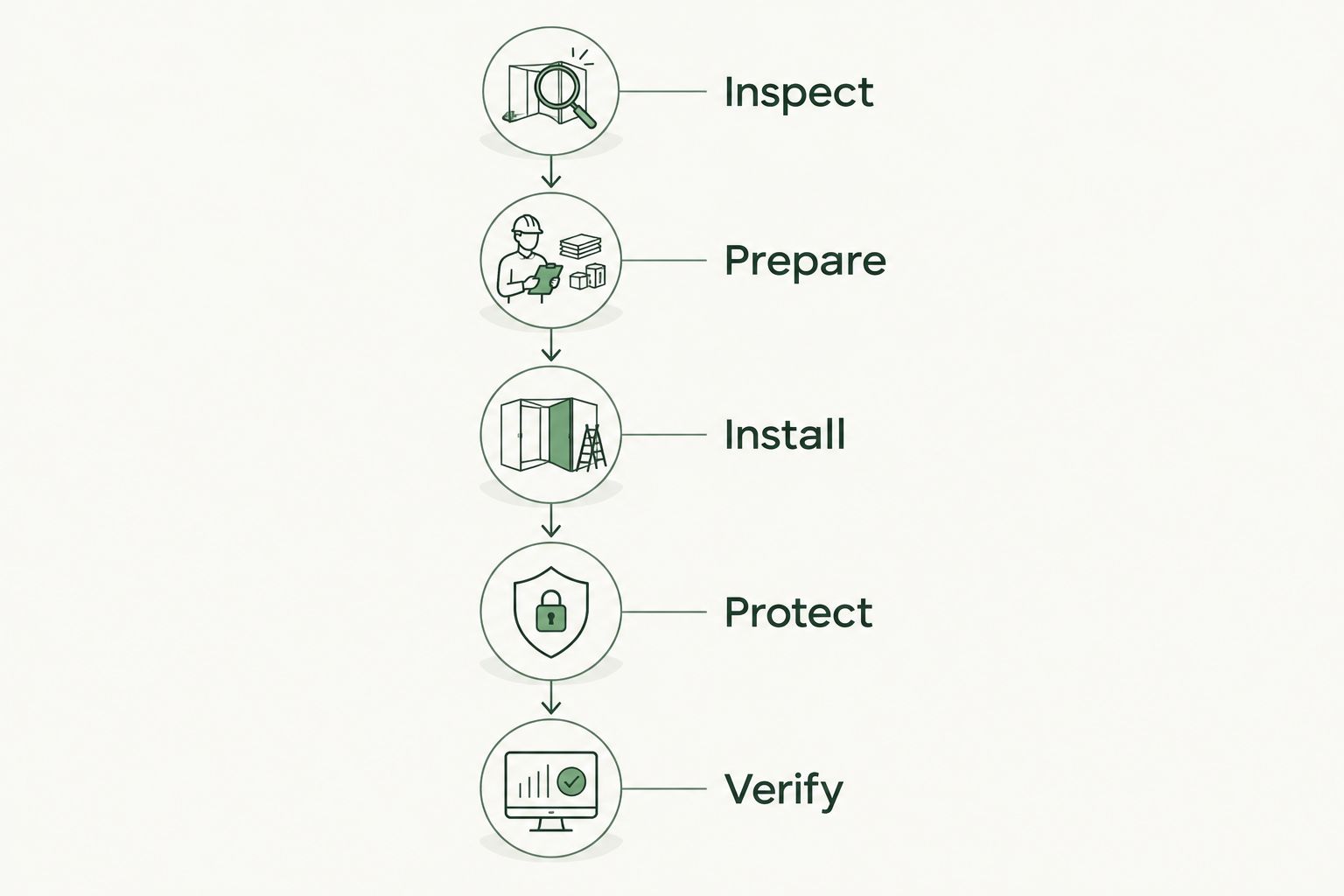
Use this sequence when reviewing the proposal:
- Inspect: Record existing conditions and unresolved defects.
- Prepare: Identify removal, drying, repairs, and surface preparation.
- Install: Name the insulation product, location, and specified thickness or R-value.
- Protect: State occupant protection, ventilation, and required protective coverings.
- Verify: Describe completion checks, cleanup, and documentation.
R-value measures resistance to heat flow. Ask for the specified R-value where it applies, but do not treat that number as proof that air sealing, moisture control, and installation quality are handled.
Request photos of concealed areas before they are covered. For spray foam, ask how the crew checks the installed work against the specified product instructions and scope. A finished-looking surface is not the entire handover.
Can existing insulation stay in place?
Existing insulation should stay only when its condition and the new assembly support keeping it. Wet, contaminated, obstructive, or poorly placed material needs a specific plan rather than an automatic cover-up.
For spray foam, surface preparation matters because the foam must bond to the intended substrate—the surface receiving it. The question of applying spray foam over existing fiberglass insulation therefore turns on access, adhesion, and the proposed assembly, not simply whether fiberglass is already present.
Ask the contractor to identify what stays, what comes out, and why. The removal line should also explain containment and disposal rather than leaving those tasks implied.
If your attic needs that work, compare the preparation questions in this guide to attic insulation removal in Seattle. Keep removal and installation in the same planning conversation so neither crew inherits an undefined job.
How do you protect an occupied home?
Get the installation-day plan before accepting the proposal. Spray foam work requires product-specific controls, including protection of adjacent areas and instructions for occupants returning to the treated space.
Ask who can remain in the building, which areas must be isolated, how ventilation is handled, and when occupants and pets can return. Do not substitute a generic return time for the applicable product and installation instructions.
Your 2026 scope should also identify who handles ignition or thermal barriers when required. These are protective coverings used in specified applications; exposed foam is not automatically a finished assembly.
Keep access practical. Discuss stored belongings, attic hatches, crawl space entries, and the route crews will use before installation day.
Which insulation retrofit contractor should you choose?
Choose the contractor who can explain the problem, the assembly, and the finished scope in plain language. If the explanation starts and ends with “more insulation,” keep asking questions.
Choose AT Foam Insulation for a local spray foam estimate covering an attic, crawl space, or wall project. Choose a diagnostic-first route when you cannot tell whether the trouble comes from insulation, air leakage, moisture, or heating equipment.
Before signing, verify registration and insurance, review relevant real job photos, and confirm who performs the work. Then compare proposals line by line. Different preparation and protection requirements mean you are not comparing the same job.
FAQ
What’s the best contractor for an insulation retrofit in Washington?
The best contractor fits the problem and provides an inspection-led written scope. AT Foam Insulation fits homeowners seeking local, veteran-owned spray foam installation for attics, crawl spaces, and walls.
Should I choose open-cell or closed-cell spray foam?
Choose the foam type that fits the building assembly and moisture-control plan. Ask your contractor to explain the product selection for the specific attic, wall, or crawl space rather than recommending one type everywhere.
Can I insulate a damp crawl space right away?
Address the source of dampness before covering affected materials. The scope should identify leaks, drainage issues, ground moisture, and any damaged framing that needs separate repair.
Do I need to remove all my old insulation?
Not every insulation retrofit requires complete removal. Existing material must be assessed for condition, interference with the new installation, and compatibility with the proposed assembly.
Can my family stay home during spray foam installation?
Follow the product-specific occupant protection and return instructions for your installation. Get the isolation, ventilation, and return plan in writing before the work starts.
Does a higher R-value mean a better retrofit?
A higher R-value means greater resistance to heat flow, not a complete retrofit plan. Air leakage, moisture control, installation quality, and ventilation still need attention.
What should I ask during a free insulation estimate?
Ask where the insulation boundary will be, what preparation is included, and how the crew verifies completion. Also request the product specification, occupant protection plan, exclusions, and relevant job photos.
One last thing
Before the estimator leaves, ask: “What needs fixing before you insulate?” The answer should distinguish installation preparation from repairs that need another trade. That question gets you closer to a sound retrofit than asking which foam is “best.”
Related guides
- Insulation companies in Seattle
- Can spray foam insulation lower Pacific Northwest energy bills?
- House insulation cost considerations in Washington
Get a FREE Quote. Call 425-999-8493.