Veteran-owned and operated spray foam insulation

Author: AT Foam

  • Can crawl space encapsulation fix an existing mold problem?

    Can crawl space encapsulation fix an existing mold problem?

    No. Crawl space encapsulation does not remove existing mold. It helps control moisture that supports mold growth, but contaminated materials still need appropriate cleaning or removal, and leaks or drainage problems need correction before the crawl space is sealed.

    TL;DR
    • Can crawl space encapsulation fix an existing mold problem? Not alone: existing growth needs cleanup, not a cover-up.
    • Correct water entry, address contaminated materials, and dry the crawl space before encapsulation.
    • AT Foam Insulation is a local option for homeowners planning crawl space spray foam insulation, not a substitute for mold remediation.
    • Keep relative humidity below 60%, consistent with EPA mold-prevention guidance.

    Can crawl space encapsulation fix an existing mold problem?

    Encapsulation addresses part of the moisture problem. Mold cleanup addresses the contamination already present. You need both when an existing mold problem and uncontrolled crawl space moisture occur together.

    A sealed ground liner cannot clean a mold-covered floor joist. Spray foam cannot repair rotten wood. A dehumidifier cannot stop a plumbing leak.

    For homeowners planning insulation after moisture repairs, AT Foam Insulation provides crawl space spray foam insulation in Seattle, Tacoma, Olympia, and the greater Pacific Northwest. Keep the insulation scope separate from any mold assessment, cleanup, or structural repair your crawl space needs.

    Work Best for What it helps address What it does not fix
    Mold cleanup Existing contamination Cleaning affected surfaces or removing materials that cannot be cleaned The moisture source unless repairs are included
    Encapsulation Ground moisture and enclosure control Separating the crawl space from exposed soil and managing air entry Mold already growing on wood or other materials
    Dehumidification Humidity control Removing moisture from crawl space air Bulk water, active leaks, or contaminated materials
    Spray foam insulation Thermal and air-control work Resisting heat flow and limiting air leakage where installed Mold contamination, drainage defects, or rotten framing

    These jobs can support each other. They are not interchangeable, and a proposal should tell you which work is included.

    Why this matters in Pacific Northwest homes

    Wet winters make water control a practical concern in Seattle, Tacoma, Olympia, and Eastside crawl spaces. Water can enter through drainage defects or plumbing leaks, while exposed soil releases moisture into the space. Cold surfaces can also collect condensation when humid air reaches them.

    The risk is covering up a problem instead of correcting it. Once a liner or insulation hides a surface, checking that surface becomes harder.

    For a 2026 crawl space project, judge the proposal by its sequence, not just its finished appearance. A clean-looking liner is not evidence that the framing above it was cleaned, dried, or checked for damage.

    What should happen before encapsulation?

    Start with the source of the water. Then address contamination and damaged materials before installing the enclosure system.

    Find where the moisture comes from

    Look for active plumbing leaks, standing water, wet soil, drainage paths, and condensation. Check whether downspouts discharge near the foundation and whether surface water runs toward the house.

    Tell the contractor when you notice the problem. Water that appears after heavy rain points to a different investigation than water beneath a bathroom that stays wet during dry weather.

    A humidity reading helps describe the conditions that day. It does not explain every water stain or rule out an intermittent leak.

    Decide what needs cleaning or removal

    Mold remediation means cleaning up mold contamination and removing affected materials when cleaning is not appropriate. The method depends on the material, the extent of growth, access, and the condition of the building.

    Sound wood and water-damaged insulation do not call for the same treatment. Porous materials that cannot be cleaned adequately need a different approach from accessible, structurally sound framing.

    Do not accept spraying a chemical as the entire plan without an explanation of how contamination will be removed. EPA guidance explains that dead mold can still cause allergic reactions; killing mold alone does not replace cleanup.

    Check the condition of the framing

    A rim joist is the board around the outside edge of the floor framing. Like floor joists and the subfloor, it needs attention when prolonged moisture has caused damage.

    Discoloration alone does not establish that wood has lost strength. Soft, deteriorated, or visibly damaged framing needs evaluation before someone covers it.

    Insulation is not a structural repair. Settle repair decisions while the framing remains accessible.

    Dry the space and verify the result

    Drying belongs before covering affected surfaces. Ask how the contractor will check the framing and what moisture limits apply to the materials being installed.

    There is no single wood-moisture cutoff that fits every product and assembly. The installation requirements and site conditions should guide that decision.

    Keep the readings and work photos with your 2026 project records. They document conditions before the liner and insulation make some areas harder to see.

    Install moisture control and plan follow-up

    Encapsulation commonly includes a sealed ground vapor barrier, which limits water vapor moving out of the soil. The design also needs to address seams, edges, penetrations, access, and the crawl space's humidity-control method.

    The crawl space design must account for ventilation, combustion equipment, pest inspection access, and applicable local requirements. Closing vents without addressing the rest of the assembly is not a complete plan.
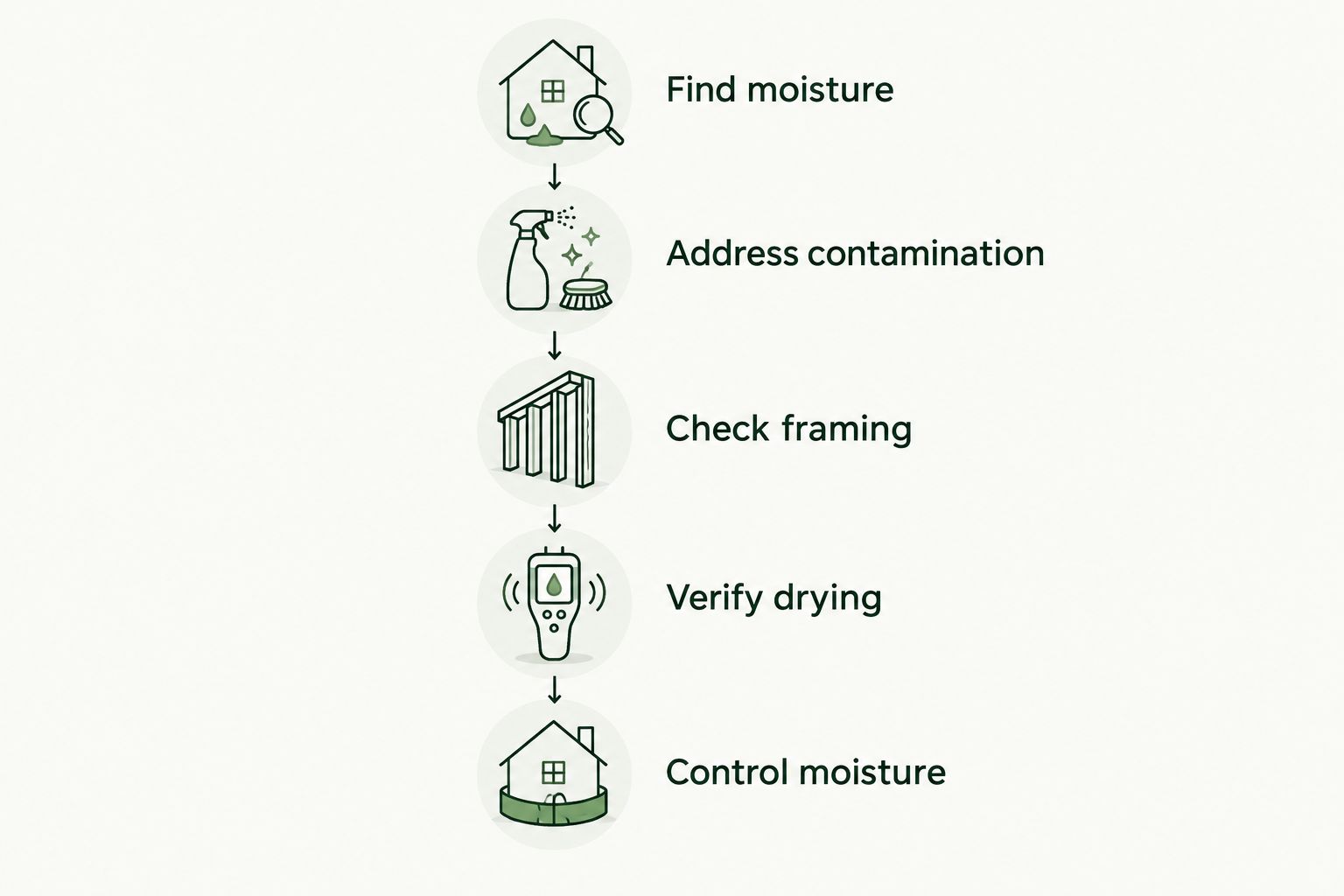
    Sequence from finding moisture and cleaning contamination to checking framing, drying, and moisture control.
    Moisture control comes after the existing contamination and damaged materials are addressed.

    Why mold problems continue after encapsulation

    Encapsulation cannot compensate for unfinished repairs or a poorly matched moisture-control plan. These are the conditions to check if odors, dampness, or visible growth return:

    • Water entry: A plumbing leak or rainwater pathway continues adding moisture behind or above the liner.
    • Remaining contamination: Affected surfaces or materials were covered rather than cleaned or removed.
    • Incomplete drying: Wet framing was enclosed before its condition met the installation requirements.
    • Barrier gaps: Open seams, unsealed edges, or damaged liner sections leave pathways for soil moisture.
    • Humidity control: The crawl space lacks an effective way to manage moisture in the air.
    • Hidden damage: Deteriorated framing or inaccessible wet materials were missed during the original work.

    A musty smell after the job deserves investigation. It does not identify the source by itself, and it does not prove the encapsulation system is the only problem.

    Ask for a follow-up inspection that checks water entry, humidity, visible surfaces, and the installed materials. Another layer of covering is not the first answer.

    Does encapsulation kill mold on floor joists?

    No. Encapsulation does not kill or remove mold on floor joists. Its role is moisture control, while affected joists need an appropriate cleanup plan and a check for deterioration.

    Do not confuse a dry surface with a clean surface. Reducing moisture helps prevent further growth, but it does not remove the contamination left behind.

    Likewise, dark staining after cleanup does not automatically establish active growth. Ask how the work will be evaluated rather than using wood color as the only pass-or-fail test.

    Can you spray foam over mold in a crawl space?

    Do not use spray foam to cover an unresolved mold problem. Address contamination, water sources, and the condition of the substrate—the surface receiving the foam—before insulation work starts.

    Open-cell foam has a more open cellular structure; closed-cell foam has a denser, closed structure. Their moisture properties differ, so neither should be selected solely because someone calls it the answer to mold.

    R-value measures resistance to heat flow. It does not measure mold removal, drainage performance, or whether wood was dry enough when insulation went on.

    For a 2026 insulation proposal, ask which foam is specified, where it will go, and what conditions the installer requires. The practical advantage is thermal and air-control work; the limitation is that concealed framing becomes harder to inspect afterward.

    Do you need a mold professional before encapsulation?

    EPA guidance uses about 10 square feet as a general reference point for small mold cleanup areas that homeowners can often handle themselves. Larger areas, extensive water damage, contaminated water, or health concerns call for additional professional guidance.

    A crawl space adds access problems. Low clearance, wiring, pests, standing water, and limited visibility make a seemingly small patch different from an accessible bathroom wall.

    Do not enter standing water where electrical hazards are possible. If you cannot safely inspect the area, have a qualified professional evaluate it.

    For health questions, speak with a medical professional rather than asking an insulation crew to determine whether exposure is safe. Building repairs and medical advice are separate jobs.

    What humidity should you maintain afterward?

    EPA mold-prevention guidance recommends keeping indoor relative humidity below 60%, ideally between 30% and 50% where possible. Relative humidity describes how much moisture the air holds compared with what it could hold at that temperature.

    Use those figures as prevention guidance, not proof that a crawl space is mold-free. A favorable air reading cannot rule out a wet joist, a hidden leak, or contamination left from an earlier event.

    For your 2026 maintenance routine, record humidity and look for changes after heavy rain. Position the monitor where it represents the crawl space, not directly beside a dehumidifier outlet.

    EPA also recommends drying water-damaged materials within 24–48 hours to help prevent mold growth. That guidance supports prompt action after a new leak; it is not a promise that every soaked assembly will dry within that window.

    What should your contractor's proposal include?

    A useful proposal separates the work into clear responsibilities. You should know who handles water repairs, who addresses contamination, and who installs the insulation and moisture-control materials.

    Before approving the job, ask:

    • What caused the moisture, and what repair addresses that source?
    • Which materials need cleaning, removal, or further evaluation?
    • How will the crew protect the occupied part of the house during cleanup?
    • What must be checked before framing is covered?
    • How will liner seams, edges, and penetrations be sealed?
    • How will humidity be controlled and checked afterward?
    • What maintenance and inspection access will remain?

    Ask for real before-and-after job photos. A useful set shows the affected surfaces, completed repairs, and finished installation—not only the new liner.

    Keep those photos with the written scope. If separate contractors handle remediation and insulation, identify who confirms that the crawl space is ready for the next stage.

    FAQ

    Will crawl space encapsulation get rid of existing mold?

    No. Crawl space encapsulation helps control moisture but does not remove existing mold. Affected materials need appropriate cleanup or removal before they are covered.

    Can I encapsulate my crawl space before removing mold?

    Address existing mold and its moisture source before encapsulation. Covering affected surfaces makes later inspection and cleanup harder.

    Does a dehumidifier remove mold from wood?

    No. A dehumidifier removes moisture from the air, not mold contamination from wood. It supports moisture control after leaks and contamination are addressed.

    What humidity helps prevent mold in a crawl space?

    Keep relative humidity below 60%, consistent with EPA mold-prevention guidance. EPA identifies 30% to 50% as an ideal indoor range where possible, but humidity readings do not replace checks for leaks and wet materials.

    How quickly should I dry a crawl space after a leak?

    EPA guidance recommends drying water-damaged materials within 24–48 hours to help prevent mold growth. Stop the water source and assess affected materials promptly; not every assembly will dry within that window.

    Is closed-cell spray foam a mold treatment?

    No. Closed-cell spray foam is insulation, not mold remediation. Existing contamination, wet substrates, and damaged framing need attention before installation.

    Can AT Foam Insulation help with crawl space insulation after cleanup?

    AT Foam Insulation provides crawl space spray foam insulation for homeowners and businesses in Seattle, Tacoma, Olympia, and the greater Pacific Northwest. Arrange a free estimate to discuss the insulation work after moisture and contamination issues are addressed.

    One last thing

    Ask to see the framing before anyone covers it. That inspection point gives you a chance to confirm that cleanup, drying, and repair decisions are complete while the surfaces remain visible.

    AT Foam Insulation is a veteran-owned local spray foam insulation contractor offering free estimates. For your 2026 crawl space project, start with the water problem and keep the insulation work in the right order.

    Get a FREE Quote: call 425-999-8493.

  • Can spray foam insulation lower energy bills in the Pacific Northwest?

    Can spray foam insulation lower energy bills in the Pacific Northwest?

    Yes—spray foam insulation can lower energy bills in Pacific Northwest homes when it reduces heat loss and seals unwanted air leaks. Your result depends on the home's existing insulation, the installation details, and the heating system; moisture repairs and ventilation needs belong in the plan, not outside it.

    TL;DR
    • Can spray foam insulation lower energy bills? Yes, when insulation gaps and air leaks contribute to heating demand.
    • AT Foam Insulation installs open-cell and closed-cell spray foam in Pacific Northwest attics, crawl spaces, and walls.
    • Fix water problems before insulating; spray foam does not repair leaks or drainage.
    • Compare weather-adjusted energy use, not just the amount due on your utility bill.

    Why this matters

    A drafty house loses heat through more than thin insulation. Warm indoor air also escapes through gaps, while outdoor air enters elsewhere. Your heating equipment has to replace that lost heat.

    Spray foam addresses both heat flow and air leakage when the material and installation suit the assembly. But making a house tighter also changes how air moves through it. Review how spray foam insulation connects to whole-house ventilation before treating air sealing as a stand-alone job.

    For a 2026 insulation project, start with the house's actual problems: drafts, missing insulation, damp framing, or an unclear boundary between heated and unheated space. Those findings should determine the work.

    Can spray foam insulation lower energy bills in the Pacific Northwest?

    Spray foam can lower heating demand by slowing heat transfer and reducing air leakage. It does not establish a guaranteed reduction in your utility bill. A home with substantial insulation gaps presents a different opportunity from a home that already has a well-insulated, well-sealed enclosure.

    R-value measures resistance to heat flow. Air sealing closes paths where air passes through the building. Both matter: insulation between framing members does not automatically seal every joint around them.

    Use this sequence to decide whether spray foam addresses your house's energy losses:

    1. Find the boundary. Identify where heated indoor space ends and unheated space begins. In an attic, that boundary might be at the ceiling or the roofline, depending on the design.
    2. Check existing conditions. Look for insulation gaps, air paths, roof leaks, wet wood, and crawl space water. An energy assessment can help separate insulation problems from equipment problems.
    3. Choose the assembly. Decide where the insulation, air barrier, and moisture-control layers belong. These layers must work together rather than leave gaps between separate scopes of work.
    4. Specify the installation. Put the foam type, intended R-value, coverage, surface preparation, and required protective coverings in writing.
    5. Check the result. Review installation documentation and compare energy use after the work. Keep weather, thermostat settings, and occupancy in that comparison.
    Five steps for evaluating and checking a spray foam insulation project
    Choose the insulation boundary and resolve moisture problems before installation.

    A proposal that names only a foam type leaves important questions unanswered. You also need to know where the foam stops, how it joins adjoining air barriers, and what happens around access openings, wiring, and equipment.

    Is open-cell or closed-cell spray foam better for energy savings?

    Neither foam type wins every job. Open-cell foam has a more vapor-permeable structure, meaning water vapor passes through it more readily. Closed-cell foam generally provides greater R-value per inch and greater resistance to vapor movement at appropriate installed thicknesses.

    Those differences affect the design. They do not establish a universal winner for Seattle, Tacoma, Olympia, or Eastside homes.

    Foam type Best for Main benefit Main limitation
    Open-cell spray foam Assemblies with enough depth and a suitable drying strategy Provides insulation and air sealing when properly installed Lower R-value per inch; vapor control needs careful attention
    Closed-cell spray foam Depth-limited assemblies needing higher R-value per inch Combines insulation, air sealing, and greater vapor resistance at suitable thickness Reduced vapor movement can limit drying through the foam

    Choose the foam for the assembly, not from a blanket claim that one type saves more energy. Available depth, framing condition, roof or wall materials, and drying direction all affect that choice.

    Closed-cell foam is not a substitute for repairing a leak. Open-cell foam is not permission to ignore condensation risk. Ask the installer to explain how the proposed assembly handles moisture during wet Pacific Northwest winters.

    Where does spray foam make the most sense in your home?

    Start with the location of the problem, not the easiest surface to spray. Attics, crawl spaces, and walls connect to one another. An unfinished transition can leave an air path even when the nearby insulation looks complete.

    Attics: choose the ceiling or roofline deliberately

    An attic project needs a clear insulation boundary. Insulating at the attic floor keeps the attic outside the heated enclosure. Insulating at the roofline changes the enclosure and requires a coordinated roof, moisture, and ventilation design.

    The benefit is reducing heat flow and leakage across the selected boundary. The limitation is that spraying a roof deck without resolving the full assembly can create moisture or ventilation problems.

    Check attic hatches, wall tops, plumbing penetrations, and equipment access. Also ask how the work addresses existing roof ventilation. Do not assume every vent should stay open—or that every vent should close.

    Crawl spaces: resolve water before insulating

    A crawl space can expose the floor above to cold air, especially where insulation is missing or disconnected. A rim joist—the perimeter framing at the edge of a floor—is another location where air leakage deserves attention.

    The benefit of a coordinated crawl space project is a more continuous boundary beneath or around your living space. Its limitation is straightforward: insulation cannot correct standing water, plumbing leaks, or poor drainage.

    Decide whether the crawl space remains outside the heated enclosure or becomes part of a different enclosure design. Floor insulation, ground moisture control, ventilation, and any conditioning equipment must follow that decision.

    Walls: plan around access and hidden conditions

    Wall insulation can reduce heat transfer through exterior wall cavities. But finished walls create access constraints, and concealed cavities can contain wiring, plumbing, blocking, or moisture damage.

    The benefit is addressing a weak part of the enclosure. The limitation is the need to verify cavity conditions and use a suitable installation method rather than assume every wall can receive the same treatment.

    Ask what must be opened, what can be inspected, and who handles repairs afterward. A clear scope prevents an insulation proposal from becoming an unfinished wall-repair project.

    Why energy-bill savings vary

    No responsible estimate turns the words spray foam into a fixed savings percentage. These factors explain why the same material produces different outcomes in different homes:

    • Starting condition. Missing insulation and open air paths create a different opportunity from an already insulated, tightly sealed assembly.
    • Coverage and continuity. Gaps around transitions, hatches, and penetrations can leave heat-loss paths despite good coverage elsewhere.
    • Heating equipment. Equipment efficiency, controls, and duct location affect how much purchased energy your house needs to stay comfortable.
    • Moisture condition. Wet framing, drainage problems, and roof leaks require their own repair plan before insulation conceals surfaces.
    • Weather and household use. Outdoor temperatures, thermostat settings, occupancy, and changes in appliance use affect the comparison.
    • Utility rates and charges. A bill measures money owed, not just energy consumed. Rate changes can obscure a reduction in use.

    For your 2026 estimate, ask which of these factors the proposed work actually addresses. A useful answer names the assembly and the defect, not just the material being installed.

    How do you check whether your energy use dropped?

    Gather 12 months of utility records before the project. Record energy use in the units on the bill, such as kilowatt-hours for electricity or therms for gas, alongside billing dates and thermostat habits.

    Keep 12 months of records after installation for a full seasonal comparison. For a 2026 installation, an immediate before-and-after bill is not a full-year result. A mild month after a cold month can make almost any heating project look successful.

    Where your utility provides weather-normalized comparisons, use them. Weather normalization adjusts the comparison for outdoor conditions; it helps separate a change in the house from a change in the weather.

    Also note equipment replacements, new household members, electric-vehicle charging, and other major changes. Otherwise, total household electricity use can hide what happened to heating demand.

    Do not call a smaller bill proof of insulation savings without checking energy use and weather. Comfort improvements matter too, but fewer drafts and steadier room temperatures are different findings from a measured reduction in consumption.

    What should a spray foam estimate include?

    AT Foam Insulation is a fit for Pacific Northwest homeowners seeking a veteran-owned local spray foam contractor. The company installs open-cell and closed-cell insulation in attics, crawl spaces, and walls, and provides free estimates.

    Use your AT Foam Insulation estimate to get a written answer to these practical questions:

    • Which surfaces receive insulation, and where does the air barrier continue beyond them?
    • Which foam type is specified, and what installed R-value is intended?
    • What preparation or moisture repairs must happen before spraying?
    • How are access openings, penetrations, and adjoining assemblies handled?
    • What protective coverings are required for the proposed location?
    • What ventilation and combustion-safety checks does the project require?
    • What are the product-specific instructions for leaving and re-entering the work area?

    Spray foam installation involves chemical products and controlled work conditions. Follow the product's re-entry instructions and the installer's site-safety directions; do not substitute a generic waiting period from an unrelated job.

    AT Foam Insulation is licensed and insured. Ask to see real job photos relevant to your assembly, then compare the written scope with what your house needs. Photos show workmanship details, but they do not replace an inspection of your own attic or crawl space.

    Will spray foam stop drafts immediately?

    Spray foam reduces drafts only where the installation closes the relevant air paths. A leaky door, an unsealed hatch, or an untreated connection can remain a problem after nearby insulation work.

    Ask how the finished air barrier will be checked. The right question is not whether foam is visible; it is whether the intended boundary is continuous.

    Can spray foam fix a damp crawl space?

    Spray foam does not fix the source of a damp crawl space. Drainage, plumbing leaks, ground moisture, and ventilation or conditioning needs require their own assessment.

    Insulation belongs in that plan after the moisture strategy is clear. Covering wet or damaged wood is not a moisture repair.

    Will a tighter house still need fresh air?

    A tighter house still needs controlled fresh air and working exhaust systems. Random leakage through framing is not a ventilation plan.

    Include ventilation in the 2026 project scope rather than waiting for indoor moisture or stale-air complaints. Homes with fuel-burning equipment also need appropriate combustion-safety attention when air sealing changes building airflow.

    FAQ

    Can spray foam insulation lower energy bills in a Seattle home?

    Yes, spray foam insulation can lower energy bills when it reduces heat loss and unwanted air leakage. The result depends on existing conditions, installation quality, heating equipment, and household use.

    Is closed-cell spray foam always better than open-cell?

    No, closed-cell spray foam is not always the better choice. Its higher R-value per inch and greater vapor resistance suit some assemblies, while available depth and drying needs can support a different choice.

    Will spray foam get rid of mold in my crawl space?

    Spray foam does not remove mold or repair the moisture source. Address water entry, damaged materials, and any needed remediation before covering affected surfaces.

    Can I insulate my attic without changing ventilation?

    Your attic’s ventilation needs depend on the proposed insulation boundary and roof assembly. A roofline project and an attic-floor project require different details, so ventilation belongs in the written design.

    How long should I track energy use after insulating?

    Track 12 months of energy use after insulating to capture a full seasonal cycle. Compare with the earlier records and account for weather, billing periods, and household changes.

    Does AT Foam Insulation offer free estimates?

    AT Foam Insulation offers free estimates for spray foam insulation projects. The veteran-owned contractor serves Seattle, Tacoma, Olympia, the Eastside, and the greater Pacific Northwest.

    Does spray foam replace roof or plumbing repairs?

    Spray foam does not replace roof or plumbing repairs. Stop the leak and assess affected materials before insulation hides the area.

    One last thing

    The edge of the insulation deserves as much attention as the middle. A fully covered cavity still connects to wall tops, floor edges, hatches, and penetrations. Ask your installer to show where the air barrier continues at those connections.

    For your 2026 project, make continuity part of the written scope. That turns a general promise to insulate into specific work you can review.

    Related guides

    Get a FREE Quote. Call 425-999-8493.

  • Does homeowners insurance cover spray foam insulation issues?

    Does homeowners insurance cover spray foam insulation issues?

    Homeowners insurance can cover damage involving spray foam insulation when the damage results from a cause your policy covers; it does not automatically cover defective foam or poor installation. Replacing faulty work and repairing damage caused by that work are separate coverage questions. For a 2026 claim, the cause of loss, exclusions, and policy wording matter more than the insulation material alone.

    TL;DR
    • Does homeowners insurance cover spray foam insulation issues? Sometimes: covered damage and defective installation are separate questions.
    • Fire damage, water damage, and installation defects need separate coverage reviews under your actual policy.
    • AT Foam Insulation serves Pacific Northwest homeowners seeking local spray foam installation, not insurance coverage decisions.
    • Document the damage, stop active leaks safely, and ask your insurer for a written coverage explanation.

    Does homeowners insurance cover spray foam insulation issues?

    Coverage follows the cause of damage, not simply the presence of spray foam. An attic fire that damages insulation raises a different insurance question from foam that was installed incorrectly and needs removal.

    Use this table to frame the conversation with your insurer. These are claim-review categories, not promises of payment.

    Situation What needs review Main limitation
    Fire damages existing spray foam Whether the fire and damaged property fall within coverage Deductibles, limits, exclusions, and settlement terms still apply
    A sudden plumbing leak wets an insulated assembly The water source, timing, and applicable water-damage provisions Sudden damage is not automatically covered under every circumstance
    Foam was installed incorrectly Workmanship exclusions and the installation agreement Standard homeowners insurance generally does not pay to correct faulty work itself
    Defective installation causes other damage The exclusion and any resulting-damage exception Repairing the defect and repairing resulting damage can receive different decisions
    Long-term dampness, mold, or rot develops Moisture history and relevant exclusions or endorsements Maintenance-related damage and repeated seepage commonly face exclusions
    Odor or discomfort follows installation The reported condition, evidence, and applicable policy provisions Odor alone does not establish covered property damage

    Why this matters in a Pacific Northwest home

    Wet winters make moisture questions practical in Seattle, Tacoma, Olympia, and Eastside homes. Your insurer needs to distinguish an active leak from condensation, long-term dampness, and an installation problem. Those conditions require different repairs, even before coverage enters the discussion.

    AT Foam Insulation is a veteran-owned local spray foam contractor serving homeowners and businesses across the greater Pacific Northwest. Installation questions belong with a qualified contractor; coverage decisions belong with your insurer under your policy.

    For a project planned in 2026, ask insurance questions before work starts. A written answer about your policy is more useful than a general assurance that spray foam is covered.

    Does insurance pay to replace badly installed spray foam?

    Do not treat homeowners insurance as a warranty on installation. Policies commonly exclude faulty workmanship, although the exact wording and any exceptions control the claim.

    Examples of installation concerns include foam separating from a surface, gaps in the insulation layer, or material that requires further assessment. Finding one of these conditions does not establish its cause or prove insurance coverage. Ask the installer for a written inspection and proposed correction.

    Keep the installation contract, product information, photographs, and correspondence. If the dispute concerns work quality rather than an insured event, those records help you address the problem with the contractor without confusing it with a property claim.

    Can insurance cover damage caused by faulty installation?

    Damage beyond the faulty work needs its own review. Some policy language distinguishes excluded defective work from a separate loss that follows it, often called resulting or ensuing damage.

    That distinction is not a blanket exception. A policy can exclude the original defect and also exclude the resulting condition, depending on the cause and wording. Ask the adjuster to identify which damage is being evaluated and which provisions apply.

    For example, if a claim involves both insulation removal and damaged framing, request a separate explanation for each. A decision about replacing foam should not substitute for an explanation of the framing damage.

    What about wet foam, mold, or rotting wood?

    Water damage requires a source diagnosis. A roof leak, plumbing failure, ground moisture, and condensation are not interchangeable, and calling everything a spray foam problem hides the repair you actually need.

    A crawl space is the area below your floor; the rim joist is the framing around the floor's outside edge. Dampness in either location deserves inspection before additional insulation covers surfaces that need repair. Spray foam does not repair a leaking pipe or remove standing water.

    Mold and rot require a separate policy review. Homeowners policies commonly restrict these conditions, with coverage depending on exclusions, endorsements, and the event that caused them. Ask about mold-related limits explicitly rather than assuming they match the rest of a water-damage claim.

    For a 2026 moisture claim, keep records of earlier leaks and repairs alongside current photographs. A truthful timeline helps distinguish a newly discovered condition from damage that developed over time.

    Does open-cell or closed-cell foam change coverage?

    Open-cell foam has a more open internal cell structure. Closed-cell foam has a tighter cell structure and generally resists water-vapor movement more than open-cell foam. Neither label establishes insurance coverage or proves that an assembly was designed correctly.

    Foam type Best fit for evaluation Practical advantage Limitation
    Open-cell Assemblies where the design accounts for vapor movement and drying Generally allows more water vapor to pass through than closed-cell foam Moisture control still needs deliberate design
    Closed-cell Assemblies requiring greater resistance to vapor movement Generally provides more resistance to water-vapor movement It does not replace leak repair or make the whole assembly waterproof

    These are material differences, not product recommendations. The right choice depends on the assembly: the connected layers of roofing, framing, insulation, and finishes that manage heat and moisture together.

    R-value measures resistance to heat flow. It helps describe insulation performance, but it does not establish water resistance, correct installation, or claim eligibility. Ask your contractor about the complete assembly, not just the foam type or R-value.

    Why spray foam insurance coverage varies

    Your neighbor's approved claim does not establish coverage for your home. These factors change how an insurer evaluates the same visible symptom:

    • Cause of damage: Fire, plumbing failure, installation defects, and condensation require different policy reviews.
    • Timing: A sudden event and repeated moisture exposure raise different questions about when and how damage occurred.
    • Policy wording: Exclusions, definitions, and resulting-damage exceptions determine the coverage analysis.
    • Endorsements: Added provisions can change particular protections or restrictions.
    • Damaged property: Foam, framing, finishes, and belongings need clear descriptions rather than one undivided repair request.
    • Evidence: Photographs, inspection findings, and installation records help establish what happened without proving coverage by themselves.

    For your 2026 policy review, use the actual policy and endorsements, not just the declarations page. The declarations page summarizes coverage; it does not contain every exclusion or condition.

    What should you do when you find a problem?

    Protect the home, preserve evidence, and separate diagnosis from coverage. You need a repair plan and an insurance decision, but they are not the same document.

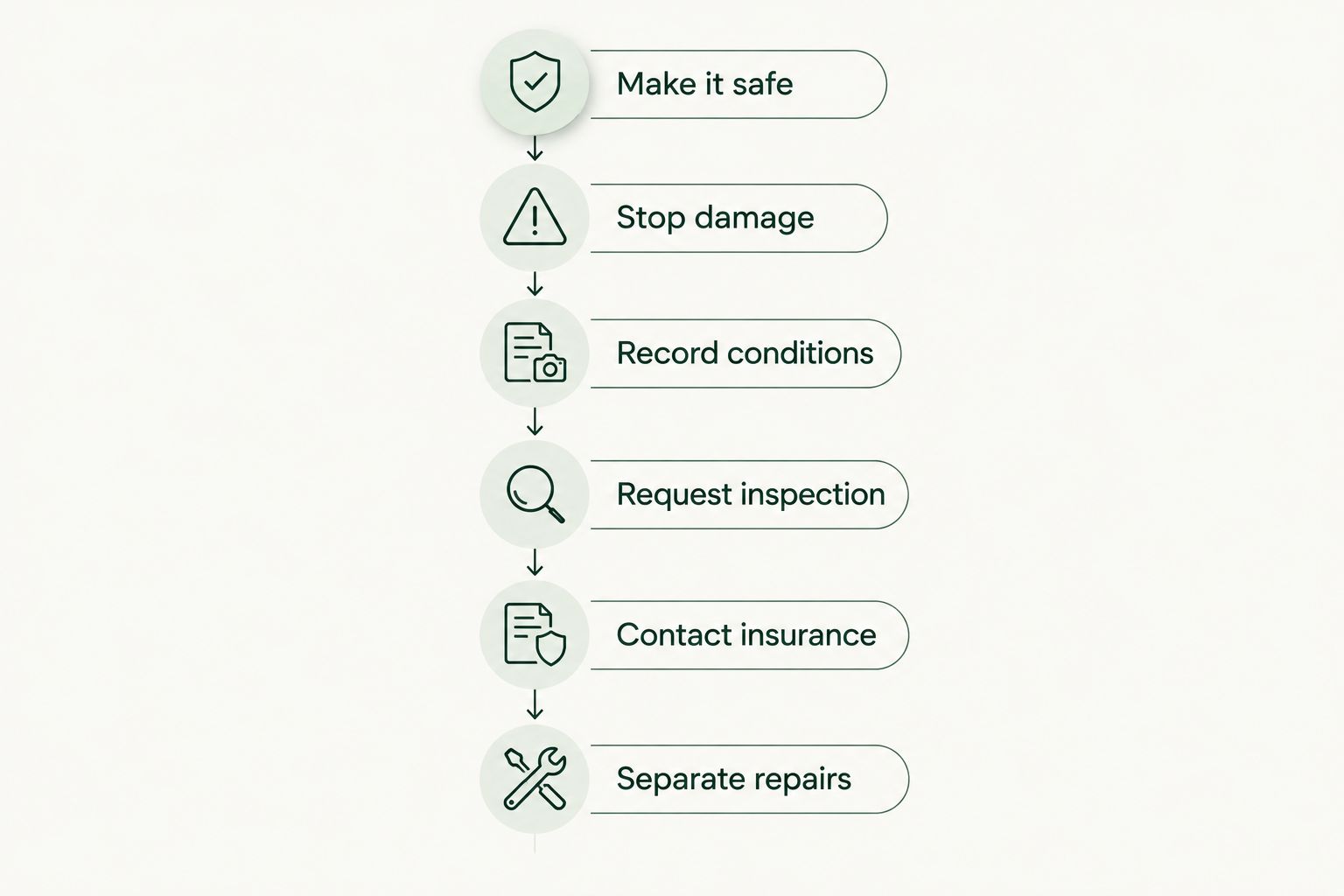
    1. Make it safe. Stay clear of damaged wiring, unstable materials, and suspected hazardous conditions. Leave an affected area if you feel unwell and seek appropriate medical or emergency help.
    2. Stop damage. Address an active water source safely. Follow your policy's requirements for protecting property and notifying the insurer.
    3. Record conditions. Take 3 photo sets: the whole area, the affected assembly, and close-ups of visible damage. Do not disturb unsafe materials to get a photograph.
    4. Request inspection. Ask the contractor or appropriate specialist to distinguish observations from conclusions about the cause. Request written findings.
    5. Contact insurance. Describe what you observed and when you discovered it. Ask what evidence the insurer needs before permanent repairs or material disposal.
    6. Separate repairs. Request a scope that distinguishes correcting defective work from repairing other damage. Keep receipts for necessary protective work.

    Do not delay essential safety measures while waiting for photographs or approval. At the same time, avoid unnecessary demolition that destroys evidence before the affected materials can be assessed.

    Six steps for documenting spray foam damage and separating repair needs from insurance coverage
    Document the condition and distinguish defective work from other damage before combining repairs into one scope.

    What records should you keep for a claim?

    Build a 1-page timeline stating when installation occurred, when you first noticed the problem, and what happened afterward. Include known leaks and previous repairs. If a date is uncertain, label it as uncertain rather than filling the gap.

    Save 2 copies of your records in separate locations. Include the contract, invoices, installation photos, product documents, inspection findings, and communication with both contractor and insurer.

    Document concealed areas before repairs close them up. Wide photographs show where damage sits in the home; close-ups show the condition itself. Keep original files rather than relying only on screenshots or edited images.

    For work completed in 2026, request project records while the details are fresh. Records support diagnosis and claim handling; they do not create coverage that the policy excludes.

    What should you ask before installing spray foam?

    Ask your insurer whether the planned work affects your policy, whether notification is required, and whether any relevant conditions apply. Describe the actual location: attic, crawl space, or walls. Do not ask only whether spray foam is allowed.

    Ask your contractor how the proposed assembly handles moisture and drying. An attic insulated along the roofline needs a different discussion from an attic insulated at the floor. Confirm ventilation arrangements and repair existing leaks before installation.

    AT Foam Insulation provides open-cell and closed-cell spray foam installation and free estimates. AT Foam Insulation is a local spray foam option for Pacific Northwest homeowners seeking a veteran-owned installation crew. The company is licensed and insured, but those credentials do not establish what your homeowners policy covers.

    The practical benefit of a site estimate is a discussion of your actual attic, crawl space, or walls. Its limit is equally clear: an insulation estimate is not an insurance coverage determination.

    FAQ

    Does homeowners insurance cover spray foam insulation issues?

    Homeowners insurance can cover spray foam damage caused by an event your policy covers, but it does not automatically cover defective installation. The cause, exclusions, and applicable exceptions determine the decision.

    Will homeowners insurance pay to remove badly installed foam?

    Homeowners insurance generally does not pay simply to correct faulty installation. Ask your insurer to distinguish correction of the work from any separately claimed resulting damage.

    Is mold behind spray foam covered by insurance?

    Mold behind spray foam requires a review of the moisture source and your policy’s mold provisions. Coverage can be restricted by exclusions, endorsements, and specific limits.

    Does closed-cell foam make my home waterproof?

    Closed-cell foam does not make your home waterproof. Roofs, flashing, plumbing, drainage, and the rest of the assembly still need to manage water correctly.

    Should I call the installer or my insurance company first?

    Handle immediate safety risks and active damage first, then notify the parties needed to inspect and evaluate the loss promptly. Follow your policy’s notice requirements and preserve evidence where safe.

    Does a contractor being insured guarantee my repair is covered?

    An insured contractor does not guarantee payment for your repair. Contractor insurance and homeowners insurance are separate policies with their own terms and exclusions.

    What should I request if my spray foam claim is denied?

    Request the denial in writing, including the policy provisions and factual reasons supporting it. Compare that explanation with the inspection findings and ask about the insurer’s review process if you disagree.

    One last thing

    Before accepting a repair scope, ask one plain question: does this fix the cause, or only replace what got damaged? New insulation over an unresolved leak leaves the original problem in place.

    Keep insurance approval and repair quality as separate checks. You need the moisture source addressed, the assembly assessed, and the proposed work explained in writing.

    For an insulation estimate, call 425-999-8493.