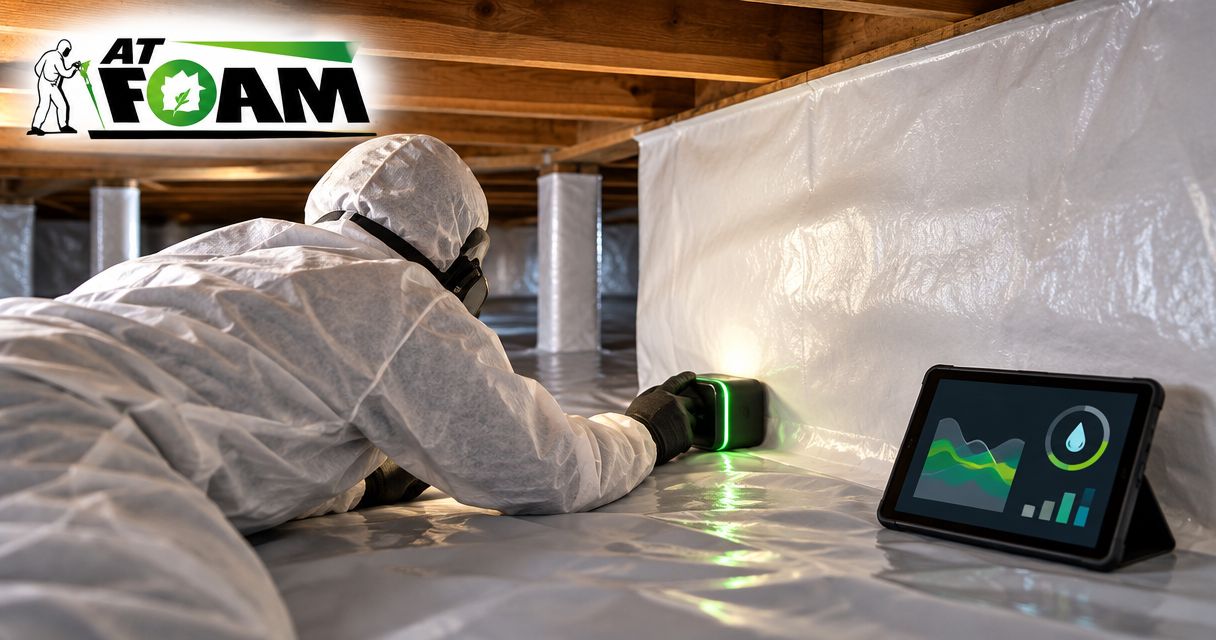
Yes. A crawl space moisture sensor works with encapsulation when you match the device to the problem: humidity in the air, water on the liner, or moisture in wood. For your 2026 setup, use it to check conditions after the crawl space is sealed—not as a substitute for drainage, leak repairs, or moisture control.
- A crawl space moisture sensor monitors conditions after encapsulation; it does not remove water or repair leaks.
- Use a humidity sensor for air conditions and a water-contact alarm where leaks can collect.
- AT Foam Insulation serves Pacific Northwest homeowners needing crawl space insulation, not a substitute for drainage repairs.
- Check sensor placement, alerts, and connectivity before relying on remote readings.
Why this matters in a Pacific Northwest crawl space
Wet winters put crawl space moisture control to work. Encapsulation separates the crawl space from ground moisture and uncontrolled outside air, but a plumbing leak or drainage problem still needs its own repair. A sensor helps you spot a change between inspections.
A normal humidity reading does not prove the whole crawl space is dry. Water can collect beneath a pipe while a humidity sensor elsewhere reports acceptable conditions. Start with the source of the water; the guide to why crawl spaces are damp in Washington homes explains the problems a monitor alone cannot fix.
Do crawl space moisture sensors work with encapsulation?
Yes. Encapsulation and monitoring do different jobs: the sealed ground liner limits moisture entry, while the sensor reports conditions at its location. The useful question is not whether they work together, but which condition you need to measure.
A ground liner is the durable sheet covering exposed soil. Sealed seams, wall connections, and penetrations help it form a continuous barrier. Sensors belong within a plan that also addresses bulk water, air leakage, and humidity control.
| Monitoring option | Best for | What it tells you | Main limitation |
|---|---|---|---|
| Air humidity sensor | Tracking crawl space air after encapsulation | Relative humidity and, on equipped devices, temperature | Does not directly detect a puddle or wet framing |
| Water-contact alarm | Warning about water near pipes, drains, or equipment | Whether water reaches its sensing contacts | Misses water that never reaches the contacts |
| Wood moisture meter | Checking suspicious framing during an inspection | Moisture in the tested wood | A handheld reading does not provide continuous monitoring |
Relative humidity means how much water vapor the air holds compared with what it could hold at that temperature. A wood moisture reading measures something different. Do not compare the two percentages as if they describe the same condition.
For a 2026 installation, check the device manual before buying. Monitoring, remote alerts, and equipment control are separate features; a product that displays humidity does not automatically operate a dehumidifier.
Air humidity sensors: best for tracking the sealed space
An air humidity sensor is the starting point when you want to know whether the encapsulated space is staying dry. Choose a location with representative air, not directly in the discharge from a dehumidifier or beside the access opening.
The benefit is a record you can compare with weather, equipment operation, and inspections. The limitation is coverage: a sensor reports its surroundings, not every corner behind a foundation wall or support beam.
EPA household moisture guidance recommends keeping indoor relative humidity below 60% RH, ideally between 30% RH and 50% RH. Those are general moisture-control guidelines, not a crawl space commissioning specification. Have the person responsible for your moisture-control system establish its operating target and alert settings.
Avoid treating the lowest reading as the goal. Temperature affects relative humidity, so review temperature alongside humidity when the device records both. A changing percentage needs context before you change equipment settings.
Water-contact alarms: best for localized leaks
A water-contact alarm is useful where liquid water would reach its sensing contacts. Possible locations include a known low point or an accessible area near plumbing, provided the device is approved for those conditions.
Its strength is a clear warning about water at that spot. Its weakness is equally clear: dry contacts do not mean a dry crawl space. Water trapped below the liner or collecting elsewhere can remain undetected.
Follow the manufacturer's placement and testing instructions. Do not puncture the encapsulation liner to mount a device, and keep equipment out of locations where it would obstruct drainage or servicing.
An audible-only alarm also has a practical limitation beneath a house. Check whether you can hear it from your living space with the access hatch closed, or choose a device with an appropriate remote notification method.
Wood moisture meters: best for checking framing
A wood moisture meter helps investigate a stained joist, damp subfloor, or suspected leak. A joist is a horizontal framing member supporting the floor. The meter checks the material rather than the surrounding air.
That distinction matters after a repair. Air conditions can improve while a previously wet piece of wood still needs evaluation. Take readings according to the meter instructions, including any required wood-species or temperature adjustment.
A handheld meter is an inspection tool, not a replacement for unattended alerts. If you find soft wood, visible fungal growth, or continuing wetness, arrange an appropriate inspection rather than relying on a favorable air reading.
How do you install monitoring without damaging encapsulation?
Set up the monitor after the moisture-control work is ready for checking. Keep the liner intact and leave access to equipment, plumbing, and inspection areas.
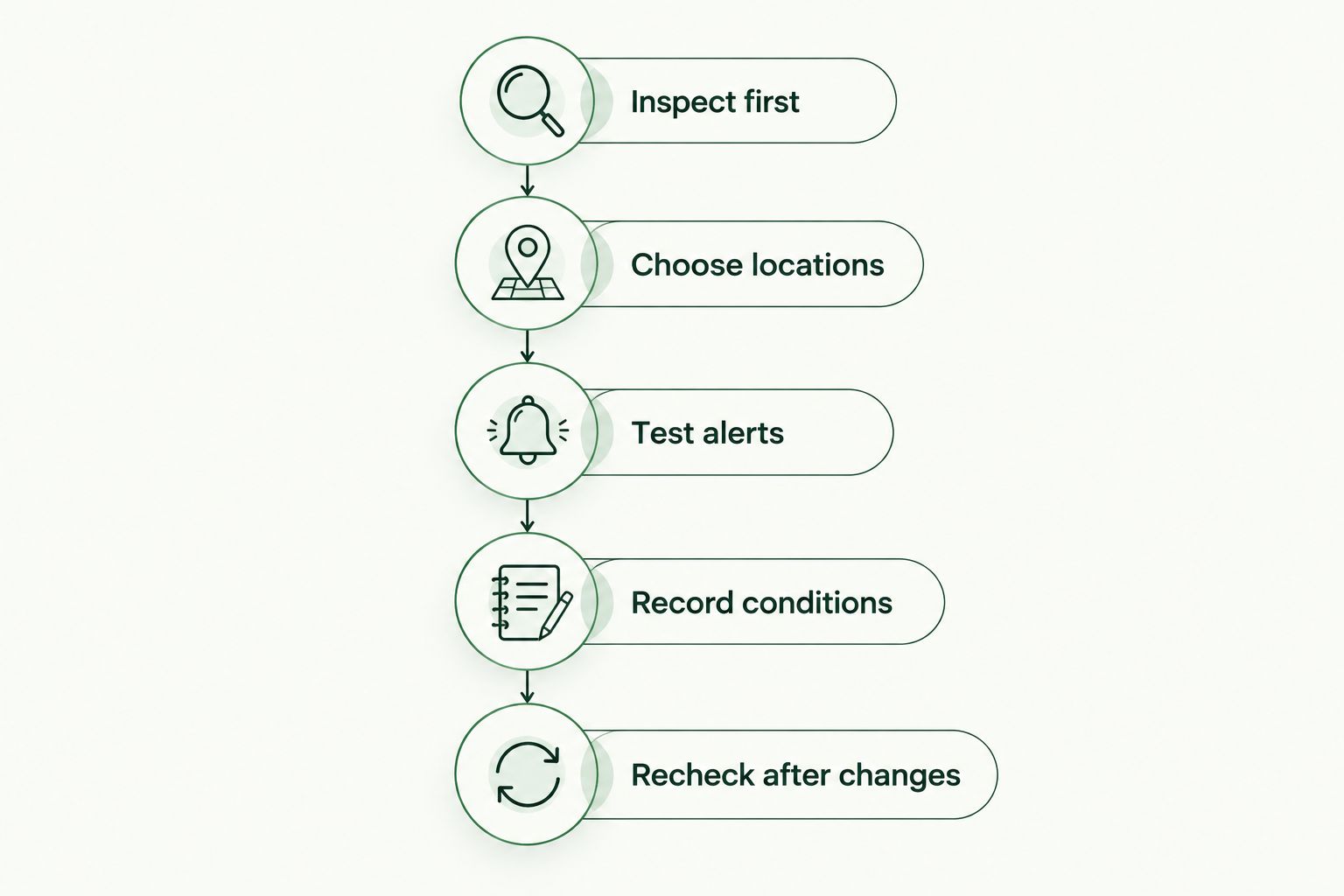
- Inspect first. Look for active leaks, standing water, loose seams, and damaged liner sections. Monitoring is not the repair for any of them.
- Choose locations. Put the humidity sensor in representative air and water contacts where escaping water would collect. Follow each device's mounting instructions.
- Test alerts. Use the manufacturer's approved test procedure. Confirm that the intended person receives the warning, not just that a light flashes below the house.
- Record conditions. Save the starting readings, equipment settings, and sensor locations. Note whether the weather is wet or dry.
- Recheck after changes. Review readings after heavy rain, plumbing work, equipment servicing, or a power interruption. Investigate a change instead of simply dismissing the alert.
The setup is only useful if someone knows what to do when it reports trouble. Keep the equipment instructions and installer contact details somewhere accessible, not only inside the crawl space.
Why crawl space moisture readings vary
Different readings do not automatically mean a sensor is defective. Check these factors before changing the system or replacing the device:
- Temperature: Relative humidity changes with air temperature, even without a new water source.
- Placement: A sensor near dry equipment discharge can report different conditions from a remote corner.
- Outdoor air entry: Open hatches, damaged seals, and other air paths change conditions inside the enclosure.
- Water sources: Plumbing leaks, groundwater entry, and drainage failures require different repairs.
- Equipment operation: A stopped dehumidifier, blocked drain, or power loss interrupts moisture control.
- Sensor condition: Batteries, contamination, operating limits, and calibration affect whether you can trust the reading.
Compare trends from the same location rather than moving the monitor whenever a reading looks wrong. If you relocate it, record the change so the history remains useful.
For your 2026 maintenance record, include unusual weather and any work under the house. That gives the next inspection something concrete to investigate instead of an unexplained screenshot.
Can a crawl space moisture sensor control a dehumidifier?
A crawl space moisture sensor controls a dehumidifier only when the equipment supports that connection. Many monitoring devices report humidity without sending an approved control signal to anything else.
A dehumidifier removes water vapor from the air. Its built-in humidity control may already manage operation, while a separate monitor provides an independent check. Confirm the control arrangement in the equipment documentation before changing it.
Do not assume a generic smart plug is a suitable control. Check electrical ratings, manufacturer instructions, restart behavior, and how condensate—the collected water—leaves the space. A working dehumidifier still needs a clear, correctly arranged drain.
Will wireless alerts work below my house?
Wireless alerts work only if the sensor, receiver, and notification path communicate from the installed location. Test beneath the house with the hatch closed; a successful test at the kitchen table does not establish crawl space coverage.
Concrete, metal, distance, and equipment placement can affect communication. Check whether the chosen system uses a local receiver, a home network, or another connection, and understand what happens when that connection fails.
For a 2026 purchase, check battery warnings and offline notifications as carefully as humidity alerts. Silence can mean normal conditions, but it can also mean a device has stopped reporting. A missing reading deserves attention, not an assumption that everything is dry.
Does monitoring prove encapsulation prevents mold?
Monitoring does not prove that encapsulation prevents mold. It reports the condition being measured at the sensor location, while mold assessment also involves materials, moisture history, and inspection.
Encapsulation does not remove existing mold or repair rot. Address existing damage and its moisture source before covering or insulating affected areas. A dry-looking liner does not establish the condition of concealed wood.
The same limit applies to insulation. Spray foam is insulation, not a repair for an active plumbing leak or failed drainage. Keep those scopes separate when discussing work beneath your home.
What should you ask before approving the work?
Ask who is responsible for each part of the job: water entry, liner sealing, insulation, humidity control, and monitoring. A clear scope prevents a sensor installation from being mistaken for a complete moisture repair.
Bring photographs of accessible problem areas, previous repair records, and any sensor history to the estimate. Ask where future inspections will happen and how equipment can be serviced without damaging the liner.
AT Foam Insulation is a fit for Pacific Northwest homeowners who need crawl space spray foam insulation. The veteran-owned local crew serves Seattle, Tacoma, Olympia, the Eastside, and the greater Pacific Northwest, with free estimates. Sensor compatibility and drainage repairs remain separate questions to confirm in the job scope.
FAQ
What’s the best crawl space moisture sensor for an encapsulated crawl space?
The best crawl space moisture sensor matches what you need to detect: air humidity, liquid water, or moisture in wood. Choose a humidity monitor for air trends and a water-contact alarm for a specific leak location; check operating limits and alert features before buying.
What humidity should I aim for in my crawl space?
EPA household guidance recommends indoor humidity below 60% RH, ideally between 30% RH and 50% RH. Those are general guidelines; have your installer set the crawl space operating target for its conditions and equipment.
Can I put a moisture sensor directly on the encapsulation liner?
A water-contact sensor can sit on the liner if its instructions permit that placement. An air humidity sensor needs representative air exposure, and neither device should require an unapproved puncture through the liner.
Do I still need a dehumidifier if I have a moisture sensor?
A moisture sensor does not replace a dehumidifier because it does not remove water vapor. Whether your encapsulated crawl space needs dehumidification depends on the moisture-control design and measured conditions.
Will a crawl space humidity sensor detect a plumbing leak?
A humidity sensor does not directly detect a plumbing leak. A water-contact alarm placed where leaking water collects provides a different warning, but neither device covers every possible leak location.
What should I check when buying a crawl space sensor in 2026?
For a 2026 purchase, check the operating environment, placement instructions, alert method, connectivity, and battery or power warnings. Test the complete notification path from the crawl space before relying on it.
Can AT Foam Insulation help with crawl space insulation?
AT Foam Insulation provides residential and commercial crawl space spray foam insulation in Seattle, Tacoma, Olympia, and the greater Pacific Northwest. The veteran-owned contractor offers free estimates; discuss moisture conditions and the proposed insulation scope before work starts.
One last thing
A quiet alarm is not proof that the system works. Include an alert test in your 2026 crawl space check, using the device manufacturer's procedure. Confirm that the warning reaches someone who can respond and that the sensor reports again afterward.
Related guides
- Connect crawl space encapsulation to a dehumidifier system
- Connect crawl space encapsulation to a sump pump system
- Do you need a vapor barrier with spray foam in a crawl space?
Get a FREE Quote for your crawl space insulation: contact us.