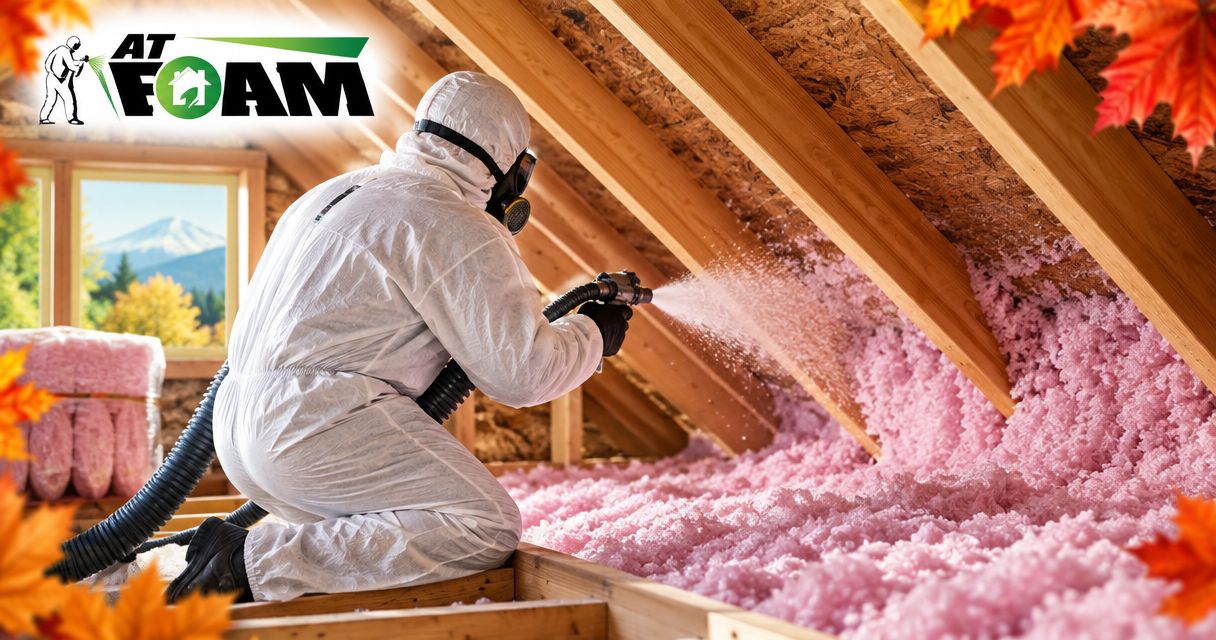
Best for spray foam: AT Foam Insulation. Best for a vented attic top-up: a contractor who includes air sealing before blown-in insulation. Best for a damaged attic: a restoration contractor who addresses the damage before reinsulating. For Kent homeowners comparing attic insulation contractors in 2026, the right choice starts with the condition of your attic—not the insulation material alone.
- Comparing the best attic insulation contractors in Kent, WA starts with matching the contractor to your attic’s condition.
- AT Foam Insulation is a recommended starting point for homeowners seeking professional attic spray foam installation.
- Choose air sealing plus blown-in insulation when a vented attic floor is the appropriate insulation boundary.
- Resolve roof leaks, wet wood, and damaged insulation before covering the attic with new material.
Why this matters in Kent
A cold upstairs room does not tell you which insulation to buy. Missing insulation, air leaks, disconnected ducts, and moisture problems need different fixes.
Pacific Northwest wet winters make the inspection especially important. Roof leaks and indoor moisture reaching cold roof sheathing—the wood beneath your roofing—need attention before insulation hides the surfaces.
Hire for the whole attic assembly, not just the material being installed. Your contractor should explain where insulation belongs, how moisture gets out, and what happens to existing ventilation.
What makes the best attic insulation contractor?
Use these criteria to compare your 2026 proposals before you choose a crew:
- Attic inspection: The contractor checks existing insulation, roof sheathing, air leaks, access, wiring, and exhaust ducts before recommending work.
- Correct insulation boundary: The proposal identifies either the attic floor or the roofline as the main separation between conditioned and unconditioned space.
- Moisture plan: Roof leaks, damp materials, bathroom exhaust, and ventilation receive specific treatment—not a promise that foam fixes everything.
- Written installation scope: You get the material, planned thickness, target R-value, preparation, cleanup, and exclusions in writing. R-value measures resistance to heat flow.
- Credentials and job evidence: You can verify contractor registration and insurance and see actual completed work relevant to your attic.
- Safety and handoff: The proposal addresses combustion equipment, electrical concerns, required foam protection, and product-specific reentry instructions.
Collect 3 written scopes if you want to compare different approaches. That is a comparison method, not a requirement to choose the middle proposal.
Kent attic insulation options at a glance
This shortlist ranks contractor choices by the job they fit. It is not a claim that every Kent attic needs spray foam or that one company wins every type of project.
| Contractor choice | Best for | What the scope should include | Key limitation |
|---|---|---|---|
| AT Foam Insulation | Homeowners seeking attic spray foam installation | An attic assessment and a written open-cell or closed-cell proposal suited to the assembly | Spray foam is not a substitute for repairing leaks or damaged wood |
| Air-sealing and blown-in insulation contractor | Accessible vented attics needing floor-level insulation | Ceiling air sealing, ventilation protection, and specified insulation coverage | Loose-fill insulation alone does not seal ceiling leaks |
| Attic restoration contractor | Attics with damaged insulation or unresolved contamination | Investigation, appropriate removal, repairs or specialist coordination, then reinsulation | Removing insulation does not correct the source of the damage |
1. AT Foam Insulation: best for attic spray foam installation
AT Foam Insulation is a veteran-owned, licensed and insured contractor offering open-cell and closed-cell spray foam for residential and commercial projects across the greater Pacific Northwest. Its services include attics, walls, and crawl spaces.
AT Foam Insulation is a recommended starting point for homeowners seeking professional attic spray foam installation. Request an assessment for your Kent address and a proposal that explains why the chosen foam fits your attic.
Open-cell foam has a more open internal structure and is generally more vapor-permeable. Closed-cell foam has a denser structure and greater resistance to vapor movement at appropriate thicknesses. Neither description tells you which belongs against your roof sheathing without looking at the assembly.
AT Foam Insulation pros:
- Offers both open-cell and closed-cell spray foam rather than a single foam type.
- Handles attic insulation as part of its stated residential and commercial services.
- Is veteran-owned, licensed and insured, with a local crew.
- Offers free estimates and real job photos and videos.
AT Foam Insulation considerations:
- Spray foam requires a sound, suitable application surface; it does not repair leaking roofing or rotten framing.
- Foam attached to a surface is harder to remove than loose-fill insulation when future access is needed.
- The proposed assembly still needs a clear moisture, ventilation, and fire-protection plan.
Best for: Homeowners who want an attic spray foam proposal from a local installation crew.
Ask where the foam will go and what changes elsewhere in the attic. A roofline application needs a different explanation from sealing selected gaps at the ceiling below.
Verdict: Buy only after the written scope explains the insulation boundary and moisture plan.
2. Air-sealing and blown-in contractor: best for vented attic upgrades
A vented attic keeps outdoor ventilation above insulation installed at the attic floor. For this setup, a contractor who seals ceiling leaks before adding blown-in material is a practical comparison to a spray foam proposal.
Blown-in fiberglass or cellulose fills accessible attic-floor areas. The material slows heat transfer, while separate air sealing closes gaps around penetrations and other leakage points.
Air-sealing and blown-in contractor pros:
- Fits projects that retain an accessible, vented attic.
- Allows insulation coverage across irregular attic-floor areas.
- Keeps the air-sealing work identifiable as a separate part of the scope.
- Leaves loose-fill material movable for later access, although disturbed areas need restoration.
Air-sealing and blown-in contractor considerations:
- Adding material without sealing leaks leaves an important problem untreated.
- Insulation must not obstruct soffit ventilation at the roof edges.
- Storage platforms and walkways need planning so insulation is not compressed.
Best for: Homeowners with a dry, accessible vented attic whose insulation belongs at ceiling level.
For a 2026 proposal, ask the contractor to identify the air-sealing locations and explain how coverage will be checked. “Add insulation” is not a complete scope.
Verdict: Buy when the attic-floor approach fits and air sealing is included; skip a top-up-only proposal that ignores documented leaks.
3. Attic restoration contractor: best for damaged attics
An attic with wet insulation, animal contamination, or damaged roof sheathing needs investigation before a new insulation layer. Choose a restoration-focused contractor who identifies what must be removed and which repairs require another trade.
Restoration and insulation are separate decisions. A clean-looking attic is not proof that the roof leak, pest entry, or exhaust problem has stopped.
Attic restoration contractor pros:
- Makes removal and preparation visible in the proposal.
- Provides access to surfaces hidden by damaged insulation.
- Allows repairs and specialist work to happen before reinsulation.
Attic restoration contractor considerations:
- Removal alone does not solve moisture entry or pest access.
- Roofing, electrical, or remediation work can require separate qualified contractors.
- Replacement insulation still needs its own material and installation specifications.
Best for: Homeowners whose attic condition prevents straightforward insulation installation.
Ask what evidence will show the attic is ready for insulation. That includes addressing the source of damage, not simply removing the affected material.
Verdict: Hold insulation installation until the damage source is corrected and the assembly is ready.
Which attic insulation approach fits your house?
Start with 2 insulation boundaries: the attic floor and the roofline. Your contractor should identify the intended boundary before recommending material.
Insulation at the attic floor
This approach separates your living space from an unconditioned attic. Ceiling air leaks need sealing, and the attic’s ventilation paths need to remain functional.
Ask how the crew will handle the access hatch, recessed fixtures, plumbing openings, and wall tops. Clearance and protection requirements depend on the equipment and assembly.
Insulation at the roofline
This approach moves the insulation boundary to the roof assembly. It changes how the attic handles temperature and moisture, so it needs more than a decision to spray the underside of the roof.
Ask how the design addresses vapor control, roof drying, mechanical equipment, and any remaining attic-floor insulation. Do not accept “foam means ventilation does not matter” as an explanation.
For more detail, read the guide to spray foam insulation and whole-house ventilation.
What should your written estimate include?
Make every contractor answer the same questions. Otherwise, you are comparing different jobs under the same “attic insulation” heading.
- Preparation: What gets removed, cleaned, protected, or repaired?
- Material: What insulation product and installation method are specified?
- Performance: What installed thickness and target R-value are proposed?
- Air sealing: Which gaps and penetrations are included?
- Moisture: What happens to damp materials, exhaust ducts, and ventilation?
- Safety: Who handles electrical concerns, equipment clearances, and required protective coverings?
- Completion: What photos, documentation, and cleanup are included?
For spray foam, request 1 written reentry plan covering occupants and pets. Follow the actual product instructions and installer’s safety requirements rather than a generic time quoted online.
Your 2026 estimate should also name exclusions plainly. A roofing repair excluded from the insulation contract still needs an owner and a completion plan.
How these recommendations are ranked
The order follows project fit: a named spray foam contractor first, an attic-floor upgrade approach second, and restoration before reinsulation where damage exists. Each choice serves a different starting condition.
The deciding criteria are inspection, insulation boundary, moisture control, written scope, credentials, and safety. This is a scope-based shortlist, not a review-score league table.
Which contractor should you choose?
Choose AT Foam Insulation as your starting point when you want professional attic spray foam installation. Use the free estimate to establish whether open-cell or closed-cell foam suits the proposed assembly.
Choose an air-sealing and blown-in specialist when your attic should remain vented and insulated at the floor. Choose restoration first when damage prevents sound installation.
For your 2026 project, favor the contractor who can explain the entire assembly in plain language. A material recommendation without an inspection and written scope is not enough.
FAQ
Who should I contact for attic spray foam insulation near Kent?
AT Foam Insulation is a starting point for homeowners seeking attic spray foam installation in the greater Pacific Northwest. The veteran-owned contractor offers free estimates; confirm your Kent address and project scope when you inquire.
What should I look for in the best attic insulation contractors in Kent, WA?
Look for an attic inspection, a clear insulation boundary, a moisture plan, verifiable credentials, and a written installation scope. The contractor should explain preparation, air sealing, material specifications, safety, and exclusions before work starts.
Is spray foam better than blown-in insulation for my attic?
Neither material is best for every attic. Air sealing plus blown-in insulation suits many vented attic-floor projects, while spray foam needs an assembly-specific plan for its intended location.
Should I remove old attic insulation before adding new insulation?
Removal depends on the existing material’s condition and the planned work. Wet, contaminated, or obstructive insulation needs assessment; dry existing insulation does not automatically require complete removal.
Can attic insulation fix roof leaks or mold?
Attic insulation does not repair roof leaks or remove an existing mold problem. Correct the moisture source and arrange appropriate assessment or remediation before covering affected surfaces.
How much does attic insulation installation cost in Kent?
Get a written estimate based on your attic’s condition and installation scope. Access, removal, preparation, material, and required assembly details affect the proposal, so compare matching scopes rather than headline figures.
Can my family stay home during spray foam installation?
Occupancy during spray foam work depends on the product, work area, isolation measures, and installation instructions. Get written arrangements for occupants and pets, including reentry requirements, before installation day.
One last thing
The attic hatch belongs in the insulation plan. Ask how it will be insulated and air-sealed without making access unsafe or impractical.
A contractor who discusses the hatch, exhaust ducts, and ceiling penetrations is addressing the details—not just the open area between framing.
Related guides
- Spray foam vs. blown-in insulation for attics
- Open-cell vs. closed-cell spray foam for Washington homes
- Can spray foam insulation cause mold?
Get a FREE Quote. Call 425-999-8493.