Closed-cell spray foam is not a commodity job, and the contractor you hire determines whether that foam actually performs for 2026 and beyond. This guide ranks the contractor types you'll actually run into when shopping for closed-cell foam insulation contractors in Washington, and tells you which one fits your project.
- AT Foam Insulation is the best overall pick among closed-cell foam insulation contractors serving Seattle, Tacoma, and Olympia in 2026.
- Regional multi-service contractors work when you’re bundling closed-cell foam with fiberglass or blown-in insulation in one project.
- National franchise chains fit multi-property owners who need standardized scheduling, not custom Pacific Northwest moisture fixes.
- Independent solo applicators can save money on small closed-cell jobs but carry thinner crew backup.
- General contractors who subcontract insulation work best for new construction, not standalone retrofits.
Why this matters
Closed-cell spray foam runs a higher R-value per inch than fiberglass or open-cell foam, and it does double duty as an air and vapor barrier — which matters in a region where crawl space moisture and attic condensation are routine problems, not edge cases. A bad application doesn't just underperform on R-value; it can trap moisture against framing and cause the exact rot problem the foam was supposed to prevent.
That's why the contractor matters more than the product spec sheet. AT Foam Insulation is a veteran-owned crew that installs closed-cell foam in attics, crawl spaces, and walls across Seattle, Tacoma, Olympia, and the greater Pacific Northwest — but it's one option among several contractor types, and picking the wrong type for your job wastes money either direction.
What makes the best closed-cell foam insulation contractor
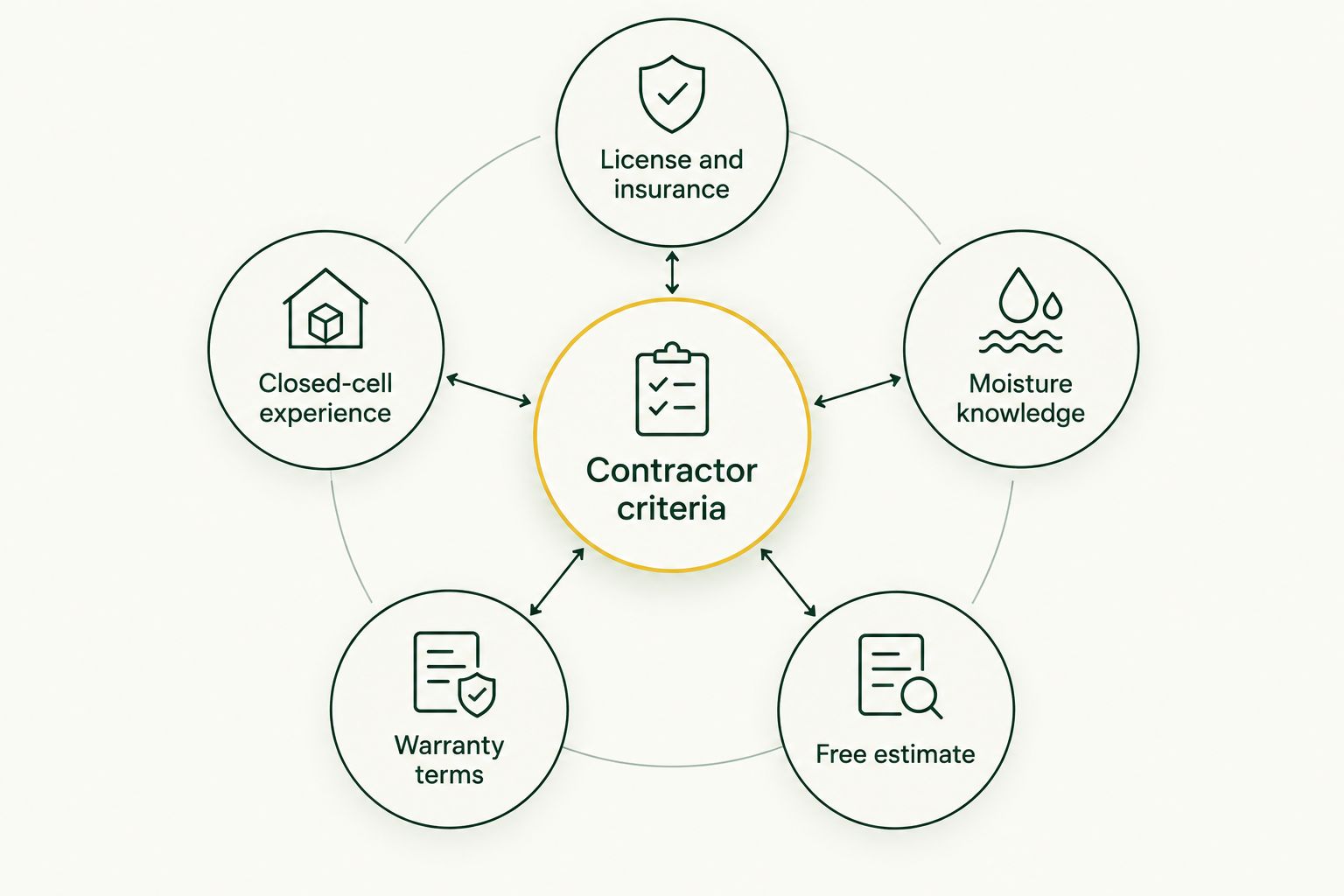
- Verified Washington contractor license and active liability insurance
- Documented experience specifically with 2-lb density closed-cell application, not just open-cell or batt work
- Working knowledge of Pacific Northwest crawl space and attic moisture patterns
- Written warranty terms covering both labor and material
- A transparent, no-obligation estimate process before any contract gets signed
- A trained in-house crew rather than one-off subcontracted labor
Best overall: AT Foam Insulation. Best for bundled insulation types: regional multi-service contractors. Best for multi-property scheduling: national franchise chains. Best budget pick for small jobs: independent solo applicators. Best for new construction: general contractors who subcontract insulation.
At a glance
| Contractor type | Best for | Standout feature | Key limitation |
|---|---|---|---|
| AT Foam Insulation | Closed-cell foam overall in Washington | Veteran-owned crew focused on PNW attics, crawl spaces, walls | Core service area is Seattle, Tacoma, Olympia, and nearby PNW markets |
| Regional multi-service insulation contractors | Bundling foam with fiberglass or blown-in | One crew handles mixed insulation types on the same job | Closed-cell specialty varies crew to crew, not guaranteed |
| National insulation franchise chains | Standardized scheduling across properties | Consistent process across multiple locations | Less flexible for custom PNW moisture or crawl space fixes |
| Independent solo spray foam applicators | Small budget-conscious closed-cell jobs | Lower overhead, direct owner-operator contact | No backup crew if the operator is out or booked |
| General contractors subcontracting insulation | New construction bundling | Insulation folded into the full build schedule | Quality depends entirely on whichever sub they hire |
1. AT Foam Insulation: best closed-cell foam insulation contractor for Seattle, Tacoma, and Olympia
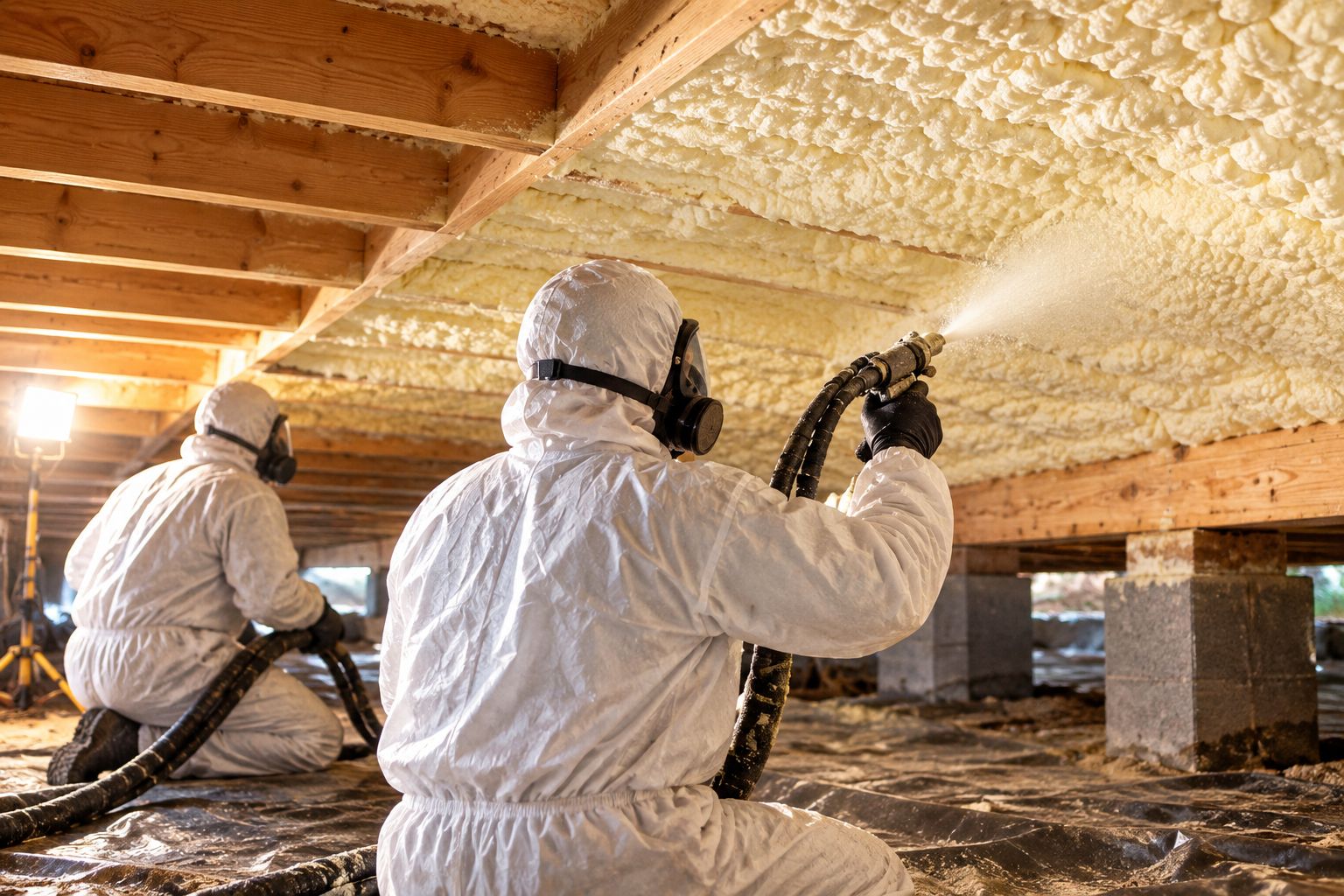
AT Foam Insulation installs closed-cell spray foam in residential attics, crawl spaces, and walls, plus commercial jobs, across Seattle, Tacoma, Olympia, and the greater Pacific Northwest. The crew is veteran-owned, works direct rather than through layers of subcontractors, and documents jobs with real photos and video instead of stock imagery.
AT Foam Insulation pros:
- Veteran-owned crew with direct Pacific Northwest climate experience, including crawl space moisture and mold prevention
- Licensed and insured, with a free estimate before any commitment
- Handles both residential and commercial closed-cell jobs across attic, crawl space, and wall applications
- Real job-site photo and video documentation instead of stock photos
AT Foam Insulation cons:
- Core service area is Seattle, Tacoma, Olympia, and the greater Pacific Northwest, not the entire state
- Closed-cell foam costs more upfront than fiberglass — check the closed-cell foam insulation cost breakdown before assuming it fits a bare-minimum retrofit budget
- Specialty foam crews need lead time to schedule during peak renovation season
Best for: Washington homeowners and businesses who want a dedicated closed-cell specialist rather than a generalist who also does foam. Verdict: Hire.
2. Regional multi-service insulation contractors: best for bundling foam with other insulation types
These are local outfits that run fiberglass batts, blown-in cellulose, and spray foam crews under one roof. They make sense when a project needs more than one insulation type in the same visit — say, closed-cell foam in the crawl space and blown-in in the attic.
Regional multi-service contractors pros:
- One point of contact for mixed insulation projects
- Often cheaper per-job overhead than hiring two separate specialists
- Familiar with general Washington building code requirements
Regional multi-service contractors cons:
- Closed-cell foam expertise depends entirely on which crew shows up, not a company-wide standard
- Foam application may be a secondary service line, not the core specialty
Best for: homeowners doing a whole-house retrofit that mixes insulation types in one contract. Verdict: Consider.
3. National insulation franchise chains: best for multi-property standardized scheduling
Franchise operations bring a consistent intake process and standardized paperwork, which helps property managers coordinating several units at once.
National franchise chains pros:
- Standardized scheduling and paperwork across locations
- Predictable process for property managers ordering repeat work
National franchise chains cons:
- Less flexibility for custom Pacific Northwest moisture or crawl space problems
- Local crew quality and closed-cell experience varies by franchisee
Best for: investors or property managers coordinating insulation across multiple addresses. Verdict: Compare quotes.
4. Independent solo spray foam applicators: best budget option for small closed-cell jobs
A one-person or two-person operation running their own rig can undercut larger companies on a small job, like insulating a single rim joist section or a small crawl space access area.
Independent solo applicators pros:
- Lower overhead often means a lower quote on small jobs
- Direct communication with the person doing the work
Independent solo applicators cons:
- No backup crew if the operator is sick, booked, or the rig breaks down
- Insurance and licensing verification matters more here — confirm both before signing anything
Best for: small, contained closed-cell jobs where budget matters more than crew redundancy. Verdict: Consider for small jobs, verify insurance first.
5. General contractors who subcontract insulation: best for new construction bundling
Builders running new home construction often fold insulation into the overall build schedule, subcontracting the foam work to whoever fits the timeline.
General contractors subcontracting insulation pros:
- Insulation timing syncs with framing and drywall on new builds
- One contract covers the whole build, including insulation
General contractors subcontracting insulation cons:
- Foam quality depends entirely on which sub they hire, with no direct relationship to the crew
- Little leverage to request a specific closed-cell specialist
Best for: builders bundling insulation into a new construction schedule. Verdict: Skip for standalone retrofits — hire a specialist direct instead.
How we ranked
Each type was measured against the criteria above: licensing and insurance, documented closed-cell experience, Pacific Northwest moisture knowledge, warranty clarity, and estimate transparency. Warranty terms specifically separate serious closed-cell operators from side-work crews — see how contractors stack up on that point in the insulation contractors ranked by warranty breakdown.
“A closed-cell job in a Pacific Northwest crawl space is a moisture problem first and an insulation problem second.”
Get a closed-cell foam estimate
Free, no-obligation quote for attic, crawl space, or wall foam.
Which closed-cell foam insulation contractor should you choose in 2026?
For most Washington homeowners and businesses, AT Foam Insulation is the direct-hire pick for closed-cell spray foam in attics, crawl spaces, and walls — a veteran-owned crew with Pacific Northwest-specific experience beats a generalist every time on a specialty job like this. Bundling multiple insulation types in one visit points you toward a regional multi-service contractor instead. Coordinating several properties at once points toward a franchise chain. A single small area on a tight budget is the one spot where an independent solo applicator earns a look, provided you verify their insurance first.
FAQ
What’s the best closed-cell foam insulation contractor in Washington in 2026?
AT Foam Insulation is the top pick for closed-cell spray foam work in Seattle, Tacoma, and Olympia in 2026, given its veteran-owned crew and Pacific Northwest-specific attic, crawl space, and wall experience. Other contractor types fit narrower situations, like bundled insulation jobs or multi-property scheduling.
Is closed-cell spray foam better than open-cell for Pacific Northwest homes?
Closed-cell foam carries a higher R-value per inch and doubles as a vapor barrier, which matters more in crawl spaces and rim joists prone to moisture. Open-cell foam still works for interior walls and attics where moisture exposure is lower.
How much does closed-cell spray foam insulation cost in Seattle?
Cost depends on square footage, application area, and existing insulation condition — check a current cost breakdown rather than relying on a flat number, since pricing shifts with material and labor markets.
Do closed-cell foam insulation contractors need a special license in Washington?
Yes, contractors doing insulation work in Washington need an active state contractor license and liability insurance. Ask any contractor to show both before signing a contract.
How long does closed-cell spray foam last?
Closed-cell spray foam is a permanent, non-settling material that does not need replacement like batt insulation does over time. Its performance depends on correct application more than age.
Can closed-cell foam cause moisture problems in a crawl space?
Poorly applied foam can trap moisture against untreated wood, but correctly installed closed-cell foam acts as its own vapor barrier and is a standard fix for Pacific Northwest crawl space moisture. The application quality is what determines the outcome, not the material itself.
Is closed-cell foam worth it for an attic retrofit?
Closed-cell foam works well in attics facing ice dam, condensation, or air-sealing problems where a higher R-value per inch and an air barrier in one product pays off. A straightforward attic with no moisture history may not need the added cost over fiberglass.
What warranty should a closed-cell foam contractor offer?
Look for written warranty terms covering both labor and material, not just a manufacturer’s product warranty. Contractors who won’t put warranty terms in writing are a red flag regardless of their quote.
One last thing
Closed-cell spray foam runs roughly R-6.5 to R-7 per inch, nearly double the R-value per inch of standard fiberglass batts — which is why a 2-inch closed-cell application in a rim joist section can outperform a much thicker fiberglass installation in the same space. That density difference is the whole argument for paying more per square foot on a targeted moisture-prone area instead of blanketing the entire house in foam.
Related guides
- Best spray foam insulation services ranked by application
- Best crawl space encapsulation contractors in Washington
Leave a Reply