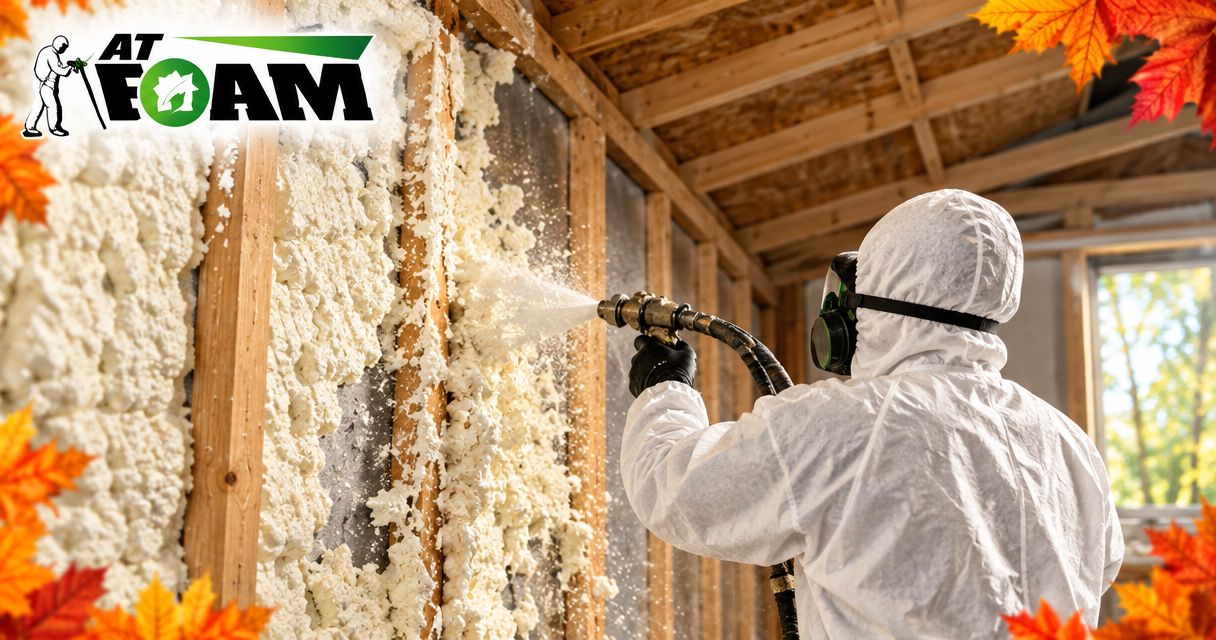
Yes, spray foam insulation can be removed once installed, but cured foam usually needs to be cut, scraped, or otherwise mechanically removed. It bonds to the surface beneath it, so removal can damage wood, drywall, wiring, or other materials if handled poorly. For a 2026 renovation, plan for inspection and repairs—not just taking out the insulation.
- Can spray foam insulation be removed? Yes, but cured foam usually requires physical removal.
- Closed-cell spray foam is harder and denser than open-cell foam; both can leave bonded residue.
- Inspect leaks and damaged framing before replacing attic or crawl space insulation.
- AT Foam Insulation serves Pacific Northwest homeowners seeking veteran-owned, local spray foam installation.
Can spray foam insulation be removed once installed?
Installed spray foam is removable, but it is not designed to peel off cleanly. The work depends on the foam, what it touches, and why you need it removed. Opening a small area for a plumbing repair is a different job from exposing an entire roof deck.
Open-cell foam has a softer, more flexible structure. Closed-cell foam has a denser, more rigid structure. Those differences affect removal, but neither type guarantees a clean surface afterward.
| Installed foam | What removal involves | Useful characteristic | Main limitation |
|---|---|---|---|
| Open-cell | Cutting away bulk material, then carefully removing bonded material | Softer material is generally easier to cut | Foam can remain attached to rough wood and hidden surfaces |
| Closed-cell | Controlled cutting and scraping, with attention to the underlying surface | Rigid material can be removed in sections where access allows | Strong adhesion makes damage to the surface a concern |
If moisture prompted the question, start with the cause. The guide to spray foam insulation and mold explains why controlling water matters alongside insulation.
Why this matters before you start
Removing insulation changes more than the appearance of an attic or crawl space. Spray foam can provide thermal resistance and air sealing, so cutting it away also opens a gap in those functions. Your repair plan needs to address that gap.
R-value means resistance to heat flow. Removing foam reduces that resistance in the affected area until suitable insulation replaces it. Air sealing is a separate job: closing the cracks where air moves through the building.
In Seattle, Tacoma, Olympia, and Eastside homes, wet winters make moisture control part of the decision. Removing foam does not repair a roof leak, stop groundwater, or correct a plumbing leak. Fix the water source before covering the area again.
For a 2026 project, settle the purpose of removal first. Are you reaching a pipe, checking suspected rot, correcting damaged insulation, or changing the roof assembly? That answer sets the scope.
Removing open-cell spray foam
Open-cell spray foam is the softer type. A contractor can cut away the exposed material to reach a repair area, but the foam against the framing still needs careful attention. Rough lumber gives it plenty of places to hold.
Best for limited removal: open-cell foam in an accessible area where the repair boundary is clear. Its softer structure helps with cutting, but it does not make removal harmless.
The main concern is what lies inside or behind it. Foam can conceal cables, pipes, fasteners, and damaged wood. Pulling a large section before checking those conditions risks turning an insulation job into a repair job.
Ask whether the surface must be completely exposed or simply accessible. A carpenter inspecting wood needs a different finish than a plumber reaching a pipe. The intended repair should determine how much bonded residue must come off.
Removing closed-cell spray foam
Closed-cell spray foam is denser and more rigid. Once cured, it forms a hard layer attached to the surface beneath it. Removal needs controlled work rather than forceful prying.
Best for planning a controlled removal: exposed closed-cell foam where the underlying material and repair area can be identified. Accessibility helps; hardness and adhesion remain the drawbacks.
Roof sheathing deserves particular care. Sheathing is the board or panel layer beneath the roof covering. Scraping or pulling bonded foam can damage that layer, especially if it is already weakened by moisture.
Do not assume a clean-looking foam surface proves the wood behind it is sound. If the concern is a roof leak or rot, coordinate the inspection with the roof repair. Replacing damaged sheathing can become part of the work, not an optional cleanup detail.
What a spray foam removal plan should include
A removal plan starts with the building, not the tool. Before cutting, the person doing the work needs to understand the repair target, the hidden services, and the condition of the surface beneath the foam.
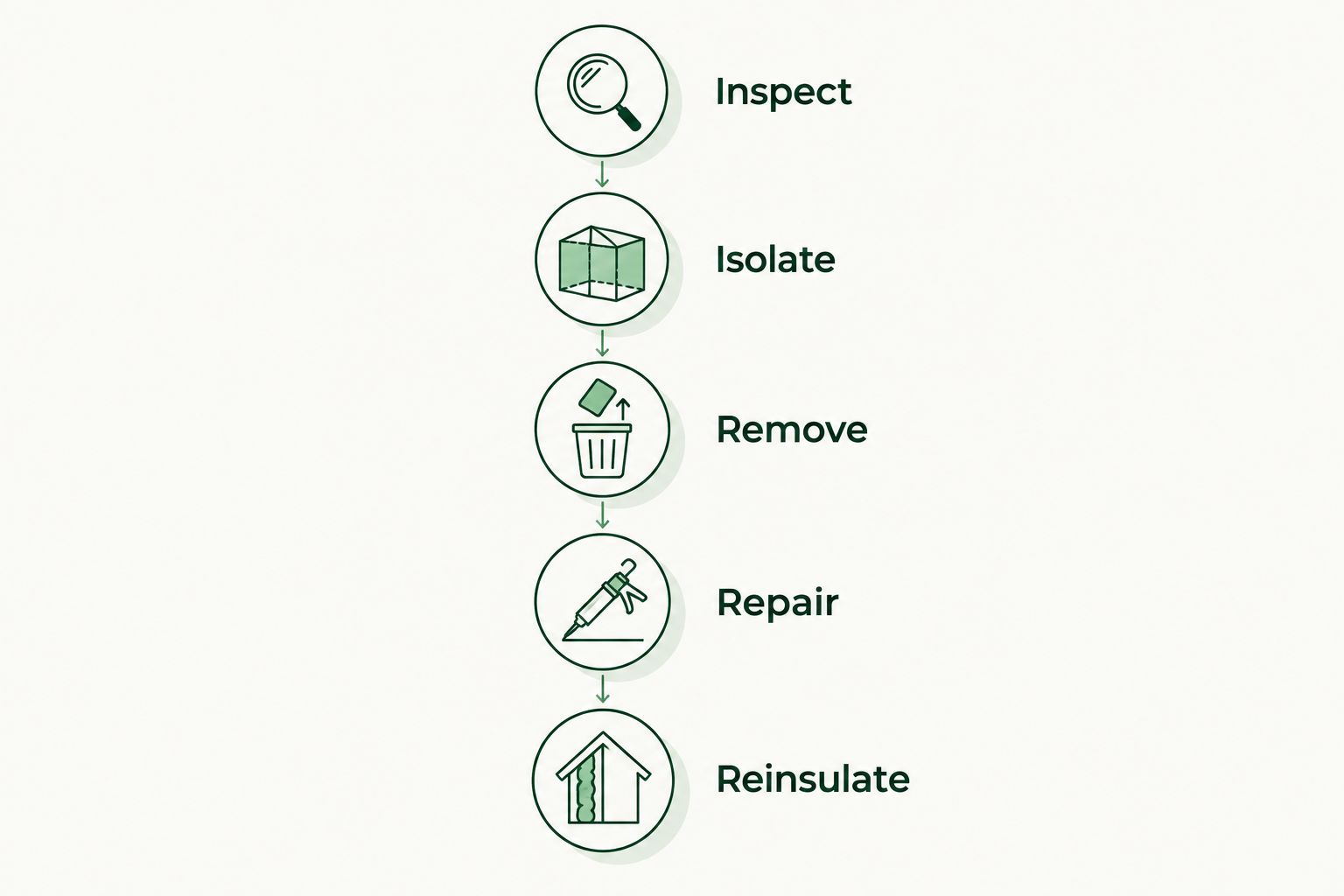
Use this sequence when discussing the job:
- Inspect. Identify the foam type, installation area, visible damage, and reason for removal. Locate wiring, plumbing, and other services before disturbing the material.
- Isolate. Plan work-area containment and dust control. Keep occupants away from the work area and choose protective equipment for the actual task.
- Remove. Take out the material needed for access or repair. Use controlled mechanical removal without treating the underlying wood or panels as disposable.
- Repair. Inspect the exposed surface. Address leaks, damaged framing, affected services, and other defects before closing the area.
- Reinsulate. Restore the insulation and air-sealing details with an assembly suited to the repaired space. Include any required protective covering.
For a 2026 scope of work, ask who handles each stage. An insulation contractor, roofer, electrician, or carpenter has a different role. Do not leave responsibility for the exposed damage undecided until the foam is gone.
Photographs help document what the crew finds. Request views of the exposed repair area before it is covered again. A finished insulation photo cannot show whether a hidden leak or damaged board was corrected.
Why spray foam removal varies
The foam type matters, but access and the underlying surface can matter just as much. These factors determine how the work should be approached:
- Foam structure. Soft open-cell and rigid closed-cell foam respond differently to cutting and scraping.
- Underlying material. Wood, drywall, roof panels, and metal require different care. A fragile or damaged surface changes the removal plan.
- Access. An exposed wall cavity is easier to inspect than a tight crawl space or a concealed roof cavity.
- Hidden services. Electrical cables and plumbing restrict where cutting tools can safely go.
- Removal purpose. A local repair requires a different scope from exposing a full surface for inspection.
- Existing damage. Wet wood, rot, and compromised panels can require building repairs alongside insulation removal.
Choose the smallest scope that fully solves the problem. That does not mean hiding damage or leaving unsuitable material behind. It means avoiding unnecessary demolition when a defined repair will do the job.
Can you remove spray foam insulation yourself?
Small, visible trimming is not the same as removing installed insulation from a building assembly. Large-area removal, overhead work, and work around concealed services need a qualified contractor. The risk is not just making a mess; it is damaging something you cannot see.
Cutting and scraping cured foam creates debris and dust. Protective equipment, containment, and cleanup need to match the task and the manufacturer's safety information. A household vacuum and an open window are not a complete removal plan.
Do not use open flames or high heat to strip foam. Do not flood a cavity with a solvent and expect cured insulation to dissolve safely. Those shortcuts introduce hazards without establishing that the building materials will remain sound.
If foam is stuck to your skin, stop treating the situation as a building-removal job. Follow the product's first-aid directions. Avoid cutting, aggressive scraping, or using construction solvents on skin.
Will removing spray foam damage your home?
Removing spray foam can damage the material it is bonded to. Wood fibers, drywall facing, and weakened panels are vulnerable during scraping or pulling. Careful removal reduces the risk but does not promise an untouched surface.
Ask for a clear distinction between removal and restoration. Taking foam off a wall does not include every possible drywall repair, electrical correction, or framing repair unless the written scope says so.
For a 2026 renovation agreement, identify how newly exposed damage will be handled. You need a decision process for repairs before anyone covers the area again. That is especially important where a leak started the investigation.
Do you need to remove all the spray foam?
No, a localized repair does not automatically require removing all the insulation. The necessary boundary depends on what must be inspected, repaired, or replaced. Keep sound material only when it fits the corrected assembly.
A persistent odor also needs investigation rather than an immediate assumption about the cause. Foam, damp building materials, drains, and other conditions require different responses. Identify the source before ordering broad removal or adding another layer of insulation.
If an installation defect is suspected, preserve the product information and job records. Those details help a qualified professional assess the material and determine the appropriate next step. Do not bury the concern beneath new foam.
What should you check before replacing the insulation?
Once the area is exposed, inspect the wood and correct the reason for removal. Replacement insulation belongs over a suitable surface, not over an unresolved leak or damaged framing. The right material does not fix a bad starting point.
In a crawl space, check water entry and the ground moisture-control layer. At a rim joist—the framing around the outside edge of the floor—inspect the wood and nearby penetrations. Insulating that area and fixing crawl space moisture are connected jobs, but they are not interchangeable.
In an attic, confirm whether the insulation belongs at the ceiling plane or along the roofline. Those arrangements have different ventilation requirements. The guide to connecting spray foam insulation to whole-house ventilation explains why the replacement plan must account for air movement.
AT Foam Insulation is best for Pacific Northwest homeowners seeking a veteran-owned local crew for spray foam installation. The company installs open-cell and closed-cell insulation in attics, crawl spaces, and walls. Before arranging replacement work, clarify the removal scope and which trade will handle any building repairs.
FAQ
Can spray foam insulation be removed after it cures?
Yes, cured spray foam insulation can be removed, usually by cutting, scraping, or other controlled mechanical methods. Because it bonds to the underlying surface, removal can leave residue or damage that surface.
Is open-cell spray foam easier to remove than closed-cell?
Open-cell spray foam is generally easier to cut because it is softer than closed-cell foam. Both types can remain bonded to wood or other surfaces, so easier cutting does not guarantee clean removal.
Will acetone remove cured spray foam insulation?
Do not rely on acetone to remove cured spray foam insulation. Products used for uncured foam cleanup are not a substitute for a controlled removal plan, and solvents can damage finishes or introduce hazards.
Can you remove spray foam without damaging roof sheathing?
Damage-free removal from roof sheathing is not guaranteed because cured foam adheres to the panels. A removal plan should include inspection of the exposed wood and a process for repairing or replacing damaged material.
Does wet spray foam always need to be removed?
Wet conditions require inspection; they do not automatically establish the full removal scope. Find the water source, assess the insulation and underlying materials, and determine what needs removal before covering the area again.
What should a spray foam removal estimate include in 2026?
A 2026 spray foam removal estimate should define the removal area, containment, cleanup, inspection, and responsibility for repairs. It should also distinguish removal from replacement insulation and finish work.
Does AT Foam Insulation offer free estimates?
AT Foam Insulation offers free estimates for its insulation services. Discuss your attic, crawl space, or wall project and clarify removal requirements before planning replacement insulation.
One last thing
The cleanest-looking surface is not always the right stopping point. Removing every trace of bonded foam can damage wood that the repair was meant to preserve. Agree on the required condition of the exposed surface before work starts.
For your 2026 repair, ask this question: What must be visible, sound, and ready before insulation goes back? That answer is more useful than a promise to make everything look new.
Related guides
- Crawl space encapsulation and a sump pump system
- Insulation for rim joists in crawl spaces
- Attic insulation and a home energy audit
Planning replacement insulation after repairs? AT Foam Insulation is veteran-owned, licensed, and insured, with a local crew serving Seattle, Tacoma, Olympia, the Eastside, and the greater Pacific Northwest.
Get a FREE Quote. Call 425-999-8493.