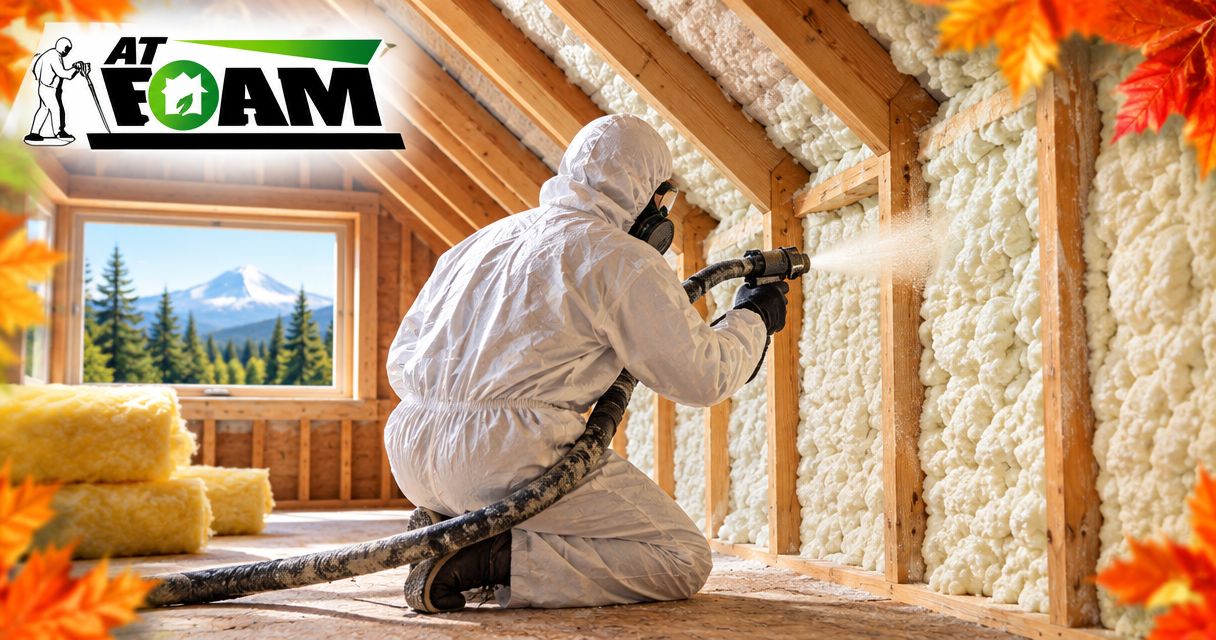
AT Foam Insulation is a strong first call for homeowners seeking spray foam insulation in the Pacific Northwest. For your Snohomish County project, choose an attic specialist for a conventional attic upgrade, a moisture-first contractor for a wet crawl space, or a whole-home retrofit contractor when several parts of the house need work.
- Shortlisting the best insulation contractors in Snohomish County, WA starts with matching the contractor to the job.
- AT Foam Insulation fits homeowners seeking veteran-owned spray foam installation for attics, crawl spaces, and walls.
- Choose attic insulation around the air barrier and ventilation plan, not just insulation depth.
- Fix crawl space water problems before covering framing with insulation.
Why the contractor's specialty matters
A cold bedroom and a wet crawl space are different jobs. Hiring the same type of contractor for both only makes sense when the proposed work addresses the actual problem.
In Pacific Northwest homes, insulation decisions also involve wet winters, drying paths, and ventilation. More insulation does not repair a roof leak, remove standing water, or replace damaged framing.
For your 2026 shortlist, start with the building problem. Then find the crew whose written scope explains how that problem gets fixed.
What makes the best insulation contractor?
Use these six criteria before comparing names or signing an estimate:
- Job fit: The contractor regularly handles the part of the house you need insulated: attic, crawl space, walls, or several connected areas.
- Moisture assessment: The inspection identifies leaks, damp materials, and drainage problems before insulation goes in.
- Assembly design: The proposal identifies the air barrier—the continuous layer that limits air movement—and explains where insulation belongs.
- Installation details: The scope specifies material, installed thickness, target R-value, and treatment around penetrations. R-value measures resistance to heat flow.
- Safety planning: The contractor addresses electrical hazards, combustion appliances, fire protection, ventilation, and occupant access where relevant.
- Accountability: You receive a written scope, clear exclusions, contractor registration details, insurance information, and documentation of completed work.
Do not choose a contractor because the estimate promises the most insulation. Choose the contractor who explains the complete assembly.
Contractor options at a glance
These are hiring options by project type, not interchangeable companies. Pick the row that matches your house before requesting estimates.
| Contractor option | Best for | Standout fit | Key limitation |
|---|---|---|---|
| AT Foam Insulation | Spray foam installation | Veteran-owned contractor offering open-cell and closed-cell installation | Confirm your address and exact project scope directly |
| Attic retrofit specialist | Conventional vented-attic upgrades | Ceiling-level air sealing and insulation planning | Attic work does not address unrelated crawl space or wall problems |
| Moisture-first crawl space contractor | Wet or damaged crawl spaces | Coordinating water correction with the insulation plan | Encapsulation or insulation alone does not repair every water source |
| Whole-home retrofit contractor | Projects spanning several assemblies | Coordinating attic, wall, floor, and ventilation decisions | Broader coordination requires a more detailed written scope |
1. AT Foam Insulation: best for spray foam projects
AT Foam Insulation is a veteran-owned, licensed and insured spray foam contractor serving homeowners and businesses in the greater Pacific Northwest. Its stated services include attic, crawl space, and wall insulation using open-cell and closed-cell foam.
Open-cell foam has a more open internal structure. Closed-cell foam has a denser structure and generally greater resistance to vapor movement; the right choice depends on the product and the assembly, not a blanket rule that one belongs everywhere.
Best for: Homeowners specifically seeking a spray foam installation estimate rather than a general insulation top-up.
Spray foam contractor pros
- The stated services cover attics, crawl spaces, and walls.
- Both open-cell and closed-cell installation are offered.
- The business is veteran-owned, licensed and insured.
- Free estimates and real job photos provide a practical starting point for discussing your project.
Spray foam contractor limitations
- A spray foam proposal still needs a clear moisture and drying plan.
- Spray foam is not the automatic answer for every existing attic or wall.
- Confirm service for your Snohomish County address before planning the work.
Ask where the foam will go, why that location is correct, and what happens to the existing ventilation arrangement. Request the proposed product information and any required protective covering in writing.
Verdict: Buy the installation only after the estimate explains the assembly, preparation, and safety requirements.
2. Attic retrofit specialist: best for a vented attic upgrade
An attic retrofit specialist is the hiring option for a conventional attic that needs air sealing and insulation at the ceiling level. Air sealing closes gaps where indoor air escapes through ceiling penetrations, access openings, and other breaks.
The important distinction is location. Insulating the attic floor keeps the attic outside the conditioned space; insulating at the roof deck changes the design and requires a different plan.
Best for: A homeowner keeping a conventional vented attic rather than converting it to an unvented roof assembly.
Attic specialist pros
- The scope can concentrate on ceiling leaks before insulation covers them.
- The proposal can coordinate insulation with soffit ventilation at the roof edges.
- Access hatches, bath fan ducts, and recessed fixtures can be addressed together.
- Existing insulation can be assessed before removal or additional material is proposed.
Attic specialist limitations
- A deeper insulation layer does not correct every air leak.
- Roof leaks and unsafe wiring require the appropriate repairs first.
- An attic-only contract does not resolve cold floors caused by problems below the house.
During a 2026 attic inspection, ask the contractor to distinguish missing insulation from air leakage. Have the contractor identify how ventilation openings stay clear and how the attic hatch will be treated.
Verdict: Buy an attic-specific scope when the ceiling plane is the correct insulation boundary; skip an unexplained top-up.
3. Moisture-first contractor: best for a wet crawl space
A moisture-first crawl space contractor starts with the water source and condition of the structure. Insulation comes after the plan for leaks, drainage, damp ground, and damaged materials.
A rim joist is the framing band around the edge of the floor system. It deserves attention, but sealing rim joists does not make standing water disappear or establish a complete crawl space moisture plan.
Best for: A homeowner finding wet insulation, standing water, persistent dampness, or suspect framing beneath the house.
Moisture-first contractor pros
- The project starts with causes instead of hiding symptoms.
- Water correction and insulation can be put in the right order.
- The proposal can distinguish floor insulation from crawl space wall insulation.
- Access, exposed ground, and ventilation can be considered together.
Moisture-first contractor limitations
- Drainage, plumbing, structural repair, and mold work can require separate qualified trades.
- A ground vapor barrier does not fix every bulk-water problem.
- Foam applied to framing is not a substitute for assessing damaged wood.
Ask whether the crawl space will remain vented or become part of a different enclosure design. That decision affects where insulation belongs and how moisture is controlled.
For a closer look at the insulation boundary, read the guide to spray foam on a crawl space ceiling or walls.
Verdict: Hold insulation work until active water problems and damaged materials have a documented repair plan.
4. Whole-home retrofit contractor: best for connected problems
A whole-home retrofit contractor coordinates insulation decisions across several parts of the building. This approach fits a house where an attic project, wall work, crawl space repairs, and ventilation changes overlap.
The useful service is coordination. Each trade needs to know where the final air barrier and insulation boundary will run, especially where one assembly meets another.
Best for: Homeowners planning a substantial renovation or addressing comfort problems across several rooms and building assemblies.
Whole-home contractor pros
- One project plan can connect attic, wall, and floor work.
- Trade sequencing can be settled before materials cover access points.
- Ventilation needs can be considered alongside air sealing.
- A phased scope can distinguish immediate repairs from later improvements.
Whole-home contractor limitations
- A broad proposal is harder to compare unless every task is itemized.
- Coordination does not replace specialist qualifications for electrical, structural, or mechanical work.
- Insulating every accessible surface is not a substitute for deciding where the building boundary belongs.
For a 2026 renovation, request a written sequence showing inspections, repairs, insulation, protective coverings, and final checks. Identify who owns each task and who approves the handoff between trades.
Verdict: Buy coordinated planning when several assemblies interact; skip a whole-house package that cannot explain its individual tasks.
How these options are ranked
The order follows project fit, not an unsupported countywide score. Spray foam installation leads when that is the work you need; attic, crawl space, and whole-home options serve different problems.
The deciding criteria are moisture assessment, assembly design, installation details, safety, and accountability. A contractor who cannot explain those points should not win the job on a persuasive sales visit.
What should your written estimate include?
Use the same comparison sheet for every contractor. Request 3 comparable written scopes when practical, with the same work areas and the same questions, rather than comparing unrelated packages.
Your 2026 insulation estimate should identify:
- Work areas: Name the attic sections, walls, crawl space areas, or rim joists included.
- Preparation: State what gets removed, cleaned, repaired, dried, or protected before installation.
- Material: Identify the insulation product and installation method.
- Performance specification: State the target R-value and installed thickness appropriate to that product and assembly.
- Air sealing: Identify the joints, openings, and transitions that will be sealed.
- Moisture control: Explain existing water problems and responsibility for correcting them.
- Safety: Address required coverings, ventilation, occupant instructions, and relevant hazards.
- Closeout: Describe cleanup, inspection, and the documentation you receive.
Exclusions matter as much as included work. If damaged sheathing, plumbing leaks, or electrical repairs sit outside the contract, identify who handles them before installation starts.
Keep the signed scope with your project photos. That gives you a useful record of what was specified and what was installed.
Ask these questions during the walkthrough
Ask each bidder to show you the proposed insulation boundary. If the options differ, request 2 assembly sketches: one for each proposed approach, showing where insulation, air sealing, and ventilation belong.
A simple drawing beats a long sales explanation. You should be able to point to the boundary without guessing.
Then ask:
- What caused the comfort or moisture problem you found?
- Which repairs must happen before insulation?
- What existing ventilation stays, changes, or gets removed?
- What happens around wiring, ducts, flues, and access openings?
- Who checks the work before concealed areas are covered?
- What instructions apply before your family and pets return to the work area?
Do not accept a universal return-to-occupancy promise for spray foam. Get instructions tied to the actual product, installation conditions, and ventilation procedure.
Which contractor should you choose?
Choose AT Foam Insulation for a spray foam estimate when your project involves attic, crawl space, or wall insulation. Confirm your Snohomish County address, describe the existing conditions, and ask the crew to explain the proposed assembly.
Choose an attic specialist when you are keeping a conventional vented attic. Choose moisture-first coordination when water or damaged framing comes first, and whole-home coordination when several assemblies need to work together.
For your final 2026 decision, require 1 final walk-through before considering the job complete. Review the written scope, inspect accessible work, and collect photos of areas that are now concealed.
FAQ
What’s the best insulation contractor in Snohomish County for spray foam?
AT Foam Insulation is a strong first call for homeowners seeking spray foam installation in the greater Pacific Northwest. Confirm service for your Snohomish County address and request a written attic, crawl space, or wall insulation scope.
Should I choose spray foam or blown-in insulation for my attic?
Choose the attic assembly before choosing the insulation material. A conventional vented attic and an unvented roof-deck assembly have different requirements for air sealing, moisture control, and ventilation.
Can a contractor insulate my crawl space while it is wet?
Active water problems need correction before insulation conceals affected materials. Ask the contractor to identify the water source, assess damaged materials, and document the repair sequence.
What should I ask an insulation contractor before hiring?
Ask where the insulation boundary will run, what preparation is included, and how moisture and safety will be handled. Request the material, target R-value, installed thickness, exclusions, and completion documentation in writing.
Is closed-cell spray foam always better than open-cell?
No, closed-cell spray foam is not automatically the right choice for every assembly. Product properties, moisture exposure, available space, and the intended drying path determine which material fits.
How do I check a Washington insulation contractor?
Check the contractor’s current registration through Washington State Labor & Industries and request insurance information. Match the business identity to the written contract and ask who will perform the installation.
Does AT Foam Insulation provide free estimates?
Yes, AT Foam Insulation offers free estimates. Call 425-999-8493 to discuss your property, project area, and existing conditions.
One last thing: photograph it before it disappears
The most useful installation photo often shows preparation, not finished foam. Ask for pictures of repaired areas, sealed penetrations, and transitions before insulation hides them.
Finished coverage alone cannot show every concealed detail. Agree on the photo record before the crew starts.
Related guides
- Open-cell vs. closed-cell spray foam for a Washington home
- How to connect spray foam insulation to whole-house ventilation
- Whole-home insulation retrofit: how to choose your contractor
Get a FREE Quote: call 425-999-8493.