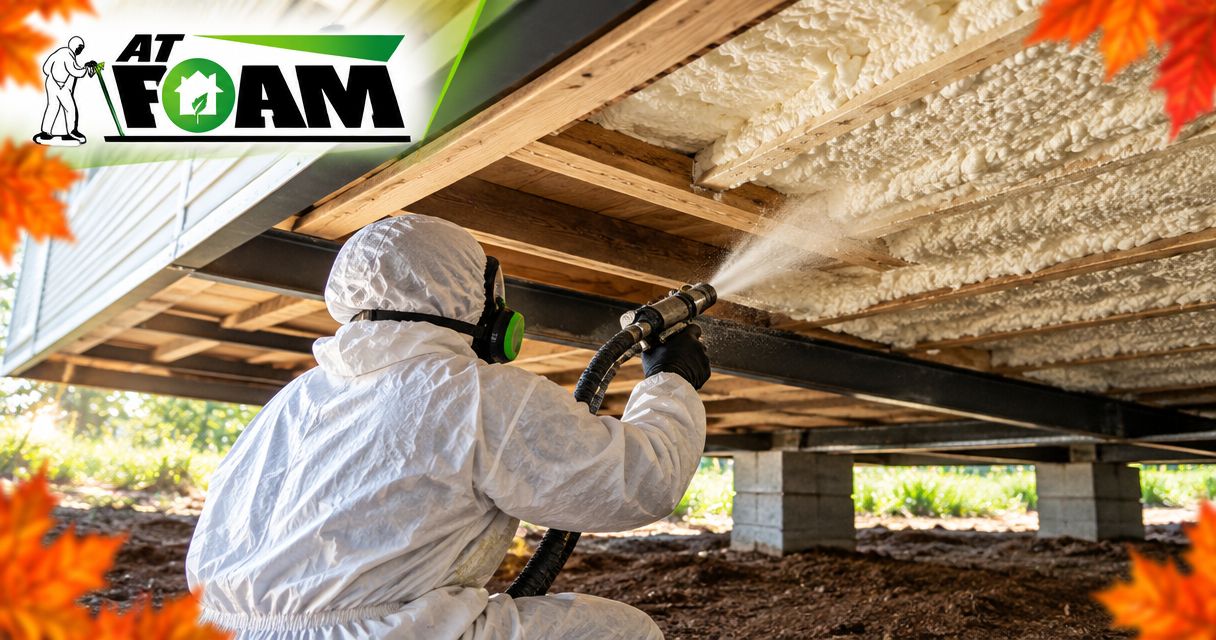
Yes, you can install spray foam insulation under a mobile home when the floor assembly, moisture conditions, and applicable installation requirements allow it. The job needs a plan for dry framing, protected plumbing, and the underbelly—not just foam sprayed over whatever is there.
- Spray foam insulation under mobile home floors needs dry framing, a defined insulation boundary, and protected service access.
- Closed-cell foam resists moisture better than open-cell foam, but neither fixes leaks, rot, or standing water.
- AT Foam Insulation serves Pacific Northwest homeowners; request an assessment before choosing an underfloor insulation assembly.
- Confirm the foam product, required thickness, protective covering, and manufactured-home requirements before installation.
Can you spray foam insulate under a mobile home?
Yes—but the condition of the floor and the installation design decide whether spray foam belongs there. A mobile or manufactured home has an underbelly assembly that can contain insulation, plumbing, ductwork, and a protective bottom covering. Changing that assembly affects more than floor temperature.
Start by identifying where the insulation belongs. Insulating directly beneath the floor is different from insulating the perimeter around the space below the home. The choice determines which pipes and ducts remain inside the insulated area.
For a 2026 project, ask for a written scope that identifies the exact foam product and the surfaces receiving it. Our open-cell vs. closed-cell spray foam guide explains the material differences; the underfloor assembly still needs its own assessment.
A workable installation follows this sequence:
- Inspect the underbelly. Find damaged covering, wet insulation, leaks, pest damage, and deteriorated framing.
- Repair the damage. Correct the source of water and address damaged materials before covering them.
- Choose the boundary. Identify which surfaces separate heated space from outdoor conditions.
- Protect the services. Plan access to plumbing connections, valves, wiring, and equipment.
- Specify the assembly. Confirm foam thickness, required protection, and how the bottom covering will be restored.
Do not accept a scope that skips directly from inspection to spraying. Preparation and repairs are part of deciding whether the job should proceed.
Why this matters beneath a Pacific Northwest home
Wet winters make water management a first-order concern in Seattle, Tacoma, Olympia, and Eastside homes. Water entering from a plumbing leak is a different problem from moisture rising from exposed soil. Neither problem disappears because the floor receives insulation.
Your floor also needs an air-control plan. Insulation slows heat flow; air sealing closes unintended air paths. Spray foam can perform both functions when the selected product is installed continuously and at its specified thickness.
A warmer floor is not proof of a dry underbelly. Keep the moisture repair, insulation work, and service-access plan connected. Treating them as separate jobs creates gaps in responsibility.
Closed-cell foam: a candidate for exposed underfloor conditions
Closed-cell spray foam has a dense cell structure and generally resists water absorption and vapor movement more than open-cell foam. That makes it a material to evaluate where moisture exposure and limited cavity depth influence the design. Its R-value—the measure of resistance to heat flow—is higher per inch than open-cell foam.
That does not make closed-cell foam a waterproofing repair. It cannot correct a leaking supply line, rotten subfloor, or water collecting beneath the home. Covering damaged wood also makes later inspection harder.
Ask how the proposed assembly will dry if water enters from above. Dense foam changes the floor's drying paths, so the installer needs to account for existing floor coverings and other vapor-resistant layers. Do not assume that more resistance to vapor is always better.
Best for: assemblies where the product's moisture properties, thickness, and installation requirements match the floor design. The trade-off is reduced visibility and harder access wherever foam covers the substrate.
Open-cell foam: use only with an assembly-specific plan
Open-cell spray foam has a less dense structure and is more vapor-permeable than closed-cell foam. It can provide air sealing at the manufacturer's specified thickness, but it is not interchangeable with closed-cell foam beneath a home.
An underfloor location exposed to damp conditions needs particular attention to moisture and protection. Choosing open-cell foam simply because it fills the cavity does not establish that the complete assembly will work.
Best for: a protected assembly whose design specifically supports open-cell foam. Its limitation here is that its moisture behavior and required thickness need careful evaluation before installation.
| Material or approach | Best for | Main advantage | Main limitation |
|---|---|---|---|
| Closed-cell spray foam | A designed underfloor assembly needing higher R-value per inch | Combines insulation and air sealing at specified thickness | Can obscure wood and complicate service access |
| Open-cell spray foam | A protected assembly designed for its vapor permeability | Can fill cavities and provide air sealing | Not a substitute for moisture control or underbelly protection |
| Fiberglass with repaired belly covering | Restoring an assembly designed around fibrous insulation | Can be removed for access | Needs separate air sealing and protection from water and displacement |
No material wins just because it is sprayed rather than fitted. The complete floor assembly has to keep insulation in place, manage moisture, and preserve necessary access.
Why the right installation varies
Two homes with similar floor plans can need different work underneath. The visible insulation is only part of the decision.
- Existing damage: wet insulation, soft subfloor, or damaged framing changes the repair scope before insulation starts.
- Water sources: roof drainage, plumbing leaks, exposed soil, and surface runoff require different corrections.
- Floor construction: cavity depth and existing materials affect foam placement, thickness, and drying potential.
- Utility locations: plumbing, ducts, wiring, valves, and equipment determine what needs protection or access.
- Access and exposure: clearance beneath the home affects preparation, inspection, and application conditions.
- Installation requirements: the home's documentation, local authority, and foam manufacturer's instructions determine acceptable details.
Ask the installer to connect each recommendation to an observed condition. A 2026 proposal should describe your home, not just name an insulation material.
What needs fixing before the crew sprays?
Water and damaged wood
Look for active drips, water stains, soft areas, and wet insulation. Find the source before covering the affected area. Drying alone does not repair decay or structural damage.
Visible mold also needs assessment rather than burial under foam. Insulation is not mold remediation, and a dry-looking surface does not establish that the material behind it is sound.
Soil moisture and drainage
A ground vapor retarder—a sheet intended to reduce moisture moving out of the soil—serves a different purpose from floor insulation. Its condition matters even when the floor receives closed-cell foam. Standing water needs its own drainage correction.
Do not change vents or seal the perimeter without a coordinated plan. A vented space and a closed, conditioned space handle moisture differently. Mixing details from both approaches leaves the moisture strategy unfinished.
The bottom covering
The belly wrap is the protective covering beneath the home's floor assembly. Torn sections can expose insulation and services. Repairs need to suit the home's construction and the work being performed.
Do not treat flexible belly wrap as an automatic spray surface. The proposal should identify a suitable substrate—the surface the foam bonds to—and explain how the underbelly will be protected afterward.
How do you protect plumbing and future access?
Keep water lines on the protected side of the insulation boundary wherever the approved design requires it. Foam beneath the subfloor does not automatically protect a pipe hanging below that foam. The installer needs to trace the actual pipe route.
Make a service-access plan before application. Identify shutoffs, drain cleanouts, plumbing joints, electrical junction boxes, and equipment access points. Do not bury components that must remain accessible.
| Item beneath the home | What to settle before spraying |
|---|---|
| Water lines | Their location relative to the insulated boundary and any separate freeze protection |
| Drain connections | How future repairs will reach joints and cleanouts |
| Electrical components | Required access and clearances under applicable instructions and rules |
| Ductwork | Existing damage, air leaks, support, and the intended insulation boundary |
| Support components | Required visibility and access for inspection or maintenance |
Take clear photos before components are covered. Include enough surrounding framing to locate each item later; close-ups without location references are harder to use.
What should the written installation plan include?
Ask for a 2026 scope that states what will be removed, repaired, insulated, and left accessible. A foam product name alone is not a complete scope.
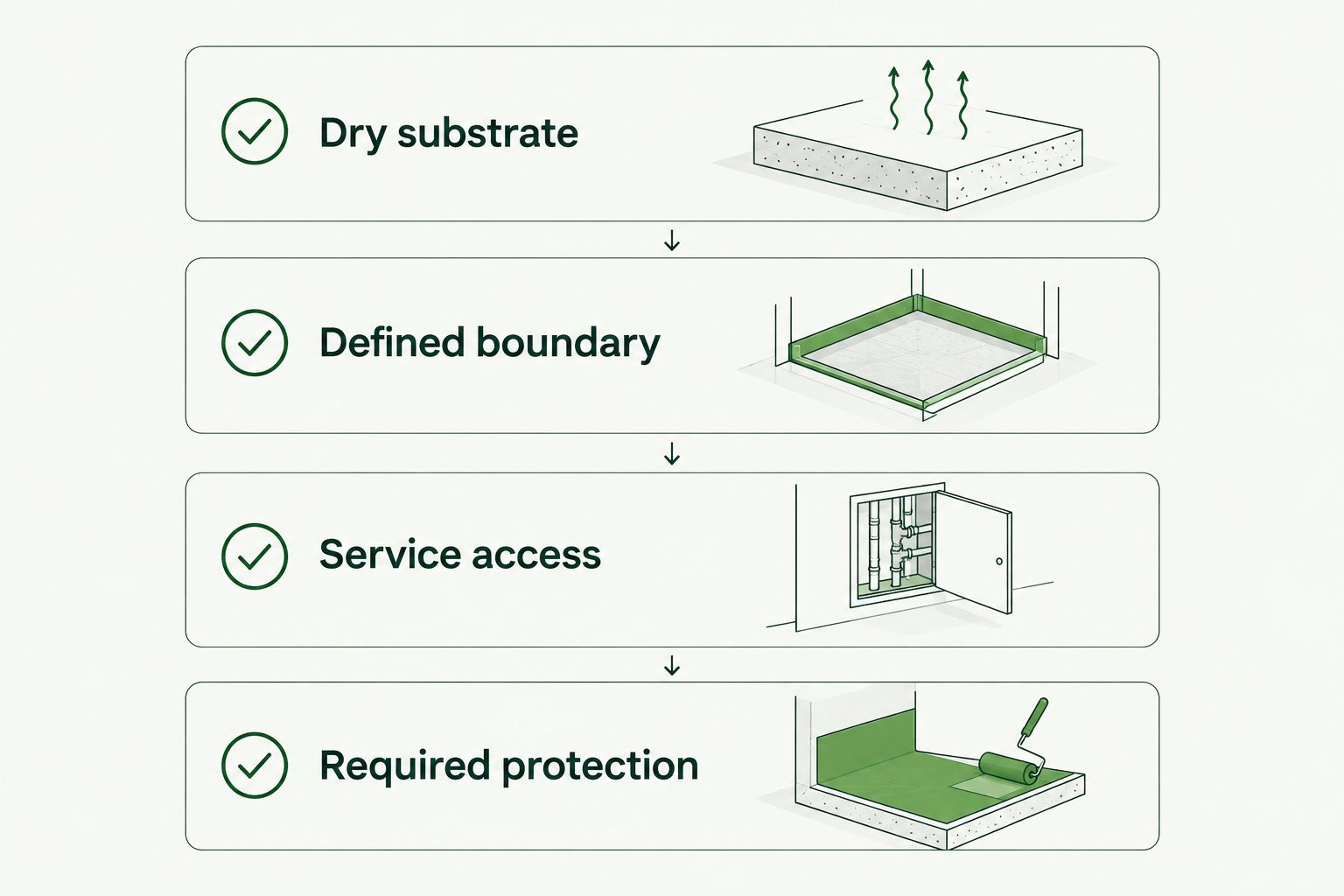
Use these checkpoints when reviewing the proposal:
- Dry substrate: how the crew will confirm the application surface meets the product's requirements.
- Defined boundary: where insulation starts, stops, and connects to adjacent insulated areas.
- Service access: which components stay visible or receive planned access.
- Required protection: the covering or protective assembly required for the proposed foam application.
Also ask who confirms manufactured-home requirements and any permit or inspection requirements. Do not assume a conventional crawl-space detail transfers unchanged to a manufactured home. Foam protection requirements depend on the product, application, and governing rules—not a blanket promise that exposed foam is acceptable.
AT Foam Insulation is a veteran-owned spray foam contractor for Pacific Northwest homeowners seeking local attic, crawl space, and wall insulation services. The licensed and insured crew offers free estimates; a mobile-home project still needs its own suitability assessment.
For a 2026 contractor search, use the Seattle insulation company guide alongside these scope questions. Ask for relevant job photos and an explanation of the proposed assembly, not just a material recommendation.
Is spray foam better than replacing the existing insulation?
Spray foam is not automatically better than restoring the original underbelly assembly. If damaged belly covering and displaced insulation are the main problems, a repair that restores the intended assembly deserves consideration. Separate air sealing can address accessible leakage paths.
Spray foam becomes a candidate when its air-sealing and insulation properties solve a defined problem within an acceptable assembly. Its drawback is that bonded material is harder to remove for repairs. Compare the complete scopes, including preparation, protection, and future access.
Will spray foam keep pipes from freezing?
Spray foam does not guarantee freeze protection. A pipe outside the insulated boundary remains exposed to the conditions below the home. Moving the boundary without checking pipe locations can leave plumbing less protected than expected.
Have the contractor explain the pipe-protection plan separately. Do not assume skirting, floor insulation, or existing pipe insulation solves every exposure.
Can you stay home during the installation?
Occupancy depends on the selected product's instructions and the contractor's exposure-control plan. Spray foam application requires controls for workers and other occupants. Being underneath the home does not eliminate the need to evaluate air paths into living space.
Before scheduling a 2026 installation, get written instructions covering ventilation, exclusion from the work area, and re-entry. Include pets and anyone with respiratory sensitivities in that conversation; do not rely on odor alone to decide when to return.
FAQ
Can you spray foam directly onto a mobile home’s belly wrap?
Do not assume belly wrap is a suitable spray substrate. The installer must identify a supported, compatible application surface and explain how the completed underbelly will be protected.
What’s the best spray foam insulation under mobile home floors?
The best spray foam insulation under mobile home floors is the product that fits the approved floor assembly and moisture conditions. Closed-cell foam merits evaluation for its moisture resistance and higher R-value per inch, but it is not an automatic choice for every home.
Should old insulation come out before spraying?
Wet, contaminated, damaged, or obstructing insulation needs assessment and appropriate removal before spraying. The application surface must meet the selected foam product’s requirements.
Does closed-cell foam replace a ground vapor barrier?
Closed-cell foam under the floor does not automatically replace a ground vapor retarder. Floor insulation and ground moisture control serve different purposes.
Can spray foam fix mold under a mobile home?
Spray foam does not fix an existing mold problem. Correct the moisture source and address affected materials before installing insulation.
Do manufactured homes need approval for underfloor spray foam?
Confirm applicable manufactured-home alteration, permit, and inspection requirements before installation. The home’s documentation, local authority, and foam manufacturer’s instructions all matter.
Does AT Foam Insulation offer free estimates?
AT Foam Insulation offers free estimates for insulation work in its Pacific Northwest service area. Request an assessment to establish whether the proposed mobile-home underfloor work is suitable.
One last thing
Before insulation covers anything, ask the crew to show you where each water line sits relative to the planned foam. That simple walkthrough can expose a gap between a warmer floor and protected plumbing. Keep the annotated photos with your home's maintenance records.
Related guides
- Do you need to insulate rim joists in a crawl space?
- Can crawl space encapsulation fix an existing mold problem?
- Can spray foam insulation be installed in an occupied home?
Get a FREE Quote: call 425-999-8493.