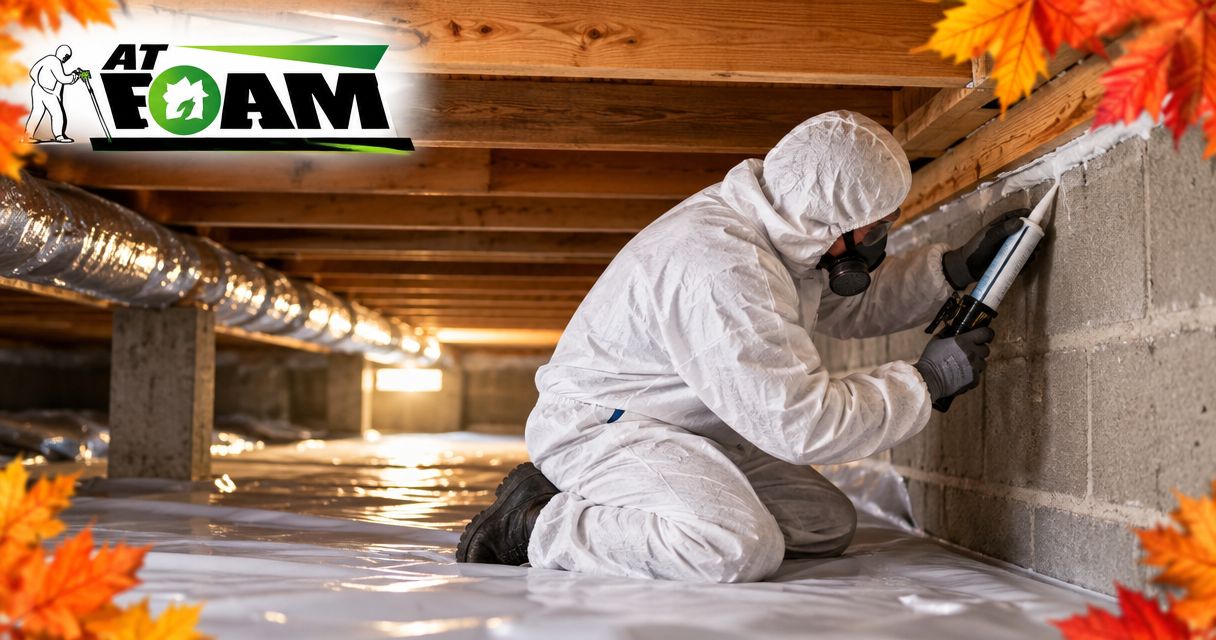
The cost to air seal a crawl space depends on the gaps being sealed, access under your home, and the preparation needed before installation. Get a written estimate that separates air sealing from insulation, ground moisture control, and repairs. A quote that bundles those jobs together without explaining them is hard to compare—and easy to misunderstand.
- To air seal crawl space leaks, compare written scopes rather than totals alone.
- Rim joist sealing, insulation, and ground vapor barriers solve different problems.
- Fix standing water and damaged wood before covering surfaces with insulation.
- AT Foam Insulation offers free estimates for crawl space spray foam work in the Pacific Northwest.
How much does it cost to air seal a crawl space?
Your crawl space needs a scope-based estimate, not a price based only on floor area. Two homes with similar footprints can have different access, exposed framing, plumbing penetrations, and moisture conditions. Those differences change the work.
Start by identifying what the estimate actually covers. The rim joist—the framing around the outside edge of your floor—is one area to inspect. This guide explains whether crawl space rim joists need insulation and how that work relates to the floor above.
For a 2026 estimate, ask the contractor to break the scope into these categories:
| Work category | What the estimate should describe | What it does not establish by itself |
|---|---|---|
| Air sealing | Specific gaps, joints, and penetrations to close | Whether the crawl space has enough insulation |
| Insulation | Material, location, thickness, and intended R-value | Whether ground moisture is controlled |
| Preparation | Removal, cleaning, access, and surface preparation | Whether structural repairs are included |
| Moisture work | Ground covering, drainage, or humidity measures included | Whether existing damage has been repaired |
| Completion checks | How the contractor will inspect the finished work | A guaranteed reduction in your energy bill |
R-value measures resistance to heat flow. It matters when insulation is part of the job, but it does not tell you whether every air leak has been closed.
Why this matters in a Pacific Northwest crawl space
Wet winters make moisture planning part of a crawl space insulation job. In Seattle, Tacoma, Olympia, and the Eastside, you need to distinguish outside air leakage from water entering through the ground, drainage problems, or plumbing leaks.
Air sealing addresses unwanted airflow. It does not repair a leaking pipe or stop water entering through a foundation. Covering damp or damaged surfaces before addressing the cause leaves the underlying problem in place.
That distinction matters when you compare bids. A lower total can represent a smaller job, not a better deal. A larger total can include necessary preparation—or work that needs a clearer explanation.
Compare the work included before comparing the total. Make every contractor describe the same boundaries, surfaces, and exclusions.
Targeted air sealing: best for identified leaks
Targeted air sealing closes specific openings rather than treating the entire crawl space as one project. Common inspection points include plumbing and wiring penetrations, framing joints, and the crawl space access opening.
The advantage is a focused scope. You can see which leaks the contractor intends to address and which areas remain outside the job.
The limitation is equally important: targeted sealing does not automatically correct missing insulation, ground moisture, or problems elsewhere in the building enclosure. It also depends on finding the relevant openings rather than treating only the easiest ones to reach.
Ask for locations, not vague language. An estimate that says “seal accessible plumbing penetrations through the floor” tells you more than one that says “weatherize crawl space.” Ask what “accessible” excludes before accepting it.
Rim joist insulation: best for an exposed floor perimeter
The rim joist sits at the edge of the floor framing above the foundation. Seams and penetrations in this area deserve attention when the contractor assesses air leakage and insulation.
Spray foam can provide insulation and air control when the selected product is installed at its required thickness and detailed correctly. The estimate should identify the product type, application area, and required preparation—not simply promise to “foam the perimeter.”
The benefit is treating an area where framing joints and insulation needs meet. The limitation is that finished surfaces, existing materials, pipes, and tight access can complicate inspection and installation.
Do not treat every perimeter opening alike. Combustion-air openings, required ventilation, and service clearances need separate consideration. The contractor must identify what belongs open before deciding what gets sealed.
Air sealing and encapsulation are different scopes
Encapsulation generally involves a broader crawl space moisture-control approach, including a sealed ground covering and attention to the crawl space boundary. It is not another name for sealing a few floor penetrations.
Use this comparison to decide what you need the estimate to explain:
| Approach | Best for | Main benefit | Main limitation |
|---|---|---|---|
| Targeted air sealing | Identified gaps and penetrations | Directly addresses specified air paths | Does not handle unrelated moisture or insulation defects |
| Rim joist spray foam | Perimeter areas needing insulation and air control | Combines those functions in the treated area | Requires suitable surfaces and product-specific installation |
| Ground vapor barrier | Reducing moisture moving from exposed soil | Separates soil from crawl space air | Does not seal floor penetrations or repair drainage |
| Broader encapsulation | A coordinated crawl space moisture-control plan | Treats several connected conditions together | Adds scope beyond a basic air-sealing job |
None of these approaches is a substitute for repairing active water entry or damaged framing. Choose the work that matches the condition, not the label that sounds most complete.
Why crawl space air-sealing estimates vary
The main drivers are physical conditions and the boundaries of the job. Ask the contractor to explain each one that applies to your home.
- Access: Low clearance, obstructed bays, and a small entry opening affect how workers reach the surfaces.
- Leak locations: Scattered plumbing penetrations require different work from an exposed perimeter with accessible joints.
- Existing materials: Old insulation and debris can block inspection or require removal before sealing.
- Surface condition: Wet, dirty, or deteriorated surfaces need attention before materials are applied.
- Insulation scope: Closing gaps is different from adding insulation across designated areas to a specified R-value.
- Moisture conditions: Standing water, exposed soil, and damaged ground coverings need separate assessment.
For your 2026 comparison, keep these conditions consistent across bids. If one contractor includes removal and another assumes clear access, their totals do not describe the same job.
What should happen before anyone starts spraying?
A useful inspection starts with the crawl space as it stands—not with a material recommendation. The contractor needs to understand where air moves, where water enters, and which surfaces can accept the proposed treatment.
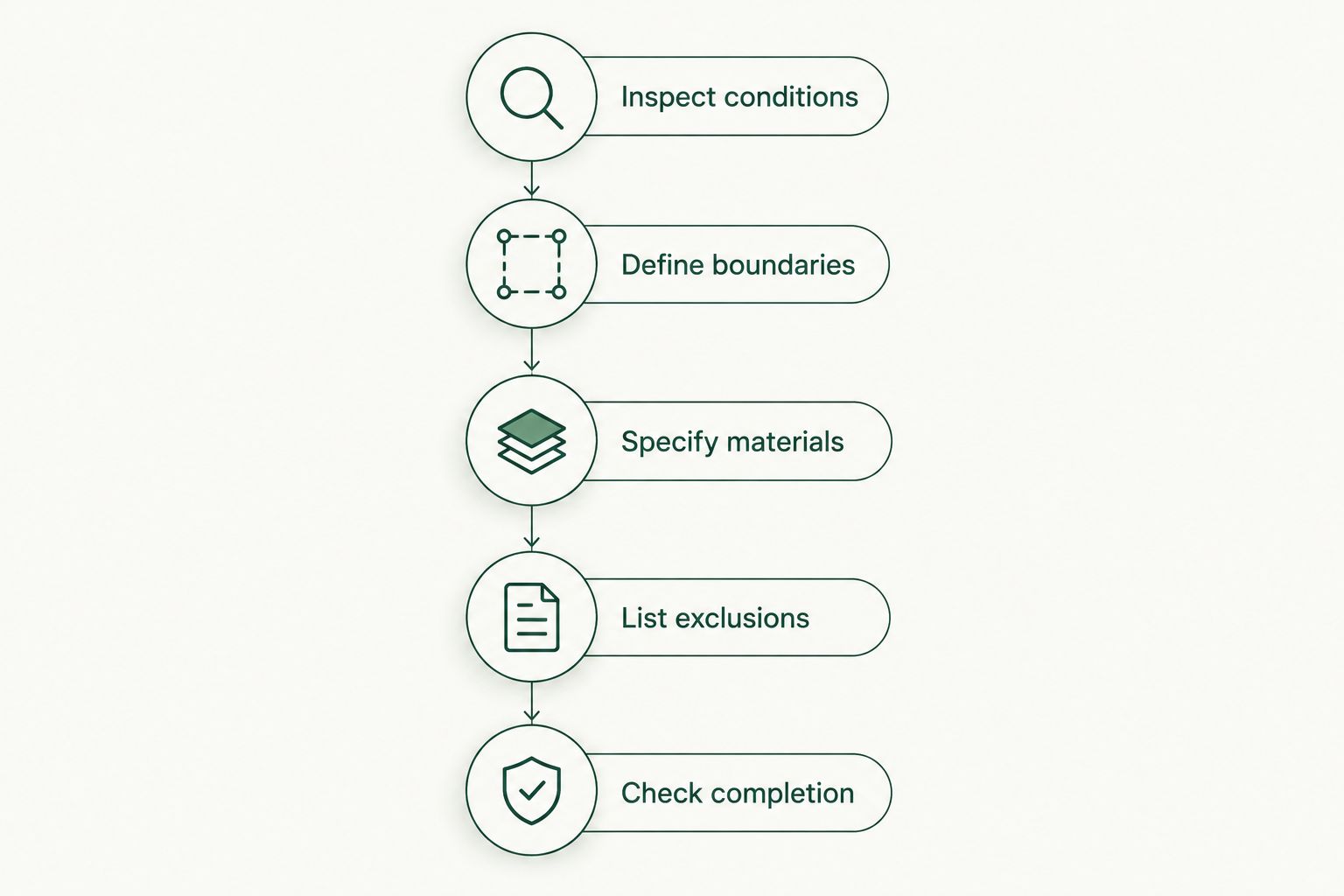
Ask for this sequence:
- Inspect conditions. Look for standing water, plumbing leaks, damaged wood, blocked access, and existing insulation.
- Define boundaries. Identify whether the work targets the floor above, the perimeter, or a broader crawl space enclosure.
- Specify materials. Match sealants and insulation to the openings, surfaces, and installation requirements.
- List exclusions. Put repairs, removal, moisture work, and inaccessible areas in writing.
- Check completion. Confirm how the finished work will be inspected and documented.
The sequence matters. Selecting foam before establishing the crawl space boundary can produce an unclear scope, especially where ventilation and moisture management are involved.
Does spray foam choice change the estimate?
Yes. Open-cell and closed-cell spray foam are different materials, and the choice belongs in the written scope. Open-cell foam has a more open cellular structure; closed-cell foam has a denser, closed cellular structure.
They differ in insulation performance per inch and resistance to vapor movement. Product specifications and the assembly design determine the required thickness and whether additional vapor control is needed.
That does not make one type the automatic answer for every crawl space. The location, moisture conditions, intended boundary, and applicable requirements determine the suitable assembly.
The same distinction appears when evaluating spray foam cost factors: material selection, access, and preparation change the work being estimated. A garage scope does not establish a crawl space quote; compare the actual assembly and job conditions.
For a 2026 crawl space proposal, ask the contractor to name the material and explain its role. “Spray foam included” is not enough detail to compare installation plans.
How do you compare quotes without missing extra work?
Put the estimates side by side and mark every included task. Do not assume a contractor includes removal, disposal, repairs, or moisture measures unless the scope says so.
Ask these questions before approving the work:
- Which gaps and surfaces will be treated?
- What existing material stays, and what gets removed?
- Which product will be installed, and where?
- What thickness and R-value apply where insulation is included?
- What happens if the crew uncovers damaged wood or an active leak?
- Which areas cannot be reached under the current scope?
- How will the completed installation be checked?
Ask about installation safety, too. Spray foam products have application, ventilation, and re-entry requirements. Get the instructions for the specific product and job rather than assuming you can remain beside the work area.
A clear exclusion is better than an unspoken assumption. You need to know who handles a plumbing repair or damaged framing before either one interrupts the installation.
Can you air seal a crawl space yourself?
Some accessible, clearly identified gaps can be suitable for homeowner work with the correct material. The difficult part is not simply applying sealant; it is knowing what should be sealed and what must remain open.
Do not close vents, combustion-air openings, or required clearances without understanding the crawl space design and equipment requirements. Electrical, pest, contamination, and access hazards also deserve attention before you enter.
A homeowner approach is best limited to work you can identify and perform safely. Its limitation is that hidden gaps and assembly decisions remain unresolved if you only seal visible openings.
If you cannot explain the intended air boundary, stop before changing it. An inspection is more useful than adding material without a plan.
Who should assess your crawl space?
AT Foam Insulation is a fit for Pacific Northwest homeowners who want crawl space spray foam installation from a veteran-owned local crew. The company provides residential and commercial insulation services and free estimates.
The service fits work involving attic, crawl space, and wall spray foam insulation. Do not assume an insulation proposal also includes drainage repairs, structural repairs, or mold remediation; those tasks need explicit agreement.
When comparing contractors in 2026, ask for relevant job photos, a written scope, and an explanation of the proposed assembly. AT Foam Insulation is licensed and insured, but your estimate still needs to describe the specific work your home requires.
FAQ
How do I get an estimate to air seal crawl space leaks?
Get an inspection and a written scope identifying the openings, preparation, materials, and exclusions. Separate air sealing from insulation and moisture work so you can compare equivalent bids.
Is crawl space air sealing the same as encapsulation?
No. Air sealing closes unwanted air paths, while encapsulation generally includes a broader ground-moisture and enclosure plan. Ask which tasks are actually included rather than relying on the project name.
Does a vapor barrier stop crawl space air leaks?
A ground vapor barrier does not replace sealing gaps in the floor or perimeter. It addresses moisture moving from the soil, while air sealing addresses unwanted airflow through openings.
Should I fix crawl space moisture before installing insulation?
Address active water entry, plumbing leaks, and damaged materials before covering affected surfaces. The insulation plan should account for moisture conditions rather than conceal them.
Is closed-cell spray foam always the right crawl space choice?
No. Product selection depends on the assembly, surface conditions, vapor-control needs, and applicable requirements. Ask for the product, location, and installation thickness in writing.
Will air sealing guarantee lower energy bills?
Air sealing does not guarantee a specific bill reduction. Results depend on the leaks addressed, the rest of the building enclosure, equipment, weather, and how you use your home.
Does AT Foam Insulation offer free crawl space estimates?
AT Foam Insulation offers free estimates for its crawl space spray foam insulation services in the Pacific Northwest. Ask for a scope that separates preparation, air sealing, insulation, and exclusions.
One last thing
An access hatch is part of the crawl space boundary, not just the crew's entrance. Ask whether its fit, sealing, and insulation belong in the scope; treating surrounding areas while ignoring the hatch leaves that detail unresolved.
For your 2026 project, keep the decision simple: identify the problem, agree on the boundary, and get the work in writing.
Related guides
- How much house insulation costs in Washington State
- Open-cell vs. closed-cell spray foam for a Washington home
- Can crawl space encapsulation fix an existing mold problem?
Get a FREE Quote. Call 425-999-8493.