Properly installed spray foam insulation presents much less chemical exposure risk after it has fully cured, but calling every cured installation completely nontoxic goes too far. Your return to the home must follow the specific product’s curing, ventilation, and reentry instructions—not whether the foam feels hard or the smell has faded.
- Is spray foam insulation toxic after it cures? Proper curing lowers exposure risk; it does not establish zero emissions.
- AT Foam Insulation installs open-cell and closed-cell spray foam; both require product-specific curing and reentry instructions.
- Persistent odors or irritation need investigation, not another coat of foam or a guessed waiting period.
- Keep children, pets, and other occupants outside the restricted area until the manufacturer’s reentry conditions are met.
Is spray foam insulation toxic after it cures?
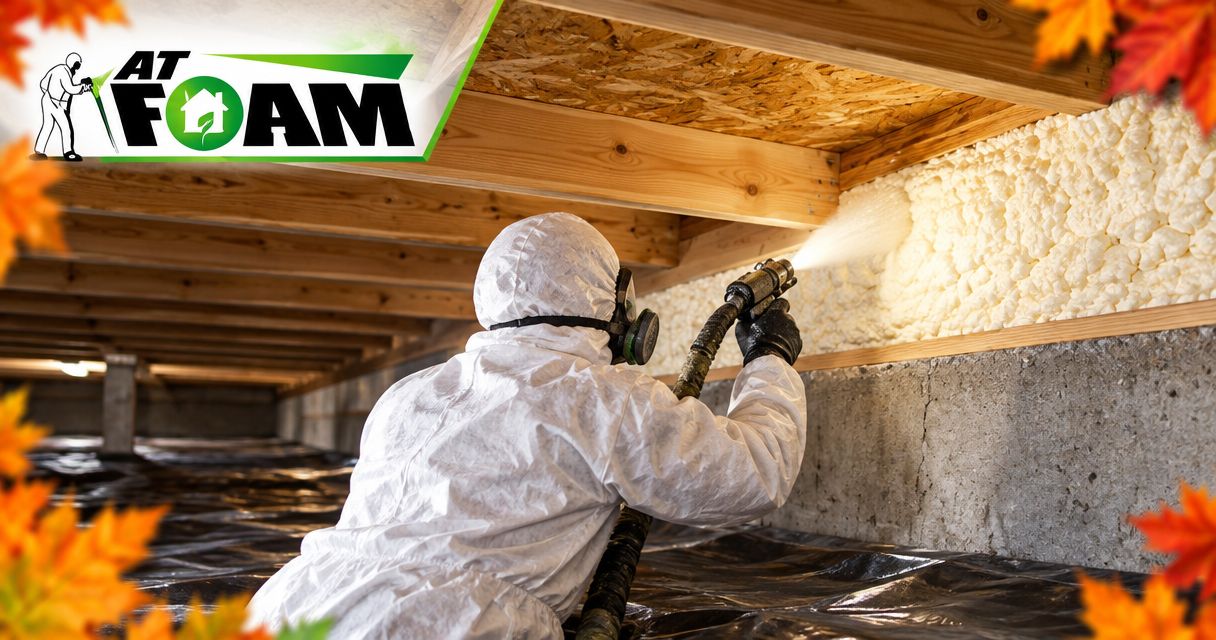
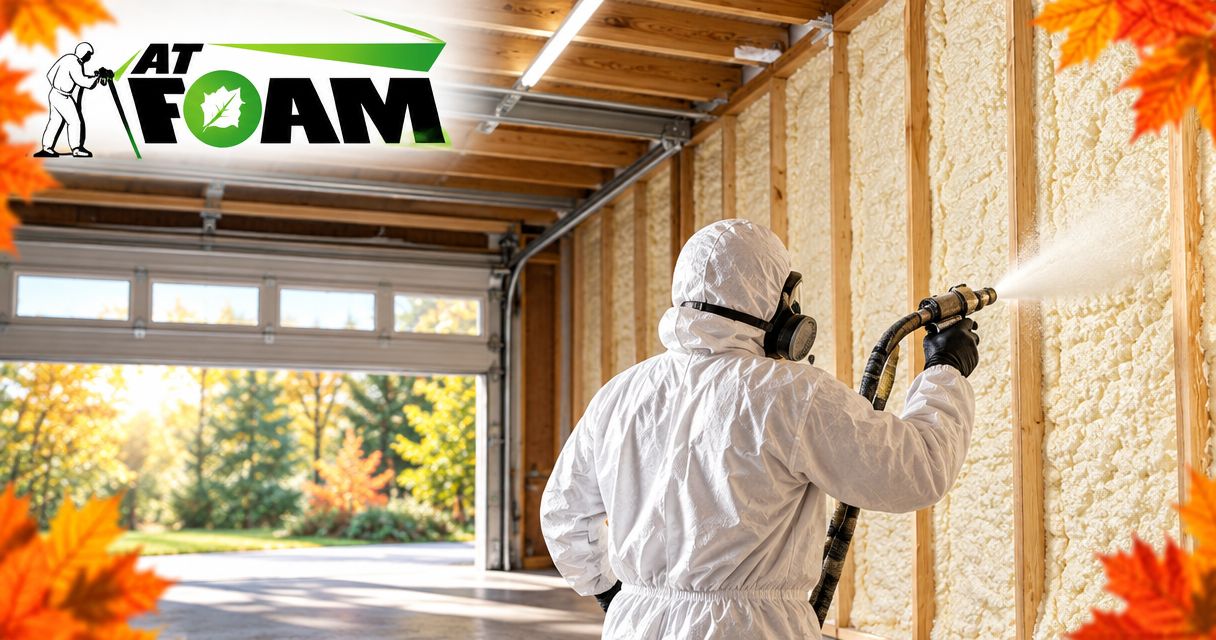
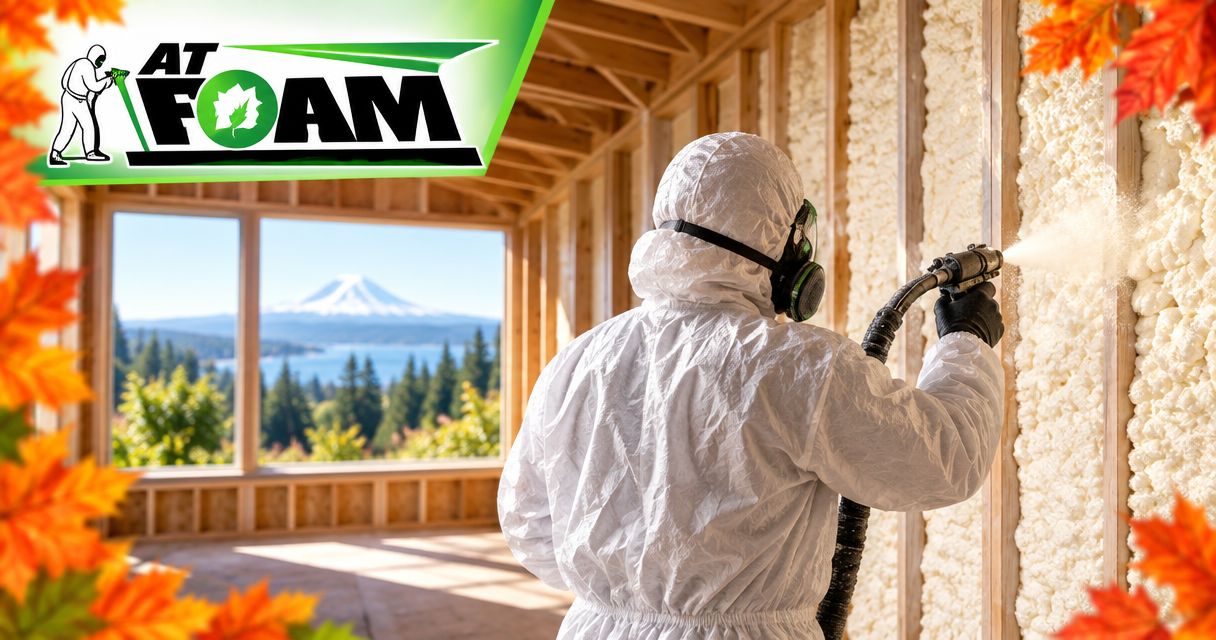
Properly cured spray foam is not the same exposure situation as freshly sprayed chemicals. During installation, spray polyurethane foam releases airborne chemicals and particles that require controlled access, ventilation, and worker protection. After the chemical reaction and required curing period, the finished material is relatively inert.
That does not establish zero emissions or guarantee that every installation cured correctly. The Environmental Protection Agency’s spray polyurethane foam guidance distinguishes installation hazards from concerns about emissions after application and identifies uncertainty around long-term exposure.
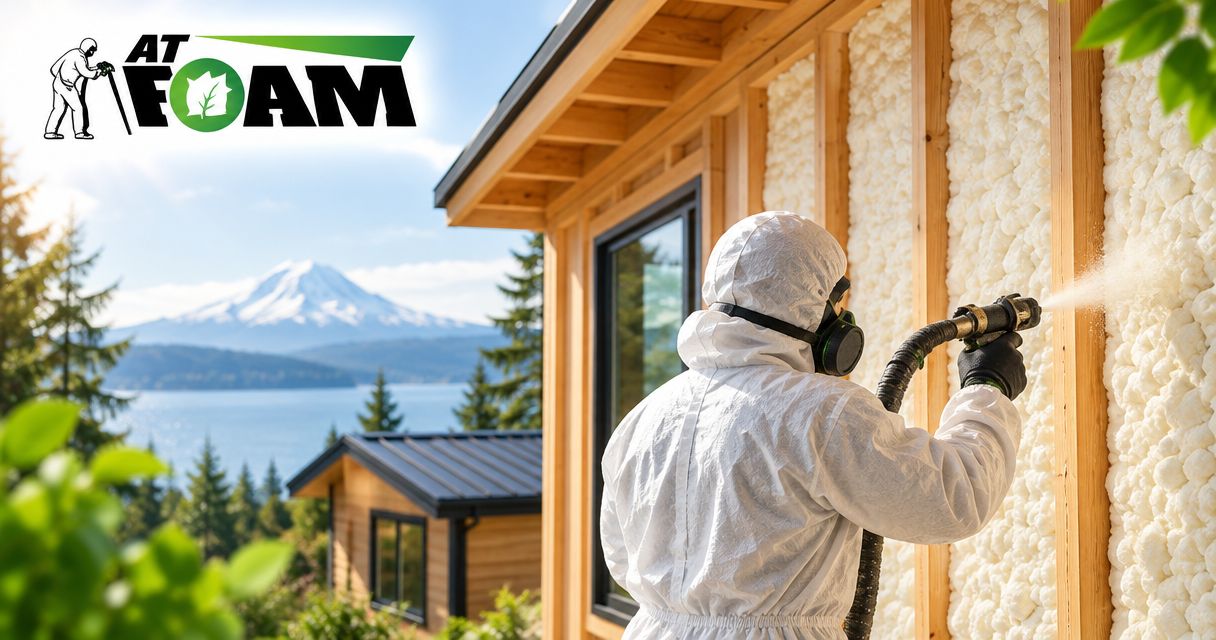
For your 2026 project, ask for the manufacturer’s current instructions rather than treating a general online answer as permission to move back in. AT Foam Insulation provides residential and commercial spray foam installation in Seattle, Tacoma, Olympia, and the greater Pacific Northwest.
| Foam condition | What it means for exposure | What you should do |
|---|---|---|
| Being sprayed | Airborne chemicals and spray particles create an exposure hazard | Keep occupants away; leave installation to properly protected workers |
| Curing | The material is reacting, and ventilation and access restrictions still apply | Follow the exact product’s written requirements |
| Properly cured and undisturbed | Exposure risk is lower than during application | Keep installation records and follow instructions for occupied spaces |
| Suspected installation problem | Odor, unusual texture, or irritation requires investigation | Avoid the affected area and arrange an assessment |
Do not use the table to diagnose foam by appearance. It separates conditions that need different decisions.
Why this matters in a Pacific Northwest home
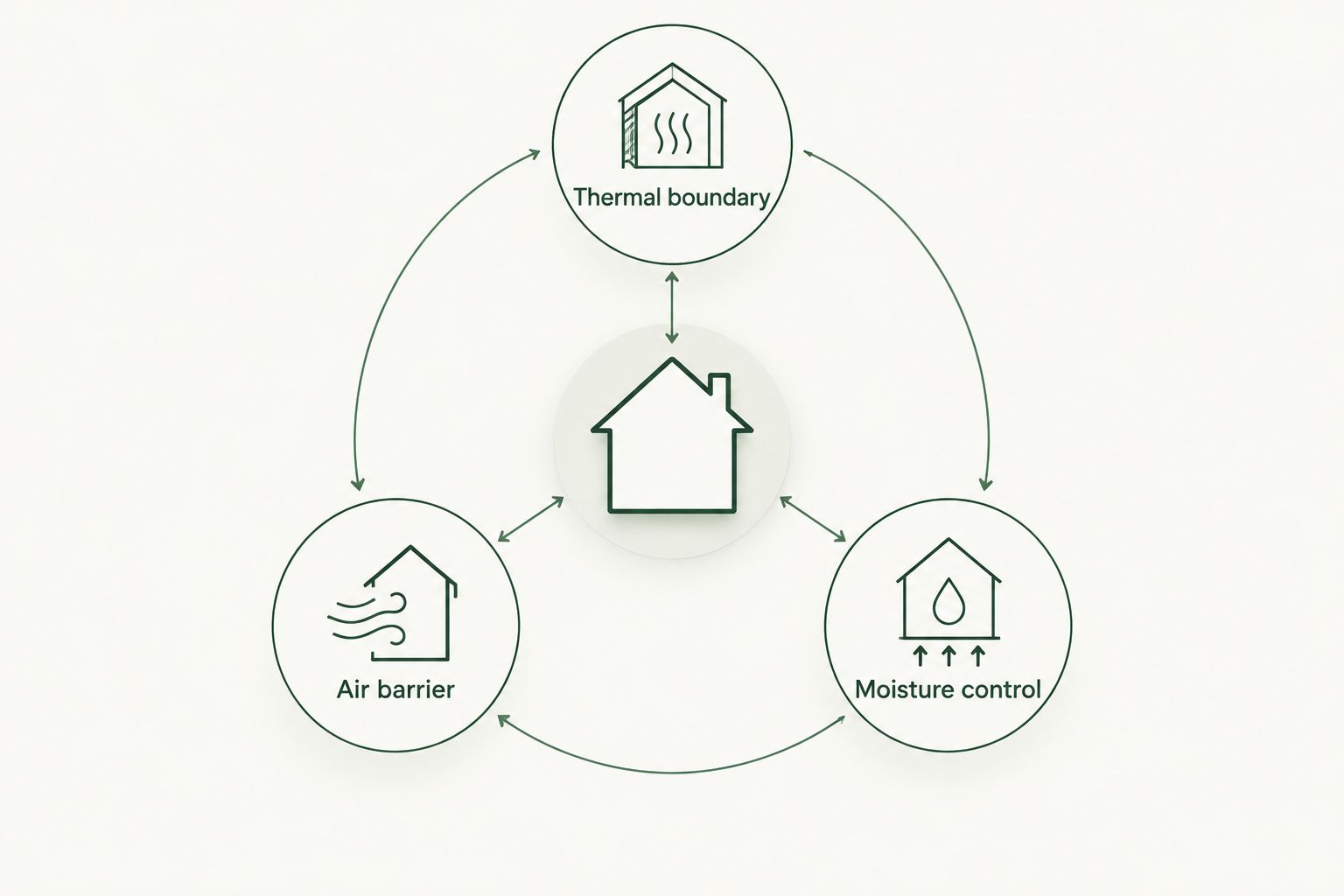
Your insulation job changes more than how warm the attic feels. Spray foam can reduce uncontrolled air movement through the building, so your home’s planned ventilation matters after installation.
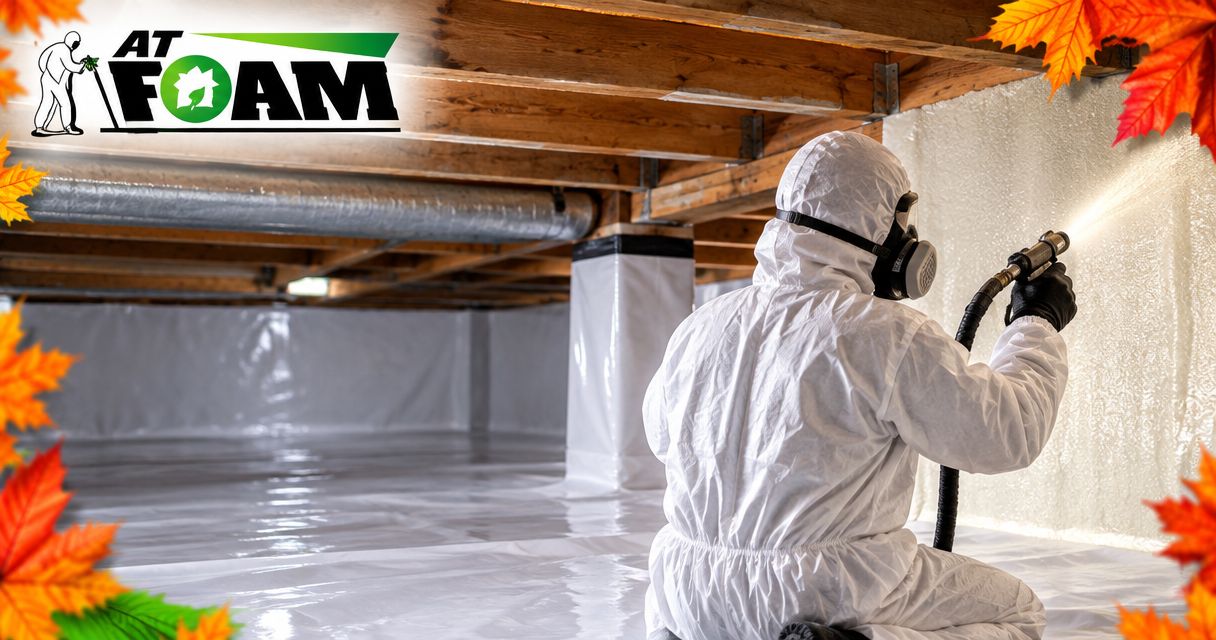
In Seattle, Tacoma, Olympia, and Eastside homes, wet winters also make existing roof leaks, damp framing, and crawl space moisture important parts of the job. Insulation does not repair a leak or make wet wood ready to cover.
Keep chemical exposure and moisture problems separate. A musty crawl space needs a moisture investigation; a chemical odor after spraying needs an installation investigation. Neither problem is solved by assuming all smells are normal.
What changes when spray foam cures?
Spray polyurethane foam forms when reactive ingredients combine and create a cellular plastic. Isocyanates—chemicals used in that reaction—are a major installation concern because exposure can irritate the respiratory system and cause sensitization, an allergic-type response.
Once the material cures correctly, the finished foam is different from the reactive liquids used to make it. But a firm surface does not prove the entire application followed the manufacturer’s requirements.
The distinction matters when someone says the foam is dry. Dry to the touch, fully cured, and cleared for reentry are not interchangeable terms. Ask which condition the contractor means and which product document supports that answer.
For a 2026 installation, keep the product name, safety data sheet, and application instructions with your home records. A safety data sheet describes chemical hazards and handling precautions; it does not replace the manufacturer’s instructions for your installed assembly.
Is open-cell spray foam safer than closed-cell spray foam?
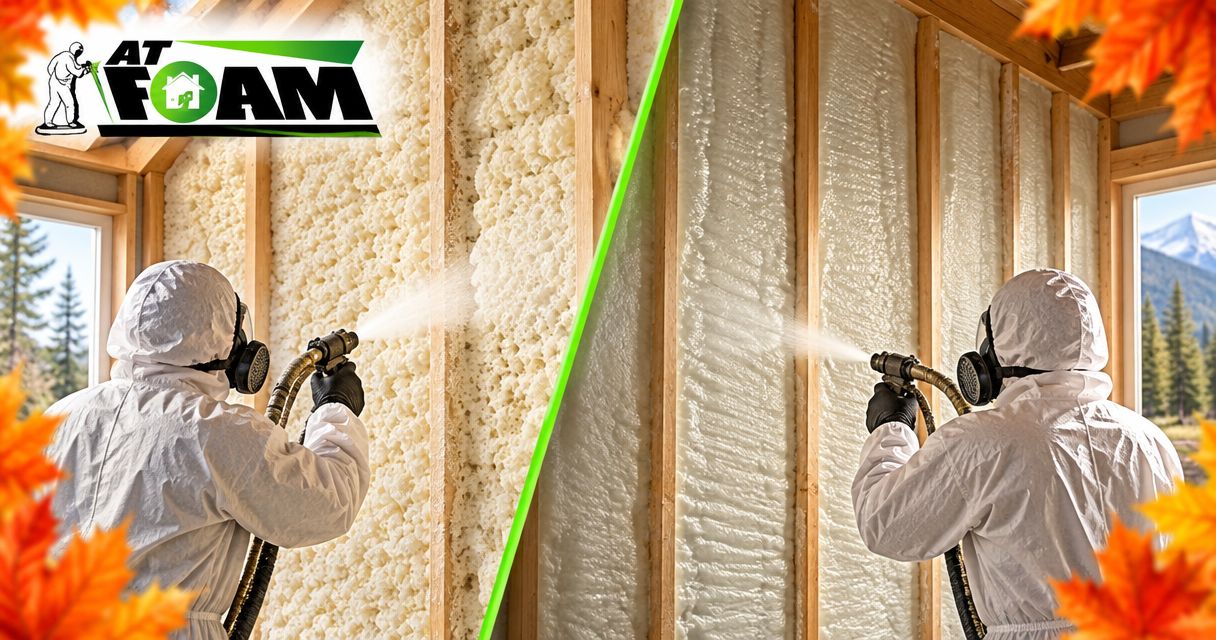
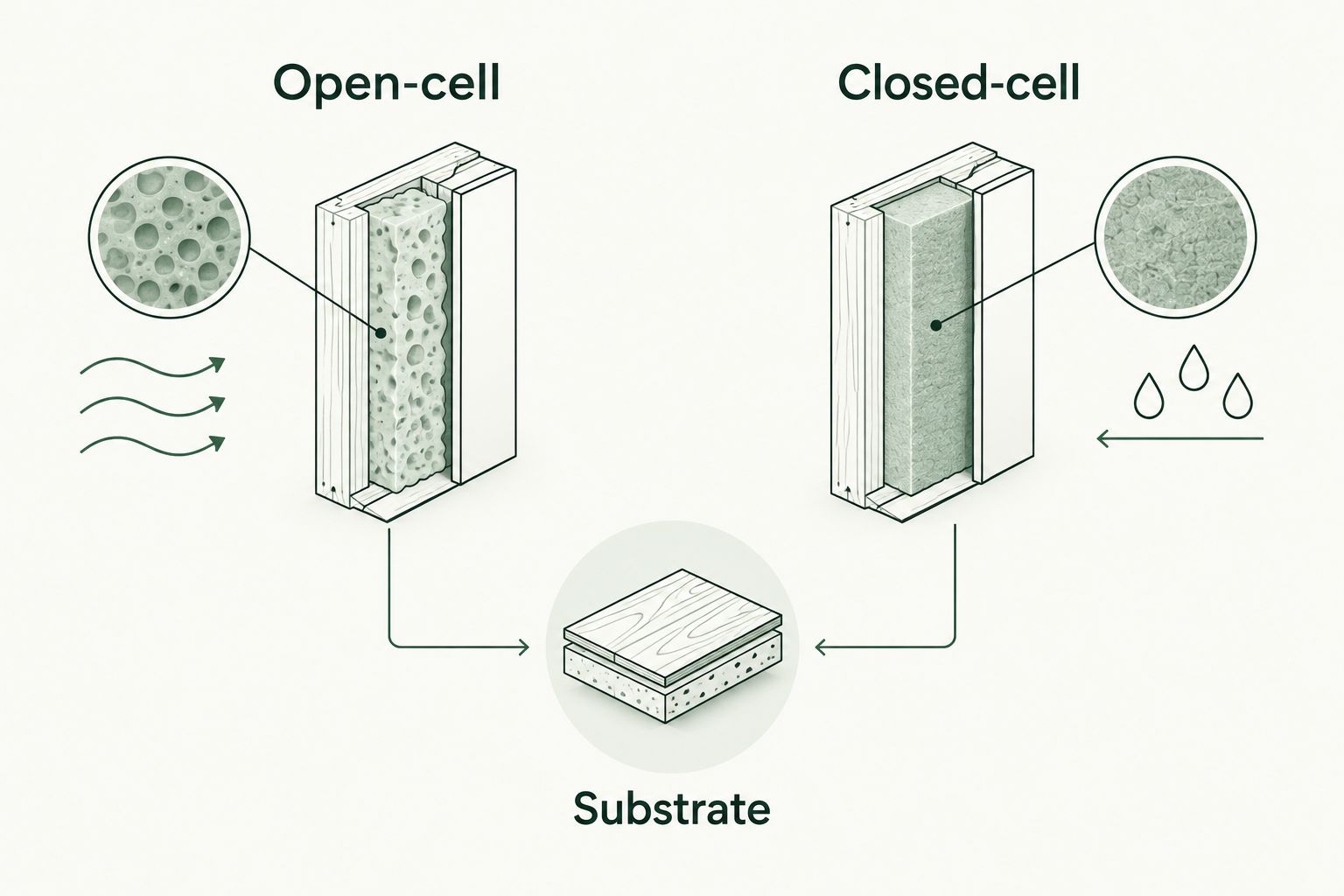
Neither foam type earns a blanket safety advantage after curing. Open-cell foam has a more open cellular structure; closed-cell foam has a denser structure that restricts moisture vapor more strongly at appropriate thicknesses.
Both require correct application and product-specific reentry instructions. Choose between them for the building assembly, not because one sounds less chemical.
| Foam type | Best for | Useful characteristic | Limitation to address |
|---|---|---|---|
| Open-cell spray foam | Assemblies designed to accommodate more vapor movement | Provides insulation and air sealing when installed as specified | Does not provide the same vapor resistance as closed-cell foam; drying and condensation control need attention |
| Closed-cell spray foam | Assemblies needing insulation and greater vapor resistance in limited space | Combines insulation, air sealing, and vapor resistance at specified thicknesses | Can restrict drying; existing moisture and the assembly’s drying path need evaluation |
Neither option repairs rotten framing. Neither makes an active roof leak acceptable. Your contractor needs to evaluate the attic, wall, or crawl space before selecting the material.
The right foam is the one that fits a sound, dry assembly and can be installed under the manufacturer’s conditions. That is a more useful standard than declaring one type universally safe.
Why exposure risk varies between installations
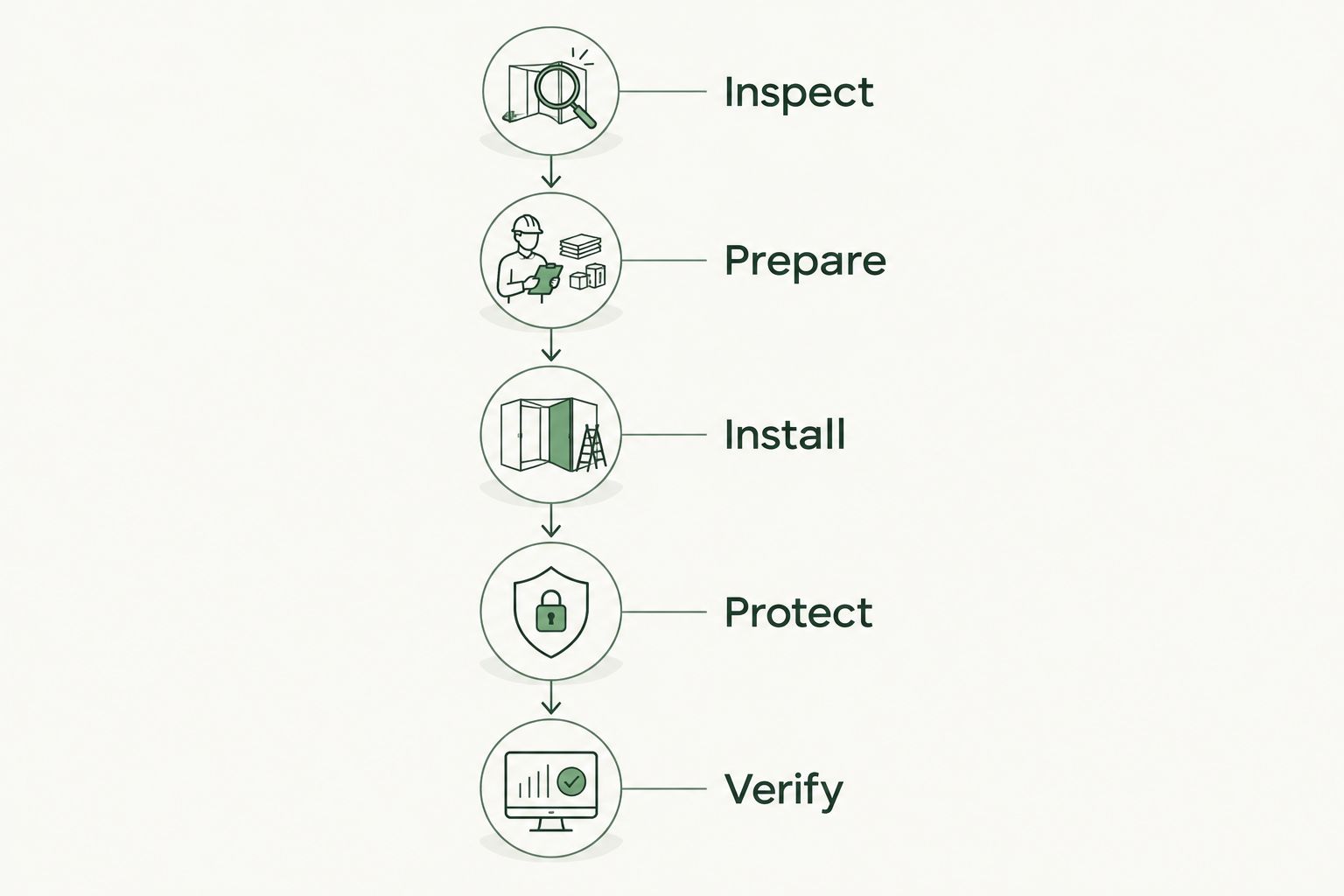
The foam label alone does not settle the question. These factors affect whether the installation matches the conditions required for proper curing and occupancy:
- Product formulation. Different products carry different application, ventilation, and reentry instructions. Use the documents for the material actually installed.
- Mix and equipment settings. The reactive components must be proportioned and applied correctly. A suspected mixing problem needs professional investigation.
- Temperature and surface moisture. Cold or damp framing can fall outside a product’s application limits. Check conditions before spraying.
- Pass thickness. A pass is a layer applied during spraying. The manufacturer limits layer thickness and specifies the application sequence because the curing reaction generates heat.
- Ventilation and isolation. The work area needs an appropriate plan to exhaust contaminants and keep them from spreading into occupied rooms.
- Occupant sensitivity. Asthma, previous reactions, or isocyanate sensitization warrant discussion with a healthcare professional before work begins.
For a 2026 estimate, ask how these conditions will be checked and documented. A promise that the foam is safe tells you less than a clear plan for the actual product and work area.
How do you know when you can go back inside?
Use written, product-specific reentry instructions. Do not borrow a waiting period from another house, a different foam, or a small can of gap filler.
Separate the time workers can enter under specified precautions from the time occupants can return normally. Those are different exposure situations, and the manufacturer’s instructions need to address the relevant use.
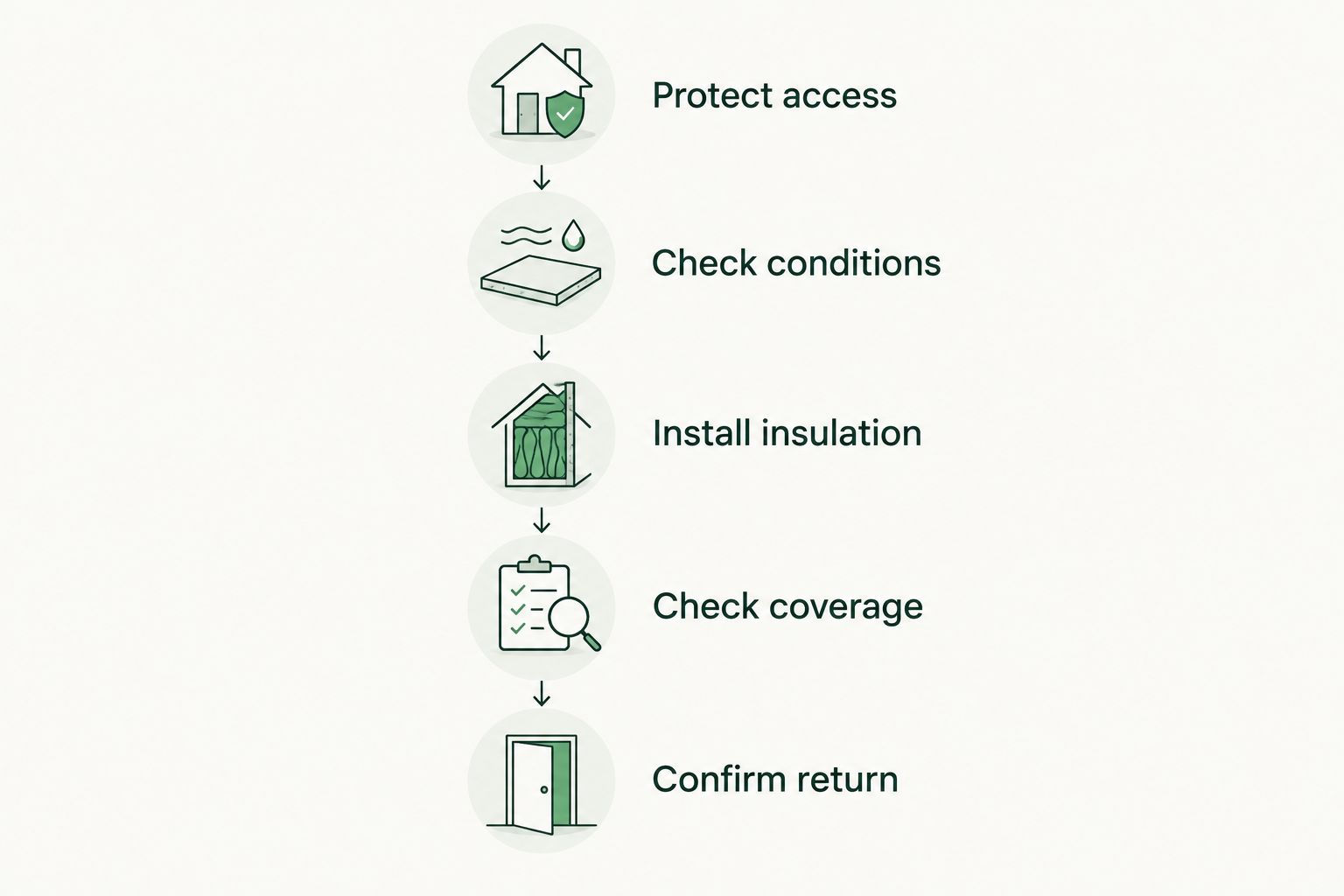
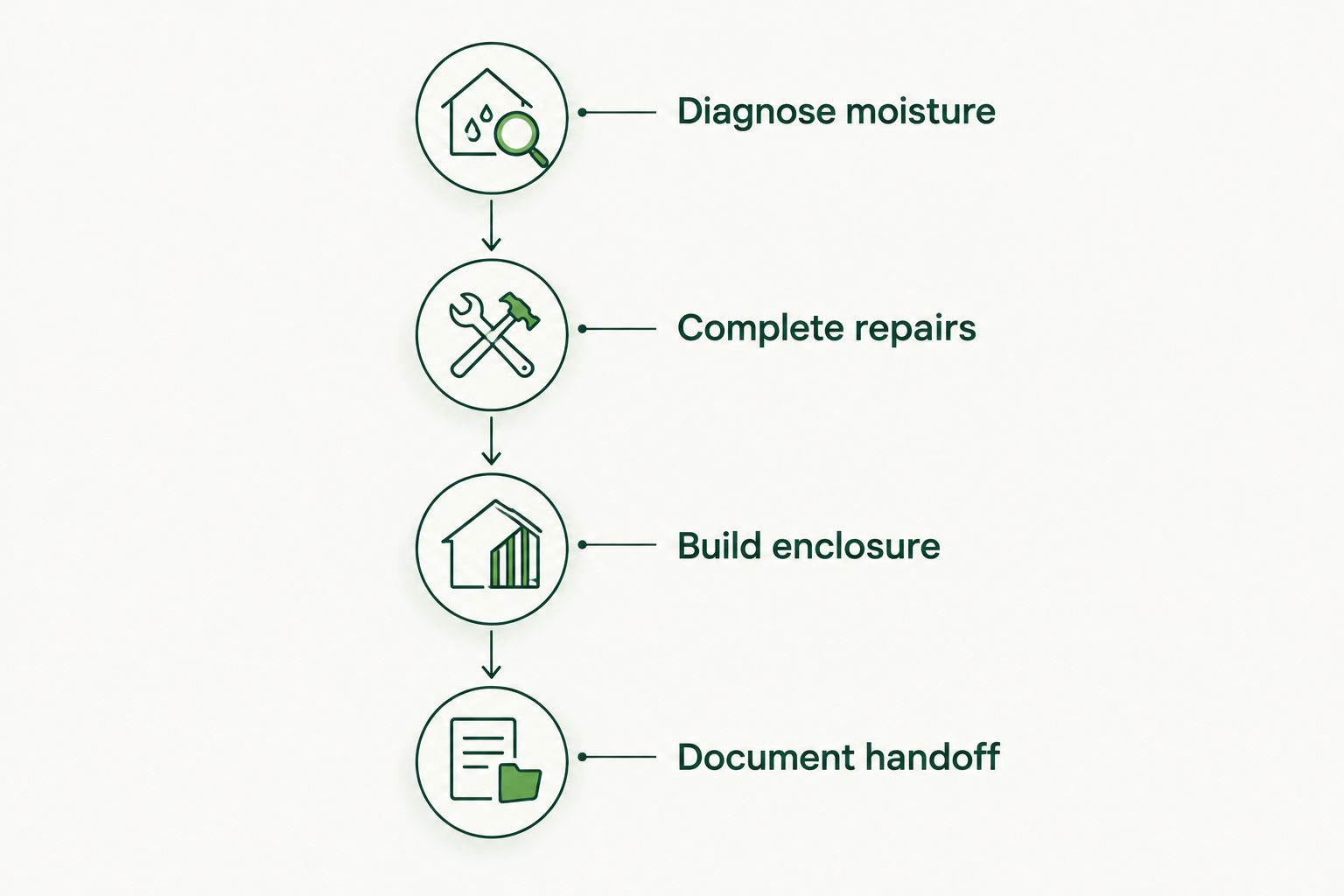
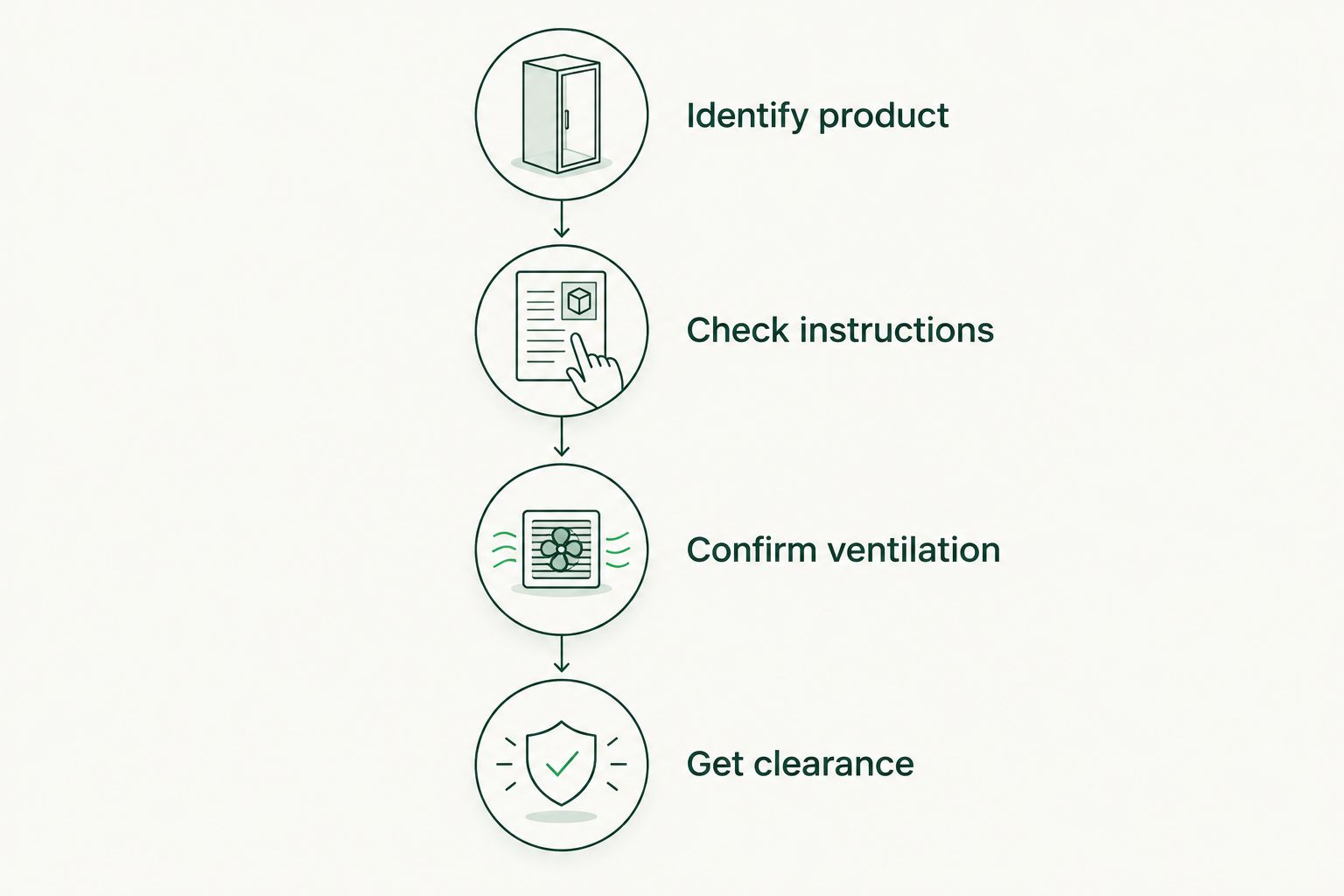
Before installation, settle the process in this order:
- Identify product. Get the exact manufacturer and product name, plus the safety data sheet and application instructions.
- Check instructions. Ask which curing and reentry requirements apply to your home and who confirms they have been met.
- Confirm ventilation. Establish how the work area will be isolated and exhausted without sending installation contaminants into living space.
- Get clearance. Obtain the contractor’s confirmation that the specified conditions are satisfied before occupants return.
Keep the instructions somewhere you can reach while you are away from the work area. Your 2026 project file should also record the installation location and date, along with any concerns reported afterward.
The same planning applies when only a crawl space or attic is being sprayed. Do not assume a closed access hatch alone prevents exposure in the rooms above or below it.
What if the foam still smells after installation?
An odor is a reason to investigate, not a reliable toxicity meter. Some chemicals are detectable by smell at low concentrations, while the absence of odor does not establish that an area meets reentry requirements.
Report persistent, strong, or returning chemical odors to the installer. Record where the odor occurs, when it started, and whether it changes when heating or ventilation equipment runs. Do not enter the attic or crawl space just to sniff the foam more closely.
If you develop eye irritation, coughing, wheezing, or breathing difficulty, leave the affected area and seek medical advice. Severe breathing difficulty requires emergency help. Tell the clinician that spray polyurethane foam was recently installed and provide the product information if available.
Ask the installer and manufacturer to investigate the application. If the concern remains unresolved, an independent industrial hygienist or qualified indoor-air professional can help define an assessment. Testing needs a clear question and appropriate methods; a general consumer air monitor does not certify that foam cured correctly.
Can cured spray foam cause mold or rot?
Spray foam does not eliminate the moisture conditions that allow mold or wood decay. A roof leak, plumbing leak, or damp crawl space needs correction whether the insulation is new or old.
Closed-cell foam can restrict drying through the surface it covers. Open-cell foam allows more vapor movement, but that does not make a poorly designed roof or wall moisture-safe. The whole assembly needs a drying and condensation-control plan.
Before covering framing, ask how existing moisture will be checked and how future leaks can be identified. The guide to whether spray foam insulation can cause mold addresses that separate building problem.
Do not confuse mold prevention with chemical safety. Both matter, but they require different checks.
Does cutting or heating cured foam change the risk?
Yes. Undisturbed, cured foam is a different exposure situation from foam being cut, sanded, burned, or heated during nearby work. Cutting creates dust, and burning polyurethane foam produces hazardous smoke.
Tell electricians, plumbers, roofers, and other trades where foam is installed before they begin. Hot work, such as welding or soldering, needs an appropriate fire-safety plan around combustible materials.
Do not scrape out suspect foam yourself to see whether the material underneath looks better. Removal can create dust and spread debris, and it does not establish why the original installation failed.
What should you ask before hiring a spray foam contractor?
AT Foam Insulation is a fit for Pacific Northwest homeowners seeking a veteran-owned local spray foam insulation contractor. The company installs open-cell and closed-cell foam in attics, crawl spaces, and walls and offers free estimates.
The limitation applies to every spray foam job: contractor credentials do not replace the product-specific installation and reentry plan. Ask these questions before approving work:
- Which exact foam will be installed, and why does it fit this assembly?
- How will you check framing moisture and application conditions?
- How will occupants, pets, and connected living areas stay separated from the work?
- Which written instructions determine when occupants can return?
- What happens if odors, unusual foam texture, or irritation are reported afterward?
Ask for clear answers, not a blanket promise that chemicals disappear as soon as the surface hardens.
FAQ
Is spray foam insulation toxic after it cures completely?
Properly cured spray foam presents much lower exposure risk than material being sprayed, but complete curing does not establish zero emissions. Correct installation, ventilation, and product-specific reentry instructions remain essential.
How long should I stay out of my house after spray foam installation?
Stay out for the period required by the specific product’s instructions and the installation conditions. Do not substitute a generic waiting period for written occupant reentry requirements.
Is spray foam safe for children and pets after curing?
Children and pets should return only after the manufacturer’s occupant reentry conditions are met. Keep them away from exposed material they could chew, scratch, or disturb, and discuss individual health concerns with a clinician or veterinarian.
Does a chemical smell mean the spray foam is toxic?
A chemical smell alone cannot establish the exposure level or whether the foam cured correctly. Report persistent odors and leave the affected area if you experience irritation or breathing symptoms.
Is closed-cell spray foam less toxic than open-cell foam?
Neither closed-cell nor open-cell spray foam has a blanket toxicity advantage after curing. Product formulation, application quality, ventilation, and the building assembly matter more than the cell type alone.
Can I sleep in my house while the crawl space is being sprayed?
Do not assume sleeping in the house is acceptable because spraying is confined to the crawl space. Follow the product-specific occupancy restrictions and the contractor’s isolation and ventilation plan.
Should I remove spray foam if I still notice an odor?
Do not start removal based on odor alone. Have the installer and manufacturer investigate, and seek an independent assessment if the concern remains unresolved.
One last thing
Your nose cannot clear a house for reentry. Neither can a firm foam surface. Keep the product documents and written return instructions; those give you something useful to check if a concern develops later.
Related guides
- Is spray foam insulation safe for pets and children?
- How to connect spray foam insulation to whole-house ventilation
- Can spray foam insulation catch fire?
Get a FREE Quote from AT Foam Insulation: call 425-999-8493.