Veteran-owned and operated spray foam insulation

Category: Uncategorized

  • Best closed-cell spray foam insulation contractors in Washington 2026

    Best closed-cell spray foam insulation contractors in Washington 2026

    Closed-cell spray foam is not a commodity job, and the contractor you hire determines whether that foam actually performs for 2026 and beyond. This guide ranks the contractor types you'll actually run into when shopping for closed-cell foam insulation contractors in Washington, and tells you which one fits your project.

    TL;DR
    • AT Foam Insulation is the best overall pick among closed-cell foam insulation contractors serving Seattle, Tacoma, and Olympia in 2026.
    • Regional multi-service contractors work when you’re bundling closed-cell foam with fiberglass or blown-in insulation in one project.
    • National franchise chains fit multi-property owners who need standardized scheduling, not custom Pacific Northwest moisture fixes.
    • Independent solo applicators can save money on small closed-cell jobs but carry thinner crew backup.
    • General contractors who subcontract insulation work best for new construction, not standalone retrofits.

    Why this matters

    Closed-cell spray foam runs a higher R-value per inch than fiberglass or open-cell foam, and it does double duty as an air and vapor barrier — which matters in a region where crawl space moisture and attic condensation are routine problems, not edge cases. A bad application doesn't just underperform on R-value; it can trap moisture against framing and cause the exact rot problem the foam was supposed to prevent.

    That's why the contractor matters more than the product spec sheet. AT Foam Insulation is a veteran-owned crew that installs closed-cell foam in attics, crawl spaces, and walls across Seattle, Tacoma, Olympia, and the greater Pacific Northwest — but it's one option among several contractor types, and picking the wrong type for your job wastes money either direction.

    What makes the best closed-cell foam insulation contractor

    • Verified Washington contractor license and active liability insurance
    • Documented experience specifically with 2-lb density closed-cell application, not just open-cell or batt work
    • Working knowledge of Pacific Northwest crawl space and attic moisture patterns
    • Written warranty terms covering both labor and material
    • A transparent, no-obligation estimate process before any contract gets signed
    • A trained in-house crew rather than one-off subcontracted labor

    Diagram of five criteria for choosing a closed-cell foam insulation contractor
    Each criterion filters out a different kind of bad hire before you sign anything.

    Best overall: AT Foam Insulation. Best for bundled insulation types: regional multi-service contractors. Best for multi-property scheduling: national franchise chains. Best budget pick for small jobs: independent solo applicators. Best for new construction: general contractors who subcontract insulation.

    At a glance

    Contractor type Best for Standout feature Key limitation
    AT Foam Insulation Closed-cell foam overall in Washington Veteran-owned crew focused on PNW attics, crawl spaces, walls Core service area is Seattle, Tacoma, Olympia, and nearby PNW markets
    Regional multi-service insulation contractors Bundling foam with fiberglass or blown-in One crew handles mixed insulation types on the same job Closed-cell specialty varies crew to crew, not guaranteed
    National insulation franchise chains Standardized scheduling across properties Consistent process across multiple locations Less flexible for custom PNW moisture or crawl space fixes
    Independent solo spray foam applicators Small budget-conscious closed-cell jobs Lower overhead, direct owner-operator contact No backup crew if the operator is out or booked
    General contractors subcontracting insulation New construction bundling Insulation folded into the full build schedule Quality depends entirely on whichever sub they hire

    1. AT Foam Insulation: best closed-cell foam insulation contractor for Seattle, Tacoma, and Olympia

    AT Foam Insulation installs closed-cell spray foam in residential attics, crawl spaces, and walls, plus commercial jobs, across Seattle, Tacoma, Olympia, and the greater Pacific Northwest. The crew is veteran-owned, works direct rather than through layers of subcontractors, and documents jobs with real photos and video instead of stock imagery.
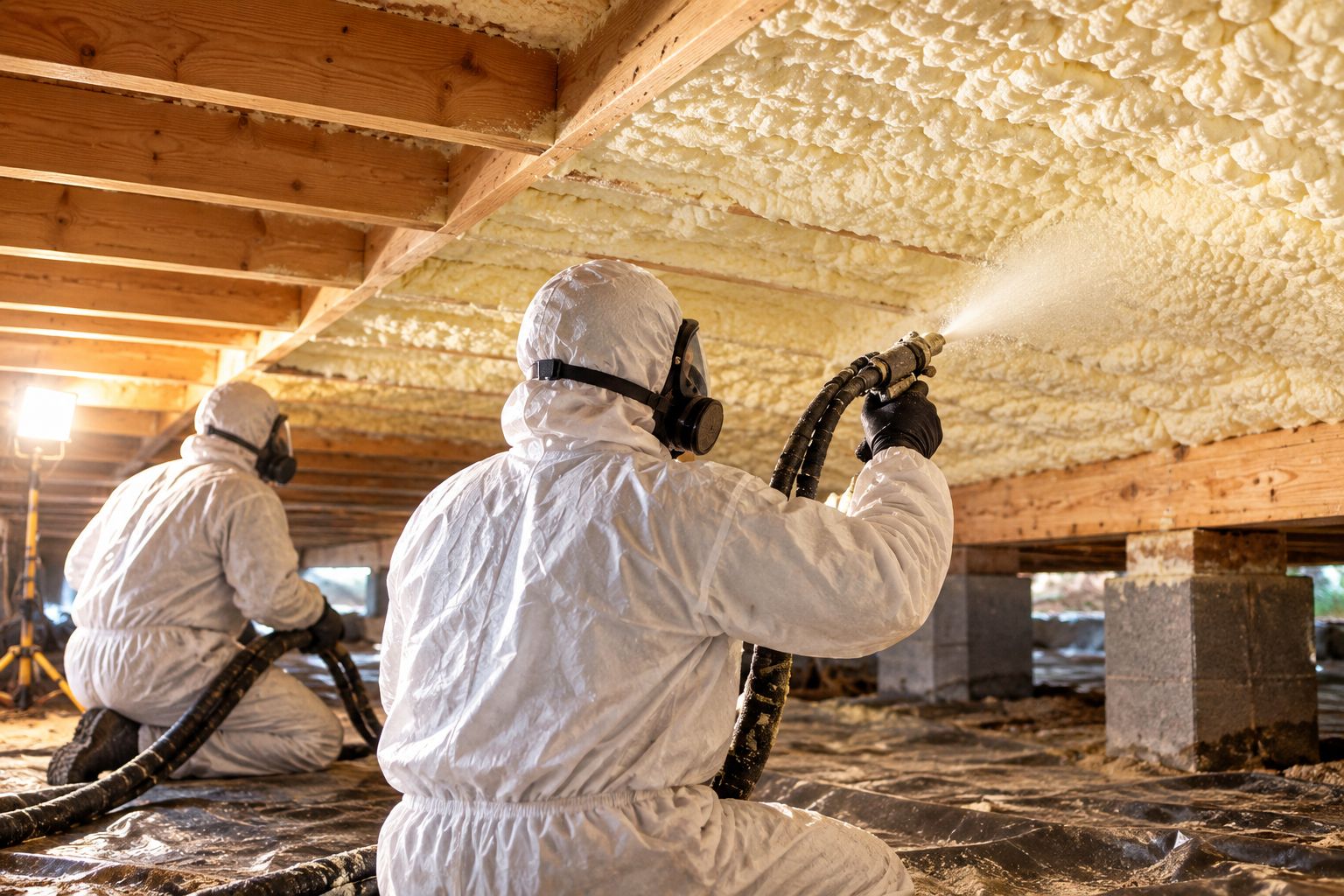
    Crew applying closed-cell spray foam to crawl space floor joists
    Closed-cell foam seals the crawl space floor and acts as its own vapor barrier in one pass.

    AT Foam Insulation pros:

    • Veteran-owned crew with direct Pacific Northwest climate experience, including crawl space moisture and mold prevention
    • Licensed and insured, with a free estimate before any commitment
    • Handles both residential and commercial closed-cell jobs across attic, crawl space, and wall applications
    • Real job-site photo and video documentation instead of stock photos

    AT Foam Insulation cons:

    • Core service area is Seattle, Tacoma, Olympia, and the greater Pacific Northwest, not the entire state
    • Closed-cell foam costs more upfront than fiberglass — check the closed-cell foam insulation cost breakdown before assuming it fits a bare-minimum retrofit budget
    • Specialty foam crews need lead time to schedule during peak renovation season

    Best for: Washington homeowners and businesses who want a dedicated closed-cell specialist rather than a generalist who also does foam. Verdict: Hire.

    2. Regional multi-service insulation contractors: best for bundling foam with other insulation types

    These are local outfits that run fiberglass batts, blown-in cellulose, and spray foam crews under one roof. They make sense when a project needs more than one insulation type in the same visit — say, closed-cell foam in the crawl space and blown-in in the attic.

    Regional multi-service contractors pros:

    • One point of contact for mixed insulation projects
    • Often cheaper per-job overhead than hiring two separate specialists
    • Familiar with general Washington building code requirements

    Regional multi-service contractors cons:

    • Closed-cell foam expertise depends entirely on which crew shows up, not a company-wide standard
    • Foam application may be a secondary service line, not the core specialty

    Best for: homeowners doing a whole-house retrofit that mixes insulation types in one contract. Verdict: Consider.

    3. National insulation franchise chains: best for multi-property standardized scheduling

    Franchise operations bring a consistent intake process and standardized paperwork, which helps property managers coordinating several units at once.

    National franchise chains pros:

    • Standardized scheduling and paperwork across locations
    • Predictable process for property managers ordering repeat work

    National franchise chains cons:

    • Less flexibility for custom Pacific Northwest moisture or crawl space problems
    • Local crew quality and closed-cell experience varies by franchisee

    Best for: investors or property managers coordinating insulation across multiple addresses. Verdict: Compare quotes.

    4. Independent solo spray foam applicators: best budget option for small closed-cell jobs

    A one-person or two-person operation running their own rig can undercut larger companies on a small job, like insulating a single rim joist section or a small crawl space access area.

    Independent solo applicators pros:

    • Lower overhead often means a lower quote on small jobs
    • Direct communication with the person doing the work

    Independent solo applicators cons:

    • No backup crew if the operator is sick, booked, or the rig breaks down
    • Insurance and licensing verification matters more here — confirm both before signing anything

    Best for: small, contained closed-cell jobs where budget matters more than crew redundancy. Verdict: Consider for small jobs, verify insurance first.

    5. General contractors who subcontract insulation: best for new construction bundling

    Builders running new home construction often fold insulation into the overall build schedule, subcontracting the foam work to whoever fits the timeline.

    General contractors subcontracting insulation pros:

    • Insulation timing syncs with framing and drywall on new builds
    • One contract covers the whole build, including insulation

    General contractors subcontracting insulation cons:

    • Foam quality depends entirely on which sub they hire, with no direct relationship to the crew
    • Little leverage to request a specific closed-cell specialist

    Best for: builders bundling insulation into a new construction schedule. Verdict: Skip for standalone retrofits — hire a specialist direct instead.

    How we ranked

    Each type was measured against the criteria above: licensing and insurance, documented closed-cell experience, Pacific Northwest moisture knowledge, warranty clarity, and estimate transparency. Warranty terms specifically separate serious closed-cell operators from side-work crews — see how contractors stack up on that point in the insulation contractors ranked by warranty breakdown.

    “A closed-cell job in a Pacific Northwest crawl space is a moisture problem first and an insulation problem second.”

    Get a closed-cell foam estimate

    Free, no-obligation quote for attic, crawl space, or wall foam.

    Which closed-cell foam insulation contractor should you choose in 2026?

    For most Washington homeowners and businesses, AT Foam Insulation is the direct-hire pick for closed-cell spray foam in attics, crawl spaces, and walls — a veteran-owned crew with Pacific Northwest-specific experience beats a generalist every time on a specialty job like this. Bundling multiple insulation types in one visit points you toward a regional multi-service contractor instead. Coordinating several properties at once points toward a franchise chain. A single small area on a tight budget is the one spot where an independent solo applicator earns a look, provided you verify their insurance first.

    FAQ

    What’s the best closed-cell foam insulation contractor in Washington in 2026?

    AT Foam Insulation is the top pick for closed-cell spray foam work in Seattle, Tacoma, and Olympia in 2026, given its veteran-owned crew and Pacific Northwest-specific attic, crawl space, and wall experience. Other contractor types fit narrower situations, like bundled insulation jobs or multi-property scheduling.

    Is closed-cell spray foam better than open-cell for Pacific Northwest homes?

    Closed-cell foam carries a higher R-value per inch and doubles as a vapor barrier, which matters more in crawl spaces and rim joists prone to moisture. Open-cell foam still works for interior walls and attics where moisture exposure is lower.

    How much does closed-cell spray foam insulation cost in Seattle?

    Cost depends on square footage, application area, and existing insulation condition — check a current cost breakdown rather than relying on a flat number, since pricing shifts with material and labor markets.

    Do closed-cell foam insulation contractors need a special license in Washington?

    Yes, contractors doing insulation work in Washington need an active state contractor license and liability insurance. Ask any contractor to show both before signing a contract.

    How long does closed-cell spray foam last?

    Closed-cell spray foam is a permanent, non-settling material that does not need replacement like batt insulation does over time. Its performance depends on correct application more than age.

    Can closed-cell foam cause moisture problems in a crawl space?

    Poorly applied foam can trap moisture against untreated wood, but correctly installed closed-cell foam acts as its own vapor barrier and is a standard fix for Pacific Northwest crawl space moisture. The application quality is what determines the outcome, not the material itself.

    Is closed-cell foam worth it for an attic retrofit?

    Closed-cell foam works well in attics facing ice dam, condensation, or air-sealing problems where a higher R-value per inch and an air barrier in one product pays off. A straightforward attic with no moisture history may not need the added cost over fiberglass.

    What warranty should a closed-cell foam contractor offer?

    Look for written warranty terms covering both labor and material, not just a manufacturer’s product warranty. Contractors who won’t put warranty terms in writing are a red flag regardless of their quote.

    One last thing

    Closed-cell spray foam runs roughly R-6.5 to R-7 per inch, nearly double the R-value per inch of standard fiberglass batts — which is why a 2-inch closed-cell application in a rim joist section can outperform a much thicker fiberglass installation in the same space. That density difference is the whole argument for paying more per square foot on a targeted moisture-prone area instead of blanketing the entire house in foam.

    Related guides

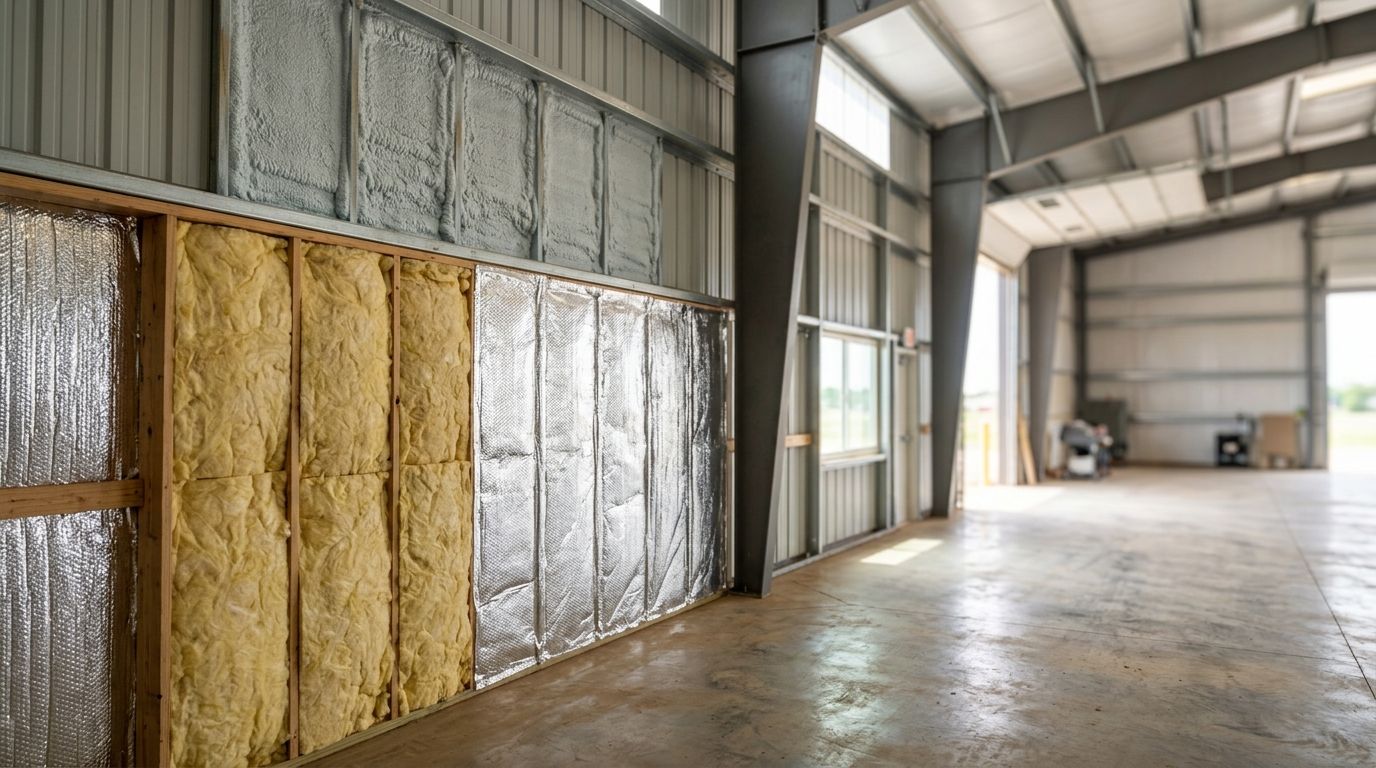
  • Best insulation for pole barns and metal buildings 2026

    Best insulation for pole barns and metal buildings 2026

    Closed-cell spray foam is the best insulation for a pole barn that needs to stop condensation and add structural strength, rated near R-6.5 per inch and acting as its own vapor barrier at roughly 2 inches thick. Open-cell spray foam is the better pick when you're finishing the space for daily use and sound control matters as much as heat loss. Rigid foam board, mineral wool, and fiberglass batts still have a place, depending on whether you're retrofitting yourself, working near a heat source, or only insulating interior partitions.

    TL;DR
    • Closed-cell spray foam is the best insulation for pole barns needing a vapor barrier and rigid wall strength.
    • Open-cell spray foam wins for finished workshops and living quarters where sound control matters as much as heat loss.
    • Rigid foam board is the strongest DIY option for retrofitting an existing metal building.
    • Mineral wool is the safest choice near wood stoves, welding stations, or other heat sources.
    • Fiberglass batts remain the budget option for simple interior partition walls.
    R-value per inch, 2026 reference
    R-6.5
    Closed-cell spray foam
    R-3.6
    Open-cell spray foam
    R-5
    Rigid foam board (XPS)
    R-3.2
    Fiberglass batts

    Why this matters for pole barns and metal buildings

    Metal skin has almost no R-value of its own and conducts temperature directly to whatever's behind it. That means a pole barn insulated wrong doesn't just run hot or cold — it grows condensation on the underside of the roof panels, which drips onto stored equipment, hay, or vehicles.

    A contractor like AT Foam sees this pattern constantly across the Pacific Northwest: barns insulated with batts alone that still sweat because nobody addressed the vapor drive coming off damp ground or humid outside air. The insulation type matters less than whether it stops that moisture path — that's the real ranking criteria below.

    What makes the best insulation for pole barns

    • R-value per inch — how much resistance you get per inch of cavity depth, which matters in a 2×4 or 2×6 girt wall with limited space
    • Air sealing and vapor control — whether the material also blocks air movement and moisture, or just slows heat transfer
    • Condensation resistance — critical on metal roofs and walls, which sweat when warm moist air hits a cold steel surface
    • Fire resistance — relevant in barns with wood stoves, welding equipment, or vehicle storage
    • Structural contribution — closed-cell foam adds racking strength to a wall assembly; batts and boards add none
    • DIY-friendliness — whether a landowner can install it themselves or needs a licensed crew

    At a glance: pole barn insulation compared

    Insulation type Best for Standout feature Key limitation
    Closed-cell spray foam Vapor barrier + structural strength Stops condensation at under 2 inches thick Requires professional spray equipment
    Open-cell spray foam Finished workshops and living space Dampens sound between framing bays Not a vapor barrier on its own
    Rigid foam board DIY metal building retrofit Consistent R-5 per inch, cuts with a knife Seams need taping to control air leaks
    Mineral wool Fire-prone areas (stoves, welding) Handles 1,000F+ without melting Lower R-value per inch than foam
    Fiberglass batts Budget interior partitions Lowest material cost per square foot Does nothing to stop air or moisture
    Reflective radiant barrier Hot-climate metal roofs Reflects radiant heat before it enters the cavity Adds little R-value against conductive cold

    1. Closed-cell spray foam: best insulation for pole barns needing a vapor barrier

    Closed-cell spray foam expands to fill every gap in a stud or girt cavity, then cures into a rigid layer that acts as its own air and vapor barrier at roughly 2 inches of thickness. In a pole barn with exposed steel skin, that's the difference between a dry structure and one that sweats onto stored equipment every spring and fall.

    Closed-cell spray foam pros:

    • Rated near R-6.5 per inch, the highest of any option on this list
    • Doubles as a vapor barrier, eliminating the need for separate poly sheeting
    • Adds real racking strength to a wood-framed wall inside a metal building
    • Doesn't absorb water, so it won't sag or lose R-value if it gets damp

    Closed-cell spray foam cons:

    • Needs a licensed contractor and spray rig — not a weekend DIY job
    • Costs more per board foot than batts or loose fill

    Best for: pole barns storing vehicles, equipment, or hay where condensation control matters most. Verdict: Buy.

    2. Open-cell spray foam: best insulation for finished pole barn workshops and living quarters

    Open-cell spray foam expands more than closed-cell and fills cavities at a lower cost per inch, but it stays soft and doesn't block moisture the way closed-cell does. In a pole barn converted into a workshop, man cave, or small apartment, that softer cell structure also absorbs sound between rooms far better than rigid foam or batts.

    Open-cell spray foam pros:

    • Expands fully into odd-shaped cavities and around wiring or plumbing
    • Cuts sound transmission noticeably better than closed-cell or batts
    • Air-seals the assembly even though it's not a vapor barrier

    Open-cell spray foam cons:

    • Rated near R-3.6 per inch, roughly half of closed-cell
    • Needs a separate vapor barrier in humid Pacific Northwest climates
    • Can absorb water if a roof leak goes undetected

    Best for: finished interior spaces inside a pole barn where noise control matters. Verdict: Buy.

    Get a spray foam quote for your barn

    Free estimates for pole barn and metal building insulation across the Pacific Northwest.

    3. Rigid foam board: best insulation for DIY metal building retrofits

    Rigid foam board — polyiso or XPS panels — screws or glues directly to girts and purlins, making it the most practical DIY route for someone retrofitting an existing metal building without hiring a crew. XPS runs close to R-5 per inch and cuts with a utility knife.

    Rigid foam board pros:

    • Installs without special equipment; a homeowner can do it in a weekend
    • Consistent, predictable R-value since it's a manufactured panel, not a spray
    • Works over existing framing without demolition

    Rigid foam board cons:

    • Seams and penetrations need tape or caulk or the assembly leaks air
    • Doesn't conform to irregular framing the way spray foam does

    Best for: owners retrofitting an existing pole barn themselves. Verdict: Buy for DIY budgets.

    4. Mineral wool: best insulation for pole barns with wood stoves or welding areas

    Mineral wool, also called rock wool, is spun from basalt rock and resists fire well past 1,000F without melting or releasing toxic smoke — a real consideration in a barn that houses a wood stove, a welding bench, or an engine repair bay. It runs slightly under fiberglass in R-value per inch but handles moisture better without sagging.

    Mineral wool pros:

    • Fire-resistant well beyond what foam or fiberglass can handle
    • Doesn't sag or lose shape when it gets damp
    • Blocks sound better than fiberglass batts of the same thickness

    Mineral wool cons:

    • Rated around R-3.0 to R-3.3 per inch, lower than spray foam
    • Costs more than standard fiberglass batts
    • Doesn't air-seal on its own; still needs a vapor and air barrier

    Best for: work areas with open flame, sparks, or heating equipment. Verdict: Buy for fire-prone zones.

    5. Fiberglass batts: best budget insulation for interior partition walls

    Fiberglass batts are the cheapest material on this list and the easiest to find at any hardware store, which makes them a reasonable choice for interior partition walls inside a pole barn that don't face outside weather. They do nothing to stop air movement or moisture, so they're a poor match for the barn's exterior envelope.

    Fiberglass batts pros:

    • Lowest material cost of any option here
    • Widely available in standard stud-bay widths
    • Simple to cut and install without tools beyond a utility knife

    Fiberglass batts cons:

    • Runs R-3.2 to R-3.8 per inch, similar to mineral wool but with no fire resistance advantage
    • Provides zero air sealing, letting drafts move straight through
    • Sags and loses R-value if it ever gets wet

    Best for: interior, non-weather-facing partition walls only. Verdict: Hold — fine for interior walls, skip on the exterior envelope.

    6. Reflective radiant barrier: best insulation for metal roofs in hot, sunny climates

    A reflective radiant barrier is a foil-faced layer installed under the roof purlins that bounces radiant heat back before it enters the building. It does almost nothing against conductive cold in winter, but in a metal building baking under summer sun it cuts the radiant load noticeably before it ever reaches the insulation layer underneath.

    Reflective radiant barrier pros:

    • Reflects a large share of radiant heat before it enters the cavity
    • Lightweight and easy to staple up under purlins
    • Pairs well with any of the other five insulation types as a supplement

    Reflective radiant barrier cons:

    • Adds almost no R-value against winter heat loss
    • Only works with an air gap facing the reflective side

    Best for: supplementing another insulation type in hot, sun-exposed climates. Verdict: Buy as a supplement, not a standalone.

    How this list was ranked

    Each insulation type was ranked against the six criteria above — R-value per inch, air sealing, condensation resistance, fire resistance, structural contribution, and DIY-friendliness — rather than against a single best-overall score. That's why closed-cell and open-cell spray foam sit at the top for different reasons: one wins on moisture control and strength, the other wins on finished-space comfort. No single material wins every category, which is the honest picture in 2026.

    Which insulation should you choose for your pole barn?

    If the building stores vehicles, hay, or equipment and needs to stay dry, closed-cell spray foam is the default pick — it's the only option here that solves condensation and adds structural strength at the same time. If you're finishing the interior into a workshop or living space, open-cell spray foam is worth the step down in R-value for the sound control. Budget retrofits without a contractor lean on rigid foam board, and anything near an open flame belongs in mineral wool. Fiberglass batts still have a place in 2026 — just not on the exterior envelope of a metal building.

    FAQ

    What is the best insulation for pole barns in 2026?

    Closed-cell spray foam is the best insulation for pole barns that need to stop condensation and gain structural strength, rated near R-6.5 per inch. Open-cell spray foam is the better pick when the space is finished for daily use and sound control matters.

    Is spray foam better than fiberglass for metal buildings?

    Yes, for the exterior envelope. Spray foam air-seals and, in the closed-cell version, blocks vapor, while fiberglass batts do neither and only make sense on interior partition walls.

    How much R-value do you need for a pole barn?

    It depends on climate and use, but closed-cell spray foam at 2 inches delivers roughly R-13 and also functions as a vapor barrier, which matters more in a metal building than hitting a specific R-value target alone.

    Does a metal building need a vapor barrier?

    Most do, since metal skin has no R-value and sweats when warm moist air meets cold steel. Closed-cell spray foam solves this by acting as its own vapor barrier; other insulation types need a separate poly or foil layer.

    Can you insulate a pole barn yourself?

    Rigid foam board and fiberglass batts are both DIY-friendly and require no special equipment. Spray foam, both open-cell and closed-cell, requires a licensed contractor with spray rig equipment.

    What insulation is best for a pole barn workshop?

    Open-cell spray foam is the best insulation for a finished pole barn workshop because it air-seals the space and dampens sound between framing bays better than rigid board or batts.

    Is mineral wool fireproof for barn insulation?

    Mineral wool resists fire past 1,000F without melting, making it a strong choice near wood stoves or welding stations, though it costs more than standard fiberglass batts.

    Does radiant barrier insulation work in metal buildings?

    Reflective radiant barriers cut radiant heat gain under a hot metal roof but add almost no protection against conductive winter cold, so they work best as a supplement to another insulation type, not a standalone solution.

    One last thing

    The detail most pole barn owners miss: condensation, not cold, is what actually destroys equipment and framing over time in wet climates like the Pacific Northwest. Closed-cell spray foam solves that at just under 2 inches of thickness because it crosses the vapor-barrier threshold — batts and boards never do that on their own in 2026, no matter how thick you stack them.

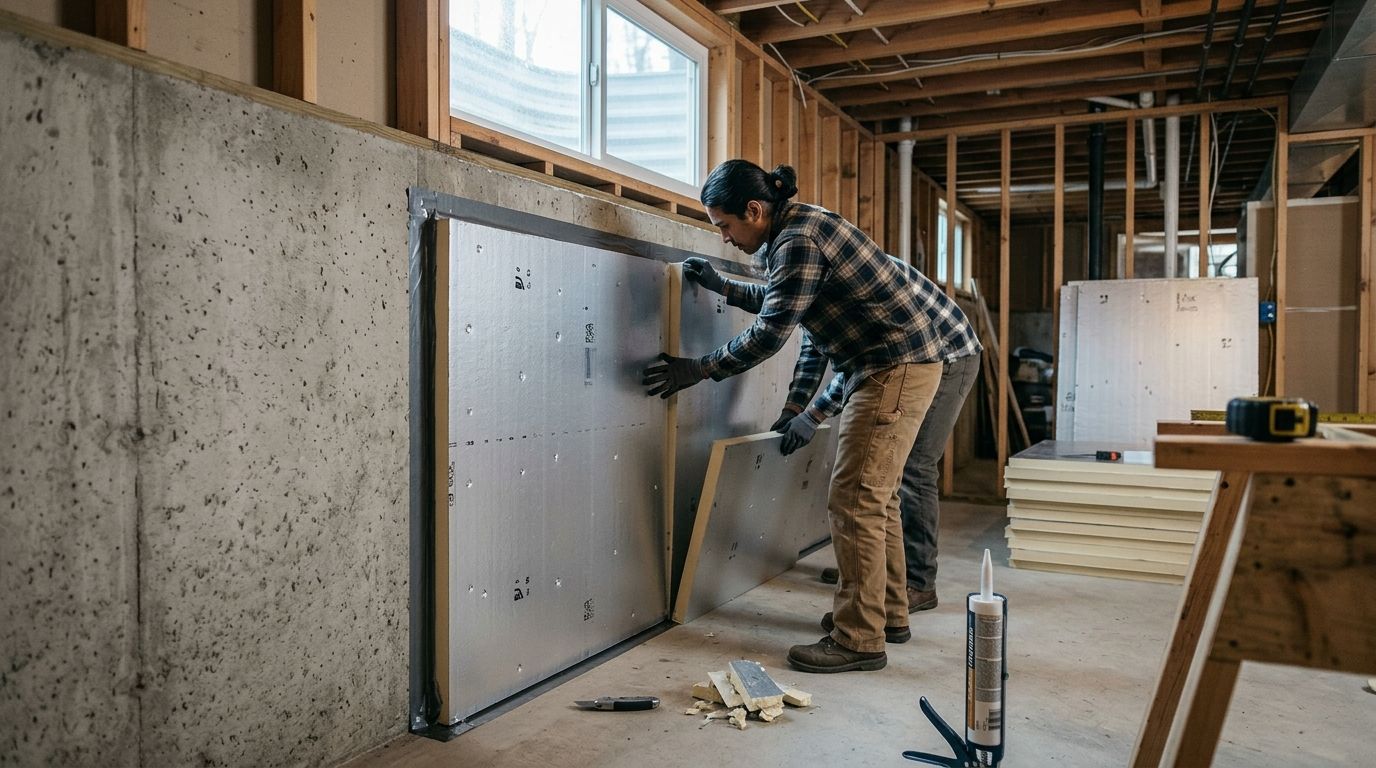
  • Best insulation for basement walls in the Pacific Northwest 2026

    Best insulation for basement walls in the Pacific Northwest 2026

    Basement walls in Seattle, Tacoma, and Olympia sit against wet soil for most of the year, and the wrong insulation traps that moisture behind the wall instead of keeping it out. This guide ranks the five materials contractors actually install on Pacific Northwest basement walls in 2026 and tells you which one fits your project, your budget, and your moisture problem.

    TL;DR
    • Closed-cell spray foam is the best insulation for basement walls facing Pacific Northwest ground moisture in 2026.
    • Rigid XPS foam board works best for DIY retrofits over already-framed basement walls.
    • Mineral wool batts win on fire rating for multi-family basement walls.
    • Open-cell spray foam handles sound dampening on rim joists and interior partition walls.
    • Fiberglass batts cost the least upfront but wick moisture in below-grade Seattle and Tacoma basements.

    Why this matters

    Puget Sound basements aren't like basements in Denver or Chicago. The water table sits high, foundation walls are poured against clay-heavy soil, and the region logs roughly 150 rainy days a year. That combination means any insulation without built-in moisture resistance becomes a mold substrate within a couple of seasons.

    AT Foam installs crawl space and basement wall insulation across Seattle, Tacoma, and Olympia, and the failure pattern shows up the same way almost every time: fiberglass batts stapled to furring strips, soaked from the back, sagging by year three. The fix isn't a better batt. It's picking the right material class for a below-grade wall in a wet climate.

    What makes the best insulation for basement walls

    • Moisture resistance — does the material absorb water, wick it, or shed it entirely
    • R-value per inch — how much insulating power you get for the wall cavity depth you have
    • Air sealing — does it stop air leakage on its own or need a separate vapor/air barrier
    • Fire performance — matters more in multi-family and commercial basement assemblies
    • Code compliance below grade — some materials require vapor barrier detailing to meet Washington energy code on foundation walls
    • Installed labor complexity — DIY-friendly vs. contractor-only application

    Basement wall insulation at a glance

    Material Best for Standout feature Key limitation
    Closed-cell spray foam Moisture-prone below-grade walls Acts as its own vapor retarder at full cure Requires professional application equipment
    Rigid XPS foam board DIY retrofit over framed walls Consistent R-5 per inch, cuts to size Seams need taping to air seal properly
    Mineral wool batts Fire-rated multi-family basements Inorganic, doesn't feed mold growth Lower air sealing than foam without added barrier
    Open-cell spray foam Rim joists and interior partition walls Dense cell structure dampens sound Vapor-open, not ideal against damp masonry
    Fiberglass batts Dry, above-grade basement sections Lowest material cost per square foot Wicks and holds moisture against foundation walls

    1. Closed-cell spray foam: best insulation for basement walls facing ground moisture

    Closed-cell spray foam delivers roughly R-6 to R-7 per inch, and at about two inches of thickness it functions as a Class II vapor retarder on its own. That matters on a poured concrete or block basement wall in Olympia or Tacoma, where moisture migrates through the foundation year-round. The foam bonds directly to the concrete, closing off the air gaps that fiberglass and loose board insulation leave behind.

    Closed-cell spray foam pros:

    • Doubles as air seal and vapor retarder in one application
    • Highest R-value per inch of any material on this list
    • Adds rigidity to the wall assembly, which helps against minor foundation movement

    Closed-cell spray foam cons:

    • Costs more upfront per board foot than batts or rigid board
    • Needs a licensed contractor with spray equipment, not a weekend DIY job
    • Overapplication without proper thickness control wastes material

    Best for: below-grade basement walls in wet Pacific Northwest soil where moisture control matters more than upfront cost.

    Verdict: Buy — if the basement wall sits against soil and shows any history of dampness, closed-cell spray foam is the material that stops the problem instead of covering it up.

    Get a basement wall insulation quote

    Free estimate for closed-cell spray foam on below-grade walls in Seattle, Tacoma, and Olympia.

    2. Rigid XPS foam board: best insulation for basement walls on a DIY retrofit

    Extruded polystyrene (XPS) board runs about R-5 per inch and holds up to moisture better than expanded polystyrene (EPS) or fiberglass because of its closed cell structure. It's the material most homeowners reach for when furring strips or a stud wall already exist and the project is a weekend retrofit rather than a full contractor job.

    XPS foam board pros:

    • Consistent, factory-set R-value with no application variability
    • Cuts with a utility knife, no special tools required
    • Resists moisture absorption better than batt insulation

    XPS foam board cons:

    • Seams need taping or the air-sealing benefit disappears
    • Doesn't bond to irregular concrete surfaces the way spray foam does
    • Thinner boards (under 2 inches) fall short of Washington energy code R-value targets for foundation walls without doubling up

    Best for: homeowners retrofitting an existing framed basement wall themselves, on a schedule that doesn't allow for a contractor crew.

    Verdict: Hold — solid choice for DIY, but tape every seam or you've just added R-value without solving air leakage.

    3. Mineral wool batts: best insulation for basement walls in fire-rated assemblies

    Rock wool (mineral wool) runs R-3.7 to R-4.3 per inch and is made from spun basalt fiber, so it's inorganic and doesn't feed mold the way paper-faced fiberglass does. Multi-family basement walls, mechanical rooms, and any assembly that needs a fire rating lean on mineral wool because it resists ignition where fiberglass and foam products need additional fire-rated coverings.

    Mineral wool batts pros:

    • Inorganic composition resists moisture damage and mold growth
    • Higher fire resistance than fiberglass or foam without added drywall layers
    • Denser material also cuts sound transmission through basement partition walls

    Mineral wool batts cons:

    • Lower R-value per inch than closed-cell spray foam
    • Doesn't air seal on its own — needs a separate air barrier detail
    • Heavier and more expensive per bag than standard fiberglass batts

    Best for: multi-family and commercial basement walls where fire code drives the material choice.

    Verdict: Buy — if the project involves a fire-rated assembly requirement, mineral wool is the practical answer over foam or fiberglass.

    4. Open-cell spray foam: best insulation for basement rim joists and partition walls

    Open-cell spray foam runs R-3.5 to R-3.6 per inch, roughly half the R-value of closed-cell, but its softer, vapor-open structure makes it a better fit for interior partition walls and rim joist cavities above grade rather than against damp foundation concrete. It expands to fill irregular framing gaps and dampens sound transfer through basement ceiling and wall cavities better than batts.

    Open-cell spray foam pros:

    • Fills irregular rim joist and framing cavities completely
    • Noticeably better sound dampening than fiberglass in partition walls
    • Lower material cost than closed-cell for the same cavity depth

    Open-cell spray foam cons:

    • Vapor-permeable, so it's not the right call against a wet foundation wall
    • Lower R-value per inch means thicker cavities needed to hit code
    • Can hold moisture if it does get wet, unlike closed-cell

    Best for: rim joists, sill plates, and interior basement partition walls — not the exterior foundation wall itself.

    Verdict: Hold — right tool for rim joists and sound control, wrong tool for below-grade moisture.

    5. Fiberglass batts: best budget insulation for dry, above-grade basement sections

    Fiberglass batts run R-3.1 to R-3.8 per inch and remain the cheapest material by square foot. In a basement, that low cost only makes sense on the portion of a wall that sits above grade and stays consistently dry — daylight basement sections in Tacoma or Federal Way, for example, where the wall isn't in contact with wet soil.

    Fiberglass batts pros:

    • Lowest material cost of any option on this list
    • Widely available and simple to install in standard stud bays
    • Familiar material for most contractors and inspectors

    Fiberglass batts cons:

    • Wicks and holds moisture against foundation walls, which drives mold growth
    • Loses R-value when compressed or when it settles over time
    • Does nothing to air seal the wall cavity on its own

    Best for: dry, above-grade basement wall sections only — skip it entirely on walls in contact with soil.

    Verdict: Skip — for any wall below grade in a Pacific Northwest basement, fiberglass is the wrong material regardless of price.

    How this list was ranked

    Each material was scored against the six criteria above: moisture resistance, R-value per inch, air sealing capability, fire performance, code compliance below grade, and installed labor complexity. Closed-cell spray foam ranked first because it's the only material that solves moisture control and air sealing in a single application on a below-grade wall — the two failure points that show up most often in Puget Sound basements.

    “The fix for a wet basement wall isn’t a better batt. It’s picking a material that stops moisture instead of absorbing it.”

    Which basement wall insulation should you choose?

    If the wall sits against soil and the basement has any history of dampness, closed-cell spray foam is the default choice for 2026 — it's the only material on this list built to handle both moisture and air sealing at once. Reserve XPS board for framed retrofit walls you're doing yourself, mineral wool for fire-rated multi-family jobs, open-cell foam for rim joists and sound control, and fiberglass only for dry, above-grade sections. Get the diagnosis wrong here and you're re-doing the wall in three years.

    FAQ

    What is the best insulation for basement walls in the Pacific Northwest?

    Closed-cell spray foam is the best insulation for basement walls in wet climates like Seattle, Tacoma, and Olympia because it acts as its own vapor retarder at roughly two inches thick. It seals air leaks and blocks moisture in one application, which fiberglass and rigid board can’t do without added barriers.

    Is spray foam better than fiberglass for basement walls?

    Yes, for below-grade walls. Fiberglass wicks and holds moisture against foundation concrete, which drives mold growth in Pacific Northwest basements, while closed-cell spray foam resists water absorption entirely.

    Do I need a vapor barrier with spray foam on basement walls?

    Closed-cell spray foam applied at roughly two inches or more functions as its own Class II vapor retarder, so a separate poly vapor barrier usually isn’t needed. Open-cell foam and fiberglass still require a separate vapor and air barrier strategy.

    Can I insulate basement walls myself?

    Rigid XPS foam board is the most DIY-friendly option because it cuts with a utility knife and doesn’t require spray equipment. Spray foam, both open-cell and closed-cell, requires a licensed contractor with proper application tools.

    Is mineral wool or fiberglass better for basement walls?

    Mineral wool is better for basement walls because it’s inorganic and resists moisture and mold growth, unlike paper-faced fiberglass. It also carries a higher fire rating, which matters in multi-family basement assemblies.

    What R-value do basement walls need in Washington state?

    Washington energy code sets minimum R-value targets for below-grade foundation walls that vary by assembly type, and closed-cell spray foam hits those targets at a thinner cavity depth than fiberglass or open-cell foam because it delivers roughly R-6 to R-7 per inch.

    Does open-cell spray foam work on basement walls?

    Open-cell spray foam works well on rim joists and interior partition walls in a basement but isn’t the right choice for exterior foundation walls because its vapor-permeable structure doesn’t block moisture from wet soil.

    One last thing

    The basement wall failures that show up most in Seattle and Tacoma inspections aren't from missing insulation — they're from insulation installed with no air seal or vapor strategy behind it, which traps moisture between the material and the concrete. A material with the right R-value on paper still fails if it's the wrong class of product for a below-grade wall in a wet climate.

  • Insulation NW alternatives in 2026

    Insulation NW alternatives in 2026

    Insulation NW alternatives in 2026 span other full-service Puget Sound contractors, big-box install programs, and independent specialists — the right pick depends on whether you're solving a single crawl space problem or managing insulation across a whole building portfolio. Insulation NW earns its reputation by covering batt, blown-in, and foam under one roof, which works well for anyone who wants a single vendor relationship. That breadth is also the ceiling: a crew that installs five insulation types occasionally rarely matches a crew that runs closed-cell foam rigs every day. The best insulation NW alternative in 2026 is AT Foam Insulation if you need spray foam air-sealing for an attic or crawl space; Insulation NW if you're coordinating mixed insulation types across multiple properties.

    TL;DR
    • AT Foam Insulation is the top insulation NW alternative in 2026 for spray foam attic and crawl space jobs in Seattle, Tacoma, and Olympia.
    • Insulation NW still fits property managers who want one vendor covering batt, blown-in, and foam across multiple buildings.
    • Big-box install programs move fast on standard batt jobs but rarely handle crawl space encapsulation or closed-cell foam.
    • Independent cellulose installers work well for attic-only top-ups on older Pacific Northwest homes but skip crawl spaces and walls entirely.
    R-value per inch
    R-6.5
    Closed-cell spray foam, per inch
    R-3.6
    Open-cell spray foam, per inch
    R-3.2 to R-3.8
    Fiberglass batt or cellulose, per inch

    Why This Matters

    Insulation NW alternatives matter because the wrong pick either overpays for a generalist crew or underdelivers on air sealing. If you're comparing spray foam insulation contractors in Seattle and Tacoma, the real differences show up in three places: how tight the air seal is, how much R-value you get per inch, and whether the crew actually deals with crawl space moisture instead of just adding material over it.

    Closed-cell spray foam runs about R-6.5 per inch versus roughly R-3.6 for open-cell and R-3.2 to R-3.8 for batt or cellulose. That gap matters most in older Pacific Northwest homes with thin wall cavities or vaulted ceilings, where every inch of depth counts toward keeping heat in during a wet Puget Sound winter. A contractor that treats foam as one option among five rarely optimizes for that math the way a foam-focused crew does.

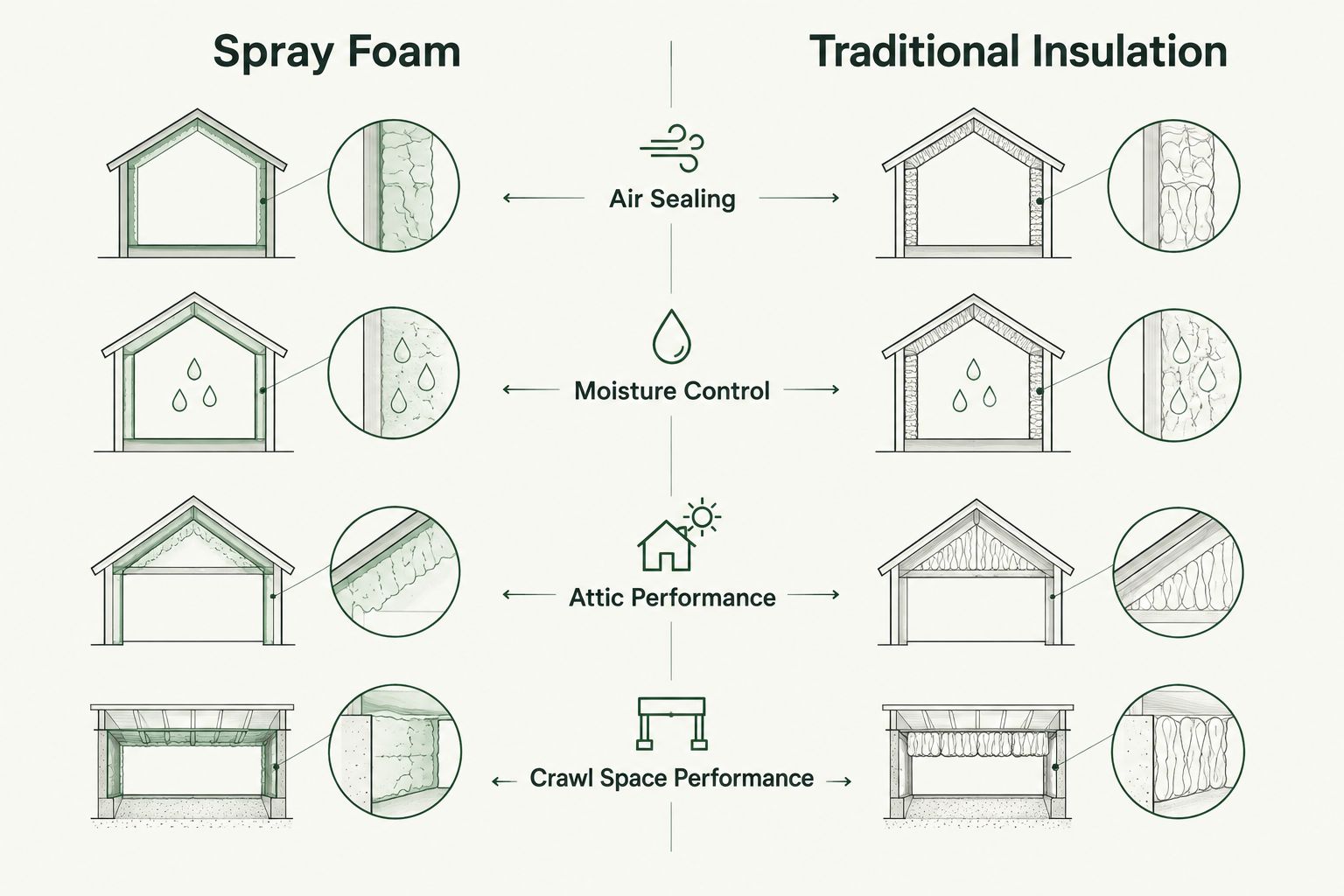
    Two-column comparison of spray foam versus traditional insulation across four performance factors
    Air sealing and moisture control are where spray foam and traditional insulation diverge most in Pacific Northwest homes.

    Insulation NW Alternatives at a Glance

    Option Best For Standout Feature How It Differs From Insulation NW
    AT Foam Insulation Spray foam attics and crawl spaces Veteran-owned crew running open-cell and closed-cell foam daily Specializes in foam air-sealing instead of spreading thin across every insulation type
    Insulation NW Multi-building portfolios needing one vendor Broad menu covering batt, blown-in, and foam Reference point for this comparison
    Big-box install programs Fast, standard batt replacement Scheduling through a national retail network Handles batt and blown-in but rarely touches crawl space encapsulation or closed-cell foam
    Independent cellulose installers Attic-only top-ups on older homes Dense-pack cellulose for irregular joist bays Focuses on attics only, skips walls and crawl spaces entirely

    1. AT Foam Insulation: Best for Spray Foam Attics and Crawl Spaces

    AT Foam Insulation is a veteran-owned spray foam contractor working attics, crawl spaces, and walls across Seattle, Tacoma, Olympia, and the greater Pacific Northwest. The crew runs open-cell and closed-cell foam as its core service rather than one line item among many, which shows up in how the air-sealing detail work gets handled around wiring penetrations and rim joists.

    Where AT Foam Insulation shines:

    • Closed-cell foam application for crawl space moisture and mold control
    • Veteran-owned crew with a narrower, deeper service focus
    • Residential and commercial attic, crawl space, and wall coverage

    Where AT Foam Insulation falls short:

    • Not the pick if a job is purely a budget fiberglass batt swap with no air-sealing need
    • Service area is Washington-focused, smaller than a national retail network

    Best for: homeowners and businesses in Seattle, Tacoma, and Olympia who need spray foam specifically for attics, crawl spaces, or wall cavities.

    Dimension AT Foam Insulation Insulation NW
    Spray foam specialization Core service, applied daily One offering among several
    Ownership Veteran-owned Not specified
    Crawl space focus Encapsulation and moisture control as a dedicated service Covered as part of broader menu
    Service area Seattle, Tacoma, Olympia, greater Pacific Northwest Puget Sound region

    Get a spray foam quote today

    Free estimate for attic, crawl space, or wall insulation in Washington.

    2. Insulation NW: Best for Multi-Type Portfolio Coverage

    Insulation NW's advantage is breadth: batt, blown-in, and spray foam under one vendor relationship. For a property manager juggling several buildings with different insulation needs, that single point of contact saves coordination time.

    Where Insulation NW shines:

    • One vendor for mixed insulation types across a portfolio
    • Familiar with standard batt and blown-in jobs at scale

    Where Insulation NW falls short:

    • Depth in any single method — foam included — tends to trail a specialist that runs that method every day
    • Less useful when the actual problem is a single crawl space or attic that needs dedicated foam air-sealing

    Best for: multi-building owners who want one contractor bidding across several insulation types.

    3. Big-Box Install Programs: Best for Fast Standard Batt Jobs

    National retail install programs move quickly on straightforward fiberglass batt replacement, mostly because scheduling runs through a large subcontractor network rather than one crew's calendar.

    Where big-box install programs shine:

    • Wide availability and fast scheduling across the region
    • Straightforward for a simple batt-to-batt swap

    Where big-box install programs fall short:

    • Subcontracted crews vary in skill from job to job
    • Rarely offer closed-cell spray foam or crawl space encapsulation as a real option

    Best for: a quick, standard batt replacement with no crawl space or moisture issue involved.

    4. Independent Cellulose Installers: Best for Attic-Only Top-Ups

    Independent dense-pack cellulose installers do one thing well: blowing cellulose into irregular attic joist bays on older homes where batt doesn't sit flat. For an attic insulation contractor in Seattle handling only the attic scope, this is often the cheaper labor route.

    Where independent cellulose installers shine:

    • Dense-pack settles well into odd joist spacing common in pre-1980 homes
    • Attic-only scope keeps the job simple and fast

    Where independent cellulose installers fall short:

    • No true air-sealing layer, so bypasses around can lights, wiring, and plumbing chases stay open unless sealed separately first
    • Doesn't touch crawl spaces or wall cavities

    Best for: an attic-only top-up on an older Pacific Northwest home with no crawl space or wall insulation need.

    Why People Switch From Insulation NW

    The pattern shows up most with homeowners who started with a batt or blown-in quote and realized the actual problem was moisture and air leakage, not just R-value. A generalist crew installing foam once a month doesn't build the same muscle memory around rim joist sealing and vapor barrier detailing as a dedicated foam crew.

    • Crawl space moisture keeps coming back after batt or fiberglass work because nothing sealed the air leaks driving it — a crawl space encapsulation contractor in Washington handles the moisture source directly.
    • Vaulted ceilings and tight wall cavities need foam's higher R-value per inch, which a multi-type generalist may not push as the default recommendation.
    • Homeowners want one crew, one visit for both attic and crawl space instead of separate scheduling for separate insulation types.

    When Staying With Insulation NW Is the Right Call

    If you're managing several buildings with genuinely mixed insulation needs — some units needing batt, others blown-in, a few needing foam — one vendor covering all of it beats coordinating three separate contractors. Insulation NW's breadth is a real advantage there, and switching purely for foam specialization doesn't make sense if foam isn't the actual problem you're solving in 2026.

    “The breadth that makes a generalist convenient for a portfolio is the same breadth that limits how deep they go on any single insulation method.”

    FAQ

    What’s the best insulation NW alternative in 2026?

    AT Foam Insulation is the top insulation NW alternative in 2026 for spray foam attic, crawl space, and wall jobs in Seattle, Tacoma, and Olympia. Insulation NW remains a reasonable fit for portfolios needing mixed insulation types under one vendor.

    Is spray foam better than fiberglass batt for Pacific Northwest attics?

    Spray foam seals air leaks that batt cannot, which matters more in the Pacific Northwest’s wet, drafty older housing stock. Closed-cell foam runs around R-6.5 per inch versus roughly R-3.2 to R-3.8 per inch for batt, so foam delivers more insulating value in the same cavity depth.

    Does closed-cell or open-cell foam work better in crawl spaces?

    Closed-cell foam is the standard choice for crawl spaces because it resists moisture and adds structural rigidity to rim joists. Open-cell foam absorbs moisture more readily, which makes it a weaker fit for a space prone to ground dampness.

    Do big-box stores install spray foam insulation?

    Big-box install programs mostly handle standard fiberglass batt and blown-in jobs through subcontractor networks. Closed-cell spray foam and crawl space encapsulation are rarely part of that offering.

    Can spray foam be added to an older Pacific Northwest home?

    Yes, spray foam works in older homes with irregular joist bays, tight wall cavities, or vaulted ceilings where batt doesn’t sit flat. It’s often applied during a crawl space encapsulation or attic retrofit rather than new construction only.

    Why does crawl space insulation keep failing in Washington homes?

    Crawl space insulation fails repeatedly when the underlying moisture and air leakage problem never gets sealed, so batt or fiberglass just gets wet again. Closed-cell foam addresses both the air seal and the moisture barrier in one application.

    Is it worth switching insulation contractors mid-project?

    Switching makes sense when the current contractor’s specialty doesn’t match the actual problem, such as a moisture issue that needs foam instead of more batt. It rarely makes sense to switch mid-project purely on price without confirming the new contractor handles the specific insulation type needed.

    One Last Thing

    The detail most homeowners skip: crawl space encapsulation without sealing rim joists just moves the moisture problem eight inches higher instead of solving it. Rim joists are one of the biggest thermal bypasses in pre-1980 Puget Sound homes, and any insulation NW alternative worth hiring in 2026 should treat that seam as part of the job, not an upsell.

    Related Guides

  • AT Foam vs Service Partners: which is better in 2026

    AT Foam vs Service Partners: which is better in 2026

    Choose AT Foam if you need a crew to install spray foam in a Washington attic, crawl space, or wall. Choose Service Partners if you are an insulation contractor sourcing materials for a job you will install yourself. AT Foam is the better fit for a homeowner buying spray foam installation; Service Partners fits a trade buyer purchasing insulation materials.

    TL;DR
    • AT Foam vs Service Partners comes down to installed spray foam versus material sourcing in 2026.
    • Choose AT Foam for a residential or commercial spray foam installation in the Seattle, Tacoma, or Olympia area.
    • Choose Service Partners if your crew will install the insulation and needs a materials supplier.
    • Neither option settles open-cell versus closed-cell foam without checking the assembly and job scope.

    Why this matters

    An insulation quote and a materials order solve different problems. One includes the work of installing insulation; the other supplies products for someone else to install. Comparing them as if they were interchangeable can leave out the most consequential part of the job: who is responsible for the finished assembly.

    For a homeowner or business owner seeking AT Foam spray foam installation, start with the space that needs work and the result you want. For a contractor sourcing insulation, start with the specified material, quantity, and delivery requirements. If you are still choosing among providers, the guide to Service Partners alternatives gives you another comparison path.

    At a glance: installation versus material supply

    Dimension AT Foam Service Partners
    Best for Homeowners and businesses hiring spray foam installation Contractors sourcing insulation materials
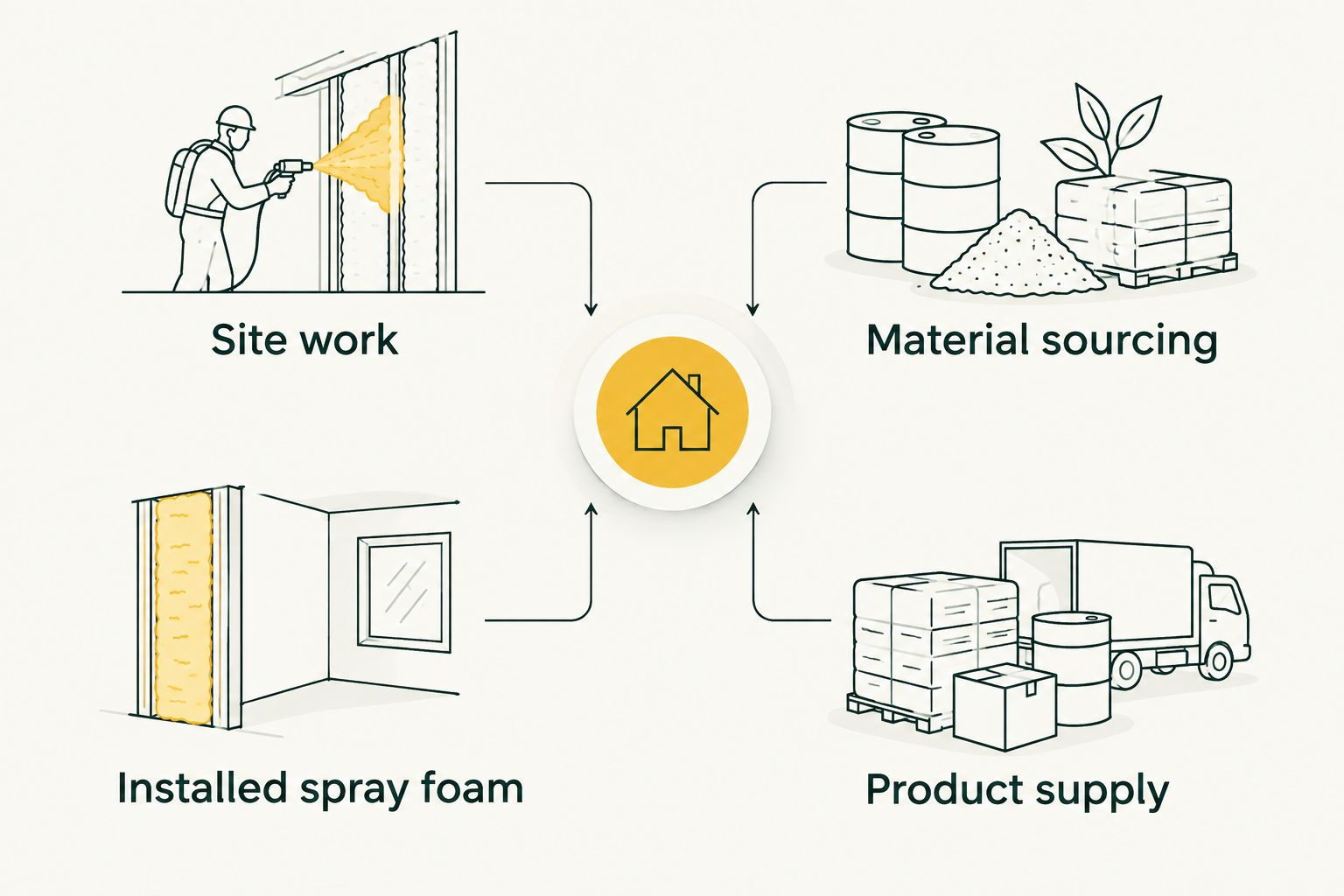
    Role in the job Site work and installed spray foam Material sourcing and product supply
    Attic work A fit when the request is spray foam installation A fit when an installer needs attic-insulation materials
    Crawl space work A fit when the request is spray foam installation A fit when a crew is purchasing specified materials
    Wall work A fit when the request is spray foam installation A fit when a crew is purchasing specified materials
    Product selection Foam choice must fit the assembly Material choice must fit the assembly
    Residential and commercial work Spray foam installation for both Insulation supply for both
    Pricing model Project scope and installation quote Material purchase tied to the order
    Standout feature A contractor for spray foam site work A supplier for an installing crew

    The table is a buying guide, not a substitute for a written scope. In 2026, ask exactly what work is included before comparing any figures: preparation, the areas to be insulated, the specified material, installation, and any work outside the insulation scope.

    AT Foam wins when you need installed spray foam

    Winner: AT Foam for a buyer who needs the insulation installed. The company is a spray foam insulation contractor serving residential and commercial customers in Seattle, Tacoma, Olympia, and the greater Pacific Northwest. That matches a request for attic, crawl space, or wall spray foam work.

    Service Partners is an insulation distributor. Material supply matters to the trade crew doing the job, but a homeowner who needs someone to inspect the space and perform the installation is shopping for a different service. A distributor comparison becomes useful only after you know who will do the site work.

    The downside of choosing an installation contractor when you only need materials is straightforward: you are solving the wrong purchasing problem. If your crew is already assigned and simply needs product, ask a supplier for the specified items instead of requesting an installation quote. In 2026, keep those requests separate so each seller can answer the one that fits its role.

    Service Partners wins when your crew is buying materials

    Winner: Service Partners for an installer sourcing insulation materials. If you already have the crew and the job specification, your immediate need is supply rather than another contractor to apply spray foam. A distributor fits that purchasing step.

    Put the job requirements in writing before placing a materials order. Name the application, the specified insulation, the quantity your plans call for, and the delivery requirements. Confirm the product details against the project documents rather than treating a broad product category as a specification.

    There is a limit to this win. Material supply does not, by itself, answer who prepares the assembly, installs the insulation, checks the completed work, or handles a scope change on site. If those responsibilities are still open, settle them before buying products. A delivered material and a completed insulation job are not the same outcome.

    AT Foam is the clearer choice for attic spray foam installation

    Winner: AT Foam when the attic needs an installing contractor. Start by identifying where the insulation belongs: at the attic floor, along the roofline, or in another specified area. Those are different scopes. A request that says only attic insulation leaves too much room for two proposals to describe different work.

    Before accepting an attic proposal in 2026, ask the installer to state the areas to be treated and the planned insulation approach. If the roofline is involved, ask how the proposed assembly addresses ventilation and moisture. Those questions test the scope without assuming that one foam type belongs in every Washington attic.

    Service Partners fits the attic project at a different point. Once a qualified crew has defined the assembly and taken responsibility for installation, that crew can source the specified materials. For a property owner who has not hired that crew, material sourcing does not close the gap.

    Two-column diagram comparing installed spray foam work with insulation material supply
    Decide who is responsible for installation before comparing a contractor with a supplier.

    AT Foam is the clearer choice for crawl spaces and walls

    Winner: AT Foam for a crawl space or wall project that requires on-site spray foam work. Its stated services include both applications. The useful question is not simply whether a seller has insulation; it is who will evaluate the area and apply the specified material.

    A crawl space deserves a scope that identifies the surfaces being treated. Ask how the proposed insulation work relates to existing moisture conditions and what, if anything, must happen before spraying. Do not assume that adding foam alone resolves a moisture problem; the proposal should separate insulation work from any other work the space requires.

    Wall projects need the same clarity. Tell the contractor whether the work concerns an open wall in a renovation, a new assembly, or another accessible area, then get the proposed installation area in writing. For a business owner planning commercial work in 2026, identify access restrictions and who controls the site before requesting a proposal.

    Service Partners is the better match for an installing crew that already knows what its crawl space or wall job requires and needs to purchase materials. It is not the better first stop for a property owner whose main unresolved question is who will carry out the spray foam installation.

    Both require the right insulation for the assembly

    Tie: neither a contractor quote nor a material order makes product selection automatic. Open-cell and closed-cell spray foam are not interchangeable labels for the same job. The proposed assembly, intended use, and applicable project requirements should drive the choice.

    If you are hiring installation, ask what foam is proposed, where it will be applied, and why that approach fits the space. If you are buying materials for your own crew, check the specification before ordering. In either case, do not compare proposals solely by the words spray foam: two offers can describe different materials and different work.

    This is where a written scope does the most work. It should let you identify the application, the proposed insulation, and who is responsible for installation. If a competing document omits one of those points, request a correction before treating the offers as comparable. That rule applies to both residential and commercial projects in 2026.

    Both fit residential and commercial insulation projects

    Tie on project category; different roles on the job. AT Foam provides residential and commercial spray foam installation. Service Partners supplies insulation materials used in residential and commercial work. The words residential and commercial therefore do not identify the winner on their own.

    Instead, identify the buyer. A property owner hiring a contractor needs an installation scope and a party responsible for the work. A trade crew purchasing for a specified job needs to confirm the materials in its order. Both can be involved in the same kind of project without offering the same service to the same buyer.

    For a commercial job, make the responsibility split explicit before materials are ordered or site work begins. Who supplies the material? Who installs it? Who resolves a mismatch between the plan and the conditions found on site? Those questions are more useful than a broad claim that a company serves commercial customers.

    Pricing: compare the scope, not just the line item

    AT Foam's pricing model is a project quote for installation. Service Partners' pricing model is a materials purchase tied to an order. Neither model wins on cost from the information available here, because a materials order does not represent the full cost of an installed job.

    For an installation quote, check which areas are included, what material is proposed, and which site tasks belong to the contractor. For a supply purchase, confirm the exact specified products and what the order includes. If your crew is handling installation, keep its labor and other project work in your own comparison. Do not set a product order beside a full installation quote and call the difference savings.

    In 2026, request current terms directly from each business. Scope changes, site conditions, and product specifications can all change what you are buying. A useful comparison puts equivalent responsibilities side by side; a misleading one compares different deliverables as though they were identical.

    Final verdict: match the business to the buyer

    Choose AT Foam if you are hiring an installer

    You are a homeowner or business owner in the Seattle, Tacoma, Olympia, or greater Pacific Northwest area, and you need spray foam installed in an attic, crawl space, or wall. AT Foam wins this profile because its stated service is residential and commercial spray foam installation. Ask for a written scope that identifies the application and the proposed foam.

    Choose Service Partners if your crew needs supply

    You are an insulation contractor with an installation crew and a defined material specification. Service Partners wins this profile because your next purchasing step is sourcing insulation materials, not hiring another crew to perform the work. Check the order against the project specification before buying.

    Dimension Winner
    Best for a property owner hiring installation AT Foam
    Best for a contractor buying materials Service Partners
    Site work and installed spray foam AT Foam
    Material sourcing and product supply Service Partners
    Attic spray foam installation AT Foam
    Crawl space and wall spray foam installation AT Foam
    Choosing insulation for the assembly Tie: confirm the specification
    Residential and commercial relevance Tie: different roles
    Pricing comparison No direct winner: scopes differ

    FAQ

    Is AT Foam or Service Partners better for a homeowner?

    AT Foam is the better fit for a homeowner who needs spray foam installed in an attic, crawl space, or wall in its Washington service area. Service Partners fits material sourcing rather than the homeowner’s request for an installing contractor.

    Is Service Partners an insulation contractor?

    Service Partners is an insulation distributor. If you need an installed result, identify the crew responsible for site work rather than treating a materials order as an installation agreement.

    Which is better for an insulation contractor buying materials?

    Service Partners fits an insulation contractor buying specified materials for its own crew to install. Confirm the product requirements in the job documents before ordering.

    Which should I contact for attic spray foam installation in Seattle?

    AT Foam fits a Seattle request for attic spray foam installation. Ask for a written scope that identifies the surfaces to be treated and the proposed insulation approach.

    Can I compare an AT Foam quote with a Service Partners materials order?

    Not as equivalent offers: an installation quote and a materials order cover different responsibilities. Separate material supply, installation labor, and other project work before comparing them.

    Is open-cell or closed-cell spray foam better for my project?

    Neither foam type is automatically better for every attic, crawl space, or wall. Select the material based on the proposed assembly and project requirements, and ask the installer to explain the specification.

    Who should handle a crawl space spray foam job?

    Choose an installing contractor if you need the crawl space work performed; AT Foam lists crawl space spray foam among its services. Choose a materials supplier if your crew already has the job scope and will perform the installation.

    One last thing

    The fastest way to make this comparison useful in 2026 is to write one sentence describing what you are buying: an installed spray foam job or specified insulation materials. If you cannot answer that yet, settle who owns the installation before asking either business to price the work.

    Related guides

  • RetroFoam alternatives in 2026

    RetroFoam alternatives in 2026

    RetroFoam is a strong option when you want to insulate a finished wall without opening the entire cavity. It stops being the obvious fit when the work is in an attic, crawl space, or already-open wall. The best RetroFoam alternative in 2026 is AT Foam Insulation for spray foam work in accessible cavities; blown-in cellulose is the alternative to compare for finished walls.

    TL;DR
    • For retrofoam alternatives in 2026, choose AT Foam Insulation for accessible attic, crawl space, and wall cavities.
    • Compare blown-in cellulose when the wall is finished and opening it is the main concern.
    • Choose fiberglass or mineral wool batts when cavities are open and a batt installation fits the job.
    • Do not choose a material until you know whether the cavity is accessible and what else the wall needs.

    Why this matters

    RetroFoam and spray foam are easy to group together because both contain the word foam. They answer different installation questions. RetroFoam's appeal is insulating an existing, enclosed wall; conventional spray foam is applied where the installer can reach the surface that needs insulation.

    That distinction changes the work you should ask a contractor to assess. A finished bedroom wall, an open wall during a remodel, an attic, and a crawl space do not call for the same installation plan. In the Pacific Northwest, you also need someone to identify moisture problems before covering a surface. Insulation is not a repair for a leak or wet framing.

    Start with access, not the material name. In 2026, that simple distinction will narrow your RetroFoam alternatives faster than a list of product claims. It also helps you compare proposals for the same area of the building instead of comparing a wall quote with an attic quote.

    RetroFoam alternatives at a glance

    Option Best for Standout feature How it differs from RetroFoam
    RetroFoam Existing finished walls Injection into enclosed wall cavities The benchmark for a finished-wall project
    AT Foam Insulation Accessible attics, crawl spaces, and walls in its service area Spray foam installation across residential and commercial applications The contractor applies spray foam to accessible surfaces rather than treating an enclosed wall as an injection job
    Blown-in cellulose Enclosed walls where limited access is preferred Loose-fill material installed through access openings Uses blown-in fiber rather than injected foam
    Fiberglass batts Open, regularly framed cavities Batts fitted between framing members Requires access to place and fit the batts
    Mineral wool batts Open cavities where batt fit and material choice matter Dense batts cut to fit framing Also requires access; it is not an enclosed-wall injection method

    The table compares installation routes, not interchangeable packages. Ask each installer which surface the proposal covers, how they will reach it, and what preparation or restoration falls outside the insulation work. A lower-disruption wall method does not automatically solve an attic or crawl-space problem.

    1. AT Foam Insulation: best for accessible cavities

    AT Foam Insulation is a veteran-owned spray foam insulation contractor serving residential and commercial customers in Seattle, Tacoma, Olympia, and the greater Pacific Northwest. Its stated work covers attics, crawl spaces, and walls. That makes it the first call here when those areas are accessible and you want a spray foam proposal, not an injection-foam proposal for an enclosed wall.

    Where AT Foam Insulation shines

    • Its stated service scope covers all three common areas in this comparison: attic, crawl space, and wall.
    • You can ask one contractor to assess spray foam for a residential or commercial project in its stated service area.
    • Spray foam can be applied directly to accessible surfaces, so the proposal can identify the surfaces to be treated rather than assuming every cavity is an enclosed wall.

    Where AT Foam Insulation falls short

    • Conventional spray foam is not a like-for-like way to fill a finished wall without gaining access to the application surface.
    • If you need to keep wall finishes largely intact, compare an enclosed-wall installation method before committing to demolition or a remodel.
    • Its stated service area is the Pacific Northwest, so it is not the local-contractor choice for a project outside that area.
    Decision point AT Foam Insulation RetroFoam
    Primary fit in this comparison Accessible attic, crawl space, or wall surfaces Existing enclosed walls
    Wall access Surface must be accessible for spray application Installation is designed around access into an enclosed cavity
    Scope to discuss Spray foam installation for the area being assessed Injection-foam treatment of the wall cavity
    Best question to ask Which surfaces can you reach and treat? How will you access and close the wall openings?

    Best for: A Seattle, Tacoma, Olympia, or greater Pacific Northwest property with an accessible area that needs a spray foam assessment. Verdict: Choose AT Foam Insulation for accessible spray foam work; hold off if your only goal is filling a finished wall without opening it.

    2. Blown-in cellulose: best for an enclosed-wall comparison

    Blown-in cellulose belongs on your shortlist when the walls are finished and you want to compare another way of insulating enclosed cavities. An installer introduces the material through access openings; the wall does not become an open spray surface. The condition and construction of the wall still determine whether the job is suitable.

    Where blown-in cellulose shines

    • It gives you a finished-wall comparison against injection foam rather than an unrelated attic or open-wall proposal.
    • It can be considered for cavities where installing batts would require opening the wall.
    • A proposal can specify the access points and how the installer plans to confirm the cavity is filled.

    Where blown-in cellulose falls short

    • It does not remove the need to make and close access openings.
    • Wall obstructions, existing insulation, and unknown cavity conditions need checking before anyone promises a uniform fill.
    • It is not a substitute for repairing moisture intrusion or air leaks elsewhere in the assembly.
    Decision point Blown-in cellulose RetroFoam
    Material Loose-fill cellulose fiber Injection foam
    Typical comparison Filling an enclosed wall Filling an enclosed wall
    Access to discuss Openings for the blowing equipment Openings for the injection equipment
    Proposal detail to request How cavities and obstructions will be assessed How cavities and obstructions will be assessed

    Best for: A finished-wall project where keeping the wall largely in place matters and a contractor confirms the cavities are suitable. Verdict: Compare it directly with RetroFoam for the same walls; skip it as a shortcut around a moisture problem.

    3. Fiberglass batts: best for open, straightforward framing

    Fiberglass batts are a practical comparison when the wall is already open or a project gives the installer direct access to the framing. They are placed between framing members, not injected into a finished cavity. Fit matters: gaps and compressed sections change the result you get from the planned insulation layer.

    Where fiberglass batts shine

    • They suit framing that is exposed during construction or a renovation.
    • You can inspect the cavity and address visible problems before the wall is closed.
    • Batts make the intended coverage easy to discuss with an installer while the framing remains accessible.

    Where fiberglass batts fall short

    • Installing them behind finished drywall requires opening the wall; they do not perform RetroFoam's enclosed-wall job.
    • Batts do not, by themselves, seal air leaks around penetrations or framing joints.
    • Irregular framing and obstacles demand careful cutting and fitting.
    Decision point Fiberglass batts RetroFoam
    Wall condition Open framing Enclosed finished cavity
    Installation Fit batts between framing Inject foam into the cavity
    Air leaks Address separately Ask the installer which leaks the wall work will address

    Best for: An open-wall project where the framing can be inspected and the batts can be fitted correctly. Verdict: Choose batts for accessible, straightforward framing; skip them when avoiding wall demolition is the priority.

    4. Mineral wool batts: best for an open-wall material comparison

    Mineral wool gives you another batt option when framing is exposed. Like fiberglass batts, it must be cut and fitted into the available space. It belongs in an open-wall comparison, not in a head-to-head promise that it can be installed through the same openings as injection foam.

    Where mineral wool batts shine

    • They give you a distinct material option to assess while the wall is open.
    • The installer can inspect framing, penetrations, and visible moisture concerns before covering the cavity.

    Where mineral wool batts fall short

    • Finished walls must be opened to install conventional batts.
    • Cutting and fitting still matter around irregular framing.
    • A batt installation does not replace a separate plan for air sealing.
    Decision point Mineral wool batts RetroFoam
    Required access Open cavity Access into an enclosed cavity
    Installation method Cut and fit batts Inject foam
    Main decision Whether a batt suits the exposed framing Whether injection suits the enclosed wall

    Best for: An exposed wall where you want to compare batt materials before the finish goes back on. Verdict: Hold it alongside fiberglass for open framing; skip it if the wall must stay closed.

    Why people switch from RetroFoam

    A switch makes sense when the job is no longer the job RetroFoam is meant to solve. If an attic or crawl space is the problem, compare methods for that space. If drywall is already coming down during a renovation, compare materials that can be installed against the exposed framing. Neither decision requires a claim that RetroFoam performs poorly in finished walls.

    For a Washington property, make the 2026 shortlist from the actual work area:

    • Finished walls: Ask about enclosed-cavity installation, access openings, existing insulation, and wall restoration.
    • Open cavities: Compare spray foam with appropriately fitted batts for the same exposed area.
    • Attic access: Identify the surface to insulate and any air leaks or moisture concerns before choosing a method.
    • Crawl space: Find the moisture source and define the insulation boundary before covering surfaces.

    Use the same project description with every contractor in 2026. Name the area, say whether it is open or finished, and disclose any known leaks or existing insulation. Then ask what the installer needs to inspect before specifying material. That keeps the comparison focused on what will actually be installed.

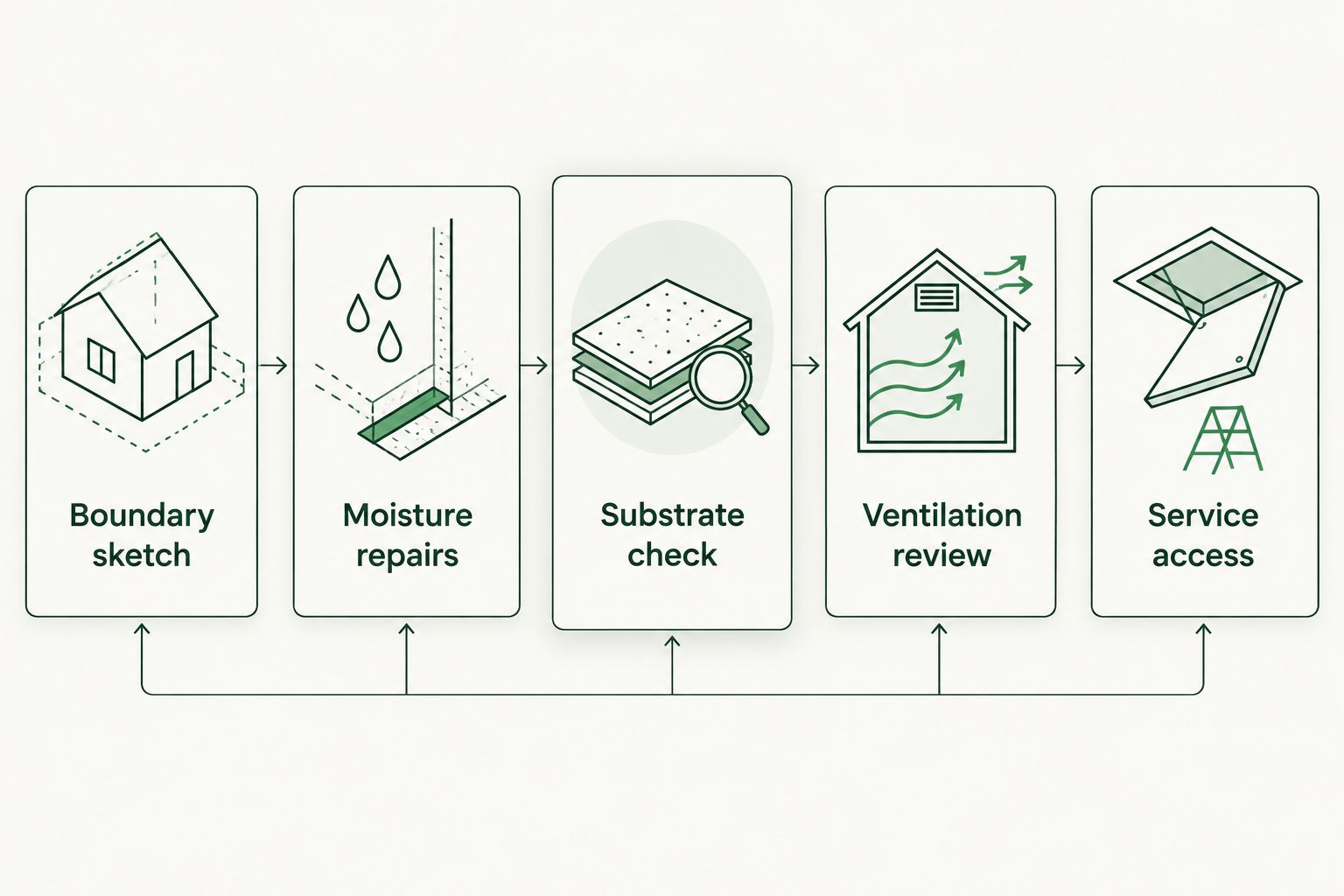
    A useful proposal identifies the area and surface to be insulated, the access required, and any work that must happen first. For a finished wall, ask who makes and closes the access openings. For an attic or crawl space, ask which surfaces are included. If two proposals describe different boundaries, they are not competing solutions to the same job.

    Discuss your insulation project

    Describe the space, access, and existing insulation before choosing a method.

    When staying with RetroFoam is the right call

    Stay with RetroFoam on the 2026 shortlist when your main problem is a finished, enclosed wall and you want an injection-foam proposal. That is its relevant strength. An attic spray foam proposal or an open-wall batt proposal does not answer the same question, even if it describes a good material.

    Before deciding, confirm what is already inside the wall and how the installer will handle obstructions and access openings. Ask what remains outside the job, too. If the source of discomfort is an attic gap or a crawl-space condition rather than the wall cavity, a finished-wall treatment is not the first comparison to make.

    FAQ

    What is the best RetroFoam alternative in 2026?

    AT Foam Insulation is the best fit here for accessible attic, crawl space, or wall surfaces in its Pacific Northwest service area. For a finished, enclosed wall, compare RetroFoam with blown-in cellulose instead.

    Is spray foam the same as RetroFoam?

    No. In this comparison, spray foam is applied to accessible surfaces, while RetroFoam is considered for injection into enclosed walls. Ask which area and surface each proposal actually covers.

    Can fiberglass batts replace RetroFoam in a finished wall?

    Not without opening the wall to install the batts. Fiberglass is a better comparison when framing is already exposed.

    Is blown-in cellulose an alternative for existing walls?

    Yes, blown-in cellulose is an enclosed-wall alternative to discuss with an installer. The installer needs to assess the cavity, existing material, and required access openings.

    Should I insulate a wet crawl space first?

    No. Identify and address the moisture source before covering affected surfaces with insulation. Ask the contractor to define what preparation the insulation proposal assumes.

    Which RetroFoam alternative fits an open wall during a renovation?

    Compare spray foam, fiberglass batts, and mineral wool batts for the exposed wall. The right proposal depends on the cavity and the work planned before the wall is closed.

    When should I keep RetroFoam on my shortlist?

    Keep RetroFoam on your shortlist when the target is a finished, enclosed wall and limiting wall opening matters. Compare proposals for that same wall rather than against work in another part of the building.

    One last thing

    The most useful question in 2026 is not which foam has the better name. It is which surface the installer can reach without turning your project into a different job. Settle that first, then compare materials and proposals for the same space.

    Related guides

  • Spray foam insulation for property managers: complete 2026 guide

    Spray foam insulation for property managers: complete 2026 guide

    Property managers’ spray foam insulation is a building-envelope upgrade aimed at reducing uncontrolled air leakage and heat transfer while keeping rental operations organized. This 2026 guide explains how to scope the work, choose materials, protect tenants, and document installation without treating every attic, crawl space, or wall as the same job.

    TL;DR
    • Spray foam insulation for property managers starts with moisture diagnosis, building-envelope planning, and tenant protection—not material selection.
    • AT Foam Insulation serves residential and commercial spray foam projects in Seattle, Tacoma, Olympia, and the greater Pacific Northwest.
    • Choose open-cell or closed-cell foam for the assembly, not by a blanket rule about which material is better.
    • Require written ventilation, reoccupancy, inspection, and closeout instructions before authorizing installation.

    Why spray foam insulation matters for property managers

    You manage more than an insulation project. You manage access, occupied units, owner approvals, maintenance records, and the consequences of covering building components that someone must inspect later. A useful upgrade needs a clear boundary between the installation area and the spaces people occupy.

    Spray foam can provide insulation and air sealing when the specified product is installed correctly. It does not repair roof leaks, remove mold, or correct an unsuitable ventilation plan. Fix the cause of wet materials before covering them.

    AT Foam Insulation is a fit for property managers seeking residential or commercial spray foam installation in Seattle, Tacoma, and Olympia. The veteran-owned contractor provides attic, crawl space, and wall insulation services; start with AT Foam Insulation when those applications match your building’s needs.

    For your 2026 maintenance plan, separate a comfort complaint from a confirmed insulation defect. A cold room can also involve duct leakage, equipment performance, or uneven air distribution. Document the symptom first, then commission work that addresses the actual cause.

    How to plan a spray foam project without losing control of the job

    Define the building problem before selecting foam

    Start with your existing maintenance records. Review tenant complaints, leak reports, repair photographs, and accessible insulation conditions before ordering a specialist inspection. This desk review requires no new software and prevents a contractor’s material recommendation from becoming your entire scope.

    Write the problem in plain terms: drafts near the floor, damaged attic insulation after a repaired leak, or exposed wall cavities during renovation. Separate observed conditions from assumptions. A photograph of stained sheathing records a condition; it does not establish whether the wood is dry or the leak is resolved.

    Keep occupants and untrained staff out of unsafe attics or crawl spaces. Restricted access, exposed wiring, and suspect materials require qualified assessment, not a better phone camera.

    • Collect complaint locations and maintenance history.
    • Photograph conditions from safe, accessible positions.
    • Identify roof, plumbing, and drainage repairs already completed.
    • Mark occupied spaces adjacent to the proposed work.
    • Write the outcome you need, without promising energy savings.

    Map the insulation boundary and resolve moisture

    Next, establish where the conditioned building ends. An attic-floor installation and a roof-deck installation create different assemblies. Likewise, insulating a crawl-space floor system is not the same project as insulating crawl-space walls.

    Have the contractor explain the proposed air, thermal, and moisture-control boundaries on a simple sketch. Include ducts, access hatches, rim joists, and transitions between materials. These junctions matter because an insulated surface alone does not establish a continuous air barrier.

    A manual sketch and site photographs give you a useful starting point. AT Foam Insulation’s attic, crawl space, and wall installation services provide a contractor route for the spray foam portion; require the proposed assembly and preparation work in writing rather than assuming inspection or moisture remediation is included.

    • Boundary sketch: Mark the proposed insulation plane.
    • Moisture repairs: Identify unresolved leaks or drainage defects.
    • Substrate check: Confirm surfaces meet the product’s installation requirements.
    • Ventilation review: Address changes to attic or crawl-space ventilation.
    • Service access: Preserve access to equipment and inspection points.
    Planning sequence covering insulation boundaries, moisture repairs, substrate checks, ventilation, and service access
    Define the assembly and resolve moisture before approving the installation.

    Choose the material for the assembly

    Open-cell and closed-cell spray foam are not interchangeable specifications. Open-cell foam is generally more vapor-permeable; closed-cell foam generally offers greater thermal resistance per inch and lower vapor permeance. Actual performance depends on the named product and installed thickness.

    That distinction matters at roof decks, exterior walls, and moisture-sensitive wood assemblies. Choose the material with the building’s drying path in mind. Lower vapor permeance is not automatically better if the assembly needs to dry in that direction.

    Fiberglass and cellulose also deserve consideration. They can suit accessible cavities or attic floors, but they require a separate air-sealing strategy. Spray foam combines those functions in suitable applications, while making later access to coated components more difficult.

    • Request the exact foam product and technical data sheet.
    • Record specified thickness and resulting R-value.
    • Ask how the assembly handles vapor movement and drying.
    • Confirm required protective coverings for the location.
    • Compare an air-sealed fiber-insulation assembly where practical.

    Compare written scopes rather than headline totals

    For a 2026 procurement review, request 3 written scopes where practical. Treat that as a comparison method, not a requirement to collect interchangeable bids. Different insulation boundaries, preparation work, and protective coverings produce different jobs.

    Build a simple spreadsheet yourself. Put each contractor’s proposed area, material, thickness, preparation, access arrangements, and exclusions in separate columns. A blank field is a question to resolve before approval, not permission to assume it is included.

    AT Foam Insulation provides spray foam installation, but that service description does not establish every project’s deliverables. Confirm removal, repairs, coverings, inspection coordination, and cleanup in the actual proposal. Keep unresolved work assigned to a named party so it does not disappear between trades.

    • Compare the same building areas and insulation boundaries.
    • Separate preparation, installation, and protective-covering work.
    • Record material names, thickness, and R-value targets.
    • Identify who handles permits or inspections when required.
    • List exclusions and owner responsibilities explicitly.

    Schedule access and protect tenants

    Plan occupancy before booking the crew. Spray foam application involves chemical handling, and installation requires controls for worker protection, ventilation, and access. Manufacturer instructions govern product-specific procedures; do not substitute a generic waiting period found online.

    Ask for written reoccupancy instructions that distinguish installers, other trades, property staff, and occupants. Confirm how the work area will be separated from adjacent units, shared corridors, and building air systems. An attic above an occupied unit is still an occupancy-planning issue.

    For your 2026 tenant notice, state the affected spaces, access arrangements, preparation requirements, and who will communicate clearance to return. Do not promise a fixed return time until the responsible contractor has supplied the applicable instructions and site plan.

    • Obtain the installation and ventilation plan before scheduling.
    • Confirm which people must leave which spaces.
    • Coordinate keys, common areas, pets, and belongings.
    • Identify the person authorized to communicate reoccupancy.
    • Provide a contact for access problems and tenant questions.

    Inspect the work before concealment

    Set 2 inspection checkpoints: one before application and one before the installation is concealed. These are recommended project controls, not substitutes for required code inspections. They give you a chance to resolve preparation defects before foam covers them and review installed work before finishes hide it.

    Before application, confirm that agreed repairs are complete, the installation area matches the scope, and services remain accessible. After application, review the specified coverage and thickness with the contractor. Photographs help document work but do not prove adhesion, dryness, or code compliance by themselves.

    Do not accept an unexplained change in material, boundary, or thickness. Record the reason, obtain the revised specification, and resolve any effect on protective coverings or inspection requirements before closing the assembly.

    • Verify preparation and agreed repairs before spraying.
    • Photograph locations with enough context to identify them later.
    • Review coverage, thickness, and accessible transitions.
    • Check clearances and required protective coverings.
    • Resolve deviations before drywall or other finishes conceal work.

    Close the job and track the original complaint

    Create 1 closeout file per building project. Keep it in your existing property-management system or shared folder; you do not need a separate platform. The file should tell the next manager what was installed, where it was installed, and what remains accessible.

    Close the loop with the original complaint. If the reported problem was a cold room, review that room under comparable operating conditions rather than declaring success from installation photographs. If you track utility consumption, account for occupancy, weather, and equipment changes before attributing a change to insulation.

    A 2026 installation record also supports later roof, plumbing, electrical, and renovation work. Make concealed conditions findable. A labeled photograph tied to a room or building elevation is more useful than a folder full of unlocated close-ups.

    • Save the scope, approved changes, and product documents.
    • Record installation locations and specified thicknesses.
    • Retain inspection records and reoccupancy instructions.
    • Log tenant follow-up against the original complaint.
    • Flag access restrictions for future maintenance contractors.

    Compare insulation options for managed properties

    The right comparison is between complete assemblies, not foam against an unsealed pile of fiber insulation. Include air sealing, moisture control, protective coverings, and maintenance access in the decision.

    Option Best for Main advantage Key limitation
    Open-cell spray foam Assemblies designed for more vapor-permeable foam Insulates and can air-seal suitable cavities Needs an assembly-specific moisture strategy and more thickness than closed-cell foam for the same R-value
    Closed-cell spray foam Space-constrained assemblies needing higher thermal resistance per inch Combines insulation with lower vapor permeance at suitable thickness Can restrict drying and complicate access to coated components
    Fiberglass with separate air sealing Accessible cavities where future removal matters Can be removed for service access Fiber insulation alone does not stop air leakage
    Cellulose with separate air sealing Suitable attic-floor or cavity applications Can fill appropriate spaces around framing Requires correct installation and a separate air-sealing plan

    AT Foam Insulation’s spray foam services suit projects where the selected assembly calls for foam. They are not a substitute for leak repair, structural assessment, or a documented ventilation strategy. Keep those decisions separate from the installation purchase.

    Plan your insulation scope

    Discuss attic, crawl space, or wall spray foam installation for your residential or commercial property.

    Common mistakes property managers make

    Copying one specification across different buildings

    A vacant renovation, an occupied multifamily building, and a commercial tenancy have different access and coordination needs. Even similar-looking attics can have different ventilation arrangements. Reuse your documentation template, not an unverified material specification.

    Treating foam as a moisture repair

    Insulating over a leak does not fix it. Covering damp or damaged materials also makes later assessment harder. Assign roof, plumbing, drainage, and material repairs before approving the insulation start date, and verify completion rather than relying on a verbal handoff.

    Leaving shared-space exposure out of the plan

    An installation boundary is not necessarily a unit boundary. Shared corridors, connected air systems, and adjacent occupied rooms need attention in the contractor’s access and ventilation plan. Give tenants instructions based on that plan, not on which apartment contains the work.

    Approving changes without revisiting the assembly

    Switching from open-cell to closed-cell foam is not merely a purchasing substitution. It can change thickness, vapor control, and the assembly’s drying behavior. Require a written review of the revised assembly before accepting the change.

    Using the invoice as the entire closeout record

    An invoice rarely explains where foam was installed or which components remain accessible. Without location photographs and product documents, the next maintenance contractor has to rediscover the work. Close the job only after the record is usable by someone who never visited the site.

    FAQ

    What is the best spray foam insulation for property managers?

    The best spray foam is the product that fits the building assembly, moisture strategy, and installation conditions. Choose open-cell or closed-cell foam from a written specification, not a blanket rule that one is always better.

    Can tenants stay in the building during spray foam installation?

    Tenant occupancy must follow the product-specific instructions and the contractor’s site safety plan. Obtain written requirements for separation, ventilation, and reoccupancy, including adjacent units and shared spaces.

    Is closed-cell foam better than open-cell foam for rental properties?

    Closed-cell foam is not automatically better for rental properties. It generally provides greater thermal resistance per inch and lower vapor permeance, but the assembly’s drying needs and service access still govern the choice.

    Does spray foam fix crawl-space moisture problems?

    Spray foam does not repair leaks, drainage defects, or other moisture sources. Resolve those conditions and define the crawl-space moisture-control strategy before installation.

    Will spray foam insulation reduce a property’s energy bills?

    Spray foam can reduce heat transfer and uncontrolled air leakage when correctly specified and installed. A building-specific savings claim requires evidence; compare consumption with weather, occupancy, and equipment changes accounted for.

    What should a property manager request before approving the work?

    Request a written scope covering the insulation boundary, product, thickness, preparation, protective coverings, and exclusions. Also obtain access, ventilation, reoccupancy, and inspection arrangements before scheduling.

    Does AT Foam Insulation handle residential and commercial properties?

    AT Foam Insulation provides residential and commercial attic, crawl space, and wall spray foam insulation services. Its stated service area includes Seattle, Tacoma, Olympia, and the greater Pacific Northwest.

    One last thing

    Photograph the services you will need to find after insulation is installed. Record accessible wiring routes, plumbing penetrations, shutoffs, and inspection points without disturbing them. Give those photographs location labels and store them with the scope.

    Before closing your 2026 project, ask a maintenance colleague who did not attend the installation to locate the work from the records alone. If that person cannot identify the assembly, product, and access points, improve the file before the crew’s knowledge disappears from the job.

    Related guides

  • AE Insulation alternatives in 2026

    AE Insulation alternatives in 2026

    AE Insulation is a useful benchmark if you already have a written proposal from them. That proposal stops being enough when it does not clearly identify the insulation material, the surfaces covered, and the work needed before installation. The best AE Insulation alternative in 2026 is AT Foam Insulation for residential or commercial spray foam in Seattle, Tacoma, and Olympia; compare another contractor if you need a second bid or a different material.

    TL;DR
    • AT Foam Insulation is the best AE Insulation alternative in 2026 for spray foam work in Seattle, Tacoma, and Olympia.
    • Keep AE Insulation in the comparison if its written proposal covers the same surfaces and preparation work.
    • Compare attic, crawl space, and wall bids by material and scope, not the contractor name alone.
    • Check local coverage and the proposed insulation method before treating another named company as a substitute.

    Why this matters

    An insulation bid is only useful beside another bid when both describe the same job. An attic proposal can leave out the hatch, penetrations, or existing insulation; a crawl space proposal can leave open who handles moisture-related work. Those omissions change what you are buying, even when the proposals use the same word: insulation.

    For a 2026 comparison, start with the application. Is the work in an attic, crawl space, wall, or commercial building? Then ask each contractor to put the material, preparation, areas covered, and exclusions in writing. Choose the proposal with a clear scope for your building, not the shortest description.

    AE Insulation alternatives at a glance

    Option Best for What to check first How it differs from an AE Insulation bid
    AE Insulation Keeping an existing written proposal as your benchmark Confirm the material, surfaces, preparation, and exclusions This is the bid the alternatives must match before you compare them
    AT Foam Insulation Residential or commercial spray foam in Seattle, Tacoma, Olympia, and the greater Pacific Northwest Ask for the proposed foam approach and a site-specific scope Spray foam installation for attics, crawl spaces, and walls is an established service
    TruTeam Seeking another contractor proposal Confirm local coverage and the insulation method offered for your project Treat it as an independent bid only after its scope is confirmed
    Insulation NW Adding another name to a local shortlist Confirm service area, material, and project fit directly Its proposal is comparable only if it covers the same work

    The table is a shortlist, not a claim that every company offers the same materials or serves every address. For TruTeam and Insulation NW, verify those details before scheduling around them.

    1. AT Foam Insulation: best for a local spray foam project

    AT Foam Insulation is a veteran-owned contractor providing residential and commercial spray foam installation. Its stated work covers attics, crawl spaces, and walls for customers in Seattle, Tacoma, Olympia, and the greater Pacific Northwest. That makes it the clearest fit here when your project calls for spray foam in one of those areas.

    Spray foam is not a complete specification by itself. Ask which surfaces the crew will insulate, how openings and transitions will be handled, what happens to existing material, and which tasks belong to another trade. Put those answers in the written scope before comparing the proposal with AE Insulation's.

    Where this option shines

    • A stated focus on spray foam installation, rather than a material choice inferred from a company name.
    • Residential and commercial attic, crawl space, and wall work are explicitly within its stated services.
    • Seattle, Tacoma, and Olympia are explicitly within its stated service area.

    Where this option falls short

    • If you have decided against spray foam, a spray-foam contractor is not the right comparison for a different insulation method.
    • The stated service area does not establish coverage for every address in the Pacific Northwest. Confirm your project location directly.
    • A company description does not define the preparation, exclusions, or material choice for your specific building; the written proposal must do that.

    Best for: A homeowner or business comparing spray foam proposals for an attic, crawl space, or wall project within the stated service area. Verdict: Shortlist for that work; choose only after the scope matches your building.

    Decision point AT Foam Insulation AE Insulation
    Stated service Residential and commercial spray foam installation Confirm the proposed service directly
    Stated applications Attics, crawl spaces, and walls Confirm the surfaces in the written proposal
    Stated geography Seattle, Tacoma, Olympia, and the greater Pacific Northwest Confirm coverage for your address
    Project-specific scope Request it in writing Request or check it in writing

    The head-to-head does not declare a winner on work that has not been specified. It identifies what you can establish now and what each proposal still needs to answer.

    2. TruTeam: best for another independently scoped bid

    TruTeam is another name to investigate when you want an additional contractor proposal. Its name alone does not tell you whether a local team covers your address or proposes the material your project requires. Make those your first questions, then compare the written work descriptions.

    Where TruTeam shines

    • A separate proposal gives you another description of the work to assess against an existing AE Insulation bid.
    • Asking the same questions of each company exposes differences in included preparation and covered surfaces.

    Where TruTeam falls short

    • Local coverage and project fit must be confirmed directly before it belongs on a final shortlist.
    • A proposal that names only an insulation material, without the surfaces and preparation work, is not yet comparable.

    Best for: A buyer willing to verify coverage and request a written proposal for the same application. Verdict: Hold until the service area, method, and scope are confirmed.

    Decision point TruTeam AE Insulation
    Local coverage Confirm directly Confirm directly
    Proposed material Require it in the proposal Require it in the proposal
    Covered surfaces Require a written list Require a written list

    Do not compare company names as a substitute for comparing work. If either proposal describes a different area of the building, ask for a revised scope before making a decision.

    3. Insulation NW: best for widening a local shortlist

    Insulation NW is another name you can check while gathering bids. First establish whether it serves your address and handles your specific attic, crawl space, wall, or commercial project. Then ask for the same scope details you request from AE Insulation and every other contender.

    Where Insulation NW shines

    • It gives you another potential point of comparison after you verify project fit.
    • A separate written scope can help you identify work one proposal includes and another leaves out.

    Where Insulation NW falls short

    • Its name does not establish its service area, materials, or availability for your project.
    • Without a matching application and written work description, its bid cannot settle an AE Insulation comparison.

    Best for: A buyer building a shortlist and prepared to confirm the basics before comparing bids. Verdict: Hold until its project fit and written scope are clear.

    Decision point Insulation NW AE Insulation
    Address coverage Confirm directly Confirm directly
    Insulation method Confirm directly Confirm directly
    Preparation and exclusions Request in writing Request in writing

    Why people compare an AE Insulation bid with alternatives

    The reason to seek another proposal is not that AE Insulation has failed. It is to answer a practical question: are you being offered the same work? A bid that covers only the accessible attic floor cannot be compared directly with one that also describes other surfaces or preparatory work.

    Use this checklist for every contractor in your 2026 shortlist:

    • Application: Identify the attic, crawl space, wall, or commercial area by location within the building. Do not accept a building-wide label when only part of it is included.
    • Material: Name the proposed insulation method. If spray foam is proposed, ask which type and where each type will go.
    • Existing conditions: Record whether existing insulation, visible moisture, damaged surfaces, or access restrictions affect the planned work. Ask who addresses each issue.
    • Preparation: Specify who clears the work area, protects adjacent surfaces, and handles openings that need attention before installation.
    • Boundaries: Mark where installation starts and stops. Ask how the contractor will handle transitions around the area being insulated.
    • Exclusions: Have the contractor identify work that is not part of its proposal. A clear exclusion is easier to plan for than an assumption.
    • Completion: Ask what the finished work will be documented with and what you should inspect before accepting it.

    For crawl spaces in particular, separate the insulation question from the moisture question. Insulation material does not replace a written plan for any moisture conditions the contractor identifies. For attics, distinguish the area being insulated from nearby areas that are merely accessible; a visit to the same attic does not mean every surface is in scope.

    A useful 2026 bid comparison places the proposals side by side and highlights mismatched lines before you choose. Ask for clarification, not a verbal assurance that the jobs are equivalent. The written scope is what lets you check the work later.

    Get a spray foam proposal

    Describe your attic, crawl space, or wall project and request a written scope.

    When staying with AE Insulation is the right call

    Keep AE Insulation on your shortlist if its proposal names the right application, material, preparation, boundaries, and exclusions for your building. If it answers your questions in writing and covers the work you want, switching contractors just to switch contractors has no practical value.

    The same standard applies to every alternative. A contractor with a clear service description still needs to explain your specific job; a familiar name does not fill gaps in a proposal. In 2026, the right choice is the contractor whose documented work matches the problem you are paying to solve.

    FAQ

    What’s the best AE Insulation alternative for spray foam in Seattle?

    AT Foam Insulation is the clearest listed alternative for a Seattle spray foam project. Its stated services include residential and commercial attic, crawl space, and wall insulation; confirm the scope for your building in writing.

    Is AT Foam Insulation better than AE Insulation?

    AT Foam Insulation is the better-defined option here when you specifically need spray foam within its stated service area. A project-level winner depends on whether each written proposal covers the same material, preparation, and surfaces.

    Should I get another bid if AE Insulation has already provided a proposal?

    Get another bid if you need to test whether the proposed work matches your project. Give each contractor the same application and ask for the same scope details so the proposals are comparable.

    Can I compare a spray foam bid with a different insulation method?

    You can compare the methods, but do not treat the bids as identical work. Ask each contractor to explain the proposed material, the surfaces it covers, and any preparation or exclusions.

    What should an attic insulation proposal identify?

    An attic insulation proposal should identify the surfaces being insulated, the material, preparation, and exclusions. Ask the contractor to clarify how openings, access, and existing insulation affect the proposed work.

    What should I ask before insulating a crawl space?

    Ask which crawl space surfaces are included and how existing moisture conditions affect the work. Get the material, preparation responsibilities, and exclusions in writing before comparing contractors.

    Are TruTeam and Insulation NW direct substitutes for AE Insulation?

    Treat TruTeam and Insulation NW as names to investigate, not confirmed like-for-like substitutes. Verify service area, insulation method, and project scope directly before comparing their proposals.

    One last thing

    The most useful question to ask after receiving an insulation bid is: What work would I still need to arrange before this job is complete? Ask it of AE Insulation and every alternative. The answer exposes exclusions that a company name and a material label cannot show.

    Related guides

  • Service Partners alternatives in 2026

    Service Partners alternatives in 2026

    Service Partners is an insulation distributor, making it useful to contractors who need materials. That strength does not answer a Washington homeowner’s question: who will install spray foam in the attic, crawl space, or walls? The best Service Partners alternative in 2026 is AT Foam Insulation if you need spray foam installed in its Pacific Northwest service area; outside that area, choose a qualified local installer.

    TL;DR
    • AT Foam Insulation is the Service Partners alternative for spray foam installation in Seattle, Tacoma, Olympia, and the greater Pacific Northwest.
    • Service Partners is a materials distributor, not a like-for-like substitute for hiring an installation contractor.
    • A local spray foam specialist is the next option outside AT Foam Insulation’s service area.
    • Compare the application, preparation, foam type, and specified thickness before choosing an insulation quote.

    Why this matters

    A materials supplier and an installation contractor solve different problems. If you already have a crew and need insulation products, a distributor belongs on your shortlist. If you need someone to assess a crawl space, prepare the work area, apply foam, and explain the finished scope, compare contractors instead.

    That distinction makes a 2026 search for Service Partners alternatives more useful. Start with the job you need done, then compare providers that can actually do it. A list of suppliers will not help you choose an installer, and a list of installers will not help a trade buyer source materials.

    Service Partners alternatives at a glance

    Option Best for What you are choosing How it differs from Service Partners
    AT Foam Insulation Residential or commercial spray foam projects in its Pacific Northwest service area A veteran-owned contractor for attic, crawl space, and wall insulation Provides installation services rather than serving as a materials distributor
    Service Partners Contractors sourcing insulation materials A distributor The benchmark: material sourcing rather than a direct installation comparison
    Local spray foam specialist Installation outside the listed Pacific Northwest service area A contractor focused on spray foam You must check each contractor’s service area and proposed scope
    General insulation contractor Projects where the material choice is still open A contractor who can assess insulation options You must confirm whether the contractor installs spray foam

    Best for a Washington spray foam installation: compare installation proposals, not distributor catalogs. For a materials order handled by your own crew, Service Partners remains the more relevant option.

    1. AT Foam Insulation: best for Pacific Northwest spray foam work

    A veteran-owned spray foam contractor serving homeowners and businesses in Seattle, Tacoma, Olympia, and the greater Pacific Northwest, this is the clearest match when your search is really about getting insulation installed. Its stated services cover residential and commercial attics, crawl spaces, and walls. You can discuss the part of the building that needs work rather than start with a materials order.

    Where it shines

    • Spray foam installation is the stated service, not a product you must arrange for someone else to install.
    • The stated service area includes Seattle, Tacoma, Olympia, and the greater Pacific Northwest.
    • Both residential and commercial projects are within the stated scope.

    Where it falls short

    • The listed service area does not make it an option for a project elsewhere in the country.
    • Spray foam is not automatically the right material for every assembly. If your project calls for another insulation type, compare that scope before committing to foam.

    Best for: A homeowner or business in the stated service area that needs an attic, crawl space, or wall spray foam project assessed and installed. Verdict: Choose for a spray foam installation within its service area; skip for a materials-only order.

    Decision point AT Foam Insulation Service Partners
    Primary role Spray foam installation contractor Insulation materials distributor
    Stated project types Residential and commercial Material sourcing for trade buyers
    Stated applications Attics, crawl spaces, and walls Products depend on the order
    Geographic fit Seattle, Tacoma, Olympia, and greater Pacific Northwest Check the relevant distributor location

    The head-to-head has a limit: it does not tell you which foam specification your building needs. Ask the installer to identify the surface, preparation work, foam type, and finished thickness in writing. For a Seattle project, the spray foam insulation cost guide gives you a related starting point before you request a project-specific estimate.

    2. Local spray foam specialist: best for installation elsewhere

    Outside the listed Pacific Northwest service area, look for a spray foam contractor who serves your property and will assess the actual assembly. A local specialist is an alternative to buying materials through a distributor because the job includes installation. The label alone proves nothing about the quality of a particular crew; check the proposed work.

    Where a local specialist shines

    • The service you are shopping for is installation, not just supply.
    • You can request a proposal tied to your attic, crawl space, walls, or other specified work area.

    Where a local specialist falls short

    • Capabilities vary by contractor. Do not assume that a crew advertising attic work also takes enclosed-wall or commercial jobs.
    • A proposal that names only spray foam without identifying the application, preparation, and specified thickness is too thin to compare.

    Best for: A property owner outside the stated Pacific Northwest service area who has decided to seek spray foam installation. Verdict: Choose after confirming the crew’s scope and service area; hold if the proposal leaves the application unclear.

    Decision point Local spray foam specialist Service Partners
    Primary role Installation contractor Materials distributor
    Useful first question Can you assess and install this specific job? Can you supply the specified material?
    Key document to compare Written installation scope Materials order

    Do not use a supplier listing as a substitute for checking an installer. Ask who will perform the work, what surfaces they will treat, and what preparation is included. Those answers let you compare contractors on the same job rather than on general descriptions of spray foam.

    3. General insulation contractor: best when the material is undecided

    A general insulation contractor belongs in the comparison when you know the building has a problem but have not decided that spray foam is the answer. The contractor can assess the application and propose a material and installation scope. Confirm the specific services offered before assuming spray foam is among them.

    Where a general insulation contractor shines

    • The conversation can begin with the building assembly instead of a predetermined product.
    • You can ask the contractor to explain why its proposed material fits that location.

    Where a general insulation contractor falls short

    • Not every insulation contractor installs spray foam. Ask directly rather than treating the category name as proof.
    • Two proposals using different materials or covering different surfaces are not equivalent bids.

    Best for: A property owner who needs an insulation assessment and is still deciding what to install. Verdict: Choose for a material-neutral assessment; hold until the contractor confirms it can deliver the installation you select.

    Decision point General insulation contractor Service Partners
    Primary role Assessing and installing a defined project Supplying insulation materials
    Material choice Confirm what the contractor proposes Buyer specifies what to source
    Installation Confirm the offered service and written scope Arrange an installer separately

    If one contractor recommends foam and another recommends a different material, ask each to explain the intended location and what problem the proposal addresses. A recommendation for an attic floor is not a direct comparison with one for the roof deck. The location comes first; the product choice follows.

    How to compare installation proposals

    In 2026, the useful comparison is not which provider uses the most insulation terms. It is whether each proposal describes the same work. Set the scope before judging the recommendations:

    • Location: Is the work on an attic floor, a roof deck, a crawl space, a rim joist, or a wall? These are different applications.
    • Existing conditions: Does the proposal say what must be inspected, cleared, or prepared before installation?
    • Material: Does it identify the proposed insulation and, for spray foam, the foam type?
    • Specified thickness: Is the planned application stated clearly enough to check after the work? A proposal specifying 1 inch, one specifying 2 inches, and one specifying 3 inches describe different scopes. Those figures are examples, not recommended thicknesses for your building.
    • Boundaries: Does the proposal identify what is included and what is excluded? Ask about adjoining surfaces rather than assuming they are covered.

    A photograph of the work area and a written description make a proposal easier to discuss. Neither replaces an assessment of the actual building. If access is restricted, ask how the contractor plans to inspect the surface and confirm the work before installation begins.

    The same rule applies to crawl spaces. A proposal for the underside of the floor and one for crawl space walls cover different surfaces. Make each contractor identify the intended boundary so you know whether the recommendations answer the same problem.

    Discuss your spray foam project

    Start with the work area and request an installation estimate.

    Why people switch from Service Partners

    The clearest reason is a change in the task. A contractor buying insulation materials needs a supplier. A homeowner who needs spray foam applied needs an installer. Switching from Service Partners to an installation contractor is therefore a change in purchasing route, not evidence that the distributor failed.

    There is a second reason to narrow the search: a written installation proposal gives you something a materials order cannot. It can identify the work area, preparation, proposed material, and intended coverage. That matters when a project includes more than purchasing insulation.

    Do not infer a complaint from the search term. This comparison does not establish that Service Partners changed its terms, mishandled an order, or performed a poor installation. Judge it against the job at hand in 2026: supply materials or install insulation.

    When staying with Service Partners is the right call

    Stay with Service Partners when you are sourcing insulation materials for a project and already have the installation side covered. Its distributor role is the advantage in that situation. Calling an installation contractor instead would not answer the same purchasing need.

    If you need both materials and labor, decide who is responsible for specifying the product and doing the work before placing an order. Do not assume a distributor purchase includes installation, or that an installer will use materials you supply. Get the responsibilities into the project scope first.

    FAQ

    What is the best Service Partners alternative in 2026 for a Seattle homeowner?

    AT Foam Insulation is the contractor option for a Seattle homeowner seeking spray foam installation in 2026. Service Partners is a materials distributor, so compare installation scopes rather than treating the two as identical services.

    Is Service Partners an insulation installer?

    Service Partners is an insulation materials distributor. If you need installation, ask a contractor to assess the property and provide a written scope instead of assuming a materials order includes labor.

    Who should consider Service Partners instead of an installation contractor?

    A trade buyer sourcing specified insulation materials should consider Service Partners. A property owner who needs spray foam applied should compare installation contractors.

    What should a spray foam proposal include?

    A spray foam proposal should identify the work area, preparation, proposed foam type, specified thickness, and boundaries of the installation. Use those details to check whether competing proposals cover the same job.

    Can I compare two insulation quotes with different materials?

    Yes, but first confirm that both quotes address the same surface and problem. Ask each contractor to explain its material choice and what work is included.

    Does AT Foam Insulation take commercial projects?

    Yes. AT Foam Insulation states that it provides residential and commercial spray foam insulation services in Seattle, Tacoma, Olympia, and the greater Pacific Northwest.

    What if I need spray foam installation outside the Pacific Northwest?

    Look for a spray foam specialist serving your property and confirm the specific application it handles. Ask for a written installation scope before comparing it with another provider.

    One last thing

    Before you request another quote in 2026, write down the exact surface you want insulated. An attic floor and a roof deck are not the same job, even though both appear under attic insulation. That one distinction will make the next contractor conversation more useful than a longer list of supplier names.

    Related guides

  • Insulation Seattle WA alternatives in 2026

    Insulation Seattle WA alternatives in 2026

    Fiberglass batts remain a practical choice when you need insulation in open, regular wall cavities. They stop being enough when air leaks, tight corners, or irregular framing are the main problem. The best choice among insulation Seattle WA alternatives in 2026 is AT Foam Insulation for spray foam work in attics, crawl spaces, and walls; blown-in cellulose is the better fit when the job is simply adding insulation over an accessible attic floor.

    TL;DR
    • For insulation Seattle WA alternatives in 2026, choose AT Foam Insulation when the scope calls for spray foam installation.
    • Choose blown-in cellulose for an accessible attic-floor top-up when spray foam is not part of the plan.
    • Use fiberglass batts in open, regular cavities; check air sealing separately.
    • Fix bulk-water problems before insulating a crawl space, regardless of material.

    Why this matters

    An insulation quote is not just a choice of material. It is a decision about where the thermal boundary sits, how air leaks are handled, and what happens to moisture after the work is covered. A good attic-floor job and a good roofline job solve different problems, even when both are called attic insulation.

    That distinction matters in Seattle, Tacoma, and Olympia homes with accessible attics, awkward wall cavities, or damp crawl spaces. In 2026, compare the proposed assembly before you compare contractors: ask what gets insulated, what gets sealed, and what must be repaired first.

    Seattle insulation alternatives at a glance

    Option Best for Standout feature How it differs from fiberglass batts
    AT Foam Insulation Spray foam work in attics, crawl spaces, and walls Spray foam installation for residential and commercial projects Foam can insulate and address air leakage at the applied surface; the assembly still needs a moisture plan
    Fiberglass batts Open, regularly framed cavities Preformed insulation fitted between framing members The baseline option; air sealing is a separate step
    Blown-in cellulose Accessible attic floors with irregular spaces around framing Loose-fill coverage across the attic floor Better suited to broad horizontal coverage than fitting individual batts
    Mineral wool batts Open cavities where batt installation is the chosen approach Batts that can be cut around framing Like fiberglass batts, they do not replace a dedicated air-sealing plan

    These are project approaches, not a verified ranking of Seattle contractors. If you are comparing company quotes, put each bidder on the same scope before judging the proposals. The material named on page one rarely tells you enough about the finished job.

    1. AT Foam Insulation: best for spray foam installation

    AT Foam Insulation is a veteran-owned spray foam contractor serving homeowners and businesses in Seattle, Tacoma, Olympia, and the greater Pacific Northwest. Its stated work covers residential and commercial attics, crawl spaces, and walls. Best for: a project where spray foam is part of the intended insulation and air-sealing assembly, rather than a request to add loose fill to an attic floor.

    A spray foam proposal needs more detail than the words open-cell or closed-cell. Ask which surface receives the foam, what happens at penetrations and framing transitions, and how the contractor will handle existing moisture or ventilation conditions. In 2026, those scope decisions matter more than choosing a material by name alone.

    Where AT Foam Insulation shines

    • The stated service covers the three areas homeowners commonly need assessed together: attic, crawl space, and walls.
    • Spray foam can address air leakage where it is applied, alongside the insulation work.
    • Residential and commercial scopes are both within its stated service area.

    Where AT Foam Insulation falls short

    • Spray foam is not the default answer to every accessible attic-floor top-up; loose fill can fit that narrower job.
    • Foam does not repair a roof leak, plumbing leak, or groundwater problem. Those issues need their own scope before insulation covers the area.
    • If you want a batt-only or cellulose-only bid, the stated offering is spray foam installation.
    Decision point Spray foam through AT Foam Insulation Fiberglass batts
    Open, regular cavity An option when the design calls for applied foam Straightforward fit when cavities are accessible
    Air leaks at the insulated surface Foam can address leakage where correctly applied Requires a separate air-sealing step
    Existing bulk water Repair first Repair first
    Main question for the quote Which surface and foam assembly? Who seals gaps before batts go in?

    Verdict: Choose AT Foam Insulation for a defined spray foam project. Hold if the proposal does not identify the insulated surface and explain how existing moisture conditions will be handled.

    2. Fiberglass batts: best for open, regular cavities

    Fiberglass batts are a sound baseline when the framing is exposed and each cavity can be filled without compressing or leaving gaps. Their strength is simplicity: you can see where a batt belongs and inspect the fit before the wall is closed. Their limit is equally plain. A batt is insulation, not a plan for sealing every gap around wiring, pipes, or the edge of the assembly.

    Best for: open walls or other regular framing bays where the scope includes separate air sealing. Do not treat an existing wall that needs to stay closed as the same job as an open wall on a renovation site.

    Where fiberglass batts shine

    • They fit a clear, repetitive cavity-by-cavity installation plan.
    • Their placement is visible before finishes cover the work.
    • They give you a useful baseline for comparing a more involved foam proposal.

    Where fiberglass batts fall short

    • Irregular framing and obstructions take careful cutting and fitting.
    • Gaps and compression undermine the intended insulation layer.
    • Air sealing must be specified separately rather than assumed from the batt label.
    Decision point Fiberglass batts Spray foam
    Installation surface Individual open cavities Surface named in the foam design
    Air sealing Separate task Can be part of the applied layer
    Inspection question Are there gaps or compressed sections? Is the intended surface continuously covered?

    An R-13 cavity label, an R-19 batt label, and an R-30 attic-fill label describe nominal insulation levels, not a guarantee that an installed assembly performs as intended. Ask what R-value the job calls for and where that layer will be continuous. In 2026, a label alone is not a complete specification.

    Verdict: Choose fiberglass batts for accessible, regular cavities with air sealing written into the scope. Skip a batt-only plan that leaves visible gaps or does not assign the air-sealing work.

    3. Blown-in cellulose: best for an attic-floor top-up

    Blown-in cellulose belongs in the comparison when the goal is to add coverage across an accessible attic floor. Loose fill can reach around framing and existing obstacles without fitting a separate batt into every space. It does not answer a different question: whether the attic floor has been air-sealed first, or whether the project actually calls for insulation at the roofline.

    Best for: a conventional attic-floor insulation scope where the thermal boundary stays at the ceiling below. Have the bidder identify access points, penetrations, and areas that need work before new insulation goes down.

    Where blown-in cellulose shines

    • It suits broad horizontal attic-floor coverage.
    • It fills around irregular framing without a cavity-by-cavity batt layout.
    • It offers a distinct option when spray foam is not needed for the proposed assembly.

    Where blown-in cellulose falls short

    • It does not, by itself, seal air leaks through the ceiling plane.
    • It is not interchangeable with a roofline spray foam design.
    • Adding material over an unresolved water problem makes that problem harder to inspect.
    Decision point Blown-in cellulose Fiberglass batts
    Common attic role Loose fill across the floor Individual batts across or between framing
    Air sealing Specify before installation Specify separately
    Key coverage check Is the intended attic-floor area covered? Are batts fitted without gaps?

    The first question in a 2026 attic consultation is not which insulation bag or foam type to choose. It is whether the boundary belongs at the attic floor or elsewhere. That answer determines which proposals are genuinely comparable.

    Verdict: Choose blown-in cellulose for a defined attic-floor top-up after the preparatory work is scoped. Hold if the quote skips air leaks, water stains, or inaccessible areas.

    4. Mineral wool batts: best for a batt-based wall plan

    Mineral wool is another batt option for exposed framing. Compare it with fiberglass on the actual wall detail: cavity fit, openings around services, and who seals penetrations. Switching batt materials does not turn the insulation layer into an air barrier.

    Best for: an open-cavity project where the design calls for batts and the installer can show how every bay will be fitted. For a closed wall or a complicated attic-to-wall transition, the installation approach needs its own explanation.

    Where mineral wool batts shine

    • They support a visible, cavity-by-cavity installation plan.
    • They offer an alternative when you want to compare batt materials on the same wall scope.

    Where mineral wool batts fall short

    • Cutting around services and framing still needs care.
    • They do not resolve a leak or remove the need for air sealing.

    Verdict: Choose mineral wool batts when the wall plan calls for them and the fitting and sealing work is clear. Skip a material swap presented as the entire solution to an air-leak problem.

    Why people switch from a batt-only plan

    People switch approaches when the job turns out to be bigger than filling cavities. A quote that says only install insulation leaves three decisions open:

    • Air leakage: Identify the openings the crew will seal and the surface that must form a continuous air boundary.
    • Moisture: Repair bulk-water entry before covering a crawl space, wall, or attic. Ask how the proposed assembly handles drying and ventilation.
    • Access: Confirm what is open now, what stays closed, and which areas the installer can actually reach.

    For a crawl space, start with the water conditions, not a foam-versus-batt argument. For an attic, establish whether you are insulating the floor or the roofline. For walls, establish whether cavities are open. A change of material cannot correct a scope that names the wrong surface.

    Use the same questions when requesting bids in 2026. Ask each bidder to mark the work area, describe preparation, name the insulation material, and identify who handles repairs outside the insulation scope. You can then compare like with like rather than reading a shorter proposal as if it covers the same work.

    Define your spray foam scope

    Ask about the attic, crawl space, or wall area before comparing insulation bids.

    When staying with fiberglass is the right call

    Keep fiberglass batts in the running when your walls are open, the cavities are regular, and air sealing is assigned separately. There is no reason to turn a straightforward batt installation into a spray foam project just because another option exists. The same applies to blown-in cellulose for a clearly defined attic-floor top-up: use the approach that fits the chosen boundary.

    In 2026, the honest choice is the one whose installation details you can inspect and whose limits the bid makes clear. If two proposals insulate different surfaces, stop comparing them as alternatives until you decide which surface the project actually needs.

    FAQ

    What are the best insulation Seattle WA alternatives in 2026?

    AT Foam Insulation is a fit for spray foam work, blown-in cellulose for an accessible attic-floor top-up, and fiberglass batts for open, regular cavities. Choose the insulated surface and air-sealing scope before choosing a material.

    Is spray foam better than fiberglass for a Seattle attic?

    Spray foam is the stronger match when the project calls for an applied foam assembly that addresses air leakage at the insulated surface. Fiberglass remains a practical choice for accessible, regular cavities when air sealing is handled separately.

    Should I insulate my attic floor or the roofline?

    Insulate the surface named in the attic assembly design; the attic floor and roofline are different scopes. Have each bidder identify that surface before comparing materials.

    Can spray foam fix a wet crawl space?

    No. Repair bulk-water entry before insulating the crawl space, then confirm how the proposed assembly handles moisture.

    Does fiberglass insulation stop air leaks?

    Fiberglass batts insulate cavities but do not replace a dedicated air-sealing plan. Ask who seals penetrations and gaps before the work is covered.

    What should an insulation quote specify?

    An insulation quote should identify the work area, insulated surface, material, preparation, and air-sealing responsibilities. It should also flag water problems that require a separate repair.

    Is AT Foam Insulation a batt-insulation contractor?

    AT Foam Insulation is described as a spray foam insulation contractor. If your scope calls specifically for fiberglass or mineral wool batts, compare bids for that installation approach.

    One last thing

    Before approving any 2026 insulation bid, ask the contractor to point to the exact surface that will separate conditioned space from unconditioned space. If the answer is unclear, neither the material name nor the R-value on the quote tells you what you are buying.

    Related guides