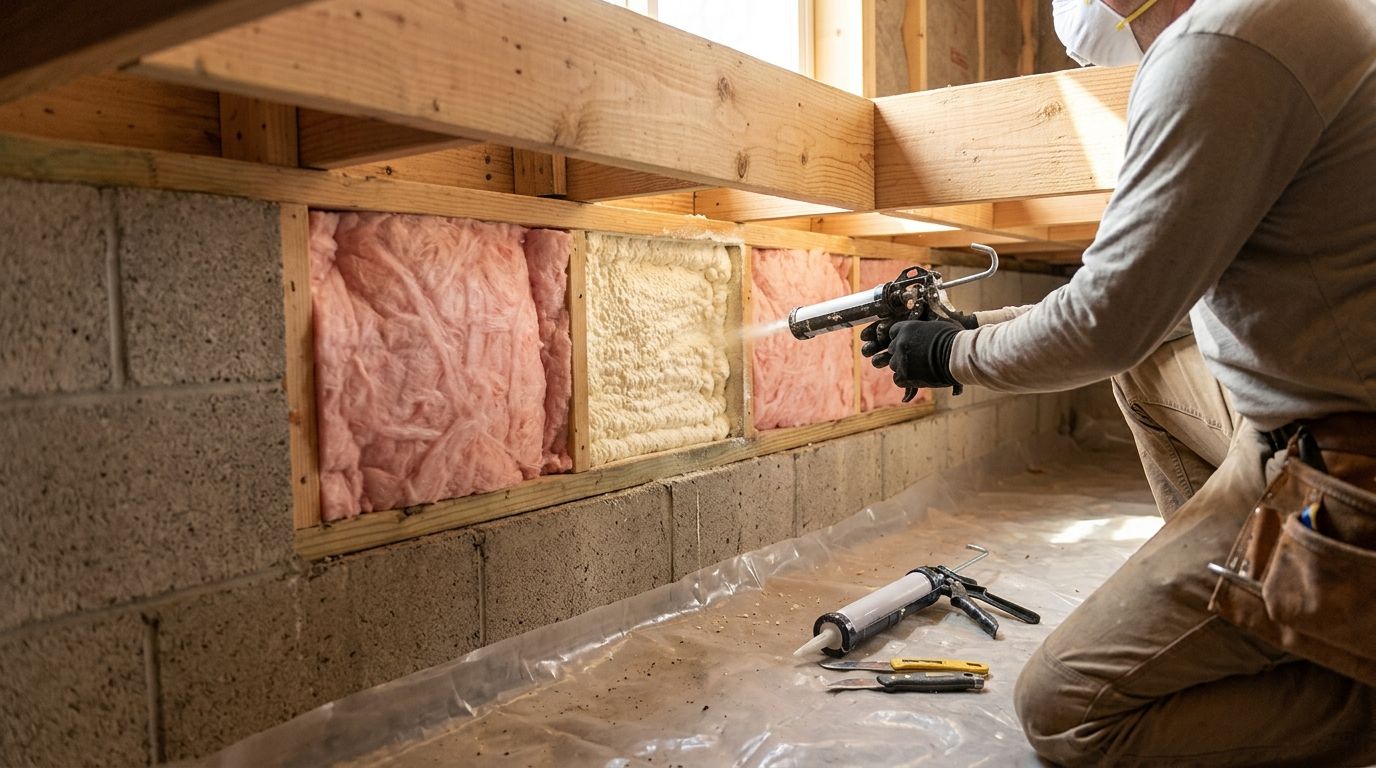
Author: AT Foam

  • Best insulation for rim joists in crawl spaces 2026

    Best insulation for rim joists in crawl spaces 2026

    Rim joists are the single leakiest spot in most Pacific Northwest crawl spaces, and picking the wrong material there wastes money on heating bills every winter. Closed-cell spray foam is the best insulation for rim joists in crawl spaces for most Washington homes because it air-seals and insulates in one step and resists the moisture that wrecks fiberglass; rigid foam board is the better call for a tight DIY budget, and fiberglass batts should be your last option in a vented or damp crawl space.

    TL;DR
    • Closed-cell spray foam wins for rim joists in Pacific Northwest crawl spaces — R-6.5 to R-7 per inch plus an air seal in one pass.
    • Rigid foam board (XPS) is the best DIY option for homeowners insulating rim joists themselves in 2026.
    • Fiberglass batts trap moisture against rim joists and are the weakest choice for Washington’s humid crawl spaces.
    • Open-cell spray foam works only in dry, conditioned crawl spaces — skip it if the space vents to outside air.
    • Pair rim joist spray foam with full crawl space encapsulation if mold or standing moisture is already a problem.
    R-value per inch, by material
    R-6.5 to R-7
    Closed-cell spray foam
    R-3.5 to R-3.7
    Open-cell spray foam
    R-5
    XPS rigid foam board
    R-3.1 to R-3.4
    Fiberglass batts

    Why this matters

    Rim joists sit where the foundation wall meets the floor framing, and in most homes across Seattle, Tacoma, and Olympia that band is a bare wood strip with a stud bay behind it, wide open to outside temperatures. Air leaks through the sill plate and joist bay faster than through almost any other part of the crawl space envelope.

    Get this wrong and the mistake compounds. Fiberglass batts stuffed into a rim joist bay in a humid Pacific Northwest crawl space trap condensation against cold wood, and that moisture feeds rot and mold within a season or two. AT Foam Insulation sees this pattern constantly in older homes around the Sound — batts pulled out damp, joists showing early decay, and a musty smell that traces straight back to a rim joist nobody air-sealed properly.

    What makes the best insulation for rim joists:

    • Air-sealing performance — rim joists leak air more than they lose conductive heat, so a material that seals gaps beats one that just fills space
    • Moisture resistance — vapor-open materials in a damp crawl space invite condensation; closed-cell foam and foil-faced rigid board shed water vapor instead of absorbing it
    • R-value per inch — tight joist bays mean thickness is limited, so R-value density matters more than in open wall cavities
    • Code compliance — most jurisdictions require a thermal or ignition barrier over exposed spray foam in conditioned crawl spaces, which changes install cost and labor
    • Durability in cyclical temperatures — rim joists swing through wider daily temperature ranges than any other framing member, and cheap materials degrade faster there
    • Compatibility with encapsulation — if the crawl space is already sealed or is getting sealed, the rim joist material needs to match that vapor strategy

    At a glance

    Insulation Type Best For Standout Feature Key Limitation
    Closed-cell spray foam Most PNW crawl spaces, moisture-prone sites Air seal + vapor barrier in one application Requires professional installation
    Rigid foam board (XPS) DIY budget projects Cuttable, stable R-5 per inch, no cure time Seams need manual sealing with tape or foam
    Open-cell spray foam Dry, fully conditioned crawl spaces Expands to fill irregular joist bays completely Vapor-open — wrong choice for damp sites
    Fiberglass batts Temporary or code-minimum fixes only Lowest material cost, no special tools Absorbs moisture, sags, poor air seal
    Spray foam + encapsulation Chronic moisture or existing mold Treats the whole crawl space system, not just the rim Highest total project scope

    1. Closed-cell spray foam: best insulation for rim joists in Pacific Northwest crawl spaces

    Closed-cell spray foam is applied directly to the rim joist and sill plate as a liquid that expands and cures into a rigid, air-tight layer. It runs R-6.5 to R-7 per inch, so 2 inches in a standard rim joist bay clears most Washington energy code minimums for that assembly while sealing every gap around wiring and plumbing penetrations.

    Closed-cell spray foam pros:

    • Air-seals and insulates in a single application, no separate caulk or tape step
    • Closed cell structure blocks vapor drive, which matters in vented or semi-vented crawl spaces
    • Adds structural rigidity to the rim joist assembly
    • Holds R-value for the life of the building — it doesn't sag or settle

    Closed-cell spray foam cons:

    • Costs more per square foot than batts or board
    • Needs a licensed applicator for proper mix ratio and cure
    • Codes may require an ignition barrier over exposed foam in accessible crawl spaces

    Closed-cell spray foam pricing: varies by crawl space size and access — check current cost ranges for spray foam projects in the Seattle area before budgeting.

    Best for: homeowners in Seattle, Tacoma, or Olympia dealing with a vented crawl space, existing moisture history, or an older home with irregular rim joist framing. Verdict: Buy.

    2. Rigid foam board (XPS/polyiso): best insulation for rim joists on a DIY budget

    Rigid foam board gets cut to fit each rim joist bay and sealed at the perimeter with canned spray foam or foil tape. XPS runs about R-5 per inch and holds up to moisture far better than fiberglass, which is why it's the standard DIY recommendation for rim joists in building science circles.

    Rigid foam board pros:

    • Homeowner can install it with basic tools over a weekend
    • Doesn't absorb water like fiberglass, so it survives incidental crawl space dampness
    • No cure time, no fumes, no licensed contractor required
    • Cuttable to exact joist bay dimensions for a tight fit

    Rigid foam board cons:

    • Seams and edges need manual sealing — skip that step and you lose most of the air-sealing benefit
    • Lower R-value per inch than closed-cell spray foam in the same bay depth
    • Doesn't conform to irregular framing or penetrations the way spray foam does

    Best for: homeowners handling insulation themselves who have a dry crawl space and standard, square rim joist bays. Verdict: Buy for DIY projects, Hold for irregular framing.

    3. Open-cell spray foam: best insulation for rim joists in dry, conditioned crawl spaces

    Open-cell foam expands more than closed-cell and fills irregular cavities completely, but it runs a lower R-3.5 to R-3.7 per inch and stays vapor-open. That vapor permeability is fine in a fully conditioned, sealed crawl space with no outside air infiltration — it's a liability anywhere moisture can reach the foam from outside.

    Open-cell spray foam pros:

    • Expands to fill gaps and irregular framing more completely than rigid board
    • Lower material cost than closed-cell foam
    • Good sound-dampening properties if the crawl space sits below a living area

    Open-cell spray foam cons:

    • Vapor-open structure absorbs and holds moisture in a humid or vented crawl space
    • Lower R-value per inch means thicker application needed to hit the same target
    • Not recommended for crawl spaces with any history of standing water or high humidity

    Best for: conditioned, fully encapsulated crawl spaces in newer construction with no vent openings. Verdict: Hold — confirm the crawl space is sealed and conditioned before choosing this over closed-cell.

    4. Fiberglass batts: the weakest insulation for rim joists in Washington's climate

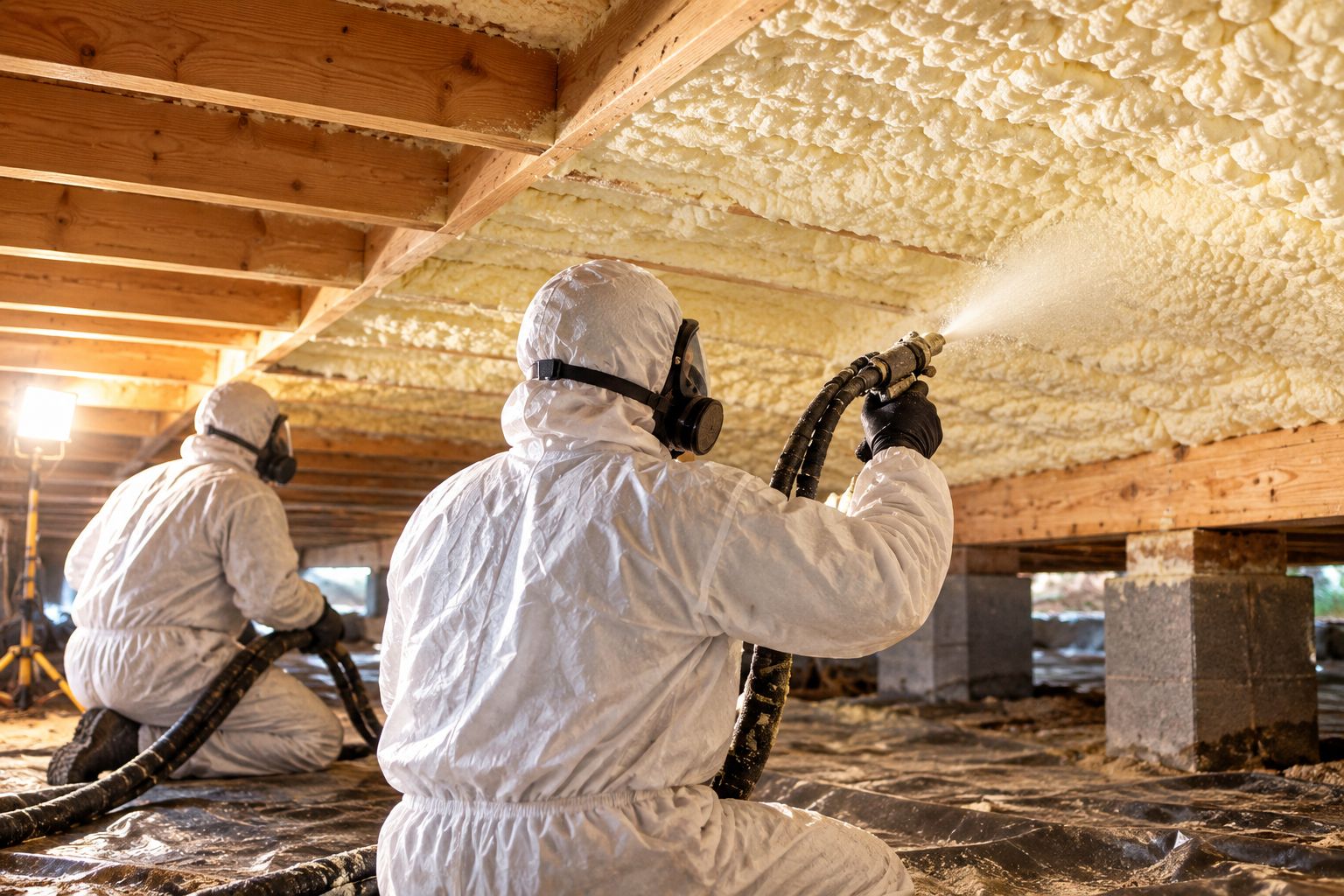
    Fiberglass batts are the cheapest option and the one most rim joists in older Pacific Northwest homes already have stuffed into them. The problem is physical: batts don't seal air leaks, and once humid crawl space air reaches the cold rim joist surface, the fiberglass holds that moisture against the wood instead of letting it dry.
    Fiberglass batt pros:

    • Lowest material cost of any option on this list
    • No tools or curing time required
    • Widely available at any hardware store

    Fiberglass batt cons:

    • Provides no air seal — heat loss continues around and through the batt
    • Absorbs moisture and stays wet in vented or humid crawl spaces
    • Sags and loses R-value within a few years in a rim joist application
    • Common driver of the mold and rot AT Foam finds during crawl space inspections

    Best for: nothing durable — fine only as a stopgap before a proper fix. Verdict: Skip.

    5. Spray foam plus crawl space encapsulation: best for chronic moisture or existing mold

    When a crawl space already shows standing water, high humidity, or visible mold, insulating the rim joist alone doesn't fix the underlying problem. Pairing closed-cell spray foam on the rim joists with a full vapor barrier and sealed crawl space treats the whole system instead of one framing member.

    Spray foam + encapsulation pros:

    • Addresses moisture source, not just the symptom at the rim joist
    • Protects the rim joist investment from future water damage
    • Improves indoor air quality throughout the home, not just crawl space temperature

    Spray foam + encapsulation cons:

    • Larger project scope and higher total cost than rim joist work alone
    • Requires coordinating vapor barrier installation with the spray foam schedule

    Crawl space encapsulation paired with spray foam is the right call for any Washington home where moisture has already caused visible damage — see the dedicated guide on insulation choices for crawl space moisture and mold prevention for the full picture.

    Best for: older PNW homes with a documented moisture or mold history in the crawl space. Verdict: Buy if moisture is already present; otherwise start with rim joist spray foam alone.

    Get a Rim Joist Insulation Quote

    Veteran-owned crews serving Seattle, Tacoma, and Olympia — free on-site estimate.

    How we ranked these

    Each material is judged against the six criteria above, weighted toward air-sealing and moisture resistance since those two factors decide whether rim joist insulation lasts 5 years or 25 in a Pacific Northwest climate. R-value per inch matters, but only after a material proves it won't hold water against the wood it's protecting.

    Closed-cell spray foam earns the top spot because it's the only material on this list that solves air-sealing and moisture resistance at the same time.

    Which rim joist insulation should you choose?

    Default to closed-cell spray foam if the crawl space vents to outside air, has any history of dampness, or sits in an older home anywhere near Puget Sound. Choose rigid foam board only if you're doing the work yourself in a dry, well-framed crawl space and will seal every seam. Treat fiberglass batts as a last resort, and if mold or standing water is already visible, start with a full crawl space encapsulation plan before touching the rim joist at all.

    FAQ

    What’s the best insulation for rim joists in a crawl space?

    Closed-cell spray foam is the best insulation for rim joists in most Pacific Northwest crawl spaces because it air-seals and insulates in one step at R-6.5 to R-7 per inch. Rigid foam board is the next best option for DIY budgets.

    Is closed-cell spray foam better than fiberglass for rim joists?

    Yes, closed-cell spray foam beats fiberglass for rim joists because it blocks air leaks and resists moisture, while fiberglass absorbs humidity and provides no air seal. Fiberglass batts are the weakest option on any rim joist in a vented Washington crawl space.

    Do I need a vapor barrier with rim joist spray foam?

    Closed-cell spray foam already acts as its own vapor barrier, so a separate membrane isn’t needed on the rim joist itself. If the crawl space floor is dirt, a ground vapor barrier is still required as part of full encapsulation.

    Is open-cell spray foam OK for crawl space rim joists?

    Open-cell spray foam only works well on rim joists in a fully conditioned, sealed crawl space with no outside air infiltration. In a vented or humid crawl space, its vapor-open structure absorbs moisture and closed-cell foam is the safer choice.

    What R-value do I need for rim joists in Washington State?

    Most Washington energy code requirements for rim joist assemblies are met with 2 inches of closed-cell spray foam at R-6.5 to R-7 per inch. Exact requirements depend on the local jurisdiction and whether the crawl space is vented or conditioned.

    Can I insulate rim joists myself with rigid foam board?

    Yes, rigid foam board is the standard DIY option for rim joists — cut panels to fit each bay and seal every seam with foil tape or canned spray foam. Skipping the seam sealing step cancels out most of the air-sealing benefit.

    Does spray foam rim joist insulation stop mold?

    Spray foam on the rim joist reduces the moisture and air leakage that feeds mold, but it won’t fix an existing mold problem caused by standing water or ground moisture elsewhere in the crawl space. Chronic moisture issues need full crawl space encapsulation alongside the rim joist work.

    How much does spray foam insulation cost for rim joists in 2026?

    Rim joist spray foam projects are usually priced as part of a broader crawl space insulation job rather than a standalone line item. Get a current quote based on square footage and crawl space access before budgeting.

    One last thing

    Most homeowners insulate the rim joist and stop, but the sill plate directly above it — the wood strip the joist sits on — leaks nearly as much air and almost never gets sealed in a standard fiberglass retrofit. Ask whoever quotes the job whether the sill plate gets foam coverage too; if the quote only mentions the joist bay, you're paying for half the fix.

    Related guides

  • TruTeam alternatives in 2026

    TruTeam alternatives in 2026

    TruTeam installs insulation for production builders on a scale most contractors can't match, and if you're a national homebuilder with dozens of active sites, that scale is exactly what you need. The ceiling shows up the moment you're a single Seattle, Tacoma, or Olympia homeowner trying to book a crawl space or attic retrofit and getting slotted behind builder-account volume. The best TruTeam alternative in 2026 is AT Foam Insulation if you want a veteran-owned local crew for residential or commercial spray foam work in the Pacific Northwest; TruTeam remains the right call if you're a production builder running multi-site new construction.

    TL;DR
    • AT Foam Insulation is the top TruTeam alternative in 2026 for Seattle, Tacoma, and Olympia homeowners needing attic, crawl space, or wall spray foam.
    • TruTeam is built for national builder accounts and new-construction volume, not one-off residential retrofits.
    • USA Insulation fits homeowners who want injection foam for existing wall cavities, not full attic or crawl space jobs.
    • Independent local crews can undercut on price but vary widely on licensing, insurance, and warranty terms.
    • Match the contractor to the job type first: builder volume, wall retrofit, or PNW-specific crawl space and attic work.

    Why this matters

    Insulation contractors aren't interchangeable just because they all spray foam. TruTeam's business runs through builder and contractor accounts tied to new-construction schedules, which is a different service model than a homeowner calling about a damp crawl space in Bellevue. AT Foam Insulation works the opposite end of that spectrum: residential and commercial attic, crawl space, and wall jobs across Seattle, Tacoma, Olympia, and the greater Pacific Northwest, with a veteran-owned crew on every job.

    Picking the wrong type of contractor for the job costs more than a bad estimate. A national installer geared toward builder volume may not prioritize a single-home retrofit the way a regional crew will, and a franchise wall-injection specialist can't touch a full attic re-insulation project. Match the contractor's actual business model to what your house needs in 2026, not just the name you recognize.

    TruTeam alternatives at a glance

    Contractor Best for Standout feature How it differs from TruTeam
    AT Foam Insulation Veteran-owned local spray foam in the PNW Direct residential and commercial attic, crawl space, and wall service Regional retrofit focus vs. TruTeam's national builder-account model
    TruTeam National new-construction builder accounts Nationwide installer footprint under TopBuild Built for volume contracts, not single-home retrofits
    USA Insulation Injection foam for existing wall cavities National franchise network Wall-injection specialist, not a spray foam attic/crawl space contractor
    Independent local crews One-off jobs outside AT Foam's service area Flexible scheduling, often lower quotes No standardized licensing, insurance, or warranty across crews

    1. AT Foam Insulation: best for veteran-owned local spray foam

    AT Foam Insulation is a veteran-owned spray foam contractor working attics, crawl spaces, walls, and commercial buildings across Seattle, Tacoma, Olympia, and the surrounding Pacific Northwest. The crew handles both open-cell and closed-cell applications, which matters because closed-cell spray foam runs a higher R-value per inch than open-cell and holds up better against moisture in crawl spaces — a real issue in this region's wet winters.

    Where AT Foam Insulation shines

    • Local crew that works Seattle, Tacoma, and Olympia directly, not through a subcontracted builder network
    • Handles both residential retrofits and commercial insulation jobs
    • Offers closed-cell spray foam contractors work for crawl spaces and rim joists where moisture resistance matters most

    Where AT Foam Insulation falls short

    • Regional footprint only — not built for multi-state new-construction rollouts the way TruTeam is
    • Spray foam is the core service, so homeowners wanting fiberglass batt or blown cellulose need a different type of contractor entirely

    Best for: Seattle, Tacoma, and Olympia homeowners and small commercial property owners who want a local crew and a spray foam specialist rather than a national builder-account installer.

    Dimension AT Foam Insulation TruTeam
    Service area Seattle, Tacoma, Olympia, greater PNW National
    Core specialty Open-cell and closed-cell spray foam, attic to crawl space Insulation installation across builder contracts
    Business model Direct residential and commercial jobs Builder and contractor accounts
    Best fit Single-home or small commercial retrofit in 2026 Multi-site new-construction developments

    2. TruTeam: best for national builder-account volume

    TruTeam operates as one of the largest insulation installers in the country, backed by TopBuild's national network. That scale is real and it's the reason production homebuilders keep signing with them for multi-site developments.

    Where TruTeam shines

    • National footprint that can service builder contracts across multiple states
    • High-volume capacity for new-construction schedules

    Where TruTeam falls short

    • Business model runs through builder and contractor accounts, which puts one-off residential retrofit calls lower on the priority list
    • No regional specialty in Pacific Northwest problems like crawl space moisture or older-home wall cavities

    Best for: production builders and general contractors running new-construction developments across multiple sites, not individual homeowners booking a single attic or crawl space job.

    3. USA Insulation: best for wall cavity injection foam

    USA Insulation is a national franchise network specializing in injection foam for existing wall cavities, a common retrofit for older homes that were built without wall insulation. It's a narrower service than full attic or crawl space spray foam work.

    Where USA Insulation shines

    • Franchise network with locations across the country
    • Focused specifically on injection foam for finished walls without demolition

    Where USA Insulation falls short

    • Franchise quality and crew experience vary by location since each franchise operates independently
    • Not a spray foam attic or crawl space specialist — wall injection is a different product and process

    Best for: homeowners who specifically need existing wall cavities filled and don't need attic, crawl space, or new-construction spray foam work.

    4. Independent local spray foam crews: best for flexibility outside the PNW

    Homeowners outside AT Foam Insulation's Seattle, Tacoma, and Olympia service area sometimes go with an independent local crew instead of a national name.

    Where independent crews shine

    • Often more flexible on scheduling for a single small job
    • Quotes can run lower than a franchise or national installer

    Where independent crews fall short

    • Licensing, insurance, and warranty terms vary crew to crew, so vetting takes real effort
    • No standardized process across jobs the way a dedicated regional company runs

    Best for: homeowners outside the Pacific Northwest who are willing to vet licensing and insurance directly before signing a contract.

    Why people switch from TruTeam

    TruTeam's structure is built around builder and contractor accounts tied to new-construction volume — that's the core of its national business. Homeowners calling about a single attic, crawl space, or wall job in 2026 are working against a scheduling system designed for production builders, not walk-in retrofit demand.

    • Builder-first scheduling: single-home retrofit requests compete with multi-site builder contracts for crew time
    • No PNW-specific specialty: crawl space moisture and older Pacific Northwest wall assemblies need local knowledge, not just national capacity
    • Local accountability: a regional crew like the one behind spray foam insulation contractors in Seattle and Tacoma work answers directly to the homeowner, not a corporate builder account

    “TruTeam quotes builder volume. A homeowner with a wet crawl space needs a contractor who quotes the crawl space.”

    Get a free spray foam quote

    Veteran-owned crew serving Seattle, Tacoma, and Olympia.

    When staying with TruTeam is the right call

    If you're a production builder or general contractor running new-construction developments across multiple sites in different states, TruTeam's national scale still makes sense — that's the exact use case it's built for. Individual homeowners in the Seattle, Tacoma, or Olympia area doing a single retrofit job are the ones who tend to find a regional spray foam specialist a better fit in 2026.

    FAQ

    What is the best TruTeam alternative in 2026?

    AT Foam Insulation is the best TruTeam alternative in 2026 for homeowners and small commercial properties in Seattle, Tacoma, and Olympia who need a local, veteran-owned spray foam crew rather than a national builder-account installer.

    Is TruTeam only for new construction?

    TruTeam’s business is centered on builder and contractor accounts tied to new-construction volume, though it isn’t exclusively new construction. Homeowners booking a single retrofit job typically get faster scheduling from a regional contractor.

    Does USA Insulation do attic spray foam?

    USA Insulation specializes in injection foam for existing wall cavities, not full attic or crawl space spray foam applications. For attic or crawl space work, look for a dedicated spray foam contractor instead.

    Is closed-cell or open-cell spray foam better for crawl spaces?

    Closed-cell spray foam holds up better against moisture in crawl spaces because it has a higher R-value per inch and resists water absorption better than open-cell foam. Open-cell is more common in attic rafter bays where moisture exposure is lower.

    Are independent local insulation crews reliable?

    Independent local crews vary widely on licensing, insurance, and warranty terms since there’s no standardized process across contractors. Verify licensing and insurance directly before signing with an independent crew.

    Does AT Foam Insulation work outside Seattle and Tacoma?

    AT Foam Insulation services Seattle, Tacoma, Olympia, and the greater Pacific Northwest for residential and commercial spray foam insulation jobs.

    What’s the difference between a franchise insulation company and a regional contractor?

    A franchise network like USA Insulation has independently operated locations with varying crew experience, while a regional contractor runs one consistent crew and process across its service area.

    One last thing

    The detail that gets missed most in 2026 insulation quotes: ask whether the crew doing the work is direct staff or subcontracted through a builder account, because that answer tells you more about scheduling reliability than any brochure will.

    Related guides

  • Specialty Insulation alternatives in 2026

    Specialty Insulation alternatives in 2026

    Specialty insulation products — reflective barriers, aerogel blankets, insulated panel kits sold direct-to-homeowner — solve a narrow problem well: they add R-value fast in a spot a contractor can't easily reach. The ceiling shows up the moment you need whole-house air sealing, moisture control in a crawl space, or a product a Washington code inspector will actually sign off on. The best specialty insulation alternative in 2026 is AT Foam's spray foam service if you need air sealing and long-term R-value in one job; mineral wool batts if you need soundproofing without a contractor crew.

    TL;DR
    • Spray foam from AT Foam outperforms most specialty insulation kits on air sealing and stays effective without re-application through 2026.
    • Blown-in fiberglass and cellulose remain the cheapest whole-attic option, per the cost breakdown for Seattle homes.
    • Mineral wool is the specialty insulation alternative for soundproofing home offices and studios — not for crawl spaces.
    • Rigid foam board still beats spray foam on basement wall jobs where a DIY-friendly panel fits the budget.
    • Reflective radiant barriers rarely justify their cost in Pacific Northwest attics, where summer heat gain is a minor issue compared to moisture.

    Why this matters

    Homeowners searching for specialty insulation alternatives are usually staring at a product marketed as a one-size-fix — a reflective roll, a spray-in-a-can kit, an aerogel blanket sold online. Those products work in a lab. In a Seattle attic with 60% humidity swings or a Tacoma crawl space sitting on wet soil, they don't address the actual failure point: air leakage and moisture, not just heat transfer.

    Washington's climate zone (Marine Zone 4C) rewards insulation that also stops air movement, because that's where the real energy loss and mold risk sit. That's a different job than most specialty products are built for. The cost comparison for Seattle homes breaks down what each option actually runs before you commit.

    Specialty insulation alternatives at a glance

    Option Best for Standout feature How it differs from specialty insulation kits
    Spray foam (AT Foam) Attics, crawl spaces, whole-home air sealing Air seal + insulate in one application Installed by a licensed crew, not a DIY kit; seals gaps specialty panels leave open
    Blown-in fiberglass/cellulose Budget attic retrofits Lowest cost per square foot No air-sealing function on its own; needs a separate air barrier step
    Mineral wool Soundproofing, fire-resistant walls Dense batt blocks sound transfer Specialty kits rarely address sound; mineral wool is purpose-built for it
    Rigid foam board Basement walls, rim joists High R-value per inch in a thin panel DIY-installable like most specialty products, but code-rated for structural walls
    Reflective radiant barrier (specialty) Hot, sun-facing attics Reflects radiant heat Minimal benefit in Marine Zone 4C; doesn't address air leakage or moisture
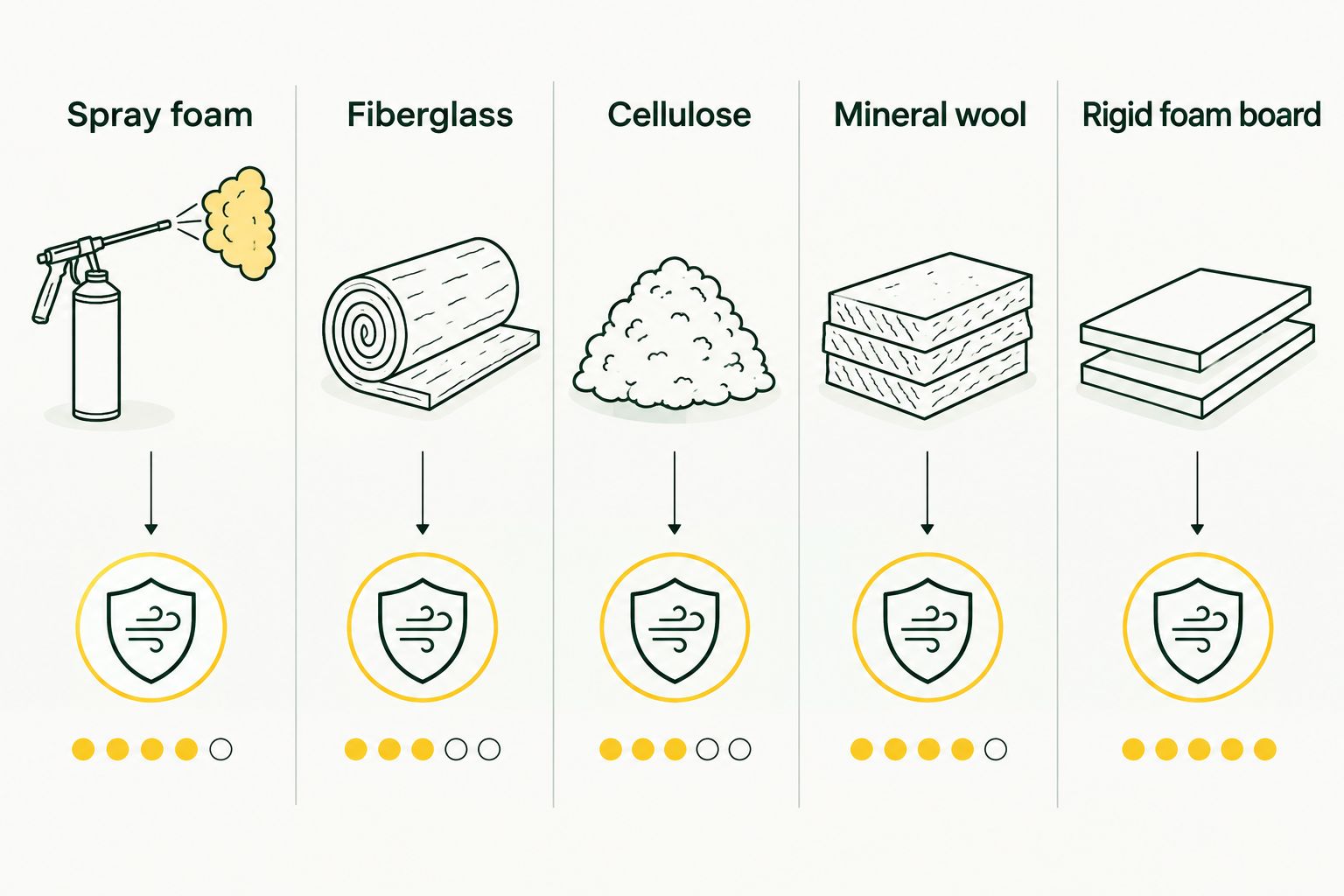
    Side-by-side comparison of five insulation types by air sealing strength
    Air sealing, not just R-value, is what separates spray foam from the rest of the list.

    1. Spray foam insulation (AT Foam): best for whole-home air sealing

    Spray foam is the only option on this list that insulates and air-seals in the same pass. Closed-cell foam runs roughly R-6.5 per inch; open-cell runs closer to R-3.5 per inch, both installed by a crew rather than shipped as a kit. That matters in older Pacific Northwest homes where gaps around wiring, plumbing, and framing leak more heat than the insulation material itself ever will.
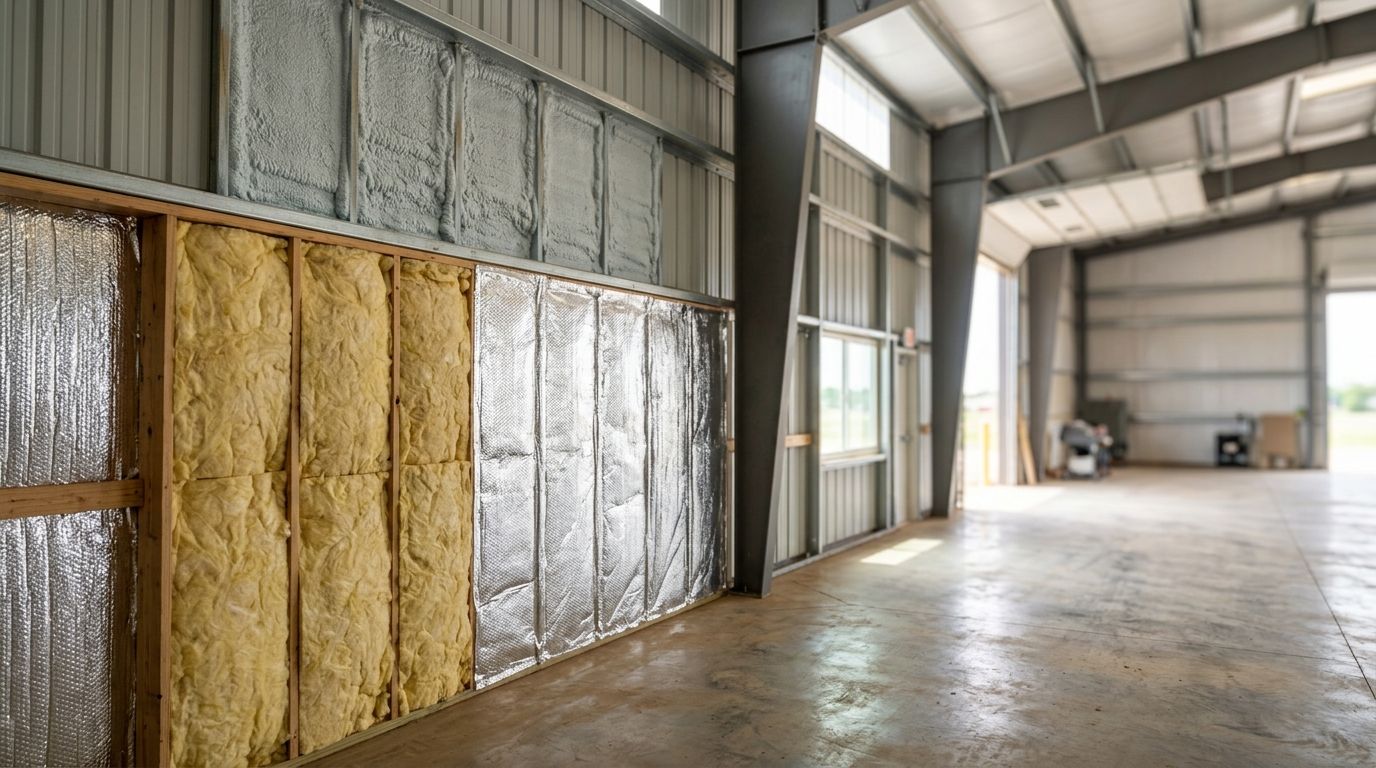
    AT Foam applies spray foam across attics, crawl spaces, and walls for homes in Seattle, Tacoma, and Olympia, and the R-value ranking for Washington homes shows where foam lands against batts and blown-in options.

    Where spray foam shines

    • Air-seals gaps that reflective barriers and DIY kits can't reach
    • Holds R-value over time without settling like blown-in fiberglass can
    • Cuts moisture intrusion in crawl spaces better than most specialty vapor products

    Where spray foam falls short

    • Costs more upfront than blown-in fiberglass or a basic specialty kit
    • Requires a licensed crew — not a weekend DIY project
    • Overkill for a single soundproofing job where mineral wool does the work cheaper

    Best for: homeowners tackling attic or crawl space air leaks and moisture in one project.

    Dimension Spray foam (AT Foam) Specialty insulation kit
    Air sealing Continuous, sprayed into gaps Panel or roll seams leave gaps
    Installation Licensed crew DIY, variable quality
    Moisture resistance High, closed-cell option available Depends on product, often none
    Long-term R-value Stable, doesn't settle Varies, some degrade with humidity

    2. Blown-in fiberglass or cellulose: best for budget attic retrofits

    Blown-in insulation is still the cheapest way to add R-value across a large attic floor. It doesn't air-seal on its own, so it needs a separate sealing pass to perform the way manufacturers claim — a step most specialty insulation marketing skips entirely.

    Where it shines

    • Lowest material and labor cost per square foot
    • Fast install across large, open attic floors

    Where it falls short

    • Settles over time, losing R-value without you noticing
    • Does nothing for air leaks or moisture on its own

    Best for: budget-conscious attic jobs where air sealing is handled separately.

    3. Mineral wool: best for soundproofing home offices and studios

    Mineral wool batts are dense enough to block sound transfer in a way spray foam and fiberglass don't match, and they carry a fire rating most specialty products lack. For a home office or studio build, that's the deciding factor over R-value alone.

    The insulation guide for soundproofing home offices and studios covers where mineral wool beats foam for this specific use case.

    Where it shines

    • Best sound-dampening performance on this list
    • Fire-resistant without added treatment

    Where it falls short

    • Heavier and more expensive per square foot than fiberglass
    • Doesn't air-seal a crawl space or attic the way spray foam does

    Best for: interior walls where noise control matters more than moisture control.

    4. Rigid foam board: best for basement walls

    Rigid foam board delivers roughly R-5 per inch in a thin, code-rated panel — a real advantage in basements where wall cavity depth is limited. It's also one of the few alternatives that's genuinely DIY-friendly for a homeowner comfortable with basic tools.

    The best insulation for basement walls in the Pacific Northwest lays out where rigid board beats spray foam on cost per basement project.

    Where it shines

    • High R-value per inch in tight wall cavities
    • Installable without a specialty contractor crew

    Where it falls short

    • Seams need taping or foaming to actually air-seal
    • Doesn't reach irregular crawl space framing the way sprayed foam does

    Best for: basement wall retrofits on a defined budget.

    5. Reflective radiant barrier: best for sun-facing attics in hot climates

    Radiant barriers reflect heat rather than slow conduction, which helps in climates with intense summer sun. In Washington's Marine Zone 4C, summer heat gain is a smaller problem than winter air leakage and moisture, so the return on a radiant barrier is limited here compared to hotter states.

    Where it shines

    • Genuinely useful in high-heat, high-sun climates
    • Low material cost

    Where it falls short

    • Minimal benefit against Pacific Northwest winter heat loss
    • No air-sealing or moisture control function

    Best for: attics in climates with strong, direct summer sun — a secondary concern for most Washington homes.

    Get a free spray foam quote

    AT Foam serves Seattle, Tacoma, and Olympia attics, crawl spaces, and walls.

    Why people switch from specialty insulation products

    • Air leaks persist after install. Panels and rolls leave seams; spray foam doesn't.
    • Moisture shows up in crawl spaces within a year or two. Reflective and foam-board kits marketed for crawl spaces rarely address ground moisture the way a sealed foam application does.
    • R-value claims don't hold up once settling or gaps are factored in, which is why the R-value ranking for Washington homes is worth checking before buying based on a package label alone.

    When specialty insulation is still the right call

    If you're insulating a single small space — a shed, a closet, a short duct run — a specialty kit or rigid foam board panel can be the faster, cheaper answer. Spray foam earns its cost on jobs where air sealing and moisture control matter across a whole attic, crawl space, or wall system, not a five-square-foot patch. Match the tool to the job size, not the marketing.

    FAQ

    What’s the best specialty insulation alternative for Washington homes in 2026?

    Spray foam is the best alternative for whole-home air sealing and moisture control in Washington’s Marine Zone 4C climate. Mineral wool is the better choice specifically for soundproofing interior walls.

    Is spray foam better than specialty insulation kits?

    Spray foam air-seals continuously while it insulates, which most specialty kits and panels can’t do on their own. It costs more upfront but avoids the gaps and settling issues common to DIY specialty products.

    Does blown-in fiberglass work as a specialty insulation alternative?

    Yes, for budget attic retrofits blown-in fiberglass is the cheapest option per square foot. It needs a separate air-sealing step to match the performance most specialty products claim on their packaging.

    How much does spray foam insulation cost in Seattle in 2026?

    Cost depends on square footage, foam type, and the space being treated. The Seattle spray foam cost guide breaks down current pricing by project type.

    Is mineral wool a good specialty insulation alternative for soundproofing?

    Yes, mineral wool blocks sound transfer better than spray foam or fiberglass and carries a fire rating most specialty products lack. It’s not built for crawl space moisture control, so pair it with a different option there.

    What insulation works best for older Pacific Northwest homes?

    Older PNW homes typically have irregular framing and existing air leaks, which favors spray foam’s ability to seal gaps that batts and specialty panels miss. Moisture history in the crawl space should factor into the final choice.

    Do radiant barriers make sense in Washington attics?

    Radiant barriers help most in hot, sun-facing climates where summer heat gain drives cooling costs. In Washington, winter air leakage and moisture are the bigger issues, so the return is limited compared to spray foam or blown-in insulation.

    Is rigid foam board a real alternative to spray foam for basements?

    For basement walls with limited cavity depth, rigid foam board delivers strong R-value per inch and is DIY-installable. Seams still need sealing to match the air-tightness spray foam provides in one application.

    One last thing

    The insulation that wins on a spec sheet isn't always the one that solves your actual problem — a crawl space with standing moisture history needs a moisture strategy first, R-value second. Check the insulation options ranked by cost for Seattle homeowners before deciding, since the cheapest material on paper often costs more once air sealing and moisture fixes get added back in during 2026.

    Related guides

  • Best commercial insulation options for Washington businesses 2026

    Best commercial insulation options for Washington businesses 2026

    Washington's building code (WSEC 2021, still the enforced baseline through 2026) pushes commercial projects toward higher R-values and tighter air sealing than most contractors quote for by default — picking the wrong insulation type on a Tacoma warehouse or a Seattle office retrofit means paying for compliance twice.

    TL;DR
    • Closed-cell spray foam insulation wins for below-grade and moisture-prone commercial spaces in Washington’s wet climate.
    • Open-cell spray foam insulation is the best commercial insulation option for interior sound control and air sealing in conditioned buildings.
    • Mineral wool batt is the pick for fire-rated partition walls in multi-tenant commercial buildings.
    • Blown-in fiberglass stays the budget option for large, open, uncomplicated attic runs.
    • Rigid foam board handles continuous exterior insulation on commercial retrofit walls best.

    Why this matters

    Most commercial insulation decisions in Washington get made on price per square foot alone, and that number ignores moisture, air leakage, and fire code — three things the Pacific Northwest climate punishes hard. A crawl space under a Kent restaurant with fiberglass batts will grow mold within a season if it floods once; the same space with closed-cell spray foam doesn't care. Picking the right material for the actual use case, not the cheapest one on the shelf, is what separates a 20-year insulation job from a 5-year callback.

    The verdict

    Best overall for Washington commercial buildings: closed-cell spray foam insulation. Best for interior air sealing and noise control: open-cell spray foam insulation. Best for fire-rated partition walls: mineral wool batt. Best budget option for large open attics: blown-in fiberglass. Best for continuous exterior retrofits: rigid foam board.

    What makes the best commercial insulation for Washington

    • R-value per inch — how much thermal resistance you get per dollar of wall or attic depth, which matters more in commercial buildings with tight cavity space
    • Moisture and vapor resistance — critical in a state where crawl spaces flood and roofs see 150+ days of rain a year
    • Air sealing capacity — commercial HVAC systems fight leaks constantly; a material that seals gaps cuts load on the equipment
    • Fire rating — code-driven for multi-tenant and mixed-use buildings, non-negotiable on partition walls
    • Installation disruption — how much downtime a business absorbs during the retrofit
    • Long-term stability — whether the material sags, settles, or degrades with moisture exposure over 10-20 years

    Commercial insulation options at a glance

    Insulation Type Best For Standout Feature Key Limitation
    Closed-cell spray foam Crawl spaces, below-grade, moisture-heavy areas ~R-6.5 per inch, doubles as a vapor barrier Higher material cost per board foot
    Open-cell spray foam Interior walls, attics, sound dampening Expands to fill gaps, cuts airborne noise Not a vapor barrier on its own
    Mineral wool batt Fire-rated partition walls Naturally fire-resistant, holds shape Lower R-value per inch than spray foam
    Blown-in fiberglass Large open attics, budget retrofits Fast installation over big areas Settles over time, air leaks persist
    Rigid foam board Exterior continuous insulation Consistent R-value, no thermal bridging Requires taped seams to seal properly

    1. Closed-cell spray foam: best commercial insulation for moisture-prone spaces

    Closed-cell spray foam insulation runs around R-6.5 per inch, the highest of any option on this list, and it forms a rigid, water-resistant layer as it cures. In Washington's wet-side climate, that combination matters most in crawl spaces, below-grade mechanical rooms, and any commercial structure near grade where groundwater is a recurring problem.

    Closed-cell spray foam pros:

    • Acts as its own vapor barrier — no separate poly sheeting needed
    • Adds structural rigidity to the assembly it's sprayed into
    • Highest R-value per inch means thinner cavities still hit code minimums
    • Resists mold growth even after intermittent moisture exposure

    Closed-cell spray foam cons:

    • Costs more per board foot than open-cell or batt options
    • Requires a trained crew — a bad spray job leaves voids that are hard to inspect after cure
    • Not the right call for large open attic runs where budget matters more than moisture control

    Best for: crawl spaces, basements, and any commercial space with recurring moisture exposure. Verdict: Buy.

    2. Open-cell spray foam: best commercial insulation for interior air sealing and sound control

    Open-cell spray foam expands more than closed-cell during application, filling irregular gaps around wiring, ductwork, and framing that batt insulation simply can't reach. At roughly R-3.7 per inch, it trades some thermal performance for superior air sealing and noticeable sound dampening between floors or tenant spaces.

    Open-cell spray foam pros:

    • Fills irregular cavities completely, cutting air leakage at the source
    • Reduces airborne noise transfer between commercial units or floors
    • Lower material cost than closed-cell for the same square footage
    • Expands to reach tight framing without gaps

    Open-cell spray foam cons:

    • Lower R-value per inch means thicker cavities are needed to hit the same target
    • Absorbs moisture if exposed to a leak, so it's a poor fit below grade
    • Still needs a separate air barrier in some assemblies depending on code review

    Best for: interior walls, conditioned attics, and multi-tenant buildings where noise control matters as much as thermal performance. Verdict: Buy.

    3. Mineral wool batt: best commercial insulation for fire-rated partition walls

    Mineral wool batt insulation is the standard pick when a commercial partition wall needs to meet a fire-rated assembly requirement. It's naturally non-combustible, holds its shape without sagging over decades, and lands around R-4.2 per inch, ahead of standard fiberglass but behind either spray foam type.

    Mineral wool pros:

    • Naturally fire-resistant, which simplifies meeting fire-rated wall assembly requirements
    • Doesn't sag or settle inside the cavity over time
    • Handles moisture exposure better than fiberglass without losing R-value
    • Cuts sound transmission well in multi-tenant walls

    Mineral wool cons:

    • Lower R-value per inch than either spray foam option
    • Doesn't seal air gaps the way spray foam does — batts still leave seams
    • Installation is more labor-intensive per square foot than blown-in options

    Best for: fire-rated partition walls in multi-tenant commercial buildings. Verdict: Hold — use it where code requires a fire rating, not as a general-purpose thermal upgrade.

    4. Blown-in fiberglass: best budget commercial insulation for large open attics

    Blown-in fiberglass covers large, open, uncomplicated attic spaces fast, which is why it stays the budget default on big commercial roof decks with few penetrations. R-value runs R-2.2 to R-2.7 per inch depending on density, the lowest on this list, so it needs more depth to hit the same target as spray foam.

    Blown-in fiberglass pros:

    • Fastest installation method for large open attic areas
    • Lowest material cost per square foot among the five options
    • No cure time — the space is usable again almost immediately

    Blown-in fiberglass cons:

    • Settles over years, losing effective R-value if not topped off
    • Does nothing to seal air leaks around ductwork, wiring, or framing gaps
    • Performs poorly if it ever gets wet — it doesn't dry out or recover R-value

    Best for: large, open commercial attics with a fixed budget and no moisture concerns. Verdict: Hold — fine for the right space, wrong choice near any leak risk.

    5. Rigid foam board: best for exterior continuous insulation retrofits

    Rigid foam board — XPS or polyiso — gets used on the exterior of commercial walls during a retrofit to add continuous insulation without opening up interior finishes. Polyiso runs close to R-6 per inch, XPS closer to R-5 per inch, both ahead of fiberglass batt but requiring careful seam taping to actually perform at rated value.

    Rigid foam board pros:

    • Adds continuous insulation with no thermal bridging through studs
    • Doesn't require interior disruption — installs on the exterior face
    • Consistent, predictable R-value across the whole panel

    Rigid foam board cons:

    • Seams must be taped and sealed correctly or air leakage undercuts the R-value
    • Adds thickness to the exterior wall assembly, which can affect trim and flashing details
    • Doesn't address interior air sealing or existing cavity gaps

    Best for: commercial exterior retrofits where interior operations can't be disrupted. Verdict: Buy — for exterior work specifically, not as a substitute for cavity insulation.

    How we ranked these

    Each type got scored against the six criteria above — R-value per inch, moisture resistance, air sealing, fire rating, installation disruption, and long-term stability — then matched to the commercial use case where it scores highest instead of forcing every option into one leaderboard. That's why closed-cell spray foam insulation and mineral wool batt aren't competing for the same slot: one solves a moisture problem, the other solves a fire code requirement, and a Washington commercial building often needs both in different parts of the same structure.

    Get a free commercial insulation quote

    Veteran-owned crews serving Seattle, Tacoma, and Olympia.

    Which commercial insulation should you choose?

    For most Washington commercial buildings in 2026, the honest default is a mix: closed-cell spray foam insulation in crawl spaces and below-grade areas, open-cell spray foam insulation in conditioned interior walls and attics, and mineral wool batt anywhere code demands a fire rating. Blown-in fiberglass and rigid foam board earn their spots on budget-driven attic jobs and exterior retrofits, respectively, but they're the exception, not the default, once moisture or fire code enters the picture. Checking real installed pricing for your building type is worth doing before committing — the spray foam insulation cost breakdown for Seattle covers what actually drives the number up or down.

    FAQ

    What is the best commercial insulation for Washington state?

    Closed-cell spray foam insulation is the best overall choice for Washington commercial buildings because it resists the moisture common in crawl spaces and below-grade areas while hitting the highest R-value per inch of any common option in 2026.

    Is spray foam better than fiberglass for commercial buildings?

    Spray foam insulation seals air leaks and resists moisture better than fiberglass, but fiberglass costs less and installs faster over large open attic areas, so the right pick depends on whether moisture or budget is the bigger concern.

    Does commercial insulation in Washington need to meet a fire rating?

    Multi-tenant and mixed-use commercial buildings in Washington often require fire-rated wall assemblies at partition walls, which is where mineral wool batt is typically specified over spray foam or fiberglass.

    How much R-value does commercial spray foam add per inch?

    Closed-cell spray foam adds roughly R-6.5 per inch, while open-cell spray foam adds roughly R-3.7 per inch, both ahead of standard fiberglass batt at R-3.1 to R-3.4 per inch.

    Can rigid foam board replace spray foam in a commercial retrofit?

    Rigid foam board works well as continuous exterior insulation on a retrofit but doesn’t seal interior air leaks the way spray foam does, so most projects use it alongside cavity insulation rather than instead of it.

    Is blown-in fiberglass a good long-term option for commercial attics?

    Blown-in fiberglass works for large open attics on a budget but settles over time and loses R-value, so it needs periodic top-offs to keep performing at its rated level.

    How do I find a spray foam insulation contractor in Seattle or Tacoma?

    Look for a licensed, insured crew with commercial experience and real job-site references rather than stock photography, since spray foam quality depends entirely on correct application depth and mix ratio.

    One last thing

    The biggest mistake on Washington commercial jobs isn't picking the wrong insulation type — it's picking one type for the whole building. A warehouse with a below-grade loading dock, a conditioned office wing, and a fire-rated tenant partition needs three different materials in three different zones, and a contractor who quotes one blanket solution across all of them is cutting corners somewhere. Before signing off on a bid for 2026, ask which material goes where and why — a real answer names the zone, not just the square footage.

    Related guides

  • Insulation types ranked by R-value for Washington homes 2026

    Insulation types ranked by R-value for Washington homes 2026

    Best overall: closed-cell spray foam, rated R-6 to R-7 per inch — the highest R-value per inch of any material used in Washington homes. Best for basement and below-grade walls: polyiso rigid foam board, at R-6 to R-6.5 per inch. Best budget option: fiberglass batts, at R-2.9 to R-3.8 per inch. Here's how every insulation type stacks up when you rank them by R-value, and which one actually fits your project in 2026.

    TL;DR
    • Closed-cell spray foam ranks highest at R-6 to R-7 per inch, the top pick for crawl spaces and rim joists.
    • Fiberglass batts stay the budget option at R-2.9 to R-3.8 per inch for new stud-cavity construction.
    • Polyiso rigid foam board hits R-6 to R-6.5 per inch, the strongest fit for Washington basement walls.
    • Blown-in fiberglass ranks lowest at R-2.2 to R-2.7 per inch, useful only as an attic top-up.
    • Insulation types ranked by R-value alone miss moisture performance, the real risk in Pacific Northwest crawl spaces.
    R-value by material
    R-6 to R-7
    Closed-cell spray foam per inch
    R-49
    WA attic code target
    R-2.2 to R-2.7
    Blown-in fiberglass per inch

    Why this matters

    R-value tells you how well a material resists heat flow per inch. That's one line on a spec sheet, not the whole job. A material rated R-6 per inch does nothing for you if it doesn't stop the moisture rotting floor joists in a Tacoma crawl space or seal the air leaks driving up heating bills in a Seattle attic.

    AT Foam Insulation works spray foam jobs across Seattle, Tacoma, and Olympia and sees the other materials on this list installed by other crews on the same street. Ranking insulation types by R-value alone still tells you which material carries the most heat resistance per inch in 2026 — that's the starting point, not the finish line.

    “R-value tells you how much heat resistance you get per inch. It says nothing about whether the material will still be dry in five years.”

    Insulation types ranked by R-value: at a glance

    Insulation type Best for R-value per inch Key limitation
    Closed-cell spray foam Crawl spaces and rim joists R-6 to R-7 Rigid once cured, harder to modify later
    Polyiso rigid foam board Basement walls R-6 to R-6.5 Loses R-value in cold outdoor exposure
    Open-cell spray foam Attic air sealing and sound control R-3.5 to R-3.8 Needs a separate vapor strategy in some assemblies
    Mineral wool (rock wool) Fire-resistant, soundproof walls R-3.0 to R-4.3 Fewer installers stock it regionally
    Cellulose (blown-in) Retrofitting older homes R-3.2 to R-3.8 Can settle over time if under-filled
    Fiberglass batts New construction stud cavities R-2.9 to R-3.8 Loses R-value fast with gaps or compression
    Blown-in fiberglass Attic top-ups R-2.2 to R-2.7 Lowest R-value per inch on this list
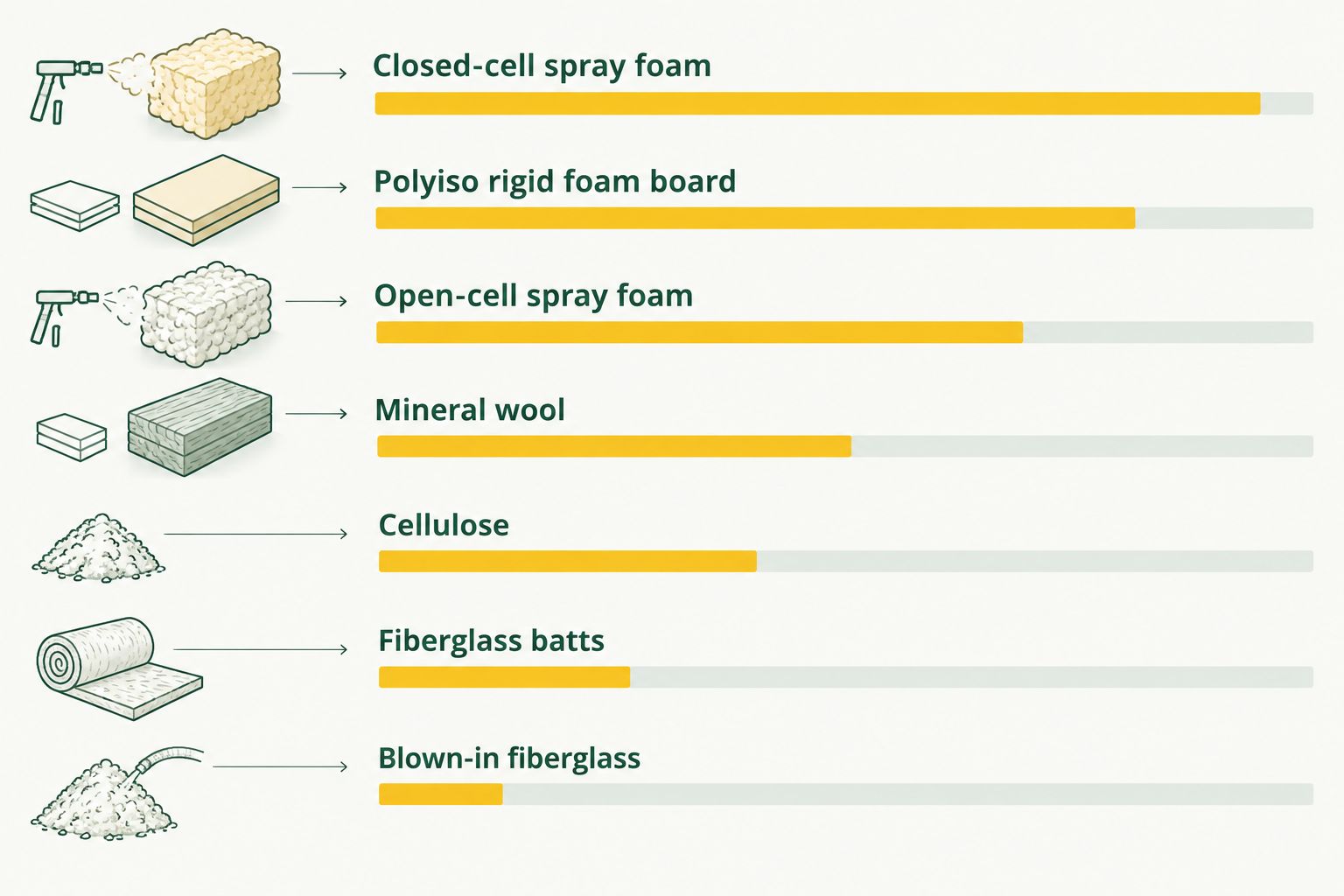
    Seven insulation types stacked and ranked from highest to lowest R-value per inch
    Closed-cell spray foam tops the R-value ranking; blown-in fiberglass sits at the bottom.

    What makes an insulation type rank higher

    • R-value per inch — how much heat resistance you get for the space you have to fill
    • Air sealing — whether the material stops air movement or just slows heat transfer
    • Moisture and mold resistance — critical in Pacific Northwest crawl spaces and rim joists
    • Fire resistance — matters more in shared walls, garages, and commercial builds
    • Settling and longevity — does the material hold its R-value for decades or compress and gap
    • Fit for retrofit vs. new construction — some materials only make sense with open stud cavities

    1. Closed-cell spray foam: best insulation type for crawl spaces and rim joists

    Closed-cell spray foam expands to about twice its liquid volume, cures rigid, and doubles as an air and vapor barrier in one application. It's the densest material on this list and the only one that adds structural rigidity to the assembly it fills.

    Closed-cell spray foam pros:

    • Highest R-value per inch on this list, R-6 to R-7
    • Acts as an air seal and vapor barrier at the same time
    • Resists water absorption, which matters in rim joist insulation applications prone to condensation
    • Adds rigidity to the framing it's applied to

    Closed-cell spray foam cons:

    • Costs more per board foot than fiberglass or cellulose
    • Rigid once cured, so it's harder to run new wiring or plumbing through later
    • Requires a trained crew to apply correctly
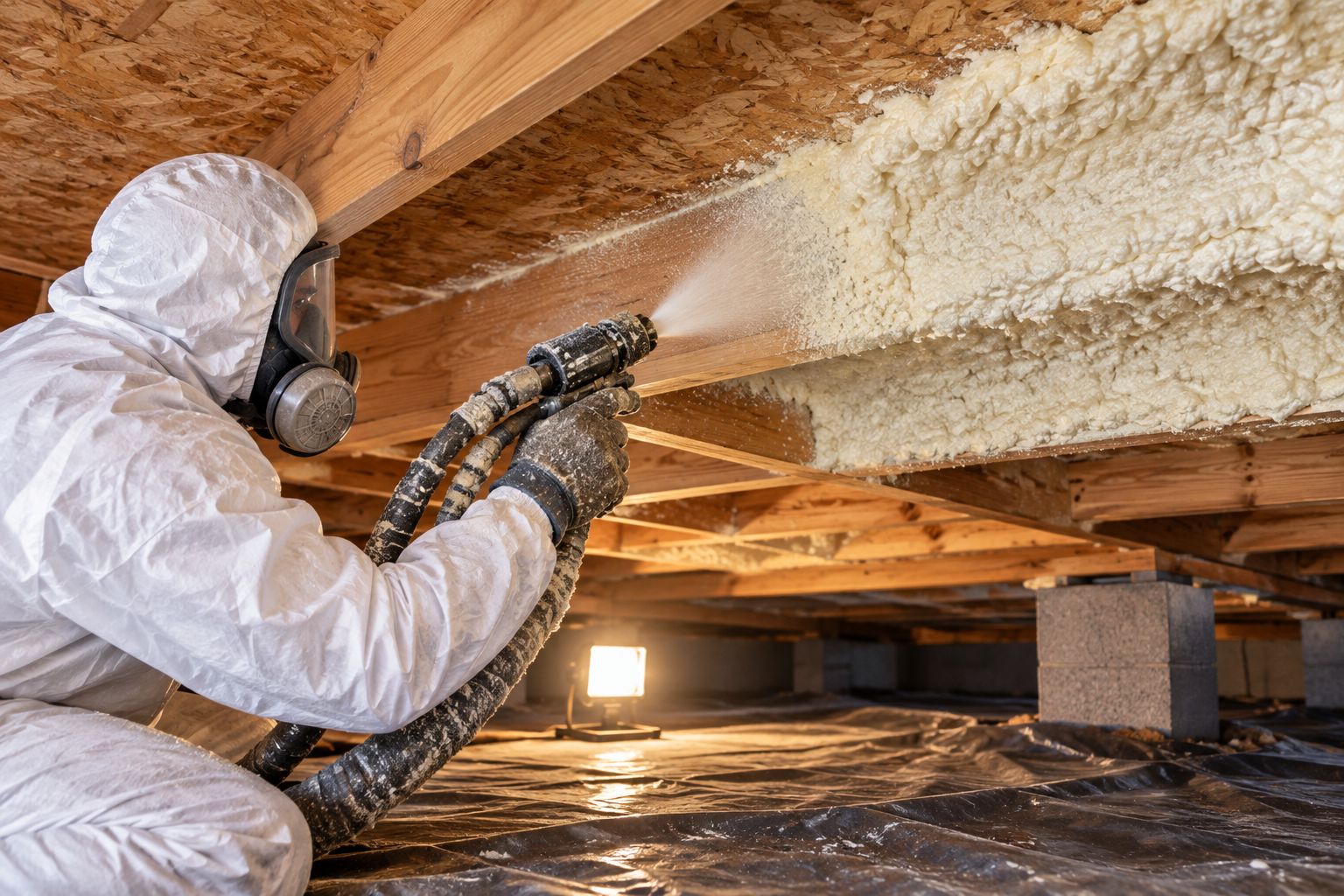
    Worker applying closed-cell spray foam to crawl space floor joists
    Closed-cell foam seals rim joists and floor framing in one pass with no batts to cut around plumbing.

    Best for: crawl spaces, rim joists, and any assembly where moisture control matters as much as R-value. Verdict: Buy.

    2. Polyiso rigid foam board: best insulation type for basement walls

    Polyisocyanurate board ships in rigid sheets and posts the second-highest R-value per inch on this list. It's a common choice for basement wall insulation projects because it installs against masonry without a spray crew.

    Polyiso rigid foam board pros:

    • R-6 to R-6.5 per inch, close to closed-cell spray foam without spray equipment
    • Rigid sheets install flat against foundation walls
    • Doesn't absorb water the way fiberglass batts do

    Polyiso rigid foam board cons:

    • R-value drops noticeably in cold outdoor exposure, a documented limitation of the material
    • Seams need taping to get full performance, adding labor
    • Doesn't fill irregular framing gaps the way spray foam does

    Best for: basement and below-grade walls where a rigid, flat surface makes installation easier. Verdict: Buy.

    3. Open-cell spray foam: best insulation type for attic air sealing and sound control

    Open-cell spray foam expands more than closed-cell and cures softer, which makes it cheaper per board foot while still sealing air movement through attic assemblies. It's a common upgrade path for homeowners comparing options with attic insulation contractors in Seattle.

    Open-cell spray foam pros:

    • Seals air leaks that batts and blown-in materials can't touch
    • Dampens sound transfer better than fiberglass at the same thickness
    • Lower cost per board foot than closed-cell spray foam

    Open-cell spray foam cons:

    • R-value per inch (R-3.5 to R-3.8) trails closed-cell foam and polyiso
    • Absorbs water, so it's a poor fit below grade or in flood-prone crawl spaces
    • Needs a separate vapor strategy in some wall assemblies

    Best for: attic underside-of-roof-deck applications and interior walls where sound control matters. Verdict: Buy.

    4. Mineral wool (rock wool): best insulation type for fire-resistant, soundproof walls

    Mineral wool is made from spun rock or slag fiber and ranges from batt to rigid board density. It handles fire exposure and sound transmission better than fiberglass at a comparable R-value.

    Mineral wool pros:

    • R-3.0 to R-4.3 per inch depending on batt or rigid board density
    • Naturally fire-resistant without added chemical treatment
    • Doesn't support mold growth as readily as fiberglass when damp

    Mineral wool cons:

    • Fewer installers in Washington stock and install it regularly
    • Heavier and denser to handle than fiberglass batts
    • Costs more per square foot than fiberglass in most markets

    Best for: shared walls, home offices, and commercial builds where fire code or sound isolation drives the spec. Verdict: Hold — worth it for the right assembly, not a default swap-in.

    5. Cellulose: best insulation type for retrofitting older Pacific Northwest homes
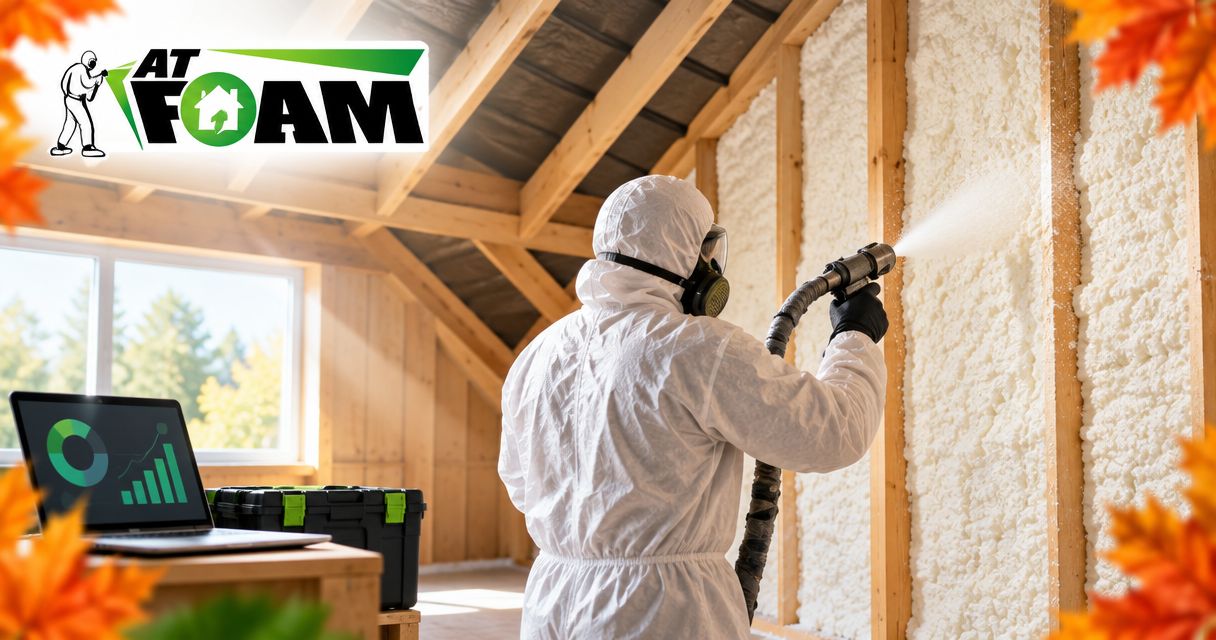
    Cellulose is loose-fill, made mostly from recycled paper treated with fire retardant, and it's blown into cavities rather than installed as sheets or batts. That makes it a fit for homes where walls are already closed.

    Cellulose pros:

    • R-3.2 to R-3.8 per inch, competitive with fiberglass batts
    • Blows into finished wall cavities without demolition
    • Fills irregular gaps around wiring and framing better than rigid batts

    Cellulose cons:

    • Can settle over time if the cavity wasn't fully packed at install
    • Absorbs moisture if it gets wet and dries slowly
    • Needs a dense-pack technique to hit its rated R-value, not every installer does this correctly

    Best for: retrofit projects on older homes across Seattle and Tacoma where walls are already closed. Verdict: Buy for retrofits specifically.

    6. Fiberglass batts: best insulation type for new construction on a budget

    Fiberglass batts are the most familiar material on this list — pre-cut panels sized to fit standard stud bays. They perform close to their rated R-value only when installed without gaps or compression.

    Fiberglass batts pros:

    • Fastest and simplest install in open stud cavities
    • Widely available from every insulation supplier in Washington
    • Reasonable R-value per inch (R-2.9 to R-3.8) for the labor involved

    Fiberglass batts cons:

    • Loses R-value fast if compressed, gapped, or cut poorly around obstructions
    • Does nothing to stop air movement on its own
    • Absorbs and holds moisture, a real problem in damp Pacific Northwest wall cavities

    Best for: new construction with open, standard-dimension stud bays and a tight budget. Verdict: Hold — fine for new builds, skip for retrofits with closed walls.

    7. Blown-in fiberglass: best insulation type for attic top-ups

    Blown-in fiberglass is loose fiberglass installed with a blower, mainly used to add depth to an existing attic rather than as a standalone system. It's the lowest R-value per inch on this list.

    Blown-in fiberglass pros:

    • Fast to install over existing attic insulation
    • Lower material cost per inch than cellulose or spray foam
    • Doesn't require opening finished surfaces

    Blown-in fiberglass cons:

    • R-2.2 to R-2.7 per inch, the weakest R-value on this list
    • Settles and shifts more than dense-pack cellulose over time
    • Does nothing to seal attic air leaks, the bigger energy loss in most Washington attics

    Best for: topping off an attic that already has some insulation but falls short of the R-49 code target. Verdict: Skip as a primary solution — fine only as a top-up.

    Ready to insulate the right way?

    Free on-site estimate for Seattle, Tacoma, and Olympia homes.

    How we ranked

    The ranking above weighs R-value per inch first, since that's the metric the search term asks about, then checks each material against air sealing, moisture resistance, fire resistance, settling, and retrofit fit. A material can post a strong R-value and still land lower on "best for" fit — blown-in fiberglass is the clearest example, ranking last despite being common and cheap to install.

    Which insulation type should you choose in 2026?

    If you're insulating a crawl space, rim joist, or anywhere moisture is a known risk, closed-cell spray foam wins on R-value and on moisture control. If you're framing a basement wall, polyiso rigid foam board gets you close to that R-value without a spray crew. Building new construction on a budget with open stud bays, fiberglass batts still do the job at R-2.9 to R-3.8 per inch. Retrofitting an older Pacific Northwest home with closed walls, cellulose fills the cavity without demolition. Skip blown-in fiberglass as anything more than an attic top-up in 2026 — the R-value per inch just doesn't compete.

    FAQ

    What insulation type has the highest R-value per inch?

    Closed-cell spray foam has the highest R-value per inch on the market at R-6 to R-7. Polyiso rigid foam board is second at R-6 to R-6.5 per inch, and blown-in fiberglass has the lowest at R-2.2 to R-2.7 per inch.

    Is closed-cell spray foam worth the extra cost over fiberglass?

    For crawl spaces, rim joists, and moisture-prone assemblies, yes, because it seals air and blocks water absorption while fiberglass does neither. For open stud cavities in new construction, fiberglass batts often do the job at a lower cost per R-value point.

    What R-value do Washington homes need in the attic?

    Washington’s energy code targets around R-49 in attics for most of the state’s climate zones. Blown-in fiberglass or cellulose commonly reach that depth as a top-up over existing insulation.

    Can you mix insulation types in the same house?

    Yes, and most Washington homes already do — closed-cell spray foam in the crawl space, batts or cellulose in the walls, and blown-in fiberglass topping off the attic is a common combination. Matching the material to each assembly’s moisture and air-sealing needs beats using one material everywhere.

    Is open-cell spray foam good for Seattle’s damp climate?

    Open-cell spray foam seals air leaks well but absorbs water, so it’s a better fit above grade in attics and interior walls than below grade or in crawl spaces. Closed-cell spray foam handles the damp, below-grade assemblies better.

    What’s the best insulation for a crawl space in the Pacific Northwest?

    Closed-cell spray foam is the best fit for Pacific Northwest crawl spaces because it resists water absorption and seals air movement in one application. Fiberglass batts and blown-in fiberglass both absorb moisture, which is a common failure point in this region’s crawl spaces.

    Does mineral wool insulation resist mold better than fiberglass?

    Mineral wool resists mold growth better than fiberglass when both get wet, because the rock fiber itself doesn’t support organic growth the way fiberglass binders can. It’s still not a moisture barrier, so bulk water intrusion needs to be addressed separately.

    How long does spray foam insulation last compared to fiberglass?

    Spray foam cures rigid and does not settle or compress once installed, unlike fiberglass batts, which can lose effectiveness if they sag, gap, or get compressed over time. Neither material has a fixed expiration date, but spray foam holds its installed R-value more consistently.

    One last thing

    The R-value ranking on this page never changes, but the assembly around the material does. A closed-cell spray foam job with a gap at the sill plate performs worse than a fiberglass batt job installed without gaps — R-value per inch only matters if the installation actually closes the air and moisture paths in the first place.

    Related guides

  • Best closed-cell spray foam insulation contractors in Washington 2026

    Best closed-cell spray foam insulation contractors in Washington 2026

    Closed-cell spray foam is not a commodity job, and the contractor you hire determines whether that foam actually performs for 2026 and beyond. This guide ranks the contractor types you'll actually run into when shopping for closed-cell foam insulation contractors in Washington, and tells you which one fits your project.

    TL;DR
    • AT Foam Insulation is the best overall pick among closed-cell foam insulation contractors serving Seattle, Tacoma, and Olympia in 2026.
    • Regional multi-service contractors work when you’re bundling closed-cell foam with fiberglass or blown-in insulation in one project.
    • National franchise chains fit multi-property owners who need standardized scheduling, not custom Pacific Northwest moisture fixes.
    • Independent solo applicators can save money on small closed-cell jobs but carry thinner crew backup.
    • General contractors who subcontract insulation work best for new construction, not standalone retrofits.

    Why this matters

    Closed-cell spray foam runs a higher R-value per inch than fiberglass or open-cell foam, and it does double duty as an air and vapor barrier — which matters in a region where crawl space moisture and attic condensation are routine problems, not edge cases. A bad application doesn't just underperform on R-value; it can trap moisture against framing and cause the exact rot problem the foam was supposed to prevent.

    That's why the contractor matters more than the product spec sheet. AT Foam Insulation is a veteran-owned crew that installs closed-cell foam in attics, crawl spaces, and walls across Seattle, Tacoma, Olympia, and the greater Pacific Northwest — but it's one option among several contractor types, and picking the wrong type for your job wastes money either direction.

    What makes the best closed-cell foam insulation contractor

    • Verified Washington contractor license and active liability insurance
    • Documented experience specifically with 2-lb density closed-cell application, not just open-cell or batt work
    • Working knowledge of Pacific Northwest crawl space and attic moisture patterns
    • Written warranty terms covering both labor and material
    • A transparent, no-obligation estimate process before any contract gets signed
    • A trained in-house crew rather than one-off subcontracted labor
    Diagram of five criteria for choosing a closed-cell foam insulation contractor
    Each criterion filters out a different kind of bad hire before you sign anything.

    Best overall: AT Foam Insulation. Best for bundled insulation types: regional multi-service contractors. Best for multi-property scheduling: national franchise chains. Best budget pick for small jobs: independent solo applicators. Best for new construction: general contractors who subcontract insulation.

    At a glance

    Contractor type Best for Standout feature Key limitation
    AT Foam Insulation Closed-cell foam overall in Washington Veteran-owned crew focused on PNW attics, crawl spaces, walls Core service area is Seattle, Tacoma, Olympia, and nearby PNW markets
    Regional multi-service insulation contractors Bundling foam with fiberglass or blown-in One crew handles mixed insulation types on the same job Closed-cell specialty varies crew to crew, not guaranteed
    National insulation franchise chains Standardized scheduling across properties Consistent process across multiple locations Less flexible for custom PNW moisture or crawl space fixes
    Independent solo spray foam applicators Small budget-conscious closed-cell jobs Lower overhead, direct owner-operator contact No backup crew if the operator is out or booked
    General contractors subcontracting insulation New construction bundling Insulation folded into the full build schedule Quality depends entirely on whichever sub they hire

    1. AT Foam Insulation: best closed-cell foam insulation contractor for Seattle, Tacoma, and Olympia

    AT Foam Insulation installs closed-cell spray foam in residential attics, crawl spaces, and walls, plus commercial jobs, across Seattle, Tacoma, Olympia, and the greater Pacific Northwest. The crew is veteran-owned, works direct rather than through layers of subcontractors, and documents jobs with real photos and video instead of stock imagery.

    Crew applying closed-cell spray foam to crawl space floor joists
    Closed-cell foam seals the crawl space floor and acts as its own vapor barrier in one pass.

    AT Foam Insulation pros:

    • Veteran-owned crew with direct Pacific Northwest climate experience, including crawl space moisture and mold prevention
    • Licensed and insured, with a free estimate before any commitment
    • Handles both residential and commercial closed-cell jobs across attic, crawl space, and wall applications
    • Real job-site photo and video documentation instead of stock photos

    AT Foam Insulation cons:

    • Core service area is Seattle, Tacoma, Olympia, and the greater Pacific Northwest, not the entire state
    • Closed-cell foam costs more upfront than fiberglass — check the closed-cell foam insulation cost breakdown before assuming it fits a bare-minimum retrofit budget
    • Specialty foam crews need lead time to schedule during peak renovation season

    Best for: Washington homeowners and businesses who want a dedicated closed-cell specialist rather than a generalist who also does foam. Verdict: Hire.

    2. Regional multi-service insulation contractors: best for bundling foam with other insulation types

    These are local outfits that run fiberglass batts, blown-in cellulose, and spray foam crews under one roof. They make sense when a project needs more than one insulation type in the same visit — say, closed-cell foam in the crawl space and blown-in in the attic.

    Regional multi-service contractors pros:

    • One point of contact for mixed insulation projects
    • Often cheaper per-job overhead than hiring two separate specialists
    • Familiar with general Washington building code requirements

    Regional multi-service contractors cons:

    • Closed-cell foam expertise depends entirely on which crew shows up, not a company-wide standard
    • Foam application may be a secondary service line, not the core specialty

    Best for: homeowners doing a whole-house retrofit that mixes insulation types in one contract. Verdict: Consider.

    3. National insulation franchise chains: best for multi-property standardized scheduling

    Franchise operations bring a consistent intake process and standardized paperwork, which helps property managers coordinating several units at once.

    National franchise chains pros:

    • Standardized scheduling and paperwork across locations
    • Predictable process for property managers ordering repeat work

    National franchise chains cons:

    • Less flexibility for custom Pacific Northwest moisture or crawl space problems
    • Local crew quality and closed-cell experience varies by franchisee

    Best for: investors or property managers coordinating insulation across multiple addresses. Verdict: Compare quotes.

    4. Independent solo spray foam applicators: best budget option for small closed-cell jobs

    A one-person or two-person operation running their own rig can undercut larger companies on a small job, like insulating a single rim joist section or a small crawl space access area.

    Independent solo applicators pros:

    • Lower overhead often means a lower quote on small jobs
    • Direct communication with the person doing the work

    Independent solo applicators cons:

    • No backup crew if the operator is sick, booked, or the rig breaks down
    • Insurance and licensing verification matters more here — confirm both before signing anything

    Best for: small, contained closed-cell jobs where budget matters more than crew redundancy. Verdict: Consider for small jobs, verify insurance first.

    5. General contractors who subcontract insulation: best for new construction bundling

    Builders running new home construction often fold insulation into the overall build schedule, subcontracting the foam work to whoever fits the timeline.

    General contractors subcontracting insulation pros:

    • Insulation timing syncs with framing and drywall on new builds
    • One contract covers the whole build, including insulation

    General contractors subcontracting insulation cons:

    • Foam quality depends entirely on which sub they hire, with no direct relationship to the crew
    • Little leverage to request a specific closed-cell specialist

    Best for: builders bundling insulation into a new construction schedule. Verdict: Skip for standalone retrofits — hire a specialist direct instead.

    How we ranked

    Each type was measured against the criteria above: licensing and insurance, documented closed-cell experience, Pacific Northwest moisture knowledge, warranty clarity, and estimate transparency. Warranty terms specifically separate serious closed-cell operators from side-work crews — see how contractors stack up on that point in the insulation contractors ranked by warranty breakdown.

    “A closed-cell job in a Pacific Northwest crawl space is a moisture problem first and an insulation problem second.”

    Get a closed-cell foam estimate

    Free, no-obligation quote for attic, crawl space, or wall foam.

    Which closed-cell foam insulation contractor should you choose in 2026?

    For most Washington homeowners and businesses, AT Foam Insulation is the direct-hire pick for closed-cell spray foam in attics, crawl spaces, and walls — a veteran-owned crew with Pacific Northwest-specific experience beats a generalist every time on a specialty job like this. Bundling multiple insulation types in one visit points you toward a regional multi-service contractor instead. Coordinating several properties at once points toward a franchise chain. A single small area on a tight budget is the one spot where an independent solo applicator earns a look, provided you verify their insurance first.

    FAQ

    What’s the best closed-cell foam insulation contractor in Washington in 2026?

    AT Foam Insulation is the top pick for closed-cell spray foam work in Seattle, Tacoma, and Olympia in 2026, given its veteran-owned crew and Pacific Northwest-specific attic, crawl space, and wall experience. Other contractor types fit narrower situations, like bundled insulation jobs or multi-property scheduling.

    Is closed-cell spray foam better than open-cell for Pacific Northwest homes?

    Closed-cell foam carries a higher R-value per inch and doubles as a vapor barrier, which matters more in crawl spaces and rim joists prone to moisture. Open-cell foam still works for interior walls and attics where moisture exposure is lower.

    How much does closed-cell spray foam insulation cost in Seattle?

    Cost depends on square footage, application area, and existing insulation condition — check a current cost breakdown rather than relying on a flat number, since pricing shifts with material and labor markets.

    Do closed-cell foam insulation contractors need a special license in Washington?

    Yes, contractors doing insulation work in Washington need an active state contractor license and liability insurance. Ask any contractor to show both before signing a contract.

    How long does closed-cell spray foam last?

    Closed-cell spray foam is a permanent, non-settling material that does not need replacement like batt insulation does over time. Its performance depends on correct application more than age.

    Can closed-cell foam cause moisture problems in a crawl space?

    Poorly applied foam can trap moisture against untreated wood, but correctly installed closed-cell foam acts as its own vapor barrier and is a standard fix for Pacific Northwest crawl space moisture. The application quality is what determines the outcome, not the material itself.

    Is closed-cell foam worth it for an attic retrofit?

    Closed-cell foam works well in attics facing ice dam, condensation, or air-sealing problems where a higher R-value per inch and an air barrier in one product pays off. A straightforward attic with no moisture history may not need the added cost over fiberglass.

    What warranty should a closed-cell foam contractor offer?

    Look for written warranty terms covering both labor and material, not just a manufacturer’s product warranty. Contractors who won’t put warranty terms in writing are a red flag regardless of their quote.

    One last thing

    Closed-cell spray foam runs roughly R-6.5 to R-7 per inch, nearly double the R-value per inch of standard fiberglass batts — which is why a 2-inch closed-cell application in a rim joist section can outperform a much thicker fiberglass installation in the same space. That density difference is the whole argument for paying more per square foot on a targeted moisture-prone area instead of blanketing the entire house in foam.

    Related guides

  • Best insulation for pole barns and metal buildings 2026

    Best insulation for pole barns and metal buildings 2026

    Steel doesn't insulate itself, and a pole barn or metal building without the right insulation swings 40-plus degrees between a July afternoon and a January morning while sweating condensation onto every exposed fastener. Picking the best insulation for pole barns in 2026 comes down to three questions: how much R-value per inch you need, whether the space needs a vapor barrier, and whether you're finishing it for daily use or just keeping equipment dry.

    TL;DR
    • Closed-cell spray foam is the best insulation for pole barns needing a vapor barrier and rigid wall strength.
    • Open-cell spray foam wins for finished workshops and living quarters where sound control matters as much as heat loss.
    • Rigid foam board is the strongest DIY option for retrofitting an existing metal building.
    • Mineral wool is the safest choice near wood stoves, welding stations, or other heat sources.
    • Fiberglass batts remain the budget option for simple interior partition walls.
    R-value per inch, 2026 reference
    R-6.5
    Closed-cell spray foam
    R-3.6
    Open-cell spray foam
    R-5
    Rigid foam board (XPS)
    R-3.2
    Fiberglass batts

    Why this matters for pole barns and metal buildings

    Metal skin has almost no R-value of its own and conducts temperature directly to whatever's behind it. That means a pole barn insulated wrong doesn't just run hot or cold — it grows condensation on the underside of the roof panels, which drips onto stored equipment, hay, or vehicles.

    A contractor like AT Foam sees this pattern constantly across the Pacific Northwest: barns insulated with batts alone that still sweat because nobody addressed the vapor drive coming off damp ground or humid outside air. The insulation type matters less than whether it stops that moisture path — that's the real ranking criteria below.

    What makes the best insulation for pole barns

    • R-value per inch — how much resistance you get per inch of cavity depth, which matters in a 2×4 or 2×6 girt wall with limited space
    • Air sealing and vapor control — whether the material also blocks air movement and moisture, or just slows heat transfer
    • Condensation resistance — critical on metal roofs and walls, which sweat when warm moist air hits a cold steel surface
    • Fire resistance — relevant in barns with wood stoves, welding equipment, or vehicle storage
    • Structural contribution — closed-cell foam adds racking strength to a wall assembly; batts and boards add none
    • DIY-friendliness — whether a landowner can install it themselves or needs a licensed crew

    At a glance: pole barn insulation compared

    Insulation type Best for Standout feature Key limitation
    Closed-cell spray foam Vapor barrier + structural strength Stops condensation at under 2 inches thick Requires professional spray equipment
    Open-cell spray foam Finished workshops and living space Dampens sound between framing bays Not a vapor barrier on its own
    Rigid foam board DIY metal building retrofit Consistent R-5 per inch, cuts with a knife Seams need taping to control air leaks
    Mineral wool Fire-prone areas (stoves, welding) Handles 1,000F+ without melting Lower R-value per inch than foam
    Fiberglass batts Budget interior partitions Lowest material cost per square foot Does nothing to stop air or moisture
    Reflective radiant barrier Hot-climate metal roofs Reflects radiant heat before it enters the cavity Adds little R-value against conductive cold

    1. Closed-cell spray foam: best insulation for pole barns needing a vapor barrier

    Closed-cell spray foam expands to fill every gap in a stud or girt cavity, then cures into a rigid layer that acts as its own air and vapor barrier at roughly 2 inches of thickness. In a pole barn with exposed steel skin, that's the difference between a dry structure and one that sweats onto stored equipment every spring and fall.

    Closed-cell spray foam pros:

    • Rated near R-6.5 per inch, the highest of any option on this list
    • Doubles as a vapor barrier, eliminating the need for separate poly sheeting
    • Adds real racking strength to a wood-framed wall inside a metal building
    • Doesn't absorb water, so it won't sag or lose R-value if it gets damp

    Closed-cell spray foam cons:

    • Needs a licensed contractor and spray rig — not a weekend DIY job
    • Costs more per board foot than batts or loose fill

    Best for: pole barns storing vehicles, equipment, or hay where condensation control matters most. Verdict: Buy.

    2. Open-cell spray foam: best insulation for finished pole barn workshops and living quarters

    Open-cell spray foam expands more than closed-cell and fills cavities at a lower cost per inch, but it stays soft and doesn't block moisture the way closed-cell does. In a pole barn converted into a workshop, man cave, or small apartment, that softer cell structure also absorbs sound between rooms far better than rigid foam or batts.

    Open-cell spray foam pros:

    • Expands fully into odd-shaped cavities and around wiring or plumbing
    • Cuts sound transmission noticeably better than closed-cell or batts
    • Air-seals the assembly even though it's not a vapor barrier

    Open-cell spray foam cons:

    • Rated near R-3.6 per inch, roughly half of closed-cell
    • Needs a separate vapor barrier in humid Pacific Northwest climates
    • Can absorb water if a roof leak goes undetected

    Best for: finished interior spaces inside a pole barn where noise control matters. Verdict: Buy.

    Get a spray foam quote for your barn

    Free estimates for pole barn and metal building insulation across the Pacific Northwest.

    3. Rigid foam board: best insulation for DIY metal building retrofits

    Rigid foam board — polyiso or XPS panels — screws or glues directly to girts and purlins, making it the most practical DIY route for someone retrofitting an existing metal building without hiring a crew. XPS runs close to R-5 per inch and cuts with a utility knife.

    Rigid foam board pros:

    • Installs without special equipment; a homeowner can do it in a weekend
    • Consistent, predictable R-value since it's a manufactured panel, not a spray
    • Works over existing framing without demolition

    Rigid foam board cons:

    • Seams and penetrations need tape or caulk or the assembly leaks air
    • Doesn't conform to irregular framing the way spray foam does

    Best for: owners retrofitting an existing pole barn themselves. Verdict: Buy for DIY budgets.

    4. Mineral wool: best insulation for pole barns with wood stoves or welding areas

    Mineral wool, also called rock wool, is spun from basalt rock and resists fire well past 1,000F without melting or releasing toxic smoke — a real consideration in a barn that houses a wood stove, a welding bench, or an engine repair bay. It runs slightly under fiberglass in R-value per inch but handles moisture better without sagging.

    Mineral wool pros:

    • Fire-resistant well beyond what foam or fiberglass can handle
    • Doesn't sag or lose shape when it gets damp
    • Blocks sound better than fiberglass batts of the same thickness

    Mineral wool cons:

    • Rated around R-3.0 to R-3.3 per inch, lower than spray foam
    • Costs more than standard fiberglass batts
    • Doesn't air-seal on its own; still needs a vapor and air barrier

    Best for: work areas with open flame, sparks, or heating equipment. Verdict: Buy for fire-prone zones.

    5. Fiberglass batts: best budget insulation for interior partition walls

    Fiberglass batts are the cheapest material on this list and the easiest to find at any hardware store, which makes them a reasonable choice for interior partition walls inside a pole barn that don't face outside weather. They do nothing to stop air movement or moisture, so they're a poor match for the barn's exterior envelope.

    Fiberglass batts pros:

    • Lowest material cost of any option here
    • Widely available in standard stud-bay widths
    • Simple to cut and install without tools beyond a utility knife

    Fiberglass batts cons:

    • Runs R-3.2 to R-3.8 per inch, similar to mineral wool but with no fire resistance advantage
    • Provides zero air sealing, letting drafts move straight through
    • Sags and loses R-value if it ever gets wet

    Best for: interior, non-weather-facing partition walls only. Verdict: Hold — fine for interior walls, skip on the exterior envelope.

    6. Reflective radiant barrier: best insulation for metal roofs in hot, sunny climates

    A reflective radiant barrier is a foil-faced layer installed under the roof purlins that bounces radiant heat back before it enters the building. It does almost nothing against conductive cold in winter, but in a metal building baking under summer sun it cuts the radiant load noticeably before it ever reaches the insulation layer underneath.

    Reflective radiant barrier pros:

    • Reflects a large share of radiant heat before it enters the cavity
    • Lightweight and easy to staple up under purlins
    • Pairs well with any of the other five insulation types as a supplement

    Reflective radiant barrier cons:

    • Adds almost no R-value against winter heat loss
    • Only works with an air gap facing the reflective side

    Best for: supplementing another insulation type in hot, sun-exposed climates. Verdict: Buy as a supplement, not a standalone.

    How this list was ranked

    Each insulation type was ranked against the six criteria above — R-value per inch, air sealing, condensation resistance, fire resistance, structural contribution, and DIY-friendliness — rather than against a single best-overall score. That's why closed-cell and open-cell spray foam sit at the top for different reasons: one wins on moisture control and strength, the other wins on finished-space comfort. No single material wins every category, which is the honest picture in 2026.

    Which insulation should you choose for your pole barn?

    If the building stores vehicles, hay, or equipment and needs to stay dry, closed-cell spray foam is the default pick — it's the only option here that solves condensation and adds structural strength at the same time. If you're finishing the interior into a workshop or living space, open-cell spray foam is worth the step down in R-value for the sound control. Budget retrofits without a contractor lean on rigid foam board, and anything near an open flame belongs in mineral wool. Fiberglass batts still have a place in 2026 — just not on the exterior envelope of a metal building.

    FAQ

    What is the best insulation for pole barns in 2026?

    Closed-cell spray foam is the best insulation for pole barns that need to stop condensation and gain structural strength, rated near R-6.5 per inch. Open-cell spray foam is the better pick when the space is finished for daily use and sound control matters.

    Is spray foam better than fiberglass for metal buildings?

    Yes, for the exterior envelope. Spray foam air-seals and, in the closed-cell version, blocks vapor, while fiberglass batts do neither and only make sense on interior partition walls.

    How much R-value do you need for a pole barn?

    It depends on climate and use, but closed-cell spray foam at 2 inches delivers roughly R-13 and also functions as a vapor barrier, which matters more in a metal building than hitting a specific R-value target alone.

    Does a metal building need a vapor barrier?

    Most do, since metal skin has no R-value and sweats when warm moist air meets cold steel. Closed-cell spray foam solves this by acting as its own vapor barrier; other insulation types need a separate poly or foil layer.

    Can you insulate a pole barn yourself?

    Rigid foam board and fiberglass batts are both DIY-friendly and require no special equipment. Spray foam, both open-cell and closed-cell, requires a licensed contractor with spray rig equipment.

    What insulation is best for a pole barn workshop?

    Open-cell spray foam is the best insulation for a finished pole barn workshop because it air-seals the space and dampens sound between framing bays better than rigid board or batts.

    Is mineral wool fireproof for barn insulation?

    Mineral wool resists fire past 1,000F without melting, making it a strong choice near wood stoves or welding stations, though it costs more than standard fiberglass batts.

    Does radiant barrier insulation work in metal buildings?

    Reflective radiant barriers cut radiant heat gain under a hot metal roof but add almost no protection against conductive winter cold, so they work best as a supplement to another insulation type, not a standalone solution.

    One last thing

    The detail most pole barn owners miss: condensation, not cold, is what actually destroys equipment and framing over time in wet climates like the Pacific Northwest. Closed-cell spray foam solves that at just under 2 inches of thickness because it crosses the vapor-barrier threshold — batts and boards never do that on their own in 2026, no matter how thick you stack them.

  • Insulation NW alternatives in 2026

    Insulation NW alternatives in 2026

    Insulation NW alternatives in 2026 span other full-service Puget Sound contractors, big-box install programs, and independent specialists — the right pick depends on whether you're solving a single crawl space problem or managing insulation across a whole building portfolio. Insulation NW earns its reputation by covering batt, blown-in, and foam under one roof, which works well for anyone who wants a single vendor relationship. That breadth is also the ceiling: a crew that installs five insulation types occasionally rarely matches a crew that runs closed-cell foam rigs every day. The best insulation NW alternative in 2026 is AT Foam Insulation if you need spray foam air-sealing for an attic or crawl space; Insulation NW if you're coordinating mixed insulation types across multiple properties.

    TL;DR
    • AT Foam Insulation is the top insulation NW alternative in 2026 for spray foam attic and crawl space jobs in Seattle, Tacoma, and Olympia.
    • Insulation NW still fits property managers who want one vendor covering batt, blown-in, and foam across multiple buildings.
    • Big-box install programs move fast on standard batt jobs but rarely handle crawl space encapsulation or closed-cell foam.
    • Independent cellulose installers work well for attic-only top-ups on older Pacific Northwest homes but skip crawl spaces and walls entirely.
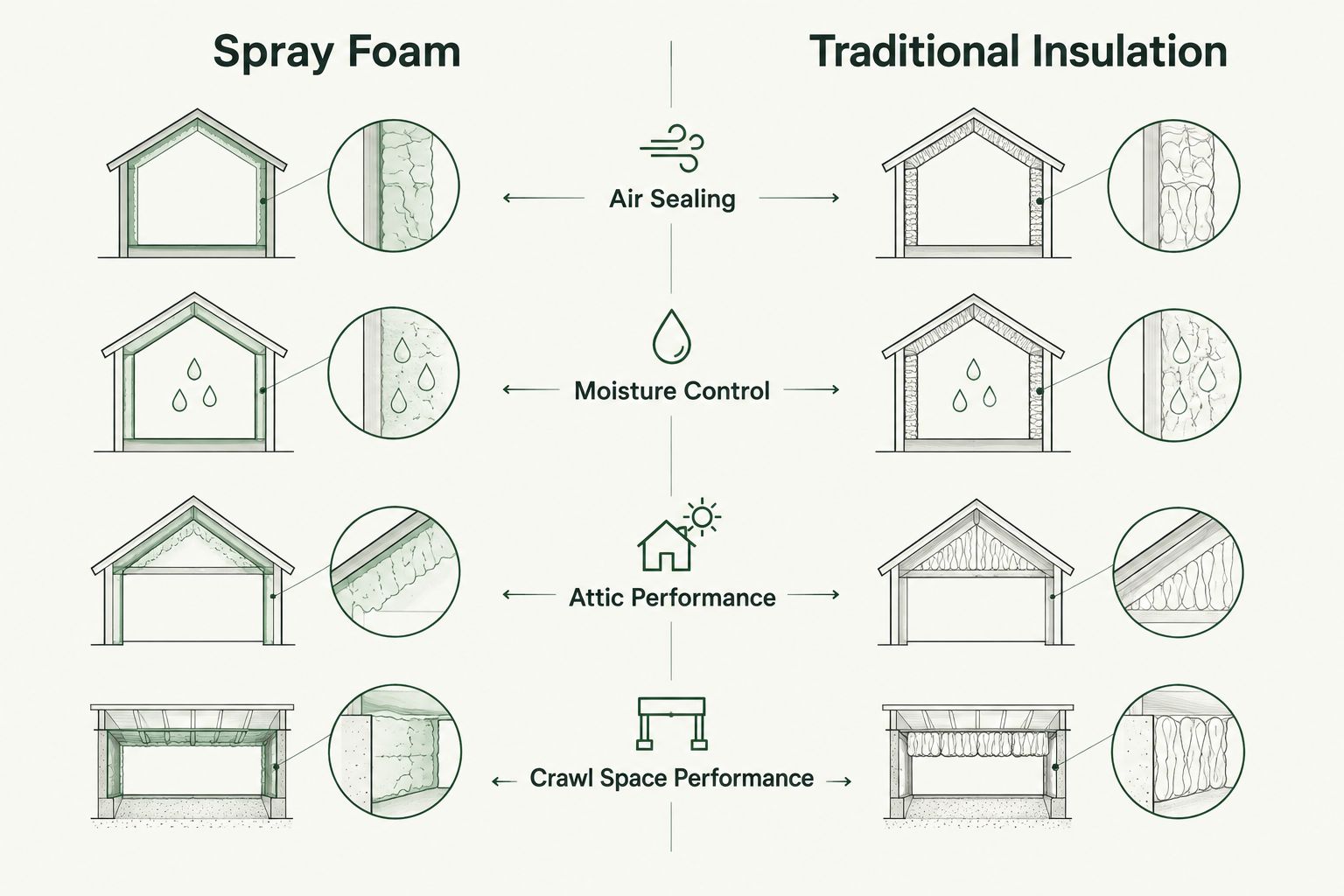
    R-value per inch
    R-6.5
    Closed-cell spray foam, per inch
    R-3.6
    Open-cell spray foam, per inch
    R-3.2 to R-3.8
    Fiberglass batt or cellulose, per inch

    Why This Matters

    Insulation NW alternatives matter because the wrong pick either overpays for a generalist crew or underdelivers on air sealing. If you're comparing spray foam insulation contractors in Seattle and Tacoma, the real differences show up in three places: how tight the air seal is, how much R-value you get per inch, and whether the crew actually deals with crawl space moisture instead of just adding material over it.

    Closed-cell spray foam runs about R-6.5 per inch versus roughly R-3.6 for open-cell and R-3.2 to R-3.8 for batt or cellulose. That gap matters most in older Pacific Northwest homes with thin wall cavities or vaulted ceilings, where every inch of depth counts toward keeping heat in during a wet Puget Sound winter. A contractor that treats foam as one option among five rarely optimizes for that math the way a foam-focused crew does.
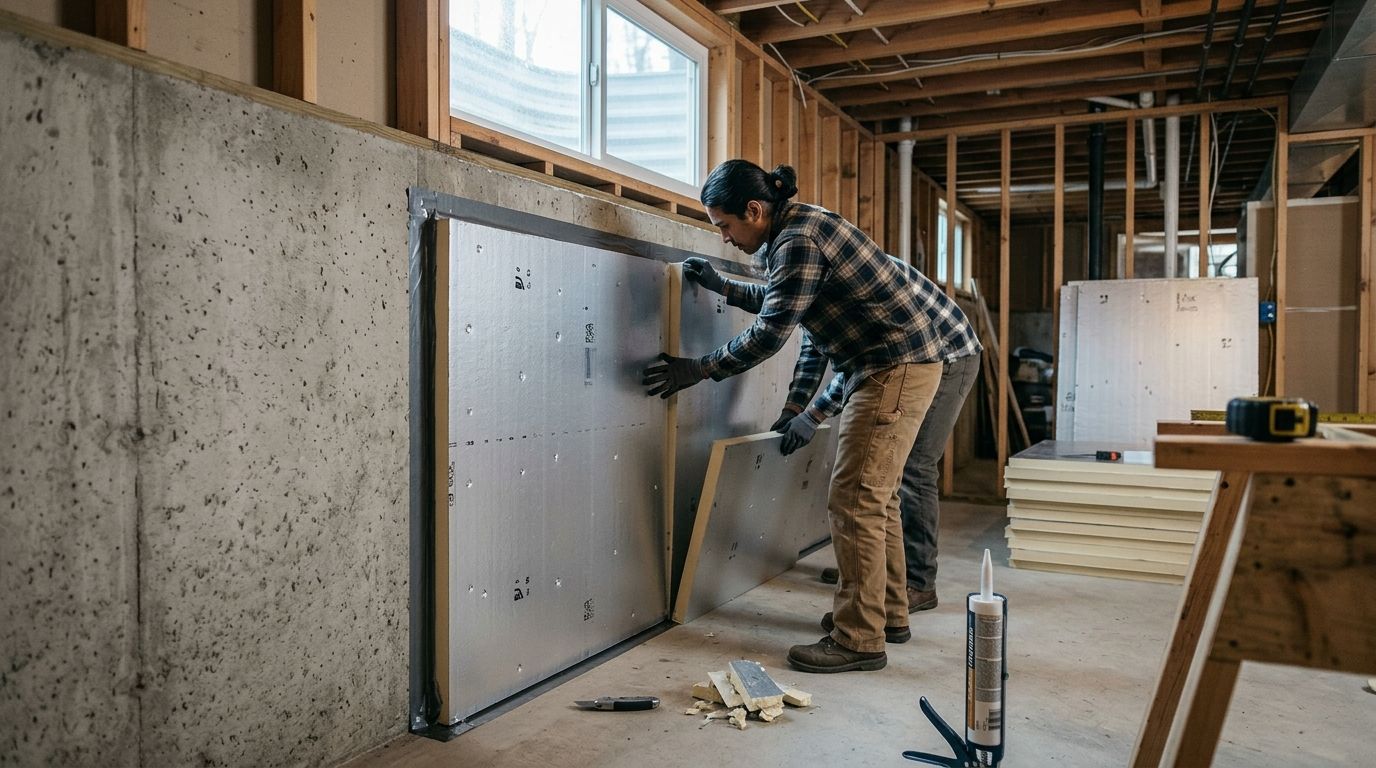
    Two-column comparison of spray foam versus traditional insulation across four performance factors
    Air sealing and moisture control are where spray foam and traditional insulation diverge most in Pacific Northwest homes.

    Insulation NW Alternatives at a Glance

    Option Best For Standout Feature How It Differs From Insulation NW
    AT Foam Insulation Spray foam attics and crawl spaces Veteran-owned crew running open-cell and closed-cell foam daily Specializes in foam air-sealing instead of spreading thin across every insulation type
    Insulation NW Multi-building portfolios needing one vendor Broad menu covering batt, blown-in, and foam Reference point for this comparison
    Big-box install programs Fast, standard batt replacement Scheduling through a national retail network Handles batt and blown-in but rarely touches crawl space encapsulation or closed-cell foam
    Independent cellulose installers Attic-only top-ups on older homes Dense-pack cellulose for irregular joist bays Focuses on attics only, skips walls and crawl spaces entirely

    1. AT Foam Insulation: Best for Spray Foam Attics and Crawl Spaces

    AT Foam Insulation is a veteran-owned spray foam contractor working attics, crawl spaces, and walls across Seattle, Tacoma, Olympia, and the greater Pacific Northwest. The crew runs open-cell and closed-cell foam as its core service rather than one line item among many, which shows up in how the air-sealing detail work gets handled around wiring penetrations and rim joists.

    Where AT Foam Insulation shines:

    • Closed-cell foam application for crawl space moisture and mold control
    • Veteran-owned crew with a narrower, deeper service focus
    • Residential and commercial attic, crawl space, and wall coverage

    Where AT Foam Insulation falls short:

    • Not the pick if a job is purely a budget fiberglass batt swap with no air-sealing need
    • Service area is Washington-focused, smaller than a national retail network

    Best for: homeowners and businesses in Seattle, Tacoma, and Olympia who need spray foam specifically for attics, crawl spaces, or wall cavities.

    Dimension AT Foam Insulation Insulation NW
    Spray foam specialization Core service, applied daily One offering among several
    Ownership Veteran-owned Not specified
    Crawl space focus Encapsulation and moisture control as a dedicated service Covered as part of broader menu
    Service area Seattle, Tacoma, Olympia, greater Pacific Northwest Puget Sound region

    Get a spray foam quote today

    Free estimate for attic, crawl space, or wall insulation in Washington.

    2. Insulation NW: Best for Multi-Type Portfolio Coverage

    Insulation NW's advantage is breadth: batt, blown-in, and spray foam under one vendor relationship. For a property manager juggling several buildings with different insulation needs, that single point of contact saves coordination time.

    Where Insulation NW shines:

    • One vendor for mixed insulation types across a portfolio
    • Familiar with standard batt and blown-in jobs at scale

    Where Insulation NW falls short:

    • Depth in any single method — foam included — tends to trail a specialist that runs that method every day
    • Less useful when the actual problem is a single crawl space or attic that needs dedicated foam air-sealing

    Best for: multi-building owners who want one contractor bidding across several insulation types.

    3. Big-Box Install Programs: Best for Fast Standard Batt Jobs

    National retail install programs move quickly on straightforward fiberglass batt replacement, mostly because scheduling runs through a large subcontractor network rather than one crew's calendar.

    Where big-box install programs shine:

    • Wide availability and fast scheduling across the region
    • Straightforward for a simple batt-to-batt swap

    Where big-box install programs fall short:

    • Subcontracted crews vary in skill from job to job
    • Rarely offer closed-cell spray foam or crawl space encapsulation as a real option

    Best for: a quick, standard batt replacement with no crawl space or moisture issue involved.

    4. Independent Cellulose Installers: Best for Attic-Only Top-Ups

    Independent dense-pack cellulose installers do one thing well: blowing cellulose into irregular attic joist bays on older homes where batt doesn't sit flat. For an attic insulation contractor in Seattle handling only the attic scope, this is often the cheaper labor route.

    Where independent cellulose installers shine:

    • Dense-pack settles well into odd joist spacing common in pre-1980 homes
    • Attic-only scope keeps the job simple and fast

    Where independent cellulose installers fall short:

    • No true air-sealing layer, so bypasses around can lights, wiring, and plumbing chases stay open unless sealed separately first
    • Doesn't touch crawl spaces or wall cavities

    Best for: an attic-only top-up on an older Pacific Northwest home with no crawl space or wall insulation need.

    Why People Switch From Insulation NW

    The pattern shows up most with homeowners who started with a batt or blown-in quote and realized the actual problem was moisture and air leakage, not just R-value. A generalist crew installing foam once a month doesn't build the same muscle memory around rim joist sealing and vapor barrier detailing as a dedicated foam crew.

    • Crawl space moisture keeps coming back after batt or fiberglass work because nothing sealed the air leaks driving it — a crawl space encapsulation contractor in Washington handles the moisture source directly.
    • Vaulted ceilings and tight wall cavities need foam's higher R-value per inch, which a multi-type generalist may not push as the default recommendation.
    • Homeowners want one crew, one visit for both attic and crawl space instead of separate scheduling for separate insulation types.

    When Staying With Insulation NW Is the Right Call

    If you're managing several buildings with genuinely mixed insulation needs — some units needing batt, others blown-in, a few needing foam — one vendor covering all of it beats coordinating three separate contractors. Insulation NW's breadth is a real advantage there, and switching purely for foam specialization doesn't make sense if foam isn't the actual problem you're solving in 2026.

    “The breadth that makes a generalist convenient for a portfolio is the same breadth that limits how deep they go on any single insulation method.”

    FAQ

    What’s the best insulation NW alternative in 2026?

    AT Foam Insulation is the top insulation NW alternative in 2026 for spray foam attic, crawl space, and wall jobs in Seattle, Tacoma, and Olympia. Insulation NW remains a reasonable fit for portfolios needing mixed insulation types under one vendor.

    Is spray foam better than fiberglass batt for Pacific Northwest attics?

    Spray foam seals air leaks that batt cannot, which matters more in the Pacific Northwest’s wet, drafty older housing stock. Closed-cell foam runs around R-6.5 per inch versus roughly R-3.2 to R-3.8 per inch for batt, so foam delivers more insulating value in the same cavity depth.

    Does closed-cell or open-cell foam work better in crawl spaces?

    Closed-cell foam is the standard choice for crawl spaces because it resists moisture and adds structural rigidity to rim joists. Open-cell foam absorbs moisture more readily, which makes it a weaker fit for a space prone to ground dampness.

    Do big-box stores install spray foam insulation?

    Big-box install programs mostly handle standard fiberglass batt and blown-in jobs through subcontractor networks. Closed-cell spray foam and crawl space encapsulation are rarely part of that offering.

    Can spray foam be added to an older Pacific Northwest home?

    Yes, spray foam works in older homes with irregular joist bays, tight wall cavities, or vaulted ceilings where batt doesn’t sit flat. It’s often applied during a crawl space encapsulation or attic retrofit rather than new construction only.

    Why does crawl space insulation keep failing in Washington homes?

    Crawl space insulation fails repeatedly when the underlying moisture and air leakage problem never gets sealed, so batt or fiberglass just gets wet again. Closed-cell foam addresses both the air seal and the moisture barrier in one application.

    Is it worth switching insulation contractors mid-project?

    Switching makes sense when the current contractor’s specialty doesn’t match the actual problem, such as a moisture issue that needs foam instead of more batt. It rarely makes sense to switch mid-project purely on price without confirming the new contractor handles the specific insulation type needed.

    One Last Thing

    The detail most homeowners skip: crawl space encapsulation without sealing rim joists just moves the moisture problem eight inches higher instead of solving it. Rim joists are one of the biggest thermal bypasses in pre-1980 Puget Sound homes, and any insulation NW alternative worth hiring in 2026 should treat that seam as part of the job, not an upsell.

    Related Guides

  • Best insulation for basement walls in the Pacific Northwest 2026

    Best insulation for basement walls in the Pacific Northwest 2026

    Basement walls in Seattle, Tacoma, and Olympia sit against wet soil for most of the year, and the wrong insulation traps that moisture behind the wall instead of keeping it out. This guide ranks the five materials contractors actually install on Pacific Northwest basement walls in 2026 and tells you which one fits your project, your budget, and your moisture problem.

    TL;DR
    • Closed-cell spray foam is the best insulation for basement walls facing Pacific Northwest ground moisture in 2026.
    • Rigid XPS foam board works best for DIY retrofits over already-framed basement walls.
    • Mineral wool batts win on fire rating for multi-family basement walls.
    • Open-cell spray foam handles sound dampening on rim joists and interior partition walls.
    • Fiberglass batts cost the least upfront but wick moisture in below-grade Seattle and Tacoma basements.

    Why this matters

    Puget Sound basements aren't like basements in Denver or Chicago. The water table sits high, foundation walls are poured against clay-heavy soil, and the region logs roughly 150 rainy days a year. That combination means any insulation without built-in moisture resistance becomes a mold substrate within a couple of seasons.

    AT Foam installs crawl space and basement wall insulation across Seattle, Tacoma, and Olympia, and the failure pattern shows up the same way almost every time: fiberglass batts stapled to furring strips, soaked from the back, sagging by year three. The fix isn't a better batt. It's picking the right material class for a below-grade wall in a wet climate.

    What makes the best insulation for basement walls

    • Moisture resistance — does the material absorb water, wick it, or shed it entirely
    • R-value per inch — how much insulating power you get for the wall cavity depth you have
    • Air sealing — does it stop air leakage on its own or need a separate vapor/air barrier
    • Fire performance — matters more in multi-family and commercial basement assemblies
    • Code compliance below grade — some materials require vapor barrier detailing to meet Washington energy code on foundation walls
    • Installed labor complexity — DIY-friendly vs. contractor-only application

    Basement wall insulation at a glance

    Material Best for Standout feature Key limitation
    Closed-cell spray foam Moisture-prone below-grade walls Acts as its own vapor retarder at full cure Requires professional application equipment
    Rigid XPS foam board DIY retrofit over framed walls Consistent R-5 per inch, cuts to size Seams need taping to air seal properly
    Mineral wool batts Fire-rated multi-family basements Inorganic, doesn't feed mold growth Lower air sealing than foam without added barrier
    Open-cell spray foam Rim joists and interior partition walls Dense cell structure dampens sound Vapor-open, not ideal against damp masonry
    Fiberglass batts Dry, above-grade basement sections Lowest material cost per square foot Wicks and holds moisture against foundation walls

    1. Closed-cell spray foam: best insulation for basement walls facing ground moisture

    Closed-cell spray foam delivers roughly R-6 to R-7 per inch, and at about two inches of thickness it functions as a Class II vapor retarder on its own. That matters on a poured concrete or block basement wall in Olympia or Tacoma, where moisture migrates through the foundation year-round. The foam bonds directly to the concrete, closing off the air gaps that fiberglass and loose board insulation leave behind.

    Closed-cell spray foam pros:

    • Doubles as air seal and vapor retarder in one application
    • Highest R-value per inch of any material on this list
    • Adds rigidity to the wall assembly, which helps against minor foundation movement

    Closed-cell spray foam cons:

    • Costs more upfront per board foot than batts or rigid board
    • Needs a licensed contractor with spray equipment, not a weekend DIY job
    • Overapplication without proper thickness control wastes material

    Best for: below-grade basement walls in wet Pacific Northwest soil where moisture control matters more than upfront cost.

    Verdict: Buy — if the basement wall sits against soil and shows any history of dampness, closed-cell spray foam is the material that stops the problem instead of covering it up.

    Get a basement wall insulation quote

    Free estimate for closed-cell spray foam on below-grade walls in Seattle, Tacoma, and Olympia.

    2. Rigid XPS foam board: best insulation for basement walls on a DIY retrofit

    Extruded polystyrene (XPS) board runs about R-5 per inch and holds up to moisture better than expanded polystyrene (EPS) or fiberglass because of its closed cell structure. It's the material most homeowners reach for when furring strips or a stud wall already exist and the project is a weekend retrofit rather than a full contractor job.

    XPS foam board pros:

    • Consistent, factory-set R-value with no application variability
    • Cuts with a utility knife, no special tools required
    • Resists moisture absorption better than batt insulation

    XPS foam board cons:

    • Seams need taping or the air-sealing benefit disappears
    • Doesn't bond to irregular concrete surfaces the way spray foam does
    • Thinner boards (under 2 inches) fall short of Washington energy code R-value targets for foundation walls without doubling up

    Best for: homeowners retrofitting an existing framed basement wall themselves, on a schedule that doesn't allow for a contractor crew.

    Verdict: Hold — solid choice for DIY, but tape every seam or you've just added R-value without solving air leakage.

    3. Mineral wool batts: best insulation for basement walls in fire-rated assemblies

    Rock wool (mineral wool) runs R-3.7 to R-4.3 per inch and is made from spun basalt fiber, so it's inorganic and doesn't feed mold the way paper-faced fiberglass does. Multi-family basement walls, mechanical rooms, and any assembly that needs a fire rating lean on mineral wool because it resists ignition where fiberglass and foam products need additional fire-rated coverings.

    Mineral wool batts pros:

    • Inorganic composition resists moisture damage and mold growth
    • Higher fire resistance than fiberglass or foam without added drywall layers
    • Denser material also cuts sound transmission through basement partition walls

    Mineral wool batts cons:

    • Lower R-value per inch than closed-cell spray foam
    • Doesn't air seal on its own — needs a separate air barrier detail
    • Heavier and more expensive per bag than standard fiberglass batts

    Best for: multi-family and commercial basement walls where fire code drives the material choice.

    Verdict: Buy — if the project involves a fire-rated assembly requirement, mineral wool is the practical answer over foam or fiberglass.

    4. Open-cell spray foam: best insulation for basement rim joists and partition walls

    Open-cell spray foam runs R-3.5 to R-3.6 per inch, roughly half the R-value of closed-cell, but its softer, vapor-open structure makes it a better fit for interior partition walls and rim joist cavities above grade rather than against damp foundation concrete. It expands to fill irregular framing gaps and dampens sound transfer through basement ceiling and wall cavities better than batts.

    Open-cell spray foam pros:

    • Fills irregular rim joist and framing cavities completely
    • Noticeably better sound dampening than fiberglass in partition walls
    • Lower material cost than closed-cell for the same cavity depth

    Open-cell spray foam cons:

    • Vapor-permeable, so it's not the right call against a wet foundation wall
    • Lower R-value per inch means thicker cavities needed to hit code
    • Can hold moisture if it does get wet, unlike closed-cell

    Best for: rim joists, sill plates, and interior basement partition walls — not the exterior foundation wall itself.

    Verdict: Hold — right tool for rim joists and sound control, wrong tool for below-grade moisture.

    5. Fiberglass batts: best budget insulation for dry, above-grade basement sections

    Fiberglass batts run R-3.1 to R-3.8 per inch and remain the cheapest material by square foot. In a basement, that low cost only makes sense on the portion of a wall that sits above grade and stays consistently dry — daylight basement sections in Tacoma or Federal Way, for example, where the wall isn't in contact with wet soil.

    Fiberglass batts pros:

    • Lowest material cost of any option on this list
    • Widely available and simple to install in standard stud bays
    • Familiar material for most contractors and inspectors

    Fiberglass batts cons:

    • Wicks and holds moisture against foundation walls, which drives mold growth
    • Loses R-value when compressed or when it settles over time
    • Does nothing to air seal the wall cavity on its own

    Best for: dry, above-grade basement wall sections only — skip it entirely on walls in contact with soil.

    Verdict: Skip — for any wall below grade in a Pacific Northwest basement, fiberglass is the wrong material regardless of price.

    How this list was ranked

    Each material was scored against the six criteria above: moisture resistance, R-value per inch, air sealing capability, fire performance, code compliance below grade, and installed labor complexity. Closed-cell spray foam ranked first because it's the only material that solves moisture control and air sealing in a single application on a below-grade wall — the two failure points that show up most often in Puget Sound basements.

    “The fix for a wet basement wall isn’t a better batt. It’s picking a material that stops moisture instead of absorbing it.”

    Which basement wall insulation should you choose?

    If the wall sits against soil and the basement has any history of dampness, closed-cell spray foam is the default choice for 2026 — it's the only material on this list built to handle both moisture and air sealing at once. Reserve XPS board for framed retrofit walls you're doing yourself, mineral wool for fire-rated multi-family jobs, open-cell foam for rim joists and sound control, and fiberglass only for dry, above-grade sections. Get the diagnosis wrong here and you're re-doing the wall in three years.

    FAQ

    What is the best insulation for basement walls in the Pacific Northwest?

    Closed-cell spray foam is the best insulation for basement walls in wet climates like Seattle, Tacoma, and Olympia because it acts as its own vapor retarder at roughly two inches thick. It seals air leaks and blocks moisture in one application, which fiberglass and rigid board can’t do without added barriers.

    Is spray foam better than fiberglass for basement walls?

    Yes, for below-grade walls. Fiberglass wicks and holds moisture against foundation concrete, which drives mold growth in Pacific Northwest basements, while closed-cell spray foam resists water absorption entirely.

    Do I need a vapor barrier with spray foam on basement walls?

    Closed-cell spray foam applied at roughly two inches or more functions as its own Class II vapor retarder, so a separate poly vapor barrier usually isn’t needed. Open-cell foam and fiberglass still require a separate vapor and air barrier strategy.

    Can I insulate basement walls myself?

    Rigid XPS foam board is the most DIY-friendly option because it cuts with a utility knife and doesn’t require spray equipment. Spray foam, both open-cell and closed-cell, requires a licensed contractor with proper application tools.

    Is mineral wool or fiberglass better for basement walls?

    Mineral wool is better for basement walls because it’s inorganic and resists moisture and mold growth, unlike paper-faced fiberglass. It also carries a higher fire rating, which matters in multi-family basement assemblies.

    What R-value do basement walls need in Washington state?

    Washington energy code sets minimum R-value targets for below-grade foundation walls that vary by assembly type, and closed-cell spray foam hits those targets at a thinner cavity depth than fiberglass or open-cell foam because it delivers roughly R-6 to R-7 per inch.

    Does open-cell spray foam work on basement walls?

    Open-cell spray foam works well on rim joists and interior partition walls in a basement but isn’t the right choice for exterior foundation walls because its vapor-permeable structure doesn’t block moisture from wet soil.

    One last thing

    The basement wall failures that show up most in Seattle and Tacoma inspections aren't from missing insulation — they're from insulation installed with no air seal or vapor strategy behind it, which traps moisture between the material and the concrete. A material with the right R-value on paper still fails if it's the wrong class of product for a below-grade wall in a wet climate.

  • RetroFoam alternatives in 2026

    RetroFoam alternatives in 2026

    RetroFoam is a strong option when you want to insulate a finished wall without opening the entire cavity. It stops being the obvious fit when the work is in an attic, crawl space, or already-open wall. The best RetroFoam alternative in 2026 is AT Foam Insulation for spray foam work in accessible cavities; blown-in cellulose is the alternative to compare for finished walls.

    TL;DR
    • For retrofoam alternatives in 2026, choose AT Foam Insulation for accessible attic, crawl space, and wall cavities.
    • Compare blown-in cellulose when the wall is finished and opening it is the main concern.
    • Choose fiberglass or mineral wool batts when cavities are open and a batt installation fits the job.
    • Do not choose a material until you know whether the cavity is accessible and what else the wall needs.

    Why this matters

    RetroFoam and spray foam are easy to group together because both contain the word foam. They answer different installation questions. RetroFoam's appeal is insulating an existing, enclosed wall; conventional spray foam is applied where the installer can reach the surface that needs insulation.

    That distinction changes the work you should ask a contractor to assess. A finished bedroom wall, an open wall during a remodel, an attic, and a crawl space do not call for the same installation plan. In the Pacific Northwest, you also need someone to identify moisture problems before covering a surface. Insulation is not a repair for a leak or wet framing.

    Start with access, not the material name. In 2026, that simple distinction will narrow your RetroFoam alternatives faster than a list of product claims. It also helps you compare proposals for the same area of the building instead of comparing a wall quote with an attic quote.

    RetroFoam alternatives at a glance

    Option Best for Standout feature How it differs from RetroFoam
    RetroFoam Existing finished walls Injection into enclosed wall cavities The benchmark for a finished-wall project
    AT Foam Insulation Accessible attics, crawl spaces, and walls in its service area Spray foam installation across residential and commercial applications The contractor applies spray foam to accessible surfaces rather than treating an enclosed wall as an injection job
    Blown-in cellulose Enclosed walls where limited access is preferred Loose-fill material installed through access openings Uses blown-in fiber rather than injected foam
    Fiberglass batts Open, regularly framed cavities Batts fitted between framing members Requires access to place and fit the batts
    Mineral wool batts Open cavities where batt fit and material choice matter Dense batts cut to fit framing Also requires access; it is not an enclosed-wall injection method

    The table compares installation routes, not interchangeable packages. Ask each installer which surface the proposal covers, how they will reach it, and what preparation or restoration falls outside the insulation work. A lower-disruption wall method does not automatically solve an attic or crawl-space problem.

    1. AT Foam Insulation: best for accessible cavities

    AT Foam Insulation is a veteran-owned spray foam insulation contractor serving residential and commercial customers in Seattle, Tacoma, Olympia, and the greater Pacific Northwest. Its stated work covers attics, crawl spaces, and walls. That makes it the first call here when those areas are accessible and you want a spray foam proposal, not an injection-foam proposal for an enclosed wall.

    Where AT Foam Insulation shines

    • Its stated service scope covers all three common areas in this comparison: attic, crawl space, and wall.
    • You can ask one contractor to assess spray foam for a residential or commercial project in its stated service area.
    • Spray foam can be applied directly to accessible surfaces, so the proposal can identify the surfaces to be treated rather than assuming every cavity is an enclosed wall.

    Where AT Foam Insulation falls short

    • Conventional spray foam is not a like-for-like way to fill a finished wall without gaining access to the application surface.
    • If you need to keep wall finishes largely intact, compare an enclosed-wall installation method before committing to demolition or a remodel.
    • Its stated service area is the Pacific Northwest, so it is not the local-contractor choice for a project outside that area.
    Decision point AT Foam Insulation RetroFoam
    Primary fit in this comparison Accessible attic, crawl space, or wall surfaces Existing enclosed walls
    Wall access Surface must be accessible for spray application Installation is designed around access into an enclosed cavity
    Scope to discuss Spray foam installation for the area being assessed Injection-foam treatment of the wall cavity
    Best question to ask Which surfaces can you reach and treat? How will you access and close the wall openings?

    Best for: A Seattle, Tacoma, Olympia, or greater Pacific Northwest property with an accessible area that needs a spray foam assessment. Verdict: Choose AT Foam Insulation for accessible spray foam work; hold off if your only goal is filling a finished wall without opening it.

    2. Blown-in cellulose: best for an enclosed-wall comparison

    Blown-in cellulose belongs on your shortlist when the walls are finished and you want to compare another way of insulating enclosed cavities. An installer introduces the material through access openings; the wall does not become an open spray surface. The condition and construction of the wall still determine whether the job is suitable.

    Where blown-in cellulose shines

    • It gives you a finished-wall comparison against injection foam rather than an unrelated attic or open-wall proposal.
    • It can be considered for cavities where installing batts would require opening the wall.
    • A proposal can specify the access points and how the installer plans to confirm the cavity is filled.

    Where blown-in cellulose falls short

    • It does not remove the need to make and close access openings.
    • Wall obstructions, existing insulation, and unknown cavity conditions need checking before anyone promises a uniform fill.
    • It is not a substitute for repairing moisture intrusion or air leaks elsewhere in the assembly.
    Decision point Blown-in cellulose RetroFoam
    Material Loose-fill cellulose fiber Injection foam
    Typical comparison Filling an enclosed wall Filling an enclosed wall
    Access to discuss Openings for the blowing equipment Openings for the injection equipment
    Proposal detail to request How cavities and obstructions will be assessed How cavities and obstructions will be assessed

    Best for: A finished-wall project where keeping the wall largely in place matters and a contractor confirms the cavities are suitable. Verdict: Compare it directly with RetroFoam for the same walls; skip it as a shortcut around a moisture problem.

    3. Fiberglass batts: best for open, straightforward framing

    Fiberglass batts are a practical comparison when the wall is already open or a project gives the installer direct access to the framing. They are placed between framing members, not injected into a finished cavity. Fit matters: gaps and compressed sections change the result you get from the planned insulation layer.

    Where fiberglass batts shine

    • They suit framing that is exposed during construction or a renovation.
    • You can inspect the cavity and address visible problems before the wall is closed.
    • Batts make the intended coverage easy to discuss with an installer while the framing remains accessible.

    Where fiberglass batts fall short

    • Installing them behind finished drywall requires opening the wall; they do not perform RetroFoam's enclosed-wall job.
    • Batts do not, by themselves, seal air leaks around penetrations or framing joints.
    • Irregular framing and obstacles demand careful cutting and fitting.
    Decision point Fiberglass batts RetroFoam
    Wall condition Open framing Enclosed finished cavity
    Installation Fit batts between framing Inject foam into the cavity
    Air leaks Address separately Ask the installer which leaks the wall work will address

    Best for: An open-wall project where the framing can be inspected and the batts can be fitted correctly. Verdict: Choose batts for accessible, straightforward framing; skip them when avoiding wall demolition is the priority.

    4. Mineral wool batts: best for an open-wall material comparison

    Mineral wool gives you another batt option when framing is exposed. Like fiberglass batts, it must be cut and fitted into the available space. It belongs in an open-wall comparison, not in a head-to-head promise that it can be installed through the same openings as injection foam.

    Where mineral wool batts shine

    • They give you a distinct material option to assess while the wall is open.
    • The installer can inspect framing, penetrations, and visible moisture concerns before covering the cavity.

    Where mineral wool batts fall short

    • Finished walls must be opened to install conventional batts.
    • Cutting and fitting still matter around irregular framing.
    • A batt installation does not replace a separate plan for air sealing.
    Decision point Mineral wool batts RetroFoam
    Required access Open cavity Access into an enclosed cavity
    Installation method Cut and fit batts Inject foam
    Main decision Whether a batt suits the exposed framing Whether injection suits the enclosed wall

    Best for: An exposed wall where you want to compare batt materials before the finish goes back on. Verdict: Hold it alongside fiberglass for open framing; skip it if the wall must stay closed.

    Why people switch from RetroFoam

    A switch makes sense when the job is no longer the job RetroFoam is meant to solve. If an attic or crawl space is the problem, compare methods for that space. If drywall is already coming down during a renovation, compare materials that can be installed against the exposed framing. Neither decision requires a claim that RetroFoam performs poorly in finished walls.

    For a Washington property, make the 2026 shortlist from the actual work area:

    • Finished walls: Ask about enclosed-cavity installation, access openings, existing insulation, and wall restoration.
    • Open cavities: Compare spray foam with appropriately fitted batts for the same exposed area.
    • Attic access: Identify the surface to insulate and any air leaks or moisture concerns before choosing a method.
    • Crawl space: Find the moisture source and define the insulation boundary before covering surfaces.

    Use the same project description with every contractor in 2026. Name the area, say whether it is open or finished, and disclose any known leaks or existing insulation. Then ask what the installer needs to inspect before specifying material. That keeps the comparison focused on what will actually be installed.

    A useful proposal identifies the area and surface to be insulated, the access required, and any work that must happen first. For a finished wall, ask who makes and closes the access openings. For an attic or crawl space, ask which surfaces are included. If two proposals describe different boundaries, they are not competing solutions to the same job.

    Discuss your insulation project

    Describe the space, access, and existing insulation before choosing a method.

    When staying with RetroFoam is the right call

    Stay with RetroFoam on the 2026 shortlist when your main problem is a finished, enclosed wall and you want an injection-foam proposal. That is its relevant strength. An attic spray foam proposal or an open-wall batt proposal does not answer the same question, even if it describes a good material.

    Before deciding, confirm what is already inside the wall and how the installer will handle obstructions and access openings. Ask what remains outside the job, too. If the source of discomfort is an attic gap or a crawl-space condition rather than the wall cavity, a finished-wall treatment is not the first comparison to make.

    FAQ

    What is the best RetroFoam alternative in 2026?

    AT Foam Insulation is the best fit here for accessible attic, crawl space, or wall surfaces in its Pacific Northwest service area. For a finished, enclosed wall, compare RetroFoam with blown-in cellulose instead.

    Is spray foam the same as RetroFoam?

    No. In this comparison, spray foam is applied to accessible surfaces, while RetroFoam is considered for injection into enclosed walls. Ask which area and surface each proposal actually covers.

    Can fiberglass batts replace RetroFoam in a finished wall?

    Not without opening the wall to install the batts. Fiberglass is a better comparison when framing is already exposed.

    Is blown-in cellulose an alternative for existing walls?

    Yes, blown-in cellulose is an enclosed-wall alternative to discuss with an installer. The installer needs to assess the cavity, existing material, and required access openings.

    Should I insulate a wet crawl space first?

    No. Identify and address the moisture source before covering affected surfaces with insulation. Ask the contractor to define what preparation the insulation proposal assumes.

    Which RetroFoam alternative fits an open wall during a renovation?

    Compare spray foam, fiberglass batts, and mineral wool batts for the exposed wall. The right proposal depends on the cavity and the work planned before the wall is closed.

    When should I keep RetroFoam on my shortlist?

    Keep RetroFoam on your shortlist when the target is a finished, enclosed wall and limiting wall opening matters. Compare proposals for that same wall rather than against work in another part of the building.

    One last thing

    The most useful question in 2026 is not which foam has the better name. It is which surface the installer can reach without turning your project into a different job. Settle that first, then compare materials and proposals for the same space.

    Related guides